I hope that are able to connect with you community during this time. If you need some encouragement, I want to let you know what I am telling my local congregation. Please feel free to join in.
It is important during this time of social distancing that we stay spiritually connected.
Join us this Sunday at 10:30 am for our Words Make Worlds series.
Or tune in on our Youtube channel or FB live from 10:45-11:15 for part of the service (and the message)
My main focus is the ABC’s of Contemporary Theology. This started as a series of blog-posts more than 5 years ago. Since then, I have taught it 3 times in 3 entirely different contexts.
I have an editor friend who is going to help me write it and an artist friend who is going to help me illustrate it. I hope that a publisher will want to pick it up, but I am prepared to make it an E-book if I need to.
Here is what I could use some help with: how do these topics sound? Each topic has at least one sub-topic that informs it. I have paired them to form one theme.
Is there anything you would add to this roster of topics in contemporary theology?
The ABCs of Contemporary Theology
Intro: the Surplus of Meaning and our contemporary situation
A is for Atonement (also Adiaphora and Apophatic)
B is for Baptism (and the Body) more than a metaphor embodied phronesis
C is for Christology (and Constructive Theology )
D is for Deconstruction (and Death of God)
E is for Empire (and Evangelical)
F is for Fideism (and Feminist)
G is for Genre (and Globalization)
H is for Hermeneutics (also Heaven and Hell)
I is for Infallible, Inerrant, Impassible and Immutable
J is for Justification (and Justice)
K is for Kenosis (and the Kingdom)
L is for Liberation (and Logos)
M is for Metaphor (and Metaphysics)
N is for Neoplatonism (and Narrative)
O is for Open & Relational (also Orthodox)
P is for Perichoresis (and Post-Colonial)
Q is for Quest for the Historical Jesus (and Queer Theology)
R is for Revelation (and words that begin with ‘Re’)
S is for Salvation (and Second Naivete)
T is for Theopoetics (and Technology)
U is for Universalism (and Ultimate Concern)
V is for Vatican II (and Voluntarism)
W is for the Word of God (and the Wesleyan Quad)
X is for X-ray (and Xenophobia)
Y is for Y2K (and Youth Ministry)
Z is for Zebra (and Zionism)
Any additions? Any changes?
Thank you so much for your feedback and help with this.
I am so excited to tell you that the book came out today.
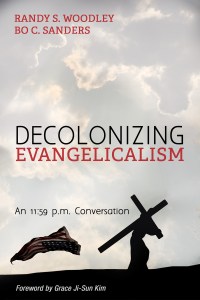
It has been such an honor to write this book in conversation with my mentor and friend Randy Woodley. The title is, “Decolonizing Evangelicalism: An 11:59 pm Conversation” published by Wipf & Stock.
It retails for $19. Right now, you can get it from Wipf & Stock at $15.20, in a week you can get it on Amazon and in a few weeks you can get it from us….in four weeks the hardback version comes out at $39.00. Get ready…
“This book is not for the faint of heart. Fasten your seatbelt and engage in a humble theological conversation which will draw you closer to Jesus as he ‘exposes truth and nurtures life.”
—Terry McGonigal, Director of Church Engagement, Whitworth University
I really can’t express how excited I am. Please stay tuned both here and at the Peacing It All Together podcast that I do with Randy for the beginning of an timely conversation.
Wanted to let you know about two resources I am really enjoying.
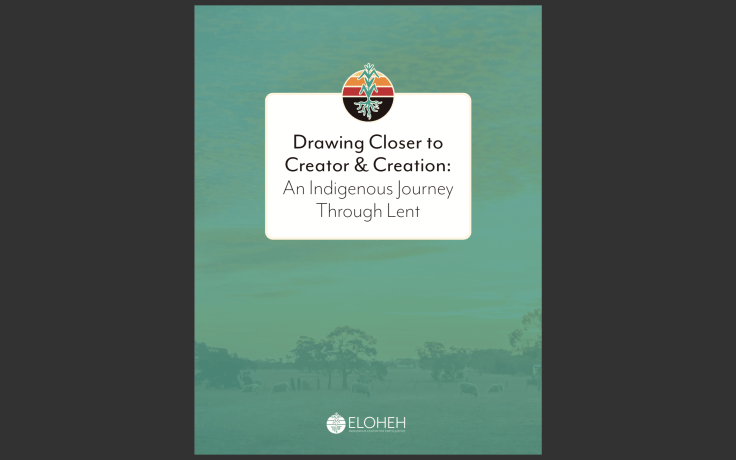
The first is a Lenten Devotional by my mentor and friend Randy Woodley called, “Drawing Closer to Creator & Creation: An Indigenous Journey Through Lent”.
It was edited by Joshua Grace and Erna Kim Hackett into daily readings that go along with a weekly theme. Download the PDF here https://www.eloheh.org
The other resource is a podcast tribute to Richard Twiss that Randy and I did to honor him on the seventh anniversary of his passing. I was able to splice some of our memories of Richard in with a presentation that did in 2009. I really want you to hear his voice.
Listen to it on Peacing It All Together and come join the discussion of Richard’s book “Rescuing the Gospel from the Cowboys” on March 11 (Tuesday at 5:30 pm).
Several years ago I was part of a leadership development cohort of young people and on the final day before they sent us back to the places that we came from all over the globe the leader encourage us to stop working on our weaknesses.
It really caught my attention because up to that point I been under the impression that my primary job was to become a well-rounded person and leader into bring up my weakest areas so it would’ve matched everything else. He said “no, put almost all of your energy into you area of strength – the thing that makes you unique only work on your weakness to the degree that it would disqualify you from ministry or cripple your leadership take away your credibility”.
Don’t work on your weakness – put all your energy into your strength – only work on your weakness enough that it does not cripple you or disqualify you from leadership.
I’ve always thought that was an interesting idea and I logged it in the back of my head carrying around all of these years and once in a while I see something and I think this calls for that I was recently out of the news cycle in the political arena for several weeks due to illness and then work stuff and then caring for family and so I was out of the loop and coming back into it has been rough.
It has been really eye-opening and I’ve noticed that when people are cynical or critical that sometimes they have an internal message that the cynical suspicion is something negative to be resisted.
I want to consider today that it might actually be the perfect time to be cynical.
A couple of years ago my friend Tad DeLay wrote a book called “The Cynic and the Fool”and I was in conversation with him around that time. I’ve noticed that it is not healthy to define yourself by what you’re not! There’s no fruit in that. There’s nothing nourishing about defining yourself in contrast to somebody else or some other group
What I am saying is that because of how we participate in our society – especially in the media age (the Society of Spectacle is one of my favorite books) – that we are conditioned, trained, and well-practiced at being cynical. It helps us not be so vulnerable and susceptible to the stunts and lies that are constantly put in front of us.
Embrace the cynicism to the degree that it compels you toward action.
So that’s my encouragement for today that that maybe this isn’t something to be resisted and that maybe it’s entirely appropriate for our moment and that it’s not a negative thing.
Maybe a little cynicism isn’t the worst thing in the world – especially if Zizek is right and the light at the end of the tunnel is another oncoming train.
My plan is to pair the chapter in the book with a different book, school of thought, or historical movement. Some of these include The Argument Culture by Deborah Tannen, The Peaceable Kingdom by Stanley Hauerwas, and the Anabaptist tradition.
Here are the 7 conversations that I hope will come up in the next 3 months:
The church is supposed to be an alternative way of life – a prophetic and subversive witness to the world – that critiques the ways of the world and provides an alternative way of being in the world. She works best as a minority position within the larger culture and is not designed to be in charge or in control of culture.
Neither the Republican or Democratic party can fix the problem of society. The Democrat and Republican parties are two sides of the same flawed coin. They are not the solution to the problem – they are manifestations of the problem.
The church is not a middle way between these two camps (compromise) but it supposed to be a third way (alternative) to their ways. What we call ‘the church’ is so saturated with both Empire and consumerism that it is completely impotent to confront the ‘powers-that-be’ – which crucified the Prince of Peace (as a scapegoat) – and these powers continue to make life worse for most of humanity.
The American ‘church’ is in bed with the systems of this world that reinforce racism, sexism, poverty, and militarism – 3 of those 4 things Martin Luther King Jr. called the ‘triplets of evil’.
There is a way of living, which Jesus modeled for us and taught about, that leads out of the muck-and-mire we find ourselves in and opens up the hopes and potential of a different way of being in the world. That is the good news of the gospel (evangel).
The church has the potential (capacity) to be the most beautiful and profound vehicle (venue) for unleashing human flourishing and peace. She does this by resisting evil, acting in love, and advocating for those who are vulnerable or on the margins.
The kingdom (or kin-dom) of God is actually within reach but the church has compromised and been corrupted by being in alliance with Empire and the systems of this world. What we call ‘church’ is a shadow of what is supposed to be. Us vs. Them thinking is a symptom of that disease.
Here is a quick video (5 min) to introduce the topics:
Let me know your thoughts, questions, and concerns.
Is there a connection between deconstruction and the dark night of the soul?
Many who participates in deconstruction experience the dark night. Not everyone, however, who experiences the dark night of the soul has been doing deconstruction.
There is enough overlap that it is worth exploring.
Many people who begin to deconstruct their faith experience various levels of disorientation, discouragement, depression, and even despair. It is difficult to dismantle the thing that used to give you shelter and even structure your experience and very existence. You begin to question everything that you have been taught, the people who taught it to you, and even yourself for being misled, fooled, or indoctrinated.
This can trigger feelings of abandonment, isolation, embarrassment, shame, and god-forsakeness at times.
This is where I find the work of Peter Rollins very helpful. He says things like
“I’m not trying to make you depressed, I trying to help you see that you are already depressed.”
One of my favorite things that he introduced me to (working off a thinker named Lacan) is called the Experience of Absence and the Absence of Experience. Let’s say that you and I are sitting at two table in the coffee shop. We are in the same place doing the same thing at the same time – with one big difference: you are expecting a friend who has not shown and is not answering your texts or calls.
You are experiencing your friend’s absence, whereas I am having an absence of that experience.
This is helped me so much over years since Peter’s book “How (Not) To Speak of God” came out. It has become a key for me that has unlocked a door into a much bigger auditorium of ideas.
I have learned to embrace the experience of absence. I actually prefer it of the absence of experience. I know that something is wrong or missing – but I would rather sit in that awareness than not know and sit in my happy naiveté. I would rather be awake the beautiful disaster than not-awake and happy.
This is not a criticism of anyone else and I know many who would disagree with me.
One of the treasures that gives me comfort in the Experience of Absence is that we have resources for this crisis inside our tradition. One of my favorites buried treasures in Christian history is called ‘via negativa’ or the apophatic tradition.
It basically says that god – by the very nature of being god – is so expansive, beyond human comprehension or our ability to explain or describe the divine essence in anything that resembles its reality – that it is more accurate to speak of god in the inverse or negative.
I love this idea.
If there is something as grand as god then every time we try to assert something about god we both say it and inherently un-say it at the same time. [1]
Via Negativa shows that it is actually easier and more accurate to speak of god in the inverse: that god is not like anything or anyone you can compare to (analogy). Even when you try so say something in the positive, whatever you say is actually far more true in the inverse.
Whatever we know about god or believe about god, there is infinitely more that is unknown and unsaid (unexplored).
Any god-talk is actually more untrue about the actual divine than it is true.
Why do I bring this up? In the same way that I have learned to embrace the Experience of Absence, I have come to love the infinitely beyond-me. Deconstruction is concerned with the limitations of words and that has been immensely rewarding as it connects with Via Negativa and another deep idea:
Paul Ricoeur has a concept called Second Naiveté when you pass through the desert of criticism (deconstruction?) and come into faith again with your eyes open. It is not first faith and it is criticism. It is Faith Again but awakened to the mystery (moment).
I could talk and write for days about Ricoeur. His concept of ‘a surplus of meaning’ has transformed my life, faith, and ministry.
None of this the same as the 16th century Catholic concept of ‘the dark night of the soul’ which leads to mystical union with god. There are, however, enough similarities and overlaps that they all belong in the same conversation.
The Experience of Absence, Via Negativa, 2nd Naiveté, and the Dark Night have all helped me on the deconstructive journey. I would love to hear about helpful resources that you have found.
Let me know if you have any questions or concerns.
[1] Two great examples are found in the analogy of ‘rock’ and ‘father’.
Scripture often refers to god as ‘a rock’ to signify strength, resilience, and trustworthiness. But of course god is not actually a rock and a rock is not god. It is a metaphor or analogy at best.
Jesus sometimes referred to god as ‘father’. This was of course relational language saying that he related to God as one relates to a (perfect image of) father. Not that god was big man in the sky who got Mary pregnant.
God is as different from our earthly father as god is anything like those beautifully flawed human men.
Yesterday I addressed the ‘danger’ of deconstructing faith: that you never get back what you gave up. You and the thing (text, concept, tradition) are never the same.
Deconstruction is neither destruction / demolition nor is it reconstruction, reformation, repair, or the recovering of some initial or earlier understanding.
Why is deconstruction so difficult? I have figured out how to introduce this topic in 60 seconds (like a postmodern elevator pitch)
The 20th century saw the height and culmination of something called ‘structuralism’ which examined the nature of things and their order. This was done in many fields, such as science, but in language/literature it starts like this:
Sounds are re/presented by symbols.
These symbols are letters in the alphabet.
Letters are put together to form words.
Words are put together to form sentences.
Sentences are put together to form paragraphs.
Paragraphs are put together to form chapters.
Chapters are put together to form books.
Books are put together to form libraries.
That is the structure of literature and a certain kind of knowledge.
Post-structuralism came along as said, “well yes … but no word completely contains the meaning of the actual thing is represents, and to be honest, it doesn’t even contain its own meaning. In fact, these symbols appear to be somewhat random and maybe even arbitrary.”
Deconstruction begins here.
Deconstruction then begins to ‘play’ with the text to see if there is any give in it. Is it pliable? Does it ever move or change? What is assumed about the text and by the text? Is the text aware of its assumptions? Do we know that author meant that? Is that the only the thing that the text can mean? Are there gaps, contradictions, blind spots, double meanings, or obstacles in the text? Has it grown rigid and brittle over time?
Deconstruction has fun with reading the text. It is often playful and whimsical, sometimes frisky and mischievous – sometimes it can be irreverent.
Most people who are open-minded are still ok up to this point. Where it becomes objectionable to many is when deconstruction inevitably takes on a posture or tone of criticism, sarcasm, accusation, transgression, or even mocking.
Deconstruction does not have a built in stop-gap or safety-valve. It has no logical end. It can feel like a free-fall or a bottomless pit. Deconstruction is intentionally disorienting and challenging.
This is all within the original area of literature and literary theory.
Now take that same impulse or permission and adapt it to spiritual or religious matters.
Take that above set of questions and begin to apply to:
Beliefs
Doctrines
Creeds
Traditions
Sacraments
Scriptures
Gatherings
Congregations
Denominations
Religions
You can see where people who are deeply invested in those arenas begin to bristle at the whimsical, critical, irreverent, subversive, or ironic movement of deconstruction.
This is the difficulty with deconstruction. It has no natural end. It can seem like an endless loop. It seems to get power (get drunk?) from its own activity. It is an omnivore that threatens to devour all it sees … and maybe even itself.
As my friend Jez Bayes pointed out, “deconstruction does seem to end up negative where it’s used … without careful limits or communal shared purpose.
That means that when people start deconstructing they aren’t able to stop, and it ends with unnecessary destruction of faith outside of any coherent community.”
For those of you who are new to my approach, I want to show my cards here:
The only thing I like less than the past is people who want to take us back there.
I felt like I needed to tell you that before I show you my feeble attempt at the deconstructive voice. This is a thing that I wrote several years ago but shows my entry into the discursive process.
Post-structuralist and deconstructive writers use lots of slashes, dashes, and parentheses.
__________
So why are so many Christian projects, programs, and theologies framed as past-oriented endeavors?
Perhaps this is why so many (re)ligious organizations and people (re)sort to (re)clamation projects in (re)action to the perceived problems that (re)sult from our denial or failure to (re)cognize that we have indeed entered into a new and different era – a place that we have never been before.
The impulse to (re)ach back into the imagined past and attempt to salvage some measure of order or to (re)orient ourselves to this new landscape in understandable. The danger, however, is (re)sounding as we endeavor to become (what the fantastic book title labels) ‘The Way We Never Were’.[2]
It is notable how many contemporary religious/spiritual projects employ a motive that begins with the prefix ‘Re’. Admittedly, there some important words in scripture that begin with ‘Re’. Words like redemption, reconciliation, and restoration are indispensable examples. Two other powerful words that would complete that constellation would be repentance and reparations.[3]
Unfortunately, these five ‘Re-’ words are not the ones that show up the most in Christian circles or are found the most in spiritual literature. While ‘revelation’ and ‘religion’ may be the most prominent offerings, they are not the only ones. Many religious projects are framed with words such as:
Revisit
Reclaim
Restore
Return
Renew
Reform
Renovate
Reframe
Redefine
Remember
Recall
Re-imagine
Re-present
Reinforce
Revive
Reexamine
Redeem
React
Respond
Retreat
The above group of ‘Re-’ words may have a comforting and comfortable ring to them,
but they are insufficient for the challenges that we are up against. One of the major challenges of this past-oriented thinking is that it places the vital energy in the past – like a sort of big bang or a pool cue striking the cue ball and sending it crashing into the group – the initial energy is dissipated and we are slowing losing steam (and power) to atrophy.
I would argue that the nature of Christianity is incarnational – so the past is not the sole determining factor for our present or future expression. We have access to an untapped reservoir of power for the present. We are being compelled or called (lured) by the possibilities of the future. We can never re-turn to the past. The nature of time and reality do not allow us to revisit but only to remember.
Deconstruction is loving the past enough to not simply conserve or preserve it.
__________
The danger of deconstruction is that you never get back what you gave up.
The difficulty of deconstruction is that there is no end to the process.
[1] I have a whole big program that includes a 125-page masters thesis on contextual theology and a 11 year web archive dedicated to innovating and updating for today.
[2] Stephanie Coontz, The Way We Never Were: American Families and the Nostalgia Trap (BasicBooks, 1992).
[3]More could be said on exploring those five Biblical concepts for the 21st century. The primary problem with the past may be that it is too easy to romanticize some notion or concept in isolation without addressing the larger structures of injustice and exclusion that it was embedded in or birthed out of.


 Bo Sanders: Public Theology