Search

Bo Sanders: Public Theology

updating & innovating for today

Jihad v. McWorld (part 4)

A Second Shift

In the previous 3 parts we established that a significant shift took place in the late 19th and early 20th century. This initial shift in modernity has subsequently created the possibility of a second, more contemporary, move that I want to explore. Taylor provides the context of this potential when he says:

In earlier societies, this ability to imagine the self outside of a particular context extended to membership of that society in its essential order. That this is no longer so with us, that many of these … questions are not only conceivable but arise as burning practical issues … is the measure of our disembedding. Another fruit of this is our ability to entertain the abstract question even where we cannot make it imaginatively real.[6]

It is in this potential that citizens of the 21st century already have, or likely will, move beyond national identities to something more potentially abstract, disembodied, plural and wrapped in multiplicity. Issues of citizenship, sexuality, race, ethnicity and religion are increasingly complex in an inter-racial, cross-cultural and multi-national globalized context.

Tomorrow’s posts will explore works by Kwame Anthony Appaih, Arjun Appadurai, Umberto Eco and Madan Sarup. Then we will address thoughts by Jean Buildrillard and Saba Mahmood as they relate to imaginaries and conceptions of community, the physical body and spirituality. 

In a section entitled ‘Global Villages’, Appiah points out that,

“People who complain about the homogeneity produced by globalization often fail to notice that globalization is, equally, a threat to homogeneity.”[7]

This is the same tension that was developed in the earlier section between secular and religious thought. Each sees the other as both the problem and a threat to their program – not realizing that in another sense, they actually give rise to each other and propagate each other’s reach.

It is addressed again in such examinations as Jihad v. McWorld: How Globalism and Tribalism are Reshaping the World by Benjamin J. Barber.  Forces that seem to be in conflict with each other are, in reality, dependant on each other in a complex interplay. Barber explains:

McWorld cannot then do without Jihad: it needs cultural parochialism to feed its endless appetites. Yet neither can Jihad do without McWorld: for where would culture be without commercial producers who market it and the information and communication systems that make it known?[8]

The complexity of the combative nature of the symbiotic relationship is found in the evolving nature of the situation.  Barber’s pairing of the phrases ‘Jihad’ with it’s perceived nemesis with ‘McWorld’ is deliberate.Jihad v McWorld

What I have called the forces of Jihad may seem then to be a throwback to pre-modern times: an attempt to recapture a world that existed prior to cosmopolitan capitalism and was defined by religious mysteries, hierarchical communities, spellbinding traditions, and historical torpor… Jihad is not only McWorld’s adversary, it is its child. The two are then thus locked together in a kind of Freudian moment of the ongoing cultural struggle, neither willing to coexist with the other, neither complete without the other.[9]

This juxtaposition is even more precarious than a simple ‘clash’ or ‘combat’ language would seem to provide. There is obviously an adversarial component but without addressing how McWorld gave rise to Jihad – and how Western constructs of religion gave rise to secularism – there is a falsity that exist for those who participate in the inflammatory dualism on both sides (as if there were only two). Conceiving of one’s identity within this fictitious and fracturous is layered in complications related to the imaginary employed.

An outgrowth of this increasing complexity is, as Appiah describes it, a “distinctively cosmopolitan commitment to pluralism”.[10] Cosmopolitan people know that we are different than each other – this is apparent at every turn – and they recognize that we have much to learn from our differences.[11] One theme that emerges repeatedly in the work of these authors is the centrality and role of media. Benedict Anderson addressed it through the textual nature of transmission that united disconnected people in the imaginary.

What Anderson coined as ‘print capitalism’ created permanent change in the way people conceived of their personhood and selfhood. Its power was housed in the dual developments of mass literacy coupled with technological innovation that allowed for ‘large-scale production of projects’.  The result was release from the need for face-to-face communication or even indirect connection between people or groups.[12]

You can see how, in these 4 posts, we live in a very different world than the one we have inhereted in our religious traditions. This helps to explain the baffling disconnect that can occur between our ancient documents and their ongoing implementation in our contemporary religious expressions.

In part 5 we begin to explore the lived and embodied implications of religion in the modern-contemporary context.  

_______________

[6] Charles Taylor, Modern Social Imaginaries (Duke University Press, 2003), 55.

[7] Kwame Anthony Appiah, Cosmopolitanism: Ethics in a World of Strangers (W. W. Norton & Company, 2007), 101.

[8] Benjamin R. Barber, Jihad Versus McWorld (Ballantine Books, 2001), 155.

[9] Ibid., 157.

[10] Appiah, Cosmopolitanism, 144.

[11] Appiah earlier broke down the intertwined notion of cosmopolitanism into two threads: the first is that our obligation extends beyond ties of family and kind (even citizenship) to those outside our immediate reach. The second thread finds value not just in human lives generically but in particular human lives. This is the loci for enlightenment liberal individualism. Ibid., xv.

[12] Arjun Appadurai, Modernity At Large: Cultural Dimensions of Globalization (U of Minnesota Press, 1996), 28.

How We Imagine A ‘Nation’ part 3

In the shadow of the Sochi Olympics and the unfolding tension in the Ukraine, we are exploring the theme/thesis that:

  • ‘Nation’ is both sovereign and transcendent.
  • ‘Nation’ is both a social imaginary and an emergent reality.

[Trust me – I am going somewhere with this]

Benedict Anderson explains that the notion of imagined communities was revolutionary because:

“regardless of the actual inequality and exploitation that may prevail in each, the nation is always conceived as a deep, horizontal comradeship”.[1]

Such an imaginary provides a new capacity for obligation and ultimate sacrifice. Appadurai, in a section entitled ‘Patriotism and Its Future’ interacts with Anderson (among others) and observes that:

Modern nationalisms involve communities of citizens in the territorially defined nation-state who share collective experience, not of face-to-face contact or common subordination to a royal person, but of reading texts together.[2]

There are significant implications to this development because much of the rhetorical energies of the ruling powers are used in order to urge “their subjects to give up … primordial loyalties – to family, tribe, caste, and region” for the “fragile abstractions” called nations which are often “multi-ethnic … tenuous collective projects”.[3] The ability to call for ultimate sacrifice out of loyalty to an abstract imaginary is a defining characteristic of the most recent centuries previously unknown.

Two implications that illustrate the power of imagined community can be found in the examples of:

  1. ‘the tomb of the unknown soldier’
  2. the modern conception of French identity in the past two centuries.

Only within the power of national imaginaries can one see the possibility of such a monument as a tomb left intentionally empty or holding the remains of an unidentified combatant. Anderson points out the absurdity of “a Tomb of the Unknown Marxist or a cenotaph for fallen Liberals.”[4] There is no reserve of belonging that would justify such a display. It would hold little value outside the context of national identity. For what did one give his life? Neither a concept nor a conviction would suffice for such a cemented monument to loyalty and subsequent indebtedness. Only within the confines of a national imaginary does death qualify for such a combination of reverence and pageantry. These are the sole property of nation-ness. One can hardly imagine either the advantage or the desire to make the tomb of an unknown soldier outside that which is called for to preserve a conception such as ‘nation’.

A second illustration of the historic development can be found in France since the nineteenth century. Taylor, working off of Eugene Weber, states that it was only late in the nineteenth century when millions belonging to peasant communities were “inducted into France as a nation of 40 million individual citizens.”

My favorite historian, John Merriman of Yale University, when addressing the same phenomenon of changes in France leading up to WWI comments on the sheer number of dialects (or patois) that were subsumed when ‘citizens’ were conscribed to the French army in the late 1800s and early 1900s. Speakers of Walloon and Basque patois were thrust into defense of something that they barely conceived of themselves as belonging to and in defense of a unified imaginary they would have little reference for called ‘France’. Many (or most) would not have primarily spoken French and may not even have been able to understand their commanding officers.

Merriman often quips that the definition of a ‘nation’ is a dialect with an army.Pastor Holding Bible

One can see how powerful the recent development of conceptualizing the nation as a valid location of sovereignty has replaced both royalty and religion as an acceptable request for this kind of sacrifice. Whereas formerly this authority was reserved for a King or God, now it was conceptualized in a shared identity and responsibility worthy of such obligation. This also had deeply impactful ramifications on areas such as family, property, education and mobility.

Whereas in the past, family and family property were primary sources of security and survival, Nation now provided drastically different possibilities for citizens. Taylor comments that the new (modern) “modes of individualism seemed a luxury, a dangerous indulgence.” [5]

Indeed, to the previously established orders of royalty and religion, these are dangerous developments.

Come back for part 4 where we explore Jihad v. McWorld.

____________________________

[1] Anderson, Imagined Communities, 8.

[2] Arjun Appadurai, Modernity At Large: Cultural Dimensions of Globalization, 1st ed. (Univ Of Minnesota Press, 1996), 161.

[3] Ibid., 162.

[4] Anderson, Imagined Communities, 10.

[5] Taylor, Modern Social Imaginaries, 17.

Missed in history? (10 of 52)

Deep and thoughtful look at The Cross & The Lynching Tree

Imagining a ‘Nation’ part 2

In part 1 I introduced a theme/thesis for this series of posts:

  • ‘Nation’ is both sovereign and transcendent. 
  • ‘Nation’ is both a social imaginary and an emergent reality.

Charles Taylor utilizes the term ‘social imaginary’ to refer to god-like capacity described by Anderson.  The term encompasses a threefold meaning:

  1. First is the way that ordinary people “imagine” their surroundings both in theory and in images, stories, and legends.
  2. Second is the general acceptance and participation in the imaginary by a population and not simply the theories dominated by a small elite.
  3. Third is empowerment provided from the imaginary for widely shared practices and a sense of legitimization.[1]

These three aspects, illustrated as legs on a table, provide a stability upon which both national identity and personal belonging rest. Expectations for behavior and vessels of meaning are then hosted within that conception.

One impact of this capacity to conceptualize national identity and belonging is in answer to the question “what would make someone be willing to die for their country?” Anderson proposes a model of historic drift where sovereignty, which had previously been located in either religion or king (or both), has shifted decisively to the Nation in recent centuries. This is a dramatic innovation and recognizing nationality as a valid location for sovereignty has significantly altered matters related to loyalty, sacrifice and belonging.

Anderson proposes a definition of the nation as “an imagined political community – and imagined as both inherently limited and sovereign.” The distinction of imagined because “the members of even the smallest nation will never know most of their fellow-members, meet them, or even hear of them”.

Communities are limited because there must be some distinguishing demarcation outside of which are other communities (nations), which provide both competition and opportunities for cooperation. This distinction provides a vital function as classifications such as all of us are difficult without the contrast inherent within the project of establishing communities. It is difficult to conceptualize amorphous membership in groups such as everyone and all.

Communities are imagined as sovereign “because the concept was born in an age in which Enlightenment and Revolution were destroying the legitimacy of the divinely-ordained, hierarchical dynastic realm.” [2]  The dissolving social order of caste and class provided more level (if desperately unequal in reality) conception of both membership and participation for the mass of the population. This perceived leveling and opening gave rise to a new capacity for sacrifice on behalf of the imagined entity – an entity that was not solely and externally located in eternity or beyond, but in an ideal which one was associated (belonged) and participated and was thus responsible. To die for a religion (God) or a King was to reinforce that social order which established the hierarchical strata. Locating sovereignty within the conception of Nation – however dispersed and elusive – was a profound change.

In 1922 Carl Schmitt wrote his famous work Political Theology: Four Chapters on the Concept of Sovereignty. In this book he makes two extraordinary claims: the first is that sovereign lies with the one who has the power to make the exception, the second is that “all significant concepts of the modern theory of the state are secularized theological concepts.”[3]  In 2011 Paul Kahn wrote an engagement of Schmitt’s work with four new chapters on the same subject. Kahn’s work is helpful in understanding this initial shift under consideration.

The capacity for the state to ask for this kind of sacrifices, the power to pardon – which is a remnant of Kingly authority, and the symbolic notion of a flag that needed to be defended are all remnants of a religious notion. The very word sovereign is borrowed from religious vocabulary.  Kahn explains:

Political theology today is best thought of as an effort to describe the social imaginary of the political… (arguing) that secularization, as the displacement of the sacred from the world of experience, never won, even though the church may have lost. The politics of the modern nation-state indeed rejected the church but simultaneously offered a new site of sacred experience.[4]

In this framing, we understand the constitution as the product of a popular sovereign, one to which we belong and participate. The constitution (law) is the result of an extraordinary act (revolution).  Kahn sees this as a deeply theological conception. It is born out of a (extraordinary/divine) moment; it produces a sacred center – the popular sovereign. The constitution is then the remnant that is left behind from that extraordinary moment. church

You can begin to see why the constitution is often thought of and talked about as an inspired document (sacred text) and why those who were responsible for it’s creation (founding fathers) are celebrated at patriarchs.[5]

If Schmitt is right – even partially – then all of these similarities are neither trivial nor inconsequential.

            The power of the state to ask for death in order to preserve itself and the capacity of people to willingly offer their lives in defense of that conception is profound. The notion of the sovereign holding the power of exception goes all the way from the individual being pardoned (as referenced earlier) to modern realities impacting all of humanity.

The President has the ability to launch nuclear weapons if he or she was to view that the national interest was in jeopardy. Kahn uses this to illustrate his point.

  • What are we saying about the nation that we are willing to jeopardize human heath, the planet, and subsequent generations for its defense?
  • What could possibly be above human health and planetary environmental conditions?

The answer is ‘only something that is of ultimate concern’.  The modern conception of the state is thus a result of religious conceptions and has replaced (in some sense) religion as the location of sovereignty one is willing to ultimately sacrifice and die for. Nation is a construct of transcendent meaning found in an imagined community.[6]

In the next post we round the corner (part 3)  toward Jihad v. McWorld (part 4)


[1] Taylor, Modern Social Imaginaries, 23.

[2] Anderson, Imagined Communities, 8.

[3] Paul W. Kahn, Political Theology: Four New Chapters on the Concept of Sovereignty, Reprint (Columbia University Press, 2012), location 37.

[4] Ibid., 360.

[5] CBC Ideas part 5

[6] It is not difficult within this framing to view contemporary movements such as the Tea Party as merely an extreme example of a group calling for a romanticized notion of an imagined past or legacy.

A Prayer for the Children and Trees of Ukraine

News stories about places that you have been feel different from other news stories. Even a short visit can plant of seed of connection that feels like an invested interest when there is a crisis. caption

Several years ago I had the opportunity to go to the Ukraine.  I was teaching a class for a new seminary that was training people for ministry in Ukraine, Georgia, and Russia – as well as outlying regions beyond. As we drove out from Kiev, the director of the seminary told me that where the Seminary is located, Vorzel, has a long history of being considered a place of healing  for people with heart and liver problems as well as general bad health.

Starting in the 1950s, under the Soviet system, people were bused there from all over the region for healing.  Apparently, Soviet scientists who studied the area concluded that it was something about the combination of the pollinating trees that converged in the air. The director explained that decades of scientific tests have proven the healing benefits of the area over and over again.

I suggested to him that maybe this is why it was a good place to have a seminary! The idea of sending people out as ‘the Fragrance of Christ’ (2 Corinthians 2:15) to bring healing to the nations.  Revelation 22 looks forward to a city where trees have a significant role.

 “and the leaves of the tree are for the healing of the nations.” (NIV)

My prayer life has changed a bit in the years since that trip to the Ukraine – but my heart still breaks to think about the pain, stress, fear, and violence happening in that region today.

Here is my prayer this morning. Would you please take a moment and join me in a prayer?

May there be peace for the children 
and for the trees,
healing for the nations. 
Amen

Imagining a ‘Nation’ part 1

Watching the Olympics was different for me this time. During the past four years I have been in a PhD program and have burrowed down into topics that have deeply impacted me.  Within one of my cognate fields (non-core studies) I addressed the issue of nationalism and the modern imaginary.

The news about events that are currently unfolding in the Ukraine-Crimea has given new attention to the old alliances and tensions golden age of nationalism – something that many thought we have moved past in the new global economy / world market-place.

In the posts that follow (8 total) you will find a common theme:

  • ‘Nation’ is both sovereign and transcendent. 
  • ‘Nation’ is both a social imaginary and an emergent reality.

We will start with the ‘social imaginary’, move to Jihad v. McWorld in part 4 and finish up with ‘Body and Embodied Practices’.

I resonate deeply with Madan Sarup when after reflecting on and talking to many people about identity he comments that:

The intersections between ‘race’, gender, class, nation and religion, (show) that identity is not something we find, or have once for all. Identity is a process, and that is why it is difficult to grasp it.[1]

There are many disparate elements that contribute to the construction of one’s identity.  This paper will engage both the historic shift from pre-modern conceptions of community/tribe/family to modern expression of nationality as well as a secondary (and subsequent) shift from identity as ‘given’ to a more fluid and transitory notion. These two shifts provide a conceptual and narrative framework for addressing the contemporary context of social imaginaries and the hyper-real. The paper concludes with an exploration of the possibilities of embodied practices providing a location for identity and belonging.

Modern Social Imaginaries and Imagined Communities

Charles Taylor (2004) and Benedict Anderson (updated edition from 2006) take a macro-perspective to the issue of social conception of self and national identity.

In this way ‘national identity’ is a helpful entry point from which to examine social conceptions of self.

It is important to distinguish the massive shift that human belonging has undergone in recent centuries.[2] Long before we get the implications of social media, technological advancements, global consumer culture or changes in political, economic, or cultural realities since the Enlightenment, we need to acknowledge the epic change that has resulted since antiquity when it comes to:

What today we would call the “identity” of the human being in those earlier societies. Because their most important actions were the doing of whole groups (tribe, clan, subtribe, lineage), articulated in a certain way (the actions were led by chiefs, shamans, masters of the fishing spear), they couldn’t conceive themselves as potentially disconnected from this social matrix. It would probably never even occur to them to try.”[3]

This drastic shift in both personal and corporate conceptualization is significant for our addressing the potential understanding of another current shift being examined. The transition from pre-modern conceptions like Taylor is describing to modern frameworks of nation, and ones belonging within that national structure, is essential to establish before an analysis can be drawn for a potentially post-national social construct.

Taylor points our that

an American will never meet, or even know the names of more than a handful of his 240,000,000-odd fellow-Americans. He has no idea of what they are up to at any one time. But he has complete confidence in their steady, anonymous, simultaneous activity.[4] 

This reality occurs, obviously, nowhere outside of the reader’s imaginary and exists entirely in their capacity to conceptualize it as such. To say a sentence such as “Americans are _____.” (brave, selfish, innovative, etc.) is impossible. Such a sentence would have to incorporate both a person like myself, and someone I have never come into contact with – for instance a Latino single teenage mom in Florida who has dropped out of school. She and I might have little in common outside the capacity of the speaker to conceptualize both our connectedness within the imaginary and our relative shared embeddeness within a society. This society would be loose and expansive (regionally) at best. The sentence then is impossible outside of the speaker’s imaginary.

Come back for part 2 where the imaginary becomes sovereign and transcendent. 

[1] Madan Sarup, Identity, Culture and the Postmodern World (Edinburgh University Press, 1996), 28.

[2] It is an oft quoted maxim the two great errors to be avoided when dealing with cultural history is on the one hand to assume that people of the ancient past were entirely like us and secondly, to make the mistake in thinking that they were nothing like us.  Both are ‘gutters’ (to use a bowling analogy) to be avoided in this present examination.

[3] Charles Taylor, Modern Social Imaginaries (Duke University Press Books, 2003), 54.

[4] Benedict Anderson, Imagined Communities: Reflections on the Origin and Spread of Nationalism, New Edition (Verso, 2006), 26.


Add an ‘S’ as a test

I started doing this several years ago. It is surprising how often it reveals something that significantly alters the perception of the topic. When a complex topic is overly simplified it actually makes it more confusing and becomes less helpful. Topics that are appropriately complex and multifaceted are not served by being pressed down or made mono.

Two historic examples and then some contemporary ones:

The Industrial Revolution, according to historians like John Merriman, was actually three industrial revolutions.

  • The first was an agricultural revolution which allowed people to grow more, which encouraged a bigger population and thus all the surplus labor that would be needed.
  • The second was inventions that impacted small groups of workers, like the cotton gin.
  • Then came the big one that generally gets all the headlines with big industry and coal burning factories.

The name ‘the industrial revolution’ is a bit of a misnomer that lumps these three together. They actually happened progressively over quite a long period of time.

The same happens with the ‘Protestant Reformation’. Most people don’t know that Luther and Zwingli were kind of up to two different things and that later Calvin came in (initially as a Lutheran) and then there were at least three little reformations. Then there was England’s Anglican movement that was doing its own thing, and the Anabaptists. That is 5 reformation movements.

When it comes to religions, it is often appropriate to add an ‘s’.

When we lump together the Jewish religion or the Jewish perspective, we may be overlooking the fact that there are three huge branches within Judaism, as well as many other splinters. There is a Reformed Judaism, a Conservative, and an Orthodox. They are very different from each other. You also have secular expressions of Judaism (cultural or ethnic).

Islam is the same way – there are over 80 ‘denominations’ of Islam. So when we say “Muslims _____” we may want to be careful and be more specific by adding a plural mentality and saying “some types of Muslims ______”.

Even within Christianity there are God knows how many different kinds of Christianity. So to say that “Christians believe ______” is more than challenging. It may be misleading.

There are several Judaisms, several types of Islams, and multiple Christian perspectives.

Sometimes people say things like “the Biblical Worldview” as if there is only one. There are actually many worldviews that informed Scripture. Certainly the view of those who wandered in the desert in the Exodus story had a different view of the world than Paul the cosmopolitan Roman citizen of Jewish descent. And one can clearly see that what Paul wrote in Romans 13 to submit to governments because they do God’s work was a different worldview than the person who wrote Revelation and called Rome ‘Babylon’ and a ‘whore who is drunk on the blood of that nations’. There are many examples that I could use but the important thing to note is that there are many worldviews in the Bible.

You also see this misnomer in the phrase “the early church”. Books like The Emergence of the Early Church and The Churches the Apostles Left Behind help expose just how many competing/complimentary groups were in the mix. What most people mean by use of the phase ‘the early church’ is the proto-orthodox notion of those whose views eventually won out.

It also helps out pastorally. It is so tempting to be prescriptive and formulaic in ministry – whether it is the advice we give or the way that we conceptualize the world and its workings. Let me give just 3 examples from the past month:

  • People have kids for all sorts of reasons. Starting a family can be motivated by several different impulses. Some parents view is as ‘legacy’ issue, for others it is an obligation. For some it is duty, for some it is a ‘gift’. Some parents didn’t know that it was an option not to procreate. For some there is a fascination with making something from your own body (I am quoting here) or seeing what a being that was half-them and half-their spouse would look like.

Dealing with family dynamics and expectations, then, is not a one-size-fits-all matter.

  • The same can be said for abortion. Women terminate pregnancies for so many different reasons. I get upset when I hear opponents of abortion painting with a brush that is so broad that a supremely complex issue gets boiled down to a single point and then used as a battering ram.

Motivations and factors both need to be addressed in the plural.

  • Missions is another topic that requires complexity. It is inaccurate to talk about ‘missions’ and mean one thing. It is astounding how many different reasons people have for becoming missionaries. It is also significant to clarify the type or kind of missions one is engaged in. At minimum there are 3: compassion motivated missions, colonial type missions, and salvation (anti-hell) driven missions.

There is much more to said on this one (especially historically) but at minimum we need to be clear when we are talking about missionaries that both their drive and their tactics can vary widely.

SO many examples could be used: ‘black’ voters, the female perspective, sexuality/celibacy, American ____, etc. Once you start adding an ‘s’ you will see more and more areas where it is applicable.complexity

When you put this all together you see that just adding an ‘s’ as a test can help address the inherent complexity within an issue by more accurately reflecting its intrinsic multiplicity. We will also discover important themes where it is not appropriate and that will allow us to appreciate those unique topics even more.

I’m interested in your thoughts, questions, and concerns.

The Meat and Potatoes of Theology

Have you ever overheard two doctors talking to each in medical speak?

Ever had a plumber try to explain to you why this or that fixture/joint is not compatible with this or that coping/fitting?

Ever gone to a ‘do it yourself’ weekend-warrior class at the hardware store, then tried to rewire/retrofit that thing only to make a second trip to the hardware store?

Ever listen to someone in the military tell a story that has so many initials, codewords and acronyms that you get L.O.S.T. in the W.E.e.D.s ?

Every craft/profession has its own vocabulary, short-hand, and set of tools that are specific to that discipline. No one seems to mind this at all. Then there is theology.

When it comes to the theological endeavor, the expectations can change. MP900405058

My theory is that is has something to do with the reality that everyone – no matter age or education level – has access to spirituality.

So everyone should be able to talk and understand what is going on in theology since everyone participates in its subject.

That is how the thinking seems to go. My desire is to clarify that while it is true that religion/spirituality is the primary activity … the theological endeavor is a secondary reflection upon that primary activity.

Theology is not the thing itself. Theology is a second-tier discipline that reflects upon the primary.

[Side note: I find it helpful to break the theological endeavor into 5 main branches and acknowledge that each has sub-disciplines within that. Practical, Biblical, Historic, Systematic and Philosophic are the Big 5 then.]

Have you ever watched a cooking show where a master chef dazzled you with culinary techniques you would not have thought of if you were given 100 years to experiment?

We love that stuff!

Once in a while some ernest person who loves God and is invested in the life of the church will complain about not understanding something I posted or said. Fair enough. 

I know that the gospel is simple enough that a child could get it. I know that the kin-dom is easy enough to enter that there are no limits for economics, education or any other category.

Here is something I would like to add to the conversation: The meat and potatoes – or bread and butter analogy. These two combos are often used to try and say ‘keep it simple’ … but here is the thing:

  • If you have ever tried to grow potatoes – it takes a while.
  • If you have ever harvested an animal for meat – it gets messy.
  • If you have ever made bread – it is complex.
  • If you have ever churned butter – it is not easy work.

Also, most of those activities require specialized equipment that had to be fashioned by a master craftsman.

My point is that ‘keeping it simple’ is often the end product of a very labor intensive, messy, complex, and lengthy process.

Simply putting meat, potatoes, bread and butter on a table is no simple undertaking. That meal that is consumed in 15 minutes took hours to prepare and more than a year to cultivate.

While a sermon probably should not contain words like ontology and meta-physics or phrases like post-Derridian phenomenology, it does not mean that those pursuits are wastes of time.

Like people who know nothing about electricity or conductors just want the light to come on when they flip the switch, that seems to be the expectation of theology. You don’t want to watch the electrician work or see how the sausage is made. You want it to work.

You don’t want to be in the kitchen while the chef works – you want a filling and delicious meal.

Let’s just not pretend that meat and potatoes or bread and butter is as simple to deliver as it is to receive and enjoy.

________

I mentioned all of this in response to the first call on the most recent TNT.

I would also recommend this little pocket dictionary of theological terms – the kindle is $6

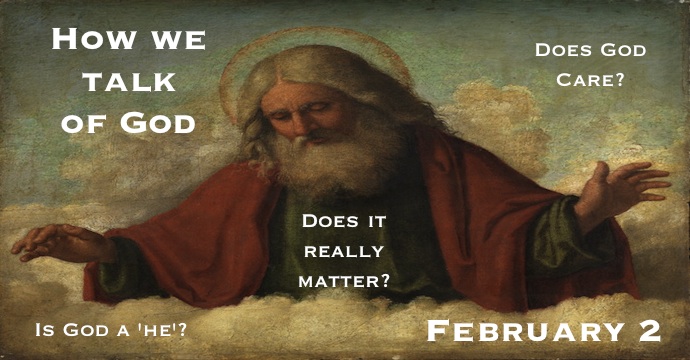
Calling God Names

I wanted to share some thoughts coming out of our conversations at the Loft LA. You can listen to the podcast of our gatherings hereName of God Loft

As we near the end of the ‘New Gear for the New Year’ series we have two final topics to cover: the Name of God and the End of the World (or the hope of a future).

If you have listened to the series, you will know that we have covered a lot of controversial topics like prayer, sin and conflict.

You might be looking at this week’s topic about the Name of God and think ‘it doesn’t seem to be as contentious as the rest of the topics in the series’.

You would be wrong.

In a post- 9/11 world there are some profound issues related to Name of God. In a positive sense we are going to look at more that 80 Biblical names for God and attempt to flesh out the beauty and depth that has been largely lost in our English translations of the Bible – where everything gets mashed down to either ‘God’ or ‘Lord’. We lose so much when that happens.

We then want to turn from the rich Biblical tradition and look at how it might inform some very real issues in our modern world.

You may have seen on the news last week that in both Indonesia and Malaysia that the courts made decisions about whether Christians are allowed to use ‘Allah’ as a name for God. In many Muslim countries around the globe, Christians adopt the name for God used in the Koran.

The question has to be asked “Is the God of Abraham, Isaac and Jacob the same for Jews, Muslims and Christians?”

We call them the ‘Abrahamic faiths’ but are they all praying to the same God? I am going to argue that it is even simpler than that. By looking at the old German god named ‘Gud’ (which is still used in Danish and Scandinavian),  we can see how names for God work, evolve, adapt and migrate.

And while we are on the subject, we have to ask about using the masculine ‘He’ when referring to God. In what way are our words used to re-present an idea. Do our words simply stand in for the thing they are supposed to represent? curves_ahead

Are words like road signs? Think of the squiggly-line sign that lets us know that there are winding turns ahead. The sign is inexact in some ways – they don’t tell you the exact number or direction of the twists ahead. The sign is just a symbol that you learn to interpret as you proceed on the road ahead.

So I just wanted to let you know that this week’s topic will be no less complicated than the rest of the series – even if the title looks more docile or simple on the surface.

Blog at WordPress.com.

Up ↑