Search

Bo Sanders: Public Theology

updating & innovating for today

Category

Argument Culture

What if this isn’t even Christianity anymore?

One week ago  I caught wind of a cooky Southern preacher who preached about a plan to exterminate lesbians, queers and homosexuals. I hear a lot of chatter about this kind of thing so I hoped it would just go away.

By Tuesday night this North Carolina pastor was showing up all over Facebook and Twitter. By Wednesday morning he was the ‘most popular’ link on all of Yahoo! world homepage.

If you have not seen this video, be warned. It is in no way understated. Here is the link:  NC Pastor 

 I have 3 main thoughts about this:

  1. I know tons of people who are not for ‘same sex marriage’ who would not speak of electric fences. Anytime you are suggesting some tactic that the Germans used in WWII you may want to take note.
  2. This is a different TYPE of Christianity – one that is the concerned with governing morals. We going to have to address why the church is even doing State sanctioned marriage in the first place. So often we try to have the second conversation without the first – no wonder it doesn’t go anywhere.
  3. My church and 50 others that I know of and communicate with on a regular basis do kind things and say loving words all the time and no one press covers it. That is the nature of the modern media. Deal with it.

Nothing thus far is that surprising – save the actual sermon by the NC Pastor. Here is my concern:

  • At what point is some pastor so deep in the Constantinian compromise that he is more Roman than Christ-like? At some point do we say ‘that is not even Christian’ ?
  • OR is this just one branch of Christianity and it is our obligation to treat this man as a brother who has simply lost his way?
  • OR is this Preacher doing more harm than good and actually crippling the gospel message – and in that sense he is an enemy of our cause?  And at that point, what do we do with Jesus’ admonition to love our enemy?

Admission: I have been re-reading Stuart Murray’s Post-Christendom and … while that is admittedly probably not the best idea … I have to admit that this whole ‘legislating civil unions and marriages’ thing in North Carolina could not come at a worse time for me.

For what it is worth, here is my 2 cents.

  1. This is not Christianity. Well, it might be Christendom but it is not whatever Jesus was after.
  2. This guy is my brother (in humanity even if not christianity) and has simply lost his way.
  3. Whether he is my crazy cousin or my enemy – Christ compels me to love and respect him as a person even as I wholly (and holy) disagree with his inhuman and immoral speech.

I’m not really sure what other course of action I have in this situation. I spent last week in the woods with no technology and unless I want to perpetually retreat away from all this ugliness, I have got to address this kind of craziness at some level. What else is there in the face of hate except to love?
Opting Out of the Argument Culture (follow up to 4 > 2)

Last week I put out a fun challenge for Good Friday: repent of either-or thinking. It got a great response and a reader asked how one might pursue a conversation differently.

After a decade of trial and error, these are the three things (appropriately) I have found most helpful in breaking down the inherited dualisms: diagrams, vocabulary, and intentional complexification.

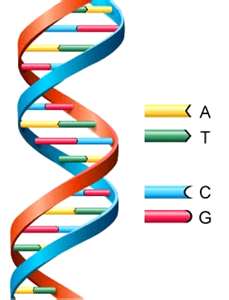
Diagrams: I am a believer in the power of shapes. I heard Len Sweet talk one time about how the two scientists that finally solved the riddle of DNA actually had all the necessary proteins and elements figured out for quite a while … but could not break the code. It wasn’t until they had that now famous shape – the double helix – that they were able to put the puzzle together.
I tell people

“You can have all the right content and be forcing it into the wrong shape.”

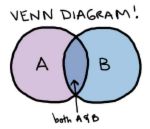
My use of the Venn last week to create 5 categories out of 2 would be an example of this. But it comes from a deep conviction that even when given 2 categories, there has to be more to the story – so look for a third. (The book Argument Culture by Deborah Tannen is excellent on this point).

Draw the person’s spectrum and then bend it (as I did here) for them. Take their two options and put it in a matrix (like the Urgent/Important matrix below). Just become convinced that there is too much data for it to be crammed into a pre-made little mold – it just won’t fit. You end up discarding too much data once your little tins are filled.

Vocabulary: When people are too familiar, too entrenched, and too comfortable, you may have to change the terms of the debate in order to unseat the status quo.

In the never ending Calvinist v Arminian debate that Calvinist love, I will teach them that Arminius was a Calvinist, but  just ‘not calvin enough’ and then, in reaction, the Synod of Dort went more calvin than Calvin to come up with T.U.L.I.P. So when Calvinist portray all free-will theologies as Arminian, that is like an American saying that all non-republicans are democrats: its just not true. They are basically just two sides of the same coin … but certainly not representative of the whole array of options. If they want to read an actual Arminian they should check out Roger Olson and his book Against Calvinism. Once you know what a real Arminian looks like, you will stop mistaking everyone who is not Calvinist for one!

Intentional Complexification:  Since dualism is destructive and deceptive, resolve to never let two contradictory-adversarial positions stand as the only options. Search far and wide, at all costs find a third option. Become inquisitive, Become imaginative. Who doesn’t see it this way?

In the abortion debate you must take away the entrenched or given labels that people assume are the only options. Pro-Life is usually just about one stage of life (unborn) and is less concerned about the life of the mother after her child’s birth, the education of the child 5 years after birth, our  country’s foreign policy and being pro-life in an age of perpetual war, and the ever increasing rates of incarceration, death penalty, etc. To be pro-life you also have to be pro-health care, for education, against militarism, anti-death penalty and should probably do something about hand guns and assault rifles ( I’m not talking about your deer rifle Mr. NRA, that is not what is being used to kill people in these shootings).

If you don’t care about the health of the mother, the education of the child, the life of soldiers, and the life of inmates then you are not pro-life: you are just anti-abortion.

When I see the conversation being set up in an us v. them scenario, I will just boycott by saying “until a women has control over her own womb and she can walk away from a pregnancy like the fella can, we can not even have this conversation. It’s impossible.” I just won’t concede the terms and allow the conversation to be set up like that. It is a false binary and it never leads anywhere except ‘both’ sides (as if there is only 2) feeling justified in their own self-virtue.

So those are my 3 suggestions. I would love to hear what things you have found help us get out of the either/or rut and change the parameters conversation!

Four is greater than Two: Good Friday repentance

So often when I hear two groups arguing, I think to myself  “the problem isn’t what we think about this subject, it is how we are thinking about it.”  If you have read posts here for any time at all you will know that I am not a big fan of dualism in general. I invest great amounts of energy examining binaries and pulling apart overly simplistic dichotomies.

In the past I have utilized a Venn diagram to illuminate the overlap between two groups that are ‘given’ as the options. Lately, I have focused more on the 4th and 5th area.
So in American politics, when ‘republican’ and ‘democrat’ are given to me as opposites, you simply illustrate the overlapping values of the two (3rd space) and then point out those who are ‘neither’ (4th space) like Green folks and anarchists. Then draw a circle around the whole system and point out folks outside the system (5th space) like Canadians.

This semester my two classes are ‘Political Liberalism and It’s Critics’ and ‘Globalization’. It has given me lots of practice in picking up on patterns and thinking in different shaped categories.

Example 1: when a subject like ‘Norms’ is discussed – in sexual identity or sexual practices for instance – often a basic “for & against” structure is presented for any isolated topic. But as the discussion develops you can actually see that this is not a linear ‘far left – far right’ spectrum configuration – even if it is presented as such!

You quickly see that there are least 4 positions even ON a spectrum: if the far left position is “there are no norms” and the far right position is that norms are “intrinsic / originate outside the system” and implement themselves, you can imagine that a center-left position would be an emergent perspective (norms arise from below in the population and then ascend) and a center-right position of top-down Hierarchy where norms are seen to be passed down from the authorities. Recognizing those four positions facilitates a radically different conversation than just outlining two.

Example 2: when the subject is ‘Law’ or court rulings, we need to rise above elementary ‘agree’ and ‘disagree’ binaries.  There are actually 4 positions in practice.

  • Agree & Obey
  • Agree & Disobey
  • Disagree but Obey
  • Disagree and Disobey

It is essential to admit that in any population there will be great variety, disparity, and diversity – so we do a terrible disservice to the matter when we reduce the matter down to basic dichotomies.

The reason I bring this up is because I am very concerned about the round-and-round cul-de-sac conversations that I hear over and over again in the church. I am growing convince that as contemporary Christians, the issue is increasingly not what we think but how we think about it.

The issues of abortion, homosexuality, biblical inerrancy, the creeds/ orthodoxy, environmentalism, and women in ministry are just 6 examples of matters where the dualisms are killing us.

One of the best things that could happen this Good Friday would be for those who take the Christian story seriously to die to – not what we think – but how we think about it. My dream would be for a heart of repentance: to decide in our hearts to swear off inherited dualisms and pledge to, as a community, look for and develop better ways of framing the issues that matter to us most.

Challenge: This Friday, repent of either/or thinking and die to the dualism of us/them for/against right/wrong in/out thinking.  Ask your small group to hold you accountable and maybe even join you in a new life (Easter) of the mind.

disclaimer: some of you will finish this post and think ‘it was so remedial it was barely worth reading’ and others will think ‘that is crazy talk – you are either right (on God’s side) or you are plain wrong – there is no middle ground.’ But we have to start somewhere, and this is the world we live in.


the Death of the Liberals is killing us

In chapter 1 of his book Death of Liberal Class, Chris Hedges sketches both the height of the Liberal era in the 19th century and its cataclysmic implosion with the arrival of World War in the 20th. The disillusionment of human evil, aggression, and suffering deflated the optimism of innate human goodness and inevitable progress that Liberalism is founded upon.
To understand the profound impact of Liberalism’s demise, it helps to make sure one understands the difference between Classical Liberalism and it’s contemporary milquetoast descent that slinks around in straw-man form on our 24 hours news cycle.
Hedges explains (pp. 6-7) “Classical liberalism was formulated largely as a response to the dissolution of feudalism and church authoritarianism. … (It) has, the philosopher John Gray writes, four principle features, or perspectives, which give it a recognizable identity. It is :

  • individualist, in that it asserts the moral primacy of the person against any collectivity;
  • egalitarian, in that it confers on all human beings the same basic moral status;
  • universalist, affirming the moral unity of the species;
  • and meliorist, in that it asserts the openended improvability, by use of critical reason, of human life

Both John Cobb (Mainline)  and Clayton Crockett (Radical Political Theology) use very similar formulations in their recent Homebrewed  podcasts. Cobb, by focusing on the demise of the Mainline and Crockett, by focusing on the Evangelical and Religious Right, articulate the monumental shift in the religious-political landscape in the past century.
The Mainline denominations are in a collapse narrative and it makes perfect sense why when one examines both the way liberal thought partnered with power in the 20th Century and the way that conducted itself (largely) within the shifting landscape of post-war realities at home and globalization abroad.

“In a traditional democracy, the liberal class functions as a safety valve. It makes piecemeal and incremental reform possible. It offers hope for change and proposes gradual steps toward greater equality. It endows the state and the mechanisms of power with virtue. It also serves as an attack dog that discredits radical social movements, making the liberal class a useful component within the power elite. But the assault by the corporate state on the democratic state has claimed the liberal class as one of its victims…
The inability of the liberal class to acknowledge that corporations have wrested power from the hands of citizens, that the Constitution and its guarantees of personal liberty have become irrelevant, and that the phrase consent of the governed is meaningless, has left it speaking and acting in ways that no longer correspond to reality. It has lent its voice to hollow acts of political theater, and the pretense that democratic debate and choice continue to exist.”  (pp. 9-10)

We talked yesterday about the fictitious nature of the supposed Left-Right spectrum.  For those of us who participate in christ centered communities and organizations, what does this mean?  While incomplete, here is my little experiment to come up with a game-plan for a start.

  1. We stop using the label ‘Liberal’ generically for anything that is not Conservative… especially to be dismissive.  Liberal is a very specific ethical  framework and it takes quite a commitment to liberal. It is not a default position.
  2. We disavow the left-right , conservative-liberal split as farcical. It doesn’t exist. Obama is a Centrist Democrat. Romney is a Centrist Republican. Any idea that Obama is a radical is ridiculous.* We repent of lazy language & thought.
  3. We wake up as the church that the role the Liberals used to play in the system does not function. There is no moderating or buffering presence to bring a corrective to the system. Thus, participating in the system as-it-now-exists will not fix the system. The corporate hold over every aspect of our political system is pervasive.
  4. We step up as the church in the revelation that government is not going to fulfill the expectation to
  • bring good news to the poor (Economy)
  • restore sight to the blind (Medical)
  • release to the captive  (Legal)
  • lift up the broken hearted (Compassion)

The church can do these things! We have deferred to the political system for too long. We have outsourced our responsibility to society but now live with the remains of the bloated carcass Christendom. With the death of the liberal class resistance to corporate rule and unchecked consumerism is impotent. The Citizen’s United ruling is just one step on long trail … but we know where it leads.
There are churches in every community and there may be no greater existing potential than us! **  I know it sounds dreamy, but in the rest of this series I want to flesh it out. By the end, it might not seem as far-fetched as it does right now.
– Bo Sanders
 
*Wall Street campaign funding, legalizing assassination, and Guantanamo Bay are your first 3 hints.
**  The danger of course is that we keep voting based on two issues while turning a blind eye to  corporate rule, environmental deregulation, and perpetual war.


This post is the beginning of a new series and was co-posted on Homebrewed Christianity.

Bending the Spectrum

I have never been a big fan of ‘spectrum’ thinking. The language of far left and far right  just rings hollow for me. It is insufficient for the most part and in the end, inaccurate.

I read the book The Argument Culture by Deborah Tannen more than a decade ago and said out loud “Oh! So THAT is why I bristle at the either/or, Republican/Democrat, Right/Left dichotomy! – now it makes sense.”

I reject the spectrum at every turn … but recently I have begun to make an exception in regards to the spectrum. The spectrum is only applicable for someone who thinks that there is a spectrum. I will only try to get them to see that not everyone exists on a spectrum nor are they accounted for by a right-left binary. I no longer try to dislodge them of the notion as a whole – I only try to introduce that a spectrum is incomplete and insufficient.

Lately I have been overwhelmed – probably because it is an election year – by binary language and dualistic thinking. In these conversations I have discovered that it can be quite effective to introduce a simple word play. Spectrums are not straight lines – like light, they bend.

You may think that this sounds overly simplistic but just think about the rise of the Tea-Party and the emergence of the Occupy movement coming in roughly the same window of time. Now those two groups would say that they stand for completely different things. To an outside observer, however, for all the minor distinctions they share a ‘Major’ concern: the system is broken and we can’t trust our leaders to fix it.

This week, I am starting a series working though the Death of the Liberal Class by Chris Hedges. He begins the book with a 25 year old former Marine walking along a highway in Upstate NY that I driven. He is disillusioned with the economic and political systems and is getting ready to do something about it. At one point the young vet says:

“I could see there was no difference between the two main political parties. There is a false left/right paradigm which diverts the working class from the real reasons for their hardships.”

I am looking forward to the series in the exact inverse proportion to how much I am dreading this election cycle.* I have lots of Tea Party types in my life and many Occupy sympathizers as friends. I hear them both saying that the system is not working and that those in charge are not capable of fixing it, that we the people need to be more hands on.

Chris Hedges analyzes the crisis and articulates the root causes better than anyone I have found. The slant of the series will revolve around one simple question “IF Hedges is right about the world – how then should we do theology?

The Tea Party, the Occupy Movement, the global economic crisis and the ongoing wars are telling us something … and it is not about the End of Days. Doing theology in this environment will inherently have some continuity with historical approaches but it will require some tools that may not be familiar to us as well as some necessary innovations.

 The left and right think that they are far apart, but in a bent system they are closer than they would believe. At some point on an arc the far right and the far left almost touch.

I end the way Hedges begins, with a quote from George Orwell:

At any given moment there is an orthodoxy, a body of ideas which it is assumed that all right-thinking people will accept without question. It is not exactly forbidden to say this, that or the other, but it is “not done” to say it, just as in mid-Victorian times it was “not done” to mention trousers in the presence of a lady. Anyone who challenges the prevailing orthodoxy finds himself silenced with surprising effectiveness. A genuinely unfashionable opinion is almost never given a fair hearing, either in the popular press or in the highbrow periodicals.  “Freedom of the Press”

* Tavis Smiley has been saying for quite a while that this will be the ugliest and most racist election in modern times.

I also posted this at Homebrewed

A Change in Seasons – Spring 2012

Over the past couple of months this blog has been primarily focused on two reoccurring themes: how we read the Bible and making sense of the miraculous. I didn’t plan it that way, per se, but it just kept coming up – and since I love those two topics, I went with it.

Now I want to change gears and do something a little more intentional. First, let me set it up.

There are several things happening in our culture that are coming together in an alarming way. The arenas of overlap include:

  • Science
  • Religion
  • Politics
  • Sexuality

The recent political backlash against women’s health, insurance coverage, and reproductive rights is fueled by a religious backlash. This is why it is no coincidence that controversy has flared up in politics around Rush Limbaugh and Rick Santorum – and in religion with Marc Driscoll and John Piper.  Both sets of controversy are coming from the same place … they just play out in different arenas.

This past week I read two news stories that illustrate the same:

Sen. James Inhofe (R-OK) argued that his belief that global warming is a hoax is biblically inspired. You can read the article here.

Well actually the Genesis 8:22 that I use in there is that “as long as the earth remains there will be springtime and harvest, cold and heat, winter and summer, day and night.” My point is, God’s still up there. The arrogance of people to think that we, human beings, would be able to change what He is doing in the climate is to me outrageous. – Sen. James Inhofe

The second story had to do with a school assembly in Iowa that turned ugly. It was supposed to be an anti-bullying presentation by a rock band that became anti-gay and anti-abortion.  You can read the story here.

I saw the headline and thought to myself “I will guarantee you that the band was ‘christian’.”  Turns out I was right!  But let me ask you: how did I know?   Because in the current arena there are 2 telltale signs:

  1. Christians have become 2 issue voters. Those two issues are homosexuality and abortion. Over the last 30 years of the Religious Right the American Church has been reduced to a caricature.
  2. The only way that a group who was brought in to talk about anti-bullying would end up ranting against gays and abortion was if they believed that they were working for a BIGGER truth and could therefor dishonor the initial intent of their invitation. What other group  would take the anti-bully opportunity and change direction like that?

We are in an election year so this in only going to get more pronounced.

There are two other factors in my change of season
As you may know, I consider myself a Contextual Theologian (vs. philosophical, systematic, historical, etc). Well, the reality that has been dawning on me is that our context is one dominated by capitalism, global consumerism, post-Cold War imperialism and technology. If I ignore those realities as a theologian then I am doing a dis-service to the Church and to my generation.

It is irresponsible to do theology in the 21st century and not address economics, consumerism (our true global religion), politics, and ecology. 

For this project I have chosen a conversation partner. I work best in dialogue and Chris Hedges is someone I find myself wrestling with throughout the day. The book that I will initially interact with is the national bestseller  “The Death of the Liberal Class” because it covers so many topics that I would love address.

My question will be simply this: IF Chris Hedges is right about the world – how then should we do theology?

I hope that you will join me on this journey and jump into the conversation! I am neither Conservative or Liberal and have been deeply impacted by the book by Deborah Tannen “The Argument Culture: stopping America’s war of words” so I hope that you will feel safe to comment on what will be put forward even though the subject matter can be volatile.

Women: Images & Identity

Last week I read a fantastic post by Julie Clawson. I wrote a post asking her some questions. She responded and so did Carol Howard Merritt.  Then Rachel Held Evans gave it ‘Conversation of the Week’ in the coveted Sunday Superlatives!   These 3 women great authors and speakers. I feel privilege to have them as dialogue partners! Here are some highlights:

Background: I love going to the movies. As a student, I usually only go the theatre on Summer break (blockbuster action films + air-conditioning = awesome) and on Winter break (tired brain + Christmas money = fantastic).

Last week I saw two movies and was quite intrigued by a pattern that I noticed during the trailers: women being tough guys. The three trailers were for Underworld: Awakening with Kate Beckinsdale, Haywire with Gina Carano (both action films) and The Iron Lady with Meryl Streep playing Margaret Thatcher.

I have read enough feminist literature to know that there is a principle (which Thatcher made famous) that “In a man’s world …” a women often has to out ‘man’ the guys in order to break into the boys club and be taken seriously.

In a system where we have been socially conditioned to see certain behaviors and attributes as ‘leadership’ or ‘strength’ – or in the church as ‘anointing’ – then women must over-do it in order to overcome the intrinsic biases and gain credibility in a system geared to evaluate by masculine expectations. (people point to Joyce Meyer as a Christian example)

This is a real problem.

THEN I was reading your blog this week and you bring up the Lego Ads making their way around Facebook and tie it into both modesty and obesity. As a youth pastor I have read everything from Reviving Ophelia to Queen Bees and Wannabes ,that explains why girls treat each other the way that they do, and I recognize that there are deep underlying issues. Let’s be honest, these deep issues will not be solved by quoting some Bible verses or ‘going back to the way things were in the Bible’.

So here are my questions: 

1. What do we do with the karate-chopping drop-kicking gun-shooting heroines of violence on the silver screen these days? On one hand, it is nice to women getting these big-deal leading roles in major films… on the other hand, are they real portrayals of women-ness or is it the bad kind of mimicry –  like ‘Girls Gone Wild’ as a picture of sexual liberation or power.


2. Are there any resources that you can point me to for Image and Identity? Your blog post on the Lego issue is really sticking with me.

3. As a youth pastor, how would you suggest I navigate the (rapidly) developing sexuality without repression while steering clear of moral permissiveness?  Any thoughts?

Julie Clawson:  Bo brings up some really good questions to which there are no easy cut and dry answers. I ranted/blogged about this general topic a few years ago, but the issues still exist, and perhaps are even intensified. On one hand, I would start by pointing out that just because a woman is an action hero, tough as nails, or possess traditional leadership qualities doesn’t mean she is acting like a man. That could simply be just who she is and she should be given space to be herself without being judged. But at the same time, I agree that it is a widespread cultural issue that women often feel like they must put on the persona of men in order to succeed. Our culture doesn’t know how to handle women who are strong, intelligent, and assertive.  Continue reading “Women: Images & Identity”

Heaven, we have a problem – with sexuality

This was a week of controversy in the Blogosphere – at least in my neighborhood.

The topic of gender, femininity, and sexuality were the touch points.  I am going to highlight 3 controversial blogs from this week … but first I want to acknowledge that it mirrored (albeit in a much smaller way) something happening in the larger culture that we are embedded in.

This was also a week that saw the Penn State football sexual abuse scandal rock the nation, the Herman Cain sexual harassment allegations, and several other national news story related to discrimination, abuse, and harassment.

These three christian conversations that follow are not happening in a vacuum – perhaps that is why they illicit such a heated response and so much attention. It impacts all of us.

Post 1:  from Stuff that Christians Like – a post called ‘Girls with a Past’ was a little test (written by a man) that women could take to see if one qualified as intriguing or not.  It was satire (which not everyone gets or likes) and it pointed out a real problem. Now, some people were offended and took it out on the author. I just want to say that the situation is infuriating but we can’t take it out on the person who illustrates the problem, Jon was articulating a severe inconsistency between what we say and what we do in the ‘church’.

Here is his post: http://www.jonacuff.com/stuffchristianslike/2011/11/stuff-christians-guys-like-girls-that-have-a-past/ let me know what you think. My 2 cents will be at the bottom of this post. It got over 500 responses.

Post 2: Rachel Held Evans (one of my favorite bloggers) put up a post called “13 things that make me a bad feminist”. It is part of a series that she does from time to time – she has also admitted to being a bad ‘evangelical’ and ‘progressive’.  This post went over like a lead-balloon . This led to a guest-post the following day.

Here is the post: http://rachelheldevans.com/13-things-lousy-feminist . It got 149 responses.

Post 3: my good buddy Tripp Fuller came out of the closet as not being ‘open and affirming’ on a video from Two Friars and a Fool. His contention was that affirming letters – whether L, B, G, Q, T, I or any other dash or asterisk – is an inherently limited response. It has two great dangers: Continue reading “Heaven, we have a problem – with sexuality”

Clowns to the left of me Jokers to the right

The old Stealers Wheels song says “clowns to the left of me – jokers to the right” , when I do watch the news I find myself humming “wingnuts to the left of me – nut jobs to the right” here I am stuck in the middle with you. Of course, it’s not that simple – nothing is. 

Over a decade ago I read an amazing book called The Argument Culture by Deborah Tannen that forever changed the way I was able to see and participate in the toxic, adversarial, binary system that had evolved. It haunts me as I watch the political environment and media circus unfold in front of me.

The other day I stumbled across another good reminder from the past. Alasdair MacIntyre was credited with saying

all contemporary debates are really between conservative liberals, liberal liberals, and radical liberals.

I found this in a Dictionary of Theology, where the author added “Thus there is little room for the criticism of the system itself.” In a post the other day I said that “in the end the structure is nearly unchanged. The system is never in danger. The machine doesn’t even slow down. The Powers are never in jeopardy. It eats new ideas with barely a burp – let alone beginning to buckle.”

Stated simply: there is a real danger is assuming our inherited  structures. When we presume the giveness of our constructed systems we are inflicted with a blindness that is more than debilitating to dialogue – it is corrosive to the very intent and virtue of our stated ideals. When the system is assumed:

  1. we begin to major on the minors.
  2. we create blind-spots that leave us vulnerable to critique.

The result then is that we either take on a defensive posture, turn aggressive, or become paralyzed and withdrawal all together. It is the social equivalent of  the “Fight-Flight-or Fright” reflex .

When we don’t examine our inherited assumption or unwilling to engage our constructed social conditioned-ness, we open the door to something quite hazardous to the Gospel message. Beyond compromise and conflict as either/or options is a real cancerous effect on community.

Our political views and denominational persuasions are not the all or nothing ‘far right vs. far left’ spectrum with a huge gap in the middle that has been presented to us. They are kinds within the same system. They are not different in kind – they are only different in degree. And when we realize this, we are afforded the possibility to step back from the arena and gain some perspective on the structure as a whole. That is is the only way that system itself will ever be critiqued – the only ways that the Powers the Be will ever get challenged. Continue reading “Clowns to the left of me Jokers to the right”

Blog at WordPress.com.

Up ↑