Search

Bo Sanders: Public Theology

updating & innovating for today

Category

Bible

Noah: Inhabiting A ReEnchanted World

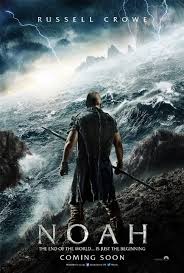
In Aronovsky’s movie, Noah inhabits an enchanted world. kinopoisk.ru

From the first rain drop that mystically/magically replaces a plucked flower, we know that Noah is walking in a world that is enchanted is way we are not used to seeing.

The rules are a little different. Things work in slightly different ways from the world that we inhabit.

From the suspension of certain laws of physics to the wondrous seed of Eden and on to the healing blessing of a barren womb, the world is undoubtedly enchanted.

It is about that enchanted world that I want to propose a problem and a promise.

Problem

In a post-enlightenment world, we no longer have access to that level of enchantment – except in cinema. That is the importance of movies. Most of us no longer sit around the fire and hear the stories and mythic tales of the ancient generations.

Movies open up a world to us that seems closed in the ancient past. Cinema releases us from the confines of our limited imagination and allows us to imagine the world (in) a different way.

Movies spark our creativity and open us up to the possibility that the world can, and maybe should, be a different way. Movies like Avatar or Star Wars are not meant to be exegeted or examined for their exacting possibilities. That would be to miss the point.

Noah should be enjoyed in the same way. A movie like this should not be measured and weighed in an attempt to map its realistic representation. That would be to close down the possibilities. Aronofsky’s vision is to open up our imaginative creativity and invite a greater possibility.

Promise 

David Ray Griffin has ambitiously tackled this problem in his massive (and heady) tome Reenchantment Without Supernaturalism. You can read Bevery Clack’s excellent review here.

Clack explains:

the naturalism that underpins this model is

  • prehensive (highlighting the conscious or unconscious grasp of something)
  • panentheistic (god’s presence is in all)
  • panexperientialist (meaning that experience is not limited only to the sensory)


I don’t want to get bogged down in big words but that tri-framing opens up an important insight that Griffin lays out.

 First, as long as the scientific and religious communities regard each other with suspicion and hostility, it will be difficult for them to cooperate wholeheartedly to overcome the problems threatening civilization today, such as the global ecological crisis.

Second, religion that has not taken account of the truths revealed by science can be very dangerous.

Third, the development of a “scientific worldview” that does not incorporate the truths revealed by religious experience has led … to the view that the universe provides no normative values to guide the future course of civilization.

It is passages like the above that bring me back to the enchanted world of Noah. We love the idea of that world. It is partly why the epic-mythical-primal storytelling of those early accounts capture us at so many levels.

The unfortunate thing is that we have no access to that world anymore. This is where cinema comes in. Movies like Noah release us from the confines of our disenchanted and mundane existence and open up our imaginations to the possibilities of an enchanted world. The unfortunate reality is, however, that cinema is the only access most of have to a world like that.

We can’t go back. We could try but we would never make it. The better option is to live wholly into this world that we actually inhabit in a way that recognizes what is already (re)enchanted and allows us to participate with integrity in the world as it is.

Noah: Eclipse of the Biblical Narrative

It has been a busy month for me but I have 4 things that I would love to hear your thoughts on in the next 24 hours.

I got a sneak peak of the new movie Noah and got to be a part of a roundtable with the director and screenwriter. You can listen to the HomeBrewed  review of the movie and interview here. 

Today I want to put up my two posts on Noah and see what y’all thought of it (if you got to see it this weekend).

______________________

The new Noah movie is a masterful work of biblical imagination and creativity. Noah

There are two aspects of the movie that audiences will notice up-front:

  1. one is related to epic-mythic-primal narrative
  2. the other addresses physics and logistics

The latter is significant for the former. Through a creative move to put the animals into hibernation, all of the questions about how you would feed that many animals, keep them from killing each other, and shoveling manure are instantly relieved. Those who are concerned about such logistical matter can then relax and settle into the narrative.

This is important because for many viewers, the story of Noah is either a) a children’s tale or b) a physics/apologetics problem.

What is missed in both the children’s story and the apologetics arguments is that we are dealing with an epic-mythic-primal narrative. It is not a newspaper account of the flood.

The danger of reducing epic-mythic-primal narrative down to newspaper reports is that too much is lost in the reductive move. The sad part is that often those who are the most series about the biblical account – and who may be upset about the creative flourishes in this movie – have often fallen victim to a debilitating loss of wonder and possibility.

 This is a ‘Failure of Imagination’.

When the Biblical Narrative is reduced down to a newspaper report,  the account lacks the appropriate level of animation.

Aronofsky illustrates how a story should inspire us. This is how we should entertain and engage a Biblical narrative – not by simplifying it down to a flannel board representation – but by breathing more life into it to see what emerges.

In the interview you will hear Aronofsky and Ari Handel say that they wanted to ‘humanize and dramatize’ this work of ‘primal story telling’. My mind went immediately to the work of Hans Frei – specifically The Eclipse of the Biblical Narrative. Frei was both concerned about and critical of the shifts that happened in recent centuries of biblical criticism. We had clearly moved out of the pre-modern (pre-critical) way of addressing a sacred text and into (via the enlightenment) a flood of critical thought and scholarly criticism.

Both the fundamentalist retreat to historical facts and the liberal abandonment of historical concerns are a failure to Frei. This is not about extracting universals or proving ‘facts.’ That is an exercise in missing the point.

Frie’s proposal related to fitting our world into the world of the Bible.  While I don’t subscribe to Frie’s system wholesale, I think that he would be very impressed by Aranofsky’s vision for the Noah story.

The director lets us inhabit the enchanted world of Noah and tries to find elements of our world within it. This is the beautiful opportunity provided for us through film. We breath creativity and imagination into the text and let it come alive.*

The next post will look at ReEnchanting the world the Noah inhabited. 

*It is important to note that Aronofsky and Handel took great pride in not contradicting a single detail in the biblical account. They admittedly added and embellished other aspects of the story.

Calling God Names

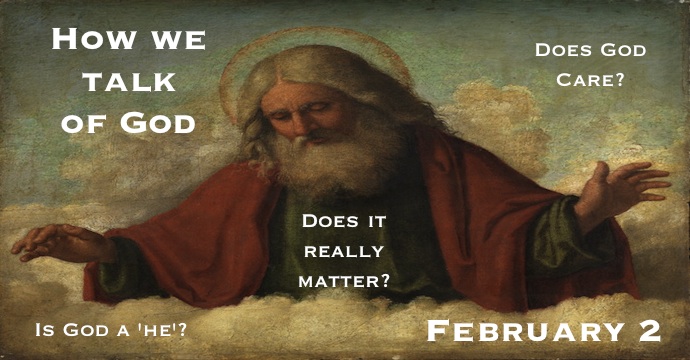
I wanted to share some thoughts coming out of our conversations at the Loft LA. You can listen to the podcast of our gatherings hereName of God Loft

As we near the end of the ‘New Gear for the New Year’ series we have two final topics to cover: the Name of God and the End of the World (or the hope of a future).

If you have listened to the series, you will know that we have covered a lot of controversial topics like prayer, sin and conflict.

You might be looking at this week’s topic about the Name of God and think ‘it doesn’t seem to be as contentious as the rest of the topics in the series’.

You would be wrong.

In a post- 9/11 world there are some profound issues related to Name of God. In a positive sense we are going to look at more that 80 Biblical names for God and attempt to flesh out the beauty and depth that has been largely lost in our English translations of the Bible – where everything gets mashed down to either ‘God’ or ‘Lord’. We lose so much when that happens.

We then want to turn from the rich Biblical tradition and look at how it might inform some very real issues in our modern world.

You may have seen on the news last week that in both Indonesia and Malaysia that the courts made decisions about whether Christians are allowed to use ‘Allah’ as a name for God. In many Muslim countries around the globe, Christians adopt the name for God used in the Koran.

The question has to be asked “Is the God of Abraham, Isaac and Jacob the same for Jews, Muslims and Christians?”

We call them the ‘Abrahamic faiths’ but are they all praying to the same God? I am going to argue that it is even simpler than that. By looking at the old German god named ‘Gud’ (which is still used in Danish and Scandinavian),  we can see how names for God work, evolve, adapt and migrate.

And while we are on the subject, we have to ask about using the masculine ‘He’ when referring to God. In what way are our words used to re-present an idea. Do our words simply stand in for the thing they are supposed to represent? curves_ahead

Are words like road signs? Think of the squiggly-line sign that lets us know that there are winding turns ahead. The sign is inexact in some ways – they don’t tell you the exact number or direction of the twists ahead. The sign is just a symbol that you learn to interpret as you proceed on the road ahead.

So I just wanted to let you know that this week’s topic will be no less complicated than the rest of the series – even if the title looks more docile or simple on the surface.

HomeGrown Christianity Begins Today

I am very excited to announce that 2014 has brought a new Eco-Theology series called “HomeBrewed Grown Christianity” all about-earth care and lovin’ God. It has grown into an 8 part series including a TNT follow-up to the initial run of interviews that begin today.HomegrownLogo_green_rev1

Episode 1: Leah Kostamo Planted: A Story of Creation, Calling, and Community   Kindle ($9.99) Paperback ($17.99)  Listen HERE

Episode 2: Matthew Sleeth Serve God Save The Planet , The Gospel According to the Earth & 24/6 about Sabbath. (Kindle $2.99)

Episode 3: Jennifer Butler is part of the new Christian Earthkeeping emphasis at George Fox Seminary. She is co-author of the upcoming book On Earth As In Heaven due out in November.

Episode 4: Randy Woodley with  Shalom and the Community of Creation: an Indigenous Vision  

Episode 5: John Cobb rang the alarm bell back in 1972 and has recently returned to the theme with Spiritual Bankruptcy: a prophetic call to action.

Episode 6: is a special surprise from new Elder Micky Jones and friend.

Episode 7: is specifically food related. How do get food on the table? What issues are related to feeding a family? 

Episode 8: at the the end of each episode, we ask our guest the same 5 questions. Tripp and I are dedicating a TNT to interacting with their answers to the those 5 questions. It will be in the same format that we did the Brueggemann-Fretheim Bible Bash.  

You may also want to pick up Colonialism, Han, and the Transformative Spirit by Grace Ji-Sun Kim. Her HBC interview with Callid was so good that I sort of wish it had been a part of this series!  I hope to return to Dr. Kim’s thoughts to close this initial run.

I attended part of planning meeting yesterday related to next year’s big Whitehead conference. The theme is “Seizing An Alternative: Toward An Ecological Civilization” based on a new essay by John Cobb.  I am greatly inspired about this HomeGrown series and am very aware of the intensity of the situation we are facing.

I hope that you will join us on this audiological journey and that you will chime in on the blogs as they roll out over the next 40 days. 

I want to thank Jesse Turri for the collection of logos for the series. If you have not heard Jesse’s work on the Unfolded podcast (with collaborator Matt Barlow)  you really need to check it out!

’12 Years A Slave’ and the Cross of Christ

by Bo Sanders 

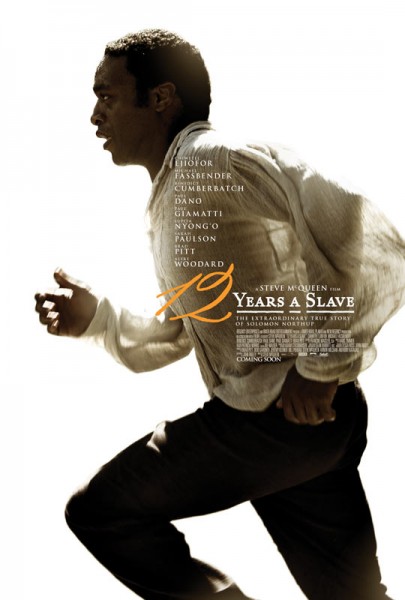
12 Years A Slave is one of the most powerful movies I have ever seen. The cinematic elements compliment the twisted and troubling plot to create a riveting experience for the viewer.  What follows is a theological reflection – for a more formal review of the movie check out Pop Theology by Ryan Parker.  Ryan and I also recorded a podcast that will be released this evening. 12-years-a-slave-poster-405x600

Based on a true story, the plight of Solomon Northup (played by Chiwetel Ejiofor) is a journey from the good life as a free black man in the North to the hellish existence of a slave in the deep South. Visual artist-turned-director Steve McQueen frames the narrative in stunning cinematography and a unique pacing that reflects the twists and turns in the story.

12 Years A Slave is one of those rare movies that impacts you emotionally and challenges the assumptions you carried into the theatre. The journey of the main character sticks with you and causes you to ask questions that you know deep down need to be examined.

I expect that this movie will be one of those rare films that trigger a much-needed cultural conversation. Issues of race and America’s haunting legacy of slavery and native reservation are never far from our national consciousness. Race is often front and center in the nightly news and on the margins of most national conversations.

While we know that something is amiss, we may not know how to approach the topic. We want to have a conversation but we may be unsure about how to proceed.

From the controversies surrounding the election of President Barack Obama to the George Zimmerman trial to the ongoing ‘stop and frisk’ policy debate in the New York City mayoral election, there is an awareness that race matters (to borrow a sentiment from Cornel West’s book title) but a perpetually unsatisfying confusion about how to access the underlying issues.

For Christians, perhaps the best way to address these issues is via the cross of Christ.  In his newest book, The Cross and the Lynching Tree, famed theologian James Cone equates the cross and the lynching tree: “though both are symbols of death, one represents a message of hope and salvation, while the other signifies the negation of that message by white supremacy.”

This is poignant because Solomon Northup first witnesses and then experiences the lynching tree in 12 Years a Slave. The lynching tree is the ultimate weapon of intimidation employed by the same slave owners who claimed the name of Christ, but who preached from the Christian Bible to their slaves in order to justify their cruelties.

For Cone,

“what is at stake is the credibility and promise of the Christian gospel and the hope that we may heal the wounds of racial violence that continue to divide our churches and our society.”

There are plenty of movies that are as fleeting and significant as the popcorn one eats during it. 12 Years A Slave is a different kind of movie. It has substance and is capable of being a touch-point for a significant cultural conversation.

“Until we can see the cross and the lynching tree together, until we can identify Christ with a ‘recrucified’ black body hanging from a lynching tree, there can be no genuine understanding of Christian identity in America, and no deliverance from the brutal legacy of slavery and white supremacy”.  – Cone

If we can talk about a movie like 12 Years A Slave in light of The Cross and the Lynching Tree, we may be able to begin to have a much-needed constructive and reconciling cultural conversation about race in America.

The election of President Obama was not the end of racism in America. As the 50th anniversary of ‘the March on Washington’ showed, we still live in a deeply divided country where race and the legacy of racist policies and attitudes have a lasting effect and are an ever-present reality.

America is also a deeply religious country and Christianity is the dominant religion. The irony, and the opportunity, resides in that fact that the symbol of the cross is so central to Christian imagery. There is great hope there, if only we would take it seriously and see what the Salvadoran martyr Ignacia Ellacurio called “the crucified peoples of history.”.

You can listen to my conversation with Ryan on the Homebrewed Christianity podcast here.

666 Is Not What You Think

A quirky and sad story has emerged out of Kentucky this week.

In one of the strangest cases of purported religious beliefs intersecting with athletic performance, a Kentucky junior cross country runner voluntarily walked away from a chance to qualify for the state meet to avoid running with the bib number “666”, which she said conflicted with her Christian beliefs.

As somebody who competed in state wide competitions back in the day, I can imagine how difficult this situation was for that young lady.  As somebody who learned how to read the Bible that same way, I understand her reluctance to associate with that number. Dark-Clouds

I am a big fan of the Book of Revelation. The last book in the Christian testament is a favorite of mine. I love it!  I love it almost as much as a I hate what the majority of N. Americans have been led to believe it is about.

I thought I would take this opportunity to point out three simple ways that this odd and sad story could have been avoided in Kentucky:

  1. We don’t have 13th floors in buildings and maybe we could just remove this number from rotations – since we know that it rubs the sensitivities of many people the wrong way. That seems like the easiest solution…
  2. The race official could have just given the young woman a new number offender her religious sensibilities. That seems like an easy solution …
  3. Someone could have just explained that the number 666 doesn’t have any actual power … and that even the Bible passage that it comes from tells you that. That seems like the best solution…

See, the actual passage says:

Revelation 13:17-18   New International Version (NIV)

17 so that they could not buy or sell unless they had the mark, which is the name of the beast or the number of its name.

18 This calls for wisdom. Let the person who has insight calculate the number of the beast, for it is the number of a man.[a] That number is 666.

Never-mind that the earliest manuscripts have the number as 616 (a whole other discussion about Roman emperor’s names and the genre called captivity literature within the apocalyptic tradition). What is important here is the world ‘calculate’.

The number – even if it is 666 – isn’t what it seems. It needs to be ‘calculated’, even according the actual verse. It’s right there in the Bible. The number has to be examined – or said another way – you have to do something with the number. It is not the actual number 666.

The clearest explanation is that it is a stand-in for a deeper meaning. Six is the number of humanity (created on the sixth day) and things that are represented in threes (holy, holy, holy Lord God Almighty who was and is and is to come) are complete. The number 666 simply means the completion, or culmination, of the human system.

The number itself is nothing to be afraid of. It is what that number represents that is of great concern. That is why the author of the Book of Revelation wrote in this poetic/symbolic language and imagery. This kind of apocalyptic literature was a political critique of its day – not a predictive work for our day. 

Pointing this out to Christian young people would accomplish at least two things:

  • It would relieve them of this superstitious ‘left-behind’ fear that is created by a misunderstanding of Biblical genres and interpretation.
  • It would serve as a challenge/inspiration to do in our day what the author of Revelation was doing in that day and use their creativity to critique the systems and structures of oppression that we are all caught up in.

The number 666 holds no special power – especially today. What it represents however is very much still in power and needs to be examined and engaged as ‘the Powers That Be’.

Getting Ready For Reza

I am getting very excited about Reza Aslan’s visit to Homebrewed Christianity this September 3rd. In anticipation of this conversation, I am reading his book Zealot and I recently attended a conversation between Reza and Rainn Wilson (who you probably know as Dwight from the Office) that was hosted at Barry Taylor’s church. IMG_2395

All of that aside, I am a little confused at some of the negative press that Reza has been getting in the past weeks. I get that some outlets and camps will be perpetually perturbed, and I don’t worry about them.

What has drawn my attention is the push-back from those I know and follow who have seemed to raise the ire about both Reza and his latest project. 

The complaints seem to come in 3 broad categories.

  • This has all been said before / Why do we need another book about Jesus? 

I am mystified by this line of reasoning. You think that because the Jesus Seminar or Borg or Crossan, Horsely or Karen Armstrong has covered this (at least some of it) in the work that there is nothing new or no new presentation that could be helpful for furthering the conversation?

Clearly – as you can see from the media response – hearing this from a new voice or from a different perspective has hit a nerve of some kind.

  • He is not even in Biblical Scholarship. 

This is an odd criticism. He is a historian and if you look at the courses in his department at the UC Riverside department you will see that it is not your normal creative writing program. Plus, discounting an author because of their field/title within the academy seems like a last-ditch effort at some level.

  • The Islamic thing. 

Don’t even get me started. If only people within a tradition are allowed … so Christians are not allowed to research-write about Jewish history or address anything Islamic? This just doesn’t hold up.

Enough of the negativity. Let me get to 3 things that I like about Reza’s project.

  • I love his approach. 

Instead of starting with the Bible, he starts with history. The Roman world was well documented and allows us to gain an elaborate picture of what life looked like during that period. We even know about their agricultural practices and prices – not to mention military, political, construction, trade, and religious matters.

Then what he does is come back to the Bible to if the details in the Gospel accounts stands up in relation to what we already know. The advantage to doing this is it helps illuminate what aspects of the Gospels were written for theological reasons. I find this a very helpful approach.

  • Not everyone knows about synoptic studies.

I come from an evangelical world where people spend lots of time reading the Bible but may not know that much about the Bible. In fact, every Christmas and Easter I felt like the bad guy for introducing them to the differences between the Synoptic accounts (not to mention the Gospel of John being its own thing).

This is why I love that Reza is getting so much attention and that we will get to chat with him on September 3 … and at my home church of all places!

I am a confessional christian and take great joy in integrating contemporary biblical scholarship as much as possible. The trick is always taking the often critical stance of that scholarship and utilizing it is a constructive confession!

One way I have found success in doing this is to embrace that the Gospel accounts are theological presentations – not newspaper reports – and that in those details that appear to be non-historical the authors/communities that wrote them are trying to tell us something. I want to hear and proclaim that something.

Am I worry that Reza’s work might not be intended for that purpose? No. That is why we are in dialogue with those in different disciples and traditions. We are translators at some level – all of us.

We engage, absorb, adapt, adopt, appropriate and integrate to the best of our ability.

  • Liberals should be even more upset than Conservatives and Evangelicals.

I get why folks from the conservative and evangelical branches of the family might not be too keen on Raza’s project. It gives them whiplash if they have never thought about this stuff before.

The most ridiculous response, however, is when those from the liberal side of the fences take the ‘we have heard all of this stuff before’ stance. Listen to what he is saying:

If the only thing that you knew about Jesus is that he was crucified, you would know everything that you need to. Crucifixion is reserved from state-criminals. Jesus was convicted of sedition.

From there it gets zesty. It turns out that the criminals on either side of Jesus that day were not ‘thieves’ they were bandits. That is how the original greek word should be translated according to Reza.

Jesus was not a good little Jewish boy who unfortunately and surprisingly got tacked up on a cross. He was a political threat with radical stances that were dangerous to the establishment. So when Liberals shrug their shoulders and go back to being ‘Chaplains to the Empire’ and participating in the establishment in ways that are complicit in unjust and oppressive institutions … they have missed what Reza is saying about their ‘savior’. It is an indictment on a brand of christianity is that is so compromised and complicit with the system that it is has lost its prophetic unction and revolutionary subversiveness.

I am excited to read the rest of this book and to continue to get ready for the September 3rd event. I don’t want to miss the opportunity to hear about Jesus from an angle I normally wouldn’t encounter. If people want to quibble about the title of the book as being fantastical and over-the-top in order to gains sales … OK.  But let’s not miss the point of the project over the title.

I would love to hear your thoughts or concerns. 

5 Biggest Pastoral Changes in the Past 5 Decades

I’m preparing to facilitate a conversation with some colleagues in the new year about ministry and honoring tradition. I want to begin – and thus frame – the conversation with the changing culture that we are products of, interact with and attempt to minister to.

It is a different way to approach the topic of tradition, admittedly, but my thought is that we start where we are and then trace threads into the past to uncover their significance. I almost always find it unhelpful to start in the past – say at the Protest Reformation – and then slowly work our way up. It is simply too limiting (in scope) and cumbersome (in process) for the contemporary expectations of ministry.

I have been reading a little Gordon Kaufman. He has me thinking about the ‘nuclear age’ and how deeply that shift, from the end of WWII, has impacted us sociologically, psychologically, and spiritually. I take this as my launching off point.

 So here are my Big 5 – in no particular order. I wanted to throw them out here and see what others who are older, or wiser, or more insightful might add to the list or modify.

 Pervasive Pop Psychology  – My dad tells a story about interviewing retired pastors 30 years ago. He asked them when things seemed to change. All of them, without exception, pointed to the window from 1968-1970. They talked about Woodstock, Vietnam, and Nixon among other things.

Many of them also talked about people’s awareness and pop psychology. I will always remember the story of a son who came home from college to visit his folks on the farm. He tried to talk to his dad about his feelings, motivations, childhood memories, his subconscious, etc.  His dad responded, ‘Son, what the hell are going on about?’ He just had no frame of reference for it. Similar stories were repeated, in differing configurations, over and over by  the ministers.

Pop psychology has permeated every facet of society. From Oprah on daytime TV to Self-Help books – it impacts what people expect from a pastor and what they want from things like premarital counseling.
In my first 10 years of ministry, I often said that I would have more prepared for the actual way I spent my week if I had gotten a degree in psychology  rather than in Bible.

Biblical Scholarship – speaking of the Bible, I am shocked as to how much different those conversations go than they did 20 years ago when I was trained in Apologetics/Evangelism.  Between the Jesus Seminar, the Da Vinci Code and Bart Ehrman popularizing the stuff many pastors knew from seminary but were not allowed to say in the pulpit, it is a very different playing field.

It is an odd split: people often know little of the Bible – because they know so much stuff about the Bible. We can’t assume even a Sunday School understanding or a surface devotional reading. But at the same time, the culture wide awareness of critical Biblical scholarship is shocking. That was not true 50 years ago.

The Internet – The Internet changes everything. From the way people spend time to the way that they shop for a church. Facebook has changed how people connect to each other. Google has changed the way people access information. It is impossible to overstate how big of an impact the Internet has had on Western society. If you are still doing church the way you did 50 years ago – and think that it will have the same effect – you are fooling yourself. You may have the same seed, but the soil itself has changed. It will not grow the same crop or produce the same fruit.

Two little examples: When kids who grew up in your church come home from college and sit in on Sunday school (for example). They will assume that they get to share their opinion. They don’t sit quietly and honor the elders by talking last. They will raise their hands and talk first. Is it that they are over empowered? No. It is that they assume that they get to help shape the discussion and their opinion is valid. They don’t sit quietly and try to get up to speed or catch up on what they have missed.

  • This is the difference between Web 1.0 and Web 2.0.  A church website is 1.0 – the staff puts out the information that it wants people to see. You read it like a newspaper. It is not interactive. Facebook is 2.0 – it creates the environment but does not generate the content. Young people live in 2.0

Doug Paggitt talks of ‘the pastor as Google’. I love this. People don’t go to Google for Google. It is not a destination. It helps people get to their destination. If it does this well, people trust Google and go it often. Pastor used to be like encyclopedias. They were a resource, a destination for information. Now, the pastor’s office is not a destination, the art of pastoring is help people find theirs. If we do that well, they trust us and come back the next time they need direction.

Pastor as encyclopedia is a repository of information. Pastor as Google is a resource that knows how to find the information.

24 Hour News & Christian Media –  Cable news and Christian radio probably have a bigger impact on the people who fill the pews that any pastor can be expected to have in a 30 minute sermon once a week.  There is no other way to say it, the narrative that is being put out on media outlets like Fox News (Clash of Civilizations) or Christian Radio (the 6 Line Narrative) is so pervasive and so monolithic that it can feel as if your parishioners are being pastored far more by their TV and car radio that you will ever be able to.

This is also part of why our country and culture have become so:

  1. polarized
  2. adversarial

I am horrified by this trend more than all the others combined. I think that it hurts the heart of God and I know that it hurts our Christian witness.

Fractured Globalism  and PostModernity – People have great troubles conceptualizing and articulating how fractured, dislocated, overwhelmed and powerless they feel in the global marketplace. Things are not simple now. Things have never been more complex and overwhelming. Look at the food on your table? Do you know where it comes from? Think about your Thanksgiving dinner last week and imagine how many miles and from how many countries those ingredients were trucked to end up on your table. You might be shocked.

Think about your car. Was it all made and assembled at the same plant? Or even in the same country. The automotive industry was fairly straight forward 50 years ago. Now it is an example of inter-national, multi-corporation conglomerates. We have been de-centered, and people feel it. The way we conceptualize ourselves, our connection to family, the way we picture the world working, the universe and thus God. The best book I have read on the subject is “Identity, Culture, and the Postmodern World” by Madan Sarup.

The PostModern Turn – speaking of PostModern, this may be the biggest of the 5 changes. It is funny to me that some christians still want to debate if the category is real just because it can not be succinctly or universally defined (how very modern!)  Look, call it what you want: late-modernity, hyper-modernity, high-modernity, or some other thing – what can not be denied is that something big and deep has shifted. Blame it on the philosophers (Derrida, Lyotard, Foucault, etc) if you want. Make up a new name for it if you must. But please stop pretending that what we are looking at is nothing radical or unexpected. Even the ostrich thinks that it is time to pull your head out of the sand!

One interesting reaction, and this applies to denominations, is the counter-modern responses that want to go back to an imagined past and reclaim a romantic pre-shift relationship between the Christian religion and

  • society
  • the economy
  • science
  • other religions

You can see this in counter-modern responses like Radical Orthodoxy (retreating to the hills of Thomism), Post-Liberal thought, Hyper-Calvinism and the Tea-Party in politics. Even if you pastor with an established denomination (and many don’t) you have to contend with these fractious groups that will impact your congregation.

Those are my 5 Big changes for Pastors over the past 50 years. I would love your thoughts!  What would you take out and what would you add?

Hopefully the Politicizing of Rape is over

This is part of  a series over the next 2 days of posts that were written a month ago. It is interesting to read them now. I will tweak the intros to each, but I fear that they will be ongoing issues until we seriously revisit some of our flimsy thinking behind these subjects.

Yet again a Republican candidate came out with an outlandish comment about rape  that has drawn widespread criticism from those outside the ideological bubble.

  Indiana Congressman Richard Murdoch, during a debate, made the latest in what has become a consistent string of rhetoric for white conservative men – notably on the heels of Senate candidate Todd Akin’s introduction of ‘legitimate’ rape into our vernacular.

Apparently Akin, who is on the House Science Committee, thinks that a women’s body can sense if the conception was because of ‘legitimate’ rape and take of the matter on its own. Richard Murdoch took it a step further, beyond biology, and introduced theology into the mix. The resulting pregnancy would be ‘God’s will’.

 Let me be clear: I get why some people hate abortion. I do. I get it. I was raised watching movies like ‘Silent Scream’ and listening to Carmen rap/sing about our nation’s demise and invitation of God’s wrath.  I get it. That is not what I want to address here.

 My concern is with the consistent and frequent rhetoric that is coming from the conservative right on the issue of rape. 
There are 3 reasons that this hits so close to home for me:

  1. My wife ran the rape crisis hotline and prevention education for the county where we lived in NY. For a decade this was a major part of our life and focus.
  2. As a minister, I have sat with countless women and heard their stories. We have walked a really tough road of recovery and healing with many.
  3. I have traded my narrow/shallow theological adolescence for a more critical-aware- sophisticated-and progressive one.

These three things come together is a very painful way for me when I hear these continuing statements from non-women candidates.

 One starts to ask “What exactly is going on with these guys? What in the world are they thinking?”
If two is a trend and three is a pattern then this is a full-blown school of thought!

Are they just trying to fire-up their base? Are they trying to out religion each other? Are they so fixated on abortion that it blinds them to the absurdity of their other positions?

 Or is it worse than that?  Is it that there view of God is fundamentally determining this stuff?  I’m afraid that this might be true. I think that these might be really good hearted christian men who have bought into a view of God that is so limited and narrow that it necessarily dictates utterances like we have been hearing.

I am suspicious that one’s view of God is like an operating system on a computer and that given enough time, this N. American conservative/fundamentalist program that gets downloaded just inherently comes with some unavoidable glitches and bugs that eventually result in stances like we have been seeing.

Thomas Jay Oord posted the following on Facebook:

 Candidate Richard Mourdock’s statements about rape, pregnancy, and God’s intentions point out a major problem with most theologies. John Calvin summarized the problem well, “There can be no distinction between God’s will and God’s permission! Why say ‘permission’ unless it is because God so wills?” The Mourdock episode suggests that those who (rightfully) object to his statements implicitly support a view of divine power closer to process theology’s view, even though they may not realize it.

 I’m not trying to pick a fight.  I am not trying to be partisan. I am simply heartbroken about these hurtful things that have consistently come to the surface during this election cycle.

Maybe a new guideline should be put in place: as a candidate you are not allowed to talk about rape unless you have walked a mile in those shoes.

At a minimum, I would like to see the name of God disconnected from this subject in political arenas. 

Create a free website or blog at WordPress.com.

Up ↑