Search

Bo Sanders: Public Theology

updating & innovating for today

Category

Bible

Praying Against Big Storms

This begins a series over the next 2 days that were written a month ago. It is interesting to read them now. I will tweak the intros to each, but I fear that they will be ongoing issues until we seriously revisit some of our flimsy thinking behind these subjects.

Hurricane Sandy was only one day in to its battering of the East and the religious weighed in.

The first thing that caught my attention was a fake picture of ‘the storm’ over NYC

I was introduced to this photo and I was immediately  suspicious of both the sunshine in the foreground and the speed boat that looks oddly mis-sized.

I thought it humorous until that afternoon when I logged onto Facebook and notices that it had already been shared by hundreds of  people. What really caught my attention, though, was a response in the form of a prayer.

My friend had stated in the captions to the photo: “This is an amazing shot of New York today with the Frankenstorm bearing down. Nature is so powerful, yet so beautiful.”   I thought “someone should tell him that it’s a fake”.  Before I could, someone else had offered this response:

Father, all the elements of nature obey your command. Calm the storms and hurricanes that threaten us and turn our fear of your power into praise of your goodness. Grant this through our Lord Jesus Christ, Your Son, who lives and reigns with you and the Holy Spirit, one God, forever and ever. Amen.

I was stunned. There are so many elements of this ‘prayer’ that concern me. I was filled with questions. Perhaps the biggest one was : Is there a god who hears these kind of prayers? 

This past Sunday at the Loft LA I had preached a sermon called ‘Why Pray?’ about this exact type of thing … so my attention was immediately piqued.

On a side note – I especially appreciated that just hours later this fake meme showed up in the twitter-verse.

I am deeply concerned about people who think that their prayers can command whole weather patterns. This concern is primarily at two levels.

  • The first is that I know so many of them.
  • The second is that a wooden reading of the Bible can lead one to think that this is acceptable and permissible.

This kind of stuff really pulls at me as an emerging evangelical-charismatic.  I was prepared to let the whole thing go when this showed up on the wire:

[I had written multiple times about John Piper’s stupid storm theology and simple Bible reading]

A Christian religious leader has already claimed that Hurricane Sandy is further proof that “God is systematically destroying America” as political judgment for the “homosexual agenda.” John McTernan previously made similar allusions about Hurricanes Katrina (2005) and Isaac (2012), which he reiterated in his urgent call to prayer posted Sunday evening (via Gay Star News):

Just last August, Hurricane Isaac hit New Orleans seven years later, on the exact day of Hurricane Katrina. Both hit during the week of the homosexual event called Southern Decadence in New Orleans!

McTernan believes that it is noteworthy that Hurricane Sandy is hitting 21 years after the “Perfect Storm,” because 3 is a “significant number with God”:

Twenty-one years breaks down to 7 x 3, which is a significant number with God. Three is perfection as the Godhead is three in one while seven is perfection.

It appears that God gave America 21 years to repent of interfering with His prophetic plan for Israel; however, it has gotten worse under all the presidents and especially Obama. Obama is 100 percent behind the Muslim Brotherhood which has vowed to destroy Israel and take Jerusalem. Both candidates are pro-homosexual and are behind the homosexual agenda. America is under political judgment and the church does not know it!

Religious spokespeople have frequently tried to draw bizarre connections between natural disasters and the LGBT community. Last year, the American Family Association’s Buster Wilson similarly claimed that Hurricane Isaac was punishment for the Southern Decadence LGBT festival. Rick Joyner had the same to say about Hurricane Katrina, claiming that “[God]‘s not gonna put up with perversion anymore.” Pat Robertson has long believed that acceptance of homosexuality could result in hurricanes, earthquakes, tornadoes, terrorist bombs, and “possibly a meteor.”

It’s likely that McTernan will not be the only religious figure to draw such allusions from this devastating storm.

One anti-gay (former lesbian) activist actually targeted  the state of Vermont as a litmus test of who her god was mad at. I loved the first comment on the post:

Considering that Lower Manhattan is troublingly at risk, I say there’s a good chance it’s Jesus cleaning up Wall Street – a modern-day version of when He cleared the moneychangers out of the Temple…

As funny as that last comment may be, I am not amused – because it concedes the rules of the game to the antiquated notions of centuries past and abdicates the metaphysical realities of 21st century life to the … let’s just say – the conceptions of bygone eras.

  • The picture was a fake.
  • It triggered real prayers.
  • I respect those intentions.
  • I questions the ‘god’ who they were offered to.
  • I am flustered that in the midst of suffering, those who claim Christ offer blame and not compassion.
  • They justify that stance by saying ‘if you only did what we said was right’.
  • It signals a pattern of christian response to tragedy.

I am concerned that the fake-ness of the pictures and posts we respond to correspond to our notion of reality and our conception of how the world works … and thus how our prayers are effective.
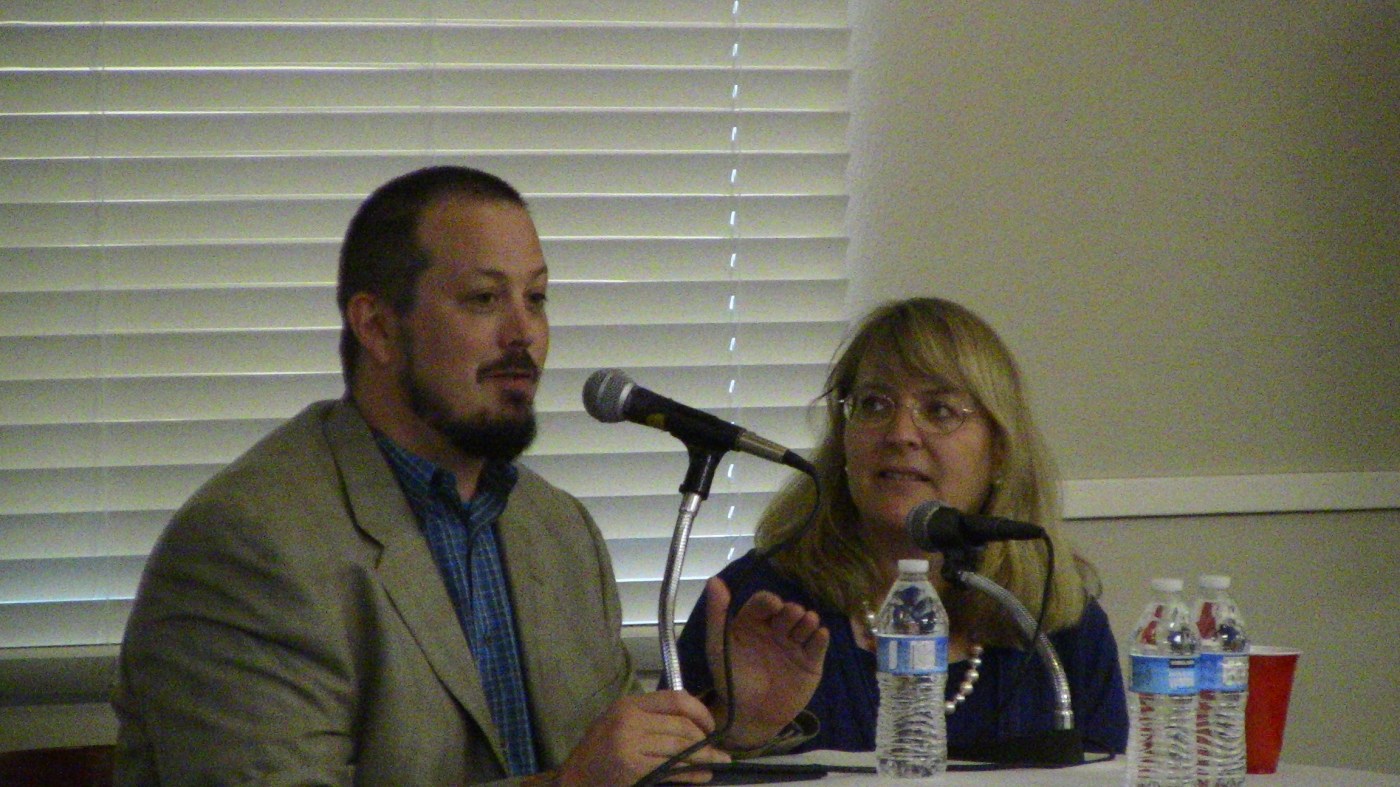
 

Diana Butler Bass and those non-human animals

Earlier this month I got to sit down with Diana Butler Bass and ask her about everything from her new book’s title Christianity After Religion to the Methodist tradition and why Evangelical young people are 30 years behind.

It was a blast! [you can hear the audio here]

At the end of the hour, the last question was put forward by Darcy who asked about something Diana had alluded to in the Methodist question. Butler Bass had said that the early Methodist had historically A) ministered to the fringes and B) gone to the frontiers.

It was the fringes and the frontiers that Darcy wanted to know about. Only, she was not asking about the past. She wanted to know about the present.

 Who are on the fringes today and where is the frontier for us?

This is possibly the best question I have heard asked at one of our live events. 

Diana didn’t flinch. She outlined three such scenarios that would qualify:

The first was in the realm of sexuality.
The second was in the realm of pluralism.
The third dealt with our environment.

  •  In sexuality she articulated issues related to the transgendered community. This did not surprise me. In the LGBT formulation, T (transgendered) is the the one the raises eyebrows. Now, because I am came to this conversation through a friend who was doing Queer theology, I had initially taken the LGBTQ as a 5-part alliance. I did not realize how difficult the T can be (not to mention the Q) until I starting asking question and listening to stories. I quickly became aware of the complexities and complications involved.

In the two weeks since Diana’s answer I have had several conversation about her take and I have realized how much conversation has yet to be had. May God give us grace as we learn from each other.

  •  In religion she mentioned learning from Hindu friends. As a student at Claremont School of Theology I am very invested in and more than on board with the idea of inter-religious learning. Yesterday was my day off and so I (as Christian) headed to a Jewish bakery to  sit and listen to an audio recording I had about diversity within Islam.

I am always shocked at how much I don’t know and how much beauty there is within each tradition. May God give us grace as we learn from each other.

  •  In issues of environment and ecology, I like to think of myself as up to speed. This is a subject I have really investigated and as someone mentored by Randy Woodley (his new book Shalom and the Kingdom of Creation was just released and he will be on the podcast next week) I was tracking with her when she talked about non-human animals [I often allude to Nipples & Belly Buttons in this regard].

It should not have been surprising to me that with the release of the video of our conversation that she came under some suspicion by a group called IRB  (Institute on Religion and Democracy) as well as others for  her views on non-human animals.

From the blog Juicy Ecumenism here is the end of Diana’s answer and their commentary:

“Non-human animals and their experience of our environment of the divine are a place that human animals need to listen in order to create more full understanding of God’s creation. […] They don’t have voices like humans do, but isn’t that part of my prejudice?”

I don’t like to bring up the slippery slope, but the mud’s looking pretty slick from here.

What IS surprising to me is that – of her three answers about the fringes and frontiers – that seemed to be the least inflammatory of the three answers!

In my humble opinion, her pluralism answer and her sexuality answer were FAR more daring – and challenging! The only thing that I can figure is that some Christians have so bought into the Cartesian dualism regarding humans that both Transgendered and Hindu folks are completely off their radar screen … but don’t you DARE say what you said about listening to non-human animals.

I was prepared to defend Diana Butler Bass after our show – she said some daring things –  I just didn’t think that it would be on the issue of creation-care over sexuality and pluralism.

This contemporary religious environment will never cease to surprise me.

God Never Changes … or does She?

I got an email from a friend asking me:

“ … there’s just one thing that I’m still not sure about: the idea that God changes over time. And the reason this bugs me is because, to me, that means we can never know who/what God is. How do we know that God really is love? What if God really use to be as violent as He/She/It was back in the Old Testament?”

I thought it would be good to post part of my response here and compare notes (theology, after all, is dialogical).

 There are 3 things that we need to flesh out (pun intended) about this question:

1. While God may not change, how humans view and speak of that God evolves. There is little doubt that over the centuries how we conceptualize and even construct our language about God (or Gods) has changed, adapted, morphed, absorbed and modified.  There is no reason to shy away from that. It is a healthy response to growing awareness and – I will even say – progressing revelation.

God is at work in our midst and God has also given us Holy Spirit to lead us and guide us. We say that God is infinite, but as I have heard it said “then no matter how much we know about God – there is infinitely more to know.”

The only objection to this seem to be a ‘you think that your better than them?’ defense of the ancients. Seriously – that is the only real defense I hear of conserving antiquated notions of God. Don’t you dare going moving stuff and changing what they set down! 

That is silly. We must acknowledge as Merold Westphal told us in his visit to the podcast that all our knowledge is situated or what we call perspectival. This is where Elizabeth Johnson’s book “She Who Is” becomes so valuable. I wrote about this in ‘She Who Is Not’ and ‘Horse Gods’.

2. Many groups and thinkers would challenge the notion that God doesn’t change. As Keith Ward points out in God: a guide for the perplexed 

 “ it is important the see how different the classical view is from the popular view. Whatever the Trinity is, it cannot consist of three distinct ‘parts’ in God, who has no parts. Whatever is meant by ‘God becoming man’ is cannot mean that God changes by taking on human flesh. Whatever is meant by the Holy Spirit working to sanctify the hearts of man and women, it cannot mean that God is actually changing by acting like a finite being in history. All statements about God changing and acting, wether they are in the Bible of not, must be metaphors, All changes are in finite things, and not in God, who is changeless.”

Ya see – the old Platonic conception of changeless ideals means that there could not have really been an incarnation. The stories in the Old Testament about God ‘changing his mind’ must be anthropomorphism. You run into to real problems really quick if you say that God never changes.

Now, having said that – we can say, as a matter of faith, that the character and nature of God never changes. In fact, I would go as far as to say that when we say that God never changes, what we are commenting on is God’s loving nature. You want to know why I can say that so confidently as a Christian …. it’s because I believe that the highest  revelation that we have of God in this world is in Jesus.

 3. Process thinkers have an especially helpful take on this.  Built into a Process theology is a dipolar nature of God.  They distinguish between the Primordial nature or God and the Consequential Nature  (some get even more advanced and add a Superjective nature … but that is for another time.)   The Primordial nature sets out all the possibilities  – the Consequential nature is the perfection of the divine experience. Therefor the Primordial nature of God, what God desires, is preserved and can be said to ‘never change’ while God is fully participatory and even impacted by what happens.

 What are your thoughts?  Is there anything I could add to make this stronger? 

I believe in God – but not that one.

I have been burning through my Summer reading list and I seem to have stumbled onto a rich vein of form! The odd thing is that they are all books with ‘God’ in the title. There are 5 (out of about 20) but they seem to have all ended up in the middle of stack. Here are the 5 I am chewing on right now:

The PostModern God edited by Graham Ward

God & Religion in the PostModern World by David Ray Griffin

God : a guide for the perplexed by Keith Ward

The Named God and the Question of Being by Stanley J. Grenz

God Is Not One by Stephen Prothero

What is so fascinating to me in all of this is how widely dispersed use of the word ‘God’ can be. You can mean a whole bunch of different things when you say ‘God’ and only a fool would assume to know what another means when they invoke that title/name. [I touched on this a while ago in ‘I’m not sure most Christians know that‘]

It made me think back to a section in John Cobb’s introductory book when he clearly outlined what he didn’t mean when he said ‘God’.  What follows is a verbatim reproduction of that section. What I would love to hear is what you don’t mean when you say ‘God’. This will be a fun little experiment in clarification done negativa,. 

 1. God as Cosmic Moralist. At its worst this notion takes the form of the image of God as divine lawgiver and judge, who has proclaimed an arbitrary set of moral rules, who keeps records of offenses, and who will punish offenders. In its more enlightened versions, the suggestion is retained that God’s most fundamental concern is the development of moral attitudes. This makes primary for God what is secondary for humane people, and limits the scope of intrinsic importance to human beings as the only beings capable of moral attitudes. Process theology denies the existence of this God.

2. God as the Unchanging and Passionless Absolute. This con­cept derives from the Greeks, who maintained that “perfection” entailed complete “immutability,” or lack of change. The notion of “impassibility” stressed that deity must be completely unaf­fected by any other reality and must lack all passion or emotional response. The notion that deity is the “Absolute” has meant that God is not really related to the world. The world is really related to God, in that the relation to God is constitutive of the world— an adequate description of the world requires reference to its de­pendence on God—but even the fact that there is a world is not constitutive of the reality of God. God is wholly independent of the world: the God-world relation is purely external to God. These three terms—unchangeable, passionless, and absolute—finally say the same thing, that the world contributes nothing to God, and that God’s influence upon the world is in no way conditioned by divine responsiveness to unforeseen, self-determining activities of us worldly beings. Process theology denies the existence of this God.

3. God as Controlling Power. This notion suggests that God determines every detail of the world. When a loved one dies prema­ turely, the question “Why?” is often asked instinctively, meaning “Why did God choose to take this life at this time?” Also, when humanly destructive natural events such as hurricanes occur, legal jargon speaks of “acts of God.” On the positive side, a woman may thank God for the rescue of her husband from a collapsed coal mine, while the husbands of a dozen other women are lost. But what kind of a God would this be who spares one while allowing the others to perish? Process theology denies the existence of this God.
4. God as Sanctioner of the Status Quo. This connotation charac­terizes a strong tendency in all religions. It is supported by the three previous notions. The notion of God as Cosmic Moralist has suggested that God is primarily interested in order. The notion of God as Unchangeable Absolute has suggested God’s establishment of an unchangeable order for the world. And the notion of God as Controlling Power has suggested that the present order exists be­ cause God wills its existence. In that case, to be obedient to God is to preserve the status quo. Process theology denies the existence of this God.

5. God as Male. The liberation movement among women has made us painfully aware how deeply our images of deity have been sexually one-sided. Not only have we regarded all three “persons” of the Trinity as male, but the tradition has reinforced these images with theological doctrines such as those noted above. God is totally active, controlling, and independent, and wholly lacking in receptiveness and responsiveness. Indeed, God seems to be the archetype of the dominant, inflexible, unemotional, completely independent (read “strong”) male. Process theology denies the existence of this God.

I find it so helpful – once in a while – to see something stated in the negative so that I have a clear contrast in my mind.

Who Believes in Miracles? I sure do!

I know at least three people who believe in miracles: Marjorie Suchocki, Bruce Epperly and I do. I have written several times about holding onto the miraculous (as well asdealing with demons and skirting ‘Satan’)  – both as Bible reading Christians and as ministers in the 21st century – even after we have excused ourselves from the super-natural worldview of centuries past. Bruce Epperly looks to Marjorei Suchoki for some helpful language about prayer and the nature of God’s power. (Suchoki is perhaps most famous for many books including one on prayer: In God’s Presence and eschatology: The End of Evil).

What follows is a summary of a section from Epperly’s book Process for the Perplexed p. 58-60. I found it so helpful and so encouraging that I wanted to put it up here (reformatted as a blog of course). All the words are Epperly’s or Suchocki’s except those in italics.

Suchocki describes the intimacy of God and world necessary to the faithful practice of prayer.

If God’s power works through presence, and if God’s presence is an ‘omnipresence’, then one could say both that there is no center to the universe and that everything in the universe is center to all else … we can say that all things are center, for if all things are in the presence of God, then it is God who centers them. The earth, then, is indeed privileged and we do have a privileged history, for all are presenced and centered in God. Prayer in such a universe makes eminent sense – for God is always present.

From this perspective, God is, as a mystic once said, “the circle whose center is everywhere and whose circumference is nowhere.”

This allows us to affirm the wisdom of my mother’s kitchen magnet motto, “prayer changes things”. Suchocki understands prayer as “our oppeness, to the God who pervades the Universe and therefore ourselves, and therefore that prayer is also God’s openess to us. In such a case, prayer is not only for our sakes but also for God’s sake.” In a relational universe, prayer is essential to God’s work in our world and “the effectiveness of God’s work with the world.”

Prayer is intimately connected with God’s vision for each moment of our lives. God’s initial aim, or vision for our lives moment by moment, is grounded in God’s awareness of our joys, sorrows, needs, and loves.

God knows us better than we know ourselves and seeks to provide possibilities that join our lives with the lives of others in a way that bring beaty and healing to the world. God inspires us to prayer for others as well as to act on their behalf. Surely this is an insightful way to interpret Romans 8:26-28

Likewise the Spirit helps us in our weakness; for we do not know how to pray as we ought, but that very Spirit intercedes with sighs too deep for words. And gone who searches the heart, knows what is the mind of the Spirit, because the Spirit intercedes for the saints according to the will of God.

God moves within our lives, inviting us to reflect God’s vision of Shalom and healing in our relationship with others, whether a child diagnosed with cancer, the survivors of the Haiti earthquake, or a friend who is in the process of discerning her future vocation.

As Suchocki affirms, “prayer is God’s invitation to us to be willing partners integrate dance that brings a world into being that reflects something of God’s character.” Accordingly, our prayers make a difference in terms of the intensity and effectiveness of God’s healing and reconciling work in the world.

While the intensity and form of divine guidance and activity in the present moment our lives shaped–and either enhanced or limited–by our past history, decisions, values, and the quality of spiritual devotion, our attentiveness to God in the present opens us to new costs bursts of spiritual energy.

Further, in an interdependent universe our prayers are an example of what quantum physicists describe as non-local causation: they create a positive field of energy around those for whom we pray, enabling them to be more open to God in a ruling God to be more creative and effective in shaping their life situation.

Process encourages people to be realistic, yet hopeful, in prayer for extraordinary life changes. Indeed, spiritual realism embraces both the concrete and the possible, regular causality and naturalistic leaps of energy. As Suchocki notes, “prayer creates a channel in the world through which God can unleash God’s will towards well-being.” Because each moment is unique, “miraculous” releases of energy that change ourselves can occur; but there are no guarantees, except God’s loving presence, in every life situation.

We see  the occurrence of events described as “miraculous” not as violations of the laws of nature, but of intensification’s of God’s healing energy as a result of the interplay of God’s visionary power and energy, our prayers, and the conditions of those for whom you pray.

Romans 8:28 can be translated this way “ in all things God works for good for those who love God” as a representative of the holistic, relational, non-coercive, and multifactorial nature of divine activity.

I find this greatly encouraging and inspiring. We get to do this wonderful thing of partnering in prayer while no longer being required to subscribe to an antiquated metaphysic or pre-modern worldview.

Let us pray.

Neither Non-Violent nor a Pacifist be

In response to  J.R. Daniel Kirk’s blog post about violence and the gospel, I thought it would be good to put all my cards on the table.

Kirk is one of HomeBrewed’s  favorite New Testament scholars and one of our favorite bloggers. He is a masterful HomeBrewer and an Academic of renown. This week he had the opportunity to catch up on his podcasts and  our TNT was one of his selected listens.

He had concerns about some of the content and in his post he said:

“What about those passages that make Jesus himself look more “violent” than selections in the Sermon might? E.g., what about the Jesus of the narrow way and crashing house from the end of the Sermon? But then there is also the question of what comes before and what comes after. There is judgment. In the OT there is war and destruction. In Revelation there is a lake of fire.”

I thought it would be good to put forward my thoughts 24 hours ahead of our recording to see what the deacons had to say.

I am not a pacifist. That label has come to mean ‘passive’ and my reading of the gospel does not allow for one to be passive in their engagement in the world.

I am not into non-violence. While I appreciate that long and astounding history of those who promote non-violence, I do not subscribe to the theory of non-violence. As a post-Colonial scholar I reserve the right of oppressed minorities to both defend themselves and to aggressively pursue their own liberation and freedom.

I do not believe that God is violent. I am resigned to the fact that humans are violent and that humans project the validation for their violence on their deity – whoever who he or she might be. Jesus shows us a different way.

So there are three ideas presented in the negative. Here are my three convictions in the positive.

  • I am under the impression that Jesus is the highest revelation of God. As a Christian, I hold that God was uniquely present in Jesus and that Jesus shows us what God is really like (image of the invisible God and all that).
  • I am a radical peace maker. I take the sermon on the mount very seriously and I am under the impression that we should be aggressive in our pursuit of peace, reconciliation and restoration.
  • I am convicted that violence begets more violence. While I am not a pacifist nor into non-violence (per se) I am deeply convinced that the problem with violence is that it begets more violence. This is why contemporary debates about war and American foreign policy are nothing more than drivel and posturing. Violence begets more violence. [ I don’t have enough time to go into how both Al Qaeda and Osama Bin Laden are products of US foreign creation}

With that in mind, I would like to acknowledge an issue raised by Dr. Kirk’s.

Jesus flipped over tables. To quote the late Chris Farley “well ladi freakin’ da!” So what? Is that what you want to do? Flip over tables at church? Well go ahead – with my blessing! But let’s be honest – Jesus turning over tables opens the door for you to justify invading foreign counties and dropping bombs on civilians who might be enemy-combatants. Seems like a leap eh? Listen to christian radio, christian TV, or Fox News. Apparently it is not that big of a jump. If all you wanted to do (with God’s blessing) is to flip over tables at church – this would be a non-issue.

Yes, the story of Joshua is a violent one. Tomorrow on TNT we will address the issue that God told the Israelites to invade Canaan and kill all the inhabitants – as well as that that damned Lake of Fire in the New Testament.

I’m looking forward to having that conversation.

______

On a different note …

I have been having the conversation for almost 20 years. It almost always goes the exact same way.

Me: Jesus told us to love one another and to turn the other cheek. He also modeled it when he was ‘led like a lamb to slaughter’.

Guy: Are you telling my that if somebody broke into your house you would just let him rape your wife?

(I’m not kidding, that it almost always the first objection)

Me: No. I would not stand by and let someone rape my wife.

Guy: I thought you were a pacifist.

Me: That doesn’t mean being passive. There are many ways to resist, restrain and deter that kind of violence.

Guy: I would kill him. I would shoot him in the face.

Me: … I think there are alternatives beside killing.

Guy: You are lying if you say that you would not kill him too. And if the Americans didn’t get involved in WWII then we would all be speaking German right now!

(Hitler is almost always the second objection)

___

In the end, I am not a pacifist because it is an ideology that one subscribes to that takes options off the table. I am not into non-violence because it limits the response of oppressed communities. I also am not a big fan of defining yourself in the negative.

What I am into into is aggressive peacemaking. I am against preemptive war and I believe that violence begets more violence.

I would love your thoughts as we prepare for tomorrow’s show.
The debate on the initial post was hot and heavy – so don’t be shy about not liking what I am proposing.

Preaching on Satan, demons, water walking and feeding 5,000

Two weeks ago I posted a progressive take on demons and explaining evil. Last week a guy named Nithin took up a fantastic response complete with critique. I answered him and then Deacon Dan Hague voiced some concerns. Here is my response to both them (including the quick recap).

Nithin said “to simply make the devil a poetic device does not take the text seriously is may impose a western, rationalistic values on a text that does not have that.”

Two things:

  1. my approach is not a western rationalistic but an literary-textual question. I am asking first not “how does the universe really work” but “what is going on in that text” or how does it function.
  2. Instead of imposing something ON the text I am instead trying to bring something OUT of the text.

My Hermeneutic Suggestion: when preaching, we take what we usually call the application and we bring it up into our interpretation. Think about the two examples of ‘feeding the 5,000’ and ‘Jesus walking on water’.  The point is never A) you can feed 5000 people with 3 loaves, or B) you can walk on water. Our application is never literal. It is practical-poetic : something like “trust god” or “take risks”. I am saying (as a progressive) to simply take that application and move it up in the process and make it your interpretation. When Jesus calms the storm, the point is to hear the word of Christ to “be not afraid” – not that we can boss storms around.
When we come to the temptation of Christ and the showdown with the devil …. think about what is going on in that text – what is its function? It is to refine or clarify Jesus’ ministry at the beginning. Its not ‘if’ he is the messiah, but to realize that it is ‘since’ he is … what kind will he be?
The devil was with Jesus in the desert. I honor what the text says. Its just that I don’t think there is a cosmic bad guy overlord called ‘the Devil’ who is a being in charge of evil. Another way to say it is : The devil is not a creature. But there is a devil.

There seem to be two major objections to my suggestion: 

  1. It is said that those who wrote these texts (and the Creeds … I found out) surely really meant them and believe them to be taken the way that they are taken today.
  2. If they are meant to be taken this way, then we had better not stray or we will lose the power of the texts and then we will have nothing.

Now the second one I call the Christmas Problem. When people first learn that there is no Santa Clause and that Jesus wasn’t born on December 25th – it would be like saying “then Christmas is meaningless”. No, Christmas is full of meaning! Just not the meaning that you had originally ascribed to it. People who read Genesis 1-3 literally are a good case study of reading a text only one way.

To the first objection, I have stated elsewhere my suspicion that we may not mean the same thing when we say ‘devil’ or ‘demon’ as those of previous centuries or those in other cultures who speak other languages. A post-enlightenment exacting use of language is not the same as a pre-modern (or non-modern) narrative expressive use of language.

Once we stop being afraid of what we lose – here is what we gain:
When we preach on the feeding of the 5,000 (men, since women didn’t count) we never say ‘So we don’t need to buy bread any more’. We never show up for Communion Sunday and ask “who brought some crumbs – we are going to multiply it”. That is never the application. We never set up a wedding dinner and just start with a couple of items and trust for the rest.
So why not just move our application ‘to trust God’ up into our interpretation?

The application of Jesus walking on water is never to fill the baptismal and ‘try it out’. We know that is not the point of the text! It is ‘take risks’ or to ‘trust God’. So why not just make that our interpretation? It is not about the physics of water walking!

When it comes to Jesus being tempted in the desert, why not focus on the economic, political and religious aspects of the story – and the function that they will play in the remainder of the gospel text?

It seems to me that we have little to lose and a great deal to gain by letting go of the wooden literal reading and trying to prop up a pre-modern metaphysic.

I have one favor to ask: please don’t bring up Bultmann. I am not demythologizing and unlike Marcus Borg I do believe in miracles. I am trying to point out the significance of the literary nature of the text and how it functions in our faith communities.

In summary –

  • My concern is the literary nature of the text
  • and how it functions in our faith communities

My suggestion-

  • move our application up into our interpretation
  • recognize that without Santa Clause or the historic literalness of December 25th, Christmas has lots of meaning.

How does that sit with you? Does that work for you?  Too radical or adventurous?  Let me know.  -Bo 

Savage Monkeys Won’t Save the Planet – why would they?

Two disclaimers up front:

  1. I originally posted this at HBC and it was not received so well. Which is fine, and I wrote a follow up that you can read [here] which is much more hopeful. 
  2. I do not expect anyone to like this or agree with this. I am simply put it out there for conversation.

The Summer philosophy group that I am a part of is reading The Faith of the Faithless by Simon Critchley. It is an wild, tour-de-force type of work that spans genres and categories. This past week it broached something that touched a nerve for me.

 The most extreme expression of human arrogance… is the idea that human beings can save the planet from environmental destruction. Because they are killer apes, that is, by virtue of a naturalized version of original sin that tends them towards wickedness and violence, human beings cannot redeem their environment.

Furthermore, the earth doesn’t need saving… The earth is suffering from disseminated primatemaia, a plague of people. Homo rapiens is ravaging the planet like a filthy pest that has infested a dilapidated but once beautiful mansion. In 1600 the human population was about half a billion. In the 1990’s it increased by the same amount.
This plague cannot be solved by the very species who are the efficient cause of the problem … When the earth is done with humans, it will recover and human civilization will be forgotten. Life will on on, but without us. Global warming is simply one of many fevers that the earth has suffered during its history. It will recover, but we won’t because we can’t.  – p. 110

This reminded me something that an old podcast interview with Michael Dowd first awakened me to. Dowd is the author of Thank God for Evolution and he has an incredible knack for articulating his unique perspective.

Dowd talks about the power of participating in a narrative. His assertion is that we are participating in the wrong narrative! If we think that humans are the crown achievement of a project that began about 10,000 years ago and was finished in a 6 day period … a project that humans were give dominion over – then we live one way. [often this dominion is mis-interpreted as domination and has resulted in everything from unchecked capitalism to environmental policies such as “drill baby drill” for instance

Dowd has this theory that humans who living under this narrative are participating in the earth as a cancer does in the body. Cancer is a biological part of the body. It is made up of the same matter that comprise the body that hosts it. But cancer is under the impression that the body that hosts it is a rival to be overcome and defeated. The cancer cells rally together to take over the body. They eventually multiply and expand to the point they endanger the very body that not only gave rise to it but that sustains it.

Ever since the Enlightenment and Descartes’ dualism, a certain set of the human population has believed that while humans are biologically mammals that they are not animals. Continuing on that while we originally were apart of the earth, we are above the earth. We are different than the rest of creation. While we came from the earth – from dust we came – we are not dependent on the earth for our very life. [I touched on this at my own blog in Nipples and Bellybuttons and the Imago dei ]

Because christian humans live by the wrong narrative, we behave as a cancer on the planet. In increasing size and exponential growth we consume at greater and greater levels, consuming the very body that gives host to our existence. At some point, the cancer ends up compromising the functions (organs) that give life to the organism in which it lives. Death ensues. We are not worried about because we think Jesus is coming back soon – it is the end times after all (a self-fulfilling prophecy if ever I saw one). *

Humans that are not willing to engage the ideas of emergence and evolution are living by a cancerous narrative that will extinguish the very host that gives it life. Humans that have a short view of history and a high view of their place in the created order behave in ways that are inherently cancerous to the ecosystems that support and sustain them.

 If we don’t wake up and acknowledge that we have been living by a false narrative we will eventually (sooner or later) overtake the host body’s capacity to renew itself and continue to survive and prosper. This 6 day – 10,000 year old narrative is resulting in a cancerous attitude that is killing the planet.

  • If Critchley is right, then we as killer apes can not save the planet – in fact we wouldn’t even care.
  • If Dowd is correct, we wouldn’t even try because we thought we didn’t need to. We would be living by a different narrative.

* The book of Revelation is a political commentary on Roman politics of the first three centuries written in the form of apocalyptic literature. 

3 things many Christians may not know (but should)

originally published as “I’m not sure most Christians know that

I was reading a fascinating article by Terry Eagelton where he was reviewing Dawkin’s book (the God Delusion) specifically and refuting the new atheist en mass. He took them to task for not knowing much about theology – which, in his mind, is a major problem if one is writing a book about God. He takes an interesting tone, nearly mocking at points, regarding their lack of sophistication and wherewithal in theological understanding and categorization.

Here is a sample (which, by the way, it reads MUCH better in a John Oliver delivery style):

Dawkins speaks scoffingly of a personal God, as though it were entirely obvious exactly what this might mean. He seems to imagine God, if not exactly with a white beard, then at least as some kind of chap, however supersized. He asks how this chap can speak to billions of people simultaneously, which is rather like wondering why, if Tony Blair is an octopus, he has only two arms. For Judeo-Christianity, God is not a person in the sense that Al Gore arguably is. Nor is he a principle, an entity, or ‘existent’: in one sense of that word it would be perfectly coherent for religious types to claim that God does not in fact exist. He is, rather, the condition of possibility of any entity whatsoever, including ourselves. He is the answer to why there is something rather than nothing. God and the universe do not add up to two, any more than my envy and my left foot constitute a pair of objects.

I was struck by his attitude and I caught myself thinking “I’m not sure that most Christians know that.” He kind of treats these antagonists with a dismissive “duh” but I am suspicious that the atheist aren’t the only one who aren’t aware of the categorical mistake of calling God a ‘person’ just because knowledge of God can be ‘personal’.

There are two significant implications of this:

  • the new atheists (Hitchens, Dawkins, Harris & Dennet) have a stinging criticism that continues to impact those on the margin of the faith and those wrestling with seasonal Christian commitment. Neither the Atheists nor those they seduce know that we don’t mean what they say we mean.
  • Many Christians continue to repeat the Creeds and Catechisms in rote repetition without comprehending the way in which language is being utilized. This concerns me as I continue to wrestle with (and against) the work of Lindbeck, Hauerwaus and MacIntyre.

Here are 3 things that I have learned over the past 5 years that I’m not sure most Christians know. In fact, as I have transitioned from an evangelist-apologist to a theologian, I’ve had the opportunity to converse with and introduce people to these ideas and ,for almost everyone, it is the first time they are hearing the distinction.

God is a Person: When we say that God is a ‘person’ we are not saying that God is like a big you (or me) in the sky. God is not a person in the way that we are a person. You almost have to think about it as a placeholder. It’s a verbal placeholder because whatever God is not exactly a person.
This is where accusations personification and anthropomorphism come in. Folk and Pop brands of christianity are very vulnerable to this charge.

God in 3 Persons: It gets really confusing when we say that there is ONE god but 3 Persons. Gregory of Nyssa, in the 4th century, said:

We can grasp this by reference to a single instance. From him, I say, who is the source of gifts, all things that share in this grace have obtained life. When, then, we inquire whence this good gift came to us, we find through the guidance of the Scriptures that it was through the Father, the Son, and the Holy Spirit. But though we take it for granted that there are three persons and names, we do not imagine that three different lives are granted us-one from each of them.

Most explanations I hear about how ‘God is One’ but can also be ‘3 persons’ reek of modalism. I was being too kind: they are modalism (one God in 3 modes). But who can blame them? Elizabeth Johnson is right when she says that it is nearly unavoidable when you start with One – then go to three (all of which are boys) … and claim that it is monotheism and not polytheism. It’s confusing as hell! She, instead, starts with a perichoretic reality and says we do the best we can to express it well.

Jesus is fully God and fully human: We don’t have space to get into  the ‘substance’ confusion about how Jesus could be fully two different things and how 98% of the explanations I have heard make it impossible that there actually was an incarnation. We still have to talk about the difference of God as a ‘being’ and God as being. Then we can deal with the nature of language and gender pronouns for God and all sorts of other stuff.

I also am not blaming people for the explanations they have been handed on these issues – they can be difficult to comprehend and even tougher to defend.I am suspicious that many of our former explanations are incomprehensible and so we simply say they are ‘mystery’ when in reality they are untenable.

What I am concerned about is that theologians not take on a ‘duh’ attitude toward those who are unfamiliar with the categorization employed within the theological endeavor. When our language is a) specific and b) different than the common use, it is we who are obligated to bridge the gap if we want others to understand what we are saying.

Blog at WordPress.com.

Up ↑