Search

Bo Sanders: Public Theology

updating & innovating for today

Category

Church History

The Pros and Cons of Advent

Last Monday John Stewart did a very funny bit on the Daily Show about how Christmas has gotten so big that it is starting to take over other Holidays – what we used to call Thanksgiving is now ‘Black Thursday’ … Watch out: you’re next Halloween!

And in one sense, it is true. Christmas has become, as many have articulated, a frenzied orgy of consumerism. My dean, Philip Clayton, in a piece entitled “ Reflections for a Time of Madness” points out:

In an irony of history, the time of spiritual preparation and silent waiting has become the busiest, most frenetic season of the year.

 Now admittedly I am new to Advent. This will only be my third time through it. I have embraced it with gusto though! Last year I even bought a box of these amazing Liturgical Calendars and led a series of lessons on it in the Adult Ed. classes at our church.

In fact, when Stuart explains that the 12 days of Christmas is actually the period from Christmas day to Epiphany (January 6) when the Magi (Wise Men) are celebrated as visiting the baby king. The sad part is that just 5 years ago, that would have been news to me! I probably thought that not only was it the 12 days that led up to Christmas – but that I was showing great restraint to limit the season to just 12 days.

I love reading, listening to and even chatting with Phyllis Tickle and Dianna Butler Bass [one of my conversations with her] about all of the rich tradition and deep meaning that are to be found in walking these ancient paths.

And while I am very excited about the spiritual season of waiting and reflection, I have a new wrinkle in my fledging appreciation for the liturgical season. We have started a new emergent gathering (the Loft LA) that employs an ‘ancient-future’ sort of engagement.

This coming Sunday we are introducing the group to the Advent Conspiracy and I am very pumped to enter into the that conversation.

 I am, however, a little less enthusiastic about introducing the topic of Advent itself. In fact, we have debated, prayed and really wrestled with how to approach this. Our liturgical service (10 am) does Advent that the 9s. We go all out. We even hold off singing the famous songs until Christmas day – even though we have this amazing (and overwhelming) pipe organ that would be a huge draw for those who like to sing the classics in preparation for the big day.

 But is it worth it to bring up the topic to a crowd of newbies? My conviction is wavering.

Look, I love Christmas. I love the month of December and the lights and the presents and everything that goes along it with. I love singing Christmas carols in December! Do I really want to get into this counter-cultural restraint motif with new folks? Is it really worth initiating folks to this old way?

 Part of me says no! The ship has sailed – that battle is lost. Christmas starts before December in our culture and we should capitalize on that as the Church! Stop being such sanctimonious nay-sayers and pious do-rights and join the party! Plan, strategize, and engage the people around you at the time the are most christianly-inclined!

They are singing things like: 

Long lay the world in sin and error pining,

‘Til He appear’d and the soul felt its worth.

A thrill of hope the weary world rejoices,

For yonder breaks a new and glorious morn.

Fall on your knees! O hear the angel voices!

O night divine, O night when Christ was born;


Truly He taught us to love one another;

His law is love and His gospel is peace.

Chains shall He break for the slave is our brother;

And in His name all oppression shall cease.

What the HELL is your problem?
Get with the program!
Shake off the dust Church Lady and roll with the times!
Carpe Mañana

Then another part of me says Advent makes so much more sense – is so much more meaningful – and aren’t we preaching an anti-mammon counter-cultural message anyway? Maybe we should cave in to culture. Maybe we should concede to the bloated, grotesque, shallow, hollow consumer and credit card carcass that christmas has become.’  Maybe Advent is still worth doing … even with new people.

Maybe, especially, with new people. Maybe giving them an alternative to the frenzied and hectic mess that December has become is exactly how we could minister to and with them.

Or maybe Advent is just one more of these sentimental oddities that the church likes to hold onto and even prides itself on hanging onto until it’s dying breath. It’s not like we own Christmas. Wait … we do kind of have an invested interest … one might even say a market share … and by God – we are going to love it to death.

As you can tell, I am quite unsettled on the issue.  Thoughts?

 [please let us know if you grew up with Advent in your response] 

5 Biggest Pastoral Changes in the Past 5 Decades

I’m preparing to facilitate a conversation with some colleagues in the new year about ministry and honoring tradition. I want to begin – and thus frame – the conversation with the changing culture that we are products of, interact with and attempt to minister to.

It is a different way to approach the topic of tradition, admittedly, but my thought is that we start where we are and then trace threads into the past to uncover their significance. I almost always find it unhelpful to start in the past – say at the Protest Reformation – and then slowly work our way up. It is simply too limiting (in scope) and cumbersome (in process) for the contemporary expectations of ministry.

I have been reading a little Gordon Kaufman. He has me thinking about the ‘nuclear age’ and how deeply that shift, from the end of WWII, has impacted us sociologically, psychologically, and spiritually. I take this as my launching off point.

 So here are my Big 5 – in no particular order. I wanted to throw them out here and see what others who are older, or wiser, or more insightful might add to the list or modify.

 Pervasive Pop Psychology  – My dad tells a story about interviewing retired pastors 30 years ago. He asked them when things seemed to change. All of them, without exception, pointed to the window from 1968-1970. They talked about Woodstock, Vietnam, and Nixon among other things.

Many of them also talked about people’s awareness and pop psychology. I will always remember the story of a son who came home from college to visit his folks on the farm. He tried to talk to his dad about his feelings, motivations, childhood memories, his subconscious, etc.  His dad responded, ‘Son, what the hell are going on about?’ He just had no frame of reference for it. Similar stories were repeated, in differing configurations, over and over by  the ministers.

Pop psychology has permeated every facet of society. From Oprah on daytime TV to Self-Help books – it impacts what people expect from a pastor and what they want from things like premarital counseling.
In my first 10 years of ministry, I often said that I would have more prepared for the actual way I spent my week if I had gotten a degree in psychology  rather than in Bible.

Biblical Scholarship – speaking of the Bible, I am shocked as to how much different those conversations go than they did 20 years ago when I was trained in Apologetics/Evangelism.  Between the Jesus Seminar, the Da Vinci Code and Bart Ehrman popularizing the stuff many pastors knew from seminary but were not allowed to say in the pulpit, it is a very different playing field.

It is an odd split: people often know little of the Bible – because they know so much stuff about the Bible. We can’t assume even a Sunday School understanding or a surface devotional reading. But at the same time, the culture wide awareness of critical Biblical scholarship is shocking. That was not true 50 years ago.

The Internet – The Internet changes everything. From the way people spend time to the way that they shop for a church. Facebook has changed how people connect to each other. Google has changed the way people access information. It is impossible to overstate how big of an impact the Internet has had on Western society. If you are still doing church the way you did 50 years ago – and think that it will have the same effect – you are fooling yourself. You may have the same seed, but the soil itself has changed. It will not grow the same crop or produce the same fruit.

Two little examples: When kids who grew up in your church come home from college and sit in on Sunday school (for example). They will assume that they get to share their opinion. They don’t sit quietly and honor the elders by talking last. They will raise their hands and talk first. Is it that they are over empowered? No. It is that they assume that they get to help shape the discussion and their opinion is valid. They don’t sit quietly and try to get up to speed or catch up on what they have missed.

  • This is the difference between Web 1.0 and Web 2.0.  A church website is 1.0 – the staff puts out the information that it wants people to see. You read it like a newspaper. It is not interactive. Facebook is 2.0 – it creates the environment but does not generate the content. Young people live in 2.0

Doug Paggitt talks of ‘the pastor as Google’. I love this. People don’t go to Google for Google. It is not a destination. It helps people get to their destination. If it does this well, people trust Google and go it often. Pastor used to be like encyclopedias. They were a resource, a destination for information. Now, the pastor’s office is not a destination, the art of pastoring is help people find theirs. If we do that well, they trust us and come back the next time they need direction.

Pastor as encyclopedia is a repository of information. Pastor as Google is a resource that knows how to find the information.

24 Hour News & Christian Media –  Cable news and Christian radio probably have a bigger impact on the people who fill the pews that any pastor can be expected to have in a 30 minute sermon once a week.  There is no other way to say it, the narrative that is being put out on media outlets like Fox News (Clash of Civilizations) or Christian Radio (the 6 Line Narrative) is so pervasive and so monolithic that it can feel as if your parishioners are being pastored far more by their TV and car radio that you will ever be able to.

This is also part of why our country and culture have become so:

  1. polarized
  2. adversarial

I am horrified by this trend more than all the others combined. I think that it hurts the heart of God and I know that it hurts our Christian witness.

Fractured Globalism  and PostModernity – People have great troubles conceptualizing and articulating how fractured, dislocated, overwhelmed and powerless they feel in the global marketplace. Things are not simple now. Things have never been more complex and overwhelming. Look at the food on your table? Do you know where it comes from? Think about your Thanksgiving dinner last week and imagine how many miles and from how many countries those ingredients were trucked to end up on your table. You might be shocked.

Think about your car. Was it all made and assembled at the same plant? Or even in the same country. The automotive industry was fairly straight forward 50 years ago. Now it is an example of inter-national, multi-corporation conglomerates. We have been de-centered, and people feel it. The way we conceptualize ourselves, our connection to family, the way we picture the world working, the universe and thus God. The best book I have read on the subject is “Identity, Culture, and the Postmodern World” by Madan Sarup.

The PostModern Turn – speaking of PostModern, this may be the biggest of the 5 changes. It is funny to me that some christians still want to debate if the category is real just because it can not be succinctly or universally defined (how very modern!)  Look, call it what you want: late-modernity, hyper-modernity, high-modernity, or some other thing – what can not be denied is that something big and deep has shifted. Blame it on the philosophers (Derrida, Lyotard, Foucault, etc) if you want. Make up a new name for it if you must. But please stop pretending that what we are looking at is nothing radical or unexpected. Even the ostrich thinks that it is time to pull your head out of the sand!

One interesting reaction, and this applies to denominations, is the counter-modern responses that want to go back to an imagined past and reclaim a romantic pre-shift relationship between the Christian religion and

  • society
  • the economy
  • science
  • other religions

You can see this in counter-modern responses like Radical Orthodoxy (retreating to the hills of Thomism), Post-Liberal thought, Hyper-Calvinism and the Tea-Party in politics. Even if you pastor with an established denomination (and many don’t) you have to contend with these fractious groups that will impact your congregation.

Those are my 5 Big changes for Pastors over the past 50 years. I would love your thoughts!  What would you take out and what would you add?

Besides John 14:6

Since John 14:6 is not about other religions … in fact, it doesn’t mention ‘salvation’ either.  So if we can not use that verse either about other religions or salvation (since it is relational and a disciples invitation) then what other verse – or other place – would you start at?

Now I want to follow up on that and begin the different direction. In case you missed it, my argument is based on the fact that John 14:6 is in no way about other religions but is a disciples invitation to follow Jesus’ way and relate to God as Jesus related to God. 

It is predicated on the fact that:

  • He is not talking to a person of another religion
  • He is not answering a question about other religions
  • He is not addressing other religions

 John 14:6 is in no way about other religions.  Having said that, SINCE John 14:6 is off the table … where DO we start in thinking about the question of other religions?

I am interested where you would begin the response if you can’t go to John 14:6 as a trump card. How would you play the hand that you have been dealt?

—— please craft the rough outline of your response before you read mine ——

Here is where I begin : it is a 1-2 punch Scripture and Tradition!  First I go to acts  Acts 17 (in the positive) for the precedent and then I go downstream and find where things have gotten plugged up and dislodge the block that limiting the flow of God’s Spirit.

In Acts 17 Paul walks into the Areopagus (Mars Hill in Athens, Greece) and he says three interesting things to start:

  1. He honors their religious culture “I see that you are very religious”.
  2. He quotes their poets and philosophers.
  3. He includes them in the ‘We’ (both v. 28 & 29).

This should be our model for cross-cultural missions. We honor their religious tradition. We learn their artists and thinkers. We include them in the we.

Unfortunately what has been the predominant modus operandi is a Colonial version of missions that does none of the three.  It disparaged previous religious traditions as paganism, witchcraft, sorcery and superstition. It had no interest in indigenous voices and expressions. It was an us/them – in/out approach.

The second thing I would do is historical. I would revisit and reject the Filioque (Latin for “and (from) the Son”)  a phrase found in the form of Nicene Creed in use in most of the Western Christian churches. It is not present in the Greek text of the Nicene Creed as originally formulated at the First Council of Constantinople, which says only that the Holy Spirit proceeds “from the Father”.

This later change (about 1,000 years into church history) is a disaster for mission. The application has been that the Holy Spirit does not precede the Gospel (preparing the culture) but follows the preaching of the Gospel. Thus when you showed up in another culture, don’t look for where the Spirit has been at work and join in … until Jesus is proclaimed, God is not at work.

Reject the Filioque and recognize that Holy Spirit has proceeded from the Father – equal to the Gospel – and is not limited to only working in kind of a 3rd tier operation. Holy Spirit is a work in every place and with every people, when we show up there we can humbly look around (as in Acts 17) to find signs of the divine activity. Having recognized it we can learn from it, and participate with it.

That is where I would start.

Diana Butler Bass and those non-human animals

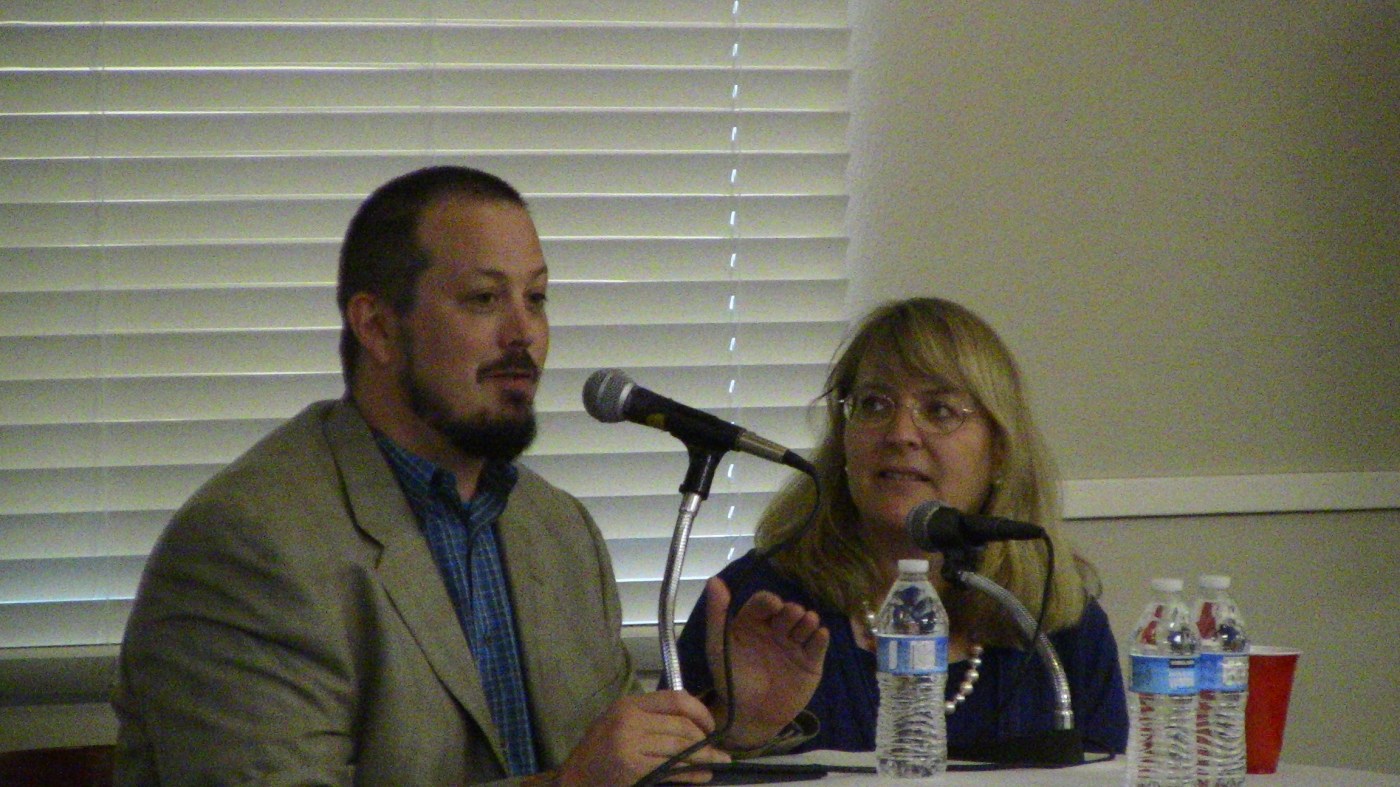
Earlier this month I got to sit down with Diana Butler Bass and ask her about everything from her new book’s title Christianity After Religion to the Methodist tradition and why Evangelical young people are 30 years behind.

It was a blast! [you can hear the audio here]

At the end of the hour, the last question was put forward by Darcy who asked about something Diana had alluded to in the Methodist question. Butler Bass had said that the early Methodist had historically A) ministered to the fringes and B) gone to the frontiers.

It was the fringes and the frontiers that Darcy wanted to know about. Only, she was not asking about the past. She wanted to know about the present.

 Who are on the fringes today and where is the frontier for us?

This is possibly the best question I have heard asked at one of our live events. 

Diana didn’t flinch. She outlined three such scenarios that would qualify:

The first was in the realm of sexuality.
The second was in the realm of pluralism.
The third dealt with our environment.

  •  In sexuality she articulated issues related to the transgendered community. This did not surprise me. In the LGBT formulation, T (transgendered) is the the one the raises eyebrows. Now, because I am came to this conversation through a friend who was doing Queer theology, I had initially taken the LGBTQ as a 5-part alliance. I did not realize how difficult the T can be (not to mention the Q) until I starting asking question and listening to stories. I quickly became aware of the complexities and complications involved.

In the two weeks since Diana’s answer I have had several conversation about her take and I have realized how much conversation has yet to be had. May God give us grace as we learn from each other.

  •  In religion she mentioned learning from Hindu friends. As a student at Claremont School of Theology I am very invested in and more than on board with the idea of inter-religious learning. Yesterday was my day off and so I (as Christian) headed to a Jewish bakery to  sit and listen to an audio recording I had about diversity within Islam.

I am always shocked at how much I don’t know and how much beauty there is within each tradition. May God give us grace as we learn from each other.

  •  In issues of environment and ecology, I like to think of myself as up to speed. This is a subject I have really investigated and as someone mentored by Randy Woodley (his new book Shalom and the Kingdom of Creation was just released and he will be on the podcast next week) I was tracking with her when she talked about non-human animals [I often allude to Nipples & Belly Buttons in this regard].

It should not have been surprising to me that with the release of the video of our conversation that she came under some suspicion by a group called IRB  (Institute on Religion and Democracy) as well as others for  her views on non-human animals.

From the blog Juicy Ecumenism here is the end of Diana’s answer and their commentary:

“Non-human animals and their experience of our environment of the divine are a place that human animals need to listen in order to create more full understanding of God’s creation. […] They don’t have voices like humans do, but isn’t that part of my prejudice?”

I don’t like to bring up the slippery slope, but the mud’s looking pretty slick from here.

What IS surprising to me is that – of her three answers about the fringes and frontiers – that seemed to be the least inflammatory of the three answers!

In my humble opinion, her pluralism answer and her sexuality answer were FAR more daring – and challenging! The only thing that I can figure is that some Christians have so bought into the Cartesian dualism regarding humans that both Transgendered and Hindu folks are completely off their radar screen … but don’t you DARE say what you said about listening to non-human animals.

I was prepared to defend Diana Butler Bass after our show – she said some daring things –  I just didn’t think that it would be on the issue of creation-care over sexuality and pluralism.

This contemporary religious environment will never cease to surprise me.

Starting in the middle never works: Romney, Israel & Palestine

Republican (presumptive) nominee  Mitt Romney got in some hot water recently in a visit to Israel. He  told Jewish donors Monday that their culture is part of what has allowed them to be more economically successful than the Palestinians, outraging Palestinian leaders who suggested his comments were racist and out of touch with the realities of the Middle East.

“And as I come here and I look out over this city and consider the accomplishments of the people of this nation, I recognize the power of at least culture and a few other things,” Romney said, citing an innovative business climate, the Jewish history of thriving in difficult circumstances and the “hand of providence.” He said similar disparity exists between neighboring countries, like Mexico and the United States.

There has been a lot of analysis about Palestinian ‘culture’ as well as economic, military, and other realities that have contributed to discrepancy that is so evident between Israel and Palestine.

I want to focus on a slightly different aspect of the story. Mitt Romney started in the middle and you just can’t do that. In a previous post entitled “Bullies, Bananas and the Bible” I stated:

You can’t verbalize the way things are – which is a result of the way things have been – as proof that this is how it should always be. 

Creation ‘expert’ Ray Comfort famously made a fool of himself by producing a video with Kirk Cameron where he praised the glories of the (modern) banana as evidence of God’s grand design and love for human beings. You can watch the video here – it is a hoot. There is only one problem. Comfort was highlighting many of the adaptations and ‘improvements’ that were results of human modification through deliberate cultivation.

This the problem starting in the middle. You can’t just walk into the way things are, assume the status quo and then make a case for it. *

This is not an isolated school of thought. I was camping in a national park with a long time friend who lives in and loves his ‘red’ state. We were hiking out and enjoying the beauty when he began to tell me about how ridiculous the environmentalists are and how stupid it is to put all these regulations on industry – we are handcuffing these innovators who create jobs for people. His evidence was to point to the trees around us and say “look at all of this amazing space – what are they so worried about? I don’t see why we need to have all these regulations and get so upset at industry.”

I pointed out that if somebody 100 years earlier had not had the foresight to preserve this land, the timber industry would own all this land and would have harvested all these trees. It would look nothing like it did and we would not be walking or hiking there. He had literally never thought about that.

It would be like walking into a grocery store, seeing a steak wrapped in saran wrap on a Styrofoam platter and beginning to articulate how perfectly the  steak was designed for your grill – how the saran wrap crumples in your hand for ease of disposal in the waste basket – how the steak is the same dimensions in thickness from side to side for consistent grilling. Clearly God designed this steak to go on your grill and for your enjoyment!!

This is the danger of starting in the middle.

John Piper’s conservative view of God is the same as Comforts view of the banana and my buddy’s view of the national park: completely ignorant and disconnected from the narrative & trajectory that lead to it.

Which leads us back to Romney: this is a consequence of privilege. I would love to ascribe it to some classicist view of god or an a-historical understanding of theology. It might be from those two things as well, but it is a consequence of privilege and the blind spot that results from it.

If you don’t account for socialization in things like gender – and instead argue for original design … if you don’t give validity to things like constructions and conditioning then you look at how society has been you will mis-attribute it to some other factor. We do it with everything from sexuality and gender  to culture and race.

If one ignores systemic oppression and historic injustice and starts in the middle, then one can conclude that it is this group’s culture or collective disposition that gives them the advantage resulting in the conditions that we see today.


Lean-Tos and Creeds: temporary structures for the journey

I am a big fan of the early churches’ creeds. I appreciate them for their historical significance, for the trajectory that they provide, and for their value as snapshots in the formation of the tradition.

In fact, as a contextual theologian, I adore them as amazing time-capsules of expressions from a very particular time and a definite location. They tell us so much about what was going on, what was a stake, what was being combated and what was already established and settled.

I actually have no problem with the creeds. My problem comes from what certain folks want to do with ‘the Creeds’ and what they try to make them into. Let’s be clear about what they are not:

  • They are not timeless and universal expressions. They are very timely and remarkably located.
  • They are not litmus tests for modern orthodoxy. There is no sense in retreating into ecclesiastic silos, playing pre-modern word games, or burying our head in the historical sand. Too much has happened, too much has changed and there is too much on the line.
  • They are not houses to live in. They are lean-tos (temporary shelters) that were erected along the way. We are still to continue our journey and travel on in our day – in the world that is – and not set up camp in the imagined past.

This is my word picture. The Creeds are lean-tos. They are not museums designed to preserve nor are the cathedrals to be maintained. They are temporary shelters – built with the best materials that were available at the time and in that place. They aren’t blueprints of how every shelter needs to be constructed nor are they houses to be reinforced and guarded. They fulfilled their purpose and provided shelter on the journey.

Christian who get protective of or defensive about the creeds are like people who are hiking with their family, build lean-to out of love for the family and then get mad at the family when it is time to leave the lean-to and continue hiking.

Or like people who love watching birds so they knock out a wall in their house to install a whole side of windows and sky-lights for bird watching. But then they become so fixated on cleaning the glass then they stopped watching the birds and actually get annoyed at the birds for dropping what birds are prone to drop.

The creeds are great. I am so thankful them as historic documents, as developmental snapshots and as contextual expressions.
What I am not so thrilled about is people who get nasty about them, defensive or aggressive. I think it is so odd that they are about things like God’s love and divine relationship… but that they can make someone behave so unloving and take them out of relationship!

I like the creeds. I just don’t like what they do to people who take them too seriously. Like lean-tos, they served their purpose. They were great. Time to move on. We are still on a journey.
___________
p.s.  I meant to include this in the post but forgot. I have since said it 3 comments – so I decided to add it.

“Like the book of Revelation and the Creeds –  we should attempt to do for our culture and day what they were attempting to do for their culture and day.”

What if this isn’t even Christianity anymore?

One week ago  I caught wind of a cooky Southern preacher who preached about a plan to exterminate lesbians, queers and homosexuals. I hear a lot of chatter about this kind of thing so I hoped it would just go away.

By Tuesday night this North Carolina pastor was showing up all over Facebook and Twitter. By Wednesday morning he was the ‘most popular’ link on all of Yahoo! world homepage.

If you have not seen this video, be warned. It is in no way understated. Here is the link:  NC Pastor 

 I have 3 main thoughts about this:

  1. I know tons of people who are not for ‘same sex marriage’ who would not speak of electric fences. Anytime you are suggesting some tactic that the Germans used in WWII you may want to take note.
  2. This is a different TYPE of Christianity – one that is the concerned with governing morals. We going to have to address why the church is even doing State sanctioned marriage in the first place. So often we try to have the second conversation without the first – no wonder it doesn’t go anywhere.
  3. My church and 50 others that I know of and communicate with on a regular basis do kind things and say loving words all the time and no one press covers it. That is the nature of the modern media. Deal with it.

Nothing thus far is that surprising – save the actual sermon by the NC Pastor. Here is my concern:

  • At what point is some pastor so deep in the Constantinian compromise that he is more Roman than Christ-like? At some point do we say ‘that is not even Christian’ ?
  • OR is this just one branch of Christianity and it is our obligation to treat this man as a brother who has simply lost his way?
  • OR is this Preacher doing more harm than good and actually crippling the gospel message – and in that sense he is an enemy of our cause?  And at that point, what do we do with Jesus’ admonition to love our enemy?

Admission: I have been re-reading Stuart Murray’s Post-Christendom and … while that is admittedly probably not the best idea … I have to admit that this whole ‘legislating civil unions and marriages’ thing in North Carolina could not come at a worse time for me.

For what it is worth, here is my 2 cents.

  1. This is not Christianity. Well, it might be Christendom but it is not whatever Jesus was after.
  2. This guy is my brother (in humanity even if not christianity) and has simply lost his way.
  3. Whether he is my crazy cousin or my enemy – Christ compels me to love and respect him as a person even as I wholly (and holy) disagree with his inhuman and immoral speech.

I’m not really sure what other course of action I have in this situation. I spent last week in the woods with no technology and unless I want to perpetually retreat away from all this ugliness, I have got to address this kind of craziness at some level. What else is there in the face of hate except to love?

Limits in (religious) Language

I just finished my semester this past week and was going through my desktop cleaning up all the icons when I discovered this post and realized that I had put it up over here yet.
It was originally posted at HBC

I like reading Lindbeck.* I used to say that I love Lindbeck but I ran into two snags.

  1. I didn’t realize what people did with Lindbeck. I did not know that it often led to retreat into a neo-Catholic expression.
  2. There is some philosophical wrinkle that I don’t fully understand about why the language that creates our religious experience implies a one-way limitation of language -it is a bit technical for me but I wanted to acknowledge it because it eventually becomes a real sticking point.

Having said that …

What I am a big fan of is Lindbeck’s critique of Language. He has a riveting analysis of the way that religious language functions in our communities and personal experiences.  I was susceptible to liking Lindbeck because of my deep appreciation for Nancey Murphy’s book “Beyond Liberalism and Fundamentalism”. I was primed for what Lindbeck brings to the table.

To become religious–no less than to become culturally or linguistically competent–is to interiorize a set of skills by practice and training. One learns how to feel, act, and think in conformity with the religious tradition that is, in its inner structure, far richer and more subtle than can be explicitly articulated. The primary knowledge is not about the religion, nor is that the religion teaches such and such, but rather how to be religious in such and such ways. p. 35

Then I found out that saying you appreciate the Lindbeck’s (post-Liberal) approach is like saying you cheer for the New York Yankees in Boston. I understand the concern with the descendants of Lindbeck’s work … but I am still suspicious that he is right about how language works in our faith communities.

Fast Forward: I was reading some stuff to get ready for the 2012 Emergent Village Theological Conversation this past January and I stumbled onto a section of Whitehead’s thoughts on religious language.** I got to a section called “Doctrine and History”. After dealing with the fact that language does not have a one-to-one correlation and that all language thus requires interpretation, the author explains:

“The language of a tradition and the central doctrines that reflect and support that language are the prime turbulence of the particular mode of existence characterizing that tradition. Furthermore, as human existence is shaped in specialized ways during the course of history, experiences occur that are not possible to persons shaped by other traditions.”

I resonate with the idea that a person is shaped by the language one is groomed and conditioned by – and that would both empower and naturally shape the experiences that one has and the interpretation of those experiences … even (or especially) the religious experiences.

It just makes sense that because religious in a communal endeavor – one is always a part of a community that has a tradition and set of practices/beliefs – that it determines, at some level, both the types of experiences one has , can have and how one translates or interprets those experiences.

This is a vital assertion for the 21st century! We no longer live in the monopoly of Christendom or the frameworks of the Colonial Era where one tradition imported and imposed foreign expectations and alien interpretations on another.

With works like “The invention of world religions” by Tomoko Masuzawa and “God is not One” by Stephen Prothero (among many others) we are entering a time in world history (and thus church history) where we need to come to terms with two things that both Lindbeck and Whitehead are pointing out:

  • Language is both inherited and powerful in shaping our experiences and subsequent interpretations of those experiences.
  • Language used in doctrines like ‘the Church’ and ‘Eucharist’ actually facilitate the ability to have certain experiences that are simply not available to those outside the community or language game. Practices like Yoga or Ramadan would be the same for those in different traditions. That is why North American Christians who do yoga are not have the same experience as those in India.

We live in an era where the realities of inter-religious education, cross-denominational communication and trans-national citizenship are going to challenge all of our inherited traditions and conceptual frameworks.

If we are unwilling to do so and insist on simply repeating the same rote answers week after week under the misguided impression that we are being faithful to the tradition … we are in danger of an irrelevance that leads not only to extinction but ultimately failure to accomplish our great commission.

*George Lindbeck wrote “The Nature of Doctrine” and along with Hans Frei (author of “Eclipse of the Biblical Narrative”) is credited with starting the Yale School of thought. One of the most famous proponents of which is Stanley Hauerwas famous for his books like  “Peaceable Kingdom” as well as other things.

** Alfred North Whitehead was a 20th century philosopher who is credited for helping to come up with what became Process-Relational thought.

Jesus & (S)words part 3

reposting from last week.
Part 1 & Part 2 provide the lead in

Part 3:  Jesus tells his disciple to buy a sword?

We come to that famous passage in Luke 22 where Jesus tells his disciples to buy a sword.

 35 Then Jesus asked them, “When I sent you without purse, bag or sandals, did you lack anything?”

“Nothing,” they answered.

36 He said to them, “But now if you have a purse, take it, and also a bag; and if you don’t have a sword, sell your cloak and buy one. 37 It is written: ‘And he was numbered with the transgressors’[b]; and I tell you that this must be fulfilled in me. Yes, what is written about me is reaching its fulfillment.”

38 The disciples said, “See, Lord, here are two swords.”

“That’s enough!” he replied.

Here are two readings you may want to consider: 

Earlier this week I engaged a political reading of Moses and the waters of Meribah from Numbers 20. My question was “why, if Moses was going to ultimately speak to the rock, did the Lord even mention the staff?”  The answer was that it was a symbol of power to be carried – yes – but ultimately resisted in favor of a better present option that might be overshadowed by the most obvious option.

It takes strength to turn the other cheek. If you don’t have the ability to retaliate … it is just being a doormat or victim? That is how I have always thought about it.

In that perspective, I have read Jesus’ odd command with Peter in mind. I see that fateful night where Jesus tells him to ‘put away your sword’ and later tells the authorities ‘if my kingdom was of this world my followers would fight.’ The implication is that Jesus’ kingdom is not of this world and so his followers don’t fight.

The sword for the disciple, then, is what the staff was for Moses in Numbers  20: a powerful option to be resisted in favor of a preferable option that is less obvious because it is less forceful.

I used to reconcile ‘buying swords’ as a sort of object lesson or training excersise for the disciples. One lesson (trust and supply) is over – next lesson: You can’t resist temptation is one of the options is not even available.

 Then, in 2007, I discovered that Biblical Scholars have a different way of handling the passage. Here is Ben Witherington: 

Lk. 22.36-38. What is the meaning of this little story, taking into account the larger context of Jesus’ teaching? Vs. 37 is the key where Jesus quotes Is. 53.12—“he was numbered with the transgressors”. Jesus is saying to the disciples—you must fulfill your role as transgressors of what I have taught you!!! They must play the part of those who do exactly the opposite of what Jesus taught them in the Sermon on the Mount. The disciples become transgressors by seeking out weapons and then seeking to use them. This much is perfectly clear from the context for the disciples then go on to say “look Lord here is two swords”. They already have such weapons and Jesus responds in disgust to the fact that they are already transgressing his principles of non-violence by responding “that’s enough” (of this nonsense).

 So either Jesus was saying that two swords was enough for the revolution (not likely) or Witherington has this right.

Conclusion: We have looked at these four famous passages now and it seems clear that although Jesus talked about swords and the writers of scripture utilized sword analogies, none of these passages is a validation of the type of violence these verses are used to justify.


Create a free website or blog at WordPress.com.

Up ↑