Search

Bo Sanders: Public Theology

updating & innovating for today

Category

Church History

Opting Out of the Argument Culture (follow up to 4 > 2)

Last week I put out a fun challenge for Good Friday: repent of either-or thinking. It got a great response and a reader asked how one might pursue a conversation differently.

After a decade of trial and error, these are the three things (appropriately) I have found most helpful in breaking down the inherited dualisms: diagrams, vocabulary, and intentional complexification.

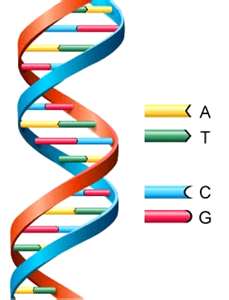
Diagrams: I am a believer in the power of shapes. I heard Len Sweet talk one time about how the two scientists that finally solved the riddle of DNA actually had all the necessary proteins and elements figured out for quite a while … but could not break the code. It wasn’t until they had that now famous shape – the double helix – that they were able to put the puzzle together.
I tell people

“You can have all the right content and be forcing it into the wrong shape.”

My use of the Venn last week to create 5 categories out of 2 would be an example of this. But it comes from a deep conviction that even when given 2 categories, there has to be more to the story – so look for a third. (The book Argument Culture by Deborah Tannen is excellent on this point).

Draw the person’s spectrum and then bend it (as I did here) for them. Take their two options and put it in a matrix (like the Urgent/Important matrix below). Just become convinced that there is too much data for it to be crammed into a pre-made little mold – it just won’t fit. You end up discarding too much data once your little tins are filled.

Vocabulary: When people are too familiar, too entrenched, and too comfortable, you may have to change the terms of the debate in order to unseat the status quo.

In the never ending Calvinist v Arminian debate that Calvinist love, I will teach them that Arminius was a Calvinist, but  just ‘not calvin enough’ and then, in reaction, the Synod of Dort went more calvin than Calvin to come up with T.U.L.I.P. So when Calvinist portray all free-will theologies as Arminian, that is like an American saying that all non-republicans are democrats: its just not true. They are basically just two sides of the same coin … but certainly not representative of the whole array of options. If they want to read an actual Arminian they should check out Roger Olson and his book Against Calvinism. Once you know what a real Arminian looks like, you will stop mistaking everyone who is not Calvinist for one!

Intentional Complexification:  Since dualism is destructive and deceptive, resolve to never let two contradictory-adversarial positions stand as the only options. Search far and wide, at all costs find a third option. Become inquisitive, Become imaginative. Who doesn’t see it this way?

In the abortion debate you must take away the entrenched or given labels that people assume are the only options. Pro-Life is usually just about one stage of life (unborn) and is less concerned about the life of the mother after her child’s birth, the education of the child 5 years after birth, our  country’s foreign policy and being pro-life in an age of perpetual war, and the ever increasing rates of incarceration, death penalty, etc. To be pro-life you also have to be pro-health care, for education, against militarism, anti-death penalty and should probably do something about hand guns and assault rifles ( I’m not talking about your deer rifle Mr. NRA, that is not what is being used to kill people in these shootings).

If you don’t care about the health of the mother, the education of the child, the life of soldiers, and the life of inmates then you are not pro-life: you are just anti-abortion.

When I see the conversation being set up in an us v. them scenario, I will just boycott by saying “until a women has control over her own womb and she can walk away from a pregnancy like the fella can, we can not even have this conversation. It’s impossible.” I just won’t concede the terms and allow the conversation to be set up like that. It is a false binary and it never leads anywhere except ‘both’ sides (as if there is only 2) feeling justified in their own self-virtue.

So those are my 3 suggestions. I would love to hear what things you have found help us get out of the either/or rut and change the parameters conversation!

Post-Contextuality : Evangelism and Missions must change

by Bo Sanders
posted at Ethnic Space

Contextual theology was the subject of my Master’s thesis.*  I was, and continue to be, enthralled with the possibility that the gospel could be uniquely expressed in every culture in a manner that was both authentic and indigenous to that group’s place and time. Lamin Sanneh goes so far as to say that it is the distinguishing characteristic of the Christian religion and that unlike Judaism, Islam, Hindu and Buddhist traditions there is no language, place, culture or time that is inherently superior for expressing the gospel.  In Whose Religion Is Christianity: the Gospel Beyond the West, he has it like this:

Being that the original scripture of the Christian movement, the New Testament Gospels are translated versions of the message of Jesus, and that means Christianity is a translated religion without a revealed language. The issue is not whether Christians translated their scriptures well or willingly, but that without translation there would be no Christianity or Christians. Translation is the church’s birthmark as well as its missionary benchmark: the church would be unrecognizable or unsustainable without it…  Since Jesus did not write or dictate the Gospels, his followers had little choice but to adopt a translated form of his message. (Sanneh p. 97)

When I wrote the thesis, I had yet to really encounter liberation or post-colonial thought in depth. My interest in contextualization arose from being a church-planter in a Missionary denomination. I did not realize at the outset of the project just how strong the critique contextual theology brought to classical (traditional) approaches. Since then I have engaged de-colonial, feminist, liberation, post-modern, and pluralistic voices that have even harsher critiques.

I keep circling back, however, to a much simpler concern: the practice of the church.

It is in this concern of practice that I have stumbled onto – and now stumble over – a haunting inconsistency between our thought and our practice.

The irony is thick. In my experience, those who are most excited about missions and evangelism are quite fond of the Bible. They often reference the Bible and even say things like “In the Bible” as a validation for doing something a certain way or “that’s unbiblical” as criticism of something.

Yet, never in the Bible do you see anyone intentionally learning another language in order to present the gospel. In the Bible, God repeatedly used dual-citizens and bi-lingual folks to get the message out. In the book of Acts we see three examples:

  • a miraculous bridging of the language barrier at Pentecost
  • the Ethiopian eunuch was a bi-lingual traveler who took something back to his ‘home’ in Africa
  • Saul/Paul was a dual-citizen who took the message to the Roman Empire

That, it seems to me, is the Biblical model for missions. (This is true whether or not one translates the Great Commission as the imperative “Go” or the more passive Greek rendering of “as you are going”. The precedent of Acts is the same.) The Biblical model is very different than the Colonial model we are so familiar with.

The past 5 centuries have had their effect – but now that the whole world is ‘mapped’ and ‘spoken for’, maybe its time to move away from the colonial obsession with conversion and trust the bilingual and dual-citizens among us to translate to and for their cultures. We would need to repent of our compulsion to import ourselves into foreign peoples or countries and then impose our cultural expectations on them.

In a global era it is time to stop importing and imposing our cultural entrapments into alien environments and presuming that we know what is best for them. There is enough migration, travel, immigration and cultural exchange that we can now trust God that this will happen in the right time and in the right way – without us taking matters into our own hands any longer and asking God to bless our efforts. The era of elaborate organizations for foreign missions needs to come to an end.** They are unbiblical – and I think they always have been – but now they are also inappropriate for our age.

 The move toward contextual theology helped me see that we have to move beyond contextualization in missions and evangelism. The Colonial era was an ugly one for the church and we need to move out its methods – not just for the word’s sake but because it undermines and  discredits the very message we are trying to convey through it.  

*different groups utilize different forms of contextualization – Catholics tend to call the process ‘inculturation’ for instance, others use a similar move called ‘indigenization’.

** I know dozens of missionaries and understand that they are passionate. I mean no harm to any one of these folks that I care so much about. I have delayed putting this out for more than a year out of my concern for their feelings.

The Predicament of Believing Philip Clayton

Spoiler Alert: I going to recommend that you read this book.

This is a difficult era for those who find themselves committed to the values of scientific rationality and yet moved by the claims of a religious tradition.

That is how the preface to Philip Clayton’s new book The Predicament of Belief  begins.

I am always a little jealous of people who have a scientific background or who have a comprehension of philosophy. Don’t get me wrong, I read books like Fabric of the Cosmos by Brian Green and dabble in Tillich or Moltmann. I love reading that stuff and get a lot out of it … but it is never comfortable or familiar. I was raised as a Billy Graham evangelical and have a Bachelor’s Degree in Biblical Studies. I have a Masters in Theology and in 20 years of ministry  I have preached over 1,000 sermons. I am a pastor. I adore the church. I think in community. It is both how I am built and how I have been groomed. This is part of why I wrote my thesis in Contextual Theology and am now pursuing a degree in Practical Theology.  I am obsessed with the church.

“… It is hard to decide what parts of one’s tradition it makes sense to reject or retain.”

Here is the thing:

  • I like when John Cobb calls into question the ousia of the Creeds and gets into the metaphysics of the hypostatic union.

But can I go with Philip’s brand of Adoptionism (in Christology)?

  • I like when Philip talks about the origins of the universe including  the possibility of a multi-verse with Red Giant suns exploding and propelling their heaviest components out into the far reaches of the galaxy.

But can I go with him when he talks about the 5 layers of the Resurrection?
[Keep in mind that I said in a post last week that I could never imagine saying 3 things:  A) Paul didn’t write that book B) Jesus probably didn’t say that sentence and C) the Bible is wrong about that ]
It is interesting to me that Philip comes from much the same background as I do. It was because of his work that Claremont School of Theology first came onto my radar. I love his vision as the new Dean for the school and have gone on to read several of his books. His conversation with Tony Jones at an Emergent Theological cohort gathering is something I still reference monthly. I get what Philip is saying and I am down with what Philip is up to. Clayton speaks to me. I quote him often in sermons and coffee-shop conversations.

Anyone who knows me knows that I have no affection for tradition-for-tradition’s-sake and I don’t even have one conservative bone in my body. I have no affinity for ceremony, ritual, sacrament, or obligation apart from their narrative value. But as I read Clayton’s newest book, I am confronted on nearly every page with the question “do you know what this would mean?”  This is edgy stuff. His work is innovative and daring and would be well over the line for those that I report to for ordination and accreditation.

 So I am left with two questions:

  • How does one preach this stuff?
  • What would it look like to let go and fall all the way down the rabbit hole of this kind of thinking?

I am saved from too much torment by two entirely different convictions.

  1. The world is changing.
  2. As people of truth, we need to deal in what is true.

The first reminds me that the world has always changed – which is good and healthy and necessary. Some say that the only difference is that we have moved,in human civilization,  from incremental change to a period of exponential change.

The second reminds me that we can say things like “You shall know that truth…” or “All truth is God’s truth” and then act like they had it right in the 3rd century. No, if we are to be people of truth, then we need to pursue truth – wherever it leads.

Pursuing truth may lead us to conclusions that are different than our traditions have expressed. It may lead to us revisiting some things that we have held dear.  But what is the alternative?  To hang on to outdated and outmoded sentimentalities that have little to do with reality and the world as-it-is? Or to continue to play word games in our ecclesiastical silos that have little bearing on the real way people live outside our theological conclaves?

No. We need this. We must to do this. We have to take seriously the landscape that is in front of us and navigate the actual terrain that we occupy. Otherwise we risk living in the conceptual map and never walking on the land as it really is.

That is the predicament of believing Philip Clayton.

Two Trolls and a Bridge (part 2 of 3)

In part one I mentioned that there are two trolls that guard the bridge to a new way. I named them as Colonial Christianity and Environmental Dualism. Of the many issues facing us, let me tell why I recognized those two.

In 1421 Chinese ships landed on the Pacific coast of what we know as North America. Last year in Postcolonial class, my prof asked us a series of questions that began with “Why didn’t they stay and colonize? What was different from what especially the Spanish would do a century later?

I spent the semester, as we read Said, de las Casas, and all those who follow them looking for a common theme that could provide a interpretive key. I kept noticing that there was secondary mechanism behind the machine of Colonial power.

Throughout history there have been Empires and that, by definition, comes with  a conquest narrative. Even in our own Bible we see that group like Assyria, the Babylonians Greeks, and Romans swept through Israel. Israel itself had the Canaanite conquest narrative. Not to mention that China was an empire that conquered and subjugated the areas and nations around them. There is nothing new about either empire or conquest.

But this is not that. There is something else going on in the Colonial era that led the British, French, Portuguese, Dutch and Spanish to expand and extend that impulse to an exponential degree. It is so inflamed and exaggerated that some explanation must be provided as to difference that we see in the 15th, 16th, and 17th centuries.

Technology is insufficient as an explanation. Guns and horses certainly explain some of atrocities we see with the Conquistadores but that is merely wood for the framework. There was a fuel that made it so flammable and destructive. What fueled the Colonial drive was a specific brand of Christianity.

I think that needs to be pointed out. It must be acknowledged for two reasons:

  1. It is still with us
  2. its unquestioned giveness allows it to remain in power but in a far more sinister way – in secret assumption.

Colonial Christianity remains – not just as a residue – but as an unquestioned operating system and that is both an ongoing danger to our planet’s existence (war, environment, economy, etc) but also to the very integrity of the Gospel message that it purports to contain.

Nipples and Bellybuttons

One of the most powerful things that the Western mind inherited comes from the thought of Renee Descartes – it is a Cartesian dualism between the mind and the physical body. On the surface it does not look so danderous – but it morphs and attches itself to other really valuable things. One mutant offspring begins to distinguish between humans and everything else. This fits great into Colonial Christianity. The result is that we think we are exceptional.

Humans are mammals – notice the presence of nipples and bellybuttons – while many Christians  recognize the similarities they refused to acknowledge that humans are mammals (and then are confused by our sexual desires and habits).

This exceptional dualism shows up in all sorts of places! In the study of religion, even if we acknowledge that other religions grew UP from communities and are expressions of their various locations … Christianity is held to be an exception to that. It came DOWN from Heaven and would be the same truth regardless of its historical embeddedness in the Ancient Near East.

Exceptionalism is an ongoing mentality today. It affects so many areas.  [by the way, Randy Woodley wrote a great piece on political exceptionalism here]

In my opinion – beside the possible exception of modern war – there is no area where exceptional thinking is more deadly than the environment. From dust we came – as humans we are made up and sustained by what comes from the soil, the water, and the air.

We must repent of of this exceptional dualism and confess that while we are unique on the earth – we are not exceptions to it and in fact we are integral parts of it and completely dependent upon it.

When you put these two monsters of Colonial Christianity and Environmental Dualism together, you may be able to see why I think that they are the Trolls blocking the bridge to a new way.

Tomorrow I will attempt to articulate what waits on the other side of the bridge. The simple fact is that we can’t go back. We can’t undo Colonization. We aren’t going back to family farms. We can’t refreeze the polar ice caps or re-create the Glaciers in Glacier National Park.  As they say ‘we shall not pass this way again’.  But I think that there is a different way of being in the world that holds hope for us.


originally posted at the Ethnic Space blog

a 3rd way to read the Bible?

In an ongoing search for a hermeneutical practice that is both healthy and accountable (meaning lifegiving without being merely devotional and scholarly without being dry) I have written quite a bit about the journey. I had a multi-part post a while back  Part 1    Part 3 as well Moving Mountains Signs that make you Wonde

This is last week’s addition (posted at HBC) and it was so well received (by some) that I wanted to A) post it here to continue that conversation and B) will be working on another series for late March.  This clearly is something that matters to people.

I love reading the Bible. I grew up reading it, I am passionate about studying it, and delight to preach from it whenever I get the chance.
I also recognize that it is getting harder to do in our contemporary context. I am a loud critic of simple dualism (constantly contending with my Evangelical associates)  – but even I must concede when there are two main schools of thought that have set themselves up in opposition to each other.  I buck the ‘spectrum’ thinking like Liberal v. Conservative (as if those were the only two options) in almost every circumstance. However, when it comes to reading the Bible, it is tough to avoid the set of major trenches that have been dug on either side of this narrow road.
The first group reads the Bible in what is called a ‘straight forward’ way and while they spend a lot of time with the text, there is little acknowledgement of what is going on behind the text. This group reads the Bible primarily devotionally, preaches exegetically and views it as not just instructive but binding for all times and places.
In my interactions with this group, there is little awareness of hermeneutics (in may cases they may have never heard the word before) and even less willingness to engage in scholarship that does anything behind the text.
The second group engages in Historical-Critical methods. They are willing to look at things like redaction (later editing). They don’t harmonize the Gospels into one Gospel. They are willing to acknowledge that Matthew and Luke’s conception, birth and subsequent details do not line up. They understand that while the story of Daniel happens in the 5th century BC – it was not written in the 5th century BC. They joke about Moses writing the 1st five books of Bible (how did he write about his own death?).
 Lately I have been engaging books like :

  • How to Read the Bible: A Guide to Scripture, Then and Now by James L. Kugel
  • To Each Its Own Meaning, Revised and Expanded: An Introduction to Biblical Criticisms and Their Application by Stephen R. Haynes
  • Whose Bible Is It? A History of the Scriptures Through the Ages by Jaroslav Pelikan
  • She Who Is: The Mystery of God in Feminist Theological Discourse by Elizabeth A. Johnson
  • Sexism and God Talk: Toward a Feminist Theology by Rosemary Radford Ruether

Over the last 4 years, it has become painfully clear to me that we have a problem when it comes to reading the Bible. Simply stated, those who spend the most time with the Bible know less about it but make greater claims for it than those who do more scholarship on it but may have little faith in it.
I was listening to a seminar on the Historical-Jesus and talking to several friends of mine who do Historical-Criticism, here are 3 sentences that no evangelical I know even have ears to hear:

  1. Paul didn’t even write that letter
  2. Jesus probably didn’t say that sentence
  3. The Bible is wrong about this

I get in trouble for saying much much milder things about the literary device of the virgin birth, the prophetic concern of Revelation which is limited to the first 2 centuries CE, and  Jesus being ironic about ‘bringing a sword’. Can you imagine what would happen if I thought that Paul didn’t write the letters that are attributed to him, that Jesus did not utter the red-letter words we have recorded in the gospels or that the Bible was wrong about something?  I can’t.
So how does a moderate engage Biblical scholarship without stumbling over Historical-Critical pitfalls and Historical Jesus land-mines?  The thing that I hear over and over is

“Just stick with N.T. Wright. He has navigated the gulf for you”

Now, I love N.T. Wright as much as the next emergent evangelical (especially his Everybody series) … but I am as unwilling, on one hand, to forego the best and most comprehensive stuff (like Dom Crossan’s work on Empire) as I am, on the other hand, to subscribe to the inane prerequisites of the Jesus Seminar.

What I would really like to see is a move within the emerging generation that is tenacious about engaging contemporary scholarship while fully embracing the kind of devotional passion that the innerant camp demonstrates  – all the while avoiding the fearful and intimidating chokehold that camp utilizes to squelch innovation & thought.
I want the next generation to both find life and direction in the scriptures and also to not have to read the tough parts with their fingers crossed behind their back.
a hopeful moderate – Rev. Bo C. Sanders

For those who do not want to scour the comments to find the links to other resources:
Daniel Kirk’s book  “Jesus have I loved but Paul?”
Ben Witherington’s  book list 

Loving Jesus – While Hating Religion

originally posted at HBC

Jeff Bethke has created quite a stir with his YouTube video that begins “Jesus came to abolish religion.”  Many video responses have followed (including a Muslim response) and  some bloggers have meticulously  attacked the logic behind his poem point-by-point.  Two  weeks ago  he was in Time magazine.

This whole controversy gets to me at two deep levels:

  •  I used to say those things. Just 4 short years ago I was an evangelical church-planter who regularly contrasted Jesus’ message to ‘religion’.


  •  I am shocked at how dismissive so many  folks are being to Bethke’s poem (especially educated and/or mainline).

I have heard many people just brush aside his use of ‘religion’ as ignorant, immature, stupid, uneducated, silly, shallow, un-historic, and false. The thing that I want to yell is

“YOU FOOLS – like it or not, that is how people use the word religion in our culture.”

If you asked A) people under 40 and B) evangelicals to define religion you would get a picture that is almost identical to Bethke’s .

I now hang out with mainline folks and people who read books on theology. They are  quick to say

  • that shows a poor understanding of religion
  • that is a silly/stupid/shallow definition of religion
  • that shows little historical perspective on the role that religion has played

Like it or not – this is the definition that many young people are using for religion. When they say (increasingly) that they are spiritual-but-not-religious , this is what they mean: empty ritual, mindless repitition, and meaningless ceremony.

I am pursuing a PhD in the field of Practical Theology for the very reason that I want to engage how people live out their faith – practice it – in particular communities. The two things that I am willing to concede up front are that

  • Many North American Christians and most Evangelicals utilize simple dualism (Physical v. Spiritual, Natural v. Supernatural, Temporal v. Eternal, Secular v. Sacred, Old v. New Testament, Law v. Grace). This is how they think.
  • Religion is conceptualized as the man-made structures that attempt to facilitate, replicate, and falsely imitate the real thing that God does/wants-to-do in the world.

It is popular to say in these circles “Religion is man’s attempt to connect with God. Jesus is God’s attempt to connect with man.” *

I know that there are many good attempts to connect with religious tradition. I have heard many addresses regarding the root of the word religion and how the ‘lig’ is the same as ligament or ‘binding’ and how it is an attempt to bind us together – not to have us bound up in rules!
My question is this: Are you willing to engage this dualistic and uniformed populist definition of religion that is in place OR would your rather hold to your enlightened and informed historical perspective and allow a conversation to happen without you because you are above it? **

I know that it can be frustrating to circle back and entertain naive perspectives. But if the alternative is to let the conversation happen without a historically informed perspective, then I think we have no choice but to concede the initial conditions of the dialogue in an attempt to express an informed/educated alternative.

*   there are alternatives like “Religion is our attempt to connect with God, Christianity is God’s connecting with us.”
**  I have intentionally provided two alternatives to honor the dualistic nature of this mentality.

God as She-He-They

Originally posted at Homebrewed Christianity as “She Who is Not”

Earlier this week I had a post about language and God talk that incorporated C.S. Lewis’ poem “A Footnote on All Prayers”.  Part of what came out of that was an exchange with J.W. about pronouns, the Bible, and Inspiration. I wanted to transfer some of that over here (I have edited it for clarity) in order to open up the conversation to more people.

J.W.: So, what does your god look like? And how is that look any different from Piper’s or Driscoll’s?

Me:
Thanks for asking! Actually there is quite a substantial difference. Let me point out just a couple of things to start:
A) I don’t believe that language about God is univocal (as I have said). SO we begin in humility understanding that all our words, metaphors and concepts are OUR best attempt.
B) I believe that langue (since it is not univocal) functions relationally. When Jesus uses ‘Father’ language, he is talking about the WAY in which relates to a father. Not that God’s ontological being is Father in an exacting and representative way. It is an expressive use of language. That is the nature of language.
C) The way that Scripture is expressed is historic. I believe that the Bible is Inspired by Holy Spirit. That means that Holy Spirit was at work in the authors and ultimately in those who collected and validated the canon. (I confess this by faith). Those authors were historically situated and particularly located. They expressed their thoughts in their best language in their best frameworks. We see that historical locatedness and account for it when we engage their writings.
D) Whether you call it ‘original sin’ (I don’t) or ‘human nature’ or (my favorite) relational brokeness and conflicting biological impulses … humans have a problem. We are not 100% whole. Something is wrong (we don’t even do the good we WANT to do). That means that in every epoch and era there are things in place that are not perfect. Those show up in scripture – since it is a snap shot of its environment. The Bible is fully human (and I believe fully divine in a Process sense) but it is not ABSENT of humanity. It is full of humanity.
So If you take just those 4 things in contrast to Piper and Driscoll, then my God talk is:

  • in Humility not certainty or pushy
  • Relational not static or exacting
  • Historical not trans-historic
  • Human not un-human

Does that help? SO that is my starting point. From there I diverge wildly from the other two.

J.W.
Well, first of all, thanks for a response.
Second, no offense, but you use an awful lot of words to not say too much. Or, to say the same thing over and over while denying that you are saying one thing, yet actually affirming another. Since I don’t have any real idea what you believe Piper and Driscoll believe, I still don’t know that you are painting a different god or not.
You start out saying that all expressions of God are only a best attempt, but then you claim to believe the inspiration of the Holy Spirit. So, which is it? Our best attempt, or Holy Spirit inspired? See the problem there. It’s either one or the other, can’t be both.
Certainly the Bible is written situationally. God could have inspired men to write it so it only made sense at one point in the entire course of time, or He could have inspired it so that it meant the same thing from beginning to end, from the beginning of time to the end of time. And written so that ordinary people could figure it out with a little help from His Holy Spirit. Which is what I believe. You seem to believe that only post-modern thought with a lot of help from certain philosophers can figure out this whole humility, relation, human thing. Sorry, way too many creeks have flowed over their banks throughout history for me to believe that only recently have we been smart enough to figure this whole mess out.
God (Holy Spirit) inspired the whole Bible. He could have very easily caused His writers to use words that wouldn’t mean anything to their (at the time, current) readers, but would only matter eons later. IF that is what He intended.
Again, you haven’t showed me anything but dichotomies, and nothing of substance that disproves anything Piper et al believe-which I still don’t know what you believe they believe.

Me:
1) I did use a lot of words, but it was to say quite a bit. Unfortunately it was not what you were looking for so you think I didn’t say much. I assure you that I say quite enough in my 300 words to get in a lot of trouble in many circles!
2) You are 100% wrong that “It’s either one or the other, can’t be both.” Inspiration is not the OVERriding of human intent – it is the filling UP and expanding of human intent. Inspiration does not make something inhuman. You are thinking of something else not inspiration. Then you accuse me of dichotomies? Weird. I am talking about a participatory-relational model that transcends either/or thinking. You must be confused.
3) Here is an example of the difference (which you apparently were not able to pick up on): It is equally a valid to call god She as it is to call god He. Because in the end, god is neither. Those are pronouns that stand in for their antecedent but which do not entirely explain god or contain god’s ontological reality. God did not give Christianity a masculine feel. We did. God is God that is beyond our biological categorizations and anatomical classification. God is not defined by those – we simply conceptualize God and these terms and portray those conceptions in our language.
This is the nature of language. It is symbolic – analogical – and metaphorical.  That does not mean that we are not saying anything when we talk about God. We are. It does not mean that there is no inspiration. There is. Those are not mutually exclusive.
To quote Elizabeth Johnson in She Who Is :

Words about God are cultural creatures, intwined with the mores and adventures of the faith community that uses them. As cultures shift, so too does the specificity of God-talk.

To call God She is just as accurate and as inaccurate as calling God ‘he’.


May your Kingdom Come … to an end

I might be done with kingdom language – not the dynamic of God’s power or God’s interaction with the world – just the word ‘kingdom’ and its imperial implications. It comes with too much baggage, it is so antiquated, and it is masculine in the way that is unhelpful.*
Here are three reasons that we have permission to move on if we were so inclined:

  • Jesus didn’t use the word.

It might seem simplistic but Jesus didn’t speak English and there is nothing magical about the English word ‘kingdom’. The New Testament uses the phrase Basileia Theou. Maybe we should just go back to that. We keep words like ‘koinonia’ and ‘selah’ in their original form so maybe we could just say when Jesus did and let it go untranslated. Then people would have to reconstruct what the concept means without importing all of their preconceived impressions.

  • The age of kings is over.

I can not believe the hysteria that occurred around the ‘royal wedding’ of Prince William to Kate Middleton – especially by Americans. Just the name the House of Commons makes me wince. I am so glad that the Age of Kings is over. Divine Right would be laughable to me … if I didn’t know how much sway it held for so long. Regardless, those days are over and maybe it is time to update our language about God’s ways as well.

  • The power of pronouns.

Even those who acknowledge that the nature of language is symbolic and metaphorical – even those who recognize that God language is not univocal – can get thrown off if one refers to God as ‘She’.  Even those who know that it is only a pronoun that functions as a place holder want to be careful about the antecedent to the pronoun.  This might be a limitation for a move toward a counter-Queendom, a more inclusive Kin-dom or a non-authoritarian Common/wealth.

There will be some obstacle to overcome.
Number one among them will that ‘it is in the Bible’. Let me say two things:
A) I love that it is in the Bible. It was powerful imagery for its day and it says something really important about God.
B) The authors of scripture conceptualized of God’s work in a way that was relevant to their time. Maybe we should as well.

Another problem I see is Christmas pageants. What will be do when we quote passages like Isaiah 9:7 which get translated into english as “His kingdom will have no end”. But I think it would be fine to have passages like this along side the shepherds and the manger (both are virtual artifacts of an agrarian society)  – as long as it was not our primary (or only) way of articulating and conceptualizing the work of God in the world.

One last thing to suggest: Jesus was in a context that was dominated by Empire. He positioned his vision and language in contrast/opposition to it. But is that our predominant contemporary element? I would suggest that in a venue of Global Capitalism  it may be more appropriate and powerful to speak of the Economy of God.

* I always have to clarify that as a man, I am not anti-masculine. I really like being a man – it’s just that only using masculine terms may have been helpful for clarity when Genesis 1-3 was written, it has become unclear and unhelpful. The hegemonic patriarchy of religious language is pitiful to hold onto and especially when it is done in a univocal way.

Language, God Talk, and Prayer

I never struggle to believe in God. I believe in the deep core of my being. I have faith in my bones. I breath this stuff. I am filled with Holy Spirit and that gives purpose to my day and direction to my life.  I never doubt the reality of the Christian faith … until I listen to a conservative like John Piper or Marc Driscoll talk. Then, it is all too apparent to me that we are (at least partially) projecting our greatest hopes and dreams onto the screen of the heavens. We are outsourcing our fears and evils onto a cosmic bad guy called the devil. We have created a galactic father figure in the sky (paging Dr. Freud).

It is so clear when Piper talks that it makes me want to retreat into the post-liberal work of George Lindbeck!  

Xenophanes is famed to have said:

“If oxen and horses and lions had hands and were able to draw with their hands and do the same things as men, horses would draw the shapes of gods to look like horses and oxen would draw them to look like oxen, and each would make the gods bodies have the same shape as they themselves had.”

It gets boiled down to “If horses had gods – they would look like horses.”

Most days I can stave that off. I can avoid the haunting suspicion and nagging doubt … but what Piper does is create a God in his own image – there is no other way to say it – it is idolatry.

So what? you may ask. Why even bother with it?  Because, I believe that there really is a God.

C.S. Lewis wrote a poem one time called “a footnote to all prayers” (it references Pheidias who was  a legendary statue maker in the ancient world)

Footnote to All Prayers
He whom I bow to only knows to whom I bow
When I attempt the ineffable Name, murmuring Thou,
And dream of Pheidian fancies and embrace in heart
Symbols (I know) which cannot be the thing Thou art.
Thus always, taken at their word, all prayers blaspheme
Worshipping with frail images a folk-lore dream,
And all men in their praying, self-deceived, address
The coinage of their own unquiet thoughts, unless
Thou in magnetic mercy to Thyself divert
Our arrows, aimed unskilfully, beyond desert;
And all men are idolators, crying unheard
To a deaf idol, if Thou take them at their word.
Take not, O Lord, our literal sense. Lord, in thy great
Unbroken speech our limping metaphor translate.

This is why we must acknowledge what it is we are doing when we pray, when we preach, and when we practice. We are doing the best we can with words, symbols, sounds and images. But if those images are solidified and codified past their point of original artistry, mysticism and metaphor – then it becomes something deadly to the soul and dangerous to the one seeking the real and living God revealed in Christ.

Blog at WordPress.com.

Up ↑