Search

Bo Sanders: Public Theology

updating & innovating for today

Category

Church

May your Kingdom Come … to an end

I might be done with kingdom language – not the dynamic of God’s power or God’s interaction with the world – just the word ‘kingdom’ and its imperial implications. It comes with too much baggage, it is so antiquated, and it is masculine in the way that is unhelpful.*
Here are three reasons that we have permission to move on if we were so inclined:

  • Jesus didn’t use the word.

It might seem simplistic but Jesus didn’t speak English and there is nothing magical about the English word ‘kingdom’. The New Testament uses the phrase Basileia Theou. Maybe we should just go back to that. We keep words like ‘koinonia’ and ‘selah’ in their original form so maybe we could just say when Jesus did and let it go untranslated. Then people would have to reconstruct what the concept means without importing all of their preconceived impressions.

  • The age of kings is over.

I can not believe the hysteria that occurred around the ‘royal wedding’ of Prince William to Kate Middleton – especially by Americans. Just the name the House of Commons makes me wince. I am so glad that the Age of Kings is over. Divine Right would be laughable to me … if I didn’t know how much sway it held for so long. Regardless, those days are over and maybe it is time to update our language about God’s ways as well.

  • The power of pronouns.

Even those who acknowledge that the nature of language is symbolic and metaphorical – even those who recognize that God language is not univocal – can get thrown off if one refers to God as ‘She’.  Even those who know that it is only a pronoun that functions as a place holder want to be careful about the antecedent to the pronoun.  This might be a limitation for a move toward a counter-Queendom, a more inclusive Kin-dom or a non-authoritarian Common/wealth.

There will be some obstacle to overcome.
Number one among them will that ‘it is in the Bible’. Let me say two things:
A) I love that it is in the Bible. It was powerful imagery for its day and it says something really important about God.
B) The authors of scripture conceptualized of God’s work in a way that was relevant to their time. Maybe we should as well.

Another problem I see is Christmas pageants. What will be do when we quote passages like Isaiah 9:7 which get translated into english as “His kingdom will have no end”. But I think it would be fine to have passages like this along side the shepherds and the manger (both are virtual artifacts of an agrarian society)  – as long as it was not our primary (or only) way of articulating and conceptualizing the work of God in the world.

One last thing to suggest: Jesus was in a context that was dominated by Empire. He positioned his vision and language in contrast/opposition to it. But is that our predominant contemporary element? I would suggest that in a venue of Global Capitalism  it may be more appropriate and powerful to speak of the Economy of God.

* I always have to clarify that as a man, I am not anti-masculine. I really like being a man – it’s just that only using masculine terms may have been helpful for clarity when Genesis 1-3 was written, it has become unclear and unhelpful. The hegemonic patriarchy of religious language is pitiful to hold onto and especially when it is done in a univocal way.


Clarifying the Quad

a quick follow up to the post from last week
– both of which were also posted at Homebrewed

 I wanted to thank everyone who gave feedback on the Four Locations of Theology in the 21st century post from earlier this week. I appreciate the comments here, on facebook, and the emails.  It has given me a lot to think about and I wanted to clarify three themes that have emerged.

Three clarifications:

  • Reason seems to be the suspicious quadrant. Every time I bring up quadrilateral, more than half of the conversation will be centered on reason. This week was no exception. Reason draws the most concern – which is funny to me because tradition is the one that I find most suspect.

Here is the thing I would want to clarify: the other 3 themes of Scripture, Tradition and Experience all have reason woven into them. Those who wrote the scriptures, those who established the tradition and even our won experience are all saturated with reason. It is inescapable. The scriptures did not fall from the sky! They passed through the author’s minds and were processed with reason. Same with tradition. The creeds were not divined in some sort of supernatural ceremony. The were constructed and reasoned. Our experiences are interpreted utilizing our filters, frameworks and lenses.

 It seems important then to clarify that those three are not independent of reason but are dynamically intertwined with it. It would be useless to take out reason (as some have suggested) because it interlinked and inescapable.

  •  It may be that the quad needs something else. Some suggested replacing one of the 4 elements with an alternative. My favorite idea came from my friend Raphael who said

 “I suggest we add a fifth source for the practice of theology in the 21st century: Imagination!”

Admittedly, it would no longer be a quad! but I think that the tradeoff is that you would get adventure and zest incorporated and not just a static, conserving, or historical product.

  • There are no guarantees. Even if we could all agree to utilize the quad for the theological endeavor, there is no guarantee that we would all come up with some thing or come out with the same conclusions. This seems to be a major concern – that we can not ensure the outcome of such an endeavor.

I am surprised at the conserving nature of such mentalities! People are ok to ‘go on the journey’ as long as we predictably end up basically where we started.
Think all you want. Explore new thoughts and incorporate science … just don’t stray too far from the foundations of antiquity!  Integrate new realities and account for ongoing historical developments … just make sure that you end up with the same thing we started with.

I have not overstated this hesitancy and resistance. But the reality is that there are no guarantees. You may start out an Evangelical and end up being an Emergent type working in a Mainline church with Process theology as your main conversation partner!  (for instance)

 In summary:

  1. You can’t get rid of reason, it is already present in the other three. Scripture, Tradition and Experience are inextricably laced with it.
  2. The quad may need a little something extra. The 21st century may require some zest, adventure and imagination
  3. There are no guarantees. While we want to honor the historical expression and provide continuity with the trajectory … it might look a little different and think a little different than it did in the 3rd or 17th century.

Thanks for all your feedback, thoughts, and concerns. I appreciate the conversation.

4 Locations for Theology in the 21st Century

originally posted at Homebrewed Christianity

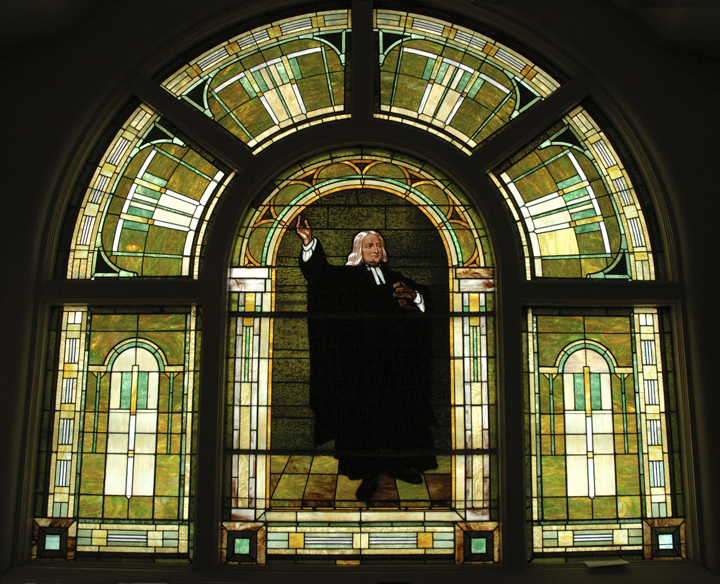
I come from a Methodist tradition that looks to John Wesley as its founder. Wesley utilized a famous quadrilateral to talk about how we do theology.
The four elements were Scripture, Tradition, Reason, and Experience.
I love the quad! I am a proud descendant of Wesley and I still find it quite helpful to utilize the same quad.  Here is why I find each element so valuable.

Scripture: No matter how fancy we want to get with our theology (I am looking at you Tillich) or whatever else we want to do (Griffin), it must account for the scriptural witness . I am not saying that we must always begin with scripture (like neo-Orthodox or Open folks) nor am I saying that we must only do scripture – but any 21st century theology must account for it. The Gutenberg and Missionary eras have reinforced a global importance and influence that must be acknowledged for any theology to carry weight. There is just no sense in having a theology that is not thoroughly scriptural if you want it to count widely.
Tradition: I grew up evangelical and developed a disdain for tradition. It was a bad word to me – like religion. It meant thoughtless, empty ritual done on autopilot in rote repetition. I see things a little differently now. Back then, I actually thought that we were free to do whatever we wanted as long as it was meaningful and effective for accomplishing the goal – which was to bring people into a deeper relationship with the living God. Now, I understand that we are all socially conditioned into elaborate human constructions. These constructs (like language or religion) are part and parcel of both the communal/social order and the religious tradition. Tradition and community must be recognized and honored since all theology is contextual theology.
Reason: I loved quoting Colossians 2:8 when I was an evangelist and someone would ask me a better question than I had an answer to
See to it that no one takes you captive through hollow and deceptive philosophy, which depends on human tradition and the elemental spiritual forces[a] of this world rather than on Christ.
It was the deceptive word play that depended on human thinking that was so dangerous to my Josh McDowell faith. I had evidence that demanded a verdict and you had tricky mental gymnastics and endless questions. I had never heard of Neoplatonism and why did I need to? I had Paul and the Epistle to the Hebrews! … Which is to say that I had never encountered the philosophical underpinnings of the New Testament writers nor of my Protestant declarations of faith.
Experience: I know that part of my fascination comes my charistmatic-evangelical roots. I know that part of it is my American protestant upbringing and that it is reinforced by my personality. But I find it on the pages of the New Testament, and I am simply uninterested a religion that is all in the head and not in the heart. I want a full body religious experience. Nice words are fine (and OH how I love nice words) but we have to walk the walk (as they say) and not just talk the talk. Theology must be validated by the community’s experience.  

I always attempt to frame things in the positive. In this case, I will also attempt to reinforce the need for all four by allowing myself to state them in the negative as well.
 Scripture: I am not interested in a Christianity that does not engage scripture or does not seek to be faithful to those initial witnesses.  We can update, renovate, adapt, evolve and reinterpret … but we must always interact with scripture. It is  scripture that we update and reinterpret.
Tradition: Let me say first that I  loath tradition for tradition’s sake. It makes be somewhere between vomitous and irate – which is not pretty. But in our global context you can’t just ‘do theology’ as if it were in a vacuum or you were starting from scratch. We are not starting with a blank slate!  I did not write the Bible, I am not the first to read the Bible – it was handed to me, was given to me and it is that ‘givenness’ that must be absorbed.
 Reason: who wants a faith the un-reasonable? Not me.  Plenty of other people do. In fact, this is really in vogue right now. Lots of conservative folks are retreating into their orthodoxy silo and playing their own isolated word games. That is a theological dead-end for the faith. It is a desperate remnant of Christendom monopoly and wholly counter to the very impetuous of the gospel they so proudly claim to defend.
 Experience: I am as uninterested in a theology that is not experienced as I am in a faith that is unreasonable.

I have been reading a lot of theology lately in preparation for the 2012 Emergent Theological Conversation. Much of it has been philosophical 20th century theology, some of it has been early century and reformation era. At the end of the day, I keep coming back to the Wesleyan quadrilateral as a framework that works for the inter-active, cross-cultural, multi-voiced engagement of the 21st century.

White, Extremely Male and Incredibly Homophobic

I originally posted this at Homebrewed Christianity but wanted to move it over here to keep the conversation going.

The news is wild these days! Its almost as if there is a cultural shift underway!
Let me just highlight 4 news stories from the past weeks:

1) The Pope: Gay marriage threatens humanity’s future

2) Pastor Joel Osteen to Oprah: Homosexuality Is Sin — But Gay People Will Get Into Heaven

3) Rick Santorum: A Straight Dad In Prison Is Better Than Two Gay Dads Who Aren’t

4) Pastor Mark Driscoll’s book on Marriage hits the shelves

It is interesting that all four of these stories have come to my attention within a week. What most people will focus on is whether there is a Bible verse to back up what they are saying or not.

What needs to be stated before we get there is two-fold:

  • All four are white males. Somebody may ask “are you implying that their gender or race somehow diminishes their right to speak with authority?” and I would answer “No – I just think that it is worth pointing it out in case later we wanted to examine how people come to power and in what ways authority is constructed, bestowed, or recognized.”
  • When you have the leader of all the world’s catholics, a guy who is renowned for not speaking up about anything or coming down on anyone, a presidential candidate, and one of the most influential evangelical pastors in America saying the same thing… one of a couple of things has to cross your mind.

Either:
a) they are all sticking up for the truth or
b) they are all sticking up for an antiquated perspective of the past

The reason that this issue has grabbed my attention is that many are calling it “The Last Taboo”.  Continue reading “White, Extremely Male and Incredibly Homophobic”

A Progressive take on being Pentecostal (or Charismatic)

In a recent Homebrewed Christianity podcast episode Mike Morrell interviews Leif Hetland, a charismatic signs & wonders Pastor. Afterward I got to talk with Tripp about my thoughts on reconciling the best of Pentecostal practices with a Progressive Christianity.

Here are my two big points:

 What Pentecostals have to say to Progressives

Jesus laid hands on people, the Disciples laid hands on people and the letters of the New Testament tell us to lay our hands on people. If you have bought into a brand of Christianity that does not have you laying your hands of people and praying in expectation that something would happen – you may want to revisit the reasons why.

If your faith is primarily intellectual, abstract, and conceptual … it may not be the religion that the writers of the New Testament called us to. The early church was a hands on movement and prayed with expectation.

What Progressives have to say to Pentecostals

Being delivered from personal demons is great and praying over whole cities to break or bind the ‘strong man’ that holds people in bondage is fine. There is a vital missing element that needs to be added. Its not just about the personal (mini) and the heavenly (meta) – that leaves a gap that must be filled. In the middle is the address of systems, structures and institutions (what Walter Wink calls ‘The Powers the Be”).

If you faith is primarily personal-congregational and supernatural-heavenly, then you might want to revisit some understandings of Scripture and the address of systemic sins (like injustice).  Otherwise you are in danger of being so heavenly minded that you actually reinforce and empower that very structures that you say you are praying against.

The 21st Century

I think that it is important to have these two camps are in conversation. Continue reading “A Progressive take on being Pentecostal (or Charismatic)”

Heaven, we have a problem – with sexuality

This was a week of controversy in the Blogosphere – at least in my neighborhood.

The topic of gender, femininity, and sexuality were the touch points.  I am going to highlight 3 controversial blogs from this week … but first I want to acknowledge that it mirrored (albeit in a much smaller way) something happening in the larger culture that we are embedded in.

This was also a week that saw the Penn State football sexual abuse scandal rock the nation, the Herman Cain sexual harassment allegations, and several other national news story related to discrimination, abuse, and harassment.

These three christian conversations that follow are not happening in a vacuum – perhaps that is why they illicit such a heated response and so much attention. It impacts all of us.

Post 1:  from Stuff that Christians Like – a post called ‘Girls with a Past’ was a little test (written by a man) that women could take to see if one qualified as intriguing or not.  It was satire (which not everyone gets or likes) and it pointed out a real problem. Now, some people were offended and took it out on the author. I just want to say that the situation is infuriating but we can’t take it out on the person who illustrates the problem, Jon was articulating a severe inconsistency between what we say and what we do in the ‘church’.

Here is his post: http://www.jonacuff.com/stuffchristianslike/2011/11/stuff-christians-guys-like-girls-that-have-a-past/ let me know what you think. My 2 cents will be at the bottom of this post. It got over 500 responses.

Post 2: Rachel Held Evans (one of my favorite bloggers) put up a post called “13 things that make me a bad feminist”. It is part of a series that she does from time to time – she has also admitted to being a bad ‘evangelical’ and ‘progressive’.  This post went over like a lead-balloon . This led to a guest-post the following day.

Here is the post: http://rachelheldevans.com/13-things-lousy-feminist . It got 149 responses.

Post 3: my good buddy Tripp Fuller came out of the closet as not being ‘open and affirming’ on a video from Two Friars and a Fool. His contention was that affirming letters – whether L, B, G, Q, T, I or any other dash or asterisk – is an inherently limited response. It has two great dangers: Continue reading “Heaven, we have a problem – with sexuality”

Religion: revision renovation and revival

Religions need revision. This is even true of made up ones! Scientology has been in the news over the past months for all the wrong reasons: splinter groups, rival factions, money issues, coercive strategies for intimidating dissenters, and even heated theological debates. [check out last week’s Time article for instance]

And this is religion where we have writings of the founder.  In fact, one of the original tenets of the religion (started just 50 years ago) was that nothing was allowed to be changed in the future. This stands is stark contrast to Christianity where we don’t have any writings of the founder (thank God) and have a model that is incarnational – which means that the religion is inherently contextual and translatable. [read Lamin Sanneh’s books like Who’s Religion is Christianity? and Translating the Message if you want to see a contemporary contrast with Islam – like ours, a religion based on revelation.]

All religion needs revision – or re-visiting, re-imagining, and reviving. Some people object to this much needed procedure. The arguments tend to fall in two broad divisions.

1) Those who object to deconstruction because it feels like destruction. This is understandable because when you hold dear something sacred, it is precious and worth protecting.

I would simply argue that like any house or house of worship, if it is going to continue to be useful, it will need to go under renovation – a re-examining with a critical lens (deconstruction) is actually a loving act of clearing room for the renovations  that need to happen.

If we didn’t love it and intend to live in it, we would walk away, burn it down, or blow it up.

2) The second objection seems to be more theoretical, less sentimental but equally as defensive. It comes from those who object by saying “that is not what those who came before would have recognized as the faith” or “those who ________  (wrote the creeds, were reformers, etc.) thought that they were doing something that you now say they did not accomplish (making meta-physical statements, producing a once for all systematic theology, etc.)

In this case, I would simply argue, with Bernard of Chartres, that we are dwarves who stand on the shoulders of giants. We have a perspective that they did not have. Ours then in a 2nd order reflection on their 1st order activity. They were in the arena, we are in the balcony. This sets up two tensions: A) it is not possible to do what they did nor is it possible to disregard it  B) you know a tree by it’s fruit and we now see that they may not have done what they thought they were doing at the time.

This is the critical element. We are part of a living tradition that lives out faith in community – communities that are radically located in particular times and places. Our tradition proclaims an incarnational gospel and orients around a living word of God. That is, both conceptually and practically, an ongoing model of revision, renovation and revival. In these ways our faith stands in distinct contrast to other religions – especially made up ones.

Emergence or Divergence?

I had a great trip with the Youth Service Project and am ready to get back to blogging!

One thing that often popped into my head while I drove was an article by David Fitch. He is an Anabaptist and had just come back from an event with Phyllis Tickle. The part of his post that kept coming to mind was this:

Phyllis sees a Christianity that comes together (eventually) through conversations. I see a Christianity that is splintering. As a result Christians look antagonistic to the world. Consequently, I don’t see a Great Emergence in our future. I see something that looks more like a Grand Disappearance exacerbated by this unappealing internal Divergence.

As an Anabaptist, David has an automatic assumption – a built in critique. Anabaptism is , by its very nature, a critique of the State Churches and the orphan (bastard) offspring that mutated in America after the Reformation in Europe. Phyllis is a Episcopal (Anglican-Church of England). You can see where the might disagree on some pretty foundational stuff.

There were several points of connection for me:

Fitch goes on to talk about his comfort with being a minority – it is the Anabaptist way after all. On this point, I don’t think that Phyllis would disagree with him too much. I had said in my earlier post that I think there will be 50 percent fewer Christians in America in 50 years than there is now. On that point, I don’t think that David would disagree with me too much.

The only place then that there seems to be genuine disagreement is found in what we think the smaller remnant will look like. I am hoping for an irenic emergence with a few ornery fundamentalist still using their megaphones (but commanding less attention). My hope is that once we settle into the reality of being a minority religion that we will adjust our expectations which will in turn transform our expressions.

What are your expectations? What do you think it will look like? Is that a good or a bad thing?

The work of God’s Spirit

This was a post on a blog from earlier this week: Hey Bo!

First, in what ways have you changed the WAY you talk about the Spirit’s work in light of “the 21st century update”? Examples?

Secondly, in what ways do you talk about the Spirit’s work SPECIFICALLY in order for it to be a “subversive danger to the systems of this world” or are these two questions one and the same?

I’d be curious to hear more!

This blog looks great. I, for one, and much more likely to hit it up now that it’s all in one place. It’s a very human thing, but it’s true that we are quite lazy, even in web-browsing! Can’t wait for the return of the POD!

I started to respond but realized that it was far too big a topic for a little reply so it morphed into a whole new post:

There are three big changes:

  1. I got rid of Dualism (like my understanding of  Transcendent and Immanent) that were both unhelpful and antiquated. I had been sold a bad (simplistic) understanding called the 3 tiered universe.  This change is essential to understanding WHAT is happening.
  2. I brought in an understanding of the Trinity called Perichoresis (or Circuminsession) that speaks of HOW it works.
  3. I have adopted a “relational” model (process) that explains WHY the Spirit’s work looks the way it does.

These three changes have revolutionized both my understanding and my practice.

I will give you an example: at church we often open a service by praying and asking God to “come” and we sing songs about the spirit/grace/power/rain coming “down”. We talk about God breaking “in” or breaking “through”.

Now I understand that this is all just language (theo-poetics) that comes from our PERCEPTIONS. That is fine. But God has already come “down” and is already “in”, God has “come” and IS at work among us.  So I don’t get caught up on the imagery – I understand that it is just how we imagine it.

This has then freed me up to stop looking at things in ‘kind’ and see them in ‘degree’. Continue reading “The work of God’s Spirit”

Blog at WordPress.com.

Up ↑