Search

Bo Sanders: Public Theology

updating & innovating for today

Category

Church

The Authority Question – Pentecostals & Methodists

Last month, at the Phyllis Tickle event, the ‘authority question’ came up, as it will/should whenever someone starts talking about ‘the Spirit’pentecost01

I was sitting out in the audience for the Fuller Seminary part of the evening. A little debate/concern arose about the issue of authority – especially as it relates to the rapidly growing Pentecostalism of the Southern Hemisphere.

I leaned over to the pastor sitting beside me and jokingly said “I pastored a charismatic church for a decade, and now I am at a Methodist church … this seems like the easiest thing in the world to navigate.”  The pastor requested that I blog about it.

Let’s get all the parts on the table and see how they come together:

Element 1: in the past we talked about seats or locations. Where does authority reside? Answers have included leaders, scripture, the collective, bylaws, reason, etc. Traditionally we have talked about authority in a static sense.

Element 2: in the Methodist tradition we have the Wesleyan Quadrilateral of Scripture, Tradition, Experience and Reason. (for an interesting side-read, John Cobb questions the sequence of those four elements)

Elements 3: I read a fascinating article a while ago about developments in neuroscience. Researches have long looked for which part of the brain memories reside in. It turns out that memories are not located in any one place but in the connection made between different parts of the brain.


Proposal: Authority, like memory, is not located in any one place. It is uniquely comprised of the connection between component parts. Depending on the collected aspects, the authority that emerges will be unique to that organization, congregation and movement.

Authority, therefor, doesn’t exist (per se) in that same sense that we used to conceptualize it … OR perhaps I should say it doesn’t reside somewhere – but in the connection and configuration of collected elements.


The reason that ‘the authority question’ is so elusive is because it is different in every place and is changing all the time

Authority will look different if you are Catholic charismatic in S. America than if you are a non-denominational megachurch in N. America. This is due to its emergent nature as an evolving concept.

Thoughts?

Calling God Names

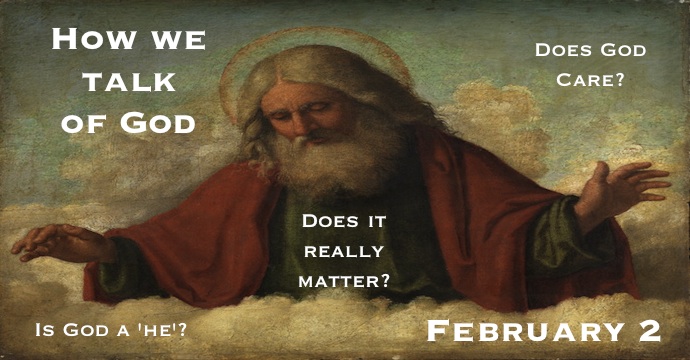
I wanted to share some thoughts coming out of our conversations at the Loft LA. You can listen to the podcast of our gatherings hereName of God Loft

As we near the end of the ‘New Gear for the New Year’ series we have two final topics to cover: the Name of God and the End of the World (or the hope of a future).

If you have listened to the series, you will know that we have covered a lot of controversial topics like prayer, sin and conflict.

You might be looking at this week’s topic about the Name of God and think ‘it doesn’t seem to be as contentious as the rest of the topics in the series’.

You would be wrong.

In a post- 9/11 world there are some profound issues related to Name of God. In a positive sense we are going to look at more that 80 Biblical names for God and attempt to flesh out the beauty and depth that has been largely lost in our English translations of the Bible – where everything gets mashed down to either ‘God’ or ‘Lord’. We lose so much when that happens.

We then want to turn from the rich Biblical tradition and look at how it might inform some very real issues in our modern world.

You may have seen on the news last week that in both Indonesia and Malaysia that the courts made decisions about whether Christians are allowed to use ‘Allah’ as a name for God. In many Muslim countries around the globe, Christians adopt the name for God used in the Koran.

The question has to be asked “Is the God of Abraham, Isaac and Jacob the same for Jews, Muslims and Christians?”

We call them the ‘Abrahamic faiths’ but are they all praying to the same God? I am going to argue that it is even simpler than that. By looking at the old German god named ‘Gud’ (which is still used in Danish and Scandinavian),  we can see how names for God work, evolve, adapt and migrate.

And while we are on the subject, we have to ask about using the masculine ‘He’ when referring to God. In what way are our words used to re-present an idea. Do our words simply stand in for the thing they are supposed to represent? curves_ahead

Are words like road signs? Think of the squiggly-line sign that lets us know that there are winding turns ahead. The sign is inexact in some ways – they don’t tell you the exact number or direction of the twists ahead. The sign is just a symbol that you learn to interpret as you proceed on the road ahead.

So I just wanted to let you know that this week’s topic will be no less complicated than the rest of the series – even if the title looks more docile or simple on the surface.

Doing Theology in the 21st Century. or why Aquinas is a footnote

We are going to have to agree to disagree about some things. One thing that I would ask (in my generous orthodoxy style) is that we both acknowledge those things that we agree on as well as those we don’t.

The reason that is important is because of something that Phyllis Tickle points out (paraphrase): it is not that former (and maybe dominant) expressions go away, it is that they no longer hold the prime spot and wield the kind of power that they once did. They are all still around however. MP900405058

The interesting terrain that we inhabit in the 21st century is littered with artifacts and occupied by pockets of groups – possible ones that were once in the ascendancy. This is, as I am often saying, the bricolage nature of our cultural/societal environment.

You have methodists who have no idea what the methods were. You have ‘Amish’ fireplace stoves being mass-produced and sold on TV (think about it). You have can still, more tellingly, find actual Amish folks if you know where to look.

Here are two things you need to know:

  1. I come to the theological endeavor as a contextual theologian.
  2. In my context, practical theology and its qualitative methods (interviews, case studies, ethnography) is my chosen approach.

There are several implications of these two things. Unlike Tripp, I don’t do systematic theology.* It is not that I don’t value other branches of theology. In fact, practical theology as a field is in a major renovation, at least in part, in order to join the other 4 primary branches of theology that do their own research and provide their own innovations:

  • Historical Theology
  • Biblical Theology
  • Systematic Theology
  • Philosophical Theology

As my professor Kathleen Greider says:

Practical theologians commonly assert that the primary text of our field is lived experience– diverse persons and communities that are contextually located, inextricably related, and experiencing each other through countless interconnections and interactions.

Almost invariably when I am enduring critique from a conversation partner who is more conservative than myself, it is only a matter of time before they bring up Aquinas. I don’t get the nuance of Aquinas. I didn’t distinguish between the early and late Aquinas. I wasn’t careful to appropriate this or that of Aquinas’ formulations. I didn’t read the right translation of Aquinas. (the same things with Barth and Scotus too) 

What I am saying is that we don’t need to understand Aquinas better or deeper. 

We are to do in our day what Aquinas did in his.

As a contextual theologian I don’t think that is accomplished by obsessing over Aquinas. I’m not saying that we aren’t generous or respectful … I’m saying that Aquinas lives neither where we do nor when we do. He lived in a different context and time.

Call this dismissive if you will but  The Church’s future is not to be found in Europe’s past. I say it all the time.

You may disagree with me about this. That is fine. I’m just telling you where I am coming from since our latest TNT has raised some eyebrows, questions (and hackles) both here and on twitter.

Historic thinkers like Aquinas never saw what I call the 5 C’s of our theological context:

  • post-Christendom
  • Colonialism
  • global Capitalism
  • Charismatic renewal (especially Pentecostalism in the Southern Hemisphere)
  • Cultural Revolutions (from Civil Rights in the 60’s to the ‘Arab Spring’)

Add to those 5 to pluralism, the internet and a growing environmental crisis and you have the 8 things we as theologians need to give great attention and care to. They are the context in which (and for which) we do theology in the 21st century. Go listen to our interview with Grace Ji-Sun Kim if you have questions about this. 

You may want to focus more on the christian tradition (like Augustine or Aquinas) and I would understand that – I view that impulse through a Lindbeckian tri-focal lens. I understand the work you want to do within that cultural-linguistic silo. [I’m having fun in this part for those unfamiliar with my style]

Disagree as we might about the importance of a writer in the 3rd or 13th century – I just wanted you to know where I was coming from and what my focus was.**

 I would love it if everyone would leave a comment and let me know how this sits with you. 

_________________

*One implication of that is that when I read systematic theologians I do so though mostly thought trusted secondary sources. Admittedly, I don’t major in primary sources – for reasons I hope are clear in this post. I find scholars who know their stuff like Elizabeth Johnson, John Caputo, Joseph Bracken and Stuart Murray and trust them.

** If you want to read more about my approach check out ‘After MacIntyre’ that I wrote a while ago but never put up on the blog. It will explain my concern about everything from consumerism to hipsters and the radical orthodoxy project.

‘Atheist Churches’ are more traditional than Emergents

I am loving the conversations that have come out of the publicity tour of Sunday Assemblies. The feedback and pushback that is being generated by these ‘atheist churches’ is proving very informative. I am actually learning a lot about how people think of church, atheism, tradition, and community.

If nothing else comes out of their moment in the spotlight, it has been very enlightening. I do, however, think that some more will come out of this.

The most illuminating resource that I have found so far was an interview with co-founder of Sunday Assembly, Pippa Evans on the Nomad Podcast ep. 55. Nomad is based in Britain – as are the comedic co-founders of Sunday Assembly – and Nomad comes out of the ‘fresh expressions’ branch of the emergent movement.

The interview with Pippa (Sanderson Jones, the other co-founder, comes in at the end) is 100% worth your time. The two things that stood out the most to me were:

  1.  Pippa talks about and has adopted the ‘form’ of church.
  2. The Nomad hosts hated it – but for the opposite reason you would think.

1. The Form: Pippa was very clear in several spots about her background in church. The telling part for me, toward the end, was when she mentioned being in Soul Survivor. If you don’t know what that is, you may have missed the reference. Soul Survivor is a very charismatic movement that has developed worship leaders and a style that has been imported around the world – including by US American evangelicals & charismatics.

Pippa explains the formula – it is all about flow:

  • Start with two high energy songs – one of them needs to be familiar and singable
  • A short presentation of poetry or reading (this is like the opening prayer or scripture equivalent)
  • A slower song
  • The offering
  • The sermon (presenting an idea)
  • Response / Confession of thanks (stuff your are grateful for)
  • A big song so that it ends with a bang

Pretty standard stuff! What it reminded me of was the hilarious parody video from a couple of years ago (which started out an in-house joke for a worship conference) about the formula for contemporary evangelical/charismatic worship services.

2. Traditional. The fascinating point that made by the Nomad hosts was that walking into and sitting through a Sunday Assembly was painful because it was reclaiming and repurposing all of the things they disliked about going to traditional church! The whole reason they are into ‘fresh expressions’ is because they found so little in the forms of the church.

They were horrified to walk in and find:

  • people sitting in strait rows
  • everyone facing forward
  • huge screens at the front with song lyrics
  • one person doing all the talking
  • passive participation by the audience
  • it was Sunday morning

My favorite part was when they asked Pippa about the possibility of conversation at future Assemblies.  She was not hopeful or  excited about the idea. She said that some people have asked for a Q&A segment at the Assemblies and that is not likely either. Her point is that things like conversation and Q&A’s happen in other places. That is not what the Sunday Assembly is for.

It was at this point that the Nomad hosts made the observation that – at least in this sense – the ‘atheist churches’ are more traditional than their emergent (fresh expressions) gatherings which have de-centered meetings and deconstructed elements. That was an epiphany for me.

I am so glad that Sunday Assembly is doing this – and even more pleased that they are so approachable about what they are doing and why they are doing it. I have already had more than a dozen conversations about ‘why we do what we do‘ with people. IMG_2181

I can tell you this though – now that I have met in the round and been in conversational church … I don’t know if I could go back to  everybody facing the same direction and not have interactive sermons Sunday after Sunday. I’m pretty sure that the future of the church is de-centered and conversational/participatory.

Let me know what you think – as you can tell, I love hearing others thoughts and being in conversation.   -Bo 

Maybe Fasting Isn’t For Today

This post generated quite a bit of conversation over at HBC. If you want to be encouraged, wander over there and read the amazing comments.

Growing up in a holiness tradition, there was no discipline I held in as high regard as I did fasting. Fasting seemed like the most serious, sacrificial thing could do without going overseas to be a missionary. Fasting was the top of the mountain for people who were really serious about following God.

Admittedly, this perspective may have been colored by being a growing teenage boy. Regardless, it did seem super-spiritual to me at the time.

After High School I got filled with God’s Spirit and called to ministry. Fasting became a discipline that I integrated into my life and training for ministry. It bore good and deep fruit in me and through the years I have encouraged others to integrate fasting into their spiritual disciplines.

I began to lose my confidence in fasting early on in youth ministry. In my first year at a new church, the annual 30-Hour Famine came up on the calendar and all of the youth groups in town participated with gusto. It was a really big deal. I had never heard of it before but we planned the all-nighter events, did the fund raising, and got the supplies for the morning’s pig-out breakfast for when it was all over.

Sometimes you need an extreme example of something along the continuum to expose the flaws you could not perceive when things were more moderate or manageable. The 30 Hour Famine was that event for me.

I have kept track over the 18 years since that event and here are the 5 reasons that I am leery to recommend fasting as a spiritual discipline in the 21st century:

1. We have both an Anorexia and an Obesity epidemic in this country. Both at the same time! This is especially true in our youth. This signals to me that we have an serious food issue that fasting would only serve to inflame.setting-sun

2. Most of us are disconnected from our food supply and the land it is produced on. We have a brand-new-in-history level of separation from where our food comes from. What has happened to farming in the past century added to our consumer habits in the West and you have an epic case of dis-location.

3. We have image issues. We see our reflection in mirrors so many times a day that it would make the saints of century’s past head’s spin! We have security cameras, fashion magazines and selfies on Facebook. Our kids are videotaped nearly non-stop – including when napping!  We think about ourselves and how we look A) all the time  B) in ways that folks from centuries past did not even know was possible. Fasting is not helpful in that scenario. It is just fuel on the fire.

4. We are aware of other people around the world more than ever before. Between the nightly news, social media, and visits from missionaries presenting their pictures and stories we have unprecedented access to the lives and living conditions of people around the world. I’m not sure how fasting works in that context when other people are starving.

5. In a capitalist structure, I’m not sure having kids fast as a fund-raiser for 30 hours, then gorge themselves on pancakes, eggs and sausage at Denny’s is sending the right message.

SO when you put this all together,  I’m not sure fasting has a place in such a chaotic environment. It seems like one of those things that worked in the past – especially in agrarian societies where you could look out the window and see crops and you knew the name of the person who harvested what was sitting on your table that evening.

I would love to hear your thoughts – whether you agree or not.   -Bo

This post in part of an ongoing series on reclaiming spiritual disciplines for the 21st century. You can read the Ancient-Future Faith one here. 

Athiest Churches: a fad or the future?

My news-feed has seen a steady stream of articles about the new trend of ‘atheist churches’ racing by this past week. Much of it seems to revolve around a successful publicity tour by British comedy duo Sanderson Jones and Pippa Evans, who are currently:

 on a tongue-in-cheek “40 Dates, 40 Nights” tour around the U.S. and Australia to drum up donations and help launch new Sunday Assemblies.

It is an impressive campaign. From LA to NY to Nashville and back to San Diego they are taking their roadshow in a revival style to rally the non-religious.  It’s a fascinating attempt. Even if it turns out to be (historically speaking) not much more than a publicity stunt, it is an indicator of something larger.

Many are fond of quoting the statistics:

“The Pew Forum on Religion & Public Life released a study last year that found 20 percent of Americans say they have no religious affiliation, an increase from 15 percent in the last five years.”

Others attempt to qualify and quantify those findings with categorical inconsistencies and clear definition problems*. Still, there is clearly some merit to considering the cultural shift.

 The question has to be asked: Are these atheist churches a blip or a significant trend? 

I think the answer is multifaceted. It is clearly more than a blip and is probably more like an outlier for what will eventually manifest. There is a clear challenge to this type of organization – their attempt to raise $800,000 has only resulted in $50,000 so far. One-night events are fun and exciting… sustaining that kind of energy is a different animal.

Which begs the question, “why would anyone give to, participate, or get excited about something based on what isn’t?”

It is a fun, if novel, moment, but sustaining that and providing direction to an organization-assembly requires more than that. MP9004065481-196x300

Here is the thing though … this is more than just a novelty. The foundations (I use that word intentionally) that we used to be able to count on are eroding. There is no doubt that the old buildings (and the institutions that occupy them) are in danger.

This matters to me. I wrote an essay more than 15 years ago (on a note-pad thank you very much) about the form of the church. As a young pastor I saw the oddity of what we did and how easily most of what we do could be imitated or replaced.

Let me say that again:

 most of what we do as the church could easily be imitated or replaced.

Unfortunately that is the problem with having a successful form. Of course there are always a dedicated minority who is really invested in worship music, liturgy and proclamation. A cynic might say that most people, however, will sing just about any lyrics** that are thrown up on the screen  and from the sermon they really just want some help being better people.

I have held for a long time that technically you could cobble together nearly every element that you get from church by intentionally seeking out a collection of experiences:

  • concert (group singing)
  • dinner/drink with friends (communion)
  • self-help seminar (information/inspiration)
  • AA meeting (accountability/confession)
  • work & give to a charity (contribution/conscience)

Which leaves only two things left to be said!

1. The beauty of the church is that you find all of those things in one place. That is the nearly miraculous thing about that list. It takes so much work to imitate and replicate what is all available in the community of saints.

2. The importance of the word ‘nearly’ . Even with the 5 elements that I suggested, for the believer there is still something missing: the transcendent.

In conclusion, while I see the merit and appeal of ‘atheist assemblies’ as a public announcement and maybe even protest, I am not sure that they are sustainable. What I am more concern with is that Christian churches of every stripe use the opportunity to evaluate what it is that we bring to the lives of people that they can not get anywhere else. I would argue that this is a gospel issue.

* The article is clear that “Pew researchers stressed, however, that the category also encompassed majorities of people who said they believed in God but had no ties with organized religion and people who consider themselves “spiritual” but not “religious.” 

** just look at the huge success of the CCM worship song “Like A Lion” last year

Ancient-Future Faith: Invitation To Conversation

An ‘Ancient-Future’ faith is an idea that gripped me more than a decade ago and, even as I have emerged into a very different expression of my faith, I can not shake. As I have revisited and revised my participation and understanding of the Christian faith, this concept has haunted me in the best of ways.

On the TNT that will come out early this week, I talk about trying to hold onto this idea even as the author who popularized it seemed to go astray/ re-entrench from that original vision before his passing in 2007. I blame it on the post-911 Clash of Civilizations mentality that gripped many white men over a certain age. That is for another day. IMG_2907

I continue to be intrigued by the pairing of practices from previous centuries with communities and expressions fully embedded in the 21st century. There is something beautiful and powerful about matching these two. We are attempting to maintain a healthy continuity with the tradition that we have inherited with a vibrant incarnation in the world that we inhabit.

That is not an easy path to navigate. It is far easier (and more convenient) to either retreat into the romantic silo of the imagined past … or to adapt and adopt every cultural expression that comes into the mall or across the radio waves. Discernment is needed.

Discernment, however, happens after recognition.  Len Sweet*  was the first to introduce me to idea that we are moving from the Gutenberg era to the Google era. While there are many aspects of this cultural shift, the most striking is the shift from black & white words on a page to the multi-media world of image & message. The image and the message compliment (or reinforce) each other and sometimes serve to contrast or challenge each other.  This is something that us ‘digital-natives’ learn to negotiate early and easily. Some would call it second nature – which is an interesting phrase in more than one way.

Here is a video inviting people to our gathering at the Loft LA.  It is a little intro to some of the ideas that I’m talking about.

Ancient Future Faith from Bo Sanders on Vimeo.

I would love to chat with anyone who is interested in these topics. Here is just a quick list of ideas we might want to flesh out in an upcoming blog convo – just let me know below!

  • Sabbath
  • Centering Prayer
  • Ancient-Future Worship
  • Gutenberg to Google
  • The mosaic, collage nature of the 21st century
  • Community discernment
  • Collaboration & contribution
  • Continuity with the tradition & integrity with the moment
  • Post-christian apologetics

Mostly I just wanted to share some of what I am wrestling with in hopes of expanding the conversation.

I look forward to your thoughts.  in Christ -Bo

* another apparent victim of what we talked about earlier

Apple Updates & the Church

I have been thinking about the church and technology a lot lately. Part of it comes from planning to update a sanctuary constructed in 1951. Some of it has to do with recruiting a team to handle all the tech stuff at ‘church plant’. A bit of it came from the odd analogy that was used repeatedly about the ‘glitches’ related to the initial launch of the Affordable Health Care Act website and all of the sigh-up problems. People, including the President, said “yeah but even Apple has glitches when it first launches a product”.

An inexact comparison to be sure.

One of the questions that we are asking at the Loft LA, as we enter into our second year, is:

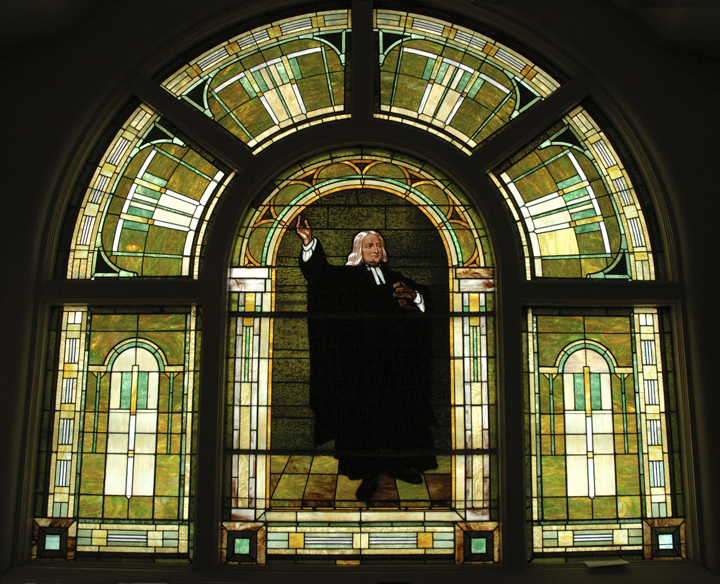
“What does it mean to use the Ancient-Future model of church in West LA?”17-85-BE3-134-08.0006-John Wesley

We come out of a United Methodist Church – which is a classic and beautiful expression of the Mainline tradition of Protestant Christianity.  The Loft is attempting to reclaim and hold onto the best of that inherited tradition … while at the same time engaging the culture around us in way that is contemporary and appropriate.
I’ll confess. It is a tricky section of water to navigate.

To use my favorite bowling analogy, there are gutters on each side that you want to avoid.
On the one side, you have a temptation to cater to the culture and concede so much of the Christian tradition that you have basically assimilated to the surrounding culture that you are nearly indistinguishable from it! This can happen in patterns of consumption, political views, sexuality, financial matters, or any other number of areas.

On the other side, you have the assumption that the inherited tradition, the given forms, are inherently relevant and effective in every place and in ever time since they were divinely delivered and historically proven. What this impulse to conserve leads to is reification of some previous era or expression of church that was culturally appropriate by which has since expired in its effectiveness in doing so. For a group whose gospel is, at its core, about incarnation … this is unacceptable.

This is why we think that the ‘Ancient-Future model’ of church is the best way forward for a young community.
Here is a short video about my recent experience with an old Apple TV that was given to me and why it triggered some thoughts about christian community for me.

Apple Updates and the Church from Bo Sanders on Vimeo.

In technology, when you fall enough behind on your updates, you can actually trap yourself with the inability to update. This is the definition of irrelevant. The christian spirituality that is employed in much of the North American church may be in this kind of danger. I am nervous that we are looking to get resources (updates) from sources (servers) that don’t exist anymore.

We are looking for solutions in things that don’t exist anymore.

The danger, for a religion that is at its core incarnation, is that the inability to be conversant with the surrounding culture in the epitome of irrelevance.

__________

Ancient-Future is a model that was popularized by Robert Webber before he changed his emphasis, focus and tone at the end of his life. His books on Faith, Worship, Evangelism and Time are supremely helpful and informative. 

My quoting him does not imply a wholesale endorsement of all of his works or thoughts. 

Religion and Consumerism’s Bricolage: in conversation with Philip Clayton

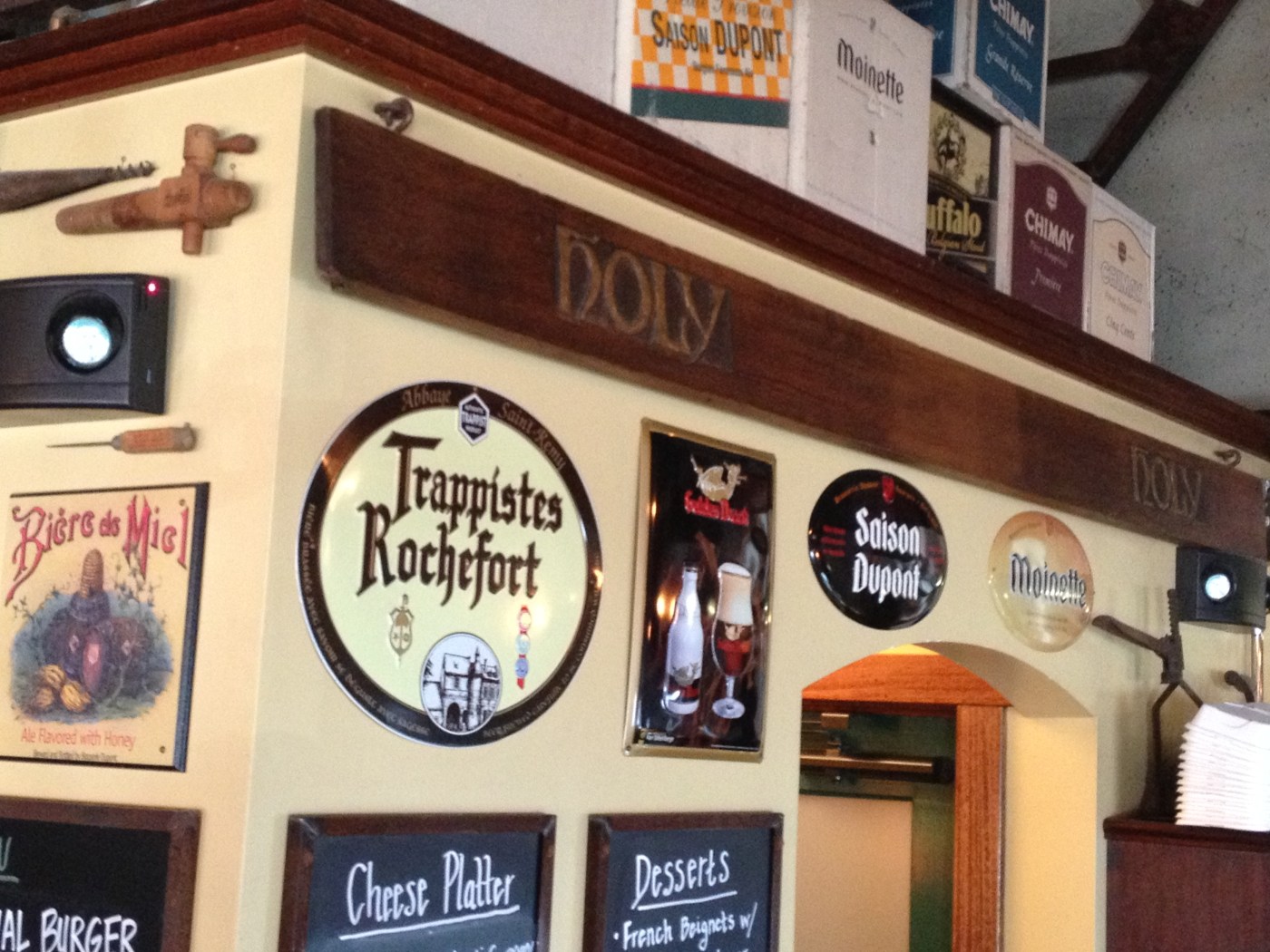
A couple of weeks ago I had a very interesting conversation with Philip Clayton. Several of us went out for lunch after the High Gravity session on Religion & Science. We were at a restaurant where the walls were decorated with a busy collection of reclaimed signs, old pictures and re-purposed trinkets.

Dr. Clayton was across the table from me and at one point I look up to notice that above his head was a sign that read ‘Holy’ on one side and ‘Holy’ at the other end. The words ‘Holy – Holy’ were framing either side of his head. IMG_2884

I tried to come up with something clever to say, scouring my memory for some passage from the Hebrew Bible or the book of Revelation to tweak. The window of opportunity closed because the conversation was quite intense. That morning the topic had been ‘Science & Religion’ and now we had expanded it to ‘Religion & Society’ – or more specifically to ‘Church & Culture’.

The conversation intensified and it became clear that neither Dr. Clayton nor Tripp was too happy with my cynical take on consumer mentalities when it comes to consuming religious experiences within a capitalist framework.

At one point I said “it is like that sign behind you: it’s not like the holy is absent from the space and all the activity that happening here – it’s just that it blends in and goes unnoticed in the midst of all the bricolage that it melts into.”

Somebody had reclaimed that wooden sign. There is a story behind it – there might have even been more to it (I wondered if it used to have a 3rd ‘Holy’ further down the line that had been lost).

But that is my point! In any gathering there are going to be those (like us at that table) who think that what is happening is legitimate, sincere, authentic, important and worth organizing your life around. The congregation is also going to be largely made up of those who are consuming a religious experience – and it is financially worth about the same amount as a movie, a meal, a game or a show.*

I will go even further: this is my great hesitation with those who want to ‘go back’ or ‘conserve’ with their religious participation. This impulse was never more evident to me than when I began interacting with those were into Radical Orthodoxy or with evangelicals who had converted to Eastern Orthodoxy or Catholicism. The ‘zeal of the convert’ can be a telling element when it comes to the anti-modern or counter-modern impulse.

An incongruity is exposed in the counter-modern impulse of these conserving movements. Never mind for a moment that often what is being conserved is born out of a patriarchal model – set that aside for a second.

I will attempt to make this in 4 succinct points:

  1. You do not live in the 14th or 16th century.
  2. You do not think like someone in a previous century.
  3. You do not engage in the rest of your week as someone in a previous century.
  4. You chose, as a consumer within a capitalist framework, to participate.

Those four things signal to me that even the most sincere, authentic, devout, and thorough engagement – whether a Pentecostal, Evangelical, Orthodox, Anglican, RO, Catholic, Mainline or Congregational expression – must account for the ubiquitous consumerism within which we all are saturated.

Dr. Clayton rightly said that I while I had a good point I was proceeding in far too cynical a manner with it. He is correct of course.

My aggressiveness is born out of a deep concern. What we say the church is about – what we believe the very gospel to be – is so vital and so needed in the world today, that we can not afford to ‘play pretend’ about previous centuries and blindly participate in consumerism all the while trumpeting the virtue of our chosen ecclesiastic community.**

The danger, in my opinion, is that religious communities will become nothing more than decorations on the corner of a neighborhood or one more option at the mall food-court. 

For christian believers, the holy is all round us. We can not afford for it to disappear among the bricolage nature of our hyper-advertised media-saturated existence.

The gospel, at its core, is incarnational. Our central story as Christians is flesh and blood in a neighborhood. The whole project is contextual – it only happens in a time and a place. We can never escape that. That is why romantic notions of past centuries or early manifestations can be dangerous distractions and fantastical facades.

We can’t afford to fade into the bricolage. IMG_2886


* plus it usually comes with free babysitting. 

** Some might object that they have not chosen but rather have ‘stayed’. I would argue that they did within the consumer’s capacity to do so. 

Create a free website or blog at WordPress.com.

Up ↑