Search

Bo Sanders: Public Theology

updating & innovating for today

Category

Church

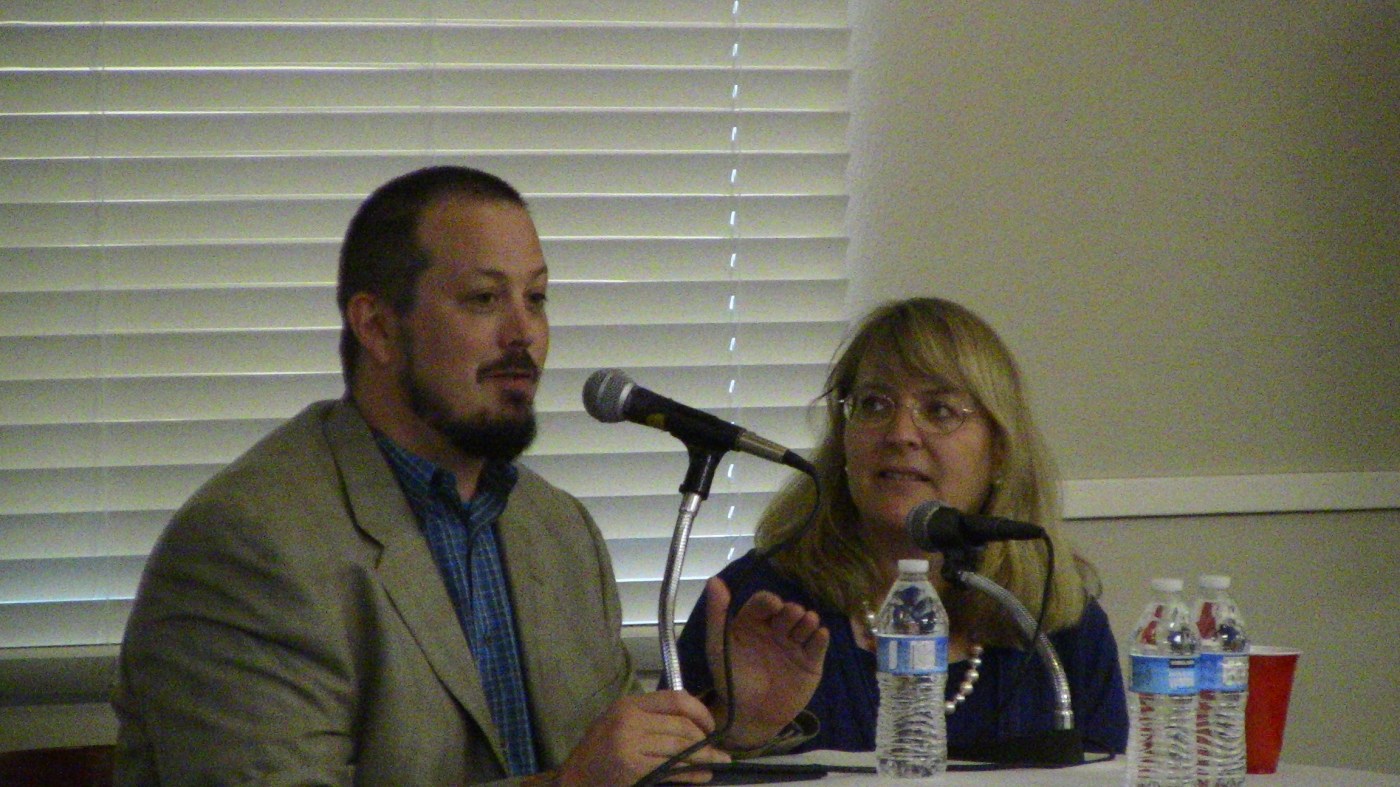
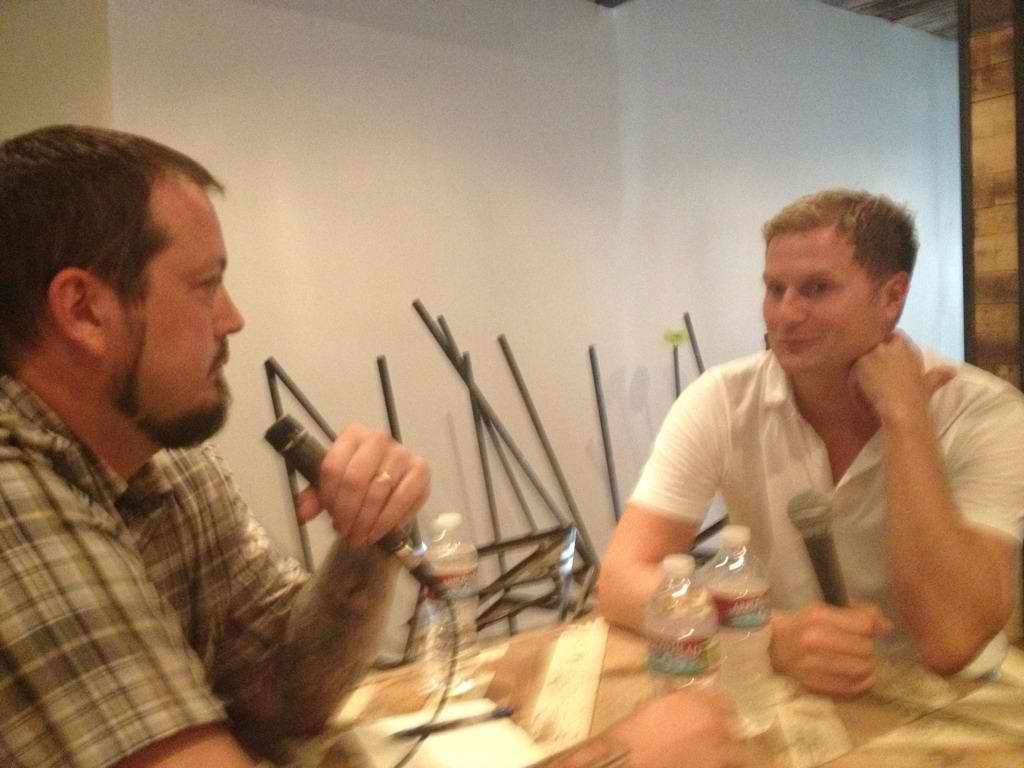
I asked Rob Bell about planting another church – he talked about Eucharist

In the a recent episode of Homebrewed Christianity, I asked Rob Bell what he would do if he were starting from scratch again.  I was particularly intrigued for three main reasons:
1) I actually am starting a new gathering so I wanted to pick his brain.
2) Bell is so creative and innovative – who better to ask?
3) His answer was somewhat surprising.

“I would have Eucharist a lot. And I would make it really clear to everybody that the Eucharist is our only hope. Because otherwise, there’s a thousand forces – the entropy is overwhelming…preferences and particularities…there are a thousand ways for a church to go in all these different directions – you end up just barely being able to hold it all together. But if you have the bread and the wine, and on a really regular basis, you put the bread and wine on the table and you say “Okay everybody – here you go: Body broken, blood poured out…”

I am not the most sacramental minister in the world so I pressed him on it a little bit. I said that both my co-pastor and folks like Nadia Bolz-Weber are really sold that Eucharist is the thing! I have even heard some RO types say that it is the only thing that can fix the world.

I heard  that and thought … look, I like communion as much as most (I would guess)  – but really Rob? The eucharist?  So I said (basically) “Yeah, I guess I’m just not that into it.  I’m more relational about it.”  By that I meant that when we sit at any table, the Spirit of Christ is with us and in that sense we are communing. When it is at church and we have special elements, it is Communion (capital C). I just don’t get into the ‘real presence’ thing at any level.

Don’t get me wrong. I love Roger Haight (and his book Jesus: Symbol of God).  I get the difference between a sign, symbol, and sacrament. I was just a little surprised that if Rob Bell were going to start from scratch … Eucharist is the first thing on the table?  (pun intended)

Rob doubled down. He said “Well it is relational!” He went on to clarify that you put the bread and the cup on the table and then ask:

“Alright – everyone have their rent payed this month? Anyone have any medical bills?”

I was stopped in my tracks. I was inspired. I even said to Rob that he almost converted me.

It’s moments like that where you realize when we say Eucharist or Communion … we may not all be saying the same thing.   It is sad at one level.  It is also inspiring at another level.

All I know is that I sure am glad that I asked that follow up question. Bell gave an incredible answer and really has me thinking about community, service and communion differently.

I recognize the gap between my and Rob’s take on this … but he has me thinking.


The Problem with Waiting for Superman

I had an interesting conversation with a friend of mine about Christopher Reeve. As you may remember the rich movie star, famous for his role as Superman, was tossed from his show horse and broke his neck resulting in paralysis. He soon began a campaign to bring awareness for the cause of such things as paralysis.

I was talking to this friend of mine who subscribes to the idea that everything is in God’s hands and everything happens for a reason (since God is in control). I was making the point that since Mr. Reeve did not care about such things as paralysis before he fell off a horse, it calls into question whether he is doing his now benevolent work for an ego-centric reason since he is campaigning for the very condition from which he suffers. ?
My point was that it would have been remarkable if some superstar or famous person cared about something before it impacted them personally. It intrigues me to see someone standing up for something that wasn’t just their back yard.
My friend thought that this was ridiculous. And said that there is a divine plan in such matters and that the proud will be humbled so that they can do this kind of work. I think that there is a great danger in the kind of thinking.

1. We are not only to care about things that directly impact us. One of the major points of Jesus‘ teaching was to care for those who couldn’t or didn’t return the favor. If we only love those who love us, what have we done? Everyone does that. If we invite to dinner only those who will reciprocate, what good is that? Even the pharisees do that. If we keep our energy and influence within a circle of economy that ultimately benefits us and ours, what value is there? Even the pagans do that.

We are supposed to be a people who look outside ourselves. Who reach out to those just beyond our natural reach. To work for those who don’t (and maybe can’t) pay us back. To folks who circles of economy don’t immediately overlap with our wealth of influence and credibility.

2. Unless we are going to adopt (or wholesale buy into) a form of divine ordination of things like the myth of progressive society, manifest destiny, social darwinism or historic inevitability – then we are on thin ice with this kind of thinking.

When I was a Sr. Pastor my wife was the director of Rape Crisis for the county which was a part of the Domestic Violence hotline. I have heard so many times over the past 20 years of being in ministry some configuration of ‘God allowed this to happen so that the victim can now help other victims/ work on the problem’. This both terrifies me (about our view of God) and infuriates me (double wounding the victim).

I get wanting to say that God was not absent from care in the situation. I do. But because we concede the omnipotence idea initially we run into that overly simple binary that if God is loving why didn’t then ‘he’ is not all-powerful and if God is all-powerful then ‘he’ is not loving. This will never get us anywhere.
We need to have a real theology of sin and a real anthropology. It is not enough to simply quote watered down clichés of something Europeans held to in the 17th and 18th centuries.

3. We are fools if we don’t think that things outside our backyard don’t effect us. There is no such thing as an individual. Every time we say ‘individual’ we must say ‘an individual in community’. There is no individual. It is an enlightenment fraud. You were born into a family, socialized into a society, you don’t speak a private language and you are intimately tied to those around you and the earth that upholds you.

So much of our short-sighted thinking acts as if we are not inter-connected in a web of relationships. Communities, cultures, economies, environments, and families are both related and in some way impacted by each other. To think otherwise is not simply foolish but sheer fantasy. What happens over there impacts us over here.

In fact, I would expand it one ring further: I need the other. I am missing something that they can supply and God has designed-called us into a mutuality and partnership that strengthens us all. I am in as much need of what they have as they are of what I bring. We need each other.

The old saying is lacking. Walking a mile in someone else’s shoes is impossible – it can’t be done. You can not have someone else’s experience. The best we can do is to build a friendship of trust, where someone tells me their story – shares with me the truth of their experience and I believe them.

When it comes to matters of race, gender and sexuality I think that we should admit that we all have something at stake in the conversation. Matters of race and color are not only important to non-whites. Gender isn’t something that only women should care about. Sexuality is not just a conversation about same-sex attraction. By not addressing issues of privilege and the fantasy of individualism we are stunting the conversation and the scope of our impact.

To summarize:

  • Jesus both modeled and taught that we are to care about more than just things that impact us directly.
  • Unless we think that this world is how God wants it to be, we need to revisit some really bad ideas we have inherited.
  • We are fooling ourselves if we think that what happens over there does not impact us over here. We are all in this together – and in fact, we need each other. God designed it that way.

Let me give you three examples:

  1. In the documentary ‘Waiting for Superman’, public education and problems with our school systems are detailed. It is a heartbreaking situation. If you don’t think that in our lifetime, that will not impact everyone of us …
  2. We have a problem in our prisons. What some call the Prison Industrial Complex and what Michelle Alexander calls the New Jim Crow is at epidemic proportions. We have a higher percentage of black men in prison in the US than South Africa had during apartheid. Half of all inmates are black. One-quarter of all African American males in their 20’s are in prison, on probation, on parole, or awaiting trial. You think that doesn’t affect us all?
  3. Domestic violence against women is the leading cause of injury – resulting in more emergency room visits than car crashes, muggings and rapes combined. What is said from our pulpits about this?

Here is why I bring this up:  if the christian gospel is supposed to be the solution – the antidote to the sin-sickness that ails us – but it continues to conceptualize the issues the way it does and participate in the culture wars the way it is … then we have a problem. The thing that is supposed to help make us well is actually contributing to the disease of ‘me and mine’. If that is the case, then what hope is there? At that point, we would no longer have the power of the gospel, we would have some odd mutation or amalgamation of some civil religion with vaguely christian veneer.

May it never be. What happens over there impacts us over here. We need each other. God designed us this way and Jesus both taught and modeled this way for us. If I only care about those things that impact me or only reach out to those who can profit me – what have I really done. Even the pharisees do that. We are to have an eye toward a kin-dom that doesn’t work the way this world does.

[tomorrow in part 2 I’ll explain why fundamentalism is pornography] 
Certainty: the difference between emergents and fundamentalists

In chapter 7 of Predicament of Belief, Philip Clayton introduces a 6 tiered scale of epistemic certainty. Things that are nearly universally agreed upon (by the ‘community of experts’) are at a level 1. Issues like ‘Ultimate Reality’ that can not be verified but can deduced in relative certainty are at a level 2. Matters of specific religions might be a level 3. Issues particular to branches within a religion would be level 4.

Clayton has pointed out in his podcast appearances how important this type of scale is. In decades past, there seemed to be a collective ability to recognize nuance and to acknowledge differentiation between ‘core’ and ‘peripheral’ matters.

In the current climate of polarized animosity, we seem to have lost the ability to distinguish. Now everything is core.

The other way to say it is that instead of ranking issues in importance on a scale of 1-10 or holding to beliefs and theories at different levels of epistemic certainty, now everything is held at level 10.

Merold Westphal said the same type of thing in his podcast visit. Belief in the resurrection should not be held at the same level theories about the rapture (for instance).

The Reformers made an important distinction about matters of adiaphora and those essential to faith. Centuries later, I think we should at least start but reclaiming that distinction (at a minimum) and probably need to adopt something similar to Clayton’s scale to reflect the complexity of religious and inter-religious issues.

I was explaining this epistemic certainty thing to a friend a while ago. I said that I held Clayton’s real presence resurrection at like a 7 or 8 (out of 10). Process at a 8 or 9. Linbeck’s post-liberalism at a 5 or 6. Pannenberg’s eschatology at a 3 or 4. The virgin birth at like a 1. That the virgin birth provides a literary function in Matthew and Luke I hold at a 9 or 10.

My friend was shocked. He said “You are not a 10 on everything? I assumed that you held everything at a 10. When I knew you as an Evangelist, you sounded certain of everything. I just assumed that you were equally certain now.”

Now, he can be forgiven at several levels.

  1. We are both from a background where everything is a 10 and if you believe it, it is core. Nuance is not a part of the game.
  2. My voice is mostly the same as it was 10 years ago, so unless I specifically clarify or qualify the statement – it probably sounds identical.
  3. If you haven’t read Predicament of Belief or been exposed to a sliding scale of epistemic certainty or something similar … you may just assume matters of faith are held at a 10.

This, to me is the second biggest difference between say an emergent type and a fundamentalist. The first is willingness to engage scholarship and advancements in science.  The second is this ability to distinguish appropriate levels of certainty about things.

I think that it would be fun to add to all my future blogs an EC rating – “epistemic certainty” on a scale of 1-10. That way if I was talking about eschatology, folks would know to read it at a 2 (for instance). When we talk about Jesus walking on the water – a 4. The dipolar nature of the Process God – a 7.

This is a game-changer for many. As I get to talk to more and more people are migrating, emerging, adapting, and awakening to the multiplicity of possibilities within Christian theology,  just knowing that not everything needs to be held at a 10 is freeing and energizing.

 * I would go back and retrofit my recent posts with an EC rating – but my posts on pluralism and homosexuality have already caused such a stir, I would hate to mess with folk’s heads at this point.

People Do Change Their Minds

Recently I was reading an article by Richard A. Muller called “The Conversion of a Climate-Change Skeptic” in the NY Times. Muller is a professor of physics at the University of California, Berkeley, and is the author of “Energy for Future Presidents: The Science Behind the Headlines.” Muller begins by saying:

Three years ago I identified problems in previous climate studies that, in my mind, threw doubt on the very existence of global warming. Last year, following an intensive research effort involving a dozen scientists, I concluded that global warming was real and that the prior estimates of the rate of warming were correct. I’m now going a step further: Humans are almost entirely the cause.

Muller ends by saying:

 Science is that narrow realm of knowledge that, in principle, is universally accepted. I embarked on this analysis to answer questions that, to my mind, had not been answered. I hope that the Berkeley Earth analysis will help settle the scientific debate regarding global warming and its human causes. Then comes the difficult part: agreeing across the political and diplomatic spectrum about what can and should be done.

This made my think back to an article that I had read a month ago by Kevin DeYoung entitled “Why No Denomination Will Survive the Homosexuality Crisis”. DeYoung basically says that we are all talking past each other and that there is no way that conservatives, liberals and those want a compromise can ever get along or agree.

His conclusion is:

 “My plea is for these denominations to make a definitive stand. Make it right, left, or center, but make one and make it clearly. Insist that member churches and pastors hold to this position. And then graciously open a big door for any pastor or church who cannot live in this theological space to exit with their dignity, their time, and their property. Because sometimes the best way to preserve unity is to admit that we don’t have it.”

 I feel for DeYoung. He is in a tough ecclesiastic place. But … I have to respectfully disagree. After all, people do change their minds. 

Here is the odd part of this conversation: Things are not static. People are not givens, and views are not set in stone. Things change.

Now there is a caveat.

What I would want to bring to attention is that in both the issue of climate change and homosexuality (and I would add emergent evolution) the migration is not symmetrical. The movement is predominately one way traffic.

I don’t think that the issue of LGBT rights is as much of a forgone conclusion as some others. I do not think that it as inevitable as I often hear. I think that there is a lot of hard work ahead to educate, to protect and to actually legislate.

But here is why I am hopeful. Having a friend who is gay is how so many young people report changing their minds on the issue. It’s amazing – knowing someone who is gay, being a friend is a powerful influence. That element paired with advancements in science bringing greater explanation are major reasons for hope.

People who grow up in Bible believing churches, have a gay friend and figure out the need to read the Bible different on that issue. But rarely does the migration happen the other way. Somebody is ok with their gay friends, then reads the Bible and says “hey I think that this 3,000 year old understanding of sexuality is more accurate than what scientist, sociologist, and psychologist are telling us today.”

That is why I am hopeful. Not because it is inevitable. Not because ‘gay is the new black’. No – I am hopeful because the movement is almost exclusively one way traffic and because having a friend can be such a powerful influence.

In both climate change and evolution – people do change their minds. Mostly based on science. But in the realm of human relationship, there is nothing like a friend.*

So I would like speak against Mr. DeYoung’s proposal and put forward a counter-proposal:

I make a motion that we give it time. That was don’t initiate a parting of the ways. That we live in the uncomfortable tension and let God sort it out as God’s Spirit works within us, among us, and all around us. That we acknowledge the plurality of perspectives and we don’t make this a terminal issue to the relationship. 

Can I get a second? 

-Bo

*p.s. I know that somebody is going to come on and post that there is someone at their church who ‘wants out of the gay life style’ and that reinforced their previously held view.  The thing is that within the construct of a church culture where one is told to ‘pray away the gay’ (to use a common phrase) is it the same kind of friendship I am talking about. If you are the ‘healthy’ or normal one and you are wanting to change them … it’s not exactly a symmetrical mutuality.  When someone is under shame from the institutional frameworks of the church, they are not free to be the kind of friend who is most likely to change one’s mind.

Diana Butler Bass and those non-human animals

Earlier this month I got to sit down with Diana Butler Bass and ask her about everything from her new book’s title Christianity After Religion to the Methodist tradition and why Evangelical young people are 30 years behind.

It was a blast! [you can hear the audio here]

At the end of the hour, the last question was put forward by Darcy who asked about something Diana had alluded to in the Methodist question. Butler Bass had said that the early Methodist had historically A) ministered to the fringes and B) gone to the frontiers.

It was the fringes and the frontiers that Darcy wanted to know about. Only, she was not asking about the past. She wanted to know about the present.

 Who are on the fringes today and where is the frontier for us?

This is possibly the best question I have heard asked at one of our live events. 

Diana didn’t flinch. She outlined three such scenarios that would qualify:

The first was in the realm of sexuality.
The second was in the realm of pluralism.
The third dealt with our environment.

  •  In sexuality she articulated issues related to the transgendered community. This did not surprise me. In the LGBT formulation, T (transgendered) is the the one the raises eyebrows. Now, because I am came to this conversation through a friend who was doing Queer theology, I had initially taken the LGBTQ as a 5-part alliance. I did not realize how difficult the T can be (not to mention the Q) until I starting asking question and listening to stories. I quickly became aware of the complexities and complications involved.

In the two weeks since Diana’s answer I have had several conversation about her take and I have realized how much conversation has yet to be had. May God give us grace as we learn from each other.

  •  In religion she mentioned learning from Hindu friends. As a student at Claremont School of Theology I am very invested in and more than on board with the idea of inter-religious learning. Yesterday was my day off and so I (as Christian) headed to a Jewish bakery to  sit and listen to an audio recording I had about diversity within Islam.

I am always shocked at how much I don’t know and how much beauty there is within each tradition. May God give us grace as we learn from each other.

  •  In issues of environment and ecology, I like to think of myself as up to speed. This is a subject I have really investigated and as someone mentored by Randy Woodley (his new book Shalom and the Kingdom of Creation was just released and he will be on the podcast next week) I was tracking with her when she talked about non-human animals [I often allude to Nipples & Belly Buttons in this regard].

It should not have been surprising to me that with the release of the video of our conversation that she came under some suspicion by a group called IRB  (Institute on Religion and Democracy) as well as others for  her views on non-human animals.

From the blog Juicy Ecumenism here is the end of Diana’s answer and their commentary:

“Non-human animals and their experience of our environment of the divine are a place that human animals need to listen in order to create more full understanding of God’s creation. […] They don’t have voices like humans do, but isn’t that part of my prejudice?”

I don’t like to bring up the slippery slope, but the mud’s looking pretty slick from here.

What IS surprising to me is that – of her three answers about the fringes and frontiers – that seemed to be the least inflammatory of the three answers!

In my humble opinion, her pluralism answer and her sexuality answer were FAR more daring – and challenging! The only thing that I can figure is that some Christians have so bought into the Cartesian dualism regarding humans that both Transgendered and Hindu folks are completely off their radar screen … but don’t you DARE say what you said about listening to non-human animals.

I was prepared to defend Diana Butler Bass after our show – she said some daring things –  I just didn’t think that it would be on the issue of creation-care over sexuality and pluralism.

This contemporary religious environment will never cease to surprise me.

God Never Changes … or does She?

I got an email from a friend asking me:

“ … there’s just one thing that I’m still not sure about: the idea that God changes over time. And the reason this bugs me is because, to me, that means we can never know who/what God is. How do we know that God really is love? What if God really use to be as violent as He/She/It was back in the Old Testament?”

I thought it would be good to post part of my response here and compare notes (theology, after all, is dialogical).

 There are 3 things that we need to flesh out (pun intended) about this question:

1. While God may not change, how humans view and speak of that God evolves. There is little doubt that over the centuries how we conceptualize and even construct our language about God (or Gods) has changed, adapted, morphed, absorbed and modified.  There is no reason to shy away from that. It is a healthy response to growing awareness and – I will even say – progressing revelation.

God is at work in our midst and God has also given us Holy Spirit to lead us and guide us. We say that God is infinite, but as I have heard it said “then no matter how much we know about God – there is infinitely more to know.”

The only objection to this seem to be a ‘you think that your better than them?’ defense of the ancients. Seriously – that is the only real defense I hear of conserving antiquated notions of God. Don’t you dare going moving stuff and changing what they set down! 

That is silly. We must acknowledge as Merold Westphal told us in his visit to the podcast that all our knowledge is situated or what we call perspectival. This is where Elizabeth Johnson’s book “She Who Is” becomes so valuable. I wrote about this in ‘She Who Is Not’ and ‘Horse Gods’.

2. Many groups and thinkers would challenge the notion that God doesn’t change. As Keith Ward points out in God: a guide for the perplexed 

 “ it is important the see how different the classical view is from the popular view. Whatever the Trinity is, it cannot consist of three distinct ‘parts’ in God, who has no parts. Whatever is meant by ‘God becoming man’ is cannot mean that God changes by taking on human flesh. Whatever is meant by the Holy Spirit working to sanctify the hearts of man and women, it cannot mean that God is actually changing by acting like a finite being in history. All statements about God changing and acting, wether they are in the Bible of not, must be metaphors, All changes are in finite things, and not in God, who is changeless.”

Ya see – the old Platonic conception of changeless ideals means that there could not have really been an incarnation. The stories in the Old Testament about God ‘changing his mind’ must be anthropomorphism. You run into to real problems really quick if you say that God never changes.

Now, having said that – we can say, as a matter of faith, that the character and nature of God never changes. In fact, I would go as far as to say that when we say that God never changes, what we are commenting on is God’s loving nature. You want to know why I can say that so confidently as a Christian …. it’s because I believe that the highest  revelation that we have of God in this world is in Jesus.

 3. Process thinkers have an especially helpful take on this.  Built into a Process theology is a dipolar nature of God.  They distinguish between the Primordial nature or God and the Consequential Nature  (some get even more advanced and add a Superjective nature … but that is for another time.)   The Primordial nature sets out all the possibilities  – the Consequential nature is the perfection of the divine experience. Therefor the Primordial nature of God, what God desires, is preserved and can be said to ‘never change’ while God is fully participatory and even impacted by what happens.

 What are your thoughts?  Is there anything I could add to make this stronger? 

Lean-Tos and Creeds: temporary structures for the journey

I am a big fan of the early churches’ creeds. I appreciate them for their historical significance, for the trajectory that they provide, and for their value as snapshots in the formation of the tradition.

In fact, as a contextual theologian, I adore them as amazing time-capsules of expressions from a very particular time and a definite location. They tell us so much about what was going on, what was a stake, what was being combated and what was already established and settled.

I actually have no problem with the creeds. My problem comes from what certain folks want to do with ‘the Creeds’ and what they try to make them into. Let’s be clear about what they are not:

  • They are not timeless and universal expressions. They are very timely and remarkably located.
  • They are not litmus tests for modern orthodoxy. There is no sense in retreating into ecclesiastic silos, playing pre-modern word games, or burying our head in the historical sand. Too much has happened, too much has changed and there is too much on the line.
  • They are not houses to live in. They are lean-tos (temporary shelters) that were erected along the way. We are still to continue our journey and travel on in our day – in the world that is – and not set up camp in the imagined past.

This is my word picture. The Creeds are lean-tos. They are not museums designed to preserve nor are the cathedrals to be maintained. They are temporary shelters – built with the best materials that were available at the time and in that place. They aren’t blueprints of how every shelter needs to be constructed nor are they houses to be reinforced and guarded. They fulfilled their purpose and provided shelter on the journey.

Christian who get protective of or defensive about the creeds are like people who are hiking with their family, build lean-to out of love for the family and then get mad at the family when it is time to leave the lean-to and continue hiking.

Or like people who love watching birds so they knock out a wall in their house to install a whole side of windows and sky-lights for bird watching. But then they become so fixated on cleaning the glass then they stopped watching the birds and actually get annoyed at the birds for dropping what birds are prone to drop.

The creeds are great. I am so thankful them as historic documents, as developmental snapshots and as contextual expressions.
What I am not so thrilled about is people who get nasty about them, defensive or aggressive. I think it is so odd that they are about things like God’s love and divine relationship… but that they can make someone behave so unloving and take them out of relationship!

I like the creeds. I just don’t like what they do to people who take them too seriously. Like lean-tos, they served their purpose. They were great. Time to move on. We are still on a journey.
___________
p.s.  I meant to include this in the post but forgot. I have since said it 3 comments – so I decided to add it.

“Like the book of Revelation and the Creeds –  we should attempt to do for our culture and day what they were attempting to do for their culture and day.”

Eucharist isn’t Enough to Combat Consumer

Early today I wrote about my appreciation for a book by John Reader entitled Reconstructing Practical Theology: the Impact of Globalization. I mentioned his use of Zombie Categories and promised to tackle a specific issue today.

Globalization and technological developments pose unique challenges and potential assaults on the conception of “self”.  Reader examines three manifestations of these developments: Self as Commodity, Self as Consumer, and Self as Project.  While admittedly the “human capacity to reduce oneself to an object is nothing new”, there is a unique capacity for the loss of dignity and of ones integrity that is of significant concern for issues of ministry.

When an individual views themselves as a commodity, defines themselves as a consumer, or constructs a new identity to project there are social behaviors that have communal implications involved at every level of engagement. Each implication carries a legitimate concern regarding community and pastoral care.

Reader addresses specific concerns about globalization by interacting with writers from various camps who are attempting innovative critiques or corrections to some of the challenges provided in globalization. At one point he examines Radical Orthodoxy and the approach of John Millbank and William Cavanaugh, who promote the Eucharist as an antidote to globalization’s blurring of boundaries.

It is suggested that globalization fragments space and dislocates the individual from location and community as a result of the fragmentation. Whereas “globalization is a master narrative, one which claims universal truth and authority for itself”, Eucharist is promoted as being trans-historical by collapsing “all spatial and temporal divisions” in its catholicity.

Reader has serious concerns about Cavanagh’s (and Radical Orthodoxy’s) solutions to globalization’s challenges:

I will next raise some questions and reservations about his solution to the problem of how Christianity might be a site of resistance to the excesses of global capitalism. The value of his book is that it draws out issues which are central for practical theology as it engages with globalization and one can agree with his analysis without agreeing with the proposed antidote.

This provides a significant distinction for Reader will readily agree with Cavanaugh’s (and Milbank’s) analysis of the zombie categories and strongly affirm the profound danger of the commodification of church and the packaging of religious programming for appeal to a consumer driven market.

It is crucial that communities first acknowledge the realities of globalization and its impact upon the congregation (including the individual members that make up the congregation) or else it will be in danger of becoming an enclave that has simply created a fantasy for use during meeting times. Groups that do this create a toxic dichotomy in the lives of members – one while the group is together and another for the real world outside the meeting. While innovative approaches are much needed and deeply appreciated they must be constructed in full awareness and admission of the epic shifts happening in every society.

This really hit home with me for several reasons. The biggest reason is just how much I hear about communion. As one who has emerged from an evangelical upbringing, participates in the emergent conversation and is employed at a mainline church – I hear about the importance of Eucharist, communion and breaking bread. While I am willing to admit that there might be something I am just not getting about this issue, I am shocked at how much stock the folks I interact with talk about it.  And it’s a diverse group of folks:

  • New-monastics in intentional community
  • Lutherans
  • United Methodists
  • Emergent types
  • Radical Orthodox
  • House Church folks

That is quite a spread. So I should probably admit that I have never bought into trans or con substantiation. I am allergic to the whole debate about ‘real presence’ and I am nervous anytime someone calls it ‘sacrament’ hoping that they actually know what sacramental means theologically and are not just using that like religious ‘special sauce’ to sprinkle on things we want to give elevated importance to.

 I think that it is beautiful symbol, an important ceremony and true sacrament. So this thing that the Rad. O folks try and do to use Eucharist to combat consumerism is just funky to me. Its not just a stretch – it might be missing the point all together. Do we need to combat consumerism? Yes.  Is this the way to do it?  I don’t think so.

Having said that, I will agree with two things:

  1. Communion can combat consumerism. I’m not talking about the Eucharist, I’m talking about actually communing – sitting around a table and eating bread with others while talking about Jesus and being the body of Christ. But a religious ceremony, especially one that is administered by salaried officials? I don’t think so.
  2. The only way that I could get behind this Eucharist idea is if the wheat for the bread was grown by community and the soil that the grapes grew in was known and visited by them! IF communion was a way to reconnect with the earth and with a location – THEN I could get down with the suggestion. That would combat combat consumerism is a significant way.  But then again, I suppose at this point I am really supporting localism and not anything to do with Eucharist!

Consumerism needs combating. I just don’t think that rehabilitating old categories and ancient practices are going to be the solution. I do think that ancient practices should be a vital part of a whole integrated approach and an import anchor in the church’s web of meaning. I just get nervous when there is so much importance placed on Eucharist and that is often the first, and sometimes only, thing mentioned.

But if we go buy the bread and juice then provide people a religious service of them consuming it like they would a biscotti and latte?  They leave the transaction feeling better about themselves … that might actually be feeding their consumeristic mentality!

__________

When I first posted this at HBC, I got lots of good feedback and some pretty heavy pushback. One of the main concerns was that I didn’t put forward enough positive alternatives. (tough to do in under 1000 words) so I will endeavor to concoct a post with some positive alternatives 😉

__________

Thoughts? Questions? Concerns? Cautions?    -Bo

Church & State are Married in a Civil Union

Originally published at HBC

A good questions can get to the heart of an issue – or expose the underlying assumptions that lie behind an issue.

I learned early on in ministry to ask a simple question about marriage: If I as an ordained minister perform a wedding ceremony for a couple, but they have not secured a license from the state, then when I say “Before God and all these witnesses – I pronounce that you are husband and wife. What God has joined together, let no one separate.” Are they married?

Overwhelmingly the answer is ‘no’. That they are not married until that paper is signed and it is legal.
So it is indeed that piece of paper that is marriage and not the Christian ceremony that we perform.

This actually happened to me one time. A young couple had secured the marriage license but in all the fun and frivolity of the reception and photos, they forgot to get the paper signed. They were just about to get on the Cruise ship when they realized the mistake!
No big deal, we got it taken care of. What was a big deal was the family’s reaction! What would have happened if they had consummated the union and they weren’t even married??? (legally).

If what we are doing is nothing more than a thin Christian veneer over a civil institution, then one has to wonder why we are also so concerned about who can get married – or even have civil unions – according to our biblical morality.

It seems that the Church wants it’s wedding cake and to eat it too.

But that is a second conversation. There is a different conversation that we need to have first. Like I said, I know hundreds of people who do not (because of what they claim is their christian conviction) support same-sex unions or homosexuality in general. I get that. But why does that then translate into legislating one’s religious belief into a legal morality imposed upon others?

My point is that there is a secondary mechanism involved. There is something else working behind the scenes.

We see this in legislating who can get married based on a reading of the Bible … but we also see it in the assumption of when someone is officially married: when the Christian minister declares it or when the State license is signed.

We try to have the second conversation without having the first and that is why we never get anywhere. Christians ask the question “should same sex unions be allowed” without first addressing “why are Christian ministers performing as agents of the State?

If the answer is what I suspect it is, then we may want to take the ‘separation of church & state’ verbiage down a notch and start thinking about how we are going to fund ministry if our tax-deductible status was not so convenient for people to ‘give’.

The same-sex union is a second conversation.
There is a conversation we should have first that no one seems too eager to entertain.

Blog at WordPress.com.

Up ↑