Search

Bo Sanders: Public Theology

updating & innovating for today

Category

Emergence

When Technology Meets Theology The Church Changes

The church is always changing.

It adjusts and adapts to cultural shifts and needs.

Change is often initiated when new technology meets evolving theology.

I talked about it in Why Do Church This Way? [link] or listen to the podcast audio

There are two interesting notes about these changes:

1) When new developments arise, the previous form does not go away, it continues on but without its former prominence or influence.

Phyllis Tickle points out in The Great Emergence that 500 years ago when the Protestant Reformation happened, the Catholic Church did not cease to exist. It had a counter-reformation and made some changes.

500 years earlier the same happened with Great Schism between the Roman West and the Eastern Orthodox. Both of which survived … just in modified forms.

500 years early in the period of Councils and Creeds saw similar issues of division and adaption.

500 years earlier (in the fallout of the the Axial Age) figures like Jesus had profound effects, and some divisions, with the existing religious order of their day.

We are 500 years after the Protestant Reformation we look to be going through something similar.

2) There is always an authority issue involved in change. 

Like a song, most people focus on the lyrics and the melody – for our analogy that is the theology and the technology. The driving force is the baseline – this is the role of authority.

Authority was central in every change listed above:

  • Axial Age
  • Jesus and early churches
  • Councils and Creeds
  • Great Schism
  • Protestant Reformation
  • Denominational decline (now)

I like to talk about collaboration, contribution, and conversation as locations of authority. I have a very de-cenereted  and democratized ideal of the church in the 21st century.

I have to keep reminding people that this is not a “free-for-all” anything-goes anarchy. It is simply the church hosting a space and but not providing all of the content.

The current change is about control. We are no longer in control. That doesn’t mean that things are out-of-control!!   It means that control was always an illusion at some level and required coercion and violence to maintain the illusion.

Opening up the microphone means that we are not in control of everything that is said. The desire for control keeps us from welcoming our congregation’s insights, experience, and perspectives as locations for God’s revelation and our theological reflection.

Admittedly, we are in the earliest days of the transition .. but here is the harsh reality:

People are voting with their feet and the ‘nones’ and ‘dones’ are the fastest growing religious affiliation in N. America. People are going to grow increasingly unsatisfied with being spectators at religious spectacles where their contribution doesn’t count and their experience and perspective are not valued.

Listen to the podcast and let me know what you think.

Z is for Zebra (evolution)

I was taught to refute evolution. It was a cornerstone to apologetics.Z-Zebra

Zebras and their stripes were a primary example used to refute evolution. If the stripes are for camouflaging a herd of zebras from predators … the first striped offspring would have actually stood out from the heard and thus been an easy target.

This is an example of getting ahead of oneself without fully entering into the school of thought one is trying to combat.
We saw this same problem with Ray Comfort and Kirk Cameron’s banana conversation. You can’t simply start with where we are and extrapolate backwards from there.

  • Science has a commitment to the process.
  • Apologetics has a conviction of the conclusions.

We can’t pretend to honestly engage in asking questions if we begin with the assumption of the answers. That will always result in coming out with twisted conclusions.

Admittedly, scientists have been baffled over the zebra’s stripes for a long time. Recently some strong studies has have shown that the stripes are not about camouflaging herds from large predators but about flies. The region where zebras dwell has a breed of flies called tsetse that are legendary in their viciousness. Scientists have historically known that flies have an aversion to landing on striped surfaces. The zebra’s striped pattern acts then as a natural deterrent. This leads to greater health with less blood loss and therefore greater vitality which benefits reproduction – passing on those key genetics to offspring.

It turns out that zebras stripes are not about herds camouflaging from large predators but about individuals deterring small pests. This means that the initial zebra ancestor to have that genetic variation would have benefited and thus that attribute would be more likely to be passed on to the next generation.

So the apologetics argument I learned is flawed and would not refute the point it is intended to.

That is problem #1 with not fully entering into an idea well enough to understand it – there has to be a commitment to the question not just a conviction about the conclusion.
Problem #2 is that much of the suspicion from creationists about evolutionary thought is based on the hard and cold version of survival of the fittest from a century ago. Many don’t know of newer strains of evolutionary thought that incorporate cooperation, mutuality and emergence thought.
Evolution has evolved in the past 30 years but many creation apologists prefer to takes pot-shots at the straw man caricature of darwinian schools of the past.

As we wrap up the ABC’s of Theology series, I wanted to acknowledge that not only has christian belief evolved and adapted over the centuries and encourage you to embrace these historic adjustments. The gospel is itself incarnational and the universe is evolutionary. Those two things go together beautifully. The gospel is good news and is constantly in need to be contextualized to new times and new places. The scriptures are inherently translatable and come into every language and culture. This is one of the unique aspects of the christian religion.

If evolution is true of the universe, christians should have no need to avoid or refute it. We can embrace evolutionary thought wholeheartedly.

Christians should, after all, be people who love truth.

Artwork for the series by Jesse Turri 

You may also want to check out earlier posts about technology, the Bible and specifically genres within the Bible.

O is for Open and Relational

One of the most vibrant developments in Christian theology has happened in the past 50 years. The conversation is diverse and includes everyone from Process friendly Mainliners to Vatican II Catholics, from Emergent types to progressive Evangelicals – and plenty of others.O-OpenRelational

These diverse perspectives come under a canopy called “Open and Relational Theologies”. The name itself is instructive and helpful in this case. Here is the easiest way to think about the name:

  • Open addresses the nature of the future.
  • Relational addresses the nature of power.

The Open crew often hale from more evangelical camps who question the common held belief (in their circles) that the future is determined. Questions of human free will, God’s intervention and nature of certainty when interpreting things like biblical prophecy, salvation, and world history.
The Relational crew is more concerned with assumptions of God’s character and power and thus question common held beliefs about things like omnipotence and intervention. This camp looks at world history and says, ‘We know how God’s activity has been framed and thought of in the past but is that really how the world works?’ Challenges to the other famous ‘O’ words are seriously undertaken: omnipotence, omniscience, omnipresence.

Both groups have many positive assertions even though they often grow out of a negative critique of established or institutional assumption regarding God’s character and work in the world.

There is much overlap between the two schools and thus they often work together and can be grouped at partners.
There are, however, three significant differences:

  1. Open thinkers often come from an evangelical background and thus are heavily Bible focused. They question the nature of the future and of God’s power but are unwilling to come all the way over to Process thoughts or to convert to a different metaphysic.
  2. Relational folks may be more likely to engage liberal brands of biblical scholarship and to shed antiquated our outdated notions by integrating scientific discoveries and new models (and better explanations) of reality.
  3. Open thinkers also hold that God could be coercive and interventionist, but willing holds back (or relinquished this) in love and for human free-will. Relational thinkers may be more willing to go all the way and say ‘no – this is just not the nature of God or God’s character. It is not that God could if God wanted to … it is simply not the way that things work.’

I came to O&R through Emergence thought. Emergent explanations of science and society make far more sense than former top-down and authoritarian (coercive) models of God and the world.
Emergence thought focus on the inter-related nature of existence and how higher forms of organization emerged from simpler and smaller  elements (or entities) within the organization or eco-system.

Many of the models we have inherited from church history are either based in hierarchy (like King-Caesar thought) or are mechanical (from the Industrial Revolution and Enlightenment on). Those mechanistic explanations of God’s power and God’s work become problematic and seem entirely outdated (and unprovable) in a world come of age.

Open & Relational schools of thought provide a much better model of reality (nature) and human experience than antiquated explanations based in the 3-tiered Universe and ancient metaphysics.

Here is a bullet point list of themes from a previous post by Tripp Fuller:

  • God’s primary characteristic is love.
  • Theology involves humble speculation about who God truly is and what God really does.
  • Creatures – at least humans – are genuinely free to make choices pertaining to their salvation.
  • God experiences others in some way analogous to how creatures experience others.
  • Both creatures and God are relational beings, which means that both God and creatures are affected by others in give-and-take relationships.
  • God’s experience changes, yet God’s nature or essence is unchanging.
  • God created all nondivine things.
  • God takes calculated risks, because God is not all-controlling.
  • Creatures are called to act in loving ways that please God and make the world a better place.
  • The future is open; it is not predetermined or fully known by God.
  • God’s expectations about the future are often partly dependent upon creaturely actions.
  • Although everlasting, God experiences time in a way analogous to how creatures experience time.

You can listen to HBC episode 107 with Thomas J. Oord for more.

Artwork for the series by Jesse Turri 


Religion and Consumerism’s Bricolage: in conversation with Philip Clayton

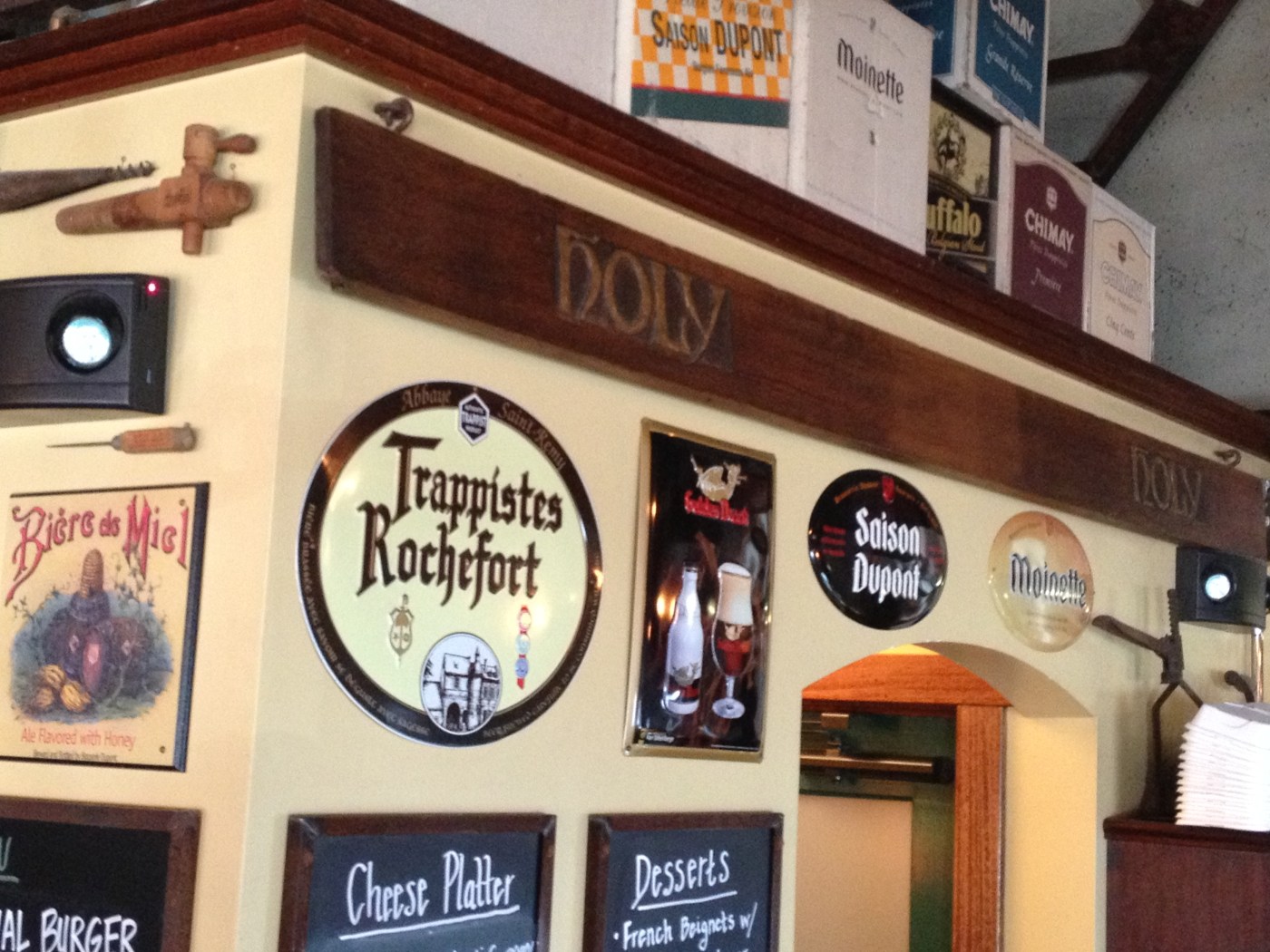
A couple of weeks ago I had a very interesting conversation with Philip Clayton. Several of us went out for lunch after the High Gravity session on Religion & Science. We were at a restaurant where the walls were decorated with a busy collection of reclaimed signs, old pictures and re-purposed trinkets.

Dr. Clayton was across the table from me and at one point I look up to notice that above his head was a sign that read ‘Holy’ on one side and ‘Holy’ at the other end. The words ‘Holy – Holy’ were framing either side of his head. IMG_2884

I tried to come up with something clever to say, scouring my memory for some passage from the Hebrew Bible or the book of Revelation to tweak. The window of opportunity closed because the conversation was quite intense. That morning the topic had been ‘Science & Religion’ and now we had expanded it to ‘Religion & Society’ – or more specifically to ‘Church & Culture’.

The conversation intensified and it became clear that neither Dr. Clayton nor Tripp was too happy with my cynical take on consumer mentalities when it comes to consuming religious experiences within a capitalist framework.

At one point I said “it is like that sign behind you: it’s not like the holy is absent from the space and all the activity that happening here – it’s just that it blends in and goes unnoticed in the midst of all the bricolage that it melts into.”

Somebody had reclaimed that wooden sign. There is a story behind it – there might have even been more to it (I wondered if it used to have a 3rd ‘Holy’ further down the line that had been lost).

But that is my point! In any gathering there are going to be those (like us at that table) who think that what is happening is legitimate, sincere, authentic, important and worth organizing your life around. The congregation is also going to be largely made up of those who are consuming a religious experience – and it is financially worth about the same amount as a movie, a meal, a game or a show.*

I will go even further: this is my great hesitation with those who want to ‘go back’ or ‘conserve’ with their religious participation. This impulse was never more evident to me than when I began interacting with those were into Radical Orthodoxy or with evangelicals who had converted to Eastern Orthodoxy or Catholicism. The ‘zeal of the convert’ can be a telling element when it comes to the anti-modern or counter-modern impulse.

An incongruity is exposed in the counter-modern impulse of these conserving movements. Never mind for a moment that often what is being conserved is born out of a patriarchal model – set that aside for a second.

I will attempt to make this in 4 succinct points:

  1. You do not live in the 14th or 16th century.
  2. You do not think like someone in a previous century.
  3. You do not engage in the rest of your week as someone in a previous century.
  4. You chose, as a consumer within a capitalist framework, to participate.

Those four things signal to me that even the most sincere, authentic, devout, and thorough engagement – whether a Pentecostal, Evangelical, Orthodox, Anglican, RO, Catholic, Mainline or Congregational expression – must account for the ubiquitous consumerism within which we all are saturated.

Dr. Clayton rightly said that I while I had a good point I was proceeding in far too cynical a manner with it. He is correct of course.

My aggressiveness is born out of a deep concern. What we say the church is about – what we believe the very gospel to be – is so vital and so needed in the world today, that we can not afford to ‘play pretend’ about previous centuries and blindly participate in consumerism all the while trumpeting the virtue of our chosen ecclesiastic community.**

The danger, in my opinion, is that religious communities will become nothing more than decorations on the corner of a neighborhood or one more option at the mall food-court. 

For christian believers, the holy is all round us. We can not afford for it to disappear among the bricolage nature of our hyper-advertised media-saturated existence.

The gospel, at its core, is incarnational. Our central story as Christians is flesh and blood in a neighborhood. The whole project is contextual – it only happens in a time and a place. We can never escape that. That is why romantic notions of past centuries or early manifestations can be dangerous distractions and fantastical facades.

We can’t afford to fade into the bricolage. IMG_2886


* plus it usually comes with free babysitting. 

** Some might object that they have not chosen but rather have ‘stayed’. I would argue that they did within the consumer’s capacity to do so. 

Moving Toward Multiplicity

Listening to Howard Zinn (author of the classic A People’s History of the United States) at a town hall meeting style presentation recorded in 2007 (you can get it on Itunes from WGBH Politics) I was struck by the need to recognize the sheer complexity of issues and multiplicity of perspectives. complexity

To state it as simply as possible: Not everything is the same. When we attempt to represent EVERYthing as if it were represented by ONE thing, we often neglect the complexity and multiplicity involved in the matter.

I will use two examples that Howard Zinn illustrated well at the community forum, then address the issues that it seemed relevant to connect to.

Zinn takes on the idea of “Family values”. Some conservative political interest say that they represent ‘family values’. But he asks “Which family?” I think it is a valid question. There are families with single moms and multiple kids, divorced dads raising a family, there are foster families, adoptive families, multi-generational families living in the same house. There are lesbian couples with no kids and gay couples with kids. My wife are were D.I.N.K.s (double income – no kids) hen she lost her job while were trying to adopt (which fell through recently) and every permeation you can imagine.

Which family is represented by Focus on the Family’s values? It is erroneous to act as if there is one kind of family and that you represent their values.

That is, unless you are saying that you value only one type of family.

That would be fair enough but you would have to stop using the phrase ‘family values’. Some families value making money or achieving success. Some value conformity. Some value religious adherence above all else. Some value military service while others value independent thinking or even civil disobedience.

Zinn says the same thing about the ‘National interest’. I am a big fan of Paul Kahn’s Political Theology and both he and Zinn talk about President’s ability to declare war or even launch the nuclear codes should the President deem it ‘in the national interest’.

But which of the many National interests? The Nation is not interested in only one thing. There are hundreds or thousands of interests. Unfortunately the reductive mono-speak is code. These buzz-words become code-words for an assume-unstated single issue that clouds the true complexity behind the language.

Zinn touched another example which has been showing up in a lot of my reading lately. The phrase ‘We the people’ is a magnificent ideal. I admire the phase and the idea behind it so much. But I think that it is worth noting that when it was written – we the people were not in the room. At the time of it’s writing, not every ‘we’ was represented.

There were no native americans in the room, no women, no blacks, no commoners. Just land-owning white males. But they had an idea – and it is that idea that we love!

I actually think that this is the exact type of trajectory mentality that we see in a progressive reading of the New Testament. When Paul says in Galatians 3:28 that “There is neither Jew nor Greek, slave nor free, male nor female, for you are all one in Christ Jesus.” He is doing this exact thing. He wrote in prophetic expectation using the 3 categories employed in his day were being broken with resurrection power. Barriers between nationality (or race), legal status and gender were being dissolved. My assertion is that it was not for the purpose of homogenization but for multiplicity! The former containers can not contain what it being poured out and welling up in Christ’s new life.

This is why I don’t sweat the fact that Paul appears to by anti-gay (though I argue that he was not anti-gay in the same way that those who quote him today are). You have to read Paul on a trajectory. Within the fruit of the Spirit of God is seed of liberation and transformation. So like ‘We the people’ – it looks forward to a greater reality than was present at it’s writing. Contained within the words is an ideal not yet realized. That is part of why I don’t want to conserve the reality of the time of it’s writing, but spring board off of it to be propelled to a greater one.

We can get caught up in reductive views that ignore the inherent complexity that we are dealing with. For instance, “Is the world essentially good or bad?” or “Are humans inherently evil or innately good?” That kind of simplicity is blind to the multiplicity of factors that we are dealing with in any conversation and allowing the conversation to be framed that way almost ensured that no progress will be made.

Good people still do bad things or even do good things with poor motivation. People who do bad things often love their own families.

We do ourselves a great disservice when we allow our media to talk about ‘the evangelical vote’ or even ‘the black perspective’ as if those parameters only mean one thing or as if everyone within designations voted the same way or believe all the same things, hold all the same values and act in unison. It is fictitious, deceptive and paralyzing.

You can’t even say ‘gun owners’ and mean one thing! Our language (and the dualism behind it) is crippling our culture.

There has been a great “De-centering” that has happened to humanity in the past 500 years. If you just look at the effect starting with Copernicus and continue to Darwin, the earth is not the center of the universe and neither are humans.

It would do us well to move from a reductive mentality (center/ order) to a dynamic interplay of emergent elements. When we recognize the complexity and multiplicity involved in the reality behind our ‘code words’, we will begin to access the real issues that face us.

The Future of the Church in N. America

The past month has seen the end of a long semester, a trip up the coast with my wife, and we have been doing all sorts of renovations over at Homebrewed Christianity. I have taken a little break from blogging and next week I will be away at a Youth Service Project with SSP. But I wanted to put a couple of things up this week:

  • some thoughts about the future
  • a theological query
  • and there have been some requests to put my sermon transcript up

Some thoughts about the future of the church

Two weeks ago I had the opportunity to go to an event at Fuller Seminary where Phyllis Tickle, Lauren Winner and Tony Jones were speaking. During the Q & R time I asked this question:

When you look at attendance rates across the board, the atrocious rate that we are losing young people raised in the church, and the passing of the WWII generation (I could have listed several other factors) … Do you think that 50 years from now there will be 50% fewer Christians in North America than there is today?

And if that is so, will homosexuality be the straw that broke the camels back?

Tony passed, Lauren wanted nothing to do with it (in their defense they are not ‘futurists’ by their own admission) so Phyllis gave the response. It was good. I have it on audio and will let her respond down the road.

I just wanted to post the question here. I do think that in 50 years there will be 50% fewer Christians in North America than there is today. I also think that is a problem… not because the church does not function well as a minority, but because the kind of christianity that we have is not calibrated well to be in that scenario.

Like it or not, the majority of our frameworks, institutions, establishments, attitudes, expectations, and Biblical interpretations are hold over from Christendom frameworks (if not colonial ones) but with the added blind spot of a lack of self-awareness. Most Christians that I talk to in Canada and the US seem to think that this is the way it should be.

I actually think that all this is just kindling. There is some gas that will be thrown on the fire. When the Baby Boomers retire (which they have just started to do) there will a significant loss of revenue and we will no longer be able to fund ministry the way that we have been. That is what will inflame the situation dramatically.

Add this to the Internet (making resources available and connections possible), the Browning of America (no white majority by 2050) and internal fighting of those who claim the name … and we may be talking about a tipping point.

Add this to fact that a lot of people have bought into a form of Christianity (whether it is conservative, charismatic, evangelical, etc.)  that looks for the Rapture (Tim Lehaye style) . But 50 years from that still will not have happened… and the disillusionment will be devastating.

Put it all together and I think that in 50 years there will be 50% fewer Christians in North America than there is today. But that it just my opinion – I could be wrong.

>the value of adding an ‘s’

>Merry Christmas and Happy Holidays!  I wish you the very best.

It is difficult, to say the least, to give a gift via a blog. Such is the nature of the beast. But if I could give you one thing that would have a big different in this coming year, it would be this: I would give you an ‘s’.

An ‘s’ can be a wonderful thing. Especially when you put it at the end of words that have been made singular but that should be plural!

Two historic examples and then some contemporary ones:

The Industrial Revolution, according to historians like John Merriman, was actually three industrial revolutions.
The first was an agricultural revolution which allowed people to grow more, which encouraged a bigger population and thus all the surplus labor that would be needed. The second was inventions that impacted small groups of workers, like the cotton gin. Then came the big one that generally gets all the headlines with big industry and coal burning factories. The name ‘the industrial revolution’ is a bit of a misnomer that lumps these three together. They actually happened progressively over quite a long period of time.

The same happens with the ‘Protestant Reformation’. Most people don’t know that Luther and Zwingli were kind of up to two different things and that later Calvin came in (initially as a Lutheran) and then there were at least three little reformations. Then there was England’s Anglican movement that was doing its own thing, and the Anabaptists. That is 5 reformation movements.

When it comes to religions, it is often appropriate to add an ‘s’. 

When we lump together the Jewish religion or the Jewish perspective, we may be overlooking the fact that there are three huge branches within Judaism, as well as many other splinters. There is a Reformed Judaism, a Conservative, and an Orthodox.  They are very different from each other.

Islam is the same way – there are over 80 types of Islam. So when we say “Muslims _____”  we may want to be careful and be more specific by adding a plural mentality and saying “some types of Muslims ______”.

Even within Christianity there are God knows how many different kinds of Christianity. So to say that “Christians believe ______” is more than challenging.  It may be misleading.

There are several Judaisms, several types of Islams, and multiple Christian perspectives.

Sometimes people say things like “the Biblical Worldview” as if there is only one. There are actually many worldviews that informed Scripture. Certainly the view of those who wandered in the desert in the Exodus story had a different view of the world than Paul the cosmopolitan Roman citizen of Jewish descent.  And one can clearly see that what Paul wrote in Romans 13 to submit to governments because they do God’s work was a different worldview than the person who wrote Revelation and called Rome ‘Babylon’  and a ‘whore who is drunk on the blood of that nations’. There are many examples that I could use but the important thing to note is that there are many worldviews in the Bible.

We are entering an era of Plurality and Multiplicity. These are two things that I value tremendously.  Adding an ‘s’ is sometimes the key to getting it right – to move it from overly simple singularity to the possibilities of seeing the diversity.

There is not one kind of Judaism or a Jewish perspective. There is not one type of Islam or a singular ‘Muslim’ perspective.  There is not one one kind of Christianity or a single ‘Christian’ perspective.

My gift to you this holiday season is an ‘s’. It may seem little… but trust me, it can be very powerful when used in the right place.

>My BIG concern(s)

>

People ask all the time about Emergent Village and the emergent conversation.* They are disappointed/concerned that it is too cynical, too white, too male, not organized enough, not powerful enough or not theologically conservative enough. 

I only get 1000 words a week so let me just make two quick points and then I will tell ya what I think that bigger issue is. 

to listen to the Podcast of this click [here] or go to Itunes “Everyday Theology”

  • Even if the critiques are true – aren’t we glad at some level that white guys are talking about this kind of stuff (making changes, challenging the status quo, etc)? My thought is that if 85% of pastors in America are male… then of course the demographics are going to reflect that starting point. We all start somewhere. You never start from scratch. We all makes the best out of where we begin.  
  • The emergent conversation is really something that has come up in just over a decade. With the 24 hour news cycle, the blog-o-sphere and Twitter… things take on an immediacy in our ‘plugged in culture’  that is unprecedented in human history (the dissemination of information).  But have you ever tried to change something at a church? Most of the time it does not change that quickly! For example, just to be ordained will take my friends 6 years before they can even serve communion! 
I have a greater concern:  I have broken them down into 3 sets of 3. 
Generation: A lot of attention gets paid to the overall changes in the 18-35 year old window.  And it should. There is definitely something going on. 
I am not sure that most churches are going to be able to bridge the gap that is about to come. That is not a knock against the church – it is an acknowledgement of how difficult the task is going to be and how wide the gap is going to become. 
Most churches are funded and/or led by the Boomers and WWII generation. But who those churches are most set up to reach is Parents (35-50) who are generically known as ‘shoppers’. They are looking for a church that meets all the needs of their family. 
I am not speaking negatively here, I am trying to sketch out a changing landscape. Here is what I am nervous about: when this Baby Boom / WWII generation  retires / passes-on (respectively) in the next 10-20 years… there is going to be a finical and leadership vacuum in many local congregations. We will not be able to keep doing ministry the way that we have been doing ministry. 
The problem is that the 18-35 generation is not interested in just doing ministry the way that it has been done – they are not going to just faithfully serve without question or input (for the most part). The expectations are different, the questions are different, and the frameworks are different. 
Context: I am very interested and concerned with the Rural, Sub-urban and Urban triangle. I am a huge proponent of contextualization. This is a huge difference from Islam (as I understand the situation) Judaism and even Christendom. The gospel is meant to be (designed to be) contextualized. The gospel of Jesus Christ is incarnational. It looks different in every different place. 
Unlike Islam you don’t have to face Mecca when you pray, you don’t have to make a trip to the holy city, and -most importantly- you don’t have to read the sacred text in its original language (Arabic in Islam, Hebrew in Judaism, and Greek for Christianity). Our Bible is meant to be translated!
So we have a contextual gospel that is meant to be incarnated in each locale in a fresh way. This is one of the great distinctions of Christianity that is often overlooked.  
In America, however, we have a Consumeristic mentality and so we often like to buy, import and replicate instead of contextualize and incarnate.  (if you think that I am overstating it go to a website like Oureach.com and click on “Fireproof” or any other theme and get ready to buy mailers, bulletins, news sheets, powerpoint slides, banners, t-shirts, and a six week sermon series). 
I am not being critical of websites and services like Outreach.com, I am simply saying that I am concerned that in my lifetime the gap between Urban, Suburban and Rural is going to increase – especially for the church of Jesus Christ. 
(I have had this conversation with Mainline, Pentecostal, and Evangelical leaders. I don’t think that it is unique to any specific style or creed).
Race: I am so intrigued by the Civil Rights movements of 50 years ago. But I am more fascinated by what is coming in the next 50 years. Studies are saying that by the year 2048 there will be no white majority in America.(Canada is in a completely different situation – I will have to talk about that some other time)  Soong Chan-Rah [link] says that it will be true of the Church by 2042 – due to the nature and makeup of Charismatic and Evangelical churches.  
Black, White, Yellow, Red, and Brown – these are us. 
What is the church doing now or planning to do in the next 20 years to get ready for this?  I don’t know.  It seems to me from all the stuff I come across, listen to, read, and discuss that race and ethnic diversity might be lucky to break the top 10 in concerns.
And this it the great concern of mine and what I would hope to address (to a degree) with the Everyday Theology project. Generation, Location and Race is a triangle that I think about everyday.  So here is my three fold make-shift framework that I am employing in my studies to get ready to be a part of the change: Philosophical, Theological and Congregational. 
  • To be Philosophically credible to the world that we are trying to reach and participate with. My hope would be for an internal coherence – that what we do and say is logical credible and is believable. 
  • To be Theologically faithful to the Christian tradition.This includes an awareness of the good and bad of Christian history, so that there is a congruence that avoids disorientation and that provides a continuity that brings some level of orientation.
  • To be contextual (incarnational) as a Congregation. That each local body would be empowered to  have a authentic expression that was appropriate for their community (so that it is not an alien expression that is just imported and implemented or imposed on a community).
My concerns are Generation, Location, and Race… My solutions are Intellectual, Historical, and Incarnational.

That is what I think awaits us in our generation and is our task as we walk forward as global christian who are hoping for a brand new day.  

* I usually preferred “emergence” without the strong “T” at the end. That “T” is what makes it a proper name or title that people often see as a brand. 

>Relationship

>

There is a reason that relationship is so central to our religion, to reading the Bible, and to prayer.  We will focus on prayer next week, but this week I wanted to look at the relational aspect of reading the Bible as a tie-in to what we have been talking about for the past 5 weeks.
    In the past, much of church history has been focused on A) Status and B) Substance. Now, it is my conviction that these are not the concerns of the Hebrew mind (in the Old Testament) nor are they the concerns of Jesus (in the Gospels) and they will not continue to be the concerns of the world that is becoming (our post-Modern world).

    That means that the only place where it has been a primary concern is with 1) those Greek  thinkers (substance) and Roman authorities (status) that come after the first century – and thus after the writing of those books that would come to be in the New Testament 2) those European systems ( in Italy then Germany then England, etc.) that led up to, and really came to fruition in, the Enlightenment (think Denominations). 
Communion
    So let’s take Communion as an example. Jesus had this meal. Whether you say that he observed it, celebrated it or initiated it – he used the moment to demonstrate and model ultimate servant-power (John 13). Jesus’ concern about communion was relationship. He even had the meal with a disciple that he knew would betray him (and one that he knew would deny him).  Jesus modeled relational truth. 
    In the 300-500 years after Jesus, the focus changed significantly. That is why – for even so many to this day – the main concern is  A) what it is and B) who is allowed to eat it.   That is why Substance and Status have supplanted Jesus’ concern – which was relationship. 
    That is why I think that whenever you eat a meal with someone and Christ’s love is in your heart – that is communion.You are having communion with them  – at least Level 1 communion. Now, if you agree with that and what to add to it an official meal of special bread and wine – that is fine. But if you want to move to that specific meal and special ingredients without the element of relationship – then I would have a problem. Especially if you then want to add a third level which is concerned with who is allowed to eat it (and who is not) and then who is allowed to serve it. 
    In fact, relationship is the main focus of so much of the Bible and we miss it when we use these lenses of Status and Substance. 
Trinity
    Look at the concept of the Trinity. The main point is that God is relationship. God is perfect relationship. But somehow in those years that followed Jesus’ time on earth – the main concern became Substance (is Jesus fully God and fully Man? )  and Status (Is the Holy Spirit equal with the other two members or not? ). Now, the whole point of a Three-in-One god is to form and inform us about the inter-relating of one to another. We miss the point of the Trinity (and the Bible)  when we look at Status and Substance.
Creation
    Look at Creation. The stuff that attracts so much attention and draws so many of the headlines (Creation vs. Evolution) misses the point of that section of scripture. It is important to know that the idea of Creation Ex Nihilo (out of nothing) never showed up in connection to the Genesis account until 200 years after Jesus.  That means that no Jewish Rabbi would have believed that before (or during) Jesus’ life. It also means that Jesus would not have believed in Creation Ex Nihilo.  God did not create the world out of nothing. 
    Go back and read that portion of scripture again. You will notice two things: first, that there were already substances present; second that God works with what is in order to bring forward something new. Then God gives that something new a responsibility (partnering in relationship) and then uses the something new to bring about yet a newer thing still. 
    So God makes the earth. Then God says to the earth ‘you bring forth plants’. Then God takes some earth and makes humans. Then God gives to the humans  responsibilities on earth.  
    The point is not the science behind creation – but ultimately God’s relationship to creation. God calls the earth good and it is noteworthy that God never says that creation is not good!   It is later that Substance and Status change the way we think about that. Substance says that the earth is “fallen” because of original sin (this is borrowed from Greek philosophy and does not come from the Bible). Status says that creation is lower than humans and therefor is of less value. Now, admittedly,  there are some words that are used in Genesis that can be read that way… but if you want to read them that way ,they do have to be interpreted that way. All I am saying is that they do not need to be interpreted that way!!
    I think that it is worth pausing and noticing that even our communion elements come up from the earth. The wheat for the bread and the grapes for the wine come from the soil – the earth. 
Resurrection
    I believe in the resurrection. The reason that I have been less dogmatic about it being a literal/physical resurrection than others is two-fold. 
First, I am driven by a desire for a BigTent Christianity where people who dialogue about the exact nature of this or that element of the Bible can still be included.
Secondly, I don’t think that that substance of Jesus resurrected body is the point of those stories. I think that the main point is how Jesus relates to us in resurrection. The experience of the disciples after the resurrection was of Christ’s presence with them – the veil had been torn in two and soon the Comforter would come in power (Acts 2). God’s spirit – the spirit of Christ – was out and about and at work in the world. 
    Just look at what the Apostle Paul would experience on the Road to Damascus (Acts 9).  Whatever Paul experienced was the real and post-resurrection Christ. It was enough to radically change his life and cause him to live for this cause and it would lead to his own imprisonment and death. The substance of the post-resurrection body is not the focus. Relationship is. God was in a new relationship with humanity. 
Faith
    I have tons and tons of examples, but I want to point out how not focusing on relationship effects even the way that we read specific verses in the New Testament.  There is a popular verse that is often quoted this way “God causes all things to work together for the good of those who love God and are called according to his purposes.”  That is based on a bad translation (King James Version). But that is not exactly how that verse reads and it certainly (even if it did read that way in English) does not mean that!
    But listen to the Revised Standard Version “ We know that in everything God works for the good with those who love him…” 
    God does not cause the things to work for us. Think about how mechanistic of view of the world produces a reading like that. 
    A more accurate way to think of it is “God works for the good with those who love God so that all things come to accomplish God’s purpose.” 
    First: It is God who works – not the things.     
    Second: God works with us to bring about God’s purposes.  
Reading the Bible with Relationship in mind affects so many things. The nature of the Trinity, the Creation narrative, the Incarnation, Communion and prayer … just to name a few!! 
    The bottom line is ‘how God relates to us’. Everything else is fun and function. Realizing this is one of the most important things that has happened to me and my walk with the Lord. I wish I had know this 15 years ago. I don’t regret what I learned and everything that I was taught – but I do wish that less attention had been paid to SUbstance and Structure and more had been paid to relationship. 
    Next week we I hope to address Salvation and Prayer. Please feel free to posts any comments or questions. I love the dialogue.

Blog at WordPress.com.

Up ↑