Search

Bo Sanders: Public Theology

updating & innovating for today

Category

place

Haunted by Zombie Categories

I have spent that last two weeks reading and shoring up my familiarity with Creation Ex Nihilo and the Trinity respectively. As fascinating as that has been,  I have to admit that am speculated out. I can only take so much speculative theology. This is part of why I am so happy to be in the field of Practical Theology. The other reason is that I have a real heart for the church.

I love Practical Theology. It is a fascinating field that is in the midst of a significant reinvention of itself. As an interdisciplinary engagement within the academy, it interacts with local faith expressions (like the church) in the hope to mutually benefit both the local church and the academy as a sort of go-between.

One of the major changes in this reinvention comes from the recognition that Practical Theology had not doing its own homework. It had fallen into a stale habit of simply attempting to apply the work of other disciplines. Applications of other’s work is fine at some level, but that is no way to gain credibility within the academy. If you want to be taken seriously in that world, you have to endeavor to innovate and explore – just like everyone else.

John Reader is one of my favorites. In the book Reconstructing Practical Theology: the Impact of Globalization the author examines the impact of globalization on everything from families and spirituality to the economy and ecology. There are two specific aspects of the book that I want to post about today and tomorrow: ‘Zombie Categories’ and ‘why the Eucharist isn’t Enough’.

Zombie Categories

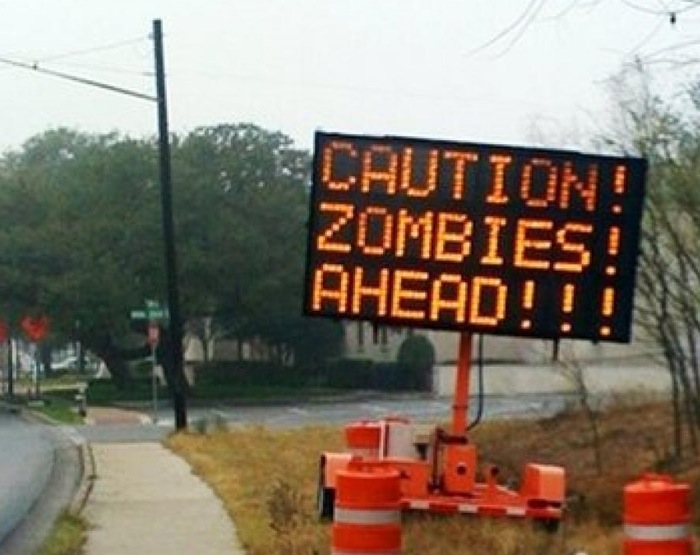
Change can be seen in the categorization used within scholarship, specifically as it applies to fields such as practical theology. Reader borrows the term “zombie categories” from Ulrich Beck to refer to existent categorization that are fundamentally dead but which still limps on refusing to go away quietly. This situation forces us to exist temporarily in parallel worlds both utilizing “old, familiar and increasingly redundant” categories alongside “new, emerging and untested” ones.

Reader examines the historical developments and transitions, quickly surveying from the early church to the professionalism and secularism of the twentieth century. This is why it is so important for contemporary theologian to interact with fields such as psychology, sociology, economics, and even the political. As much as I appreciate and have learned from the Big 4 of Theology (Systematic, Historic, Biblical and Philosophical).

In a quick survey of the territory it is becomes clear that the issues encountered under the heading of globalization are not simply a series of incremental changes to which we must adapt to keep operating. The impact of globalization challenges the very frameworks and concepts that are familiar to the practice of Christian ministry.

I get push-back all the time for saying that we need to reexamine and desperately reinvent the very frameworks and vocabularies with which we engage in ministry.

The concerns of local ministry and pastoral care along with the conduct of worship and the diverse challenges needing to be addressed in any context ask something very distinct from us now. The transient nature of globalization paired with a virtually liquid social structure requires a different set of questions and a unique collection of frameworks to adequately address the challenges of ministry and spirituality in a world where the boundaries are constantly shifting. These concerns are most appropriately addressed by re-imagining internal categories inherent to the tradition, partnered with the resources made available by engaging with “the insights of other disciplines”.

This is not about answering the same old questions in slightly different ways for our new context – this is about asking entirely different kinds of questions about the formation of self, the family relationship, construction of community and the nature of religion.

Tomorrow I want to look at how consumerism forms our concept of ‘self’ and why the Eucharist – no matter how tightly we hold to it or how faithfully we perform it – address what is going on with us these days. But first I needed to state how deep the change is and how profound its impact on us is. Cleverly updated answers to the antiquated questions are not going to cut it anymore.

Something else is needed. Our world is not simply a bigger version of what used to be. When people keep insisting that ‘this’ is just an amplified version of ‘that’ they may be missing the point of what it is exactly that we need to be doing here.  “Doing the same thing Sunday after Sunday” may be the worst idea in the history of the church. It may not be –  but it is sure to kill us while we lie in the very bed that we made for ourselves. 

Originally posted at HBC 

Place, Direction and Perspective: changes since I was a pastor

Last week I had chance to return to the place where I had been a pastor for 11 years. I have been away for 4 years pursuing higher education. It was great to reconnect with folks that I love very much. The trip also included a chance to head out into the woods with a group of guys for a week-long canoe trip in the Adirondack Mountains.

One night around the fire, someone asked

“so you have learned a lot and changed a lot since you were our pastor, bring us up to speed. What has changed in your thinking in 4 years?”

It was a question that I hoped would come up and had given it a lot of thought as I flew across the country from LA to NY.

 I said that there were 3 big changes – that I had added 2 things and gotten rid of 1 thing. 

Directions: 

We had a saying that oriented us over those 11 years I was pastor: Upward – Inward – Outward: it must be all 3 – they must be in that order. I have learned that there is a 4th direction: downward. 

When we look downward, two things happen:

  1. We see the earth. This awakens us to things like where our food comes from, ecology, and location – the importance of place. Christianity is an incarnational religion and it is a spirituality that is em-bodied. Location is central to the practices of christian community.
  2. We see those less fortunate or less powerful. This awakens us to issues of justice. Cornel West is the one who has helped me see the importance of not just looking around (which is vital for awareness) and looking up (where our strength come from) but looking down for those who might need some help.

Adding this 4th direction brings in issues of environment, locatedness, and justice. It illustrates the importance of embodying the gospel in a place – none of us are from everywhere.

 Critique and Create:

One of the things that I have learned in my travels (from folks like Zizkek, Cornel West, Marc Ellis and Diana Butler Bass) is that there are 3 broad kinds of churches in North America:

  • Prophetic – that critique the system
  • Therapeutic – that help you adjust to the system
  • Messianic – that look to escape the system

We were great at two of them. We had a natural Messianic element because our denomination is staunchly and passionately pre-millennial (the soon coming King! is one of our big 4 things). We also had a good dose of the Therapeutic and helped a lot of people be the best version of themselves within the existing structures.

If I got to do it again, I would add a Prophetic element and address the systems and structures that hold so much sway in our communities and in the lives of our congregations.

The example that I used was routinely praying for a guy with a limited skill set to get a job. “Jesus – please help ‘J’ to get a job”.  By not addressing the relationship of local government with factories and manufactures in our area … we were relegating the answer to our prayers to the ‘powers that be’ and J was perpetually disappointed with God and discouraged in his faith. We nearly set him up to fail.

 Those are the 2 things I have added: a 4th direction and 3rd element. But I have also gotten rid of something – I no longer believe in the supernatural. 

Why the Natural is super:

I am convinced that the church has made a major mistake in adopting the language of the super-natural. Since the epic flub with Galileo and Copernicus the church has allowed science to have the natural (things that make sense) and has been relegated to watching over things that increasingly don’t make sense and retreating into words like ‘mystery’ and ‘faith’ as cover for that which is just not reasonable.

I do not believe in a realm (the natural) that is without God. As a Christian, I believe that God’s work is the most natural thing in the world. I am unwilling to concede the natural-spiritual split and then leave less and less room for God as science is able to explain more and more. The church is foolish to accept the dualism (natural-supernatural) and then superintend only the spiritual part.

No wonder 85% of our kids walk away in their 20’s. This stuff is unbelievable. 

I would prefer to reclaim the language of the ‘miraculous’ (surprising to us or unexpected) and ‘signs’ from the Gospel of John (that point to a greater reality).

So that is what has changed since I was Senior Pastor four years ago. I look down now (at the earth, for location, and for issues of justice). I hear the Prophetic critiquing the system. And I have gotten rid of the super-natural while embracing the miraculous.

 It was so great to share these thoughts and hear the feedback from my friends as we shared the week together. I would love to get your feedback or to hear how you have changed in the past few years.  -Bo 

>the springs of Saratoga – a story (part 2)

in part 1 I began to tell the story of the springs …


When I first became inspired about the imagery of the springs, the language contributed a definite gravity to the direction of my sermons and the content of my congregation’s prayers. We began to see miraculous healings and answers to prayer that convinced us that there was something deep to this idea. 


I shared these developments with my regional pastor group and also my denominational pastors gathering. I was met at both places with a swift warning. “Make sure that your people know that the power for healing is with God and not with the water.”   This caused me to be very hesitant as I was continuously exhorted by other pastors and leaders not to “take it too far.”

 My wife would object to their line of reasoning by asking rhetorically “ If they have a headache and take an aspirin, do they think that the power is with God or the aspirin?” 
Continue reading “>the springs of Saratoga – a story (part 2)”

>The springs of Saratoga – a story (part 1 of 2)

I have been talking about water the past two weeks: first Jesus walking on the water and then the healing pool in John 5.  I think a lot about mineral / hot springs and how they are a grace (gift) of God. I thought I might be good to pull back the curtain and share part of why they mean so much to me. 


Saratoga Springs, New York, is a unique little city that has grown up around a set of natural springs in the area. There are almost a dozen springs that are still in use. People come, sometimes from great distances, to drink, soak, and enjoy them.  Continue reading “>The springs of Saratoga – a story (part 1 of 2)”

Create a free website or blog at WordPress.com.

Up ↑