Search

Bo Sanders: Public Theology

updating & innovating for today

Category

Practical Theology

Constructivism or Critical Theory (part 2 of 3)

Warning: These 3 posts are very nerdy. There is a reason behind my madness … but just be forewarned.

Yesterday I admitted to social construction being my philosophical orientation within my chosen field of Practical Theology (PT). A constructivist view is important in (at least) two ways:

  1. It is an admission that we are all subjects of a constructed reality who are both actors and those who are acted upon within a larger structure of expectations, attitudes and behaviors that we have a) inherited b) been formed by and c) reinforced by our actions and participation.
  2. It is an acknowledgement that no one is a object to be studied nor are we objective – but that we are all subject who are acted upon and who act in accordance to our position within the given structures and our possibilities given our location within that greater culture.

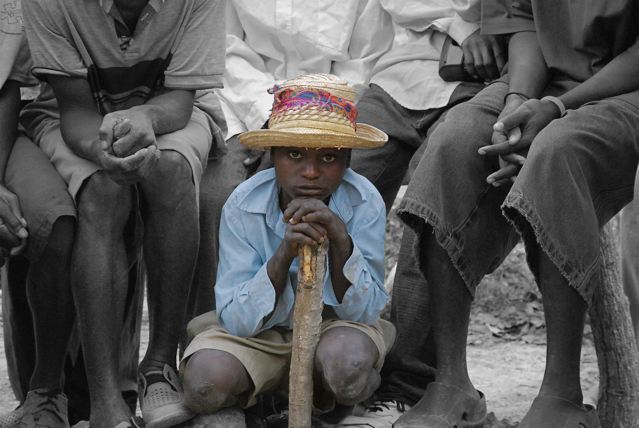
Admittedly, this is not an easy position to take. It is a commitment. One must commit to exploring the world this way philosophically, experientially and intellectually.Boy at Cockflight_3

Here are 3 ways that this commitment plays out: 

Two weeks ago on Homebrewed released another installment of Mimetic theory (an early blog is here – another pod is to come this Fall). Girard and those who follow his line of reasoning say that we humans, even as babies, learn what to desire my mimicking (thus mimetic) those who care for us. We learn even what to desire (like what foods) by imitating them. Think of this as the outer edge of the ‘learned behavior’ line of reasoning.

Social Construction says that we are not individuals first. There is no access to a  pre-social self. We are formed, groomed and socialized into our families, tribes, societies and cultures and the we occupy and possess within that larger structure a place as subject. This subjective position means that we are actors – but not before we are acted upon. We are not objective in our perspective nor are we simply objects of study. We are subjects who have been subjected.

If you have read the above 2 paragraphs you will see why I put up such a stink this Summer about my approach not being ‘liberal’. I do not believe in the autonomous, selective nor the pre-institutional self. I am a social constructivist who believes that we are socialized, groomed and conditioned from day 1.  (more on this tomorrow)

This next section in admittedly technical but I think that is a fascinating snapshot of a larger landscape. 

I read an amazing article by Lynn Schofield Clark about the incremental difference between Critical Theory and Constructivism as it relates to qualitative research (which is what PT does). Critical Theory is something that I am very interested in employing in my research and that is why Clark’s clarification about how it impacts research is so important.

Both ‘critical’ and ‘constructivist’ approaches desire to “confront injustices in society”. They also both recognize the limitations of people’s opportunities and imaginations for changing unjust social systems due to due the inherent constraints of being a subject within that very system.

Both approaches have an Achilles’ heel. Critical theory has to try and get away from it’s Marxist origin which can overly reductive and materially deterministic. Constructivism (which is more humanistic) can be limited by attempting to validate its findings with claims inherited from the natural sciences. Critical researches are not concerned with seeking validation from the sciences because they are working more on the meta-theoretical.

While both approaches share a large amount of overlap, one glaring concern about Critical researches is:

 its tendency toward elitism. With its proponents’ commitment to the idea that research can bring about a better and more equitable world, critics charge that critical theorists tend to assume that they are not only more capable of analyzing a situation than most; they are better equipped to offer a proscriptive plan of action…

Further, critics charge that critical theorists can be unwilling to listen to the experiences of those most adversely effected by current policies and the status quo, as they tend to focus their analyses on persons and institutions in positions of power and authority. This, critics note, causes critical theorists to be out of touch with the very persons they purport to be most interested in helping.

This concern has given me pause to consider my approach.

The last thing I wanted to pass on is a great line from the Clark article about validity:

The research is valid to the extent that the analysis provides insight into the systems of oppression and domination that limit human freedoms, and on a secondary level, in its usefulness in countering such systems.

Tomorrow I want to talk about “when good isn’t enough” and why my post-colonial concern propels me beyond the liberal label.

Why I’m Into Practical Theology (1/3)

Warning: The next 3 post are going to be very nerdy. There is a reason behind my madness … but just be forewarned.

Philosophy is a hobby for me. I blog about it here a lot because I really enjoy the dialogue and I learn tons in the exchange of ideas. I have had to cut back on blogging as I am now preparing for my qualifying exams.  While I am getting a PhD in Practical Theology,  the inescapable fact is that the ‘Ph’ in PhD is philosophy.church-300x199

I often hear the old line that ‘we can’t believe our way into new ways of acting – but that we act our way into new ways of believing’. While I understand the direction behind the challenge, I am suspicious of it’s accuracy for two reasons:

  1. I have been deeply impacted by my studies and this has led to my behaving differently.
  2. I fundamentally object to the binary of belief and action as if they are two different things.

Believing something is an activity and we actively believe something. My mentor, Randy Woodley, is fond of saying ‘you don’t have to tell me what you believe. I know exactly what you believe – I can see it in what you do’. He says this in reference to a Native elder watching the perennial arrival of white missionaries come to the reservation.

I’m afraid that even my earnest desire to be what Donald Schon calls a ‘reflective practitioner’ betrays an underlying binary.

In my Master’s thesis on contextual theology – in a section highlighting the work of Paulo Freire – I wrested with this tension.

More than the believing of propositional truth, the praxis model invites encounters of “doing the truth” quoting Gustavo Gutierrez as saying “contemplation and practice together make up a first act; theologizing is a second act”.

This expectation both comes from and puts forward an understanding of epistemology that is significantly different than theoretical or speculative theologies.  It challenges theologies that are too general and assumed to be universal by questioning the very nature of knowing. Truth is not out there to be brought in; the truth is in here to be brought out.

That is how I got into Practical Theology. 

Rarely a day goes by without someone I meet, even check-out clerks at the grocery store, joking with me that theology isn’t practical.  I must have heard that 500 times in the past 5 years.

I don’t blame people for the misunderstanding. The field might better be called ‘the practice of theology’.  The truth is that the field of PT has changed radically in the past 30 years (more on this tomorrow). It used to be attached to things like homiletics (the art of preaching) or liturgy or pastoral counseling. It is no longer a ‘how to’ kind of field.

PT is really more sociology done with a theological lens – we use qualitative methods (vs. quantitative methods like statistics) to access ground level experiences and practices. Philosopher-types would  lump it in to phenomenology. The main focus of PT is to examine how a given issue of study is actually lived out in real contexts (locations and congregations). We use interviews, case studies, ethnographies and other qualitative methods to do our research.

Here is where the philosophy stuff comes in! When doing PT you must locate your particular approach within 4 generally recognizable categories. The  4 Philosophical Orientations are:

  • Postpositivism
  • Constructivism
  • Advocacy/Participation
  • Pragmatism

Postpositivism is mostly for those who want to report their qualitative findings in more quantitative terms (like for medical studies where stats are valued).

Constructivism is my orientation. It focuses on social and historical constructions and allows one to formulate critical theories about underlying issues.

Advocacy/Participation is the favorite of feminist approaches (among others) because it a) actually advocates for tangible change and b) it ensures that the group being studies is not exploited for the researches privilege.

Pragmatism is an approach that is problem-centered and is more willing to utilize different methods depending on the desired outcome of the research.

I hope you see now why I am into Practical Theology. I thought it would be good to introduce the everyone (including the Homebrewed crowd) to the discipline for 3 simple reasons:

  1. my blog style and topic selection is going to have to shift slightly as I prepare for these qualifying exams.
  2. Callid has begun his PhD in PT at Boston. So 2 out of the 3 theology nerds are in PT (and Micky Jones may be soon to follow). That is a lot of practical theology.
  3. Callid and I were talking and it dawned on us that even our friends don’t really know what it is that we do.

Over the next two days I want to build a bridge to what I will be doing and clarify a couple of things that are still left over from this eventful Summer.

Create a free website or blog at WordPress.com.

Up ↑