Search

Bo Sanders: Public Theology

updating & innovating for today

Category

Race

Cultural Marxism?

Cultural Marxism

Imagine that one group of people wanted to look at the layered and overlapping nature of racism in our country with issues of policing and economic realities, and another group of people used their platforms to warn their followers against this examination because of an obscure ancestor who’s nearly 200 year old political and economic theories were horribly misapplied a century ago to devastating consequences that enveloped the globe.

That is an actual scenario that is happening right now. There is a reckoning going on N. America about the legacy of racism and the ways that institutions and structures of power have been employed like overlapping gears in a machine to systemically (re)create and (re)enforce the layered injustice and inequality that has resulted from the legacy of settler colonialism and slavery. One node of this societal web is called Critical Race Theory (CRT) which examines interrelated issues, exposes hidden mechanisms of power, and advocates for change.[1]

Many evangelical leaders, however, are warning their people against CRT for the most obscure reason: Marxism.

I want to be clear that cynical slur is being used as a dog-whistle. It is being employed to scare people because of the guilty by association nature of fear: communism, Soviet Russia, enemy during the cold war, Lenin & Stalin, secret police & the gulag =  millions dead.

But you can read lots and lots of CRT (and Critical Whiteness Study) without ever encountering any Marx. It is such an odd objection and if it were sincere, and being brought up in good faith, I would want to be generous and irenic in addressing why it is such a big concern right now. It is, however, not sincere or being employed in good faith and I will not be addressing it as a legitimate concern.

So what is this claim of ‘Cultural Marxism’ why does it work?

First I want to tell you why it is ridiculous and then I want to tell you why there might be some utility in it.

Why it is silly to keep bringing up Marxism: an analogy

It is the equivalent of me wanting to use a cell phones and you constantly referencing Alexander Bell. First, a lot has changed since the early days of telephones. Secondly, I don’t care about Bell, I want to USE a cell phone.

You keep taking it back to history and want to focus on the early design of the rotary phone with its receiver, and land line, and how the cord used to tangle about itself, and the operator … Now all of that might be really interesting but I am not wanting to talk about the history of the phone – I want to use a cell phone.

It would be like if wanted to get a burger at McDonald’s and you got upset because in 1954 Ray Kroc started a hamburger stand in San Bernadino California and ‘you know about California!’ I could say:

  • A lot has happened since then and McDonald’s is global now. Why do you keep bringing up California in the 50’s ?
  • There are a lot of concerns about McDonald’s like how they get their beef and how they treat their workers … why do you keep bringing up Ray Kroc?
  • I just want to eat a hamburger, I don’t have to know the history of hamburgers or the founder of the restaurant.

That is the equivalent of what is happening right now where those who want to employ (utilize) Critical Theory and specifically CRT and the evangelicals who are talking about Marxism and the Cold War. One group want to use a toolkit called CRT to address a real live situation presently happening in our moment and other group want to talk about origins and historic side effects of a remote influence on the field.

Like  I have said before, this charge of Marxism is a cynical distraction technique that is not being employed in good faith. It is a scare tactic and a boogeyman.

Now having said that, “Is there any merit to addressing this?” and I think that there is.

So Marx influenced the Frankfurt School who popularized Critical Theory in the wake of WWII and this migrated and evolved over the next 40 years into Critical Race Theory which has in turn adapted and evolved greatly over the last 40 years including the integration of Foucault in the 80’s & 90’s and then eventually the insights related to intersectionality the multiple layers of overlapping and inter-acting levels of oppression and prejudice.

Here we have two important points to consider:

On one hand you have massive lineage of an entire field that has evolved and adapted over the past 80 years and so one might say ‘who cares about a guy who’s writing was influential on a bunch of guys who were influential in getting the ball rolling for a concept that eventually became this entirely different thing we are doing today?

BUT on the other hand – that language of oppression and alienation has a genealogy and legacy so maybe the origin is important  because the DNA carries through the generations and influences and historical transformations, mutations, adjustments and counter-corrections. Maybe it is important how something gets started because your ancestors’ legacy lives through you today.  Like it or not, you are product and a result of those who came before you. You have inherited their legacy and are a result of their actions and ideas, beliefs and decisions.

Let’s give this a little merit and see what aspects of Marx’s thoughts continue to influence or bear fruit in today’s Critical Race Theory.

If we can decouple the boogeyman of Marxism then we can see something that is really important. Cultural Marxism is a growing influence in N. America. (I would point you to several popular podcasts in Canada and the US) And

So I will openly say that Marx’s solutions were wrong. Their application was disastrous in totalitarian states. But that doesn’t mean that his diagnosis with the problems of industrialized capitalism were faulty. His critique still has teeth.

But that is, again, not the point. Because that is not the part of Marx that CRT is utilizing. Critical Race Theory employs the legacy of his concern about alienation, oppression, and disparity. It continues his concern for emancipation and liberation for working class people but has broadened that scope of concern advocate for the marginalized by exposing the mechanism and structures within the system that keep them the levers of power.

This, for me, is why it is so important to decouple CRT from the dog-whistle of Marxism because those who want to examine the structurated nature of race-relations in N. America and the intersectional aspects of race, gender, class, sexuality (and religion) are not utilizing the same part of Marx that led to communism, Soviet Russia, enemy during the cold war, Lenin & Stalin, secret police & the gulag =  millions dead.

Now, admittedly, there are those who are currently employing Marx politically. No doubt. But that is why it is so important not let the specter of Marx be used as a scare tactic, dog-whistle, and boogeyman by evangelical leaders to scare people away from examining very real concerns about the structurated nature of race in this country.

Why are the evangelical leaders so concerned. Well I think that there is a lot of confusion within evangelicalism right now. There is a generational crisis with the loss of people like Billy Graham and the new attrition of their adult children.[2] There is a political crisis with white evangelicals supporting Trump at oddly disproportionate rates. There is a economic crisis with many of their colleges and seminaries unable to sustain financial viability. There is a cultural crisis where their century old created sub-cultured has siloed so profoundly that it has become insular and fearful. There is an eschatological crisis where the much anticipated 2nd Coming of Christ appears to be waning in popularity and is compounded by the rapid loss of that generation that saw the founding of the nation of Israel as a major cornerstone in Biblical prophecy.

With all of that going on: generational, political, economic, cultural, and doctrinal – you don’t also want to be dealing with issues of race and racial disparity. Critical Race Theory and Postcolonial Theologies are an unwelcomed intrusion into your already unstable house.

That is my theory anyway. I could be wrong – maybe they are genuinely intimidated and a little naïve about CRT and are thus justified in their concern and sincerely confused.

[1] I often call Critical Race Theory a ‘toolkit’ that does 3 things: examines (or interrogates), exposes, and advocates. Admittedly, it is not neutral – it has an agenda: emancipation, liberation, and empowerment.

[2] It used to be a mark of pride that evangelical youth groups held onto a higher percentage of its kids, as compared to Liberal or Mainline congregations) as the teens graduated into their college & career phases. In the past 15 years however, the same attrition rate has plagued the evangelicals as their Mainline counterparts so that over 80% of young people either leave the faith or just stop participating in church.


Whiteness Workshop

I would like make something available to you that I hope you find helpful.

This is a ‘workshop on whiteness’ that I developed in 2015 and then updated a little bit last year. PDF:  Whiteness Workshop Sanders

If you are interested in learning more about race and specifically the issue of whiteness then I want to be here for you during this important time in our nation’s history.

Let me tell you who I am looking for. Let’s say that there is a whiteness spectrum that goes from Level 1 (white normative – pull your pants up, speak English, don’t give your kids weird names) to Level 10 (Woke AF) then here is how I map that spectrum.

Level 2: not racist but snarky and defensive (they can say the N-word but we can’t?)

Level 3: I want to say Black Lives Matter but doesn’t All Lives include black ones?

Level 4: I get that people are upset but …

Level 5: Can’t we all just get along?

Level 6: Something is really wrong isn’t it?

I am looking for people who are at Level  2, 3, 4, or 5 and want to move to level 6.

  • If you don’t know what POC stands for.
  • If you get told to ‘check your privilege’.
  • If you don’t understand how race could be a ‘construct’.
  • If you think that bringing up race is racist.

Now, if you are more advanced than I am (Woke AF) then I bless you on your journey and say, ‘you know the work that you need to do – get busy – we need you in the struggle’.

Also, if you are Level 1, I am not sure I can help you. That doesn’t mean that you can’t be helped – only that I am not the person to help. It is too close to some bad experiences I had when I was younger and I don’t tend to have the best reactions.

If, however, you are at Level 3 (I want to say that Black Lives Matter) or Level 4 (I get that people are up but …) or Level 5 (Can’t we all just get along?) then I would like to make myself available to you.

I offer you a couple of  things:

  • Read this Whiteness Workshop (35 pages) and keep track of any questions, concerns, or objections that you have.
  • Invite a friend or two to do this exercise with you.
  • Email me any questions you want to ask but don’t feel like you can without getting in trouble.
  • Let me know if a phone call would be preferred and we can set that up.

email: anEverydayTheology@gmail.com

You may be thinking, “can’t I just ask a person of color that I know?”

Please don’t.

It is not their job to educate us white people or carry our emotional burden. Communities of color have their own work that they are doing right now. Educating ourselves about issues of race and specifically whiteness is our labor right now.

So, if you are intrigued but what I am offering and would identify yourself as within the window on my whiteness scale, then I would truly love to be a resource for you during this time.

Pentecost 2020

Today’s sermon (10 min) with full transcript below

50 days after the events of Easter, religion changed forever.

In the cross of Christ, god had identified with the brown body that was murdered by state violence and had vindicated the victim who cried out ‘it is finished’ – let this scapegoating mechanism be exposed for what it is. Jesus unmasked the unjust nature of the powers the be.

The nature of god’s presence in the world was trans-formed as well. The temple curtain was torn in two and the glory of god was exposed to come out from man-made structures and institutions to find its home in the new body of Christ – the people of god.

The event of Pentecost was radically illuminating, thus the symbolism of the tongues of fire. God’s spirit had come to all flesh. This is the decentering of God’s power to the margins, the democratization of religion.

The church is essentially Pentecostal.

I’m not talking about the gift of tongues only, the miracle of Pentecost is not in the speaking but in the hearing. People heard the message of God’s love in ways that they could understand (as if in their own native tongue).

God was communicating through ordinary women and men – not just those with religious titles or theological education. God was pleased to speak through the children of God by pouring out Holy Spirit power on all flesh  in a fulfillment of Joel 2 that daughters and sons dream dreams and prophesy.

Pentecost is my favorite day of the church calendar. Not just because of its liturgical flare or because it is ‘the birth-day of the church’. Pentecost is my favorite because it holds the very DNA of the church being contextual in its message – speaking in ways that people of different tribes and nations can hear and receive that good news of God’s work in the world.

As Methodist we take this very seriously. God’s presence in each person means that they are vector of God’s ongoing work in the world and their experience is a valid location for revelation and reflection.  We added to the inherited Anglican triad of scripture, tradition, and reason the fourth component of our Wesleyan quadrilateral: experience.

We let that experience inform, form, and transform our mission and ministry. That is part of why the historical commitment to the abolition of slavery was spearheaded by Methodist around the globe.

We expect to experience the things that we believe and we believe people’s experiences.

This is especially true for liberal Methodists. To our religious commitment we also add a layer of prioritizing the inherent worth and value of every individual. Every life matters.

When we see an atrocity repeated over and over again of certain demographic of our population – in this case, unarmed black men – being victimized and disproportionally targeted we cry out in lament at the injustice built into the legacy of racism in the country. We rail against the nature of our whiteness in being complicit with the historical policies that police black bodies differently.

We can not stand idly by at the systemic nature of racism in America and it makes us sick to learn about the experiences of whole communities of color being targeted for different treatment for the last 400 years (actually over 500 years in the legacy of colonialism).

We teach our kids to sing “Red and Yellow, Black and White”, all are precious in Jesus’ sight.

The Bible says that if one part of the body suffers, that we all suffer. Jesus said that if even one sparrow falls to the ground, the God’s concern is there. Well more than one part of our body is hurting and we are experiencing the convulsions of that sickness.

Dr. King famously said, ““In the end, we will remember not the words of our enemies, but the silence of our friends.”

We can keep silent no longer. We must speak up and stand with our sisters and brothers who are hurting. On this Pentecost Sunday we must also embrace our prophetic voice and speak in tongues that are not our own so that all may hear the message of God’s love and justice in ways that they can hear it. Not just in the langue that we are comfortable speaking but in a langue foreign to ourselves so that the dignity and worth of every soul can hear and receive it in ways that matter to those who hear our utterances.

Black lives matter. Every black life matters. Red lives matter. Brown lives matter. And if that is not true then we can not say that every life matters. So we raise our collective voice to say that we will stand against the systems of injustice and marginalization that have been put in place in order to expose the continuing scapegoat mechanism that plagues our country and unmask the powers that be which perpetuate the ongoing persecution of our sisters and brothers who bear the image of God (imago dei) and on who’s tinted flesh god’s Holy Spirit has been poured out.

The importance of every single life and every single person and community is infinite value and worth to the God we cry out to.

Hear the prophet Amos speak to us again today:

14 Seek good, and not evil,
that you may live;
and so the Lord, the God of hosts, will be with you,
as you have said.
15 Hate evil, and love good,
and establish justice in the gate;
it may be that the Lord, the God of hosts,
will be gracious to the remnant of Joseph.

16 Therefore thus says the Lord, the God of hosts, the Lord:

“In all the squares there shall be wailing,
and in all the streets they shall say, ‘Alas! Alas!’
They shall call the farmers to mourning
and to wailing those who are skilled in lamentation,
17 and in all vineyards there shall be wailing,
for I will pass through your midst,”
says the Lord.


18 Woe to you who desire the day of the Lord!
Why would you have the day of the Lord?
It is darkness, and not light,
19     as if a man fled from a lion,
and a bear met him,
or went into the house and leaned his hand against the wall,
and a serpent bit him.
20 Is not the day of the Lord darkness, and not light,
and gloom with no brightness in it?

21 “I hate, I despise your feasts,
and I take no delight in your solemn assemblies.
22 Even though you offer me your burnt offerings and grain offerings,
I will not accept them;
and the peace offerings of your fattened animals,
I will not look upon them.
23 Take away from me the noise of your songs;
to the melody of your harps I will not listen.
24 But let justice roll down like waters,
and righteousness like an ever-flowing stream.


God Loves Who?

Our Left – Right politic divide creates problems for understanding and living in God’s love.

God loves us AND them.

I have been thinking about Identity Politics in the Gospel of Luke.

Identity Politics are great for politics – everyone should bring their whole humanity to the table and should vote according to their social location.

While Identity Politics are great for politics, it is not great for community.

It exposes that the Left is just the inverse of the Right – and neither is the gospel.

The gospel of God’s love transcends and even subverts our current political divide.

Check out the video and let me know your thoughts.

Nudity as Social Construct

A State-Trooper in Georgia introduced me to the difference between ‘naked’ and ‘nekid’.

Naked is when you don’t have any clothes on.
Nekid is when you don’t have any clothes on and you are up to somethin‘.

This is a surprisingly helpful distinction!

Earlier this week I saw a podcast episode humorously entitled “Nudity as a Social Construct”.  I am finding this analogy equally helpful.

Every time I attempt to talk to somebody about how both race and gender are socially constructed, they want to argue about biologic (or physical) element of skin color or genitalia – things are visible to the naked-eye (as it were).

I have been looking for a third example to use as an analogy and now I have it: nudity.

See, the fact that you don’t have any clothes on is not up for debate. That is a physical reality, a biological ‘given’.
What it means in our society – or how it is interpreted – is both situational and culturally determined.

Depending on your:

  • geography
  • culture
  • situation
  • era
  • intention

Not having a shirt on could mean very different things. If you were a tribesman in the 1900’s in Saharan Africa, not having a shirt on means something very different than if you show up to a business presentation with no shirt on in modern-day America.

Both men have no shirt on. How that is interpreted is socially constructed.

It is situational, or location specific. Like the clothes that you wear (or don’t wear) to the beach.

I am finding this analogy a helpful conversation starter with those who struggle to understand how race and gender are socially constructed concepts and not simply biological realities.

Have you found any helpful analogies or tools to further this conversation?

Race Research

This winter has been a fruitful time of researching issues related to race for my dissertation. Academic approaches to race, and specifically ‘whiteness’, are central to my examination of  ethnic, gender, and racial diversity within church and denominational leadership.

I know that academic stuff is not for everyone – so here are 6 amazing articles that I have found that I would love to pass along:

This is the best 3 page article I found. It is The Christian Century and it could be useful to teachers or to Sunday School classes. 

This article explains the idea of  ‘structuration’ introduced by Giddens which refers to the observation that:

“actors are as much producers as they are also products of society’s structurations.”

This is one of the more unique approaches that I have encountered. It is hard hitting and is primarily concerned with the language related to the struggle to understand race. 

There are few articles that I have highlighted more than this one. 

Rieger is one of my favorite authors. His ‘No Rising Tide’ on the economy and ‘Christ & Empire’ are classics. He also writes on Globalization and does interesting collaborations.

This last one is a little different. It does require that you have access to a research library to download [email me at anEverydayTheology@gmail.com] if you can’t get it. 

It is also an update / challenge to the famous 2000 book “Divided by Faith: Evangelical Religion and the Problem of Race in America

Race not only continues to be an issue of great importance to the church of N. America but some of us think that it is an increasingly critical issue for our lifetime.

 Please pass along any articles or links that you have found helpful! 

Morphing Nature of Race and Gender

Understanding both race and gender can seem difficult at times. Concepts can be illusive and definitions can feel like they change mid-course.

What if it turns out that it doesn’t just seem that way – it actually is that way?

An article that has been very helpful to me is by Troy Duster called “The Morphing Properties of Whiteness” in the book The Making and Unmaking of Whiteness.

His approach moves us from an ‘essentialist’ understanding of race to an elemental one. That is my phrasing, not his – but it holds great possibility for discussions around race and, I would add, gender.

It is in vogue today to say that is race is not a biological reality (DNA, science, etc) but is instead a socially constructed category. That is fine and true BUT that does not help us deal with historical and ongoing effects of race and our previous racial understandings.

In adopting a “Morphing Properties” approach, it gives us a framing metaphor of steam/water/ice to help distinguish between abstract concepts (gas), fluid definitions (liquid) and concrete consequences (solid). It also acknowledges that things can change very quickly. His personal story on p. 123 is telling.

I have been using this article for over a year in whiteness workshops, church settings, and in the classroom. It seems to help people make sense of an overwhelming, complicated, and elusive topic. This gives them an entry point without their white fragility causing them to get their hackles up right away.

I have also started utilizing the elemental approach to gender with those who have inherited an essentialist binary of male/female. I am working here off of Elaine Graham’s Transforming Practice where she engages Judith Butler’s notion of perfomativity. (see below)

I’m arguing that masculinity is performed and that whiteness operates on a performative register.

My thesis: We enact and embody (concrete) our understandings and ideas (abstract) in a fluid environment of social relationships (liquid).

This is a conversation that I would very much like to have in 2017 so I wanted to recommend this article.

If you are looking for a good paperback, I would suggest How The Irish Became White.
If you want a good (and inexpensive) Kindle book, The History of White People is a doozy.

Continue reading “Morphing Nature of Race and Gender”

This Week in Whiteness

This is the first installment of what I fear will be an ongoing series.  At the end of the HBC review of the film 12 Years A Slave, I made a case that there is a deep and central ongoing problem related to race in this country – that we don’t quite know how to get at.

Now, some of you may be thinking ‘that is the simplest and most obvious thing I have ever read. Duh!’  and you would be right …

But here is the thing: that is not the problem.

The problem is that there are a near equal amount of people whose response is ‘What? No there is not. Stop making trouble and bringing this up all the time.’PuzzlePiece

The conversation is frustrating because of a complex little piece at the center of the cultural-historical puzzle. The mechanism is two-fold:

  • Many whites know-sense-feel-suspect-intuit that something is wrong but don’t know how to address it.
  • Race issues are supposed to be a thing of the past. You hear sentiments like ” I thought we fixed that whole problem,  I mean  MLK … and the election of Obama and I like Beyonce’s music and Michael Jordan was my favorite basketball player …”

Plus” , I hear this often, “if people wouldn’t make such a big deal about one celebrity who says something they shouldn’t have … if things were not so darn politically correct these days then it would just be one person sharing their opinion – right or wrong“.

If you have read my stuff before, you will know that I am often not that interested in talking about the thing itself (I usually sit back on these hot-button issues and let those closer to the issue handle it as a I read and learn – what I am looking for is patterns that develop).  My concern is usually the thing behind the thing.

Here then is my fear: the issues related to race in N. America are not isolated to a certain generation nor are they limited to celebrities (folks like Paula Deen or the Duck Dynasty crew).

The very nature of whiteness has a built-in mechanism (the privilege) that does not allow itself to see itself (or at least makes it extremely difficult to).

Jemar Tisby does a masterful job in breaking down the complexity of the situation when describes:

What Phil Robertson and others get wrong is how they diagnose the state of race relations in America.  They use external cues like the frequency of a smile, and their personal exposure to overt instances of racism to judge the climate of a culture.  But what some people fail to understand is that there are unwritten rules of conduct when Blacks interact with Whites.

“External cues” can be such a distracting data-set when diagnosing the culture around you.

But of course ‘external cues’ are not the only variable. The larger issue is related to ‘social construction’. Categories like race are constructed socially and all of us are acted-upon by them.

So when Megyn Kelley says that Santa and Jesus are white and that this is historically verifiable … while she is wrong (of course)  – it is not entirely her fault.  I have been reading a fascinating book called The Color of Christ: The Son of God and the Saga of Race in America. It turns out the images of Jesus have a long, complex and troubling history on this side of the Atlantic.  One is almost led to have mercy on Mrs. Kelly for her mistaken notion (joke or not) simply because the images that she would have had available to her formation are in-themselves skewed.

If you want to listen to a fascinating examination of race – and specifically why is can be so difficult to even address the underlying issues, track down a Canadian (CBC) ‘Ideas’ episode called Is Race A Fiction (video)  or download it on I-Tunes (audio).

I hear this sometimes:

“Since race is scientifically unverifiable and we are all part of the human race … why don’t we just stop with all of the talk about race and treat each other like human-beings?”

If only it were that easy. As you will hear in that CBC episode – The problem is that race is now a social and historical category that has been both acted upon and which has formed us (part of our social construction) and that makes it ‘real’ even if it doesn’t actually exist!

In the end, these flareups about the color of Santa or the opinions of guys who make duck calls are not just the death-flalings at the end of a post-racial era. Nor are they the isolated opinions of few backward folks in rural pockets of this continent.
These issues are not soon to disappear nor will they simply go away with time.

There is something deep in the heart of whiteness that is not going anywhere anytime soon. That is why we can not simply ‘let things run their course’ or be passive about the ongoing perpetuation of false categories and attitudes. In fact, the deeper I look into the issue, the deeper and scarier the issue of whiteness appears.

If you want to listen to my chat with Micky Jones about all of this you can find it here.

If you are going to comment- please do me a favor and remember that I am more concerned about the thing behind that thing than I am about the thing itself. 

_________________

For further reading:

Whiteness: a critical reader

The Heart of Whiteness: Confronting Race, Racism and White Privilege

After Whiteness: unmasking the american majority

I am going to cross-post this here and at Ethnic Space.

’12 Years A Slave’ and the Cross of Christ

by Bo Sanders 

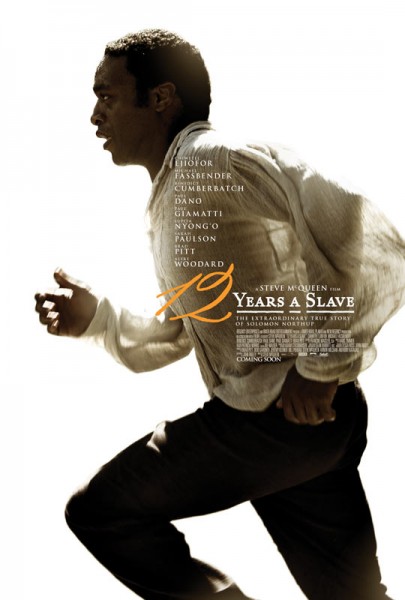
12 Years A Slave is one of the most powerful movies I have ever seen. The cinematic elements compliment the twisted and troubling plot to create a riveting experience for the viewer.  What follows is a theological reflection – for a more formal review of the movie check out Pop Theology by Ryan Parker.  Ryan and I also recorded a podcast that will be released this evening. 12-years-a-slave-poster-405x600

Based on a true story, the plight of Solomon Northup (played by Chiwetel Ejiofor) is a journey from the good life as a free black man in the North to the hellish existence of a slave in the deep South. Visual artist-turned-director Steve McQueen frames the narrative in stunning cinematography and a unique pacing that reflects the twists and turns in the story.

12 Years A Slave is one of those rare movies that impacts you emotionally and challenges the assumptions you carried into the theatre. The journey of the main character sticks with you and causes you to ask questions that you know deep down need to be examined.

I expect that this movie will be one of those rare films that trigger a much-needed cultural conversation. Issues of race and America’s haunting legacy of slavery and native reservation are never far from our national consciousness. Race is often front and center in the nightly news and on the margins of most national conversations.

While we know that something is amiss, we may not know how to approach the topic. We want to have a conversation but we may be unsure about how to proceed.

From the controversies surrounding the election of President Barack Obama to the George Zimmerman trial to the ongoing ‘stop and frisk’ policy debate in the New York City mayoral election, there is an awareness that race matters (to borrow a sentiment from Cornel West’s book title) but a perpetually unsatisfying confusion about how to access the underlying issues.

For Christians, perhaps the best way to address these issues is via the cross of Christ.  In his newest book, The Cross and the Lynching Tree, famed theologian James Cone equates the cross and the lynching tree: “though both are symbols of death, one represents a message of hope and salvation, while the other signifies the negation of that message by white supremacy.”

This is poignant because Solomon Northup first witnesses and then experiences the lynching tree in 12 Years a Slave. The lynching tree is the ultimate weapon of intimidation employed by the same slave owners who claimed the name of Christ, but who preached from the Christian Bible to their slaves in order to justify their cruelties.

For Cone,

“what is at stake is the credibility and promise of the Christian gospel and the hope that we may heal the wounds of racial violence that continue to divide our churches and our society.”

There are plenty of movies that are as fleeting and significant as the popcorn one eats during it. 12 Years A Slave is a different kind of movie. It has substance and is capable of being a touch-point for a significant cultural conversation.

“Until we can see the cross and the lynching tree together, until we can identify Christ with a ‘recrucified’ black body hanging from a lynching tree, there can be no genuine understanding of Christian identity in America, and no deliverance from the brutal legacy of slavery and white supremacy”.  – Cone

If we can talk about a movie like 12 Years A Slave in light of The Cross and the Lynching Tree, we may be able to begin to have a much-needed constructive and reconciling cultural conversation about race in America.

The election of President Obama was not the end of racism in America. As the 50th anniversary of ‘the March on Washington’ showed, we still live in a deeply divided country where race and the legacy of racist policies and attitudes have a lasting effect and are an ever-present reality.

America is also a deeply religious country and Christianity is the dominant religion. The irony, and the opportunity, resides in that fact that the symbol of the cross is so central to Christian imagery. There is great hope there, if only we would take it seriously and see what the Salvadoran martyr Ignacia Ellacurio called “the crucified peoples of history.”.

You can listen to my conversation with Ryan on the Homebrewed Christianity podcast here.

Create a free website or blog at WordPress.com.

Up ↑