Search

Bo Sanders: Public Theology

updating & innovating for today

Category

Theology

Language, God Talk, and Prayer

I never struggle to believe in God. I believe in the deep core of my being. I have faith in my bones. I breath this stuff. I am filled with Holy Spirit and that gives purpose to my day and direction to my life.  I never doubt the reality of the Christian faith … until I listen to a conservative like John Piper or Marc Driscoll talk. Then, it is all too apparent to me that we are (at least partially) projecting our greatest hopes and dreams onto the screen of the heavens. We are outsourcing our fears and evils onto a cosmic bad guy called the devil. We have created a galactic father figure in the sky (paging Dr. Freud).

It is so clear when Piper talks that it makes me want to retreat into the post-liberal work of George Lindbeck!  

Xenophanes is famed to have said:

“If oxen and horses and lions had hands and were able to draw with their hands and do the same things as men, horses would draw the shapes of gods to look like horses and oxen would draw them to look like oxen, and each would make the gods bodies have the same shape as they themselves had.”

It gets boiled down to “If horses had gods – they would look like horses.”

Most days I can stave that off. I can avoid the haunting suspicion and nagging doubt … but what Piper does is create a God in his own image – there is no other way to say it – it is idolatry.

So what? you may ask. Why even bother with it?  Because, I believe that there really is a God.

C.S. Lewis wrote a poem one time called “a footnote to all prayers” (it references Pheidias who was  a legendary statue maker in the ancient world)

Footnote to All Prayers
He whom I bow to only knows to whom I bow
When I attempt the ineffable Name, murmuring Thou,
And dream of Pheidian fancies and embrace in heart
Symbols (I know) which cannot be the thing Thou art.
Thus always, taken at their word, all prayers blaspheme
Worshipping with frail images a folk-lore dream,
And all men in their praying, self-deceived, address
The coinage of their own unquiet thoughts, unless
Thou in magnetic mercy to Thyself divert
Our arrows, aimed unskilfully, beyond desert;
And all men are idolators, crying unheard
To a deaf idol, if Thou take them at their word.
Take not, O Lord, our literal sense. Lord, in thy great
Unbroken speech our limping metaphor translate.

This is why we must acknowledge what it is we are doing when we pray, when we preach, and when we practice. We are doing the best we can with words, symbols, sounds and images. But if those images are solidified and codified past their point of original artistry, mysticism and metaphor – then it becomes something deadly to the soul and dangerous to the one seeking the real and living God revealed in Christ.


Clarifying the Quad

a quick follow up to the post from last week
– both of which were also posted at Homebrewed

 I wanted to thank everyone who gave feedback on the Four Locations of Theology in the 21st century post from earlier this week. I appreciate the comments here, on facebook, and the emails.  It has given me a lot to think about and I wanted to clarify three themes that have emerged.

Three clarifications:

  • Reason seems to be the suspicious quadrant. Every time I bring up quadrilateral, more than half of the conversation will be centered on reason. This week was no exception. Reason draws the most concern – which is funny to me because tradition is the one that I find most suspect.

Here is the thing I would want to clarify: the other 3 themes of Scripture, Tradition and Experience all have reason woven into them. Those who wrote the scriptures, those who established the tradition and even our won experience are all saturated with reason. It is inescapable. The scriptures did not fall from the sky! They passed through the author’s minds and were processed with reason. Same with tradition. The creeds were not divined in some sort of supernatural ceremony. The were constructed and reasoned. Our experiences are interpreted utilizing our filters, frameworks and lenses.

 It seems important then to clarify that those three are not independent of reason but are dynamically intertwined with it. It would be useless to take out reason (as some have suggested) because it interlinked and inescapable.

  •  It may be that the quad needs something else. Some suggested replacing one of the 4 elements with an alternative. My favorite idea came from my friend Raphael who said

 “I suggest we add a fifth source for the practice of theology in the 21st century: Imagination!”

Admittedly, it would no longer be a quad! but I think that the tradeoff is that you would get adventure and zest incorporated and not just a static, conserving, or historical product.

  • There are no guarantees. Even if we could all agree to utilize the quad for the theological endeavor, there is no guarantee that we would all come up with some thing or come out with the same conclusions. This seems to be a major concern – that we can not ensure the outcome of such an endeavor.

I am surprised at the conserving nature of such mentalities! People are ok to ‘go on the journey’ as long as we predictably end up basically where we started.
Think all you want. Explore new thoughts and incorporate science … just don’t stray too far from the foundations of antiquity!  Integrate new realities and account for ongoing historical developments … just make sure that you end up with the same thing we started with.

I have not overstated this hesitancy and resistance. But the reality is that there are no guarantees. You may start out an Evangelical and end up being an Emergent type working in a Mainline church with Process theology as your main conversation partner!  (for instance)

 In summary:

  1. You can’t get rid of reason, it is already present in the other three. Scripture, Tradition and Experience are inextricably laced with it.
  2. The quad may need a little something extra. The 21st century may require some zest, adventure and imagination
  3. There are no guarantees. While we want to honor the historical expression and provide continuity with the trajectory … it might look a little different and think a little different than it did in the 3rd or 17th century.

Thanks for all your feedback, thoughts, and concerns. I appreciate the conversation.

4 Locations for Theology in the 21st Century

originally posted at Homebrewed Christianity

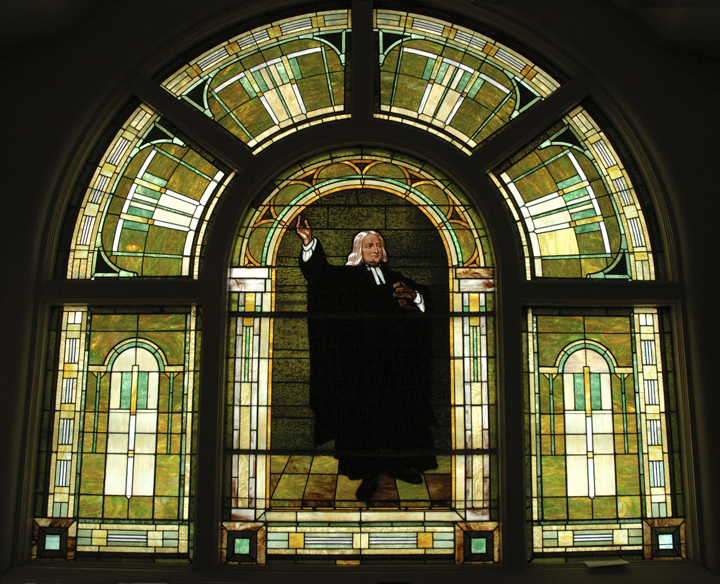
I come from a Methodist tradition that looks to John Wesley as its founder. Wesley utilized a famous quadrilateral to talk about how we do theology.
The four elements were Scripture, Tradition, Reason, and Experience.
I love the quad! I am a proud descendant of Wesley and I still find it quite helpful to utilize the same quad.  Here is why I find each element so valuable.

Scripture: No matter how fancy we want to get with our theology (I am looking at you Tillich) or whatever else we want to do (Griffin), it must account for the scriptural witness . I am not saying that we must always begin with scripture (like neo-Orthodox or Open folks) nor am I saying that we must only do scripture – but any 21st century theology must account for it. The Gutenberg and Missionary eras have reinforced a global importance and influence that must be acknowledged for any theology to carry weight. There is just no sense in having a theology that is not thoroughly scriptural if you want it to count widely.
Tradition: I grew up evangelical and developed a disdain for tradition. It was a bad word to me – like religion. It meant thoughtless, empty ritual done on autopilot in rote repetition. I see things a little differently now. Back then, I actually thought that we were free to do whatever we wanted as long as it was meaningful and effective for accomplishing the goal – which was to bring people into a deeper relationship with the living God. Now, I understand that we are all socially conditioned into elaborate human constructions. These constructs (like language or religion) are part and parcel of both the communal/social order and the religious tradition. Tradition and community must be recognized and honored since all theology is contextual theology.
Reason: I loved quoting Colossians 2:8 when I was an evangelist and someone would ask me a better question than I had an answer to
See to it that no one takes you captive through hollow and deceptive philosophy, which depends on human tradition and the elemental spiritual forces[a] of this world rather than on Christ.
It was the deceptive word play that depended on human thinking that was so dangerous to my Josh McDowell faith. I had evidence that demanded a verdict and you had tricky mental gymnastics and endless questions. I had never heard of Neoplatonism and why did I need to? I had Paul and the Epistle to the Hebrews! … Which is to say that I had never encountered the philosophical underpinnings of the New Testament writers nor of my Protestant declarations of faith.
Experience: I know that part of my fascination comes my charistmatic-evangelical roots. I know that part of it is my American protestant upbringing and that it is reinforced by my personality. But I find it on the pages of the New Testament, and I am simply uninterested a religion that is all in the head and not in the heart. I want a full body religious experience. Nice words are fine (and OH how I love nice words) but we have to walk the walk (as they say) and not just talk the talk. Theology must be validated by the community’s experience.  

I always attempt to frame things in the positive. In this case, I will also attempt to reinforce the need for all four by allowing myself to state them in the negative as well.
 Scripture: I am not interested in a Christianity that does not engage scripture or does not seek to be faithful to those initial witnesses.  We can update, renovate, adapt, evolve and reinterpret … but we must always interact with scripture. It is  scripture that we update and reinterpret.
Tradition: Let me say first that I  loath tradition for tradition’s sake. It makes be somewhere between vomitous and irate – which is not pretty. But in our global context you can’t just ‘do theology’ as if it were in a vacuum or you were starting from scratch. We are not starting with a blank slate!  I did not write the Bible, I am not the first to read the Bible – it was handed to me, was given to me and it is that ‘givenness’ that must be absorbed.
 Reason: who wants a faith the un-reasonable? Not me.  Plenty of other people do. In fact, this is really in vogue right now. Lots of conservative folks are retreating into their orthodoxy silo and playing their own isolated word games. That is a theological dead-end for the faith. It is a desperate remnant of Christendom monopoly and wholly counter to the very impetuous of the gospel they so proudly claim to defend.
 Experience: I am as uninterested in a theology that is not experienced as I am in a faith that is unreasonable.

I have been reading a lot of theology lately in preparation for the 2012 Emergent Theological Conversation. Much of it has been philosophical 20th century theology, some of it has been early century and reformation era. At the end of the day, I keep coming back to the Wesleyan quadrilateral as a framework that works for the inter-active, cross-cultural, multi-voiced engagement of the 21st century.

Then agian, maybe I’m wrong

I posted yesterday about Plaxico Burress, Romans 8:28, Walter Rauschenbusch, President Obama, and the Antichrist. My point simply was that people do believe this stuff – even though sometimes I am accused of contending against something that no one really believes. My only point is that people do actually believe those things.

But I know what people who hold to those views are going to say – I have heard this line of reasoning since I first attended Bible college 20 years ago. Here is what they will say:

  • Maybe Plaxico Burress shooting himself in the foot did happen for a reason. Maybe God – who is in control [which is the next level up from being sovereign] – let this happen so that nothing worse happened. Maybe God allowed him to injure himself so that he did not harm who know how many other people with that gun.
  • Maybe people don’t know about Walter Rauschenbusch because he focused on the wrong thing (social conditions like poverty) instead of the Gospel (of salvation). [if you are unfamiliar with this distinction, read this post by Rachel Held-Evans about Scot McKnight’s new book]. Maybe God let his name fall into the annuls of long lost history because his ministry was not honoring to the truth of the gospel and got side tracked from the real important issue.
  • Maybe President Obama could be the Antichrist. With everything happening about Israel right now, all the earthquakes, the economy like it is… this could be the end – and if it is – then the most powerful politician in the world who plays both the Christian and Muslim card could be that duplicitous man of lawlessness that we have been waiting for.

Its not that I am unaware of the line of reasoning. Its just that I don’t believe it. Now, I could be wrong about any one of these given bullet points – but that people do believe these things … about that I am not wrong ;).

Sometimes I hate being right

Three stories caught my attention today:

1) In the newest Men’s Journal magazine, Plaxico Burress (NFL player) who was recently released from prison for weapons possession is interviewed. He was busted two years ago for weapons because he brought a gun into a NY nightclub and … shot himself in the foot.  Literally.

The eye opening part of the story is the two page spread of a tattoo across his back that reads – and I am not kidding about this – “Everything happens for a reason“.

2) I was listening to an popular podcast on Itunes. It is a theology show that tackles tough and often complex subjects. They’re most recent show was on the Religious right and the Religious left.  The team member that was charged with reporting on the Social Gospel said that he had never heard of Walter Rauschenbusch … and that he had never heard his name pronounced out loud before. He had to ask how the last name was pronounced.

3) A protester/heckler was removed from a speech by President Obama for shouting him down as “the Anti-Christ“. For real.

Here is why these three got to me:

  • I am frequently dismissed  for making too big of deal out of a bad reading of Romans 8:28 that “God causes everything to work together to for the good …”  I am told that “no one actually believes that everything happens for a reason.”  I’m telling you – they do.
  • I am continuously telling people who read theology or attend a Mainline church that “people in the Conservative-Evangelical-Charismatic camp do not know who that is – they have never heard of them”.  That’s impossible is the response. I would bet that a large majority of self-proclaimed Christians in America have no idea who Walter Raushenbusch is.  I didn’t.
  • The “Left-Behind” dispensational end-times teaching has permeated the American church. I try to point out the inherent danger here and am more often than not told that “no one actually thinks that“. They do.  People who I know by name believe it. That we are in the end times, the there is actually a mark of the beast and that there is actually one big bad guy called the Anti-Christ.

I’m telling you: people actually think that “everything happens for a reason”. People have no idea who Walter Raushenbusch was. People think that Obama might actually be the Anti-Christ.

This is not the kind of thing that I wanted to be right about.

Training Imams, Rabbis, and Pastors at Claremont Lincoln University

Today the new University Project announced it’s official name – Claremont Lincoln University. You can read about the background story of the name here.

As a Claremont student, I am invested in the future of the project. I had desired to come to the School of Theology for a while but that was considerably amplified with the announcement of the project [read the Time Magazine article here] to train Imams, Rabbis and Pastors in close quarters and in close contact.

There are two things that I am especially excited about and a third that I am concerned about:

  • There has been a lot of talk around training Imams. I have been following several conversations about the domestic training of those who will serve in U.S. Islamic communities. Historically, the first wave was bringing over foreign trained Imams to serve in the American context. That had inherent limitations. The second wave was to send American candidates for foreign training. The challenge was then to translate the training into a context that was significantly different than the training environment.

Imams in the U.S. are asked to provide services and play roles that are unique to the North American context. Imams are asked – not just to be experts in theology and textual interpretation – but serve as social workers, counselors, and all sorts of other roles that are not traditionally in the job description or accounted for in the training they may receive. The Islamic Center of Southern California and Claremont Lincoln University will address these concerns in a uniquely particular way.

John Cobb: what went wrong with the Mainline?

Last week I was editing the 101st episode of Homebrewed Christianity. It was a conversation primarily between Paul Capetz and John Cobb. It was a fantastic theological dialogue … and then then subject turned toward practical matters.

What happened to the Mainline church? Why is it in such decline?

It turns out the answer, according to Cobb, is both complex and not absent of theology.

He details three major shifts that were a recipe for disaster:

The first shift was an acculturation. In post World War 2 America, there was a boom in church attendance as it played a vital role both socially and in the family. In a twist of fate, the Mainline churches (and social gospel) were successful – maybe too successful. The church got comfortable. The church liked its forms – especially liturgy. The church was satisfied with the direction and changes of society. Cobb doesn’t use the word complacency but self-satisfaction about success can become paralyzing in future discussions.

The second shift was a diminishing of the importance of theology. It was the ecumenical  mentality and apathetic attitude toward theological difference  that somehow resulted in a mentality that it doesn’t really matter so much what you believe about this specific or that. At some point one has to think that this casualness about theology is not simply laziness but an abdication of core responsibilities.

The third shift came in the 70’s when the Liberation Theologies showed up and “they knew exactly what they believed and were not afraid to say so.” The Mainline was impotent and irrelevant by comparison. (my words, not Cobb’s)

When you put these three together, you see a perfect storm: loss of intensity due to acculturation, loss of identity due to theological abandonment, and loss of relevance (potency) due to shifting contexts. Continue reading “John Cobb: what went wrong with the Mainline?”

weaving my theological web

part of being Post-foundational is a move away from thinking in “foundation stones” – building blocks that become unmovable or unquestionable over time – and moving to more a “web” of meaning or interpretation. The advantage of the web-mentality  is that it is flexible and you can adjust one part of it without the entire project crumbling into ruins.

I like this switch a lot.   Of course, no system or structure comes without it’s complications, glitches, and obstacles.

A web is not a liquid existence. It still needs to be anchored somewhere. It has to be connected to something.

I am fond of saying that I want to be innovative, but in a way that honors the original idea and provides continuity with the tradition. This desire means that I am not floating from thing to thing as if I was un-anchored. We are all, at some level, tied to both the original vision and to the modern manifestation. The first asks for accountability and the second one calls for integrity.

navigating between the original vision and the historic progression is demanding. It takes time, a little bit of research, and a whole lot of grace. In fact, I see why some people don’t want to do it. It would be easier to either A) be conservative and just set the foundation stones in place and then never need to move them or ask the original questions again or B) be destructive and/or pragmatic and just do what works now without consideration for the road that brought us here.

I have noticed a pattern lately in my conversations. There seem to be four ideas or movements that I use to anchor my web of meaning / interpretation to.  I ran this by a couple of friends and it has led to some really interesting conversations.

I am a post-conservative, emergent, progressive with charismatic leanings. – this allows me to be in conversation with process thought as well as post-modern thinkers. Continue reading “weaving my theological web”

The table of the Lord: eating together

In the gospel story the Last Supper is the calm before the storm.

If we were filming it as block-buster movie, the Last Supper is where we transition from the wide-screen shots  to a narrow focus – from  fast cut action sequences of arguing with Pharisees to slower calmer exchanges with the devoted and the trusted.

There is a narrowing, a focusing, that happens at this point in the story. It gets tighter, it gets smaller, it gets quieter, it gets more focused. Everything draws in – the story takes a breath. Continue reading “The table of the Lord: eating together”

Create a free website or blog at WordPress.com.

Up ↑