Search

Bo Sanders: Public Theology

updating & innovating for today

Category

Violence

What if we miss what was ‘finished’?

Imagine that the God of the universe arranged to stage a magnificent pageant – a cosmic drama – that would right the wrongs of the world and change the course of history. The stage would be set with the most intense consequences and most elaborate circumstances.

Imagine that this drama would unfold in such a way that God’s covenant people would be delivered and their prayers would be answered. The only way that such a drama could be staged would be that God’s own self would have to be a player! The generation that experienced this engagement – and the generations that would follow – came to believe that the divine was at work in the central actor in such a unique way that this new character was worthy of worship as God.

The above scenario is exactly what the Easter is to the church. God staged drama so cataclysmic that nothing (we proclaim) would ever be the same. Humanity’s relationship to the divine and even they way we practice religion – not to mention who gets to practice the religion – was radically altered. In fact, a new religion was born with new scriptures and new methods and even new truths.

The central event, the climax, of this pageant was the violent death of the central character and his eventual vindication in life conquering death and the systems of domination in religion and politics.

In Christ, God exposed the violent and fraudulent scheme of scapegoating when ‘the one who knew no sin became sin for us’. Something happened in the heart and person of the Godhead when Christ died a martyr and scapegoat. The dark events on this little blue planet we call earth had cosmic ramifications. Creation and all that had gone wrong since Eden was being deemed with value again. Sin itself was being destroyed and the life of the ages was being made available for all creation – past and forever.

 When Jesus was lifted up on the cross, God lifted a mirror to show humanity its true face.

The violence of the cross and the political/religious trial that led up to it unmasked the authorities and institutions of power. Our violence and blaming of the other was exposed – as if God was saying “do you see what you do? You do this over and over again, lashing out at each other with blame and cruelty and bloodshed. You even do this to me! Then you claim to do it in my name and for my glory … Stop it.”
cross-150x150“No one needs to be treated like this anymore. No more scapegoats. No more violence in my name and for my sake. This has gone far enough and I am putting an end to this … It is finished.”

And with that he breathed his last and gave up his spirit – according to the scriptures.

Let that set in.

Now let’s ask a second question. What if God staged this grand pageant and even participated in this cosmic drama … and we missed it.

Is it possible that we as humanity and as Christians in particular could have seen all of this, organized a yearly remembrance of it, written songs about it, created ceremonies and rituals to enact every week and then proceed to reinforce and re-entrench that very thing that drama was meant to expose?

It that even possible?

Could it be that we were visited by the divine in a unique and particular way, that we received that King of Glory and then turned around to set up the very structures and systems of violence and domination that were exposed in Jesus’ way? It seems unimaginable.

We proclaim, worship and claim to serve a God who became humble as a servant and even unto death (Philippians 2) to unmask the powers that be and show a different way to be in the world. Jesus calls us to take up our cross daily and to follow this example.

Jesus died on the cross not just for our sin but because of it. We needed a savior to save us from ourselves and this vicious cycle of aggression and violence we perpetuate , sometimes in God’s name. We killed the Prince of Peace but God vindicated the victim and by God’s mighty love and sacrifice destroyed the need to ever do this to anyone else.

The scapegoat mechanism was unmasked as God held up a mirror to humanity and exposed the destructive and unending cycle of violence for political stability, national security or religious purity. The great drama has shown us the conclusion of this damnable way of thinking: we do this is God’s name and we even did to the Son of God.

This never has to happen again. The lesson of the Easter drama is that Life itself has ruined these cycles of death and destruction so that we can stop perpetuating this unsatisfying and unproductive way of treating each other.

It is finished.

Concerns About ‘The’ Cross

I have received lots of feedback via email, FaceBook and text on Blood: Easter, the Cross and that quote about Liberals. 

It seems that most people get the main thrust of the article but have one doubt/hesitation they can’t shake/make sense of. I was asked to write a response at a non-grad school level (which I love to do).

I have two requests:

  1. If you are looking for something more academic please read Heim’s Saved From Sacrifice. It is wonderful.
  2. If you are a big fan of a penal substitution theory of atonement, understand that I am not. I’m willing to talk about it – just understand that it would be unhelpful for you to simply repeat that view as a defense of that view.

So let’s get started!

  • You said that we focus too much on the cross, but I love the cross and think we don’t focus on it enough! Jesus said to take up our crosses – we are a resurrection people and resurrection only happens after crucifixion. 

There are several problems here. cross-150x150
First, there was more than one cross. There were three just in our Easter story (but not in most of our pictures – like the one to the right). So you can’t say ‘the’ cross. You can say ‘that’ cross. It is vital to get just how many crosses there were. Roman use of crosses was systemic. Jesus’ cross was not an exception in that way.

Second, you are using ‘the cross’ as a shorthand for the whole story. The incarnation, crucifixion, empty grave and pentecost provide a much better snapshot. To try and sum them up in ‘the cross’ is too limited.

Third, we are people of the resurrection. That does not mean that ‘the cross’ is a good thing. What happened there was unjust. That God redeemed it and brought something good out of it … does not change that it was tragic.


  • How do we engage the cross still as people who follow Jesus?

It seems like most of the things that we say about the cross are the first half of what should be a longer sentence.

“We preach the cross and Christ crucified” … yes but what do we preach about the cross?  That is was unjust? That ‘it is finished’ (the sacrificial system)?

“Jesus died our sins” …  yes but also because of our sin? And to what end? To move us away from the scapegoating impulse? To expose and unmask our unjust propensity toward violence?

Here is the problem: if we are not careful, we miss the radical reversal that Jesus’ cross is supposed to provide and we end up simply absorbing it into the system that it was meant to expose. This is a tragedy that ends up normalizing the violence Jesus unmasks and continues the cycle of victimization Jesus was trying to break.

Because of the way talk about the cross in half-sentences and short-hand phrases, we end up siding with the Romans’ use of power and violence and miss the fact that on Good Friday, God was not on the side of the Romans but that God was with Jesus on that cross.


  • What do we do with the sacrificial lamb imagery? 

 I will withhold my real answer (that it was contextual and historically located) and will instead present what I think is a more helpful response!

We see a trajectory in our canon. God moves Abraham from human sacrifice to animal & grain … later God moves on from that system ( you see this in passages like Psalm 40:6 “sacrifice and offering you did not desire” and Hosea 6:6 “For I desire mercy, not sacrifice”)

People will often quote Hebrews 9:22 “without the shedding of blood there is no forgiveness of sins”. The half they leave out is that it actually says “under the law …”

You see what has happened? By not saying the first half (under the law) and only saying the second half, we actually miss the entire point of Jesus’ sacrifice and end up reinforcing the system Jesus came to move us on from!  We live and think as if we are still under the law!

The way talk and think about the cross of Christ actually undoes the very thing that Jesus came to do.

The rest of Hebrews 9 says that Jesus died once of all. So we don’t need to kill ‘them’ – they are ‘us’. We are all them – the all. Jesus died once for all so that we could stop this us-them thinking and stop victimizing and scapegoating. We miss this and then absorb ‘the cross of Christ‘ into the very system of power and violence that Jesus came to destroy.


  • I thought that the blood shed on the cross provides the forgiveness of sin?

Jesus forgave sins before the crucifixion. Part of the problem with saying ‘the cross’ as a form of shorthand for the whole story is that we skip both the life and teaching of Jesus. Jesus got in trouble for forgiving sins. How could he do that if what you are saying is true?

See? God forgives sin. How can God do that? Well if the debt that is owed is to God … then God can forgive them. The problem with they way we have been taught to think and talk about ‘the cross’ is that God is not free to forgive. God has to play by some external rules and ‘with out the shedding of blood, there is no forgiveness’. But remember that the law is that way. God is not.  Jesus, and this true wether you think Jesus was a messenger of God or God incarnate, forgave sins before the shedding of blood. How did he do that if they way were taught is true?

God forgives sins. Thank God! And we need to repent. We have made God into something Jesus was meant to destroy. We have placed God on the side of the powers and violence that God was trying to combat. We have returned to the very thing God was attempting to redeem us from and release us from. We have absorbed Jesus’ cross into the very system Jesus was attempting to unmask and expose. We have missed the very lesson that Easter is supposed to teach us.

I will contend that God was with Jesus on that cross and that the empty grave is the vindication of the victim so that we might be freed from the cycle of violence and victimization … once for all.


I look forward to your ongoing feedback and I will try to respond throughout the day to any honest questions that come up.

’12 Years A Slave’ and the Cross of Christ

by Bo Sanders 

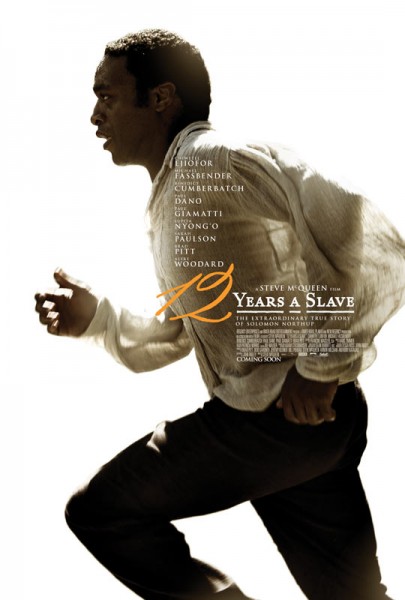
12 Years A Slave is one of the most powerful movies I have ever seen. The cinematic elements compliment the twisted and troubling plot to create a riveting experience for the viewer.  What follows is a theological reflection – for a more formal review of the movie check out Pop Theology by Ryan Parker.  Ryan and I also recorded a podcast that will be released this evening. 12-years-a-slave-poster-405x600

Based on a true story, the plight of Solomon Northup (played by Chiwetel Ejiofor) is a journey from the good life as a free black man in the North to the hellish existence of a slave in the deep South. Visual artist-turned-director Steve McQueen frames the narrative in stunning cinematography and a unique pacing that reflects the twists and turns in the story.

12 Years A Slave is one of those rare movies that impacts you emotionally and challenges the assumptions you carried into the theatre. The journey of the main character sticks with you and causes you to ask questions that you know deep down need to be examined.

I expect that this movie will be one of those rare films that trigger a much-needed cultural conversation. Issues of race and America’s haunting legacy of slavery and native reservation are never far from our national consciousness. Race is often front and center in the nightly news and on the margins of most national conversations.

While we know that something is amiss, we may not know how to approach the topic. We want to have a conversation but we may be unsure about how to proceed.

From the controversies surrounding the election of President Barack Obama to the George Zimmerman trial to the ongoing ‘stop and frisk’ policy debate in the New York City mayoral election, there is an awareness that race matters (to borrow a sentiment from Cornel West’s book title) but a perpetually unsatisfying confusion about how to access the underlying issues.

For Christians, perhaps the best way to address these issues is via the cross of Christ.  In his newest book, The Cross and the Lynching Tree, famed theologian James Cone equates the cross and the lynching tree: “though both are symbols of death, one represents a message of hope and salvation, while the other signifies the negation of that message by white supremacy.”

This is poignant because Solomon Northup first witnesses and then experiences the lynching tree in 12 Years a Slave. The lynching tree is the ultimate weapon of intimidation employed by the same slave owners who claimed the name of Christ, but who preached from the Christian Bible to their slaves in order to justify their cruelties.

For Cone,

“what is at stake is the credibility and promise of the Christian gospel and the hope that we may heal the wounds of racial violence that continue to divide our churches and our society.”

There are plenty of movies that are as fleeting and significant as the popcorn one eats during it. 12 Years A Slave is a different kind of movie. It has substance and is capable of being a touch-point for a significant cultural conversation.

“Until we can see the cross and the lynching tree together, until we can identify Christ with a ‘recrucified’ black body hanging from a lynching tree, there can be no genuine understanding of Christian identity in America, and no deliverance from the brutal legacy of slavery and white supremacy”.  – Cone

If we can talk about a movie like 12 Years A Slave in light of The Cross and the Lynching Tree, we may be able to begin to have a much-needed constructive and reconciling cultural conversation about race in America.

The election of President Obama was not the end of racism in America. As the 50th anniversary of ‘the March on Washington’ showed, we still live in a deeply divided country where race and the legacy of racist policies and attitudes have a lasting effect and are an ever-present reality.

America is also a deeply religious country and Christianity is the dominant religion. The irony, and the opportunity, resides in that fact that the symbol of the cross is so central to Christian imagery. There is great hope there, if only we would take it seriously and see what the Salvadoran martyr Ignacia Ellacurio called “the crucified peoples of history.”.

You can listen to my conversation with Ryan on the Homebrewed Christianity podcast here.

Neither Non-Violent nor a Pacifist be

In response to  J.R. Daniel Kirk’s blog post about violence and the gospel, I thought it would be good to put all my cards on the table.

Kirk is one of HomeBrewed’s  favorite New Testament scholars and one of our favorite bloggers. He is a masterful HomeBrewer and an Academic of renown. This week he had the opportunity to catch up on his podcasts and  our TNT was one of his selected listens.

He had concerns about some of the content and in his post he said:

“What about those passages that make Jesus himself look more “violent” than selections in the Sermon might? E.g., what about the Jesus of the narrow way and crashing house from the end of the Sermon? But then there is also the question of what comes before and what comes after. There is judgment. In the OT there is war and destruction. In Revelation there is a lake of fire.”

I thought it would be good to put forward my thoughts 24 hours ahead of our recording to see what the deacons had to say.

I am not a pacifist. That label has come to mean ‘passive’ and my reading of the gospel does not allow for one to be passive in their engagement in the world.

I am not into non-violence. While I appreciate that long and astounding history of those who promote non-violence, I do not subscribe to the theory of non-violence. As a post-Colonial scholar I reserve the right of oppressed minorities to both defend themselves and to aggressively pursue their own liberation and freedom.

I do not believe that God is violent. I am resigned to the fact that humans are violent and that humans project the validation for their violence on their deity – whoever who he or she might be. Jesus shows us a different way.

So there are three ideas presented in the negative. Here are my three convictions in the positive.

  • I am under the impression that Jesus is the highest revelation of God. As a Christian, I hold that God was uniquely present in Jesus and that Jesus shows us what God is really like (image of the invisible God and all that).
  • I am a radical peace maker. I take the sermon on the mount very seriously and I am under the impression that we should be aggressive in our pursuit of peace, reconciliation and restoration.
  • I am convicted that violence begets more violence. While I am not a pacifist nor into non-violence (per se) I am deeply convinced that the problem with violence is that it begets more violence. This is why contemporary debates about war and American foreign policy are nothing more than drivel and posturing. Violence begets more violence. [ I don’t have enough time to go into how both Al Qaeda and Osama Bin Laden are products of US foreign creation}

With that in mind, I would like to acknowledge an issue raised by Dr. Kirk’s.

Jesus flipped over tables. To quote the late Chris Farley “well ladi freakin’ da!” So what? Is that what you want to do? Flip over tables at church? Well go ahead – with my blessing! But let’s be honest – Jesus turning over tables opens the door for you to justify invading foreign counties and dropping bombs on civilians who might be enemy-combatants. Seems like a leap eh? Listen to christian radio, christian TV, or Fox News. Apparently it is not that big of a jump. If all you wanted to do (with God’s blessing) is to flip over tables at church – this would be a non-issue.

Yes, the story of Joshua is a violent one. Tomorrow on TNT we will address the issue that God told the Israelites to invade Canaan and kill all the inhabitants – as well as that that damned Lake of Fire in the New Testament.

I’m looking forward to having that conversation.

______

On a different note …

I have been having the conversation for almost 20 years. It almost always goes the exact same way.

Me: Jesus told us to love one another and to turn the other cheek. He also modeled it when he was ‘led like a lamb to slaughter’.

Guy: Are you telling my that if somebody broke into your house you would just let him rape your wife?

(I’m not kidding, that it almost always the first objection)

Me: No. I would not stand by and let someone rape my wife.

Guy: I thought you were a pacifist.

Me: That doesn’t mean being passive. There are many ways to resist, restrain and deter that kind of violence.

Guy: I would kill him. I would shoot him in the face.

Me: … I think there are alternatives beside killing.

Guy: You are lying if you say that you would not kill him too. And if the Americans didn’t get involved in WWII then we would all be speaking German right now!

(Hitler is almost always the second objection)

___

In the end, I am not a pacifist because it is an ideology that one subscribes to that takes options off the table. I am not into non-violence because it limits the response of oppressed communities. I also am not a big fan of defining yourself in the negative.

What I am into into is aggressive peacemaking. I am against preemptive war and I believe that violence begets more violence.

I would love your thoughts as we prepare for tomorrow’s show.
The debate on the initial post was hot and heavy – so don’t be shy about not liking what I am proposing.

Jesus & (S)words part 3

reposting from last week.
Part 1 & Part 2 provide the lead in

Part 3:  Jesus tells his disciple to buy a sword?

We come to that famous passage in Luke 22 where Jesus tells his disciples to buy a sword.

 35 Then Jesus asked them, “When I sent you without purse, bag or sandals, did you lack anything?”

“Nothing,” they answered.

36 He said to them, “But now if you have a purse, take it, and also a bag; and if you don’t have a sword, sell your cloak and buy one. 37 It is written: ‘And he was numbered with the transgressors’[b]; and I tell you that this must be fulfilled in me. Yes, what is written about me is reaching its fulfillment.”

38 The disciples said, “See, Lord, here are two swords.”

“That’s enough!” he replied.

Here are two readings you may want to consider: 

Earlier this week I engaged a political reading of Moses and the waters of Meribah from Numbers 20. My question was “why, if Moses was going to ultimately speak to the rock, did the Lord even mention the staff?”  The answer was that it was a symbol of power to be carried – yes – but ultimately resisted in favor of a better present option that might be overshadowed by the most obvious option.

It takes strength to turn the other cheek. If you don’t have the ability to retaliate … it is just being a doormat or victim? That is how I have always thought about it.

In that perspective, I have read Jesus’ odd command with Peter in mind. I see that fateful night where Jesus tells him to ‘put away your sword’ and later tells the authorities ‘if my kingdom was of this world my followers would fight.’ The implication is that Jesus’ kingdom is not of this world and so his followers don’t fight.

The sword for the disciple, then, is what the staff was for Moses in Numbers  20: a powerful option to be resisted in favor of a preferable option that is less obvious because it is less forceful.

I used to reconcile ‘buying swords’ as a sort of object lesson or training excersise for the disciples. One lesson (trust and supply) is over – next lesson: You can’t resist temptation is one of the options is not even available.

 Then, in 2007, I discovered that Biblical Scholars have a different way of handling the passage. Here is Ben Witherington: 

Lk. 22.36-38. What is the meaning of this little story, taking into account the larger context of Jesus’ teaching? Vs. 37 is the key where Jesus quotes Is. 53.12—“he was numbered with the transgressors”. Jesus is saying to the disciples—you must fulfill your role as transgressors of what I have taught you!!! They must play the part of those who do exactly the opposite of what Jesus taught them in the Sermon on the Mount. The disciples become transgressors by seeking out weapons and then seeking to use them. This much is perfectly clear from the context for the disciples then go on to say “look Lord here is two swords”. They already have such weapons and Jesus responds in disgust to the fact that they are already transgressing his principles of non-violence by responding “that’s enough” (of this nonsense).

 So either Jesus was saying that two swords was enough for the revolution (not likely) or Witherington has this right.

Conclusion: We have looked at these four famous passages now and it seems clear that although Jesus talked about swords and the writers of scripture utilized sword analogies, none of these passages is a validation of the type of violence these verses are used to justify.


Jesus & (S)words part 2

I’m reposting last week’s HBC conversation in 3 parts
[part 1 is here]

Part 2:  

There are lots of swords in the New Testament.  The Word of God is compared to a double-edged sword and Jesus comes back wielding a sword. Maybe the Bible is more than ‘O.K.’ with swords and sword imagery?

Let me throw out two things:

  • In the context of the Roman Empire and its occupation of Jewish lands in the 1st century, swords would have been a common item that drawing imagery out of would have been appropriate.
  • A well-known pastor in Seattle, Washington is famously quoted as saying “Jesus is a cage fighter with a tattoo on his thigh and a sword in his hand, determined to make someone bleed”. He said this in reference to the fact that he “could not worship somebody that he could beat up.”

Some people dismiss statements like this and chalk it up to testosterone fueled, overly inflated, pumped up hyper-masculinity.  I worry that there is something much deeper and much more sinister involved. I think that it is a fundamental misunderstanding of the nature of God and the interpretation of Christian scripture.

 What is noteworthy in Revelation 19, is that the sword is not in Jesus’ hand but it comes out of Jesus’ mouth. That seems important in the poetic/prophetic  nature of Revelation. This sword is not your average sword. It is not in Jesus’ hand and that makes you wonder if the way in which this sword “strike down” the nations is not in bloody violence but in a kind of destruction that would happen as a result of a sword that proceeds from the mouth of God?  Let’s ask ourselves “is there something that comes from the mouth of God that radically impacts or consumes peoples and nations?”  Is there something sharp that comes from the mouth of God … something sharper than any two edged sword?

Oh, here we go: Hebrews 4

12 For the word of God is alive and active. Sharper than any double-edged sword, it penetrates even to dividing soul and spirit, joints and marrow; it judges the thoughts and attitudes of the heart.

So far so good! ‘It’ judges the thoughts and heart… but here comes the twist:

 13 Nothing in all creation is hidden from His sight. Everything is uncovered and laid bare before the eyes of him to whom we must give account.

Hold the phones! … the Word of God (it) is a person? Yes. Guess who?

 14 Therefore, since we have a great high priest who has ascended into heaven, Jesus the Son of God, let us hold firmly to the faith we profess.

Jesus is the Word of God?    (I’m being funny but you may want to check out John 1 for clarification).

 In conclusion: the use of sword imagery  in both Revelation and in the book of Hebrews needs to be taken with a poetic grain of salt. Yes, the Bible uses sword imagery. The thing is that if Jesus’ (S)word, from part 1,  is a non-sword or an un-sword and in Revelation is comes from Jesus’ mouth and in Hebrews it is a person … then none of these passages, thus far, can be utilized to justify what so many Christian (s)words are used for. 

I’ve obviously been having fun here, but the bottom line is that just because the Bible uses swords as analogies – it isn’t a wholesale validation of swords nor a justification for using them as the world does.

________

I would love to hear your thoughts – I just have one request: please don’t use the word ‘Pacifist’ when speaking of Jesus. That set of commitments belongs to a distinct school of thought  that did not exist in Jesus day so it is anachronistic to use in that way. He was certainly into non-violence and radical peace-making but Pacifism is a unique configuration of convictions.

Jesus & (S)words

This conversation went really well last week over at Homebrewed. I thought I would post it here in smaller chunks for anyone wanted to continue the conversation.

Jesus tells his disciples to sell their bags and buy swords. Why? And why then does he reprimand Peter for using a blade at the moment when it seemed to be most appropriate?  Was Jesus being inconsistent? Did he change his mind in the moment? Was it a test? Did he set Peter up to fail? Why did he say that ‘those who live by the sword, will die by the sword?’ and then tell his disciple to buy them?

I am asked about Jesus’ relationship to swords as much as anything I get asked about. Good hearted people are quite baffled by the whole subject.

  • Jesus did after all say that he came to bring a sword.
  • As the word of God, he is said to be sharper than any two-edged sword.
  • He is pictured with a sword coming from his mouth when he ‘returns’.
  • and there is this matter of him telling his followers to buy swords

As a former apologist, I have gotten pretty good at helping the baffled work through these passages. I even has a presentation I do called jesuSword that incorporates Jesus, his words, and these passages about swords.

 In order to facilitate a lively give and take, we will take this in 3 quick addresses over the next 24 hours.

 Part 1: Jesus says that he came to bring a sword.

 Matthew 10:34 “Do not suppose that I have come to bring peace to the earth. I did not come to bring peace, but a sword. 35 For I have come to turn “‘a man against his father, a daughter against her mother, a daughter-in-law against her mother-in-law—   37 Anyone who loves their father or mother more than me is not worthy of me; anyone who loves their son or daughter more than me is not worthy of me. 38 Whoever does not take up their cross and follow me is not worthy of me. 39 Whoever finds their life will lose it, and whoever loses their life for my sake will find it.

 Is it possible that Jesus was being ironic and that his sword is actually an un-sword. I say this because Jesus’ sword does the exact opposite thing that normal swords do. His sword divides family. Traditional swords are used their swords to defend their kin and kind.

Jesus was using a play on words.

Jesus was using hyperbole. In his day swords were actually for defending one’s family – for guarding me and mine. In this sense, Jesus’ “sword” is an un-sword… or an anti-sword. It does the opposite of what human swords are used for.  Jesus’ sword is not for defending family but for dividing family. Jesus did not come with a human sword but the opposite!!

John Caputo puts it this way:

The kingdom reigns wherever the least and most undesirable are favored while the best and most powerful are put on the defensive. The powerless power of the kingdom prevails whenever the one is preferred to the ninety-nine, whenever one loves one’s enemies and hates one’s father and mother while the world, which believes in power, counsels us to fend off our enemies and keep the circle of kin and kind, of family and friends, fortified and tightly drawn.”

If Jesus was being ironic or using hyperbole, it would make so much more sense than the way this passage gets used to justify violence and militarism.

I would love to hear your thoughts – I just have one request: please don’t use the word ‘Pacifist’ when speaking of Jesus. That set of commitments belongs to a distinct school of thought  that did not exist in Jesus day so it is anachronistic to use in that way. He was certainly into non-violence and radical peace-making but Pacifism is a unique configuration of convictions.   

Violence in the Hunger Games

originally posted at Homebrewed Christianity

Writing a paper on Globalization called for a serious study break and so I headed to the opening day of the Hunger Games. There are three things that you should know about my movie going experience:

  • My theater is one block from UCLA and I appeared to be the oldest person in the theater.
  • LA is wonderful for diversity. This was the most eclectic group of folks I have watched an opening night movie with since I watched the Waterboy in New York  (1998)
  • I have intentionally not watched a single preview or read anything about the movie whatsoever. I hate how previews ruin the narrative experience for me.

In short I will simply say this for the movie:

  1. It was better than advertised.
  2. The DeColonial themes in the first half of the movie were incredible (I will write more about this next week).
  3. If you are contemplating going, you should go.

That being said, I left the theater with three quotes running though my head. The first relates to a scene where a young person (on the badteam) is killed and the crowd I was with … cheered. Now, up to that point violence had been a very bad thing and an unwanted/inevitable element of oppression and Imperial spectacle. I’m not even focusing on the violence against women angle here – just the violence alone. Chris Hedges talk of war movies the same way:

“They turn war into porn. Soldiers and Marines, especially those who have never seen war, buy cases of beer and watch movies like Platoon, movies meant to denounce war, and as they do, they revel in the destructive power of weaponry. The reality of violence is different. Everything formed by violence is senseless and useless. It exists without a future. It leaves behind nothing but death, grief, and destruction.” –  Death of the Liberal Class (p. 55).

As a Christian I am always amazed by an ever-present paradox.Often in my circles, folks who have air-tight orthodoxy cred and are in complete alignment with the Creedal formulations … have an openness to violence and a willingness for militarism the betrays the very story of the Jesus that they so passionately proclaim.  Then they run into somebody like John Caputo who’s orthodoxy & ontology are surely suspect by who gets Jesus right:

“The kingdom of God is the rule of weak forces like patience and forgiveness, which, instead of forcibly exacting payment for an offense, release and let go. The kingdom is found whenever war and aggression are met with an offer of peace. The kingdom is a way of living, not in eternity, but in time, a way of living without why, living for the day, like the lilies of the field – figures of weak forces – as opposed to mastering and programming time, calculating the future, containing and managing risk. The kingdom reigns wherever the least and most undesirable are favored while the best and most powerful are put on the defensive. The powerless power of the kingdom prevails whenever the one is preferred to the ninety-nine, whenever one loves one’s enemies and hates one’s father and mother while the world, which believes in power, counsels us to fend off our enemies and keep the circle of kin and kind, of family and friends, fortified and tightly drawn.” -The Weakness of God, p. 15

I think I would rather be with Caputo and get Jesus right than to have the right Christology and miss the whole point with Jesus. The final quote comes from Franz Fannon in the Wretched of the Earth:

”The starving peasant, outside the class system, is the first among the exploited to discover that only violence pays. For him there is no compromise, no possible coming to terms; colonization and decolonization are simply a question of relative strength. The exploited man sees that his liberation implies the use of all means, and that of force first and foremost … (it) will only yield when confronted with greater violence.” (48)

I watched the movie tonight and drove home with these three quotes in my head. What do we do with movies meant to expose the Imperial spectacle of violence and end up glorifying it? Is this a case where the medium is the message and if violence is on a screen it can not communicate the badness of violence but exalts all violence? How do we as Christians navigate the spectacle of violence from our friends watching MMA to our congregants applauding war, electric chairs, drone attacks and torture? What if they have better Christology, Ontololgy, and Creedal subscription than we do … but get the violence question wrong and miss the whole point of Jesus’ life and death? And how do we who occupy the privileged place, the place of power, and the dominant  narrative recognize that violence in support of the hegemonic status quo is not the same as violence against and in revolt of it?  That what is good for the goose is not necessarily what is good for the gander if the goose is the only one armed to the teeth?

One final thought:

“Empire is a particular formation of government and power and, given its pretence to be global, generates a ‘collective spirit’, an anthropological construction, that allows and approves of certain behaviours, reactions, feelings, and attitudes of the social and political actors, that shapes a certain logic and way of conceiving life, and that imposes and translates itself into values and a hegemonic Weltanschauung (ethos).” – Néstor Míguez, Joerg Rieger, and Jung Mo Sung, Beyond the Spirit of Empire: Theology and Politics in a New Key ( 2009), Kindle Locations 204–207.

The Status Quo has got to Go!

written for Homebrewed

A few weeks ago Joerg Rieger (on Homebrewed Christianity) cautioned about a type of Christianity that was a cheerleader for the system, that reinforced the status quo, and participated in society in way that strengthened Empire.

I have said before I come from a background where this type of thinking is not just disorienting but alienating. The focus is on individuals – with little mention of anything systemic. The goal is the salvation of souls for the afterlife – with no address of collective issues.

It was reading Walter Wink  “the Powers the Be” that radically impacted the way I could see this. I have since encountered other writings and teachers who have opened the subject even further.

Now, it is odd to look at the central figure of our faith and ask how did Jesus ever get portrayed as a guy who basically told people to be nice and obey the rules? Cornell West would talk about him be sanitized, deodorized, and neutralized. Someone else might call this being a chaplain to the empire.

My buddy Tripp and I have a theme that shows up in our personal conversations on a fairly regular basis. It revolves around the idea that variable X or Y may be changed or tweaked, but the outcome of the equation is never in doubt. A specific issue may be protested, but the machine itself in never in danger. Certain areas can be challenged or  even overhauled, but the system itself is never in jeopardy.

This is not limited to Empire. It goes beyond hegemony. It is not limited to Capitalism.

The powers that be, or the system, or the machine (as you prefer) is an omnibus. It can absorb – incorporate – and co-op any variation, deviation, or even challenge … and in the end the structure is nearly unchanged. The system is never in danger. The machine doesn’t even slow down. The Powers are never in jeopardy. It eats new ideas with barely a burp – let alone beginning to buckle.

We could talk about an anarchist musical band that signs a record contract, or a retail store that sells Buddhist trinkets from ‘the far east’, or a seminar on Native American spirituality that meets in a university classroom… but I don’t want to get sidelined. 

Benjamin Barber in his book Jihad vs. McWorld talks about the market in such a way that sketched a picture (for me) of a machine that needs to be fueled by new authentic-indigenous expressions, otherwise it runs dry and burns out on it’s own the boredom of its generic repetitions and knock-offs.

“McWorld cannot then do without Jihad: it needs cultural parochialism to feed its endless appetites. Yet neither can Jihad do without that world: for where would culture be without a commercial producers who market it and the information and communication systems that make it known?” Continue reading “The Status Quo has got to Go!”

Blog at WordPress.com.

Up ↑