Search

Bo Sanders: Public Theology

updating & innovating for today

Tag

abortion

Conflict Case Study

Conflict Case Study: 2nd Amendment, Abortion, Voting, Police

This is a follow-up to last week’s Conflict Culture.

5 elements to each:

1) Individualism

2) Remnant Structure

3) Technology

4) Intensity/Amplification

5) Trigger

2nd Amendment

  1. Individual: gun owner
  2. Remnant: militia language and muskets
  3. Technology: Assault rifles and militarization
  4. Heat: 24-hour coverage of mass shootings
  5. Trigger: ‘don’t politicize’ in wake of shooting vs. government taking guns

Abortion

  1. Individual: choice of woman v. unborn child
  2. Remnant: essential understandings of gender, sexuality, and
  3. Technology: sonogram, pregnancy tests, in vetro fertilization, sperm banks
  4. Heat: echo-chamber media (not able to see other side)
  5. Trigger: Roe v Wade, appointment of Supreme Court justices

Policing Strategies

  1. Individual: unarmed black men v. a ‘good’ cop
  2. Remnant: policing practices originated in Jim Crow South
  3. Technology: cell phone videos, body cams, riot gear, militarization
  4. Heat: echo-chamber media (not able to see other side)
  5. Trigger: access to national media provides constant new stories

Voting:

  1. Individual: popular vote v what does one vote matter?
  2. Remnant: electoral college and gerrymandering
  3. Technology: Russian bots, Facebook, Citizens United, PACs
  4. Heat: Argument Culture, Echo Chamber, Social Media
  5. Trigger: Hanging ‘chads’ in Gore v Bush, Popular Vote


What issue would you like to explore with this 5-part tool?

Add an ‘S’ as a test

I started doing this several years ago. It is surprising how often it reveals something that significantly alters the perception of the topic. When a complex topic is overly simplified it actually makes it more confusing and becomes less helpful. Topics that are appropriately complex and multifaceted are not served by being pressed down or made mono.

Two historic examples and then some contemporary ones:

The Industrial Revolution, according to historians like John Merriman, was actually three industrial revolutions.

  • The first was an agricultural revolution which allowed people to grow more, which encouraged a bigger population and thus all the surplus labor that would be needed.
  • The second was inventions that impacted small groups of workers, like the cotton gin.
  • Then came the big one that generally gets all the headlines with big industry and coal burning factories.

The name ‘the industrial revolution’ is a bit of a misnomer that lumps these three together. They actually happened progressively over quite a long period of time.

The same happens with the ‘Protestant Reformation’. Most people don’t know that Luther and Zwingli were kind of up to two different things and that later Calvin came in (initially as a Lutheran) and then there were at least three little reformations. Then there was England’s Anglican movement that was doing its own thing, and the Anabaptists. That is 5 reformation movements.

When it comes to religions, it is often appropriate to add an ‘s’.

When we lump together the Jewish religion or the Jewish perspective, we may be overlooking the fact that there are three huge branches within Judaism, as well as many other splinters. There is a Reformed Judaism, a Conservative, and an Orthodox. They are very different from each other. You also have secular expressions of Judaism (cultural or ethnic).

Islam is the same way – there are over 80 ‘denominations’ of Islam. So when we say “Muslims _____” we may want to be careful and be more specific by adding a plural mentality and saying “some types of Muslims ______”.

Even within Christianity there are God knows how many different kinds of Christianity. So to say that “Christians believe ______” is more than challenging. It may be misleading.

There are several Judaisms, several types of Islams, and multiple Christian perspectives.

Sometimes people say things like “the Biblical Worldview” as if there is only one. There are actually many worldviews that informed Scripture. Certainly the view of those who wandered in the desert in the Exodus story had a different view of the world than Paul the cosmopolitan Roman citizen of Jewish descent. And one can clearly see that what Paul wrote in Romans 13 to submit to governments because they do God’s work was a different worldview than the person who wrote Revelation and called Rome ‘Babylon’ and a ‘whore who is drunk on the blood of that nations’. There are many examples that I could use but the important thing to note is that there are many worldviews in the Bible.

You also see this misnomer in the phrase “the early church”. Books like The Emergence of the Early Church and The Churches the Apostles Left Behind help expose just how many competing/complimentary groups were in the mix. What most people mean by use of the phase ‘the early church’ is the proto-orthodox notion of those whose views eventually won out.

It also helps out pastorally. It is so tempting to be prescriptive and formulaic in ministry – whether it is the advice we give or the way that we conceptualize the world and its workings. Let me give just 3 examples from the past month:

  • People have kids for all sorts of reasons. Starting a family can be motivated by several different impulses. Some parents view is as ‘legacy’ issue, for others it is an obligation. For some it is duty, for some it is a ‘gift’. Some parents didn’t know that it was an option not to procreate. For some there is a fascination with making something from your own body (I am quoting here) or seeing what a being that was half-them and half-their spouse would look like.

Dealing with family dynamics and expectations, then, is not a one-size-fits-all matter.

  • The same can be said for abortion. Women terminate pregnancies for so many different reasons. I get upset when I hear opponents of abortion painting with a brush that is so broad that a supremely complex issue gets boiled down to a single point and then used as a battering ram.

Motivations and factors both need to be addressed in the plural.

  • Missions is another topic that requires complexity. It is inaccurate to talk about ‘missions’ and mean one thing. It is astounding how many different reasons people have for becoming missionaries. It is also significant to clarify the type or kind of missions one is engaged in. At minimum there are 3: compassion motivated missions, colonial type missions, and salvation (anti-hell) driven missions.

There is much more to said on this one (especially historically) but at minimum we need to be clear when we are talking about missionaries that both their drive and their tactics can vary widely.

SO many examples could be used: ‘black’ voters, the female perspective, sexuality/celibacy, American ____, etc. Once you start adding an ‘s’ you will see more and more areas where it is applicable.complexity

When you put this all together you see that just adding an ‘s’ as a test can help address the inherent complexity within an issue by more accurately reflecting its intrinsic multiplicity. We will also discover important themes where it is not appropriate and that will allow us to appreciate those unique topics even more.

I’m interested in your thoughts, questions, and concerns.

Hopefully the Politicizing of Rape is over

This is part of  a series over the next 2 days of posts that were written a month ago. It is interesting to read them now. I will tweak the intros to each, but I fear that they will be ongoing issues until we seriously revisit some of our flimsy thinking behind these subjects.

Yet again a Republican candidate came out with an outlandish comment about rape  that has drawn widespread criticism from those outside the ideological bubble.

  Indiana Congressman Richard Murdoch, during a debate, made the latest in what has become a consistent string of rhetoric for white conservative men – notably on the heels of Senate candidate Todd Akin’s introduction of ‘legitimate’ rape into our vernacular.

Apparently Akin, who is on the House Science Committee, thinks that a women’s body can sense if the conception was because of ‘legitimate’ rape and take of the matter on its own. Richard Murdoch took it a step further, beyond biology, and introduced theology into the mix. The resulting pregnancy would be ‘God’s will’.

 Let me be clear: I get why some people hate abortion. I do. I get it. I was raised watching movies like ‘Silent Scream’ and listening to Carmen rap/sing about our nation’s demise and invitation of God’s wrath.  I get it. That is not what I want to address here.

 My concern is with the consistent and frequent rhetoric that is coming from the conservative right on the issue of rape. 
There are 3 reasons that this hits so close to home for me:

  1. My wife ran the rape crisis hotline and prevention education for the county where we lived in NY. For a decade this was a major part of our life and focus.
  2. As a minister, I have sat with countless women and heard their stories. We have walked a really tough road of recovery and healing with many.
  3. I have traded my narrow/shallow theological adolescence for a more critical-aware- sophisticated-and progressive one.

These three things come together is a very painful way for me when I hear these continuing statements from non-women candidates.

 One starts to ask “What exactly is going on with these guys? What in the world are they thinking?”
If two is a trend and three is a pattern then this is a full-blown school of thought!

Are they just trying to fire-up their base? Are they trying to out religion each other? Are they so fixated on abortion that it blinds them to the absurdity of their other positions?

 Or is it worse than that?  Is it that there view of God is fundamentally determining this stuff?  I’m afraid that this might be true. I think that these might be really good hearted christian men who have bought into a view of God that is so limited and narrow that it necessarily dictates utterances like we have been hearing.

I am suspicious that one’s view of God is like an operating system on a computer and that given enough time, this N. American conservative/fundamentalist program that gets downloaded just inherently comes with some unavoidable glitches and bugs that eventually result in stances like we have been seeing.

Thomas Jay Oord posted the following on Facebook:

 Candidate Richard Mourdock’s statements about rape, pregnancy, and God’s intentions point out a major problem with most theologies. John Calvin summarized the problem well, “There can be no distinction between God’s will and God’s permission! Why say ‘permission’ unless it is because God so wills?” The Mourdock episode suggests that those who (rightfully) object to his statements implicitly support a view of divine power closer to process theology’s view, even though they may not realize it.

 I’m not trying to pick a fight.  I am not trying to be partisan. I am simply heartbroken about these hurtful things that have consistently come to the surface during this election cycle.

Maybe a new guideline should be put in place: as a candidate you are not allowed to talk about rape unless you have walked a mile in those shoes.

At a minimum, I would like to see the name of God disconnected from this subject in political arenas. 

Opting Out of the Argument Culture (follow up to 4 > 2)

Last week I put out a fun challenge for Good Friday: repent of either-or thinking. It got a great response and a reader asked how one might pursue a conversation differently.

After a decade of trial and error, these are the three things (appropriately) I have found most helpful in breaking down the inherited dualisms: diagrams, vocabulary, and intentional complexification.

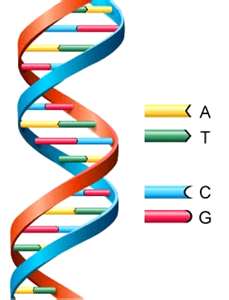
Diagrams: I am a believer in the power of shapes. I heard Len Sweet talk one time about how the two scientists that finally solved the riddle of DNA actually had all the necessary proteins and elements figured out for quite a while … but could not break the code. It wasn’t until they had that now famous shape – the double helix – that they were able to put the puzzle together.
I tell people

“You can have all the right content and be forcing it into the wrong shape.”

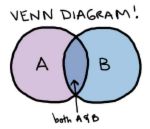
My use of the Venn last week to create 5 categories out of 2 would be an example of this. But it comes from a deep conviction that even when given 2 categories, there has to be more to the story – so look for a third. (The book Argument Culture by Deborah Tannen is excellent on this point).

Draw the person’s spectrum and then bend it (as I did here) for them. Take their two options and put it in a matrix (like the Urgent/Important matrix below). Just become convinced that there is too much data for it to be crammed into a pre-made little mold – it just won’t fit. You end up discarding too much data once your little tins are filled.

Vocabulary: When people are too familiar, too entrenched, and too comfortable, you may have to change the terms of the debate in order to unseat the status quo.

In the never ending Calvinist v Arminian debate that Calvinist love, I will teach them that Arminius was a Calvinist, but  just ‘not calvin enough’ and then, in reaction, the Synod of Dort went more calvin than Calvin to come up with T.U.L.I.P. So when Calvinist portray all free-will theologies as Arminian, that is like an American saying that all non-republicans are democrats: its just not true. They are basically just two sides of the same coin … but certainly not representative of the whole array of options. If they want to read an actual Arminian they should check out Roger Olson and his book Against Calvinism. Once you know what a real Arminian looks like, you will stop mistaking everyone who is not Calvinist for one!

Intentional Complexification:  Since dualism is destructive and deceptive, resolve to never let two contradictory-adversarial positions stand as the only options. Search far and wide, at all costs find a third option. Become inquisitive, Become imaginative. Who doesn’t see it this way?

In the abortion debate you must take away the entrenched or given labels that people assume are the only options. Pro-Life is usually just about one stage of life (unborn) and is less concerned about the life of the mother after her child’s birth, the education of the child 5 years after birth, our  country’s foreign policy and being pro-life in an age of perpetual war, and the ever increasing rates of incarceration, death penalty, etc. To be pro-life you also have to be pro-health care, for education, against militarism, anti-death penalty and should probably do something about hand guns and assault rifles ( I’m not talking about your deer rifle Mr. NRA, that is not what is being used to kill people in these shootings).

If you don’t care about the health of the mother, the education of the child, the life of soldiers, and the life of inmates then you are not pro-life: you are just anti-abortion.

When I see the conversation being set up in an us v. them scenario, I will just boycott by saying “until a women has control over her own womb and she can walk away from a pregnancy like the fella can, we can not even have this conversation. It’s impossible.” I just won’t concede the terms and allow the conversation to be set up like that. It is a false binary and it never leads anywhere except ‘both’ sides (as if there is only 2) feeling justified in their own self-virtue.

So those are my 3 suggestions. I would love to hear what things you have found help us get out of the either/or rut and change the parameters conversation!

Four is greater than Two: Good Friday repentance

So often when I hear two groups arguing, I think to myself  “the problem isn’t what we think about this subject, it is how we are thinking about it.”  If you have read posts here for any time at all you will know that I am not a big fan of dualism in general. I invest great amounts of energy examining binaries and pulling apart overly simplistic dichotomies.

In the past I have utilized a Venn diagram to illuminate the overlap between two groups that are ‘given’ as the options. Lately, I have focused more on the 4th and 5th area.
So in American politics, when ‘republican’ and ‘democrat’ are given to me as opposites, you simply illustrate the overlapping values of the two (3rd space) and then point out those who are ‘neither’ (4th space) like Green folks and anarchists. Then draw a circle around the whole system and point out folks outside the system (5th space) like Canadians.

This semester my two classes are ‘Political Liberalism and It’s Critics’ and ‘Globalization’. It has given me lots of practice in picking up on patterns and thinking in different shaped categories.

Example 1: when a subject like ‘Norms’ is discussed – in sexual identity or sexual practices for instance – often a basic “for & against” structure is presented for any isolated topic. But as the discussion develops you can actually see that this is not a linear ‘far left – far right’ spectrum configuration – even if it is presented as such!

You quickly see that there are least 4 positions even ON a spectrum: if the far left position is “there are no norms” and the far right position is that norms are “intrinsic / originate outside the system” and implement themselves, you can imagine that a center-left position would be an emergent perspective (norms arise from below in the population and then ascend) and a center-right position of top-down Hierarchy where norms are seen to be passed down from the authorities. Recognizing those four positions facilitates a radically different conversation than just outlining two.

Example 2: when the subject is ‘Law’ or court rulings, we need to rise above elementary ‘agree’ and ‘disagree’ binaries.  There are actually 4 positions in practice.

  • Agree & Obey
  • Agree & Disobey
  • Disagree but Obey
  • Disagree and Disobey

It is essential to admit that in any population there will be great variety, disparity, and diversity – so we do a terrible disservice to the matter when we reduce the matter down to basic dichotomies.

The reason I bring this up is because I am very concerned about the round-and-round cul-de-sac conversations that I hear over and over again in the church. I am growing convince that as contemporary Christians, the issue is increasingly not what we think but how we think about it.

The issues of abortion, homosexuality, biblical inerrancy, the creeds/ orthodoxy, environmentalism, and women in ministry are just 6 examples of matters where the dualisms are killing us.

One of the best things that could happen this Good Friday would be for those who take the Christian story seriously to die to – not what we think – but how we think about it. My dream would be for a heart of repentance: to decide in our hearts to swear off inherited dualisms and pledge to, as a community, look for and develop better ways of framing the issues that matter to us most.

Challenge: This Friday, repent of either/or thinking and die to the dualism of us/them for/against right/wrong in/out thinking.  Ask your small group to hold you accountable and maybe even join you in a new life (Easter) of the mind.

disclaimer: some of you will finish this post and think ‘it was so remedial it was barely worth reading’ and others will think ‘that is crazy talk – you are either right (on God’s side) or you are plain wrong – there is no middle ground.’ But we have to start somewhere, and this is the world we live in.


Create a free website or blog at WordPress.com.

Up ↑