Search

Bo Sanders: Public Theology

updating & innovating for today

Tag

bible

Democracy, Pentecost, and the Old Testament?

  • Is it possible that democratic desires are present in the Old Testament and I have just never seen them before?
  • Is the de-centering of Pentecost and the empowerment of the people foreshadowed in the Old Testament?
  • Can we say  A) that Pentecost in the undoing of Babel and B) that God’s desire has always been for the voice of authority to reside in the people (multitude) and not in top-down leaders?

Here is why I am asking:

Recently I stumbled on what might be the most interesting reading of Moses at Mirebah I have seen. It comes from the book Emergency Politics by Bonnie Honig (also on Kindle). In it, she is engaging the theology of Franz Rosenzweig – a contemporary and rival to the German (later Nazi) Carl Schmitt who famously said “” Sovereign is he who decides on the exception.”

In Numbers chpt 20, Miriam passes away. She had been a prophetess for the people and had challenged Moses’ authority on occasion. Immediately after her passing (this will become important) the people realize that there is no water and press Moses and Aaron for solutions. Moses and Aaron step away from the people to seek God and receive instruction to “take the staff and speak to the rock – it will pour out water before their eyes”.

Moses, as you may remember, doesn’t follow instructions to the ‘T’. He ad libs a little bit.  He does indeed gather the people but then he veers from the plan. He chastises the people and then strikes the rock. Two things happen:

  • water does indeed come out
  • God is displeased with Moses and will not let him enter the land that is promised.

I have preached this passage many times and have read lots of treatments. I am intrigued by this passage and have always been unsettled by one detail in the story, which I have never been able to resolve:

why does the Lord tell Moses to take the staff if he is just going to speak to the rock? Why even mention the staff?

Here is where Honig and Rosenzweig bring a unique reading. The staff represent something magical like sorcery – or the miraculous for the early 20th century. This is a political theology and what is at stake in the suspension of law in emergency conditions. Can a sovereign power suspend law in the same way that  God suspends the laws of physics in order to preform miracles? Leaders, being empowered by God, the thinking goes, could suspend ‘normal’ activity if they determined an exceptional circumstance.

In Honig and Rosenzweig’s hermeneutic the dispersed empowerment of the people (multitude) is the location for God’s will and is intended to be home to the will/voice of the Lord. But, as we know, this responsibility had been too overwhelming and was resisted by the people in selecting Moses as a king type who would speak to God for/instead of them (Exodus 20:19). This was an abdication by the people of what the Lord had desired for them as a people – to be prophets all.

This resistance is reinforced when the voice of the people rises in the absence of water, and Moses (along with his brother Aaron) turn away from the ‘stiff necked people’ and receive instruction to speak to the rock. Moses then, probably importing the top-down authoritarianism of his Egyptian upbringing, disobeys the command to speak and instead, chastises the people and strikes the rock with his staff in an act of magical sorcery. God, though it produces water, reprimands this act, and Moses is disallowed from entering the promised-land with the people.

This event is placed within the historical context, earlier in the passage, where Miriam passed away and immediately the people realized that they had no water and held a council against Moses and Aaron. Miriam’s name alludes to water and she was the sister who placed Moses in the Nile’s water when he was an infant. She had been the only one to challenge Moses’ authoritarian ways and she provided, as a prophetess, a check to Moses’ power. Without her, this reading states, Moses proved he will give the people … “not authentic prophecy, but sorcery.” In not recognizing the predictive prophecy of the people (and Miriam), Moses loses his leadership of the people.

Honig utilizes Rosenzweig’s two types of prayer – one that spontaneously arises in a situational moment, and another that is used by the community and creates an openness or receptivity – to analyze the judicial deliberation surrounding the Bush v. Gore presidential ruling. By imagining that the people could have risen up in expectation of a serious effort to count valuable democratic votes instead of waiting for a Schmittian top-down rule from the authorities. The sovereign power might have been within the people prepared for and receptive to the sign instead of what came from above it – a rupture from beyond them. This expectation is foreshadowed within the Mosaic tradition that one day all of the people would be prophets (like Miriam).

Honig asks if this metaphorical reading (which it expressly is)  is a good model for democratic politics and a comparison of the  “state of legal exception to the divine rule of god”. The people, she says, when bound together can give to themselves the powers of state and can again decide to suspend them when, as a multitude, they are oriented and receptive (having been prepared) to the consequences of such action and what they point toward as a sign.

This, in the end, is the problem with magical thinking! We abdicate our power as the people – to be receptive to and bring forward the voice and will of God – in favor of looking to magically empowered leaders to suspend the rules that govern due to exceptional (or emergency) circumstances and hand down solution (metaphorically) through sorcery.

It makes sense then why the Lord even mentions the staff if Moses is ultimately to speak to the rock. It is a metaphor (symbol) of concentrated power that is present but to be resisted in lue of the prophetic possibility of speaking. In that speaking, which is to be located in the people (multitude) prepared by prayer, that a sign is revealed that points to a greater reality. We never hear that voice if a receptive people continually abdicate that potential to exceptional leaders who are expected to provide magical results.

God’s of use of authoritarian leaders would, in this line of thinking, always be either a temporary measure, a concession, or a deviation from the Lord’s will to have the voice housed in the God’s people.

I started with questions and I will close with one:

  • What kind of effect would a reading like this have the kenosis  of Philippians 2 and that weird conversation in 1 Samuel 8 where the people want a king and God says “trust me, you don’t – you only think you do” ?

Charismatics, Evangelicals, Singing & the unamed ‘You’

by Bo Sanders

Three interesting conversations have recently merged in my little corner of the interwebs:

  • The Republican presidential primaries have brought to the limelight some very complex subjects like race, economics, and religion that are handled with stereotypical banter, generally at increased volume.

Santorum is an uber-Catholic, Romney is Mormon, Newt wants the Evangelical vote and all of this is contrasted to Obama’s social-justice-Jeremiah-Wright past. The religion aspect of this election year is going to be fascinating.

I point out that in our national militarism mentality and our cultural myth of redemptive violence, that PSA is playing a role in our religious silo that is spilling over in unhelpful and even harmful ways.

The author calls them evangelical – in contrast to pentecostals who speak in tongues – even though I am not sure that the Vineyard (which both of her congregations are) are wholly representative off all the different camps that come under that tent.


Last week I posted that I was ‘worried about worship’ and one of my concerns dealt with the epistemology behind the band-centered worship experience. I said

“ Is this situation inflamed by an epistemology employed by evangelical and charismatic churches? I don’t know how else to say it but …. if you think that you are singing to God (vs. about God) and the God is actually listening to you and evaluating what is going on, then are you more critical of both the sour-notes and distracting ‘self’ behavior or overly elaborate performances?”

As I read the review of Luhrmann’s new book in the New Yorker magazine (“Seeing is Believing” by Joan Acocella) I was amazed at the obvious parallels to what I had attempted to address. Unfortunaly, the New Yorker requires that you subscribe to the magazine in order to read the article… so I can’t just link there for you. If, however you get the chance to pick up the magazine or copy it at the library, it is well worth your time.

Without the article to link to I will just offer a couple of related thoughts:

The three step plan to Hearing the Voice of God (the Father) is exactly – 100% – my experience of being raised evangelical. So many people that I talk to who were/are charismatic or evangelical have this exact same experience [she also mentions there lack of social service, lack of political involvement, and lack of theology]. The thing I still find shocking is that so many of those outside those groups do not know that is what it is like inside, and how often those inside don’t know that this is not everyone else’s experience of the christian faith.

David Bebbington in Evangelicalism in Modern Britain: A History from the 1730s to the 1980s (Routledge, 1989) did a masterful job of find some common theme that ran through evangelical history. This was a tough job (not always obvious) and has resulted in much debate about if these can even be called one grouping in any coherent sense. I am leaning more and more toward saying that Evangelicalism is not an official membership but is rather a dynamic relation between experience and expression. These two things are facilitated by an epistemology that is more central than any doctrinal or theological markers. Over the last 400 years what has been defining is not the political involvement (it has changed) or what was believed (it has adapted) but the experiential component (enthusiasm) that manifests is a distinct expression.

I have been out of the worship-band culture (Hillsong, Matt Redman, etc) for 2 years. I recently preached at a church with a worship band. What stood out to me so forcibly was the word “You”. I didn’t know why at first but as the service progressed I was struck by how many (all) the songs were addressed to ‘You’. You are holy, you are famous, I need you, etc. It stands in stark contrast to songs sung to God or about God like: a mighty fortress is our God, Oh God our help is ages past, and even Holy is the Lord God Almighty.

I often get to hear Mainliners talk about the alien experience of stumbling upon a christian music station on the radio. I also get to hear visitors to our pipe-organ-hymns-only church wonder about the lack of intimacy and excitement. I think it has less to do with the music style and more to do with the epistemology of singing songs to a ‘You’ and all the assumptions that would accompany that subtle change.

I would love to hear your thoughts on this – agree or disagree

[originally posted at Homebrewed Christianity]

My 200th post is to thank my International Readers!

According to WordPress, this is my 200th post. Of course that is a somewhat arbitrary number since I started on an I-web blog for 2 years, then moved to Blogger for 2 years and have only recently moved to WordPress.

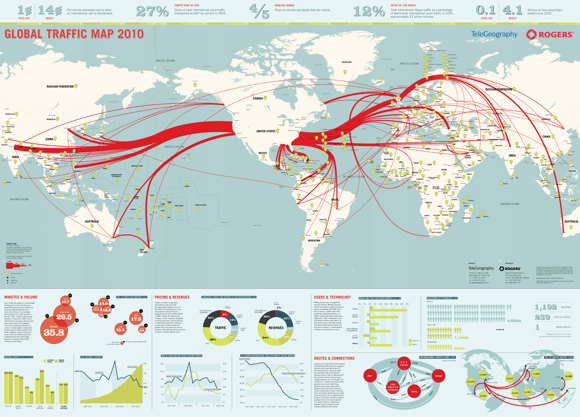
WordPress is constantly making upgrades and I just wanted to tell you about my favorite feature at WordPress. Recently they have added a map on the dashboard that tells you where your readers are coming from. I love maps anyway but this is my new favorite map!

So far today I have had visitors from Canada, Russia, Italy, Sudan and Denmark.  I find that so encouraging! I have had the pleasure of visiting 17 countries in my travels and I love talking with people from around the world. When I found out that folks from all these countries were coming to help me navigate between the everyday and theology – I was ecstatic!

Just this week I have had visitors from Nigeria, United Kingdom, Canada, Republic of Korea, India, Spain, Australia, Portugal, Turkey, Mongolia, Italy, Indonesia, Russian Federation, Mexico, Egypt, Sweden, Denmark, Sudan, Hong Kong, Brazil, Estonia, Cambodia, United Arab Emirates, Latvia, Austria, France, Germany, and Norway. I find this absolutely astounding.

I always knew that there was some level of international readership but this new dashboard feature has really opened my eyes to just how wide a conversation like this  (emerging-Bible-church-theology) can reach in our internet culture. I am so excited to post with this new knowledge and expand the scope even more.

I am honored to be a part of the bigger conversation and look forward to comparing notes with you all over the next 200 posts.  – Bo Sanders

53 in the past month:
Canada FlagCanada
United Kingdom FlagUnited Kingdom
Korea, Republic of FlagRepublic of Korea
Germany FlagGermany
Australia FlagAustralia
Sweden FlagSweden
Denmark FlagDenmark
Brazil FlagBrazil
Philippines FlagPhilippines
India FlagIndia
Greece FlagGreece
Italy FlagItaly
Saudi Arabia FlagSaudi Arabia
Malaysia FlagMalaysia
Indonesia FlagIndonesia
Bulgaria FlagBulgaria
Spain FlagSpain
Macedonia, the former Yugoslav Republic of FlagMacedonia
Turkey FlagTurkey
Egypt FlagEgypt
United Arab Emirates FlagUnited Arab Emirates
Mongolia FlagMongolia
Algeria FlagAlgeria
Mexico FlagMexico
Portugal FlagPortugal
Russian Federation FlagRussian Federation
Thailand FlagThailand
Malta FlagMalta
South Africa FlagSouth Africa
Hong Kong FlagHong Kong
Tanzania, United Republic of FlagUnited Republic of Tanzania
Netherlands FlagNetherlands
France FlagFrance
Sudan FlagSudan
Cambodia FlagCambodia
Latvia FlagLatvia
Austria FlagAustria
Estonia FlagEstonia
Norway FlagNorway
Sri Lanka FlagSri Lanka
Colombia FlagColombia
Japan FlagJapan
Poland FlagPoland
Serbia FlagSerbia
Romania FlagRomania
Bangladesh FlagBangladesh
Moldova, Republic of FlagMoldova
New Zealand FlagNew Zealand
Viet Nam FlagViet Nam
Iceland FlagIceland
Taiwan, Province of China FlagTaiwan
Yemen FlagYemen
Finland FlagFinland


Opting Out of the Argument Culture (follow up to 4 > 2)

Last week I put out a fun challenge for Good Friday: repent of either-or thinking. It got a great response and a reader asked how one might pursue a conversation differently.

After a decade of trial and error, these are the three things (appropriately) I have found most helpful in breaking down the inherited dualisms: diagrams, vocabulary, and intentional complexification.

Diagrams: I am a believer in the power of shapes. I heard Len Sweet talk one time about how the two scientists that finally solved the riddle of DNA actually had all the necessary proteins and elements figured out for quite a while … but could not break the code. It wasn’t until they had that now famous shape – the double helix – that they were able to put the puzzle together.
I tell people

“You can have all the right content and be forcing it into the wrong shape.”

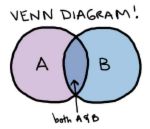
My use of the Venn last week to create 5 categories out of 2 would be an example of this. But it comes from a deep conviction that even when given 2 categories, there has to be more to the story – so look for a third. (The book Argument Culture by Deborah Tannen is excellent on this point).

Draw the person’s spectrum and then bend it (as I did here) for them. Take their two options and put it in a matrix (like the Urgent/Important matrix below). Just become convinced that there is too much data for it to be crammed into a pre-made little mold – it just won’t fit. You end up discarding too much data once your little tins are filled.

Vocabulary: When people are too familiar, too entrenched, and too comfortable, you may have to change the terms of the debate in order to unseat the status quo.

In the never ending Calvinist v Arminian debate that Calvinist love, I will teach them that Arminius was a Calvinist, but  just ‘not calvin enough’ and then, in reaction, the Synod of Dort went more calvin than Calvin to come up with T.U.L.I.P. So when Calvinist portray all free-will theologies as Arminian, that is like an American saying that all non-republicans are democrats: its just not true. They are basically just two sides of the same coin … but certainly not representative of the whole array of options. If they want to read an actual Arminian they should check out Roger Olson and his book Against Calvinism. Once you know what a real Arminian looks like, you will stop mistaking everyone who is not Calvinist for one!

Intentional Complexification:  Since dualism is destructive and deceptive, resolve to never let two contradictory-adversarial positions stand as the only options. Search far and wide, at all costs find a third option. Become inquisitive, Become imaginative. Who doesn’t see it this way?

In the abortion debate you must take away the entrenched or given labels that people assume are the only options. Pro-Life is usually just about one stage of life (unborn) and is less concerned about the life of the mother after her child’s birth, the education of the child 5 years after birth, our  country’s foreign policy and being pro-life in an age of perpetual war, and the ever increasing rates of incarceration, death penalty, etc. To be pro-life you also have to be pro-health care, for education, against militarism, anti-death penalty and should probably do something about hand guns and assault rifles ( I’m not talking about your deer rifle Mr. NRA, that is not what is being used to kill people in these shootings).

If you don’t care about the health of the mother, the education of the child, the life of soldiers, and the life of inmates then you are not pro-life: you are just anti-abortion.

When I see the conversation being set up in an us v. them scenario, I will just boycott by saying “until a women has control over her own womb and she can walk away from a pregnancy like the fella can, we can not even have this conversation. It’s impossible.” I just won’t concede the terms and allow the conversation to be set up like that. It is a false binary and it never leads anywhere except ‘both’ sides (as if there is only 2) feeling justified in their own self-virtue.

So those are my 3 suggestions. I would love to hear what things you have found help us get out of the either/or rut and change the parameters conversation!

Four is greater than Two: Good Friday repentance

So often when I hear two groups arguing, I think to myself  “the problem isn’t what we think about this subject, it is how we are thinking about it.”  If you have read posts here for any time at all you will know that I am not a big fan of dualism in general. I invest great amounts of energy examining binaries and pulling apart overly simplistic dichotomies.

In the past I have utilized a Venn diagram to illuminate the overlap between two groups that are ‘given’ as the options. Lately, I have focused more on the 4th and 5th area.
So in American politics, when ‘republican’ and ‘democrat’ are given to me as opposites, you simply illustrate the overlapping values of the two (3rd space) and then point out those who are ‘neither’ (4th space) like Green folks and anarchists. Then draw a circle around the whole system and point out folks outside the system (5th space) like Canadians.

This semester my two classes are ‘Political Liberalism and It’s Critics’ and ‘Globalization’. It has given me lots of practice in picking up on patterns and thinking in different shaped categories.

Example 1: when a subject like ‘Norms’ is discussed – in sexual identity or sexual practices for instance – often a basic “for & against” structure is presented for any isolated topic. But as the discussion develops you can actually see that this is not a linear ‘far left – far right’ spectrum configuration – even if it is presented as such!

You quickly see that there are least 4 positions even ON a spectrum: if the far left position is “there are no norms” and the far right position is that norms are “intrinsic / originate outside the system” and implement themselves, you can imagine that a center-left position would be an emergent perspective (norms arise from below in the population and then ascend) and a center-right position of top-down Hierarchy where norms are seen to be passed down from the authorities. Recognizing those four positions facilitates a radically different conversation than just outlining two.

Example 2: when the subject is ‘Law’ or court rulings, we need to rise above elementary ‘agree’ and ‘disagree’ binaries.  There are actually 4 positions in practice.

  • Agree & Obey
  • Agree & Disobey
  • Disagree but Obey
  • Disagree and Disobey

It is essential to admit that in any population there will be great variety, disparity, and diversity – so we do a terrible disservice to the matter when we reduce the matter down to basic dichotomies.

The reason I bring this up is because I am very concerned about the round-and-round cul-de-sac conversations that I hear over and over again in the church. I am growing convince that as contemporary Christians, the issue is increasingly not what we think but how we think about it.

The issues of abortion, homosexuality, biblical inerrancy, the creeds/ orthodoxy, environmentalism, and women in ministry are just 6 examples of matters where the dualisms are killing us.

One of the best things that could happen this Good Friday would be for those who take the Christian story seriously to die to – not what we think – but how we think about it. My dream would be for a heart of repentance: to decide in our hearts to swear off inherited dualisms and pledge to, as a community, look for and develop better ways of framing the issues that matter to us most.

Challenge: This Friday, repent of either/or thinking and die to the dualism of us/them for/against right/wrong in/out thinking.  Ask your small group to hold you accountable and maybe even join you in a new life (Easter) of the mind.

disclaimer: some of you will finish this post and think ‘it was so remedial it was barely worth reading’ and others will think ‘that is crazy talk – you are either right (on God’s side) or you are plain wrong – there is no middle ground.’ But we have to start somewhere, and this is the world we live in.


Post-Contextuality : Evangelism and Missions must change

by Bo Sanders
posted at Ethnic Space

Contextual theology was the subject of my Master’s thesis.*  I was, and continue to be, enthralled with the possibility that the gospel could be uniquely expressed in every culture in a manner that was both authentic and indigenous to that group’s place and time. Lamin Sanneh goes so far as to say that it is the distinguishing characteristic of the Christian religion and that unlike Judaism, Islam, Hindu and Buddhist traditions there is no language, place, culture or time that is inherently superior for expressing the gospel.  In Whose Religion Is Christianity: the Gospel Beyond the West, he has it like this:

Being that the original scripture of the Christian movement, the New Testament Gospels are translated versions of the message of Jesus, and that means Christianity is a translated religion without a revealed language. The issue is not whether Christians translated their scriptures well or willingly, but that without translation there would be no Christianity or Christians. Translation is the church’s birthmark as well as its missionary benchmark: the church would be unrecognizable or unsustainable without it…  Since Jesus did not write or dictate the Gospels, his followers had little choice but to adopt a translated form of his message. (Sanneh p. 97)

When I wrote the thesis, I had yet to really encounter liberation or post-colonial thought in depth. My interest in contextualization arose from being a church-planter in a Missionary denomination. I did not realize at the outset of the project just how strong the critique contextual theology brought to classical (traditional) approaches. Since then I have engaged de-colonial, feminist, liberation, post-modern, and pluralistic voices that have even harsher critiques.

I keep circling back, however, to a much simpler concern: the practice of the church.

It is in this concern of practice that I have stumbled onto – and now stumble over – a haunting inconsistency between our thought and our practice.

The irony is thick. In my experience, those who are most excited about missions and evangelism are quite fond of the Bible. They often reference the Bible and even say things like “In the Bible” as a validation for doing something a certain way or “that’s unbiblical” as criticism of something.

Yet, never in the Bible do you see anyone intentionally learning another language in order to present the gospel. In the Bible, God repeatedly used dual-citizens and bi-lingual folks to get the message out. In the book of Acts we see three examples:

  • a miraculous bridging of the language barrier at Pentecost
  • the Ethiopian eunuch was a bi-lingual traveler who took something back to his ‘home’ in Africa
  • Saul/Paul was a dual-citizen who took the message to the Roman Empire

That, it seems to me, is the Biblical model for missions. (This is true whether or not one translates the Great Commission as the imperative “Go” or the more passive Greek rendering of “as you are going”. The precedent of Acts is the same.) The Biblical model is very different than the Colonial model we are so familiar with.

The past 5 centuries have had their effect – but now that the whole world is ‘mapped’ and ‘spoken for’, maybe its time to move away from the colonial obsession with conversion and trust the bilingual and dual-citizens among us to translate to and for their cultures. We would need to repent of our compulsion to import ourselves into foreign peoples or countries and then impose our cultural expectations on them.

In a global era it is time to stop importing and imposing our cultural entrapments into alien environments and presuming that we know what is best for them. There is enough migration, travel, immigration and cultural exchange that we can now trust God that this will happen in the right time and in the right way – without us taking matters into our own hands any longer and asking God to bless our efforts. The era of elaborate organizations for foreign missions needs to come to an end.** They are unbiblical – and I think they always have been – but now they are also inappropriate for our age.

 The move toward contextual theology helped me see that we have to move beyond contextualization in missions and evangelism. The Colonial era was an ugly one for the church and we need to move out its methods – not just for the word’s sake but because it undermines and  discredits the very message we are trying to convey through it.  

*different groups utilize different forms of contextualization – Catholics tend to call the process ‘inculturation’ for instance, others use a similar move called ‘indigenization’.

** I know dozens of missionaries and understand that they are passionate. I mean no harm to any one of these folks that I care so much about. I have delayed putting this out for more than a year out of my concern for their feelings.

the Death of the Liberals is killing us

In chapter 1 of his book Death of Liberal Class, Chris Hedges sketches both the height of the Liberal era in the 19th century and its cataclysmic implosion with the arrival of World War in the 20th. The disillusionment of human evil, aggression, and suffering deflated the optimism of innate human goodness and inevitable progress that Liberalism is founded upon.
To understand the profound impact of Liberalism’s demise, it helps to make sure one understands the difference between Classical Liberalism and it’s contemporary milquetoast descent that slinks around in straw-man form on our 24 hours news cycle.
Hedges explains (pp. 6-7) “Classical liberalism was formulated largely as a response to the dissolution of feudalism and church authoritarianism. … (It) has, the philosopher John Gray writes, four principle features, or perspectives, which give it a recognizable identity. It is :

  • individualist, in that it asserts the moral primacy of the person against any collectivity;
  • egalitarian, in that it confers on all human beings the same basic moral status;
  • universalist, affirming the moral unity of the species;
  • and meliorist, in that it asserts the openended improvability, by use of critical reason, of human life

Both John Cobb (Mainline)  and Clayton Crockett (Radical Political Theology) use very similar formulations in their recent Homebrewed  podcasts. Cobb, by focusing on the demise of the Mainline and Crockett, by focusing on the Evangelical and Religious Right, articulate the monumental shift in the religious-political landscape in the past century.
The Mainline denominations are in a collapse narrative and it makes perfect sense why when one examines both the way liberal thought partnered with power in the 20th Century and the way that conducted itself (largely) within the shifting landscape of post-war realities at home and globalization abroad.

“In a traditional democracy, the liberal class functions as a safety valve. It makes piecemeal and incremental reform possible. It offers hope for change and proposes gradual steps toward greater equality. It endows the state and the mechanisms of power with virtue. It also serves as an attack dog that discredits radical social movements, making the liberal class a useful component within the power elite. But the assault by the corporate state on the democratic state has claimed the liberal class as one of its victims…
The inability of the liberal class to acknowledge that corporations have wrested power from the hands of citizens, that the Constitution and its guarantees of personal liberty have become irrelevant, and that the phrase consent of the governed is meaningless, has left it speaking and acting in ways that no longer correspond to reality. It has lent its voice to hollow acts of political theater, and the pretense that democratic debate and choice continue to exist.”  (pp. 9-10)

We talked yesterday about the fictitious nature of the supposed Left-Right spectrum.  For those of us who participate in christ centered communities and organizations, what does this mean?  While incomplete, here is my little experiment to come up with a game-plan for a start.

  1. We stop using the label ‘Liberal’ generically for anything that is not Conservative… especially to be dismissive.  Liberal is a very specific ethical  framework and it takes quite a commitment to liberal. It is not a default position.
  2. We disavow the left-right , conservative-liberal split as farcical. It doesn’t exist. Obama is a Centrist Democrat. Romney is a Centrist Republican. Any idea that Obama is a radical is ridiculous.* We repent of lazy language & thought.
  3. We wake up as the church that the role the Liberals used to play in the system does not function. There is no moderating or buffering presence to bring a corrective to the system. Thus, participating in the system as-it-now-exists will not fix the system. The corporate hold over every aspect of our political system is pervasive.
  4. We step up as the church in the revelation that government is not going to fulfill the expectation to
  • bring good news to the poor (Economy)
  • restore sight to the blind (Medical)
  • release to the captive  (Legal)
  • lift up the broken hearted (Compassion)

The church can do these things! We have deferred to the political system for too long. We have outsourced our responsibility to society but now live with the remains of the bloated carcass Christendom. With the death of the liberal class resistance to corporate rule and unchecked consumerism is impotent. The Citizen’s United ruling is just one step on long trail … but we know where it leads.
There are churches in every community and there may be no greater existing potential than us! **  I know it sounds dreamy, but in the rest of this series I want to flesh it out. By the end, it might not seem as far-fetched as it does right now.
– Bo Sanders
 
*Wall Street campaign funding, legalizing assassination, and Guantanamo Bay are your first 3 hints.
**  The danger of course is that we keep voting based on two issues while turning a blind eye to  corporate rule, environmental deregulation, and perpetual war.


This post is the beginning of a new series and was co-posted on Homebrewed Christianity.

Economy and Ecology: the future of the past (part 3 of 3)

I left off in part 2 by imagining what might be on the other side of the ‘bridge’ after we get past the two trolls of colonial christianity and environmental dualism. My hope is that there is a different way to be in the world.

I admit that we can’t go back. We can’t undo Colonization. We aren’t going back to family farms. We can’t refreeze the polar ice caps or re-create the Glaciers in Glacier National Park.  As they say ‘we shall not pass this way again’.

My hope is not to reclaim some previous ideal of human community. My desire is to explore a realistic assessment of what is possible (and preferable) given the past developments and as-is structures of existence.

Here are three groups/conversations that give me a little hope:

The Environmental-Philosophical crowd. People like Bill McKibben have been sounding the alarm for quite a while and have since moved to talking about a radically different planet termed “Eaarth” in which we will need to go small and local.

On a larger scale, our whole civilization stands on the edge of collapse because the data inputted into our risk management models come from the last couple of hundred years, a very atypical time. A giddy time, high on oil… Our time, on every front, has been marked by the dizzying Alice-on-her-first-pill explosion in the size of the human enterprise. For almost all of human history, our society was small and nature was large; in a few brief decades that key ratio has reversed. – p. 105

Native Communities: Three years ago I got to take part in two conferences that altered the way I see the world and think about the future. The first was the Theology of the Land conference at George Fox Seminary. The second was a NAIITS gathering at the George Fox undergrad campus. Randy Woodley continues to be a voice of reason and reconciliation in an increasingly complex environment. I am anxiously anticipating the release of his newest book this year that deals with the concept of Shalom and Creation.

Process and Eco-Feminist Theology:
Last month I helped organize an event that brought together the Emergent church and Process theology.  One of the key folks in that conversation is John Cobb, author of Spiritual Bankruptcy. Cobb’s and others in the conversation are deeply involved in both ecology and economy from a theological perspective. I was greatly encouraged to hear about projects from around the country of communities taking seriously the reality we find ourselves in. From small neo-monastic communities to universities to political & civil engagements, there is a growing awareness that something has got to change.

  • The way that we have lived
  • the rate at which we have used resources
  • the expectations for perpetual growth
  • and economic prosperity

have exhausted creation and bankrupted modern human civilization.

This is not a ‘the sky is falling’ mentality. This is a ‘new reality’ perspective that the damage is done and we can not go back or turn back the clock. This just is the way it is now. But if global capitalism, and its mutant offspring – consumerism, continue to go unchecked … let me say it a different way: the church has a message and a historic practice that can engage voices of health and community. Unfortunately, the church herself has been seduced and gone into the business of supply and demand. Those days need to come to an end. It betrays her calling and compromises her message.

The first step is to repent of the Cartesian dualism and the second is to resign from the colonial impulse. After that we can embrace the truth that we are both a product of and a participant in nature and that mutually edifying, inter-connected, trans-national, multi-racial community is our hope for the future.

The expectation of one big global community is ruining us. The future is small, diverse, multiple, and interdependent.

originally posted at Ethnic Space

Two Trolls and a Bridge (part 2 of 3)

In part one I mentioned that there are two trolls that guard the bridge to a new way. I named them as Colonial Christianity and Environmental Dualism. Of the many issues facing us, let me tell why I recognized those two.

In 1421 Chinese ships landed on the Pacific coast of what we know as North America. Last year in Postcolonial class, my prof asked us a series of questions that began with “Why didn’t they stay and colonize? What was different from what especially the Spanish would do a century later?

I spent the semester, as we read Said, de las Casas, and all those who follow them looking for a common theme that could provide a interpretive key. I kept noticing that there was secondary mechanism behind the machine of Colonial power.

Throughout history there have been Empires and that, by definition, comes with  a conquest narrative. Even in our own Bible we see that group like Assyria, the Babylonians Greeks, and Romans swept through Israel. Israel itself had the Canaanite conquest narrative. Not to mention that China was an empire that conquered and subjugated the areas and nations around them. There is nothing new about either empire or conquest.

But this is not that. There is something else going on in the Colonial era that led the British, French, Portuguese, Dutch and Spanish to expand and extend that impulse to an exponential degree. It is so inflamed and exaggerated that some explanation must be provided as to difference that we see in the 15th, 16th, and 17th centuries.

Technology is insufficient as an explanation. Guns and horses certainly explain some of atrocities we see with the Conquistadores but that is merely wood for the framework. There was a fuel that made it so flammable and destructive. What fueled the Colonial drive was a specific brand of Christianity.

I think that needs to be pointed out. It must be acknowledged for two reasons:

  1. It is still with us
  2. its unquestioned giveness allows it to remain in power but in a far more sinister way – in secret assumption.

Colonial Christianity remains – not just as a residue – but as an unquestioned operating system and that is both an ongoing danger to our planet’s existence (war, environment, economy, etc) but also to the very integrity of the Gospel message that it purports to contain.

Nipples and Bellybuttons

One of the most powerful things that the Western mind inherited comes from the thought of Renee Descartes – it is a Cartesian dualism between the mind and the physical body. On the surface it does not look so danderous – but it morphs and attches itself to other really valuable things. One mutant offspring begins to distinguish between humans and everything else. This fits great into Colonial Christianity. The result is that we think we are exceptional.

Humans are mammals – notice the presence of nipples and bellybuttons – while many Christians  recognize the similarities they refused to acknowledge that humans are mammals (and then are confused by our sexual desires and habits).

This exceptional dualism shows up in all sorts of places! In the study of religion, even if we acknowledge that other religions grew UP from communities and are expressions of their various locations … Christianity is held to be an exception to that. It came DOWN from Heaven and would be the same truth regardless of its historical embeddedness in the Ancient Near East.

Exceptionalism is an ongoing mentality today. It affects so many areas.  [by the way, Randy Woodley wrote a great piece on political exceptionalism here]

In my opinion – beside the possible exception of modern war – there is no area where exceptional thinking is more deadly than the environment. From dust we came – as humans we are made up and sustained by what comes from the soil, the water, and the air.

We must repent of of this exceptional dualism and confess that while we are unique on the earth – we are not exceptions to it and in fact we are integral parts of it and completely dependent upon it.

When you put these two monsters of Colonial Christianity and Environmental Dualism together, you may be able to see why I think that they are the Trolls blocking the bridge to a new way.

Tomorrow I will attempt to articulate what waits on the other side of the bridge. The simple fact is that we can’t go back. We can’t undo Colonization. We aren’t going back to family farms. We can’t refreeze the polar ice caps or re-create the Glaciers in Glacier National Park.  As they say ‘we shall not pass this way again’.  But I think that there is a different way of being in the world that holds hope for us.


originally posted at the Ethnic Space blog

Blog at WordPress.com.

Up ↑