Search

Bo Sanders: Public Theology

updating & innovating for today

Tag

bible

Drop ‘The’

Twice is a trend, three is a pattern.  The word ‘the’ has become a stumbling block.

The first incident occurred on TNT when I spoke up about my friendship with ‘Al’ – as in incarnational, etc. – and Tripp professed his love for the word ‘the’. Tripp wants to talk about the incarnation and the resurrection. I am more interested in a more generic, and I would add more fruitful, discussion about concepts like incarnation and resurrection.
You can read more about ‘Al’ here.

The second occasion was a little less contentious and I loved the feedback I got from the suggestion to Add An ‘S’ As A Test. It turns our that simple making something plural can be a great way to get away from the certitude or dogmatic cul de sac that conversation can get caught up in.
You can read more about Adding An ‘S’ here.

Last month a third incident emerged. At the Phyllis Tickle event to celebrate her new book and her life’s work, Barry Taylor (who I have studied with) offered a profound challenge. Phyllis’ new book is about Age of the Spirit. It became clear in the Q&R at Fuller Seminary that the Spirit was going to be a point of concern for people. You have questions about the modern pentecostal movement at one end and concern about early Trinitarian formulations at the other.
What Barry Taylor suggested at the Live3D event afterward was dropping the ‘the’ in Age of the Spirit. Why not just talk about the Age of Spirit?

Dropping ‘the’ is sometimes necessary when adding an ‘s’.fundamentals

Please don’t misunderstand me. I am not saying that this is a cure-all formula for getting out of any theological pickle/quandary that you find yourself in. What I am saying is that dropping ‘the’ can sometimes open up greater possibilities AND provide much needed clarity to doctrinal or historical gridlock.

The bottom line: We are moving out of an era built around certainty and on propositional truth. Things are becoming more fractured, de-centered and relational (there is Al again). This can be a good thing – shifting from certainty.
(Now, in fairness, Phyllis had a great trinitarian answer to Barry’s concern that you will be able to hear later when the podcast comes out.)
There is a lager issue at hand, however, and that is the way in which we hold truth. I’m going to suggest in a post later this week that we revisit not just our conceptions of God and religious experiences – but that we hold our interpretations of them differently. Until then, I want to encourage you to do a little experiment and drop ‘the’.
Let me know how it goes.

Starter Suggestion: if you are someone who uses the phrase ‘the church’, try and replace that phrase with the word ‘churches’ and see if the sentence still makes sense. It probably won’t – which means that you will have to go back and look at the assumptions that underlie the sentence.

The Authority Question – Pentecostals & Methodists

Last month, at the Phyllis Tickle event, the ‘authority question’ came up, as it will/should whenever someone starts talking about ‘the Spirit’pentecost01

I was sitting out in the audience for the Fuller Seminary part of the evening. A little debate/concern arose about the issue of authority – especially as it relates to the rapidly growing Pentecostalism of the Southern Hemisphere.

I leaned over to the pastor sitting beside me and jokingly said “I pastored a charismatic church for a decade, and now I am at a Methodist church … this seems like the easiest thing in the world to navigate.”  The pastor requested that I blog about it.

Let’s get all the parts on the table and see how they come together:

Element 1: in the past we talked about seats or locations. Where does authority reside? Answers have included leaders, scripture, the collective, bylaws, reason, etc. Traditionally we have talked about authority in a static sense.

Element 2: in the Methodist tradition we have the Wesleyan Quadrilateral of Scripture, Tradition, Experience and Reason. (for an interesting side-read, John Cobb questions the sequence of those four elements)

Elements 3: I read a fascinating article a while ago about developments in neuroscience. Researches have long looked for which part of the brain memories reside in. It turns out that memories are not located in any one place but in the connection made between different parts of the brain.


Proposal: Authority, like memory, is not located in any one place. It is uniquely comprised of the connection between component parts. Depending on the collected aspects, the authority that emerges will be unique to that organization, congregation and movement.

Authority, therefor, doesn’t exist (per se) in that same sense that we used to conceptualize it … OR perhaps I should say it doesn’t reside somewhere – but in the connection and configuration of collected elements.


The reason that ‘the authority question’ is so elusive is because it is different in every place and is changing all the time

Authority will look different if you are Catholic charismatic in S. America than if you are a non-denominational megachurch in N. America. This is due to its emergent nature as an evolving concept.

Thoughts?

Noah: Inhabiting A ReEnchanted World

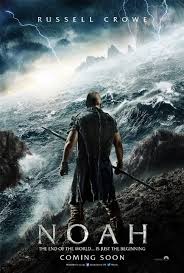
In Aronovsky’s movie, Noah inhabits an enchanted world. kinopoisk.ru

From the first rain drop that mystically/magically replaces a plucked flower, we know that Noah is walking in a world that is enchanted is way we are not used to seeing.

The rules are a little different. Things work in slightly different ways from the world that we inhabit.

From the suspension of certain laws of physics to the wondrous seed of Eden and on to the healing blessing of a barren womb, the world is undoubtedly enchanted.

It is about that enchanted world that I want to propose a problem and a promise.

Problem

In a post-enlightenment world, we no longer have access to that level of enchantment – except in cinema. That is the importance of movies. Most of us no longer sit around the fire and hear the stories and mythic tales of the ancient generations.

Movies open up a world to us that seems closed in the ancient past. Cinema releases us from the confines of our limited imagination and allows us to imagine the world (in) a different way.

Movies spark our creativity and open us up to the possibility that the world can, and maybe should, be a different way. Movies like Avatar or Star Wars are not meant to be exegeted or examined for their exacting possibilities. That would be to miss the point.

Noah should be enjoyed in the same way. A movie like this should not be measured and weighed in an attempt to map its realistic representation. That would be to close down the possibilities. Aronofsky’s vision is to open up our imaginative creativity and invite a greater possibility.

Promise 

David Ray Griffin has ambitiously tackled this problem in his massive (and heady) tome Reenchantment Without Supernaturalism. You can read Bevery Clack’s excellent review here.

Clack explains:

the naturalism that underpins this model is

  • prehensive (highlighting the conscious or unconscious grasp of something)
  • panentheistic (god’s presence is in all)
  • panexperientialist (meaning that experience is not limited only to the sensory)


I don’t want to get bogged down in big words but that tri-framing opens up an important insight that Griffin lays out.

 First, as long as the scientific and religious communities regard each other with suspicion and hostility, it will be difficult for them to cooperate wholeheartedly to overcome the problems threatening civilization today, such as the global ecological crisis.

Second, religion that has not taken account of the truths revealed by science can be very dangerous.

Third, the development of a “scientific worldview” that does not incorporate the truths revealed by religious experience has led … to the view that the universe provides no normative values to guide the future course of civilization.

It is passages like the above that bring me back to the enchanted world of Noah. We love the idea of that world. It is partly why the epic-mythical-primal storytelling of those early accounts capture us at so many levels.

The unfortunate thing is that we have no access to that world anymore. This is where cinema comes in. Movies like Noah release us from the confines of our disenchanted and mundane existence and open up our imaginations to the possibilities of an enchanted world. The unfortunate reality is, however, that cinema is the only access most of have to a world like that.

We can’t go back. We could try but we would never make it. The better option is to live wholly into this world that we actually inhabit in a way that recognizes what is already (re)enchanted and allows us to participate with integrity in the world as it is.

Noah: Eclipse of the Biblical Narrative

It has been a busy month for me but I have 4 things that I would love to hear your thoughts on in the next 24 hours.

I got a sneak peak of the new movie Noah and got to be a part of a roundtable with the director and screenwriter. You can listen to the HomeBrewed  review of the movie and interview here. 

Today I want to put up my two posts on Noah and see what y’all thought of it (if you got to see it this weekend).

______________________

The new Noah movie is a masterful work of biblical imagination and creativity. Noah

There are two aspects of the movie that audiences will notice up-front:

  1. one is related to epic-mythic-primal narrative
  2. the other addresses physics and logistics

The latter is significant for the former. Through a creative move to put the animals into hibernation, all of the questions about how you would feed that many animals, keep them from killing each other, and shoveling manure are instantly relieved. Those who are concerned about such logistical matter can then relax and settle into the narrative.

This is important because for many viewers, the story of Noah is either a) a children’s tale or b) a physics/apologetics problem.

What is missed in both the children’s story and the apologetics arguments is that we are dealing with an epic-mythic-primal narrative. It is not a newspaper account of the flood.

The danger of reducing epic-mythic-primal narrative down to newspaper reports is that too much is lost in the reductive move. The sad part is that often those who are the most series about the biblical account – and who may be upset about the creative flourishes in this movie – have often fallen victim to a debilitating loss of wonder and possibility.

 This is a ‘Failure of Imagination’.

When the Biblical Narrative is reduced down to a newspaper report,  the account lacks the appropriate level of animation.

Aronofsky illustrates how a story should inspire us. This is how we should entertain and engage a Biblical narrative – not by simplifying it down to a flannel board representation – but by breathing more life into it to see what emerges.

In the interview you will hear Aronofsky and Ari Handel say that they wanted to ‘humanize and dramatize’ this work of ‘primal story telling’. My mind went immediately to the work of Hans Frei – specifically The Eclipse of the Biblical Narrative. Frei was both concerned about and critical of the shifts that happened in recent centuries of biblical criticism. We had clearly moved out of the pre-modern (pre-critical) way of addressing a sacred text and into (via the enlightenment) a flood of critical thought and scholarly criticism.

Both the fundamentalist retreat to historical facts and the liberal abandonment of historical concerns are a failure to Frei. This is not about extracting universals or proving ‘facts.’ That is an exercise in missing the point.

Frie’s proposal related to fitting our world into the world of the Bible.  While I don’t subscribe to Frie’s system wholesale, I think that he would be very impressed by Aranofsky’s vision for the Noah story.

The director lets us inhabit the enchanted world of Noah and tries to find elements of our world within it. This is the beautiful opportunity provided for us through film. We breath creativity and imagination into the text and let it come alive.*

The next post will look at ReEnchanting the world the Noah inhabited. 

*It is important to note that Aronofsky and Handel took great pride in not contradicting a single detail in the biblical account. They admittedly added and embellished other aspects of the story.

Add an ‘S’ as a test

I started doing this several years ago. It is surprising how often it reveals something that significantly alters the perception of the topic. When a complex topic is overly simplified it actually makes it more confusing and becomes less helpful. Topics that are appropriately complex and multifaceted are not served by being pressed down or made mono.

Two historic examples and then some contemporary ones:

The Industrial Revolution, according to historians like John Merriman, was actually three industrial revolutions.

  • The first was an agricultural revolution which allowed people to grow more, which encouraged a bigger population and thus all the surplus labor that would be needed.
  • The second was inventions that impacted small groups of workers, like the cotton gin.
  • Then came the big one that generally gets all the headlines with big industry and coal burning factories.

The name ‘the industrial revolution’ is a bit of a misnomer that lumps these three together. They actually happened progressively over quite a long period of time.

The same happens with the ‘Protestant Reformation’. Most people don’t know that Luther and Zwingli were kind of up to two different things and that later Calvin came in (initially as a Lutheran) and then there were at least three little reformations. Then there was England’s Anglican movement that was doing its own thing, and the Anabaptists. That is 5 reformation movements.

When it comes to religions, it is often appropriate to add an ‘s’.

When we lump together the Jewish religion or the Jewish perspective, we may be overlooking the fact that there are three huge branches within Judaism, as well as many other splinters. There is a Reformed Judaism, a Conservative, and an Orthodox. They are very different from each other. You also have secular expressions of Judaism (cultural or ethnic).

Islam is the same way – there are over 80 ‘denominations’ of Islam. So when we say “Muslims _____” we may want to be careful and be more specific by adding a plural mentality and saying “some types of Muslims ______”.

Even within Christianity there are God knows how many different kinds of Christianity. So to say that “Christians believe ______” is more than challenging. It may be misleading.

There are several Judaisms, several types of Islams, and multiple Christian perspectives.

Sometimes people say things like “the Biblical Worldview” as if there is only one. There are actually many worldviews that informed Scripture. Certainly the view of those who wandered in the desert in the Exodus story had a different view of the world than Paul the cosmopolitan Roman citizen of Jewish descent. And one can clearly see that what Paul wrote in Romans 13 to submit to governments because they do God’s work was a different worldview than the person who wrote Revelation and called Rome ‘Babylon’ and a ‘whore who is drunk on the blood of that nations’. There are many examples that I could use but the important thing to note is that there are many worldviews in the Bible.

You also see this misnomer in the phrase “the early church”. Books like The Emergence of the Early Church and The Churches the Apostles Left Behind help expose just how many competing/complimentary groups were in the mix. What most people mean by use of the phase ‘the early church’ is the proto-orthodox notion of those whose views eventually won out.

It also helps out pastorally. It is so tempting to be prescriptive and formulaic in ministry – whether it is the advice we give or the way that we conceptualize the world and its workings. Let me give just 3 examples from the past month:

  • People have kids for all sorts of reasons. Starting a family can be motivated by several different impulses. Some parents view is as ‘legacy’ issue, for others it is an obligation. For some it is duty, for some it is a ‘gift’. Some parents didn’t know that it was an option not to procreate. For some there is a fascination with making something from your own body (I am quoting here) or seeing what a being that was half-them and half-their spouse would look like.

Dealing with family dynamics and expectations, then, is not a one-size-fits-all matter.

  • The same can be said for abortion. Women terminate pregnancies for so many different reasons. I get upset when I hear opponents of abortion painting with a brush that is so broad that a supremely complex issue gets boiled down to a single point and then used as a battering ram.

Motivations and factors both need to be addressed in the plural.

  • Missions is another topic that requires complexity. It is inaccurate to talk about ‘missions’ and mean one thing. It is astounding how many different reasons people have for becoming missionaries. It is also significant to clarify the type or kind of missions one is engaged in. At minimum there are 3: compassion motivated missions, colonial type missions, and salvation (anti-hell) driven missions.

There is much more to said on this one (especially historically) but at minimum we need to be clear when we are talking about missionaries that both their drive and their tactics can vary widely.

SO many examples could be used: ‘black’ voters, the female perspective, sexuality/celibacy, American ____, etc. Once you start adding an ‘s’ you will see more and more areas where it is applicable.complexity

When you put this all together you see that just adding an ‘s’ as a test can help address the inherent complexity within an issue by more accurately reflecting its intrinsic multiplicity. We will also discover important themes where it is not appropriate and that will allow us to appreciate those unique topics even more.

I’m interested in your thoughts, questions, and concerns.

The Meat and Potatoes of Theology

Have you ever overheard two doctors talking to each in medical speak?

Ever had a plumber try to explain to you why this or that fixture/joint is not compatible with this or that coping/fitting?

Ever gone to a ‘do it yourself’ weekend-warrior class at the hardware store, then tried to rewire/retrofit that thing only to make a second trip to the hardware store?

Ever listen to someone in the military tell a story that has so many initials, codewords and acronyms that you get L.O.S.T. in the W.E.e.D.s ?

Every craft/profession has its own vocabulary, short-hand, and set of tools that are specific to that discipline. No one seems to mind this at all. Then there is theology.

When it comes to the theological endeavor, the expectations can change. MP900405058

My theory is that is has something to do with the reality that everyone – no matter age or education level – has access to spirituality.

So everyone should be able to talk and understand what is going on in theology since everyone participates in its subject.

That is how the thinking seems to go. My desire is to clarify that while it is true that religion/spirituality is the primary activity … the theological endeavor is a secondary reflection upon that primary activity.

Theology is not the thing itself. Theology is a second-tier discipline that reflects upon the primary.

[Side note: I find it helpful to break the theological endeavor into 5 main branches and acknowledge that each has sub-disciplines within that. Practical, Biblical, Historic, Systematic and Philosophic are the Big 5 then.]

Have you ever watched a cooking show where a master chef dazzled you with culinary techniques you would not have thought of if you were given 100 years to experiment?

We love that stuff!

Once in a while some ernest person who loves God and is invested in the life of the church will complain about not understanding something I posted or said. Fair enough. 

I know that the gospel is simple enough that a child could get it. I know that the kin-dom is easy enough to enter that there are no limits for economics, education or any other category.

Here is something I would like to add to the conversation: The meat and potatoes – or bread and butter analogy. These two combos are often used to try and say ‘keep it simple’ … but here is the thing:

  • If you have ever tried to grow potatoes – it takes a while.
  • If you have ever harvested an animal for meat – it gets messy.
  • If you have ever made bread – it is complex.
  • If you have ever churned butter – it is not easy work.

Also, most of those activities require specialized equipment that had to be fashioned by a master craftsman.

My point is that ‘keeping it simple’ is often the end product of a very labor intensive, messy, complex, and lengthy process.

Simply putting meat, potatoes, bread and butter on a table is no simple undertaking. That meal that is consumed in 15 minutes took hours to prepare and more than a year to cultivate.

While a sermon probably should not contain words like ontology and meta-physics or phrases like post-Derridian phenomenology, it does not mean that those pursuits are wastes of time.

Like people who know nothing about electricity or conductors just want the light to come on when they flip the switch, that seems to be the expectation of theology. You don’t want to watch the electrician work or see how the sausage is made. You want it to work.

You don’t want to be in the kitchen while the chef works – you want a filling and delicious meal.

Let’s just not pretend that meat and potatoes or bread and butter is as simple to deliver as it is to receive and enjoy.

________

I mentioned all of this in response to the first call on the most recent TNT.

I would also recommend this little pocket dictionary of theological terms – the kindle is $6

HomeGrown Christianity Begins Today

I am very excited to announce that 2014 has brought a new Eco-Theology series called “HomeBrewed Grown Christianity” all about-earth care and lovin’ God. It has grown into an 8 part series including a TNT follow-up to the initial run of interviews that begin today.HomegrownLogo_green_rev1

Episode 1: Leah Kostamo Planted: A Story of Creation, Calling, and Community   Kindle ($9.99) Paperback ($17.99)  Listen HERE

Episode 2: Matthew Sleeth Serve God Save The Planet , The Gospel According to the Earth & 24/6 about Sabbath. (Kindle $2.99)

Episode 3: Jennifer Butler is part of the new Christian Earthkeeping emphasis at George Fox Seminary. She is co-author of the upcoming book On Earth As In Heaven due out in November.

Episode 4: Randy Woodley with  Shalom and the Community of Creation: an Indigenous Vision  

Episode 5: John Cobb rang the alarm bell back in 1972 and has recently returned to the theme with Spiritual Bankruptcy: a prophetic call to action.

Episode 6: is a special surprise from new Elder Micky Jones and friend.

Episode 7: is specifically food related. How do get food on the table? What issues are related to feeding a family? 

Episode 8: at the the end of each episode, we ask our guest the same 5 questions. Tripp and I are dedicating a TNT to interacting with their answers to the those 5 questions. It will be in the same format that we did the Brueggemann-Fretheim Bible Bash.  

You may also want to pick up Colonialism, Han, and the Transformative Spirit by Grace Ji-Sun Kim. Her HBC interview with Callid was so good that I sort of wish it had been a part of this series!  I hope to return to Dr. Kim’s thoughts to close this initial run.

I attended part of planning meeting yesterday related to next year’s big Whitehead conference. The theme is “Seizing An Alternative: Toward An Ecological Civilization” based on a new essay by John Cobb.  I am greatly inspired about this HomeGrown series and am very aware of the intensity of the situation we are facing.

I hope that you will join us on this audiological journey and that you will chime in on the blogs as they roll out over the next 40 days. 

I want to thank Jesse Turri for the collection of logos for the series. If you have not heard Jesse’s work on the Unfolded podcast (with collaborator Matt Barlow)  you really need to check it out!

4 Attempts at Approaching ‘God’

Over Christmas my brother-in-law, who is a fellow pastor, wanted to have a conversation about approaches to God – specifically as it related to epistemology (how we know what we know).

Although we both went to the same Bible college more then 20 years ago, our paths have headed in different directions and our hope was to compare notes and see where some common ground might be found for future conversations about ministry and christian spirituality.

 I thought it would be fun to throw out my initial schematic here and ask for some help in refining / overhauling it. 

I started with 4 basic historic approaches and then added a layer where each of the 4 approaches had 2 directions. Each approach has the possibility of starting with the notion of ‘god’ and then working out to the concept or starting with the concept and working toward the notion of god.


 4 Approaches pic

  •  Ethics has been a popular approach in the past. It is not as popular after the events of the 20th century (WWII, global pluralism and post-modern theory being 3 reasons why).

The problem here seems to be that starting with ‘god’ does not inherently result in clear ethics. In fact, those who have attempted to take the ethics approach often run into the problem that the two don’t necessarily equate. It is obvious that those who believe in ‘god’ are not more ethical than those who don’t believe in that same god or any god for that matter.

To make matters worse, starting with ethics (the outside-in direction) has a tough time getting all the way to ‘god’ by trying to equate ethics with evidence that there is a god. While you can see that the ethics and belief in god may have some overlap, it is not the most efficient of effective approach and thus it has fallen out of favor.

  • Revelation is a tried-and-true approach historically. Protestants of almost every stripe love this approach. From fundamentalist to fans of Karl Barth feast on a steady diet of the revelation approach.

That God reveals god’s-self in creation, in history, in scripture and in experience is a staple of the christian religion. The problem is that there is often a gap. If you start with what is revealed you might not make it all the way to God… and likewise, if you start with God it can be tough to make it all the way out to what is revealed. The problems come in things like Biblical (historic) criticism, modern science and the pesky pluralism of the post-colonial era.

  • Reductive approaches are perhaps the post problematic. We are haunted in late modernity by this shadow of foundationalism. As we are all aware, the scientific reductionism of the New Atheists is just the flip-side of the coin from fundamentalists like Jerry Falwell. If you start out there, you never make it in to God. If you start with God, you never make it all the way out there.

This approach has left us with a nasty enlightenment hangover and many (if not most) people are weary of the contentious and often combative result of this attempt of making your way in the world.

  • Linguistic approaches (I include the hermeneutical crowd in this) seem to me the most promising in the 21st century. The problem, however, is that they can often be so different from classic or historic approaches that the uninitiated have a difficult time even recognizing them as the same christianity one is trying to engage.

Take for instance the much debated sentences of Jack Caputo. What does it even mean that God does not exist but that God insists? Is god just a concept of our highest good? And how does one fend off the Feuerbach critique that religion is nothing more than a human projection by talking about ‘language games’?

Does god ontologically exist or not? Is the linguistic approach just a fancy way of skirting the tricky questions about what we can know beyond the physical world? Most importantly, for the epistemology question that we were originally attempting to get setup, how do you even more forward if linguistics/hermeneutics are your preferred entry point?

So that is my “4 Approaches – 2 Directions” schematic. It lead to a fruitful conversation even while it clearly needed some adjustments.

I would welcome your thoughts, questions, concerns, revisions, suggestions and innovations. 

p.s. I’m going to start linking to the Kindle version of Pocket Dictionary of Theological Terms at the bottom of posts like this. It is only $5 and it is so helpful new readers of this blog.

Pastoring the Process

Last week was a fun one for me! On top of interacting with concerns of Roger Olson and Tony Jones about process thought, I have received amazing emails, tweets, blog and Facebook comments.

Keep in mind that while I am familiar with process thought, I don’t subscribe to it hook-line-and-sinker … so I am a good person to ask these kind of questions to.

MP900178784

Here are the 4 biggest themes that emerged from those interactions.

How does Process affect your field of Practical Theology?

The first thing to understand that Practical Theology is kinda sociology with a theological lens. We use interviews, case studies & ethnographies (qualitative methods) to investigate how religion is lived out on the ground.

So a Practical Theologian does not need to subscribe to any particular school of thought per se. We do have to locate ourselves philosophically but no one approach is required.

Having said that … I am primarily concerned with pastoral theology and as a pastor, process theology has deeply impacted the way that I think, believe, lead and facilitate my interactions with the community of faith.

Doesn’t it seem weird to base so much on the philosophy of one guy in the 20th century?

Not exactly. Once you understand that all of christian history and specifically western theology is based and embedded with philosophy from day 1. If you don’t know how the Gospel of John or the Nicene Creed is laced with philosophical frameworks, this will be eye-opening to you.

Having said that, the philosophical approach that come from thinkers like Alfred North Whitehead is notable in a number a ways. It is naturalist (vs. empiricist) and it is advantageous in the areas of:

A) creation-care

B) give and take (symbiotic) relationship we have with the earth & the rest of creation

C) the realistic (not idealistic) way that things are after the industrial revolution

D) emergent thought and evolutionary history

When you put that all together, THEN add the fact that Whitehead had a Bible – what you end up with is an approach that is far more compatible with the way that the world actually works than anything we have inherited from centuries past.

Does it really matter?

100% Yes! Are you kidding me? When people question the nature of God’s power – why God doesn’t do the things that a god is supposed to do – when God, who could do anything if ‘he’ wanted to, doesn’t do them … both the world and the faith that we have inherited doesn’t make any sense.

Giving people both a permission to ask questions and a framework to process different approaches is a gift in the 21st century.

There is no school of thought that I have found more fruitful in engaging than process. Engaging biblical scholarship is a great starter. Asking big question about the nature of human violence (like memetic theory) is a catalyst. The pièce de résistance is found an alternative framework that not only asks different questions but allows for different answers.

Does it change how you pastor? 

Absolutely! If the nature of God’s power is not coercive but persuasive, then it affects everything.

  • The way you view administration
  • The way you counsel people
  • The way you preach
  • The way you recruit help
  • The way you pray
  • The way you empower & delegate
  • The way you do hospital visitation
  • The way you respond to criticism
  • The way discipleship is defined*
  • The way the community conceives of itself and participates
  • The way you perceive outsiders

I actually can not think of one aspect of church-life that is untouched  by this upgrade in operating-systems.

As you can tell, I am having a blast, so feel free to keep the conversation rolling! What else do we want to address? 

* In last week’s response “Is God Unique?” I made the case – based on the Advent podcast with John Cobb – that following Jesus in discipleship looks a little different. 

Jesus was as open to and as faithful to the will of God as Mother Theresa was to her calling, Francis of Assisi was to being Francis, maybe even Buddha was to be Buddha … That is not what makes Jesus unique.

WHAT makes Jesus unique is WHAT God called Jesus to. It is possible that all of these people were equally open & available to god as Jesus was. The difference is what God called Jesus to.

Jesus played a unique role in human history. No has ever – or will ever – play that role. What God did in Jesus has impacted all of humanity. Jesus is unique.

NOW having said that … the art of following Jesus is being open to and available to the presence of God the way that Jesus was open to available to the will of God is Jesus’ life.

Being like Jesus is not doing what Jesus did (walking on water) but being available to God the way the Jesus was available to God. This is discipleship.

Create a free website or blog at WordPress.com.

Up ↑