Search

Bo Sanders: Public Theology

updating & innovating for today

Tag

Biblical

Christian Politics

Normally I am allergic to modifiers. I find them deeply suspicious.

Why reference someone as female comedian or author? You don’t call Stephen King a male author or Jerry Seinfeld a male comedian.

Randy Woodley is often referenced as a Native American theologian. That is fine… but why am I not introduced as a white theologian?

The worst is ‘biblical’. Every time I hear it used I think to myself, “this is probably going to be inaccurate and untrue”.

People talk about biblical marriage but that is an imaginary. There are between 9-15 types of marriage in the Bible. It is the same with a ‘biblical’ worldview. There are 6 different worldviews in the Hebrew and Christian testaments. People want to say that scripture speaks with one voice … but have you read it ? I wish it did!!  It just doesn’t.

All of that is to say that I DO have one modifier that I find helpful: Christian.   Not like christian bookstores, or christian radio stations, or christian colleges.

I find the modifier ‘christian’ helpful when it comes to politics and the underlying motivation behind them.

Watch the short video and let me know what you think.

Headed To Seminary This Fall?

I’ve been having some good Twitter exchanges with people in transitions. One of them is with a person headed to seminary this Fall. Here is a quick list of resources I would suggest as you get ready:

1a) The Pocket Dictionary of Theological Terms. Tiny little book. Do 1 letter per day. 26 days you are set!

1b) The Global Dictionary of Theology. Massive work (996 pages) Read it and you will be unstoppable.

2) Shalom and the Community of Creation by Randy Woodley. American contextual theology connecting Jewish Biblical notions.

3) She Who Is by Elizabeth Johnson. The nature and importance of religious language and God-talk.

4) To Each Its Own Meaning: Biblical Criticisms and Their Application by McKenzie and Hays. Genre is everything.

5) Postcolonial Criticism and Biblical Interpretation by R. S. Sugirtharajah. You will never see the Bible the same. Available on audible as well.

6) Beyond Liberalism and Fundamentalism by Nancy Murphy. The #1 book I wish I had read before seminary.

7) Post-Christendom by Stuart Murray. Gotta know your context. Mind-blowing analysis.

8) Modern Christian Thought: Twentieth Century edited by Livingston and Fiorenza. Epic tome (554 pages) covers everything you will need to get started. SO good!

9) Theology at the End of Modernity edited by Sheila Greeve Davaney. 15 authors who light up the subject! Powerful.

That is my Top 10 list. I love this stuff so much and am grateful to have been asked this question.

I would love to hear your thoughts or additions!

The Problem With The Future Is Its Past: Theology

Part 1 of a 3 part series I’m doing this week on Homebrewed

The Future Of Christian Theology was purchased with great anticipation. I had read David Ford before and appreciated his innovative and insightful perspective.

Gordon Kaufman’s Theology For A Nuclear Age has probably been the most influential book I have read outside my reading for school. Most of my reading for school is in Practical Theology, Post-Colonial Studies and Critical Race Theory. I am a big fan of going forward so The Future of Christian Theology was an exciting proposition.

Ford does an amazing job. In raising up the 20th century as the most prolific and creative era of Christian Theology he is masterful at articulating the diversity and accounting for the plurality in communities represented. I love his emphasis on Pentecostal, Liberation, Feminist, and Post-Modern approaches. He does a wonderful job addressing global-regional diversity as well as the full denominational spectrum.

Yet when it comes time to highlight the legends of the 20th century, in order to avoid perpetually reinventing the wheel, he picks the following six legendary theologians to lift up:

  • Karl Barth
  • Dietrich Bonhoeffer
  • Paul Tillich
  • Karl Rahner
  • Hans Urs von Balthasar
  • Henri de Lubac

Lists can be fun – they can also be telling.

Around here we might want to supplement the list with John Cobb, Wolfhart Pannenberg, Jurgen Moltmann or the Niebuhr brothers. Students at my former seminary might want to add Stanley Grenz. All of these have written prolifically and systematically.

Those who wanted to branch out from Systematic Theology might add voices like James Cone or Gustavo Gutierrez. Somewhere else you might get Stanley Hauerwas and John Howard Yoder. Even in my master thesis on ‘contextual theology’ I utilized Robert Schreiter and Stephen Bevans.[1]

The trend is clear and problematic. That men do theology is not the problem – if only men are seen as doing theology, it is a problem. This stems from the habit of calling some theologies ‘particular’ or classifying them as “theology +” (race, gender, sexuality, etc.). We have inherited a long history that loves to compartmentalize, categorize and then control who is qualified (and who is not). MP9004065481-196x300

This situation results in classifying Feminist theologians in exactly that way: with a modifier. The result is that you have plain theology and particular theology, generic theology and specific theology, regular theology and something-other-than- regular theology.

The works of Rosemary Radford Ruether, Elizabeth Johnson, Sallie McFague, Elisabeth Schussler Fiorenza and Bonnie Miller-McLemore get qualified within a sub-discipline.

The future of theology has got to be better than its past in this way.

I have 3 suggestions for moving past theology’s past.

 1 – Get rid of the category – and very notion of – ‘particular theology’. It is all particular theology. There is no universal or timeless theology. All theology is contextual theology. It all comes from a time and place and utilizes the constructs of its era. The fact that we have not recognized this truth in the past is part of the problem.

2 – Or add modifiers to every theology. Pannenberg wasn’t just doing theology – he was doing German, 20th century, white male theology. You can see, however, that this might become a cumbersome and laborious way to proceed … which brings me to my third point.

3- Christian theology is not Identity Politics – it comes from and represents a community. Every time we adopt and adapt another way of doing things we compromise the central Christian reality that there is no ‘us/them’ – there is no ‘they’, it is all ‘we’. Christian theology is born out of and can only be done in community. Inherited notions of the ‘individual’ or the ‘autonomous self’ are both false and hurtful and need to be left behind as we move forward.

Yes, every author and thinker must be socially located, but while any specific author can be classified by their race/gender/class or geography … the future of theology is not about the social location of any particular voice but the community that formed them and in-forms their contribution to the greater whole.

When listening to podcast with Grace Ji-Sun Kim (coming out Thursday), it is not enough to say that she is doing Korean-American, Feminist, Liberationist Theology … she is doing Theology. She is a part of the Christian community and her work is the future of theology – as is mine – because she and I are part of the same global Christian community. Her work and my work are related in Christ.

I might employ methods from my field of Practical Theology but that doesn’t mean that Grace’s work is not practical.

This is how language both helps and hinders us. Her work and mine might come from different perspectives and be in-formed by different experiences – and it is all theology.

The future of theology is not to be found in individual voices but in collaborations and connections that form community.

The way that we have talked about theology and particular theologies in the past is going to be a problem in the future.

If Randy Woodley wants to locate himself and his work as Native American Contextual Theology because it brings some corrective to the past oversight and omission – that is wonderful. It becomes an important and illuminating distinction. It is not, however, merely a particular theology : it is theology.

Bring out the modifiers! Biblical, Historic, Systematic, Philosophical, and Practical are the Big 5 historically. Fine! Just as long as we are clear that no one is doing ‘plain old regular theology’.

In fact, Randy’s work is the future of theology. We are all socially located and contextually particular, which is why there is no ‘plain’ theology and ‘particular’ theology.

It is all particular theology in the same way that it is all theology.

The mistake of the past was thinking that there was ‘regular’ and ‘specific’. In reality, it is all specific. Which means that we are all ‘us’ and we are all contributing to the future of theology – together.

The trick is not to say ‘we have one of these theologies and one of these types of theologians represented’ – the change is to say that ‘in all of these we have theology’. Without ‘these’ we have something less than theology.

_______________

[1] One sees the problem even in the critics of theology when theologian Paul Ricouer talks about the ‘masters of suspicion’ in Marx, Nietzsche and Freud – a list that I would expand to include Feuerbach, Wittgenstein and Foucault.

Theological Approaches: Comparative and Constructive

Preparing for qualifying exams is intense. Going back over every book and paper that might be relevent to your five topics is helpful for compiling the work you have done over the last four years.

I am constantly thinking and reading about theology. One of my fascinations is the various models or frameworks that others employ to outline the theological endeavor. Some use a ‘landscape’ motif, with this group over here and that group over there, while others utilize a ‘spectrum’ analogy often moving from one ‘direction’ to the other.

One can do this in a historic sense,  from classic on the left to contemporary on the right, or more of a conviction/conclusion breakdown with conservative at one end and liberal at the other.*

The first list I encountered was in my pre-doctoral prep when researching the discipline of Practical Theology I would often see the field contrasted with the ‘Big 4’ schools of theology:

  1. Systematic
  2. Historical
  3. Biblical
  4. Philosophic

Practical Theology is different in that, like Sociology, it utilizes qualitative methods like interviews, case studies and ethnography.

I also like Grenz and Olson’s approach in “Who Needs Theology: an invitation to the study of God“, where they move from:

  • Folk to
  • Lay to
  • Ministerial to
  • Professional to
  • Academic

They don’t seem to find much value in either the Folk or the Academic (who only write for or can be understood by other academics) but they make a good case for the middle 3 approaches.

Recently I have come up with a  different spectrum:

  • Creedal
  • Confessional
  • Constructive
  • Radical

Creedal asks “What has the church historically believed about this?”

Confessional asks “What do we as Christian say about this?”

Constructive asks “What can we as Christian say about this?” or “What do we want to say about this?”

Radical asks “If we weren’t bound by institutional constraints, what would we say about this?”

It wasn’t until I was updating this blog’s ‘Big Ideas’ page that I realized that my real passion is not a ‘constructive’ but a ‘comparative’  approach. I am fascinated by the diversity and complexity of faith communities and historically situated or contextual approaches. I love to survey the landscape first (comparative) and then figure out where I want to travel to or settle down (constructive).

This approach has been very helpful to me so I wanted to pass it along.

What about you? What spectrum or framework have you found helpful?  

* Those who have read me before will know that I contest this second spectrum because there are schools outside or past liberal schools of thought and they are not accounted for but simply lumped into the liberal camp for lack of nuance and specificity. 

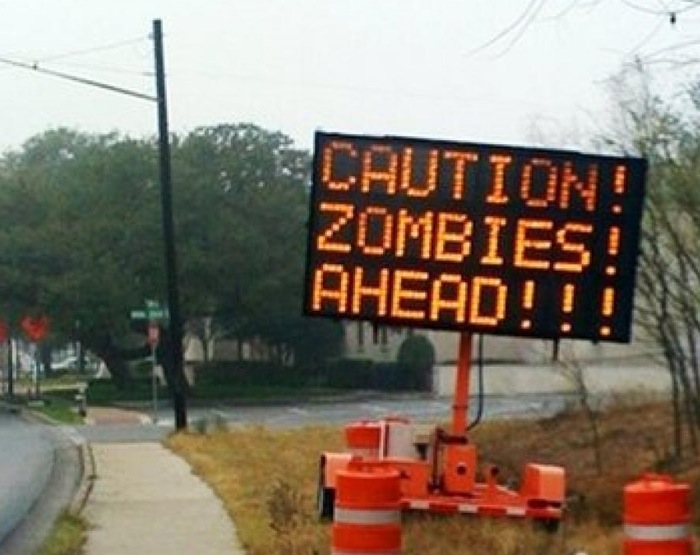
Haunted by Zombie Categories

I have spent that last two weeks reading and shoring up my familiarity with Creation Ex Nihilo and the Trinity respectively. As fascinating as that has been,  I have to admit that am speculated out. I can only take so much speculative theology. This is part of why I am so happy to be in the field of Practical Theology. The other reason is that I have a real heart for the church.

I love Practical Theology. It is a fascinating field that is in the midst of a significant reinvention of itself. As an interdisciplinary engagement within the academy, it interacts with local faith expressions (like the church) in the hope to mutually benefit both the local church and the academy as a sort of go-between.

One of the major changes in this reinvention comes from the recognition that Practical Theology had not doing its own homework. It had fallen into a stale habit of simply attempting to apply the work of other disciplines. Applications of other’s work is fine at some level, but that is no way to gain credibility within the academy. If you want to be taken seriously in that world, you have to endeavor to innovate and explore – just like everyone else.

John Reader is one of my favorites. In the book Reconstructing Practical Theology: the Impact of Globalization the author examines the impact of globalization on everything from families and spirituality to the economy and ecology. There are two specific aspects of the book that I want to post about today and tomorrow: ‘Zombie Categories’ and ‘why the Eucharist isn’t Enough’.

Zombie Categories

Change can be seen in the categorization used within scholarship, specifically as it applies to fields such as practical theology. Reader borrows the term “zombie categories” from Ulrich Beck to refer to existent categorization that are fundamentally dead but which still limps on refusing to go away quietly. This situation forces us to exist temporarily in parallel worlds both utilizing “old, familiar and increasingly redundant” categories alongside “new, emerging and untested” ones.

Reader examines the historical developments and transitions, quickly surveying from the early church to the professionalism and secularism of the twentieth century. This is why it is so important for contemporary theologian to interact with fields such as psychology, sociology, economics, and even the political. As much as I appreciate and have learned from the Big 4 of Theology (Systematic, Historic, Biblical and Philosophical).

In a quick survey of the territory it is becomes clear that the issues encountered under the heading of globalization are not simply a series of incremental changes to which we must adapt to keep operating. The impact of globalization challenges the very frameworks and concepts that are familiar to the practice of Christian ministry.

I get push-back all the time for saying that we need to reexamine and desperately reinvent the very frameworks and vocabularies with which we engage in ministry.

The concerns of local ministry and pastoral care along with the conduct of worship and the diverse challenges needing to be addressed in any context ask something very distinct from us now. The transient nature of globalization paired with a virtually liquid social structure requires a different set of questions and a unique collection of frameworks to adequately address the challenges of ministry and spirituality in a world where the boundaries are constantly shifting. These concerns are most appropriately addressed by re-imagining internal categories inherent to the tradition, partnered with the resources made available by engaging with “the insights of other disciplines”.

This is not about answering the same old questions in slightly different ways for our new context – this is about asking entirely different kinds of questions about the formation of self, the family relationship, construction of community and the nature of religion.

Tomorrow I want to look at how consumerism forms our concept of ‘self’ and why the Eucharist – no matter how tightly we hold to it or how faithfully we perform it – address what is going on with us these days. But first I needed to state how deep the change is and how profound its impact on us is. Cleverly updated answers to the antiquated questions are not going to cut it anymore.

Something else is needed. Our world is not simply a bigger version of what used to be. When people keep insisting that ‘this’ is just an amplified version of ‘that’ they may be missing the point of what it is exactly that we need to be doing here.  “Doing the same thing Sunday after Sunday” may be the worst idea in the history of the church. It may not be –  but it is sure to kill us while we lie in the very bed that we made for ourselves. 

Originally posted at HBC 

Blog at WordPress.com.

Up ↑