Search

Bo Sanders: Public Theology

updating & innovating for today

Tag

book

Opting Out of the Argument Culture (follow up to 4 > 2)

Last week I put out a fun challenge for Good Friday: repent of either-or thinking. It got a great response and a reader asked how one might pursue a conversation differently.

After a decade of trial and error, these are the three things (appropriately) I have found most helpful in breaking down the inherited dualisms: diagrams, vocabulary, and intentional complexification.

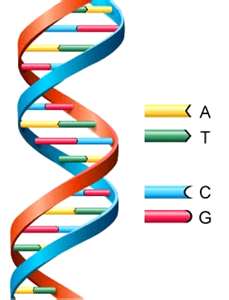
Diagrams: I am a believer in the power of shapes. I heard Len Sweet talk one time about how the two scientists that finally solved the riddle of DNA actually had all the necessary proteins and elements figured out for quite a while … but could not break the code. It wasn’t until they had that now famous shape – the double helix – that they were able to put the puzzle together.
I tell people

“You can have all the right content and be forcing it into the wrong shape.”

My use of the Venn last week to create 5 categories out of 2 would be an example of this. But it comes from a deep conviction that even when given 2 categories, there has to be more to the story – so look for a third. (The book Argument Culture by Deborah Tannen is excellent on this point).

Draw the person’s spectrum and then bend it (as I did here) for them. Take their two options and put it in a matrix (like the Urgent/Important matrix below). Just become convinced that there is too much data for it to be crammed into a pre-made little mold – it just won’t fit. You end up discarding too much data once your little tins are filled.

Vocabulary: When people are too familiar, too entrenched, and too comfortable, you may have to change the terms of the debate in order to unseat the status quo.

In the never ending Calvinist v Arminian debate that Calvinist love, I will teach them that Arminius was a Calvinist, but  just ‘not calvin enough’ and then, in reaction, the Synod of Dort went more calvin than Calvin to come up with T.U.L.I.P. So when Calvinist portray all free-will theologies as Arminian, that is like an American saying that all non-republicans are democrats: its just not true. They are basically just two sides of the same coin … but certainly not representative of the whole array of options. If they want to read an actual Arminian they should check out Roger Olson and his book Against Calvinism. Once you know what a real Arminian looks like, you will stop mistaking everyone who is not Calvinist for one!

Intentional Complexification:  Since dualism is destructive and deceptive, resolve to never let two contradictory-adversarial positions stand as the only options. Search far and wide, at all costs find a third option. Become inquisitive, Become imaginative. Who doesn’t see it this way?

In the abortion debate you must take away the entrenched or given labels that people assume are the only options. Pro-Life is usually just about one stage of life (unborn) and is less concerned about the life of the mother after her child’s birth, the education of the child 5 years after birth, our  country’s foreign policy and being pro-life in an age of perpetual war, and the ever increasing rates of incarceration, death penalty, etc. To be pro-life you also have to be pro-health care, for education, against militarism, anti-death penalty and should probably do something about hand guns and assault rifles ( I’m not talking about your deer rifle Mr. NRA, that is not what is being used to kill people in these shootings).

If you don’t care about the health of the mother, the education of the child, the life of soldiers, and the life of inmates then you are not pro-life: you are just anti-abortion.

When I see the conversation being set up in an us v. them scenario, I will just boycott by saying “until a women has control over her own womb and she can walk away from a pregnancy like the fella can, we can not even have this conversation. It’s impossible.” I just won’t concede the terms and allow the conversation to be set up like that. It is a false binary and it never leads anywhere except ‘both’ sides (as if there is only 2) feeling justified in their own self-virtue.

So those are my 3 suggestions. I would love to hear what things you have found help us get out of the either/or rut and change the parameters conversation!

the Death of the Liberals is killing us

In chapter 1 of his book Death of Liberal Class, Chris Hedges sketches both the height of the Liberal era in the 19th century and its cataclysmic implosion with the arrival of World War in the 20th. The disillusionment of human evil, aggression, and suffering deflated the optimism of innate human goodness and inevitable progress that Liberalism is founded upon.
To understand the profound impact of Liberalism’s demise, it helps to make sure one understands the difference between Classical Liberalism and it’s contemporary milquetoast descent that slinks around in straw-man form on our 24 hours news cycle.
Hedges explains (pp. 6-7) “Classical liberalism was formulated largely as a response to the dissolution of feudalism and church authoritarianism. … (It) has, the philosopher John Gray writes, four principle features, or perspectives, which give it a recognizable identity. It is :

  • individualist, in that it asserts the moral primacy of the person against any collectivity;
  • egalitarian, in that it confers on all human beings the same basic moral status;
  • universalist, affirming the moral unity of the species;
  • and meliorist, in that it asserts the openended improvability, by use of critical reason, of human life

Both John Cobb (Mainline)  and Clayton Crockett (Radical Political Theology) use very similar formulations in their recent Homebrewed  podcasts. Cobb, by focusing on the demise of the Mainline and Crockett, by focusing on the Evangelical and Religious Right, articulate the monumental shift in the religious-political landscape in the past century.
The Mainline denominations are in a collapse narrative and it makes perfect sense why when one examines both the way liberal thought partnered with power in the 20th Century and the way that conducted itself (largely) within the shifting landscape of post-war realities at home and globalization abroad.

“In a traditional democracy, the liberal class functions as a safety valve. It makes piecemeal and incremental reform possible. It offers hope for change and proposes gradual steps toward greater equality. It endows the state and the mechanisms of power with virtue. It also serves as an attack dog that discredits radical social movements, making the liberal class a useful component within the power elite. But the assault by the corporate state on the democratic state has claimed the liberal class as one of its victims…
The inability of the liberal class to acknowledge that corporations have wrested power from the hands of citizens, that the Constitution and its guarantees of personal liberty have become irrelevant, and that the phrase consent of the governed is meaningless, has left it speaking and acting in ways that no longer correspond to reality. It has lent its voice to hollow acts of political theater, and the pretense that democratic debate and choice continue to exist.”  (pp. 9-10)

We talked yesterday about the fictitious nature of the supposed Left-Right spectrum.  For those of us who participate in christ centered communities and organizations, what does this mean?  While incomplete, here is my little experiment to come up with a game-plan for a start.

  1. We stop using the label ‘Liberal’ generically for anything that is not Conservative… especially to be dismissive.  Liberal is a very specific ethical  framework and it takes quite a commitment to liberal. It is not a default position.
  2. We disavow the left-right , conservative-liberal split as farcical. It doesn’t exist. Obama is a Centrist Democrat. Romney is a Centrist Republican. Any idea that Obama is a radical is ridiculous.* We repent of lazy language & thought.
  3. We wake up as the church that the role the Liberals used to play in the system does not function. There is no moderating or buffering presence to bring a corrective to the system. Thus, participating in the system as-it-now-exists will not fix the system. The corporate hold over every aspect of our political system is pervasive.
  4. We step up as the church in the revelation that government is not going to fulfill the expectation to
  • bring good news to the poor (Economy)
  • restore sight to the blind (Medical)
  • release to the captive  (Legal)
  • lift up the broken hearted (Compassion)

The church can do these things! We have deferred to the political system for too long. We have outsourced our responsibility to society but now live with the remains of the bloated carcass Christendom. With the death of the liberal class resistance to corporate rule and unchecked consumerism is impotent. The Citizen’s United ruling is just one step on long trail … but we know where it leads.
There are churches in every community and there may be no greater existing potential than us! **  I know it sounds dreamy, but in the rest of this series I want to flesh it out. By the end, it might not seem as far-fetched as it does right now.
– Bo Sanders
 
*Wall Street campaign funding, legalizing assassination, and Guantanamo Bay are your first 3 hints.
**  The danger of course is that we keep voting based on two issues while turning a blind eye to  corporate rule, environmental deregulation, and perpetual war.


This post is the beginning of a new series and was co-posted on Homebrewed Christianity.

God as She-He-They

Originally posted at Homebrewed Christianity as “She Who is Not”

Earlier this week I had a post about language and God talk that incorporated C.S. Lewis’ poem “A Footnote on All Prayers”.  Part of what came out of that was an exchange with J.W. about pronouns, the Bible, and Inspiration. I wanted to transfer some of that over here (I have edited it for clarity) in order to open up the conversation to more people.

J.W.: So, what does your god look like? And how is that look any different from Piper’s or Driscoll’s?

Me:
Thanks for asking! Actually there is quite a substantial difference. Let me point out just a couple of things to start:
A) I don’t believe that language about God is univocal (as I have said). SO we begin in humility understanding that all our words, metaphors and concepts are OUR best attempt.
B) I believe that langue (since it is not univocal) functions relationally. When Jesus uses ‘Father’ language, he is talking about the WAY in which relates to a father. Not that God’s ontological being is Father in an exacting and representative way. It is an expressive use of language. That is the nature of language.
C) The way that Scripture is expressed is historic. I believe that the Bible is Inspired by Holy Spirit. That means that Holy Spirit was at work in the authors and ultimately in those who collected and validated the canon. (I confess this by faith). Those authors were historically situated and particularly located. They expressed their thoughts in their best language in their best frameworks. We see that historical locatedness and account for it when we engage their writings.
D) Whether you call it ‘original sin’ (I don’t) or ‘human nature’ or (my favorite) relational brokeness and conflicting biological impulses … humans have a problem. We are not 100% whole. Something is wrong (we don’t even do the good we WANT to do). That means that in every epoch and era there are things in place that are not perfect. Those show up in scripture – since it is a snap shot of its environment. The Bible is fully human (and I believe fully divine in a Process sense) but it is not ABSENT of humanity. It is full of humanity.
So If you take just those 4 things in contrast to Piper and Driscoll, then my God talk is:

  • in Humility not certainty or pushy
  • Relational not static or exacting
  • Historical not trans-historic
  • Human not un-human

Does that help? SO that is my starting point. From there I diverge wildly from the other two.

J.W.
Well, first of all, thanks for a response.
Second, no offense, but you use an awful lot of words to not say too much. Or, to say the same thing over and over while denying that you are saying one thing, yet actually affirming another. Since I don’t have any real idea what you believe Piper and Driscoll believe, I still don’t know that you are painting a different god or not.
You start out saying that all expressions of God are only a best attempt, but then you claim to believe the inspiration of the Holy Spirit. So, which is it? Our best attempt, or Holy Spirit inspired? See the problem there. It’s either one or the other, can’t be both.
Certainly the Bible is written situationally. God could have inspired men to write it so it only made sense at one point in the entire course of time, or He could have inspired it so that it meant the same thing from beginning to end, from the beginning of time to the end of time. And written so that ordinary people could figure it out with a little help from His Holy Spirit. Which is what I believe. You seem to believe that only post-modern thought with a lot of help from certain philosophers can figure out this whole humility, relation, human thing. Sorry, way too many creeks have flowed over their banks throughout history for me to believe that only recently have we been smart enough to figure this whole mess out.
God (Holy Spirit) inspired the whole Bible. He could have very easily caused His writers to use words that wouldn’t mean anything to their (at the time, current) readers, but would only matter eons later. IF that is what He intended.
Again, you haven’t showed me anything but dichotomies, and nothing of substance that disproves anything Piper et al believe-which I still don’t know what you believe they believe.

Me:
1) I did use a lot of words, but it was to say quite a bit. Unfortunately it was not what you were looking for so you think I didn’t say much. I assure you that I say quite enough in my 300 words to get in a lot of trouble in many circles!
2) You are 100% wrong that “It’s either one or the other, can’t be both.” Inspiration is not the OVERriding of human intent – it is the filling UP and expanding of human intent. Inspiration does not make something inhuman. You are thinking of something else not inspiration. Then you accuse me of dichotomies? Weird. I am talking about a participatory-relational model that transcends either/or thinking. You must be confused.
3) Here is an example of the difference (which you apparently were not able to pick up on): It is equally a valid to call god She as it is to call god He. Because in the end, god is neither. Those are pronouns that stand in for their antecedent but which do not entirely explain god or contain god’s ontological reality. God did not give Christianity a masculine feel. We did. God is God that is beyond our biological categorizations and anatomical classification. God is not defined by those – we simply conceptualize God and these terms and portray those conceptions in our language.
This is the nature of language. It is symbolic – analogical – and metaphorical.  That does not mean that we are not saying anything when we talk about God. We are. It does not mean that there is no inspiration. There is. Those are not mutually exclusive.
To quote Elizabeth Johnson in She Who Is :

Words about God are cultural creatures, intwined with the mores and adventures of the faith community that uses them. As cultures shift, so too does the specificity of God-talk.

To call God She is just as accurate and as inaccurate as calling God ‘he’.


Clarifying the Quad

a quick follow up to the post from last week
– both of which were also posted at Homebrewed

 I wanted to thank everyone who gave feedback on the Four Locations of Theology in the 21st century post from earlier this week. I appreciate the comments here, on facebook, and the emails.  It has given me a lot to think about and I wanted to clarify three themes that have emerged.

Three clarifications:

  • Reason seems to be the suspicious quadrant. Every time I bring up quadrilateral, more than half of the conversation will be centered on reason. This week was no exception. Reason draws the most concern – which is funny to me because tradition is the one that I find most suspect.

Here is the thing I would want to clarify: the other 3 themes of Scripture, Tradition and Experience all have reason woven into them. Those who wrote the scriptures, those who established the tradition and even our won experience are all saturated with reason. It is inescapable. The scriptures did not fall from the sky! They passed through the author’s minds and were processed with reason. Same with tradition. The creeds were not divined in some sort of supernatural ceremony. The were constructed and reasoned. Our experiences are interpreted utilizing our filters, frameworks and lenses.

 It seems important then to clarify that those three are not independent of reason but are dynamically intertwined with it. It would be useless to take out reason (as some have suggested) because it interlinked and inescapable.

  •  It may be that the quad needs something else. Some suggested replacing one of the 4 elements with an alternative. My favorite idea came from my friend Raphael who said

 “I suggest we add a fifth source for the practice of theology in the 21st century: Imagination!”

Admittedly, it would no longer be a quad! but I think that the tradeoff is that you would get adventure and zest incorporated and not just a static, conserving, or historical product.

  • There are no guarantees. Even if we could all agree to utilize the quad for the theological endeavor, there is no guarantee that we would all come up with some thing or come out with the same conclusions. This seems to be a major concern – that we can not ensure the outcome of such an endeavor.

I am surprised at the conserving nature of such mentalities! People are ok to ‘go on the journey’ as long as we predictably end up basically where we started.
Think all you want. Explore new thoughts and incorporate science … just don’t stray too far from the foundations of antiquity!  Integrate new realities and account for ongoing historical developments … just make sure that you end up with the same thing we started with.

I have not overstated this hesitancy and resistance. But the reality is that there are no guarantees. You may start out an Evangelical and end up being an Emergent type working in a Mainline church with Process theology as your main conversation partner!  (for instance)

 In summary:

  1. You can’t get rid of reason, it is already present in the other three. Scripture, Tradition and Experience are inextricably laced with it.
  2. The quad may need a little something extra. The 21st century may require some zest, adventure and imagination
  3. There are no guarantees. While we want to honor the historical expression and provide continuity with the trajectory … it might look a little different and think a little different than it did in the 3rd or 17th century.

Thanks for all your feedback, thoughts, and concerns. I appreciate the conversation.

Create a free website or blog at WordPress.com.

Up ↑