Search

Bo Sanders: Public Theology

updating & innovating for today

Tag

book

Blood: Easter, the Cross & that quote about Liberals

It is almost Easter – my most conflicted time of year as a pastor.

I am smitten with the empty grave. In fact, I am almost as excited about the Easter imagery as I am horrified by N. American Protestant’s fascination with the cross.
I have written and talked about this disturbing trend in the past so I won’t take the time to elaborate on it here.

This whole subject has been intensified for me this year. I have been leading a discussion at my church through Lent about historic atonement theories. The hope in doing so has been twofold.

  • We wanted to look at how the churches’ understand of the cross has changed over time.
  • I wanted to suggest a way to move past those previous and limited views.

We have been working through this in conversation with several resources: Saved From Sacrifice, The Non-Violent Atonement and the work of Michael Hardin.
It has been a powerful excersise and I have learned a great deal in the process. It is the week before Palm Sunday and I have two things in the back of my mind:lamb

  1. It bothers me that our most well attended services with the most visitors are our bloodiest (in imagery).
  2. That damn H. Richard Niehbuhr quote.

His famous jab at ‘liberal’ christianity:

“A God without wrath brought men without sin into a kingdom without judgment through the ministrations of a Christ without a cross.”

This quote gets under my skin so much. Here are 3 reasons why:
1) It is so true. I suspected it when I migrated out West and it is has only been confirmed as I have emerged from an charismatic/evangelical context to a more mainline one. I can not tell you how many people would be covered by Niehbuhr’s concern.

2) We live in a sanitized and sterilized culture (to paraphrase Cornell West) where most people have no connection to the meat on their table. They pick it up at the grocery store in plastic wrapped styrofoam containers. I say this as an avid hunter descended from farmers. We live in a horrifically violent culture (both domestic and military) but so few of us are familiar with blood. We outsource our violence.
This is why a penal substitutionary view of the cross is so attractive /acceptable for so many. The vicarious nature of god pouring out ‘his’ wrath on Jesus results in a pornographic delight that can be seen in depictions like that famous scene in The Passion and in many of our contemporary worship songs.

3) That Niehbuhr quote is thrown around too easily whenever someone wants to reexamine or revisit underlying assumptions about what happened (or how we understand) Easter.

Let me be clear about what I am saying and what I am not saying:
I am not saying that there was no cross and that there was no blood. I get both, I accept both and I proclaim both.
I am saying that something perverse has seeped into our understanding and our imagery.

  • What happened on that cross was real.
  • What happened on that cross mattered.
  • What happened on that cross was unjust.
  • What happened on that cross changed humanity’s relationship to God.

My concern is that we have misunderstood both how it changed and why it changed.
Let me end the critique there and wrap up with a constructive proposal.

When Jesus takes the bread and cup and forever changes their meaning he is saying “what they will do to me – don’t you, as my followers, do to anyone else”.
When Jesus says “forgive them, they know not what they do”, he is saying that they think they know what (and why) they are doing, but they are wrong.
When Jesus says “it is finished”, he is proclaiming the end of this type of scapegoating and violence by those who think they are doing it on God’s behalf.

2 Corinthians 5:18 All this is from God, who reconciled us to himself through Christ and gave us the ministry of reconciliation: 19 that God was reconciling the world to himself in Christ, not counting people’s sins against them. And he has committed to us the message of reconciliation. 20 We are therefore Christ’s ambassadors, as though God were making his appeal through us. We implore you on Christ’s behalf: Be reconciled to God. 21 [The one] who had no sin [was made] to be sin, so that in him we might become the righteousness of God.*

We are to be about peace. We are to be a people of reconciliation. In Christ, God absorbed the hatred and violence of the world. The one who knew no sin – an innocent man – was proclaimed guilty and God responds by proclaiming that we who are guilty of doing that are now innocent and our sins are forgiven.

This is the good news of gospel! This is the hope for human-kind. No one needs to be sacrificed any more. No one needs to die because God is angry – Christ’s unjust death is to be the last. In the empty grave we see the vindication of the victim. God took humanity’s wrong judgement of Jesus and now judges us right with God. We who are guilty are proclaimed innocent because the innocent one was found guilty.

Easter is the great reversal and the vindication of the victimized. It is finished. We can’t afford to keep missing this and repeating the mistake. We who follow Jesus must be about peace and reconciliation. Too many have been scapegoated, placed on crosses and victimized by violence … in Jesus’ name.

God forgive us – we know not what we are doing.
Let it be finished.
In Jesus’ name.


* If that final verse reads a little different than you are used to hearing it, you should listen to the podcast with Michael Hardin.
Imitation, Simulation, and Repetition – How We Imagine Ourselves

Imitation, Simulation, and Repetition

Madan Surap’s Identity, Culture and the Postmodern World is the most expansive and impressive examination that I have encountered around the issues of societal conception and cultural identities. His basic assertion, which is expanded as the work progresses, is that “ identities are not entirely determined … we do not have homogenous identity but (instead) have several contradictory selves”.  By interacting with such historic figures as Lacan, Baudrillard, Foucault, Said, and Kristiva, Sarup provides a tour-de-force of elements contributing to a modern conception of self, identity, community, and culture.

Identity has a history. At one time it was taken for granted that a person had a ‘given’ identity. The debates round it today assume that identity is not an inherent quality of a person but that it arises in interaction with others and the focus is on the processes by which identity is constructed.[1]

The construction of someone’s identity involves a process of selection as to which elements will receive consideration and emphasis. “Social dynamics such as class, nation, ‘race’, ethnicity, gender and religion” are then organized into a narrative.

[2] This is the process by which a subject’s story emerges for both presentation (by them) and evaluation (by others).  Sarup utilizes a three themed approach for illustrating the transitional nature of one’s identity:

  • the meaning of home
  • the journey of the migrant and
  • the crossing of the border.

It is clear from the above three keys that Sarup is employing a moving motif. There is transition of movement built into the conception of self and community. By articulating this framework as one expecting migration, he provides an inherent instability and liquidity within the process of conceptualization. Identities within this expectation “do not remain static, but they change according to the strength of social forces, the dynamics of class, nation, religion, sex and gender, ‘race’ and ethnicity”. [3]

The reality that becomes available within this approach is that each of those contributing elements also is a moving target that can, at times, be as transitionary as the personal identities that are framed within it.

It is not difficult to isolate any one of the contributing elements and illustrate how that one category has undergone layers of adjustment, adaptation, evolution and challenge:

  • class (Marx, the Royals of England, modern India),
  • nation (from the French Revolution to post-colonial movements),
  • religion (historic drift of the Methodist from Wesley to today),
  • sex and gender (Foucault, Kinsey, and the feminist revolution),
  • race and ethnicity (see How the Irish Became White by Noel Ignatiev).

The points on which the web of constructed identity are anchored seem themselves to be migrating and moving elements – albeit at a tortuous pace in comparison to personal identity markers.

In order to address the underlying influences and their contribution to the process of formation, Sarup asks a set of leading questions:

  1. How do frames of culture, for example, hold the individual personalities in place?
  2. How are places imagined and represented?
  3. How do they affect people’s identities?
  4. How do the worlds of imagination and representation come together?[4]

I find the questions as helpful at this point in the address as any polished explanations. It is precisely the presumed ‘giveness’ of both identity and community that has triggered my abandonment of former inherited constructions and a subsequent willingness to explore the nature of socially conditioned conceptions of oneself as well as constructivist theory of knowledge (which will be touched on at the conclusion).

Sarup’s three themes introduced earlier (the meaning of home, the journey of the migrant and the crossing of the border) provide a way forward in examining the frameworks associated with a mobile or transitory conception. To clarify, he is saying that “identity is to do not with being but with becoming”.[5]

  • While home is always a place, notions of home are not the same in every culture.
  • Immigrant communities may have home-land but essentially home is a place rooted into one’s family.
  • We are always born into relationships and those are always based in a place.
  • Frontiers are places of separation and articulation.
  • In contrast, boundaries are constitutively crossed or transgressed.
  • Strangers are both aware of their strangeness within and unclassifiable to those without. They are undecidables. The stranger blurs boundary lines.[6]
  • Many strangers attempt to erase this stigma by assimilating.
  • A foreigner is one who does not belong to the group, the other.

These markers and designations form the structure in which Sarup explores the evolving landscape of contemporary global communities and individual conceptions of self and belonging. Ultimately he concludes that:

Identity is a construction, a consequence of a process of interaction between people, institutions and practices and that, because the range of human behavior is so wide, groups maintain boundaries to limit the type of behavior within a defined cultural territory. Boundaries are an important point of reference for those participating in any system.[7]Boy at Cockflight_3

The transitory nature of the cultural boundaries and increasingly fluid conception of personal identities that are framed within them – or in contrast to them – make addressing either the stable elements that exist or the migrating ones difficult without a historic referent or a narrative frame. I am pleased that with a historic approach like social imaginaries/ imagined communities (Taylor and Anderson) and several narrative frames (like the one provided by Sarup) that some progress can be made in examining this issue of socially constructed notions of self, identity, belonging and community.

Sarup warns against several mistakes that those who try to address issues of identity often make:
– One danger is in focusing on an influence or social dynamic in isolation. By isolating only race, or nationality one overlooks the “multiplicity of factors”[8] that contribute to the construction of one’s identity.
– Another danger is found in over simplifying the view of social structures that frame an issue and not analyzing them as significantly complex issues. Among his other cautions, an important aspect to consider is negotiation of “the past-present relation and its reconciliation”.[9]

The past is important because it is though narrative that people represent themselves to themselves.

The representation of the past to oneself becomes vital especially in an American context. Baudrillard has a vicious critique of America’s lack of (perceived) history and how that lack creates an environment where everyone is expected (and has the opportunity) to re-create themselves everyday. He says that America has no ‘ancestral history’, no roots ‘except the future’, and that America is ‘weightless’.[10]

America, according to Baudrillard, is a realization of the hyper-real that is an idealized imagining of an anticipated reality.

In the next post we will begin to get religious. 


[1] Sarup, Identity, Culture and the Postmodern World, 14.

[2] Ibid., 15.

[3] Ibid., 171.

[4] Ibid., 6.

[5] Ibid.

[6] This is where Sarup interacts with the work of Julia Kristeva’s Strangers to Ourselves.

[7] Sarup, Identity, Culture and the Postmodern World, 11.

[8] Ibid., 39.

[9] Ibid., 40.

[10] Jean Baudrillard, “America After Utopia,” New Perspectives Quarterly, Fall 2009, 1.

How We Imagine Ourselves: Technology

I am fascinated by how we both image ourselves and imagine ourselves. The connection between them is significant and the implications are even more so.

In March I wrote about how conceptions of a ‘people’ and a ‘nation’ have come through historic transitions in the past 2 centuries. More recent authors extend that concern beyond just text to the escalated pervasiveness of electronic media.  Appiah frames it this way:

The worldwide web of information – radio, television, telephones, the Internet – means not only that we can affect lives everywhere but that we can learn about life anywhere, too. Each person you know about and can affect is someone to whom you have responsibilities: to say this is to just to affirm the very idea of morality. The challenge, then, is to take minds and hearts formed over long millennia of living in local troops and equip them with ideas and institutions that will allow us to live together as the global tribe we have become.[1]

This radical re-formation of belonging, obligation and security holds major opportunities as well as obstacles to conceptualizing social identity and participating in imagine community for the 21st century globalized existence. [2] Arjun Appadurai pins media and migration as the two interconnected (and similar) effects that work on “the imagination as a constitutive feature of modern subjectivity” because “they offer new resources and new disciplines for the constructed imagined selves and imagined worlds.” [3]

The rate of change provides a rupture – not merely a transition but an exponential increase in connectivity and complexity.complexity

The power of this new media, according to Appadurai, is not only as a direct source “of new images and scenarios for life possibilities” but in that fact that “imagination has now acquired a singular new power in social life.”[4] Think back to Taylor’s earlier assertion that those in previous centuries not only didn’t have the ability to conceptualize themselves with a life outside of immediate connections but that it probably would have never even dawned them to try.

The capacity to conceptualize or imagine oneself in a radically different place, group or life scenario has not only become possible but it the primary realm of constructing an imaginary.

This shift is facilitated by media technology and is “one of the principle shifts in the global cultural order”. [5]  

Technology is radically changing the way that we conceptualize (imagine) everything from identity, belonging and who we are connected to as well as in what way that happens.

In the next 3 posts I begin to flesh out what this change looks like.


[1] Appiah, Cosmopolitanism, xiii.

[2] It is worth noting that a walk down a large avenue in a major city would “have within sight more human beings that most of those prehistoric hunter-gatherers saw in a lifetime.” Even Greece at its heyday or Rome at its peak would have paled in comparison. Ibid., xii.

[3] Appadurai, Modernity At Large, 3.

[4] Ibid., 53.

[5] Ibid.

[6] Ibid., 115.

[7] Ibid., 117.

[8] A similar case might be made for women who have been disgruntled based on the patriarchal remnants still influencing them and their sisters even though they are aware that they are 51% of the population as a whole. A great deal is made out of the number ‘51’ in juxtaposition to matters of access, equality and compensation. Much is made of that number. What if, one might ask, if that number was changed. Would the case be harder to make? What if only 42% of the population was women? Or what if it turned out that an error had been made and actually 64% of the population was women. Would that make the current inequalities and unjust practices more grotesque?

Drop ‘The’

Twice is a trend, three is a pattern.  The word ‘the’ has become a stumbling block.

The first incident occurred on TNT when I spoke up about my friendship with ‘Al’ – as in incarnational, etc. – and Tripp professed his love for the word ‘the’. Tripp wants to talk about the incarnation and the resurrection. I am more interested in a more generic, and I would add more fruitful, discussion about concepts like incarnation and resurrection.
You can read more about ‘Al’ here.

The second occasion was a little less contentious and I loved the feedback I got from the suggestion to Add An ‘S’ As A Test. It turns our that simple making something plural can be a great way to get away from the certitude or dogmatic cul de sac that conversation can get caught up in.
You can read more about Adding An ‘S’ here.

Last month a third incident emerged. At the Phyllis Tickle event to celebrate her new book and her life’s work, Barry Taylor (who I have studied with) offered a profound challenge. Phyllis’ new book is about Age of the Spirit. It became clear in the Q&R at Fuller Seminary that the Spirit was going to be a point of concern for people. You have questions about the modern pentecostal movement at one end and concern about early Trinitarian formulations at the other.
What Barry Taylor suggested at the Live3D event afterward was dropping the ‘the’ in Age of the Spirit. Why not just talk about the Age of Spirit?

Dropping ‘the’ is sometimes necessary when adding an ‘s’.fundamentals

Please don’t misunderstand me. I am not saying that this is a cure-all formula for getting out of any theological pickle/quandary that you find yourself in. What I am saying is that dropping ‘the’ can sometimes open up greater possibilities AND provide much needed clarity to doctrinal or historical gridlock.

The bottom line: We are moving out of an era built around certainty and on propositional truth. Things are becoming more fractured, de-centered and relational (there is Al again). This can be a good thing – shifting from certainty.
(Now, in fairness, Phyllis had a great trinitarian answer to Barry’s concern that you will be able to hear later when the podcast comes out.)
There is a lager issue at hand, however, and that is the way in which we hold truth. I’m going to suggest in a post later this week that we revisit not just our conceptions of God and religious experiences – but that we hold our interpretations of them differently. Until then, I want to encourage you to do a little experiment and drop ‘the’.
Let me know how it goes.

Starter Suggestion: if you are someone who uses the phrase ‘the church’, try and replace that phrase with the word ‘churches’ and see if the sentence still makes sense. It probably won’t – which means that you will have to go back and look at the assumptions that underlie the sentence.

The Authority Question – Pentecostals & Methodists

Last month, at the Phyllis Tickle event, the ‘authority question’ came up, as it will/should whenever someone starts talking about ‘the Spirit’pentecost01

I was sitting out in the audience for the Fuller Seminary part of the evening. A little debate/concern arose about the issue of authority – especially as it relates to the rapidly growing Pentecostalism of the Southern Hemisphere.

I leaned over to the pastor sitting beside me and jokingly said “I pastored a charismatic church for a decade, and now I am at a Methodist church … this seems like the easiest thing in the world to navigate.”  The pastor requested that I blog about it.

Let’s get all the parts on the table and see how they come together:

Element 1: in the past we talked about seats or locations. Where does authority reside? Answers have included leaders, scripture, the collective, bylaws, reason, etc. Traditionally we have talked about authority in a static sense.

Element 2: in the Methodist tradition we have the Wesleyan Quadrilateral of Scripture, Tradition, Experience and Reason. (for an interesting side-read, John Cobb questions the sequence of those four elements)

Elements 3: I read a fascinating article a while ago about developments in neuroscience. Researches have long looked for which part of the brain memories reside in. It turns out that memories are not located in any one place but in the connection made between different parts of the brain.


Proposal: Authority, like memory, is not located in any one place. It is uniquely comprised of the connection between component parts. Depending on the collected aspects, the authority that emerges will be unique to that organization, congregation and movement.

Authority, therefor, doesn’t exist (per se) in that same sense that we used to conceptualize it … OR perhaps I should say it doesn’t reside somewhere – but in the connection and configuration of collected elements.


The reason that ‘the authority question’ is so elusive is because it is different in every place and is changing all the time

Authority will look different if you are Catholic charismatic in S. America than if you are a non-denominational megachurch in N. America. This is due to its emergent nature as an evolving concept.

Thoughts?

Noah: Inhabiting A ReEnchanted World

In Aronovsky’s movie, Noah inhabits an enchanted world. kinopoisk.ru

From the first rain drop that mystically/magically replaces a plucked flower, we know that Noah is walking in a world that is enchanted is way we are not used to seeing.

The rules are a little different. Things work in slightly different ways from the world that we inhabit.

From the suspension of certain laws of physics to the wondrous seed of Eden and on to the healing blessing of a barren womb, the world is undoubtedly enchanted.

It is about that enchanted world that I want to propose a problem and a promise.

Problem

In a post-enlightenment world, we no longer have access to that level of enchantment – except in cinema. That is the importance of movies. Most of us no longer sit around the fire and hear the stories and mythic tales of the ancient generations.

Movies open up a world to us that seems closed in the ancient past. Cinema releases us from the confines of our limited imagination and allows us to imagine the world (in) a different way.

Movies spark our creativity and open us up to the possibility that the world can, and maybe should, be a different way. Movies like Avatar or Star Wars are not meant to be exegeted or examined for their exacting possibilities. That would be to miss the point.

Noah should be enjoyed in the same way. A movie like this should not be measured and weighed in an attempt to map its realistic representation. That would be to close down the possibilities. Aronofsky’s vision is to open up our imaginative creativity and invite a greater possibility.

Promise 

David Ray Griffin has ambitiously tackled this problem in his massive (and heady) tome Reenchantment Without Supernaturalism. You can read Bevery Clack’s excellent review here.

Clack explains:

the naturalism that underpins this model is

  • prehensive (highlighting the conscious or unconscious grasp of something)
  • panentheistic (god’s presence is in all)
  • panexperientialist (meaning that experience is not limited only to the sensory)


I don’t want to get bogged down in big words but that tri-framing opens up an important insight that Griffin lays out.

 First, as long as the scientific and religious communities regard each other with suspicion and hostility, it will be difficult for them to cooperate wholeheartedly to overcome the problems threatening civilization today, such as the global ecological crisis.

Second, religion that has not taken account of the truths revealed by science can be very dangerous.

Third, the development of a “scientific worldview” that does not incorporate the truths revealed by religious experience has led … to the view that the universe provides no normative values to guide the future course of civilization.

It is passages like the above that bring me back to the enchanted world of Noah. We love the idea of that world. It is partly why the epic-mythical-primal storytelling of those early accounts capture us at so many levels.

The unfortunate thing is that we have no access to that world anymore. This is where cinema comes in. Movies like Noah release us from the confines of our disenchanted and mundane existence and open up our imaginations to the possibilities of an enchanted world. The unfortunate reality is, however, that cinema is the only access most of have to a world like that.

We can’t go back. We could try but we would never make it. The better option is to live wholly into this world that we actually inhabit in a way that recognizes what is already (re)enchanted and allows us to participate with integrity in the world as it is.

Noah: Eclipse of the Biblical Narrative

It has been a busy month for me but I have 4 things that I would love to hear your thoughts on in the next 24 hours.

I got a sneak peak of the new movie Noah and got to be a part of a roundtable with the director and screenwriter. You can listen to the HomeBrewed  review of the movie and interview here. 

Today I want to put up my two posts on Noah and see what y’all thought of it (if you got to see it this weekend).

______________________

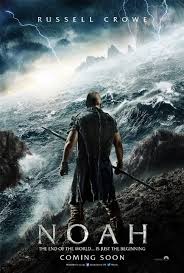
The new Noah movie is a masterful work of biblical imagination and creativity. Noah

There are two aspects of the movie that audiences will notice up-front:

  1. one is related to epic-mythic-primal narrative
  2. the other addresses physics and logistics

The latter is significant for the former. Through a creative move to put the animals into hibernation, all of the questions about how you would feed that many animals, keep them from killing each other, and shoveling manure are instantly relieved. Those who are concerned about such logistical matter can then relax and settle into the narrative.

This is important because for many viewers, the story of Noah is either a) a children’s tale or b) a physics/apologetics problem.

What is missed in both the children’s story and the apologetics arguments is that we are dealing with an epic-mythic-primal narrative. It is not a newspaper account of the flood.

The danger of reducing epic-mythic-primal narrative down to newspaper reports is that too much is lost in the reductive move. The sad part is that often those who are the most series about the biblical account – and who may be upset about the creative flourishes in this movie – have often fallen victim to a debilitating loss of wonder and possibility.

 This is a ‘Failure of Imagination’.

When the Biblical Narrative is reduced down to a newspaper report,  the account lacks the appropriate level of animation.

Aronofsky illustrates how a story should inspire us. This is how we should entertain and engage a Biblical narrative – not by simplifying it down to a flannel board representation – but by breathing more life into it to see what emerges.

In the interview you will hear Aronofsky and Ari Handel say that they wanted to ‘humanize and dramatize’ this work of ‘primal story telling’. My mind went immediately to the work of Hans Frei – specifically The Eclipse of the Biblical Narrative. Frei was both concerned about and critical of the shifts that happened in recent centuries of biblical criticism. We had clearly moved out of the pre-modern (pre-critical) way of addressing a sacred text and into (via the enlightenment) a flood of critical thought and scholarly criticism.

Both the fundamentalist retreat to historical facts and the liberal abandonment of historical concerns are a failure to Frei. This is not about extracting universals or proving ‘facts.’ That is an exercise in missing the point.

Frie’s proposal related to fitting our world into the world of the Bible.  While I don’t subscribe to Frie’s system wholesale, I think that he would be very impressed by Aranofsky’s vision for the Noah story.

The director lets us inhabit the enchanted world of Noah and tries to find elements of our world within it. This is the beautiful opportunity provided for us through film. We breath creativity and imagination into the text and let it come alive.*

The next post will look at ReEnchanting the world the Noah inhabited. 

*It is important to note that Aronofsky and Handel took great pride in not contradicting a single detail in the biblical account. They admittedly added and embellished other aspects of the story.

Jihad v. McWorld (part 4)

A Second Shift

In the previous 3 parts we established that a significant shift took place in the late 19th and early 20th century. This initial shift in modernity has subsequently created the possibility of a second, more contemporary, move that I want to explore. Taylor provides the context of this potential when he says:

In earlier societies, this ability to imagine the self outside of a particular context extended to membership of that society in its essential order. That this is no longer so with us, that many of these … questions are not only conceivable but arise as burning practical issues … is the measure of our disembedding. Another fruit of this is our ability to entertain the abstract question even where we cannot make it imaginatively real.[6]

It is in this potential that citizens of the 21st century already have, or likely will, move beyond national identities to something more potentially abstract, disembodied, plural and wrapped in multiplicity. Issues of citizenship, sexuality, race, ethnicity and religion are increasingly complex in an inter-racial, cross-cultural and multi-national globalized context.

Tomorrow’s posts will explore works by Kwame Anthony Appaih, Arjun Appadurai, Umberto Eco and Madan Sarup. Then we will address thoughts by Jean Buildrillard and Saba Mahmood as they relate to imaginaries and conceptions of community, the physical body and spirituality. 

In a section entitled ‘Global Villages’, Appiah points out that,

“People who complain about the homogeneity produced by globalization often fail to notice that globalization is, equally, a threat to homogeneity.”[7]

This is the same tension that was developed in the earlier section between secular and religious thought. Each sees the other as both the problem and a threat to their program – not realizing that in another sense, they actually give rise to each other and propagate each other’s reach.

It is addressed again in such examinations as Jihad v. McWorld: How Globalism and Tribalism are Reshaping the World by Benjamin J. Barber.  Forces that seem to be in conflict with each other are, in reality, dependant on each other in a complex interplay. Barber explains:

McWorld cannot then do without Jihad: it needs cultural parochialism to feed its endless appetites. Yet neither can Jihad do without McWorld: for where would culture be without commercial producers who market it and the information and communication systems that make it known?[8]

The complexity of the combative nature of the symbiotic relationship is found in the evolving nature of the situation.  Barber’s pairing of the phrases ‘Jihad’ with it’s perceived nemesis with ‘McWorld’ is deliberate.Jihad v McWorld

What I have called the forces of Jihad may seem then to be a throwback to pre-modern times: an attempt to recapture a world that existed prior to cosmopolitan capitalism and was defined by religious mysteries, hierarchical communities, spellbinding traditions, and historical torpor… Jihad is not only McWorld’s adversary, it is its child. The two are then thus locked together in a kind of Freudian moment of the ongoing cultural struggle, neither willing to coexist with the other, neither complete without the other.[9]

This juxtaposition is even more precarious than a simple ‘clash’ or ‘combat’ language would seem to provide. There is obviously an adversarial component but without addressing how McWorld gave rise to Jihad – and how Western constructs of religion gave rise to secularism – there is a falsity that exist for those who participate in the inflammatory dualism on both sides (as if there were only two). Conceiving of one’s identity within this fictitious and fracturous is layered in complications related to the imaginary employed.

An outgrowth of this increasing complexity is, as Appiah describes it, a “distinctively cosmopolitan commitment to pluralism”.[10] Cosmopolitan people know that we are different than each other – this is apparent at every turn – and they recognize that we have much to learn from our differences.[11] One theme that emerges repeatedly in the work of these authors is the centrality and role of media. Benedict Anderson addressed it through the textual nature of transmission that united disconnected people in the imaginary.

What Anderson coined as ‘print capitalism’ created permanent change in the way people conceived of their personhood and selfhood. Its power was housed in the dual developments of mass literacy coupled with technological innovation that allowed for ‘large-scale production of projects’.  The result was release from the need for face-to-face communication or even indirect connection between people or groups.[12]

You can see how, in these 4 posts, we live in a very different world than the one we have inhereted in our religious traditions. This helps to explain the baffling disconnect that can occur between our ancient documents and their ongoing implementation in our contemporary religious expressions.

In part 5 we begin to explore the lived and embodied implications of religion in the modern-contemporary context.  

_______________

[6] Charles Taylor, Modern Social Imaginaries (Duke University Press, 2003), 55.

[7] Kwame Anthony Appiah, Cosmopolitanism: Ethics in a World of Strangers (W. W. Norton & Company, 2007), 101.

[8] Benjamin R. Barber, Jihad Versus McWorld (Ballantine Books, 2001), 155.

[9] Ibid., 157.

[10] Appiah, Cosmopolitanism, 144.

[11] Appiah earlier broke down the intertwined notion of cosmopolitanism into two threads: the first is that our obligation extends beyond ties of family and kind (even citizenship) to those outside our immediate reach. The second thread finds value not just in human lives generically but in particular human lives. This is the loci for enlightenment liberal individualism. Ibid., xv.

[12] Arjun Appadurai, Modernity At Large: Cultural Dimensions of Globalization (U of Minnesota Press, 1996), 28.

How We Imagine A ‘Nation’ part 3

In the shadow of the Sochi Olympics and the unfolding tension in the Ukraine, we are exploring the theme/thesis that:

  • ‘Nation’ is both sovereign and transcendent.
  • ‘Nation’ is both a social imaginary and an emergent reality.

[Trust me – I am going somewhere with this]

Benedict Anderson explains that the notion of imagined communities was revolutionary because:

“regardless of the actual inequality and exploitation that may prevail in each, the nation is always conceived as a deep, horizontal comradeship”.[1]

Such an imaginary provides a new capacity for obligation and ultimate sacrifice. Appadurai, in a section entitled ‘Patriotism and Its Future’ interacts with Anderson (among others) and observes that:

Modern nationalisms involve communities of citizens in the territorially defined nation-state who share collective experience, not of face-to-face contact or common subordination to a royal person, but of reading texts together.[2]

There are significant implications to this development because much of the rhetorical energies of the ruling powers are used in order to urge “their subjects to give up … primordial loyalties – to family, tribe, caste, and region” for the “fragile abstractions” called nations which are often “multi-ethnic … tenuous collective projects”.[3] The ability to call for ultimate sacrifice out of loyalty to an abstract imaginary is a defining characteristic of the most recent centuries previously unknown.

Two implications that illustrate the power of imagined community can be found in the examples of:

  1. ‘the tomb of the unknown soldier’
  2. the modern conception of French identity in the past two centuries.

Only within the power of national imaginaries can one see the possibility of such a monument as a tomb left intentionally empty or holding the remains of an unidentified combatant. Anderson points out the absurdity of “a Tomb of the Unknown Marxist or a cenotaph for fallen Liberals.”[4] There is no reserve of belonging that would justify such a display. It would hold little value outside the context of national identity. For what did one give his life? Neither a concept nor a conviction would suffice for such a cemented monument to loyalty and subsequent indebtedness. Only within the confines of a national imaginary does death qualify for such a combination of reverence and pageantry. These are the sole property of nation-ness. One can hardly imagine either the advantage or the desire to make the tomb of an unknown soldier outside that which is called for to preserve a conception such as ‘nation’.

A second illustration of the historic development can be found in France since the nineteenth century. Taylor, working off of Eugene Weber, states that it was only late in the nineteenth century when millions belonging to peasant communities were “inducted into France as a nation of 40 million individual citizens.”

My favorite historian, John Merriman of Yale University, when addressing the same phenomenon of changes in France leading up to WWI comments on the sheer number of dialects (or patois) that were subsumed when ‘citizens’ were conscribed to the French army in the late 1800s and early 1900s. Speakers of Walloon and Basque patois were thrust into defense of something that they barely conceived of themselves as belonging to and in defense of a unified imaginary they would have little reference for called ‘France’. Many (or most) would not have primarily spoken French and may not even have been able to understand their commanding officers.

Merriman often quips that the definition of a ‘nation’ is a dialect with an army.Pastor Holding Bible

One can see how powerful the recent development of conceptualizing the nation as a valid location of sovereignty has replaced both royalty and religion as an acceptable request for this kind of sacrifice. Whereas formerly this authority was reserved for a King or God, now it was conceptualized in a shared identity and responsibility worthy of such obligation. This also had deeply impactful ramifications on areas such as family, property, education and mobility.

Whereas in the past, family and family property were primary sources of security and survival, Nation now provided drastically different possibilities for citizens. Taylor comments that the new (modern) “modes of individualism seemed a luxury, a dangerous indulgence.” [5]

Indeed, to the previously established orders of royalty and religion, these are dangerous developments.

Come back for part 4 where we explore Jihad v. McWorld.

____________________________

[1] Anderson, Imagined Communities, 8.

[2] Arjun Appadurai, Modernity At Large: Cultural Dimensions of Globalization, 1st ed. (Univ Of Minnesota Press, 1996), 161.

[3] Ibid., 162.

[4] Anderson, Imagined Communities, 10.

[5] Taylor, Modern Social Imaginaries, 17.

Blog at WordPress.com.

Up ↑