Search

Bo Sanders: Public Theology

updating & innovating for today

Tag

books

Imagining a ‘Nation’ part 1

Watching the Olympics was different for me this time. During the past four years I have been in a PhD program and have burrowed down into topics that have deeply impacted me.  Within one of my cognate fields (non-core studies) I addressed the issue of nationalism and the modern imaginary.

The news about events that are currently unfolding in the Ukraine-Crimea has given new attention to the old alliances and tensions golden age of nationalism – something that many thought we have moved past in the new global economy / world market-place.

In the posts that follow (8 total) you will find a common theme:

  • ‘Nation’ is both sovereign and transcendent. 
  • ‘Nation’ is both a social imaginary and an emergent reality.

We will start with the ‘social imaginary’, move to Jihad v. McWorld in part 4 and finish up with ‘Body and Embodied Practices’.

I resonate deeply with Madan Sarup when after reflecting on and talking to many people about identity he comments that:

The intersections between ‘race’, gender, class, nation and religion, (show) that identity is not something we find, or have once for all. Identity is a process, and that is why it is difficult to grasp it.[1]

There are many disparate elements that contribute to the construction of one’s identity.  This paper will engage both the historic shift from pre-modern conceptions of community/tribe/family to modern expression of nationality as well as a secondary (and subsequent) shift from identity as ‘given’ to a more fluid and transitory notion. These two shifts provide a conceptual and narrative framework for addressing the contemporary context of social imaginaries and the hyper-real. The paper concludes with an exploration of the possibilities of embodied practices providing a location for identity and belonging.

Modern Social Imaginaries and Imagined Communities

Charles Taylor (2004) and Benedict Anderson (updated edition from 2006) take a macro-perspective to the issue of social conception of self and national identity.

In this way ‘national identity’ is a helpful entry point from which to examine social conceptions of self.

It is important to distinguish the massive shift that human belonging has undergone in recent centuries.[2] Long before we get the implications of social media, technological advancements, global consumer culture or changes in political, economic, or cultural realities since the Enlightenment, we need to acknowledge the epic change that has resulted since antiquity when it comes to:

What today we would call the “identity” of the human being in those earlier societies. Because their most important actions were the doing of whole groups (tribe, clan, subtribe, lineage), articulated in a certain way (the actions were led by chiefs, shamans, masters of the fishing spear), they couldn’t conceive themselves as potentially disconnected from this social matrix. It would probably never even occur to them to try.”[3]

This drastic shift in both personal and corporate conceptualization is significant for our addressing the potential understanding of another current shift being examined. The transition from pre-modern conceptions like Taylor is describing to modern frameworks of nation, and ones belonging within that national structure, is essential to establish before an analysis can be drawn for a potentially post-national social construct.

Taylor points our that

an American will never meet, or even know the names of more than a handful of his 240,000,000-odd fellow-Americans. He has no idea of what they are up to at any one time. But he has complete confidence in their steady, anonymous, simultaneous activity.[4] 

This reality occurs, obviously, nowhere outside of the reader’s imaginary and exists entirely in their capacity to conceptualize it as such. To say a sentence such as “Americans are _____.” (brave, selfish, innovative, etc.) is impossible. Such a sentence would have to incorporate both a person like myself, and someone I have never come into contact with – for instance a Latino single teenage mom in Florida who has dropped out of school. She and I might have little in common outside the capacity of the speaker to conceptualize both our connectedness within the imaginary and our relative shared embeddeness within a society. This society would be loose and expansive (regionally) at best. The sentence then is impossible outside of the speaker’s imaginary.

Come back for part 2 where the imaginary becomes sovereign and transcendent. 

[1] Madan Sarup, Identity, Culture and the Postmodern World (Edinburgh University Press, 1996), 28.

[2] It is an oft quoted maxim the two great errors to be avoided when dealing with cultural history is on the one hand to assume that people of the ancient past were entirely like us and secondly, to make the mistake in thinking that they were nothing like us.  Both are ‘gutters’ (to use a bowling analogy) to be avoided in this present examination.

[3] Charles Taylor, Modern Social Imaginaries (Duke University Press Books, 2003), 54.

[4] Benedict Anderson, Imagined Communities: Reflections on the Origin and Spread of Nationalism, New Edition (Verso, 2006), 26.

 

Add an ‘S’ as a test

I started doing this several years ago. It is surprising how often it reveals something that significantly alters the perception of the topic. When a complex topic is overly simplified it actually makes it more confusing and becomes less helpful. Topics that are appropriately complex and multifaceted are not served by being pressed down or made mono.

Two historic examples and then some contemporary ones:

The Industrial Revolution, according to historians like John Merriman, was actually three industrial revolutions.

  • The first was an agricultural revolution which allowed people to grow more, which encouraged a bigger population and thus all the surplus labor that would be needed.
  • The second was inventions that impacted small groups of workers, like the cotton gin.
  • Then came the big one that generally gets all the headlines with big industry and coal burning factories.

The name ‘the industrial revolution’ is a bit of a misnomer that lumps these three together. They actually happened progressively over quite a long period of time.

The same happens with the ‘Protestant Reformation’. Most people don’t know that Luther and Zwingli were kind of up to two different things and that later Calvin came in (initially as a Lutheran) and then there were at least three little reformations. Then there was England’s Anglican movement that was doing its own thing, and the Anabaptists. That is 5 reformation movements.

When it comes to religions, it is often appropriate to add an ‘s’.

When we lump together the Jewish religion or the Jewish perspective, we may be overlooking the fact that there are three huge branches within Judaism, as well as many other splinters. There is a Reformed Judaism, a Conservative, and an Orthodox. They are very different from each other. You also have secular expressions of Judaism (cultural or ethnic).

Islam is the same way – there are over 80 ‘denominations’ of Islam. So when we say “Muslims _____” we may want to be careful and be more specific by adding a plural mentality and saying “some types of Muslims ______”.

Even within Christianity there are God knows how many different kinds of Christianity. So to say that “Christians believe ______” is more than challenging. It may be misleading.

There are several Judaisms, several types of Islams, and multiple Christian perspectives.

Sometimes people say things like “the Biblical Worldview” as if there is only one. There are actually many worldviews that informed Scripture. Certainly the view of those who wandered in the desert in the Exodus story had a different view of the world than Paul the cosmopolitan Roman citizen of Jewish descent. And one can clearly see that what Paul wrote in Romans 13 to submit to governments because they do God’s work was a different worldview than the person who wrote Revelation and called Rome ‘Babylon’ and a ‘whore who is drunk on the blood of that nations’. There are many examples that I could use but the important thing to note is that there are many worldviews in the Bible.

You also see this misnomer in the phrase “the early church”. Books like The Emergence of the Early Church and The Churches the Apostles Left Behind help expose just how many competing/complimentary groups were in the mix. What most people mean by use of the phase ‘the early church’ is the proto-orthodox notion of those whose views eventually won out.

It also helps out pastorally. It is so tempting to be prescriptive and formulaic in ministry – whether it is the advice we give or the way that we conceptualize the world and its workings. Let me give just 3 examples from the past month:

  • People have kids for all sorts of reasons. Starting a family can be motivated by several different impulses. Some parents view is as ‘legacy’ issue, for others it is an obligation. For some it is duty, for some it is a ‘gift’. Some parents didn’t know that it was an option not to procreate. For some there is a fascination with making something from your own body (I am quoting here) or seeing what a being that was half-them and half-their spouse would look like.

Dealing with family dynamics and expectations, then, is not a one-size-fits-all matter.

  • The same can be said for abortion. Women terminate pregnancies for so many different reasons. I get upset when I hear opponents of abortion painting with a brush that is so broad that a supremely complex issue gets boiled down to a single point and then used as a battering ram.

Motivations and factors both need to be addressed in the plural.

  • Missions is another topic that requires complexity. It is inaccurate to talk about ‘missions’ and mean one thing. It is astounding how many different reasons people have for becoming missionaries. It is also significant to clarify the type or kind of missions one is engaged in. At minimum there are 3: compassion motivated missions, colonial type missions, and salvation (anti-hell) driven missions.

There is much more to said on this one (especially historically) but at minimum we need to be clear when we are talking about missionaries that both their drive and their tactics can vary widely.

SO many examples could be used: ‘black’ voters, the female perspective, sexuality/celibacy, American ____, etc. Once you start adding an ‘s’ you will see more and more areas where it is applicable.complexity

When you put this all together you see that just adding an ‘s’ as a test can help address the inherent complexity within an issue by more accurately reflecting its intrinsic multiplicity. We will also discover important themes where it is not appropriate and that will allow us to appreciate those unique topics even more.

I’m interested in your thoughts, questions, and concerns.

HomeGrown Christianity Begins Today

I am very excited to announce that 2014 has brought a new Eco-Theology series called “HomeBrewed Grown Christianity” all about-earth care and lovin’ God. It has grown into an 8 part series including a TNT follow-up to the initial run of interviews that begin today.HomegrownLogo_green_rev1

Episode 1: Leah Kostamo Planted: A Story of Creation, Calling, and Community   Kindle ($9.99) Paperback ($17.99)  Listen HERE

Episode 2: Matthew Sleeth Serve God Save The Planet , The Gospel According to the Earth & 24/6 about Sabbath. (Kindle $2.99)

Episode 3: Jennifer Butler is part of the new Christian Earthkeeping emphasis at George Fox Seminary. She is co-author of the upcoming book On Earth As In Heaven due out in November.

Episode 4: Randy Woodley with  Shalom and the Community of Creation: an Indigenous Vision  

Episode 5: John Cobb rang the alarm bell back in 1972 and has recently returned to the theme with Spiritual Bankruptcy: a prophetic call to action.

Episode 6: is a special surprise from new Elder Micky Jones and friend.

Episode 7: is specifically food related. How do get food on the table? What issues are related to feeding a family? 

Episode 8: at the the end of each episode, we ask our guest the same 5 questions. Tripp and I are dedicating a TNT to interacting with their answers to the those 5 questions. It will be in the same format that we did the Brueggemann-Fretheim Bible Bash.  

You may also want to pick up Colonialism, Han, and the Transformative Spirit by Grace Ji-Sun Kim. Her HBC interview with Callid was so good that I sort of wish it had been a part of this series!  I hope to return to Dr. Kim’s thoughts to close this initial run.

I attended part of planning meeting yesterday related to next year’s big Whitehead conference. The theme is “Seizing An Alternative: Toward An Ecological Civilization” based on a new essay by John Cobb.  I am greatly inspired about this HomeGrown series and am very aware of the intensity of the situation we are facing.

I hope that you will join us on this audiological journey and that you will chime in on the blogs as they roll out over the next 40 days. 

I want to thank Jesse Turri for the collection of logos for the series. If you have not heard Jesse’s work on the Unfolded podcast (with collaborator Matt Barlow)  you really need to check it out!

Seductive Statistics and Evangelical Persecution Complex

An intriguing aspect of cultural conceptions has to do with the importance of numbers. Empires have historically (and colonial projects more recently) have trusted in the power of quantification for both influence in shaping narrative and to fuel the imagination of the population. The ability to take a census, to generate maps with classifications of miles and acres (for example) has been utilized by those in a position to do so as mechanism of control and domination.[1] Colonial concerns of quantification, compartmentalization and subsequent mastery (control) of those established categories have been powerful and formative in the imaginaries available to it subjects (and former subjects).

“The vast ocean of numbers regarding land, field, crops, forests, castes, tribes, and so forth, gathered under colonial rule over the last four centuries, was not a utilitarian enterprise in a simple, referential manner. Its function was part of a complex including informational, justificatory, and pedagogical techniques … State-generated numbers were often put to important pragmatic uses, including setting agrarian tax levels, resolving land disputed, assessing various military options, and, later in the century, trying to adjudicate indigenous claims for political representation and policy change. Numbers were useful in all these ways.” [2]

The mechanism of devices such as census, map and agrarian register functioned in one way during colonial occupation – and in many places still functions as such – but has morphed in more recent thought for both minority communities within existing systems of power as well as de-colonial perspectives.

For an example we might look to the impact of projected demographic changes in the United States. It is widely speculated that, if present trends continue, by 2048 there will be no white majority in the country.

It is important to clarify that

  • A) this has not happened yet and
  • B) that whites will still be larger than every other ethnic group (or racial category) individually.

The turning of the tide is that as the racial categories have been constructed, there will be more non-whites than whites. This is deceptive at two levels:

  1. first it is based on statistical projections bases on demographic numbers from census results. It is simply a number at this point.
  2. Secondly, there is no inherent association or camaraderie amongst what will be the new majority except that they are non-white. Outside of that parameter, there is no assumed similarity, priority, or fixed fraternity.

Here is an example of the difficulties associated with this approach. When a young Native American man says to me with confidence that in his lifetime there will be no white majority, he draws confidence that his current lot, as a minority, will not always be the case. He is both encouraged by this projected reality and emboldened to be strong, take a stand, and let his voice be heard. He can feel the change that is in the air. His America will look very different than his father’s and great-grandfather’s America. But within his conception – his new cultural imaginary – there are (at least) three unstated difficulties.

  • The first barrier is that it is a projected number that is not his present reality. He draws strength and confidence for resistance to the perceived injustice and inequality of present reality. It is a number generated from his colonial oppressors’ census data. His growing sense of self and imagined community is a result of an empirical projection.
  • The second barrier is that he is feeling a sense of fraternity and camaraderie with a population that he will only ever meet a fraction of. He is envisioning himself as part of a dispersed community that is based on the categorization imposed by the powers that oppress him.
  • The third barrier is that of assuming an alliance with Blacks, Asians, Latinos, Islanders, and other immigrants who he may have little in common with outside their expressed non-whiteness. If he were to be empowered with legislative influence along side an LA Latina, a South Carolina descendant of slaves, and a NY Korean would they share many common cultural values?

Yet he has been given a number that allows him to imagine himself in a different cultural context – participating in a different social order. That number allows him to dream and plan now for something that is not his present reality and to behave/participate as if that number were the greater reality. Numbers, in this sense, are powerful within and for the social imaginary.[3]

I was raised and ordained in a denomination that I experienced as massive. It had a global magazine, publishing house, plus six universities and two seminaries around North America. When I attended national gathering the rented civic centers were filled to capacity. I later found that we were dwarfed in size by other denominations. This numeric awareness changed my feeling about what I belonged to and my experience of it. I am now serving with the United Methodist denomination. I have experienced this group as vibrant and massive. Within the ranks, however, is an awareness of a statistical decline that is sobering. The way that members conceive of their movement and conceptualize what is possible is impacted (hampered) by the presence of a shrinking number. It seasons their reality and ability to imagine the community to which they belong.

The power of numbers to shape experience is worth examining.  If I were a child with a skin disease that limited my physical and social options, would I feel it less un-fair if I were informed that 364 other children are inflicted with this disease yearly? Would it matter if I were to learn that I was one of only 3 people worldwide that has my condition? What if I was the victim of a violent crime: would it change the way I process what I had experienced if I learned that 50 such crimes happened daily in my city?

Would my feeling of isolation and loss be impacted by my awareness (numerically) of people that I have never met? Yes. In the western construct, numbers impact the way that we conceive of our experience and conceptualize of an imagined reality or community.

Which brings us to the ‘persecution complex’ that is framing story of many Evangelical communities. Within the ‘statistical’ approach that I have suggested above,  one can quickly zoom in on a phenomenon related to narrative that some evangelical leaders peddle with great success to ‘rally the troops’ and garner support.[4] Pastor Holding Bible

In the exact opposite way that the young Native American man (above) gained encouragement from the idea of statistical formulation, the evangelical may become angry at the perceived loss of what Bill Leonard (in episode 114) calls “Protestant cultural hegemony”. From the ‘Happy Holidays’ controversy to the Duck Dynasty fiasco what we are going through is somewhere between a slight societal shift and a seismic cultural upheaval.

The phenomenon itself is debatable. What is not debatable is the very real perception and subsequent feeling of loss by those who have bought into this narrative framing of their experience.

I recently had a conversation with someone who lives in a different region of the country. She expressed concern that Wednesday nights were no longer ‘sacred’ and that both little league Baseball games and High School practice times now encroached on what just a decade ago was set aside for Bible Study and kids programs at the area churches.

Now the reality is that she can buy Christian books and music at Walmart (!) or one of several Christian bookstores in her area while listening to her choice of Christian radio stations as she drives past the more-than-a-dozen  Protestant churches between her kids’ private Christian school and the ball fields.

The reality is that Christians are neither A) persecuted nor B) a minority in America but that statistical awareness of an incremental  loss of influence is perceived (or felt) as such. The underlying truth, however, is that it is a conceptual framework (narrative) attempting to grapple with a loss of cultural influence/domination (hegemony) that was so pervasive within the 20th century’s modern social imaginary.


[1] Arjun Appadurai, Modernity At Large, , 115.

[2] Ibid., 117.

[3] A similar case might be made for women who have been disgruntled based on the patriarchal remnants still influencing them and their sisters even though they are aware that they are 51% of the population as a whole. A great deal is made out of the number ‘51’ in juxtaposition to matters of access, equality and compensation. Much is made of that number. What if, one might ask, that number was changed. Would the case be harder to make? What if only 42% of the population were women? Or what if it turned out that an error had been made and actually 64% of the population were women. Would that make the current inequalities and unjust practices more grotesque? [See Imagined Communities by Benedict Anderson]

[4] Madan Sarup, Identity, Culture and the Postmodern World, 14. “Identity has a history. At one time it was taken for granted that a person had a ‘given’ identity. The debates round it today assume that identity is not an inherent quality of a person but that it arises in interaction with others and the focus is on the processes by which identity is constructed”

Doing Theology in the 21st Century. or why Aquinas is a footnote

We are going to have to agree to disagree about some things. One thing that I would ask (in my generous orthodoxy style) is that we both acknowledge those things that we agree on as well as those we don’t.

The reason that is important is because of something that Phyllis Tickle points out (paraphrase): it is not that former (and maybe dominant) expressions go away, it is that they no longer hold the prime spot and wield the kind of power that they once did. They are all still around however. MP900405058

The interesting terrain that we inhabit in the 21st century is littered with artifacts and occupied by pockets of groups – possible ones that were once in the ascendancy. This is, as I am often saying, the bricolage nature of our cultural/societal environment.

You have methodists who have no idea what the methods were. You have ‘Amish’ fireplace stoves being mass-produced and sold on TV (think about it). You have can still, more tellingly, find actual Amish folks if you know where to look.

Here are two things you need to know:

  1. I come to the theological endeavor as a contextual theologian.
  2. In my context, practical theology and its qualitative methods (interviews, case studies, ethnography) is my chosen approach.

There are several implications of these two things. Unlike Tripp, I don’t do systematic theology.* It is not that I don’t value other branches of theology. In fact, practical theology as a field is in a major renovation, at least in part, in order to join the other 4 primary branches of theology that do their own research and provide their own innovations:

  • Historical Theology
  • Biblical Theology
  • Systematic Theology
  • Philosophical Theology

As my professor Kathleen Greider says:

Practical theologians commonly assert that the primary text of our field is lived experience– diverse persons and communities that are contextually located, inextricably related, and experiencing each other through countless interconnections and interactions.

Almost invariably when I am enduring critique from a conversation partner who is more conservative than myself, it is only a matter of time before they bring up Aquinas. I don’t get the nuance of Aquinas. I didn’t distinguish between the early and late Aquinas. I wasn’t careful to appropriate this or that of Aquinas’ formulations. I didn’t read the right translation of Aquinas. (the same things with Barth and Scotus too) 

What I am saying is that we don’t need to understand Aquinas better or deeper. 

We are to do in our day what Aquinas did in his.

As a contextual theologian I don’t think that is accomplished by obsessing over Aquinas. I’m not saying that we aren’t generous or respectful … I’m saying that Aquinas lives neither where we do nor when we do. He lived in a different context and time.

Call this dismissive if you will but  The Church’s future is not to be found in Europe’s past. I say it all the time.

You may disagree with me about this. That is fine. I’m just telling you where I am coming from since our latest TNT has raised some eyebrows, questions (and hackles) both here and on twitter.

Historic thinkers like Aquinas never saw what I call the 5 C’s of our theological context:

  • post-Christendom
  • Colonialism
  • global Capitalism
  • Charismatic renewal (especially Pentecostalism in the Southern Hemisphere)
  • Cultural Revolutions (from Civil Rights in the 60’s to the ‘Arab Spring’)

Add to those 5 to pluralism, the internet and a growing environmental crisis and you have the 8 things we as theologians need to give great attention and care to. They are the context in which (and for which) we do theology in the 21st century. Go listen to our interview with Grace Ji-Sun Kim if you have questions about this. 

You may want to focus more on the christian tradition (like Augustine or Aquinas) and I would understand that – I view that impulse through a Lindbeckian tri-focal lens. I understand the work you want to do within that cultural-linguistic silo. [I’m having fun in this part for those unfamiliar with my style]

Disagree as we might about the importance of a writer in the 3rd or 13th century – I just wanted you to know where I was coming from and what my focus was.**

 I would love it if everyone would leave a comment and let me know how this sits with you. 

_________________

*One implication of that is that when I read systematic theologians I do so though mostly thought trusted secondary sources. Admittedly, I don’t major in primary sources – for reasons I hope are clear in this post. I find scholars who know their stuff like Elizabeth Johnson, John Caputo, Joseph Bracken and Stuart Murray and trust them.

** If you want to read more about my approach check out ‘After MacIntyre’ that I wrote a while ago but never put up on the blog. It will explain my concern about everything from consumerism to hipsters and the radical orthodoxy project.

Ancient-Future Faith: Invitation To Conversation

An ‘Ancient-Future’ faith is an idea that gripped me more than a decade ago and, even as I have emerged into a very different expression of my faith, I can not shake. As I have revisited and revised my participation and understanding of the Christian faith, this concept has haunted me in the best of ways.

On the TNT that will come out early this week, I talk about trying to hold onto this idea even as the author who popularized it seemed to go astray/ re-entrench from that original vision before his passing in 2007. I blame it on the post-911 Clash of Civilizations mentality that gripped many white men over a certain age. That is for another day. IMG_2907

I continue to be intrigued by the pairing of practices from previous centuries with communities and expressions fully embedded in the 21st century. There is something beautiful and powerful about matching these two. We are attempting to maintain a healthy continuity with the tradition that we have inherited with a vibrant incarnation in the world that we inhabit.

That is not an easy path to navigate. It is far easier (and more convenient) to either retreat into the romantic silo of the imagined past … or to adapt and adopt every cultural expression that comes into the mall or across the radio waves. Discernment is needed.

Discernment, however, happens after recognition.  Len Sweet*  was the first to introduce me to idea that we are moving from the Gutenberg era to the Google era. While there are many aspects of this cultural shift, the most striking is the shift from black & white words on a page to the multi-media world of image & message. The image and the message compliment (or reinforce) each other and sometimes serve to contrast or challenge each other.  This is something that us ‘digital-natives’ learn to negotiate early and easily. Some would call it second nature – which is an interesting phrase in more than one way.

Here is a video inviting people to our gathering at the Loft LA.  It is a little intro to some of the ideas that I’m talking about.

Ancient Future Faith from Bo Sanders on Vimeo.

I would love to chat with anyone who is interested in these topics. Here is just a quick list of ideas we might want to flesh out in an upcoming blog convo – just let me know below!

  • Sabbath
  • Centering Prayer
  • Ancient-Future Worship
  • Gutenberg to Google
  • The mosaic, collage nature of the 21st century
  • Community discernment
  • Collaboration & contribution
  • Continuity with the tradition & integrity with the moment
  • Post-christian apologetics

Mostly I just wanted to share some of what I am wrestling with in hopes of expanding the conversation.

I look forward to your thoughts.  in Christ -Bo

* another apparent victim of what we talked about earlier

’12 Years A Slave’ and the Cross of Christ

by Bo Sanders 

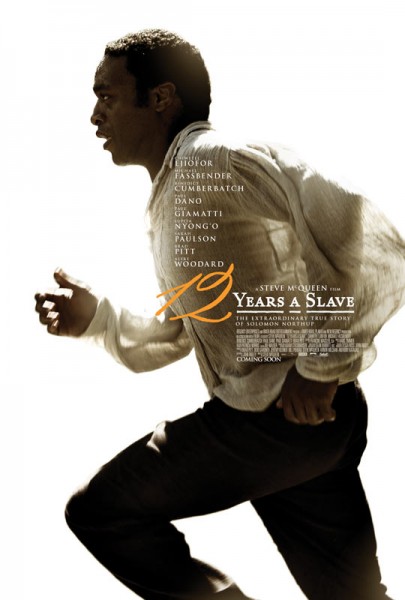
12 Years A Slave is one of the most powerful movies I have ever seen. The cinematic elements compliment the twisted and troubling plot to create a riveting experience for the viewer.  What follows is a theological reflection – for a more formal review of the movie check out Pop Theology by Ryan Parker.  Ryan and I also recorded a podcast that will be released this evening. 12-years-a-slave-poster-405x600

Based on a true story, the plight of Solomon Northup (played by Chiwetel Ejiofor) is a journey from the good life as a free black man in the North to the hellish existence of a slave in the deep South. Visual artist-turned-director Steve McQueen frames the narrative in stunning cinematography and a unique pacing that reflects the twists and turns in the story.

12 Years A Slave is one of those rare movies that impacts you emotionally and challenges the assumptions you carried into the theatre. The journey of the main character sticks with you and causes you to ask questions that you know deep down need to be examined.

I expect that this movie will be one of those rare films that trigger a much-needed cultural conversation. Issues of race and America’s haunting legacy of slavery and native reservation are never far from our national consciousness. Race is often front and center in the nightly news and on the margins of most national conversations.

While we know that something is amiss, we may not know how to approach the topic. We want to have a conversation but we may be unsure about how to proceed.

From the controversies surrounding the election of President Barack Obama to the George Zimmerman trial to the ongoing ‘stop and frisk’ policy debate in the New York City mayoral election, there is an awareness that race matters (to borrow a sentiment from Cornel West’s book title) but a perpetually unsatisfying confusion about how to access the underlying issues.

For Christians, perhaps the best way to address these issues is via the cross of Christ.  In his newest book, The Cross and the Lynching Tree, famed theologian James Cone equates the cross and the lynching tree: “though both are symbols of death, one represents a message of hope and salvation, while the other signifies the negation of that message by white supremacy.”

This is poignant because Solomon Northup first witnesses and then experiences the lynching tree in 12 Years a Slave. The lynching tree is the ultimate weapon of intimidation employed by the same slave owners who claimed the name of Christ, but who preached from the Christian Bible to their slaves in order to justify their cruelties.

For Cone,

“what is at stake is the credibility and promise of the Christian gospel and the hope that we may heal the wounds of racial violence that continue to divide our churches and our society.”

There are plenty of movies that are as fleeting and significant as the popcorn one eats during it. 12 Years A Slave is a different kind of movie. It has substance and is capable of being a touch-point for a significant cultural conversation.

“Until we can see the cross and the lynching tree together, until we can identify Christ with a ‘recrucified’ black body hanging from a lynching tree, there can be no genuine understanding of Christian identity in America, and no deliverance from the brutal legacy of slavery and white supremacy”.  – Cone

If we can talk about a movie like 12 Years A Slave in light of The Cross and the Lynching Tree, we may be able to begin to have a much-needed constructive and reconciling cultural conversation about race in America.

The election of President Obama was not the end of racism in America. As the 50th anniversary of ‘the March on Washington’ showed, we still live in a deeply divided country where race and the legacy of racist policies and attitudes have a lasting effect and are an ever-present reality.

America is also a deeply religious country and Christianity is the dominant religion. The irony, and the opportunity, resides in that fact that the symbol of the cross is so central to Christian imagery. There is great hope there, if only we would take it seriously and see what the Salvadoran martyr Ignacia Ellacurio called “the crucified peoples of history.”.

You can listen to my conversation with Ryan on the Homebrewed Christianity podcast here.

666 Is Not What You Think

A quirky and sad story has emerged out of Kentucky this week.

In one of the strangest cases of purported religious beliefs intersecting with athletic performance, a Kentucky junior cross country runner voluntarily walked away from a chance to qualify for the state meet to avoid running with the bib number “666”, which she said conflicted with her Christian beliefs.

As somebody who competed in state wide competitions back in the day, I can imagine how difficult this situation was for that young lady.  As somebody who learned how to read the Bible that same way, I understand her reluctance to associate with that number. Dark-Clouds

I am a big fan of the Book of Revelation. The last book in the Christian testament is a favorite of mine. I love it!  I love it almost as much as a I hate what the majority of N. Americans have been led to believe it is about.

I thought I would take this opportunity to point out three simple ways that this odd and sad story could have been avoided in Kentucky:

  1. We don’t have 13th floors in buildings and maybe we could just remove this number from rotations – since we know that it rubs the sensitivities of many people the wrong way. That seems like the easiest solution…
  2. The race official could have just given the young woman a new number offender her religious sensibilities. That seems like an easy solution …
  3. Someone could have just explained that the number 666 doesn’t have any actual power … and that even the Bible passage that it comes from tells you that. That seems like the best solution…

See, the actual passage says:

Revelation 13:17-18   New International Version (NIV)

17 so that they could not buy or sell unless they had the mark, which is the name of the beast or the number of its name.

18 This calls for wisdom. Let the person who has insight calculate the number of the beast, for it is the number of a man.[a] That number is 666.

Never-mind that the earliest manuscripts have the number as 616 (a whole other discussion about Roman emperor’s names and the genre called captivity literature within the apocalyptic tradition). What is important here is the world ‘calculate’.

The number – even if it is 666 – isn’t what it seems. It needs to be ‘calculated’, even according the actual verse. It’s right there in the Bible. The number has to be examined – or said another way – you have to do something with the number. It is not the actual number 666.

The clearest explanation is that it is a stand-in for a deeper meaning. Six is the number of humanity (created on the sixth day) and things that are represented in threes (holy, holy, holy Lord God Almighty who was and is and is to come) are complete. The number 666 simply means the completion, or culmination, of the human system.

The number itself is nothing to be afraid of. It is what that number represents that is of great concern. That is why the author of the Book of Revelation wrote in this poetic/symbolic language and imagery. This kind of apocalyptic literature was a political critique of its day – not a predictive work for our day. 

Pointing this out to Christian young people would accomplish at least two things:

  • It would relieve them of this superstitious ‘left-behind’ fear that is created by a misunderstanding of Biblical genres and interpretation.
  • It would serve as a challenge/inspiration to do in our day what the author of Revelation was doing in that day and use their creativity to critique the systems and structures of oppression that we are all caught up in.

The number 666 holds no special power – especially today. What it represents however is very much still in power and needs to be examined and engaged as ‘the Powers That Be’.

Should Christians Vote? Russell Brand has me asking again

Last week Russell Brand, in a BBC interview, raised a lot of eyebrows by calling into question the legitimacy of voting. He talked about the brokeness of the system and the relative banality of the process.

I saw lots of good Facebook conversation (which seems rare these days) about the clip and it admittedly poked me in an old bruise.

You will want to watch the clip. It is 8 minutes of good exchange and Brand is a surprisingly effective and thoughtful spokesperson.

Paxman vs Brand – full interview by DaveLiason

The reason that this clip got under my skin is because, up until the last US election, I too had never voted. Unfortunately I did not so for the same reasons as Brand – but none the less, the streak came to an end and I have a little bit of buyer’s remorse.

On one hand, I am happy that I voted in a local election. We had some stuff related to funding education that I am very happy to say passed by a narrow margin and I like to think that I was on the right side of that one.
Then there is the Obama presidency.

It is important to understand that I had never voted because I had bought into an odd descendant of the Lutheran ‘two kingdoms’ idea that the kingdom of the world as one thing and the kingdom of Heaven as another. Through a long process that started with my reading Walter Wink‘s work on ‘Powers’, I emerged from that bifurcated construct.

Having no reason not to vote, and knowing the historic emphasis of people’s fighting for the right to vote, I cautiously waded into the voting booth. I am glad that I did so and it has been a good lesson in limited effectiveness.

Last week Cornel West (on the Smiley & West podcast – minute 8) said that the Obama presidency has been marked by three things and will be remembered in history by them:

  • it is a drone administration
  • it is a National Surveillance administration
  • it is a Wall Street administration

That is certainly not what I voted for. That does not represent my hopes for him. I don’t sense this is what most people wanted or expected when they voted for him initially.

This holds a valuable lesson in measured expectations for me. Do I want to go back to my old ways of sitting on the sideline in protest or apathy? Probably not.

Voting is important at some level. Voting, however, should hold just as much weight as what gifts I got for my family last Christmas or what I ate for Thanksgiving last year. I want to keep doing both of those things. I find them both very important. I just don’t think that are so influential as to change the world.adbusters_corporate_flag
Voting is often choosing the lesser of two evils. In the age of Citizens United especially, the choices that we have in candidates are immediately people who have made concessions to big business and corporate interests. That is never going to deliver the results that I would truly be excited about. On the other hand, until we get real immigration reform, somebody is going to be driving the ship and I am not willing to abandon the process altogether … in Jesus’ name.

I would love to hear your thoughts – especially on the Russell Brand clip or the Cornel West summary.

Create a free website or blog at WordPress.com.

Up ↑