Search

Bo Sanders: Public Theology

updating & innovating for today

Tag

Christian

The Pros and Cons of Advent

Last Monday John Stewart did a very funny bit on the Daily Show about how Christmas has gotten so big that it is starting to take over other Holidays – what we used to call Thanksgiving is now ‘Black Thursday’ … Watch out: you’re next Halloween!

And in one sense, it is true. Christmas has become, as many have articulated, a frenzied orgy of consumerism. My dean, Philip Clayton, in a piece entitled “ Reflections for a Time of Madness” points out:

In an irony of history, the time of spiritual preparation and silent waiting has become the busiest, most frenetic season of the year.

 Now admittedly I am new to Advent. This will only be my third time through it. I have embraced it with gusto though! Last year I even bought a box of these amazing Liturgical Calendars and led a series of lessons on it in the Adult Ed. classes at our church.

In fact, when Stuart explains that the 12 days of Christmas is actually the period from Christmas day to Epiphany (January 6) when the Magi (Wise Men) are celebrated as visiting the baby king. The sad part is that just 5 years ago, that would have been news to me! I probably thought that not only was it the 12 days that led up to Christmas – but that I was showing great restraint to limit the season to just 12 days.

I love reading, listening to and even chatting with Phyllis Tickle and Dianna Butler Bass [one of my conversations with her] about all of the rich tradition and deep meaning that are to be found in walking these ancient paths.

And while I am very excited about the spiritual season of waiting and reflection, I have a new wrinkle in my fledging appreciation for the liturgical season. We have started a new emergent gathering (the Loft LA) that employs an ‘ancient-future’ sort of engagement.

This coming Sunday we are introducing the group to the Advent Conspiracy and I am very pumped to enter into the that conversation.

 I am, however, a little less enthusiastic about introducing the topic of Advent itself. In fact, we have debated, prayed and really wrestled with how to approach this. Our liturgical service (10 am) does Advent that the 9s. We go all out. We even hold off singing the famous songs until Christmas day – even though we have this amazing (and overwhelming) pipe organ that would be a huge draw for those who like to sing the classics in preparation for the big day.

 But is it worth it to bring up the topic to a crowd of newbies? My conviction is wavering.

Look, I love Christmas. I love the month of December and the lights and the presents and everything that goes along it with. I love singing Christmas carols in December! Do I really want to get into this counter-cultural restraint motif with new folks? Is it really worth initiating folks to this old way?

 Part of me says no! The ship has sailed – that battle is lost. Christmas starts before December in our culture and we should capitalize on that as the Church! Stop being such sanctimonious nay-sayers and pious do-rights and join the party! Plan, strategize, and engage the people around you at the time the are most christianly-inclined!

They are singing things like: 

Long lay the world in sin and error pining,

‘Til He appear’d and the soul felt its worth.

A thrill of hope the weary world rejoices,

For yonder breaks a new and glorious morn.

Fall on your knees! O hear the angel voices!

O night divine, O night when Christ was born;


Truly He taught us to love one another;

His law is love and His gospel is peace.

Chains shall He break for the slave is our brother;

And in His name all oppression shall cease.

What the HELL is your problem?
Get with the program!
Shake off the dust Church Lady and roll with the times!
Carpe Mañana

Then another part of me says Advent makes so much more sense – is so much more meaningful – and aren’t we preaching an anti-mammon counter-cultural message anyway? Maybe we should cave in to culture. Maybe we should concede to the bloated, grotesque, shallow, hollow consumer and credit card carcass that christmas has become.’  Maybe Advent is still worth doing … even with new people.

Maybe, especially, with new people. Maybe giving them an alternative to the frenzied and hectic mess that December has become is exactly how we could minister to and with them.

Or maybe Advent is just one more of these sentimental oddities that the church likes to hold onto and even prides itself on hanging onto until it’s dying breath. It’s not like we own Christmas. Wait … we do kind of have an invested interest … one might even say a market share … and by God – we are going to love it to death.

As you can tell, I am quite unsettled on the issue.  Thoughts?

 [please let us know if you grew up with Advent in your response] 
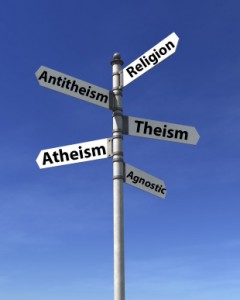
Christians have to believe something about Hell, Election and Predestination

On last month’s TNT I said something that I have heard a lot of feedback on (some positive and some negative ). I thought it would be good to continue the conversation here on the blog.

 My assertion was that: If you are a Christian, you have to believe something about hell. It is just not an option to say “I don’t believe in hell”.  The word ‘hell’ is in the English version of the Bible and you can’t just say, as a Christian, that you don’t believe it. You can hold that it was a burning garbage dump in a valley outside Jerusalem that Jesus makes a poetic illusion to … but you have to believe something about hell. 

I would go on to broaden that assertion. I would say that you must believe in predestination, election, and the Book of Revelation.

All 4 of these are topics that l have personally heard people say “I don’t believe in __”

  • You have to believe something about hell.
  • You have to believe something about predestination.
  • You have to believe something about election.
  • You have to believe something about the Book of Revelation.

It is is just not an option to say “I don’t believe in hell”.  Jesus did.  If you are a Christian, you have to hold some belief about it.

Paul spoke of predestination. Election is a theme in scripture. You can’t just say ‘I don’t believe in Revelation’.  You can object to how some people interpret and preach the Book of Revelation … but you can’t ‘not believe’ it.

 Why It Matters: 

I come from an Evangelical-Charismatic background and am now employed at a Mainline church and attend a Mainline school.  I am passionate that thoughtful progressive Christians can not make the same mistake that Liberals made in the past century. By ‘de-mythologizing’ the Bible they undercut the very foundation that the tradition is built on.

It is like sawing the very branch that your a sitting on … on the tree side of the branch! What do you think is going to happen? You are left no place to perch.

I love Biblical Scholarship. I delight in post-modern and progressive theology. I take seriously the post-colonial critique and the perspective of feminists and queer theory. But it does us no good if we know what we don’t believe about something but do not have the ability to present in a constructive way what we do believe about those very subjects.

There is so little value in participating in a community based on a tradition where one does not believe in the very words of that faith’s sacred text.

Why even do it?  I think that is why so many ‘nones’ have just opted out. I actually greatly respect those who participate in the emergent conversation and who are valiantly attempting to update their denomination from within. It is far easier to just walk away from the entire project all together … and many have.

So How Do I Do It? 

Predestination:  Forget about the historical hyper-Calvinist understanding that you ‘don’t believe in”. Romans 8:29 says “For those God foreknew he also predestined to be conformed to the likeness of his Son, that he might be the firstborn among many brothers.”

Who did God foreknow? Everyone.  What are they predestined to? To be conformed to the image of the Son.  Does everyone arrive at their destination? No.

Predestination might be, what some Process thinkers would be called, an ‘initial aim’. It is God’s desire for all. God doesn’t always get what God wants ( see 1Timothy 2:4).

 Election: Karl Barth said it clearly. God elected Jesus. All humanity is involved in that election. All who are ‘in Christ’ are elect.

 The Book of Revelation: You may not like the ‘Left Behind’ / Hal Lidsey / Jack Van Impe interpretation of the Book of Revelation … but you can’t, as a Christian, say that you don’t believe in it.  It’s in the Bible. You have to believe something about it.

The Book of Revelation was a political critique of the Roman Empire of the first two centuries written in the genre of the ‘apocalyptic’. It is not predictive of the 21st century. But we don’t want to throw it away!  What we need, more than ever, is to imitate it and write an apocalyptic critique of our as-it structures, systems and institutions of injustice and our empire. We need a prophetic imagination.

You can’t say, as a Christian, that you don’t believe in this stuff. You have to believe something about this stuff. My suggestion is that we just believe more informed better stuff about these topics. The simple fact is that we are community of people centered about a sacred text and it is simply not acceptable to say ‘I don’t believe in something’. We are free to not believe in some people’s interpretation – but we have to believe something about it. 

Thoughts? Questions? Comments? 

I Voted For the First Time Last Week

Seven days ago I voted for the very first time.  I wasn’t sure I wanted to puncture the seal – cross that threshold – and break my long string of abstaining.

 Here is the background on why I have never voted: 

  • In High-school my family moved from the Chicagoland area to Saskatchewan, Canada. After High-school I stayed in Canada to play football when my family moved to NY and I became a dual citizen.

When you come of age outside your culture of origin, you see some stuff within that culture a little differently. Voting (and politics in general) was one of them. I didn’t see its impact locally like I would have if I was a farmer or a school teacher, I saw it through the media circus. Loyalty and responsibility take on a different meaning when you have dual belonging.

  • When I got filled with Holy Spirit and called to ministry I was initiated in a very dualistic form of evangelical charismatic christianity. It was spiritual in contrast to physical. Church in contrast to world. Supernatural in contrast to natural.

I was a zealous young man and so I took it further than most. Many would quote the verse “we are in the world but not of the world”. I would take it further and quote 2 Timothy 2:4 “”No good soldier gets entangled in civilian affairs, but rather tries to please his commanding officer.”  I followed the Lutheran idea of ‘two kingdoms’ (kingdom of God and kingdom of this world) all the way down.

  • When I became Ordained I not only opted out of Social Security (which ministers are allowed to do in their first two years of filing taxes) but I registered with the Government as an objector.

I am a registered objector. I indicated that what remaining taxes I did pay, I did not want them going to pay for wars … and this was before W was in office (!). I would tell people “I am not political. I am focused on the spiritual realm not the physical. The government takes care of people in this way, I take care of people in a different way. Plus, I don’t want my loyalties in the natural realm to limit my ministry to people in the supernatural.”  It actually worked quite well for me for a time. I was very vocal about my opting out of the system and in my congregation was a eclectic mix of New England Democrats and pre- Fox News Republicans.

Here is why I was thinking about voting for the first time: 

  •  I no longer subscribe to the dualism of natural – supernatural, physical – spiritual, or church – world. I have shed my understanding of Luther’s two kingdoms.  I read Jesus’ admonition about “In the world but not of the world” differently now … and all it took was an introduction to Biblical scholarship and some Roman political history. 
  • Randy Woodley was my mentor in seminary and he would ask me to explain my politics to him and then challenge me that it was incoherent and inconsistent. I play my conversations with him over and over in my head. Once you study colonial history (or even 20th century history) you realize that to be silent in the face of systemic oppression and repressive legislation is to become complicit with the injustice and suffering that the God you claim to serve is so opposed to.
  • I read Martin Luther Kings “Letter from a Birmingham Jail”  and realized that I was one of those white ministers he was talking about being disappointed in and let down by.

“First, I must confess that over the past few years I have been gravely disappointed with the white moderate. I have almost reached the regrettable conclusion that the Negro’s great stumbling block in his stride toward freedom is not the White Citizen’s Counciler or the Ku Klux Klanner, but the white moderate, who is more devoted to “order” than to justice; who prefers a negative peace which is the absence of tension to a positive peace which is the presence of justice; …Shallow understanding from people of good will is more frustrating than absolute misunderstanding from people of ill will. Lukewarm acceptance is much more bewildering than outright rejection.”

  •  The attacks on September 11, 2001 and the Bush-Cheney-Rumsfeld (and Halliburton) parley into two wars under the false guise of ‘Weapons of Mass Destruction’ haunts me when I think of how a different administration might have proceeded differently.
  • As one getting their PhD in Religious Education I have become all too aware of the impact of economic and bureaucratic decisions on children’s education. I don’t see how you can know what I know now and not do something so little that can make such a big change for so many.
  • I live in California where we don’t just vote for candidates (which I was still leery about) but we also vote on propositions. Some of these propositions directly impact school budgets and it would be gross neglect to stay silent on them when our public schools are in such desperate shape.
  • The Paul Ryan budget was and is immoral and unimaginable. I was still siting on the fence about voting – even with the whole Tea Party and Occupy movement thing – until Romney’s selection for his Vice Presidential running mate. I have watched the union stuggles in Wisconsin and Chicago, I have listened to the disgusting rhetoric of this latest financial crisis and continueing bailouts of Wall Street and too-big-fail banks… but when Romney picked Ryan … and I had just recorded that interview with Randy Woodley … I was horrified.

 Why I was still hesitating: 

I read Chris Hedges ‘Death of the Liberal Class’ and can not shake the nauseating reality of just how broken our democratic system is. Both candidates are owned by big business and the election (thanks to the Citizens United decision) is a sham.

It seems to me that to participate in a process this corrupt is to somehow be complicit with the immorality and to sanction or validate these compromised actors.

I have gone this long and there is just something in my identity, something about the way that I imagine myself and tell my story that can not conceive of crossing that line – of breaking the seal and entering into this realm. It was the strangest thing to think about.

 In the end: 

Smiley and West is my second favorite podcast in the world (next to the one I am on). No, President Obama did not do so many things that he said he would do the first time (like close Guantanamo) but … he also did some stuff (like health care reform) that was much needed (although I question the for-profit nature of our insurance companies).

I’m still leery about endorsing professional politicians, but in the end I just didn’t know how I can have learned what I have learned about education in the country and not do something that would so greatly impact the young people – and disproportionately young people of color.

After all, I would hate to have the problem of Christopher Reeve that I spoke so harshly against.

 I am interested in any thoughts on my journey and process.  Comments? Questions?  

The Next Pat Robertson Gaff

With the election season over, the frequency, intensity and insanity of conservative white men making outlandish statements will hopefully die down …  I’m moving a bunch of blogs over there this week and found this cheeky little blog I wrote in the middle of the fire-storm.

 Pat Robertson topped even himself in the category of ‘insulting-inflammatory- stupid comments while the tape is running’ this morning. That may seem difficult with all of the previous entries that have earned him elite status in the gaff Olympics.

The most recent entry was in response to a question from a man who apparently wanted to know what to do with his non-submissive wife.  Robertson started with suggesting that the man could convert to Islam … and as tough as it might be to top that one, he did. After conceding that the Bible does not allow for him to divorce her, Robertson gave him the option to move to Saudi Arabia – thereby indicting not only an entire religion but an entire nation.

I know that many will want to jump on Robertson with disdain and scorn but … maybe we should not be so quick to jump to judgement. As often happens in cases like this, there is a good possibility that there is something we don’t know behind the scenes. There might be more to the story that at first meets the eye.

  • Robertson might have undiagnosed Tourette Syndrome.
  • He might have a serious drinking problem and been under the influence when he made those egregious comments.

Now, before you dismiss this outright – just keep in mind that many preachers and politicians who rail against homosexuality later turn out to have been involved in illicit same-sex affairs at the very time they were railing. This pattern can be seen in leaders of many self-righteous and sanctimonious movements.

With public figures, we just don’t know. So I am suggesting that we might want to hold off judgement. Sure, right now it looks like crazy Uncle Pat has come unglued and betrayed the very gospel that he is supposed to be a minister of and a spokesman for. But … let’s just give it time.

That is plan A.

If you can’t wait for that, there is a plan B. As I proposed a while ago, it is possible that words for fundamentalist christians are like dialogue in porn movies. They play an important role in allowing us to suspend our suspicion and get down to the real business at hand.

I said that the real activities were nationalism, capitalism and militarism. One of our deaconesses added patriarchy. This accusation would stick to Robertson’s many gaffs like a field of burrs on a cheap pair of cotton dockers.

 Here is the thing: I want to be a generous and gracious purveyor irenic ecumenism. But there are times when you hear something like this and realize how many people are genuinely injured by this stuff. Like it or not – he is a spokesman for our religion, my tradition and Jesus’ name. This is why I go so far out of my way to say that we need to stop waiting for Superman and start sticking up for causes that don’t directly impact us.

Here is a conversation that I have had repeatedly in the past 20 years.

 Me: I’m not against guns for hunting, but we have to do something about assault rifles and semi-automatic handguns.

Guy: It’s our God given right to bear arms.

Me: Wait! You probably still believe in things like depravity and original sin right?

Guy: It’s right there in the Word.

Me: Umm… those aren’t actually in the text of scripture but anyway … IF you believe in depravity, don’t you think we should account for that in our gun laws?

Guy: The second amendment protects our God given right to defend ourself.

Me: I get that, I’m just trying to say that we could revisit some things that were written in the era of muzzle-loaded muskets and flint lock rifles.

Guy: Liberal.

People don’t like when I am critical, negative, dismissive or adversarial. Neither do I.  All I am saying is that I am very nervous about what gets broadcast on christian radio and TV these days and the impact that it has on thousands and thousands of people.

So here is the question: If, and I am only asking ‘if’, there was a machine that was fueled by a different vision of the world and different priority structure than that fleeting Galilean vision – but it was covered with a thin veneer of Jesus talk as a mask for the true agenda … shouldn’t we say something at some point?

If the Jesus-paint was only a mask on a monster, or a series of brushstrokes on a Hollywood set facade … we should say something right?

That probably is why plan B in this case is not so popular.

THE most important thing in all of this is that we are very clear about people who have simply bought into a bad brand of christianity and those who are up to something with it.  It is one thing to have merely inherited a flawed-limited-unaware religious product and those who openly promote a product that injures people and harms those who need what Christ provides the most.  We have to be careful.  This stuff is wicked, acidic, and cancerous. We can’t paint with a broad brush or be dismissive of folks who are just walking the same road we are all walking together – trying to figure it out.

May God give us grace in the journey.  We need it.  Lots of it.

Diana Butler Bass and those non-human animals

Earlier this month I got to sit down with Diana Butler Bass and ask her about everything from her new book’s title Christianity After Religion to the Methodist tradition and why Evangelical young people are 30 years behind.

It was a blast! [you can hear the audio here]

At the end of the hour, the last question was put forward by Darcy who asked about something Diana had alluded to in the Methodist question. Butler Bass had said that the early Methodist had historically A) ministered to the fringes and B) gone to the frontiers.

It was the fringes and the frontiers that Darcy wanted to know about. Only, she was not asking about the past. She wanted to know about the present.

 Who are on the fringes today and where is the frontier for us?

This is possibly the best question I have heard asked at one of our live events. 

Diana didn’t flinch. She outlined three such scenarios that would qualify:

The first was in the realm of sexuality.
The second was in the realm of pluralism.
The third dealt with our environment.

  •  In sexuality she articulated issues related to the transgendered community. This did not surprise me. In the LGBT formulation, T (transgendered) is the the one the raises eyebrows. Now, because I am came to this conversation through a friend who was doing Queer theology, I had initially taken the LGBTQ as a 5-part alliance. I did not realize how difficult the T can be (not to mention the Q) until I starting asking question and listening to stories. I quickly became aware of the complexities and complications involved.

In the two weeks since Diana’s answer I have had several conversation about her take and I have realized how much conversation has yet to be had. May God give us grace as we learn from each other.

  •  In religion she mentioned learning from Hindu friends. As a student at Claremont School of Theology I am very invested in and more than on board with the idea of inter-religious learning. Yesterday was my day off and so I (as Christian) headed to a Jewish bakery to  sit and listen to an audio recording I had about diversity within Islam.

I am always shocked at how much I don’t know and how much beauty there is within each tradition. May God give us grace as we learn from each other.

  •  In issues of environment and ecology, I like to think of myself as up to speed. This is a subject I have really investigated and as someone mentored by Randy Woodley (his new book Shalom and the Kingdom of Creation was just released and he will be on the podcast next week) I was tracking with her when she talked about non-human animals [I often allude to Nipples & Belly Buttons in this regard].

It should not have been surprising to me that with the release of the video of our conversation that she came under some suspicion by a group called IRB  (Institute on Religion and Democracy) as well as others for  her views on non-human animals.

From the blog Juicy Ecumenism here is the end of Diana’s answer and their commentary:

“Non-human animals and their experience of our environment of the divine are a place that human animals need to listen in order to create more full understanding of God’s creation. […] They don’t have voices like humans do, but isn’t that part of my prejudice?”

I don’t like to bring up the slippery slope, but the mud’s looking pretty slick from here.

What IS surprising to me is that – of her three answers about the fringes and frontiers – that seemed to be the least inflammatory of the three answers!

In my humble opinion, her pluralism answer and her sexuality answer were FAR more daring – and challenging! The only thing that I can figure is that some Christians have so bought into the Cartesian dualism regarding humans that both Transgendered and Hindu folks are completely off their radar screen … but don’t you DARE say what you said about listening to non-human animals.

I was prepared to defend Diana Butler Bass after our show – she said some daring things –  I just didn’t think that it would be on the issue of creation-care over sexuality and pluralism.

This contemporary religious environment will never cease to surprise me.

Innovation, Context and History in Christianity

I was away on a youth service trip last week and upon my return had the opportunity to listen to the Barry Taylor podcast from the previous week’s live show. It sounded great and I was sorry to have missed it.

About 23 minutes in to The Theology of Rock, Barry Taylor talks about the play between the universal nature of music and the highly contextual nature of styles and genres. He points out that while music is said to be universal, actual songs and individual expression are very particular and specifically located. They come from a place and in a time and that lyrics – while they may get the lion’s share of attention – are nearly inconsequential in some respects to understanding what is going on in the music.

Lyrics are often an afterthought and may even be antagonistic to what is going on in the music itself. This was a fascinating point and it sent my brain on wild series of connections and contrasts in theology.

My background is in contextual theology and as I stated two weeks ago in my post about the Creeds as contextual documents (or time/place snapshots) they are neither universal nor timeless. Christian expressions – even the early Creeds – are both radically located and time-bound. Now, the objection is always that ‘they were not intended to be so – the authors surely believed them to be universal and for all times’.  While it may be true that writers of the creeds, or the Reformers or systematic theologians in general may be under that impression, we see the historical flaw in that line of thinking.

 We see now that all theology and thus theological expression are contextual expression that are uniquely located and particularly time specific. It’s not just the language (Greek or Latin or German) that needs to be translated but the ideas, concepts and content itself needs to be translated and renovated.

I would like to put forward a proposition to help us unravel the tangled web of theological history and frame – in a positive way – a path forward. I am suggesting that we acknowledge that we are always braiding or weaving a fabric from at least 3 strands:

  •  History and Tradition: Theology and other Christian expressions don’t happen in a vacuum. We never start with a blank slate. We never get back to zero – and we are not supposed to! We are part of long history with much tradition and we are to honor that even while continuing out along the trajectory provided.
  •  Context and Location: All truth is both received and expressed in cultural containers that come with inherent lenses through which we interpret what we see, experience and receive. Our job is to acknowledge and incorporate this understand as we engage our culture, place, and time in a meaningful way that is faithful to the tradition, based on the historic precedent, and aware of our modern realities.
  •  Innovation and Expression: Nothing stays the same. We are fooling ourselves if we pretend otherwise. Language – even about God, technology, and society are fluid realities that call for us to adjust, revisit, and renovate our understandings and activities. Christianity is uniquely designed to adapt and evolve. We are not only called to it but are empowered with a unique set of tools embedded within the Gospels and Acts of the early Church.

The trick is to stop reducing down things down to simply one element in our thinking. That reductive move is death to both understanding and applying the very message that we are talking about!  [read Lamin Sanneh’s Whose Religion is Christianity?: the Gospel beyond the West  for more]

 It is not simply history or tradition. People who extract content without accounting for historical context or timely innovation are in grave danger of importing and imposing collateral damage every time and in every place they do so. If we do not acknowledge the particular time and unique context from which any expression emerged, then we are willfully blind to the cultural constraints and societal containers that framed the content.

 It is not merely context. We are not free to disregard the precedent of the past. The entire project of theological reflection and Christian expression is in dialogue with the historic tradition. If one wants to do something else, that is fine – I get that – but to do theology is to submit to some level of constraint within the forms and disciplines employed.

 It is not only innovation. We do need to, in fact we must, engage our time and world as it is. We can no longer afford to  retreat into a romanticized imagined past (like the radical orthodox). But neither can we simply disregard the tradition and act as if we ourselves are not cultural creatures and products of socialization and cultural-religious conditioning. We are not free to do whatever we want. The entire enterprise is to be in dialogue with the tradition, to acknowledge the contextual nature of all truth and to engage our time and place appropriately based on that.

Theology is not simply history or tradition. It is not merely context. It is not only innovation. Christian theology is a dynamic interplay between these three elements (not to mention issues of power that effected formation of things like the early Creeds). We are foolish to ignore them historically and our work is impotent if we don’t acknowledge them and joyfully incorporate them in our work today.

We do well when we incorporate the long tradition into our context and allow for an appropriate level of innovation that honors the trajectory of the tradition and provides a continuity with the precedent of the past.

-Bo Sanders 

What if this isn’t even Christianity anymore?

One week ago  I caught wind of a cooky Southern preacher who preached about a plan to exterminate lesbians, queers and homosexuals. I hear a lot of chatter about this kind of thing so I hoped it would just go away.

By Tuesday night this North Carolina pastor was showing up all over Facebook and Twitter. By Wednesday morning he was the ‘most popular’ link on all of Yahoo! world homepage.

If you have not seen this video, be warned. It is in no way understated. Here is the link:  NC Pastor 

 I have 3 main thoughts about this:

  1. I know tons of people who are not for ‘same sex marriage’ who would not speak of electric fences. Anytime you are suggesting some tactic that the Germans used in WWII you may want to take note.
  2. This is a different TYPE of Christianity – one that is the concerned with governing morals. We going to have to address why the church is even doing State sanctioned marriage in the first place. So often we try to have the second conversation without the first – no wonder it doesn’t go anywhere.
  3. My church and 50 others that I know of and communicate with on a regular basis do kind things and say loving words all the time and no one press covers it. That is the nature of the modern media. Deal with it.

Nothing thus far is that surprising – save the actual sermon by the NC Pastor. Here is my concern:

  • At what point is some pastor so deep in the Constantinian compromise that he is more Roman than Christ-like? At some point do we say ‘that is not even Christian’ ?
  • OR is this just one branch of Christianity and it is our obligation to treat this man as a brother who has simply lost his way?
  • OR is this Preacher doing more harm than good and actually crippling the gospel message – and in that sense he is an enemy of our cause?  And at that point, what do we do with Jesus’ admonition to love our enemy?

Admission: I have been re-reading Stuart Murray’s Post-Christendom and … while that is admittedly probably not the best idea … I have to admit that this whole ‘legislating civil unions and marriages’ thing in North Carolina could not come at a worse time for me.

For what it is worth, here is my 2 cents.

  1. This is not Christianity. Well, it might be Christendom but it is not whatever Jesus was after.
  2. This guy is my brother (in humanity even if not christianity) and has simply lost his way.
  3. Whether he is my crazy cousin or my enemy – Christ compels me to love and respect him as a person even as I wholly (and holy) disagree with his inhuman and immoral speech.

I’m not really sure what other course of action I have in this situation. I spent last week in the woods with no technology and unless I want to perpetually retreat away from all this ugliness, I have got to address this kind of craziness at some level. What else is there in the face of hate except to love?

Bending the Spectrum

I have never been a big fan of ‘spectrum’ thinking. The language of far left and far right  just rings hollow for me. It is insufficient for the most part and in the end, inaccurate.

I read the book The Argument Culture by Deborah Tannen more than a decade ago and said out loud “Oh! So THAT is why I bristle at the either/or, Republican/Democrat, Right/Left dichotomy! – now it makes sense.”

I reject the spectrum at every turn … but recently I have begun to make an exception in regards to the spectrum. The spectrum is only applicable for someone who thinks that there is a spectrum. I will only try to get them to see that not everyone exists on a spectrum nor are they accounted for by a right-left binary. I no longer try to dislodge them of the notion as a whole – I only try to introduce that a spectrum is incomplete and insufficient.

Lately I have been overwhelmed – probably because it is an election year – by binary language and dualistic thinking. In these conversations I have discovered that it can be quite effective to introduce a simple word play. Spectrums are not straight lines – like light, they bend.

You may think that this sounds overly simplistic but just think about the rise of the Tea-Party and the emergence of the Occupy movement coming in roughly the same window of time. Now those two groups would say that they stand for completely different things. To an outside observer, however, for all the minor distinctions they share a ‘Major’ concern: the system is broken and we can’t trust our leaders to fix it.

This week, I am starting a series working though the Death of the Liberal Class by Chris Hedges. He begins the book with a 25 year old former Marine walking along a highway in Upstate NY that I driven. He is disillusioned with the economic and political systems and is getting ready to do something about it. At one point the young vet says:

“I could see there was no difference between the two main political parties. There is a false left/right paradigm which diverts the working class from the real reasons for their hardships.”

I am looking forward to the series in the exact inverse proportion to how much I am dreading this election cycle.* I have lots of Tea Party types in my life and many Occupy sympathizers as friends. I hear them both saying that the system is not working and that those in charge are not capable of fixing it, that we the people need to be more hands on.

Chris Hedges analyzes the crisis and articulates the root causes better than anyone I have found. The slant of the series will revolve around one simple question “IF Hedges is right about the world – how then should we do theology?

The Tea Party, the Occupy Movement, the global economic crisis and the ongoing wars are telling us something … and it is not about the End of Days. Doing theology in this environment will inherently have some continuity with historical approaches but it will require some tools that may not be familiar to us as well as some necessary innovations.

 The left and right think that they are far apart, but in a bent system they are closer than they would believe. At some point on an arc the far right and the far left almost touch.

I end the way Hedges begins, with a quote from George Orwell:

At any given moment there is an orthodoxy, a body of ideas which it is assumed that all right-thinking people will accept without question. It is not exactly forbidden to say this, that or the other, but it is “not done” to say it, just as in mid-Victorian times it was “not done” to mention trousers in the presence of a lady. Anyone who challenges the prevailing orthodoxy finds himself silenced with surprising effectiveness. A genuinely unfashionable opinion is almost never given a fair hearing, either in the popular press or in the highbrow periodicals.  “Freedom of the Press”

* Tavis Smiley has been saying for quite a while that this will be the ugliest and most racist election in modern times.

I also posted this at Homebrewed

Two Trolls and a Bridge (part 2 of 3)

In part one I mentioned that there are two trolls that guard the bridge to a new way. I named them as Colonial Christianity and Environmental Dualism. Of the many issues facing us, let me tell why I recognized those two.

In 1421 Chinese ships landed on the Pacific coast of what we know as North America. Last year in Postcolonial class, my prof asked us a series of questions that began with “Why didn’t they stay and colonize? What was different from what especially the Spanish would do a century later?

I spent the semester, as we read Said, de las Casas, and all those who follow them looking for a common theme that could provide a interpretive key. I kept noticing that there was secondary mechanism behind the machine of Colonial power.

Throughout history there have been Empires and that, by definition, comes with  a conquest narrative. Even in our own Bible we see that group like Assyria, the Babylonians Greeks, and Romans swept through Israel. Israel itself had the Canaanite conquest narrative. Not to mention that China was an empire that conquered and subjugated the areas and nations around them. There is nothing new about either empire or conquest.

But this is not that. There is something else going on in the Colonial era that led the British, French, Portuguese, Dutch and Spanish to expand and extend that impulse to an exponential degree. It is so inflamed and exaggerated that some explanation must be provided as to difference that we see in the 15th, 16th, and 17th centuries.

Technology is insufficient as an explanation. Guns and horses certainly explain some of atrocities we see with the Conquistadores but that is merely wood for the framework. There was a fuel that made it so flammable and destructive. What fueled the Colonial drive was a specific brand of Christianity.

I think that needs to be pointed out. It must be acknowledged for two reasons:

  1. It is still with us
  2. its unquestioned giveness allows it to remain in power but in a far more sinister way – in secret assumption.

Colonial Christianity remains – not just as a residue – but as an unquestioned operating system and that is both an ongoing danger to our planet’s existence (war, environment, economy, etc) but also to the very integrity of the Gospel message that it purports to contain.

Nipples and Bellybuttons

One of the most powerful things that the Western mind inherited comes from the thought of Renee Descartes – it is a Cartesian dualism between the mind and the physical body. On the surface it does not look so danderous – but it morphs and attches itself to other really valuable things. One mutant offspring begins to distinguish between humans and everything else. This fits great into Colonial Christianity. The result is that we think we are exceptional.

Humans are mammals – notice the presence of nipples and bellybuttons – while many Christians  recognize the similarities they refused to acknowledge that humans are mammals (and then are confused by our sexual desires and habits).

This exceptional dualism shows up in all sorts of places! In the study of religion, even if we acknowledge that other religions grew UP from communities and are expressions of their various locations … Christianity is held to be an exception to that. It came DOWN from Heaven and would be the same truth regardless of its historical embeddedness in the Ancient Near East.

Exceptionalism is an ongoing mentality today. It affects so many areas.  [by the way, Randy Woodley wrote a great piece on political exceptionalism here]

In my opinion – beside the possible exception of modern war – there is no area where exceptional thinking is more deadly than the environment. From dust we came – as humans we are made up and sustained by what comes from the soil, the water, and the air.

We must repent of of this exceptional dualism and confess that while we are unique on the earth – we are not exceptions to it and in fact we are integral parts of it and completely dependent upon it.

When you put these two monsters of Colonial Christianity and Environmental Dualism together, you may be able to see why I think that they are the Trolls blocking the bridge to a new way.

Tomorrow I will attempt to articulate what waits on the other side of the bridge. The simple fact is that we can’t go back. We can’t undo Colonization. We aren’t going back to family farms. We can’t refreeze the polar ice caps or re-create the Glaciers in Glacier National Park.  As they say ‘we shall not pass this way again’.  But I think that there is a different way of being in the world that holds hope for us.


originally posted at the Ethnic Space blog

Create a free website or blog at WordPress.com.

Up ↑