Search

Bo Sanders: Public Theology

updating & innovating for today

Tag

Christmas

The Virus of War

We need to be careful about this language of a war against the virus. In the last 30 years war has migrated in meaning it has become too easily appropriated for anything we are concerned about.

We could talk about varieties that have global implications like the war on terror, to more seasonal and trivial instances like the so-called war on Christmas, and everything in between.  We could talk about the war on drugs, the war on poverty, the war on women, and so many other instances of war migrating in dangerous ways.

There are two primary reasons for concern:

  • First, whenever war is invoked emergency measures are implemented and we are in danger of losing our rights at citizens. I will talk about emergency politics below.
  • Second, because of global capitalism and our pervasive consumer society the victory in these wars is somehow always linked shopping.

You will remember the now famous exhortation by then President George W. Bush after the events of September 11 to not let the terrorists win by … going shopping.

A brilliant article came out this week about the impending call “return to normal”. We would be wise to pay attention to how that phrase is going to be used–not everyone means the same thing when they use the same words.

American politicians have become very comfortable invoking the war analogy but it really got my attention this past weekend when the Prime Minister of Canada used to the phrase. As a dual citizen between Canada and the US it always gets my attention when something that I had thought was unique to the American military mentality shows up north of the border.

Then yesterday during the extended media circus of a Covid 19 press conference, the current President of the United States repeatedly claimed that the powers of his office were total.

This is the danger of our exceptional times–exceptions get made that are nearly impossible to retract later. They get codified and instantiated, which sets the precedent, which then moves from being a fluid situation due to an emergency to a solidified expectation that is written in stone. 

The problem is that we now live in a permanent state of emergency.

I write about Emergency Politics every so often. It is far more ominous than its news coverage. Here is a snippet for those who are new:

Bonnie Honig, in Emergency Politics, says “The state of exception is that paradoxical situation in which the law is legally suspended by sovereign power.”

September 11, 2001 ushered in a state of perpetual exception. This applies to racial profiling, police brutality, State surveillance of its citizenry in the NSA – to name only a few.

When people are scared they willingly sacrifice their freedom and privacy in exchange for safety. The State benefits from a frightened population and people are more willing to accept the exceptional measures.

A population is more willing to view as exceptional the excessive tactics and escalation of violence precisely because we now live in a permanent state of exception (or emergency).

Gulli [in this article ] reports, “At the end of his critique of the state of exception, Giorgio Agamben addresses the question of contingency, which is very important in all of his work, when, with a reference to Benjamin, he speaks of “the urgency of the state of exception ‘in which we live’” (2005)

In his eighth thesis on the philosophy of history, Walter Benjamin says:

“The tradition of the oppressed teaches us that the ‘state of emergency’ in which we live is not the exception but the rule. We must attain to a conception of history that is in keeping with this insight. Then we shall clearly realize that it is our task to bring about a real state of emergency.” (1968)

I bring this up in the hopes that our current crisis might help to create a real sense of emergency that will call into question in the larger American conscience a question about the permanent state of exception that has crept in over the past decades.

We must question the exceptional State and its emergency politics that have become too normalized and quietly accepted in our society.
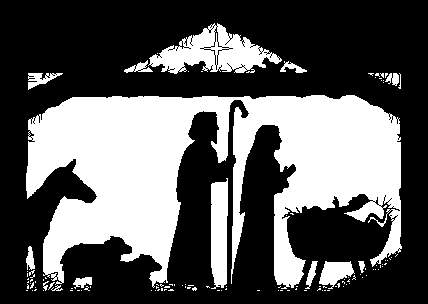
Born Of A Virgin? It happened a lot back then

I posted this 2 years ago and thought it might be fun to revisit. 

As Christians we confess that Jesus was born to a virgin.  Some people doubt the accuracy of that – but they may not realize that it was not that uncommon back then.

Here are just 10 people born of a virgin in the ancient world: 

  • Buddha
  • Krishna – born without a sexual union, by “mental transmission” from the mind of Vasudeva into the womb of Devaki, his mother.
  • Odysseus
  • Romulus
  • Dionysus*
  • Heracles – Son of a god (Zeus)
  • Glycon – son of the God Apollo
  • Zoroaster/Zarathustra
  • Attis of Phrygia
  • Horus

One theory is that when somebody who led a deeply impactful life died, those who wrote about them later would attempt to say something special about them. One of the ways that they could do that was to say something extraordinary about their birth. It was a way of that there was something significant, even about they way that they were conceived.

Sometimes it was that they were born to people that were really old (past the age of child-bearing age).

Think of Issac born to Abraham and Sarah in the Old Testament or John the Baptist born to Zechariah and Elizabeth in the New (Advent).

Now, If somebody wanted to take the origin of their hero up a notch, they could say that there was no human dad … it was a god!  (like Zeus)

This is why some think that Jesus’ autobiographers took it up even one more notch! Not only did a God not have sex with women … there was NO sex at all!

 Now some say “yeah, lots of people were said to be born of a virgin … but Jesus actually was.”

This is where the problem starts. As best as I can discern, there basically three ways to approach the problem: physics, meta-physics or linguistics. 

Physics:

Some people take an approach that is so certain that even science itself would be proved wrong. This usually comes up around issue like the Shroud of Turin (the cloth Jesus was buried in). I once heard a very confident person say that if we did DNA test on the blood on the shroud it would show that Jesus was fully human with 46 pairs of chromosomes – only instead of 23 from the female mother and 23 from the male father – Jesus would have 46 human ones from Mary.

I find this problematic for the same reason that I do not believe in the super-natural. It concedes the rules of the games to science (reductive naturalism) then tries to fill in the gaps with God.  That is a losing game-plan if ever I heard one.

Meta-Physics: 

Other people try to get around the whole reductive scientific debate by saying “Look, if God could make the world in 6 days out of nothing, then what is to make a virgin pregnant?  God does whatever God wants to do and who are we to question that?”

I am not a big fan of this approach either. It seems to say that revelation doesn’t have to report to reason and that God can not be evaluated on any reasonable standard conceived of by humans.

It seems just a short leap to say that God can elect who God wants for salvation God can pick favorites if that is what ‘He‘ wants to do.

It seems to retreat into the silo of ecclesiastic isolation and unaccountability. I think we have to look a little deeper ask some bigger questions.

 Linguistics:

This is an interesting approach that some in the post-liberal camp or comparable schools of thoughts might take.

The basic line is that it’s not the physics or meta-physics of the virgin birth that matters, its the way that it impacts us as people and forms us as a community. The importance of the language found in the gospels has to do with how it functions for us as a community and tradition.

Some folks don’t like this linguistic approach because it seems like theologically ‘thin soup’ to them. They look at the formulations that are quantified in the early creeds and they make definite and literal assumptions about what is behind them.

I am however nervous that all of this controversy is simply because we don’t know how to read a gospel. It’s like when we get sucked into debates about talking snakes in the garden of Eden or trying to prove scientifically how a man like Jonah could stay alive in the belly of a whale for 3 days and not be eaten by the stomach acid (or something).

It would be the equivalent of people 1,000 years from now arguing that we actually thought there was a place called Mudville and that a man named Casey was literally up to to bat.  It is because we don’t know how to read the genre of literature.

Jesus was born of a virgin – we confess that by faith, it is affirmed in our ancient creeds and it functions in our community to form us as people.    

* I even found one internet source that claims Dionysus was born of a virgin on December 25 and, as the Holy Child, was placed in a manger. He was a traveling teacher who performed miracles. He “rode in a triumphal procession on an ass.” He was a sacred king killed and eaten in an eucharistic ritual for fecundity and purification. Dionysus rose from the dead on March 25. He was the God of the Vine, and turned water into wine. He was called “King of Kings” and “God of Gods.” He was considered the “Only Begotten Son,” Savior,” “Redeemer,” “Sin Bearer,” Anointed One,” and the “Alpha and Omega.” He was identified with the Ram or Lamb. His sacrificial title of “Dendrites” or “Young Man of the Tree” intimates he was hung on a tree or crucified.

Jesus Isn’t Superman

As you may be aware, with the release of the Man of Steel movie earlier this year there was a major push by evangelical marketing types to get preachers to focus on the messianic imagery that had been intentionally spliced into the movie. Comic-Con- Superman A_Cala

This is not my concern (although insights about that whole phenomenon would not be discouraged).

My concern is with the real and inherited christologies that show up around both Christmas and Easter. I am content most of the year to naively pretend that we all are basically talking about the same thing when we use the name of Jesus. That fiction is often shattered in Advent and Lent as we build up to the high holidays holy days.

I have often been given opportunities in recent years to introduce lay people to the concepts of ‘christology from below’ (instead of the dreaded  ‘low christology’)  and to illuminate the dangers of starting – not with a cosmic christ – but with a pre-incarnate Jesus. [selah]

Most people have never thought about the difference and the importance that it might make in how they both believe and worship … let alone live their christianity.

What I am hoping to do here is to offer you a gift exchange:  you get something from Homebrewed and in exchange you help me out with something!

The offering: The current ‘Barrel Aged’ Homebrewed Podcast is a chat with John Cobb about Advent and Incarnation.  It is in my top 10 favorite episodes that we have ever done and I got Tripp to post it specifically for this conversation. It is a delicious audiological delight. 

The request: What I am asking in exchange is for ya’all to help me come up with and clarify a list I am working on for the conversation this week at my church.  We are starting a new series called ‘Jesus Isn’t Superman’ and I am coming up with tweets to get people thinking.

Here is what I have so far:

Jesus didn’t crash on earth sent from a distant planet – Jesus was born of a women. #JesusIsntSuperman

Jesus doesn’t get powers from the yellow sun – Jesus’ power is in his relatedness & availability to God’s spirit. #JesusIsntSuperman

Jesus isn’t Christ’s Clark Kent secret identity that can be taken off when its time to walk on water. #JesusIsntSuperman

Jesus wasn’t an alien pretending to be human & secretly had a fortress of solitude to retreat to. Jesus was fully human #JesusIsntSuperman

Post your thoughts here and thanks in advance, I look forward to hearing your contributions! 

The Pros and Cons of Advent

Last Monday John Stewart did a very funny bit on the Daily Show about how Christmas has gotten so big that it is starting to take over other Holidays – what we used to call Thanksgiving is now ‘Black Thursday’ … Watch out: you’re next Halloween!

And in one sense, it is true. Christmas has become, as many have articulated, a frenzied orgy of consumerism. My dean, Philip Clayton, in a piece entitled “ Reflections for a Time of Madness” points out:

In an irony of history, the time of spiritual preparation and silent waiting has become the busiest, most frenetic season of the year.

 Now admittedly I am new to Advent. This will only be my third time through it. I have embraced it with gusto though! Last year I even bought a box of these amazing Liturgical Calendars and led a series of lessons on it in the Adult Ed. classes at our church.

In fact, when Stuart explains that the 12 days of Christmas is actually the period from Christmas day to Epiphany (January 6) when the Magi (Wise Men) are celebrated as visiting the baby king. The sad part is that just 5 years ago, that would have been news to me! I probably thought that not only was it the 12 days that led up to Christmas – but that I was showing great restraint to limit the season to just 12 days.

I love reading, listening to and even chatting with Phyllis Tickle and Dianna Butler Bass [one of my conversations with her] about all of the rich tradition and deep meaning that are to be found in walking these ancient paths.

And while I am very excited about the spiritual season of waiting and reflection, I have a new wrinkle in my fledging appreciation for the liturgical season. We have started a new emergent gathering (the Loft LA) that employs an ‘ancient-future’ sort of engagement.

This coming Sunday we are introducing the group to the Advent Conspiracy and I am very pumped to enter into the that conversation.

 I am, however, a little less enthusiastic about introducing the topic of Advent itself. In fact, we have debated, prayed and really wrestled with how to approach this. Our liturgical service (10 am) does Advent that the 9s. We go all out. We even hold off singing the famous songs until Christmas day – even though we have this amazing (and overwhelming) pipe organ that would be a huge draw for those who like to sing the classics in preparation for the big day.

 But is it worth it to bring up the topic to a crowd of newbies? My conviction is wavering.

Look, I love Christmas. I love the month of December and the lights and the presents and everything that goes along it with. I love singing Christmas carols in December! Do I really want to get into this counter-cultural restraint motif with new folks? Is it really worth initiating folks to this old way?

 Part of me says no! The ship has sailed – that battle is lost. Christmas starts before December in our culture and we should capitalize on that as the Church! Stop being such sanctimonious nay-sayers and pious do-rights and join the party! Plan, strategize, and engage the people around you at the time the are most christianly-inclined!

They are singing things like: 

Long lay the world in sin and error pining,

‘Til He appear’d and the soul felt its worth.

A thrill of hope the weary world rejoices,

For yonder breaks a new and glorious morn.

Fall on your knees! O hear the angel voices!

O night divine, O night when Christ was born;


Truly He taught us to love one another;

His law is love and His gospel is peace.

Chains shall He break for the slave is our brother;

And in His name all oppression shall cease.

What the HELL is your problem?
Get with the program!
Shake off the dust Church Lady and roll with the times!
Carpe Mañana

Then another part of me says Advent makes so much more sense – is so much more meaningful – and aren’t we preaching an anti-mammon counter-cultural message anyway? Maybe we should cave in to culture. Maybe we should concede to the bloated, grotesque, shallow, hollow consumer and credit card carcass that christmas has become.’  Maybe Advent is still worth doing … even with new people.

Maybe, especially, with new people. Maybe giving them an alternative to the frenzied and hectic mess that December has become is exactly how we could minister to and with them.

Or maybe Advent is just one more of these sentimental oddities that the church likes to hold onto and even prides itself on hanging onto until it’s dying breath. It’s not like we own Christmas. Wait … we do kind of have an invested interest … one might even say a market share … and by God – we are going to love it to death.

As you can tell, I am quite unsettled on the issue.  Thoughts?

 [please let us know if you grew up with Advent in your response] 

Create a free website or blog at WordPress.com.

Up ↑