Search

Bo Sanders: Public Theology

updating & innovating for today

Tag

church

4 Attempts at Approaching ‘God’

Over Christmas my brother-in-law, who is a fellow pastor, wanted to have a conversation about approaches to God – specifically as it related to epistemology (how we know what we know).

Although we both went to the same Bible college more then 20 years ago, our paths have headed in different directions and our hope was to compare notes and see where some common ground might be found for future conversations about ministry and christian spirituality.

 I thought it would be fun to throw out my initial schematic here and ask for some help in refining / overhauling it. 

I started with 4 basic historic approaches and then added a layer where each of the 4 approaches had 2 directions. Each approach has the possibility of starting with the notion of ‘god’ and then working out to the concept or starting with the concept and working toward the notion of god.


 4 Approaches pic

  •  Ethics has been a popular approach in the past. It is not as popular after the events of the 20th century (WWII, global pluralism and post-modern theory being 3 reasons why).

The problem here seems to be that starting with ‘god’ does not inherently result in clear ethics. In fact, those who have attempted to take the ethics approach often run into the problem that the two don’t necessarily equate. It is obvious that those who believe in ‘god’ are not more ethical than those who don’t believe in that same god or any god for that matter.

To make matters worse, starting with ethics (the outside-in direction) has a tough time getting all the way to ‘god’ by trying to equate ethics with evidence that there is a god. While you can see that the ethics and belief in god may have some overlap, it is not the most efficient of effective approach and thus it has fallen out of favor.

  • Revelation is a tried-and-true approach historically. Protestants of almost every stripe love this approach. From fundamentalist to fans of Karl Barth feast on a steady diet of the revelation approach.

That God reveals god’s-self in creation, in history, in scripture and in experience is a staple of the christian religion. The problem is that there is often a gap. If you start with what is revealed you might not make it all the way to God… and likewise, if you start with God it can be tough to make it all the way out to what is revealed. The problems come in things like Biblical (historic) criticism, modern science and the pesky pluralism of the post-colonial era.

  • Reductive approaches are perhaps the post problematic. We are haunted in late modernity by this shadow of foundationalism. As we are all aware, the scientific reductionism of the New Atheists is just the flip-side of the coin from fundamentalists like Jerry Falwell. If you start out there, you never make it in to God. If you start with God, you never make it all the way out there.

This approach has left us with a nasty enlightenment hangover and many (if not most) people are weary of the contentious and often combative result of this attempt of making your way in the world.

  • Linguistic approaches (I include the hermeneutical crowd in this) seem to me the most promising in the 21st century. The problem, however, is that they can often be so different from classic or historic approaches that the uninitiated have a difficult time even recognizing them as the same christianity one is trying to engage.

Take for instance the much debated sentences of Jack Caputo. What does it even mean that God does not exist but that God insists? Is god just a concept of our highest good? And how does one fend off the Feuerbach critique that religion is nothing more than a human projection by talking about ‘language games’?

Does god ontologically exist or not? Is the linguistic approach just a fancy way of skirting the tricky questions about what we can know beyond the physical world? Most importantly, for the epistemology question that we were originally attempting to get setup, how do you even more forward if linguistics/hermeneutics are your preferred entry point?

So that is my “4 Approaches – 2 Directions” schematic. It lead to a fruitful conversation even while it clearly needed some adjustments.

I would welcome your thoughts, questions, concerns, revisions, suggestions and innovations. 

p.s. I’m going to start linking to the Kindle version of Pocket Dictionary of Theological Terms at the bottom of posts like this. It is only $5 and it is so helpful new readers of this blog.

Pastoring the Process

Last week was a fun one for me! On top of interacting with concerns of Roger Olson and Tony Jones about process thought, I have received amazing emails, tweets, blog and Facebook comments.

Keep in mind that while I am familiar with process thought, I don’t subscribe to it hook-line-and-sinker … so I am a good person to ask these kind of questions to.

MP900178784

Here are the 4 biggest themes that emerged from those interactions.

How does Process affect your field of Practical Theology?

The first thing to understand that Practical Theology is kinda sociology with a theological lens. We use interviews, case studies & ethnographies (qualitative methods) to investigate how religion is lived out on the ground.

So a Practical Theologian does not need to subscribe to any particular school of thought per se. We do have to locate ourselves philosophically but no one approach is required.

Having said that … I am primarily concerned with pastoral theology and as a pastor, process theology has deeply impacted the way that I think, believe, lead and facilitate my interactions with the community of faith.

Doesn’t it seem weird to base so much on the philosophy of one guy in the 20th century?

Not exactly. Once you understand that all of christian history and specifically western theology is based and embedded with philosophy from day 1. If you don’t know how the Gospel of John or the Nicene Creed is laced with philosophical frameworks, this will be eye-opening to you.

Having said that, the philosophical approach that come from thinkers like Alfred North Whitehead is notable in a number a ways. It is naturalist (vs. empiricist) and it is advantageous in the areas of:

A) creation-care

B) give and take (symbiotic) relationship we have with the earth & the rest of creation

C) the realistic (not idealistic) way that things are after the industrial revolution

D) emergent thought and evolutionary history

When you put that all together, THEN add the fact that Whitehead had a Bible – what you end up with is an approach that is far more compatible with the way that the world actually works than anything we have inherited from centuries past.

Does it really matter?

100% Yes! Are you kidding me? When people question the nature of God’s power – why God doesn’t do the things that a god is supposed to do – when God, who could do anything if ‘he’ wanted to, doesn’t do them … both the world and the faith that we have inherited doesn’t make any sense.

Giving people both a permission to ask questions and a framework to process different approaches is a gift in the 21st century.

There is no school of thought that I have found more fruitful in engaging than process. Engaging biblical scholarship is a great starter. Asking big question about the nature of human violence (like memetic theory) is a catalyst. The pièce de résistance is found an alternative framework that not only asks different questions but allows for different answers.

Does it change how you pastor? 

Absolutely! If the nature of God’s power is not coercive but persuasive, then it affects everything.

  • The way you view administration
  • The way you counsel people
  • The way you preach
  • The way you recruit help
  • The way you pray
  • The way you empower & delegate
  • The way you do hospital visitation
  • The way you respond to criticism
  • The way discipleship is defined*
  • The way the community conceives of itself and participates
  • The way you perceive outsiders

I actually can not think of one aspect of church-life that is untouched  by this upgrade in operating-systems.

As you can tell, I am having a blast, so feel free to keep the conversation rolling! What else do we want to address? 

* In last week’s response “Is God Unique?” I made the case – based on the Advent podcast with John Cobb – that following Jesus in discipleship looks a little different. 

Jesus was as open to and as faithful to the will of God as Mother Theresa was to her calling, Francis of Assisi was to being Francis, maybe even Buddha was to be Buddha … That is not what makes Jesus unique.

WHAT makes Jesus unique is WHAT God called Jesus to. It is possible that all of these people were equally open & available to god as Jesus was. The difference is what God called Jesus to.

Jesus played a unique role in human history. No has ever – or will ever – play that role. What God did in Jesus has impacted all of humanity. Jesus is unique.

NOW having said that … the art of following Jesus is being open to and available to the presence of God the way that Jesus was open to available to the will of God is Jesus’ life.

Being like Jesus is not doing what Jesus did (walking on water) but being available to God the way the Jesus was available to God. This is discipleship.

Doing Theology in the 21st Century. or why Aquinas is a footnote

We are going to have to agree to disagree about some things. One thing that I would ask (in my generous orthodoxy style) is that we both acknowledge those things that we agree on as well as those we don’t.

The reason that is important is because of something that Phyllis Tickle points out (paraphrase): it is not that former (and maybe dominant) expressions go away, it is that they no longer hold the prime spot and wield the kind of power that they once did. They are all still around however. MP900405058

The interesting terrain that we inhabit in the 21st century is littered with artifacts and occupied by pockets of groups – possible ones that were once in the ascendancy. This is, as I am often saying, the bricolage nature of our cultural/societal environment.

You have methodists who have no idea what the methods were. You have ‘Amish’ fireplace stoves being mass-produced and sold on TV (think about it). You have can still, more tellingly, find actual Amish folks if you know where to look.

Here are two things you need to know:

  1. I come to the theological endeavor as a contextual theologian.
  2. In my context, practical theology and its qualitative methods (interviews, case studies, ethnography) is my chosen approach.

There are several implications of these two things. Unlike Tripp, I don’t do systematic theology.* It is not that I don’t value other branches of theology. In fact, practical theology as a field is in a major renovation, at least in part, in order to join the other 4 primary branches of theology that do their own research and provide their own innovations:

  • Historical Theology
  • Biblical Theology
  • Systematic Theology
  • Philosophical Theology

As my professor Kathleen Greider says:

Practical theologians commonly assert that the primary text of our field is lived experience– diverse persons and communities that are contextually located, inextricably related, and experiencing each other through countless interconnections and interactions.

Almost invariably when I am enduring critique from a conversation partner who is more conservative than myself, it is only a matter of time before they bring up Aquinas. I don’t get the nuance of Aquinas. I didn’t distinguish between the early and late Aquinas. I wasn’t careful to appropriate this or that of Aquinas’ formulations. I didn’t read the right translation of Aquinas. (the same things with Barth and Scotus too) 

What I am saying is that we don’t need to understand Aquinas better or deeper. 

We are to do in our day what Aquinas did in his.

As a contextual theologian I don’t think that is accomplished by obsessing over Aquinas. I’m not saying that we aren’t generous or respectful … I’m saying that Aquinas lives neither where we do nor when we do. He lived in a different context and time.

Call this dismissive if you will but  The Church’s future is not to be found in Europe’s past. I say it all the time.

You may disagree with me about this. That is fine. I’m just telling you where I am coming from since our latest TNT has raised some eyebrows, questions (and hackles) both here and on twitter.

Historic thinkers like Aquinas never saw what I call the 5 C’s of our theological context:

  • post-Christendom
  • Colonialism
  • global Capitalism
  • Charismatic renewal (especially Pentecostalism in the Southern Hemisphere)
  • Cultural Revolutions (from Civil Rights in the 60’s to the ‘Arab Spring’)

Add to those 5 to pluralism, the internet and a growing environmental crisis and you have the 8 things we as theologians need to give great attention and care to. They are the context in which (and for which) we do theology in the 21st century. Go listen to our interview with Grace Ji-Sun Kim if you have questions about this. 

You may want to focus more on the christian tradition (like Augustine or Aquinas) and I would understand that – I view that impulse through a Lindbeckian tri-focal lens. I understand the work you want to do within that cultural-linguistic silo. [I’m having fun in this part for those unfamiliar with my style]

Disagree as we might about the importance of a writer in the 3rd or 13th century – I just wanted you to know where I was coming from and what my focus was.**

 I would love it if everyone would leave a comment and let me know how this sits with you. 

_________________

*One implication of that is that when I read systematic theologians I do so though mostly thought trusted secondary sources. Admittedly, I don’t major in primary sources – for reasons I hope are clear in this post. I find scholars who know their stuff like Elizabeth Johnson, John Caputo, Joseph Bracken and Stuart Murray and trust them.

** If you want to read more about my approach check out ‘After MacIntyre’ that I wrote a while ago but never put up on the blog. It will explain my concern about everything from consumerism to hipsters and the radical orthodoxy project.

Jesus Isn’t Superman

As you may be aware, with the release of the Man of Steel movie earlier this year there was a major push by evangelical marketing types to get preachers to focus on the messianic imagery that had been intentionally spliced into the movie. Comic-Con- Superman A_Cala

This is not my concern (although insights about that whole phenomenon would not be discouraged).

My concern is with the real and inherited christologies that show up around both Christmas and Easter. I am content most of the year to naively pretend that we all are basically talking about the same thing when we use the name of Jesus. That fiction is often shattered in Advent and Lent as we build up to the high holidays holy days.

I have often been given opportunities in recent years to introduce lay people to the concepts of ‘christology from below’ (instead of the dreaded  ‘low christology’)  and to illuminate the dangers of starting – not with a cosmic christ – but with a pre-incarnate Jesus. [selah]

Most people have never thought about the difference and the importance that it might make in how they both believe and worship … let alone live their christianity.

What I am hoping to do here is to offer you a gift exchange:  you get something from Homebrewed and in exchange you help me out with something!

The offering: The current ‘Barrel Aged’ Homebrewed Podcast is a chat with John Cobb about Advent and Incarnation.  It is in my top 10 favorite episodes that we have ever done and I got Tripp to post it specifically for this conversation. It is a delicious audiological delight. 

The request: What I am asking in exchange is for ya’all to help me come up with and clarify a list I am working on for the conversation this week at my church.  We are starting a new series called ‘Jesus Isn’t Superman’ and I am coming up with tweets to get people thinking.

Here is what I have so far:

Jesus didn’t crash on earth sent from a distant planet – Jesus was born of a women. #JesusIsntSuperman

Jesus doesn’t get powers from the yellow sun – Jesus’ power is in his relatedness & availability to God’s spirit. #JesusIsntSuperman

Jesus isn’t Christ’s Clark Kent secret identity that can be taken off when its time to walk on water. #JesusIsntSuperman

Jesus wasn’t an alien pretending to be human & secretly had a fortress of solitude to retreat to. Jesus was fully human #JesusIsntSuperman

Post your thoughts here and thanks in advance, I look forward to hearing your contributions! 

‘Atheist Churches’ are more traditional than Emergents

I am loving the conversations that have come out of the publicity tour of Sunday Assemblies. The feedback and pushback that is being generated by these ‘atheist churches’ is proving very informative. I am actually learning a lot about how people think of church, atheism, tradition, and community.

If nothing else comes out of their moment in the spotlight, it has been very enlightening. I do, however, think that some more will come out of this.

The most illuminating resource that I have found so far was an interview with co-founder of Sunday Assembly, Pippa Evans on the Nomad Podcast ep. 55. Nomad is based in Britain – as are the comedic co-founders of Sunday Assembly – and Nomad comes out of the ‘fresh expressions’ branch of the emergent movement.

The interview with Pippa (Sanderson Jones, the other co-founder, comes in at the end) is 100% worth your time. The two things that stood out the most to me were:

  1.  Pippa talks about and has adopted the ‘form’ of church.
  2. The Nomad hosts hated it – but for the opposite reason you would think.

1. The Form: Pippa was very clear in several spots about her background in church. The telling part for me, toward the end, was when she mentioned being in Soul Survivor. If you don’t know what that is, you may have missed the reference. Soul Survivor is a very charismatic movement that has developed worship leaders and a style that has been imported around the world – including by US American evangelicals & charismatics.

Pippa explains the formula – it is all about flow:

  • Start with two high energy songs – one of them needs to be familiar and singable
  • A short presentation of poetry or reading (this is like the opening prayer or scripture equivalent)
  • A slower song
  • The offering
  • The sermon (presenting an idea)
  • Response / Confession of thanks (stuff your are grateful for)
  • A big song so that it ends with a bang

Pretty standard stuff! What it reminded me of was the hilarious parody video from a couple of years ago (which started out an in-house joke for a worship conference) about the formula for contemporary evangelical/charismatic worship services.

2. Traditional. The fascinating point that made by the Nomad hosts was that walking into and sitting through a Sunday Assembly was painful because it was reclaiming and repurposing all of the things they disliked about going to traditional church! The whole reason they are into ‘fresh expressions’ is because they found so little in the forms of the church.

They were horrified to walk in and find:

  • people sitting in strait rows
  • everyone facing forward
  • huge screens at the front with song lyrics
  • one person doing all the talking
  • passive participation by the audience
  • it was Sunday morning

My favorite part was when they asked Pippa about the possibility of conversation at future Assemblies.  She was not hopeful or  excited about the idea. She said that some people have asked for a Q&A segment at the Assemblies and that is not likely either. Her point is that things like conversation and Q&A’s happen in other places. That is not what the Sunday Assembly is for.

It was at this point that the Nomad hosts made the observation that – at least in this sense – the ‘atheist churches’ are more traditional than their emergent (fresh expressions) gatherings which have de-centered meetings and deconstructed elements. That was an epiphany for me.

I am so glad that Sunday Assembly is doing this – and even more pleased that they are so approachable about what they are doing and why they are doing it. I have already had more than a dozen conversations about ‘why we do what we do‘ with people. IMG_2181

I can tell you this though – now that I have met in the round and been in conversational church … I don’t know if I could go back to  everybody facing the same direction and not have interactive sermons Sunday after Sunday. I’m pretty sure that the future of the church is de-centered and conversational/participatory.

Let me know what you think – as you can tell, I love hearing others thoughts and being in conversation.   -Bo 

Maybe Fasting Isn’t For Today

This post generated quite a bit of conversation over at HBC. If you want to be encouraged, wander over there and read the amazing comments.

Growing up in a holiness tradition, there was no discipline I held in as high regard as I did fasting. Fasting seemed like the most serious, sacrificial thing could do without going overseas to be a missionary. Fasting was the top of the mountain for people who were really serious about following God.

Admittedly, this perspective may have been colored by being a growing teenage boy. Regardless, it did seem super-spiritual to me at the time.

After High School I got filled with God’s Spirit and called to ministry. Fasting became a discipline that I integrated into my life and training for ministry. It bore good and deep fruit in me and through the years I have encouraged others to integrate fasting into their spiritual disciplines.

I began to lose my confidence in fasting early on in youth ministry. In my first year at a new church, the annual 30-Hour Famine came up on the calendar and all of the youth groups in town participated with gusto. It was a really big deal. I had never heard of it before but we planned the all-nighter events, did the fund raising, and got the supplies for the morning’s pig-out breakfast for when it was all over.

Sometimes you need an extreme example of something along the continuum to expose the flaws you could not perceive when things were more moderate or manageable. The 30 Hour Famine was that event for me.

I have kept track over the 18 years since that event and here are the 5 reasons that I am leery to recommend fasting as a spiritual discipline in the 21st century:

1. We have both an Anorexia and an Obesity epidemic in this country. Both at the same time! This is especially true in our youth. This signals to me that we have an serious food issue that fasting would only serve to inflame.setting-sun

2. Most of us are disconnected from our food supply and the land it is produced on. We have a brand-new-in-history level of separation from where our food comes from. What has happened to farming in the past century added to our consumer habits in the West and you have an epic case of dis-location.

3. We have image issues. We see our reflection in mirrors so many times a day that it would make the saints of century’s past head’s spin! We have security cameras, fashion magazines and selfies on Facebook. Our kids are videotaped nearly non-stop – including when napping!  We think about ourselves and how we look A) all the time  B) in ways that folks from centuries past did not even know was possible. Fasting is not helpful in that scenario. It is just fuel on the fire.

4. We are aware of other people around the world more than ever before. Between the nightly news, social media, and visits from missionaries presenting their pictures and stories we have unprecedented access to the lives and living conditions of people around the world. I’m not sure how fasting works in that context when other people are starving.

5. In a capitalist structure, I’m not sure having kids fast as a fund-raiser for 30 hours, then gorge themselves on pancakes, eggs and sausage at Denny’s is sending the right message.

SO when you put this all together,  I’m not sure fasting has a place in such a chaotic environment. It seems like one of those things that worked in the past – especially in agrarian societies where you could look out the window and see crops and you knew the name of the person who harvested what was sitting on your table that evening.

I would love to hear your thoughts – whether you agree or not.   -Bo

This post in part of an ongoing series on reclaiming spiritual disciplines for the 21st century. You can read the Ancient-Future Faith one here. 

Athiest Churches: a fad or the future?

My news-feed has seen a steady stream of articles about the new trend of ‘atheist churches’ racing by this past week. Much of it seems to revolve around a successful publicity tour by British comedy duo Sanderson Jones and Pippa Evans, who are currently:

 on a tongue-in-cheek “40 Dates, 40 Nights” tour around the U.S. and Australia to drum up donations and help launch new Sunday Assemblies.

It is an impressive campaign. From LA to NY to Nashville and back to San Diego they are taking their roadshow in a revival style to rally the non-religious.  It’s a fascinating attempt. Even if it turns out to be (historically speaking) not much more than a publicity stunt, it is an indicator of something larger.

Many are fond of quoting the statistics:

“The Pew Forum on Religion & Public Life released a study last year that found 20 percent of Americans say they have no religious affiliation, an increase from 15 percent in the last five years.”

Others attempt to qualify and quantify those findings with categorical inconsistencies and clear definition problems*. Still, there is clearly some merit to considering the cultural shift.

 The question has to be asked: Are these atheist churches a blip or a significant trend? 

I think the answer is multifaceted. It is clearly more than a blip and is probably more like an outlier for what will eventually manifest. There is a clear challenge to this type of organization – their attempt to raise $800,000 has only resulted in $50,000 so far. One-night events are fun and exciting… sustaining that kind of energy is a different animal.

Which begs the question, “why would anyone give to, participate, or get excited about something based on what isn’t?”

It is a fun, if novel, moment, but sustaining that and providing direction to an organization-assembly requires more than that. MP9004065481-196x300

Here is the thing though … this is more than just a novelty. The foundations (I use that word intentionally) that we used to be able to count on are eroding. There is no doubt that the old buildings (and the institutions that occupy them) are in danger.

This matters to me. I wrote an essay more than 15 years ago (on a note-pad thank you very much) about the form of the church. As a young pastor I saw the oddity of what we did and how easily most of what we do could be imitated or replaced.

Let me say that again:

 most of what we do as the church could easily be imitated or replaced.

Unfortunately that is the problem with having a successful form. Of course there are always a dedicated minority who is really invested in worship music, liturgy and proclamation. A cynic might say that most people, however, will sing just about any lyrics** that are thrown up on the screen  and from the sermon they really just want some help being better people.

I have held for a long time that technically you could cobble together nearly every element that you get from church by intentionally seeking out a collection of experiences:

  • concert (group singing)
  • dinner/drink with friends (communion)
  • self-help seminar (information/inspiration)
  • AA meeting (accountability/confession)
  • work & give to a charity (contribution/conscience)

Which leaves only two things left to be said!

1. The beauty of the church is that you find all of those things in one place. That is the nearly miraculous thing about that list. It takes so much work to imitate and replicate what is all available in the community of saints.

2. The importance of the word ‘nearly’ . Even with the 5 elements that I suggested, for the believer there is still something missing: the transcendent.

In conclusion, while I see the merit and appeal of ‘atheist assemblies’ as a public announcement and maybe even protest, I am not sure that they are sustainable. What I am more concern with is that Christian churches of every stripe use the opportunity to evaluate what it is that we bring to the lives of people that they can not get anywhere else. I would argue that this is a gospel issue.

* The article is clear that “Pew researchers stressed, however, that the category also encompassed majorities of people who said they believed in God but had no ties with organized religion and people who consider themselves “spiritual” but not “religious.” 

** just look at the huge success of the CCM worship song “Like A Lion” last year

’12 Years A Slave’ and the Cross of Christ

by Bo Sanders 

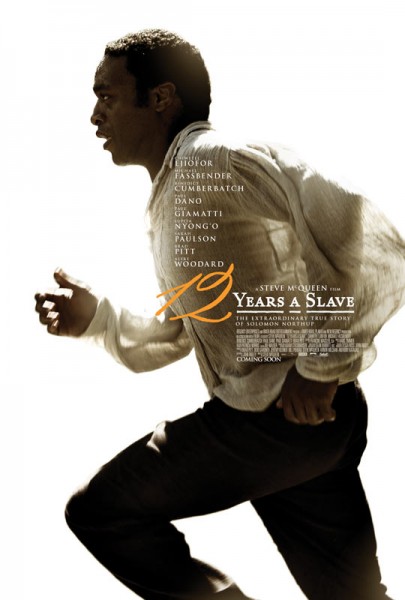
12 Years A Slave is one of the most powerful movies I have ever seen. The cinematic elements compliment the twisted and troubling plot to create a riveting experience for the viewer.  What follows is a theological reflection – for a more formal review of the movie check out Pop Theology by Ryan Parker.  Ryan and I also recorded a podcast that will be released this evening. 12-years-a-slave-poster-405x600

Based on a true story, the plight of Solomon Northup (played by Chiwetel Ejiofor) is a journey from the good life as a free black man in the North to the hellish existence of a slave in the deep South. Visual artist-turned-director Steve McQueen frames the narrative in stunning cinematography and a unique pacing that reflects the twists and turns in the story.

12 Years A Slave is one of those rare movies that impacts you emotionally and challenges the assumptions you carried into the theatre. The journey of the main character sticks with you and causes you to ask questions that you know deep down need to be examined.

I expect that this movie will be one of those rare films that trigger a much-needed cultural conversation. Issues of race and America’s haunting legacy of slavery and native reservation are never far from our national consciousness. Race is often front and center in the nightly news and on the margins of most national conversations.

While we know that something is amiss, we may not know how to approach the topic. We want to have a conversation but we may be unsure about how to proceed.

From the controversies surrounding the election of President Barack Obama to the George Zimmerman trial to the ongoing ‘stop and frisk’ policy debate in the New York City mayoral election, there is an awareness that race matters (to borrow a sentiment from Cornel West’s book title) but a perpetually unsatisfying confusion about how to access the underlying issues.

For Christians, perhaps the best way to address these issues is via the cross of Christ.  In his newest book, The Cross and the Lynching Tree, famed theologian James Cone equates the cross and the lynching tree: “though both are symbols of death, one represents a message of hope and salvation, while the other signifies the negation of that message by white supremacy.”

This is poignant because Solomon Northup first witnesses and then experiences the lynching tree in 12 Years a Slave. The lynching tree is the ultimate weapon of intimidation employed by the same slave owners who claimed the name of Christ, but who preached from the Christian Bible to their slaves in order to justify their cruelties.

For Cone,

“what is at stake is the credibility and promise of the Christian gospel and the hope that we may heal the wounds of racial violence that continue to divide our churches and our society.”

There are plenty of movies that are as fleeting and significant as the popcorn one eats during it. 12 Years A Slave is a different kind of movie. It has substance and is capable of being a touch-point for a significant cultural conversation.

“Until we can see the cross and the lynching tree together, until we can identify Christ with a ‘recrucified’ black body hanging from a lynching tree, there can be no genuine understanding of Christian identity in America, and no deliverance from the brutal legacy of slavery and white supremacy”.  – Cone

If we can talk about a movie like 12 Years A Slave in light of The Cross and the Lynching Tree, we may be able to begin to have a much-needed constructive and reconciling cultural conversation about race in America.

The election of President Obama was not the end of racism in America. As the 50th anniversary of ‘the March on Washington’ showed, we still live in a deeply divided country where race and the legacy of racist policies and attitudes have a lasting effect and are an ever-present reality.

America is also a deeply religious country and Christianity is the dominant religion. The irony, and the opportunity, resides in that fact that the symbol of the cross is so central to Christian imagery. There is great hope there, if only we would take it seriously and see what the Salvadoran martyr Ignacia Ellacurio called “the crucified peoples of history.”.

You can listen to my conversation with Ryan on the Homebrewed Christianity podcast here.

666 Is Not What You Think

A quirky and sad story has emerged out of Kentucky this week.

In one of the strangest cases of purported religious beliefs intersecting with athletic performance, a Kentucky junior cross country runner voluntarily walked away from a chance to qualify for the state meet to avoid running with the bib number “666”, which she said conflicted with her Christian beliefs.

As somebody who competed in state wide competitions back in the day, I can imagine how difficult this situation was for that young lady.  As somebody who learned how to read the Bible that same way, I understand her reluctance to associate with that number. Dark-Clouds

I am a big fan of the Book of Revelation. The last book in the Christian testament is a favorite of mine. I love it!  I love it almost as much as a I hate what the majority of N. Americans have been led to believe it is about.

I thought I would take this opportunity to point out three simple ways that this odd and sad story could have been avoided in Kentucky:

  1. We don’t have 13th floors in buildings and maybe we could just remove this number from rotations – since we know that it rubs the sensitivities of many people the wrong way. That seems like the easiest solution…
  2. The race official could have just given the young woman a new number offender her religious sensibilities. That seems like an easy solution …
  3. Someone could have just explained that the number 666 doesn’t have any actual power … and that even the Bible passage that it comes from tells you that. That seems like the best solution…

See, the actual passage says:

Revelation 13:17-18   New International Version (NIV)

17 so that they could not buy or sell unless they had the mark, which is the name of the beast or the number of its name.

18 This calls for wisdom. Let the person who has insight calculate the number of the beast, for it is the number of a man.[a] That number is 666.

Never-mind that the earliest manuscripts have the number as 616 (a whole other discussion about Roman emperor’s names and the genre called captivity literature within the apocalyptic tradition). What is important here is the world ‘calculate’.

The number – even if it is 666 – isn’t what it seems. It needs to be ‘calculated’, even according the actual verse. It’s right there in the Bible. The number has to be examined – or said another way – you have to do something with the number. It is not the actual number 666.

The clearest explanation is that it is a stand-in for a deeper meaning. Six is the number of humanity (created on the sixth day) and things that are represented in threes (holy, holy, holy Lord God Almighty who was and is and is to come) are complete. The number 666 simply means the completion, or culmination, of the human system.

The number itself is nothing to be afraid of. It is what that number represents that is of great concern. That is why the author of the Book of Revelation wrote in this poetic/symbolic language and imagery. This kind of apocalyptic literature was a political critique of its day – not a predictive work for our day. 

Pointing this out to Christian young people would accomplish at least two things:

  • It would relieve them of this superstitious ‘left-behind’ fear that is created by a misunderstanding of Biblical genres and interpretation.
  • It would serve as a challenge/inspiration to do in our day what the author of Revelation was doing in that day and use their creativity to critique the systems and structures of oppression that we are all caught up in.

The number 666 holds no special power – especially today. What it represents however is very much still in power and needs to be examined and engaged as ‘the Powers That Be’.

Blog at WordPress.com.

Up ↑