I posted this 2 years ago and thought it might be fun to revisit.
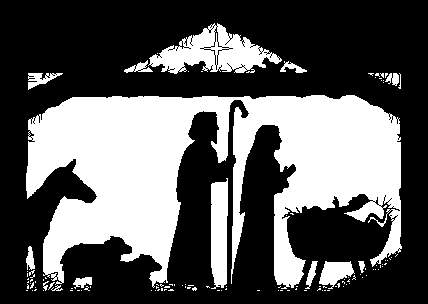
As Christians we confess that Jesus was born to a virgin. Some people doubt the accuracy of that – but they may not realize that it was not that uncommon back then.
Here are just 10 people born of a virgin in the ancient world:
- Buddha
- Krishna – born without a sexual union, by “mental transmission” from the mind of Vasudeva into the womb of Devaki, his mother.
- Odysseus
- Romulus
- Dionysus*
- Heracles – Son of a god (Zeus)
- Glycon – son of the God Apollo
- Zoroaster/Zarathustra
- Attis of Phrygia
- Horus
One theory is that when somebody who led a deeply impactful life died, those who wrote about them later would attempt to say something special about them. One of the ways that they could do that was to say something extraordinary about their birth. It was a way of that there was something significant, even about they way that they were conceived.
Sometimes it was that they were born to people that were really old (past the age of child-bearing age).
Think of Issac born to Abraham and Sarah in the Old Testament or John the Baptist born to Zechariah and Elizabeth in the New (Advent).
Now, If somebody wanted to take the origin of their hero up a notch, they could say that there was no human dad … it was a god! (like Zeus)
This is why some think that Jesus’ autobiographers took it up even one more notch! Not only did a God not have sex with women … there was NO sex at all!
Now some say “yeah, lots of people were said to be born of a virgin … but Jesus actually was.”
This is where the problem starts. As best as I can discern, there basically three ways to approach the problem: physics, meta-physics or linguistics.
Physics:
Some people take an approach that is so certain that even science itself would be proved wrong. This usually comes up around issue like the Shroud of Turin (the cloth Jesus was buried in). I once heard a very confident person say that if we did DNA test on the blood on the shroud it would show that Jesus was fully human with 46 pairs of chromosomes – only instead of 23 from the female mother and 23 from the male father – Jesus would have 46 human ones from Mary.
I find this problematic for the same reason that I do not believe in the super-natural. It concedes the rules of the games to science (reductive naturalism) then tries to fill in the gaps with God. That is a losing game-plan if ever I heard one.
Meta-Physics:
Other people try to get around the whole reductive scientific debate by saying “Look, if God could make the world in 6 days out of nothing, then what is to make a virgin pregnant? God does whatever God wants to do and who are we to question that?”
I am not a big fan of this approach either. It seems to say that revelation doesn’t have to report to reason and that God can not be evaluated on any reasonable standard conceived of by humans.
It seems just a short leap to say that God can elect who God wants for salvation God can pick favorites if that is what ‘He‘ wants to do.
It seems to retreat into the silo of ecclesiastic isolation and unaccountability. I think we have to look a little deeper ask some bigger questions.
Linguistics:
This is an interesting approach that some in the post-liberal camp or comparable schools of thoughts might take.
The basic line is that it’s not the physics or meta-physics of the virgin birth that matters, its the way that it impacts us as people and forms us as a community. The importance of the language found in the gospels has to do with how it functions for us as a community and tradition.

Some folks don’t like this linguistic approach because it seems like theologically ‘thin soup’ to them. They look at the formulations that are quantified in the early creeds and they make definite and literal assumptions about what is behind them.
I am however nervous that all of this controversy is simply because we don’t know how to read a gospel. It’s like when we get sucked into debates about talking snakes in the garden of Eden or trying to prove scientifically how a man like Jonah could stay alive in the belly of a whale for 3 days and not be eaten by the stomach acid (or something).
It would be the equivalent of people 1,000 years from now arguing that we actually thought there was a place called Mudville and that a man named Casey was literally up to to bat. It is because we don’t know how to read the genre of literature.
Jesus was born of a virgin – we confess that by faith, it is affirmed in our ancient creeds and it functions in our community to form us as people.
* I even found one internet source that claims Dionysus was born of a virgin on December 25 and, as the Holy Child, was placed in a manger. He was a traveling teacher who performed miracles. He “rode in a triumphal procession on an ass.” He was a sacred king killed and eaten in an eucharistic ritual for fecundity and purification. Dionysus rose from the dead on March 25. He was the God of the Vine, and turned water into wine. He was called “King of Kings” and “God of Gods.” He was considered the “Only Begotten Son,” Savior,” “Redeemer,” “Sin Bearer,” Anointed One,” and the “Alpha and Omega.” He was identified with the Ram or Lamb. His sacrificial title of “Dendrites” or “Young Man of the Tree” intimates he was hung on a tree or crucified.


 Bo Sanders: Public Theology