Search

Bo Sanders: Public Theology

updating & innovating for today

Tag

cross

How Good Was Friday? part 3

Part 3 in a series of 4. In part 1 I asked if our focus on blood and violence has caused us to miss something vital in the Easter story. Part 2 asked if we have mistakenly celebrated the very thing that Christ came to destroy? In part 4 I will ask if we even need a cross (technically). 

We may have overdone it with the cross. It is out of proportion.  I want to I hear more about the empty tomb (resurrection) and the coming of Holy Spirit (pentecost).

It can seem like , for Protestant Evangelicals, that it is ‘all atonement theory – all the time’.

I have a friend who said “Discipleship is photo-shopping the cross into every picture and angle of my life.”  I asked him if the empty tomb wouldn’t be more appropriate. He said that you can’t have one without the other.

So is that what we are doing?

 Is ‘the cross’ shorthand for the whole story?

Is it assumed that when we say ‘Cross’ we mean also Resurrection and Pentecost?

That would make me nervous.

Here is my concern: in the resurrection God spoke a new word over the world. I would like to live into that new word and participate with God’s Spirit who was given as a gift and a seal of the promise.

To obsess on the cross and related atonement theories is to live perpetually in the old word and to camp in the final thing that God said about the old situation.

It manifests in odd ways too. When my school, Claremont, was entering into a new venture of a Multi-Faith University, new logos were drawn up for each participating school. One symbol and one color for each represented religion or tradition. It is actually a cool branding that sends a message I can really get behind.

The problem is that we, as the Christian representative, got a red logo with the Cross as our symbol. We couldn’t have gone with the Flame or the Dove or the Bible or anything else?  What is the deal with the Cross obsession? Is it really the best representative for what the whole religion is about?

It has also takes on weird colonial connotations which have compromised its essential message.

I’m just a little Crossed-out. It’s too much. It is out of proportion with the other elements of our faith and is used disproportionally to the other symbols we have.

I would like to see us move into God’s new word for the world – and move out of our perpetual lingering in God’s last word over the old world.

What if we miss what was ‘finished’?

Imagine that the God of the universe arranged to stage a magnificent pageant – a cosmic drama – that would right the wrongs of the world and change the course of history. The stage would be set with the most intense consequences and most elaborate circumstances.

Imagine that this drama would unfold in such a way that God’s covenant people would be delivered and their prayers would be answered. The only way that such a drama could be staged would be that God’s own self would have to be a player! The generation that experienced this engagement – and the generations that would follow – came to believe that the divine was at work in the central actor in such a unique way that this new character was worthy of worship as God.

The above scenario is exactly what the Easter is to the church. God staged drama so cataclysmic that nothing (we proclaim) would ever be the same. Humanity’s relationship to the divine and even they way we practice religion – not to mention who gets to practice the religion – was radically altered. In fact, a new religion was born with new scriptures and new methods and even new truths.

The central event, the climax, of this pageant was the violent death of the central character and his eventual vindication in life conquering death and the systems of domination in religion and politics.

In Christ, God exposed the violent and fraudulent scheme of scapegoating when ‘the one who knew no sin became sin for us’. Something happened in the heart and person of the Godhead when Christ died a martyr and scapegoat. The dark events on this little blue planet we call earth had cosmic ramifications. Creation and all that had gone wrong since Eden was being deemed with value again. Sin itself was being destroyed and the life of the ages was being made available for all creation – past and forever.

 When Jesus was lifted up on the cross, God lifted a mirror to show humanity its true face.

The violence of the cross and the political/religious trial that led up to it unmasked the authorities and institutions of power. Our violence and blaming of the other was exposed – as if God was saying “do you see what you do? You do this over and over again, lashing out at each other with blame and cruelty and bloodshed. You even do this to me! Then you claim to do it in my name and for my glory … Stop it.”

cross-150x150“No one needs to be treated like this anymore. No more scapegoats. No more violence in my name and for my sake. This has gone far enough and I am putting an end to this … It is finished.”

And with that he breathed his last and gave up his spirit – according to the scriptures.

Let that set in.

Now let’s ask a second question. What if God staged this grand pageant and even participated in this cosmic drama … and we missed it.

Is it possible that we as humanity and as Christians in particular could have seen all of this, organized a yearly remembrance of it, written songs about it, created ceremonies and rituals to enact every week and then proceed to reinforce and re-entrench that very thing that drama was meant to expose?

It that even possible?

Could it be that we were visited by the divine in a unique and particular way, that we received that King of Glory and then turned around to set up the very structures and systems of violence and domination that were exposed in Jesus’ way? It seems unimaginable.

We proclaim, worship and claim to serve a God who became humble as a servant and even unto death (Philippians 2) to unmask the powers that be and show a different way to be in the world. Jesus calls us to take up our cross daily and to follow this example.

Jesus died on the cross not just for our sin but because of it. We needed a savior to save us from ourselves and this vicious cycle of aggression and violence we perpetuate , sometimes in God’s name. We killed the Prince of Peace but God vindicated the victim and by God’s mighty love and sacrifice destroyed the need to ever do this to anyone else.

The scapegoat mechanism was unmasked as God held up a mirror to humanity and exposed the destructive and unending cycle of violence for political stability, national security or religious purity. The great drama has shown us the conclusion of this damnable way of thinking: we do this is God’s name and we even did to the Son of God.

This never has to happen again. The lesson of the Easter drama is that Life itself has ruined these cycles of death and destruction so that we can stop perpetuating this unsatisfying and unproductive way of treating each other.

It is finished.

Christianity Without a Cross?

On last week’s TNT I introduced a thought experiment: take the cross out of the Jesus story and see what you can still do.cross-150x150

This thought experiment appeals to me for two reasons:

  1. Modern Protestants have overdone it on the cross.
  2. The incarnation and resurrection hold far more interest and power.

I have started to get some great responses to my assertion that one could still come up with over 90% of Christianity without the cross.

I thought it would be good to give it more form here and open it up for conversation.

Keep in mind what I’m saying and what I am not saying:

  • Just because Jesus’ story went the way it did doesn’t mean that it had to go that way.
  • Just because things are the way they are doesn’t mean that they have to stay this way.
  • Jesus’ resurrection could have followed any death – not just the cross.
  • The incarnation is where the old formulation of divine/human or transcendent/imminent are breached or fused.
  • The Christianity that we have was formed in the aftermath of the cross and resurrection … that is not evidence of the cross’ necessity.
  • Had Jesus died some other way, he still would have died once for all.
  • The satisfaction, propitiation, expiation and reconciliation that so many focus on in atonement theories are still there without the cross.
  • The Christianity that would have emerged would have been slightly different but still largely the same.
  • Jesus’ jewishness, the incarnation, resurrection and Pentecost are the 4 things that still anchor the Christian church.
  • The cross really doesn’t play that important of a role – not like the previous 4 – it’s main purpose is decoration on our buildings, necklaces and t-shirts.

Those are some of my thoughts about the variable of the cross.

My final point is not included in the same manner as those above, but to be honest: once the Roman Empire co-opted christianity (the Constantinian Compromise) the cross has mostly been a hood-ornament on the machine of empire. Except for a few places on the periphery and during a few periods of severe oppression and domination … the powerful church has been better, as Tripp says, at building crosses than bearing them.

This point does not prove the thought-experiment, so I don’t want it to distract the conversation, but in the end … I’m not sure how much the cross really does for us.

This is one of the many reasons that I promote being an Incarnational Christian. That is where the power is – incarnation and resurrection!

  • Jesus could have died of sudden-infant-death-syndrome or of old age and still died once for all.
  • Jesus could have been stabbed or beaten to death and it is still the resurrection where God vindicates the victim.

I would go as far as to say what the cross was meant to expose – the scapegoating and victimization mechanism – is still firmly in place and actually still employed by those who sing ‘The wonderful cross’ and ‘on a hill far away’ on Sundays.

There ya go! I have tried to make a case with this thought experiment – I would love your feedback, concerns, and questions!

Let’s have some fun with this.

E is for Empire


“Christian theology suffers from an imperial condition”E-Empire

This is how Catherine Keller begins her chapter in PostColonial Theology.  [Keller podcast]

The people that I know who love, quote, and believe the Bible the most happen to be the least aware of the Bible’s concern with /critique of Empire.

What is fascinating to me is that those who are most unaware of the nature of the American Empire (Imperial reign) are also those who claim to take the Bible the most seriously.

Whenever I bring this up, some who will question ‘How can this be so?” While others will say “What are you making such a big deal about?”

Here is how it works: The biblical narrative details many empires – all of whom have a devastating effect on the people of God.
The Exodus narrative, the Babylonian captivity and the Roman occupation are all examples of Empire. The Bible is through-and-through saturated with imperialism and the disastrous effects that it has on those who are faithful to God.

This is where is gets tough: Moses, Daniel and Jesus all suffered (and subsequently overcame) Imperial regimes. The Bible is saturated with themes of ‘Empire’ and resistance.

The problem is that those who are most imbedded in the Empire (and believe the Bible) are the most unaware of this theme and may have no idea that the Bible that they believe so much has anything to say about the issue what so ever!

If you have never heard of ‘Empire / Imperialism’ then the Bible reads a certain way which allows you to be complicit in the current American imperial impulse and actually believe that you are serving the Kingdom of God by participating in that said structure.

The shocker is when you find out that Moses, Daniel and Jesus were on the underbelly of the beast and were figures of resistance seeking to undermine the established order – the systems, structures and institutions of repression and containment.

It can be eye-opening!~

There is not a single part of the New Testament that is not haunted by the shadow of Empire and Imperial domination.
One might as well not even read the Gospels or the Book of Revelation outside of this lens!!

As long as we are on the subject, it is impossible to talk about the Cross of Christ or Paul’s diatribe in Romans 1 without a thorough understanding of Empire. Take a minute and think about what a cross was – an instrument of intimidation and public terror reserved for those who threatened that stability of the Empire (like sedition).

I might go as far as to say that Empire and Imperial pressures dominate and dictate every facet of the Bible and especially the New Testament.

Here is the shocker: those who take the Bible the most seriously (or least read it the most) may know the least about this aspect of its original context …

… and may be those what are most blind to the current role that their nationalistic government plays in the world.


Think about this: if you do not see the role that Egypt, Babylon and Rome played in the Biblical narrative … by what lens would be able to see the role that post-Cold War America plays in the global War on Terror?

I don’t think that you could.

Here is the bottom line: The people of God have frequently been oppressed and dominated.
Scripture tells us of their resistance and deliverance.
If, then, the people who claim to be ‘with God’ are complicit in the oppression and marginalization of those who claim to be fellow believers ‘in Christ’ … let alone those who come from a different tradition…

… you can see the problem.

Empire dominates everything. Domination is actually the Modus Operandi of Imperial regimes. The methods are predictable:

  • Road blocks
  • Security checks
  • Boarders
  • Prisons
  • War
  • Control

The Bible testifies to this and to the resistance of it. The great irony of history is that so many Bible believing people both don’t know this – and subsequently participate (even complicetly) in the continuation of this oppressive system.
The Bible tells us that Moses, Daniel and Jesus all suffered under Imperial oppression. We need to make sure that we don’t use the Bible to defend or extend any Nationalistic/ Empire ambitions in the world that we live in via the systems that we participate in and support.
For further examination:

Beyond the Spirit of Empire – Rieger, Sung, Miguez [Rieger podcast]

Arrogance of Nations: Paul and Empire – Elliott  [Elliot podcast]

God and Empire – Crossan  [Crossan podcast]

Jesus and Empire – Horsley

New Testament and Empire – Carter  [Carter podcast]

If interested, here is a blog series I wrote about social imaginaries (nationalism)
In case one would think that I made too much out of the absence of this topic in certain circles, it is illustrative that neither Grenz nor Gonzalez – the two resources I am utilizing in the series –  have an entry for ‘Empire’ in their dictionaries. They do however both address ‘Empiricism’ (as in ‘empirical evidence’).

Concerns About ‘The’ Cross

I have received lots of feedback via email, FaceBook and text on Blood: Easter, the Cross and that quote about Liberals. 

It seems that most people get the main thrust of the article but have one doubt/hesitation they can’t shake/make sense of. I was asked to write a response at a non-grad school level (which I love to do).

I have two requests:

  1. If you are looking for something more academic please read Heim’s Saved From Sacrifice. It is wonderful.
  2. If you are a big fan of a penal substitution theory of atonement, understand that I am not. I’m willing to talk about it – just understand that it would be unhelpful for you to simply repeat that view as a defense of that view.

So let’s get started!

  • You said that we focus too much on the cross, but I love the cross and think we don’t focus on it enough! Jesus said to take up our crosses – we are a resurrection people and resurrection only happens after crucifixion. 

There are several problems here. cross-150x150
First, there was more than one cross. There were three just in our Easter story (but not in most of our pictures – like the one to the right). So you can’t say ‘the’ cross. You can say ‘that’ cross. It is vital to get just how many crosses there were. Roman use of crosses was systemic. Jesus’ cross was not an exception in that way.

Second, you are using ‘the cross’ as a shorthand for the whole story. The incarnation, crucifixion, empty grave and pentecost provide a much better snapshot. To try and sum them up in ‘the cross’ is too limited.

Third, we are people of the resurrection. That does not mean that ‘the cross’ is a good thing. What happened there was unjust. That God redeemed it and brought something good out of it … does not change that it was tragic.


  • How do we engage the cross still as people who follow Jesus?

It seems like most of the things that we say about the cross are the first half of what should be a longer sentence.

“We preach the cross and Christ crucified” … yes but what do we preach about the cross?  That is was unjust? That ‘it is finished’ (the sacrificial system)?

“Jesus died our sins” …  yes but also because of our sin? And to what end? To move us away from the scapegoating impulse? To expose and unmask our unjust propensity toward violence?

Here is the problem: if we are not careful, we miss the radical reversal that Jesus’ cross is supposed to provide and we end up simply absorbing it into the system that it was meant to expose. This is a tragedy that ends up normalizing the violence Jesus unmasks and continues the cycle of victimization Jesus was trying to break.

Because of the way talk about the cross in half-sentences and short-hand phrases, we end up siding with the Romans’ use of power and violence and miss the fact that on Good Friday, God was not on the side of the Romans but that God was with Jesus on that cross.


  • What do we do with the sacrificial lamb imagery? 

 I will withhold my real answer (that it was contextual and historically located) and will instead present what I think is a more helpful response!

We see a trajectory in our canon. God moves Abraham from human sacrifice to animal & grain … later God moves on from that system ( you see this in passages like Psalm 40:6 “sacrifice and offering you did not desire” and Hosea 6:6 “For I desire mercy, not sacrifice”)

People will often quote Hebrews 9:22 “without the shedding of blood there is no forgiveness of sins”. The half they leave out is that it actually says “under the law …”

You see what has happened? By not saying the first half (under the law) and only saying the second half, we actually miss the entire point of Jesus’ sacrifice and end up reinforcing the system Jesus came to move us on from!  We live and think as if we are still under the law!

The way talk and think about the cross of Christ actually undoes the very thing that Jesus came to do.

The rest of Hebrews 9 says that Jesus died once of all. So we don’t need to kill ‘them’ – they are ‘us’. We are all them – the all. Jesus died once for all so that we could stop this us-them thinking and stop victimizing and scapegoating. We miss this and then absorb ‘the cross of Christ‘ into the very system of power and violence that Jesus came to destroy.


  • I thought that the blood shed on the cross provides the forgiveness of sin?

Jesus forgave sins before the crucifixion. Part of the problem with saying ‘the cross’ as a form of shorthand for the whole story is that we skip both the life and teaching of Jesus. Jesus got in trouble for forgiving sins. How could he do that if what you are saying is true?

See? God forgives sin. How can God do that? Well if the debt that is owed is to God … then God can forgive them. The problem with they way we have been taught to think and talk about ‘the cross’ is that God is not free to forgive. God has to play by some external rules and ‘with out the shedding of blood, there is no forgiveness’. But remember that the law is that way. God is not.  Jesus, and this true wether you think Jesus was a messenger of God or God incarnate, forgave sins before the shedding of blood. How did he do that if they way were taught is true?

God forgives sins. Thank God! And we need to repent. We have made God into something Jesus was meant to destroy. We have placed God on the side of the powers and violence that God was trying to combat. We have returned to the very thing God was attempting to redeem us from and release us from. We have absorbed Jesus’ cross into the very system Jesus was attempting to unmask and expose. We have missed the very lesson that Easter is supposed to teach us.

I will contend that God was with Jesus on that cross and that the empty grave is the vindication of the victim so that we might be freed from the cycle of violence and victimization … once for all.


I look forward to your ongoing feedback and I will try to respond throughout the day to any honest questions that come up.

Blood: Easter, the Cross & that quote about Liberals

It is almost Easter – my most conflicted time of year as a pastor.

I am smitten with the empty grave. In fact, I am almost as excited about the Easter imagery as I am horrified by N. American Protestant’s fascination with the cross.
I have written and talked about this disturbing trend in the past so I won’t take the time to elaborate on it here.

This whole subject has been intensified for me this year. I have been leading a discussion at my church through Lent about historic atonement theories. The hope in doing so has been twofold.

  • We wanted to look at how the churches’ understand of the cross has changed over time.
  • I wanted to suggest a way to move past those previous and limited views.

We have been working through this in conversation with several resources: Saved From Sacrifice, The Non-Violent Atonement and the work of Michael Hardin.
It has been a powerful excersise and I have learned a great deal in the process. It is the week before Palm Sunday and I have two things in the back of my mind:lamb

  1. It bothers me that our most well attended services with the most visitors are our bloodiest (in imagery).
  2. That damn H. Richard Niehbuhr quote.

His famous jab at ‘liberal’ christianity:

“A God without wrath brought men without sin into a kingdom without judgment through the ministrations of a Christ without a cross.”

This quote gets under my skin so much. Here are 3 reasons why:
1) It is so true. I suspected it when I migrated out West and it is has only been confirmed as I have emerged from an charismatic/evangelical context to a more mainline one. I can not tell you how many people would be covered by Niehbuhr’s concern.

2) We live in a sanitized and sterilized culture (to paraphrase Cornell West) where most people have no connection to the meat on their table. They pick it up at the grocery store in plastic wrapped styrofoam containers. I say this as an avid hunter descended from farmers. We live in a horrifically violent culture (both domestic and military) but so few of us are familiar with blood. We outsource our violence.
This is why a penal substitutionary view of the cross is so attractive /acceptable for so many. The vicarious nature of god pouring out ‘his’ wrath on Jesus results in a pornographic delight that can be seen in depictions like that famous scene in The Passion and in many of our contemporary worship songs.

3) That Niehbuhr quote is thrown around too easily whenever someone wants to reexamine or revisit underlying assumptions about what happened (or how we understand) Easter.

Let me be clear about what I am saying and what I am not saying:
I am not saying that there was no cross and that there was no blood. I get both, I accept both and I proclaim both.
I am saying that something perverse has seeped into our understanding and our imagery.

  • What happened on that cross was real.
  • What happened on that cross mattered.
  • What happened on that cross was unjust.
  • What happened on that cross changed humanity’s relationship to God.

My concern is that we have misunderstood both how it changed and why it changed.
Let me end the critique there and wrap up with a constructive proposal.

When Jesus takes the bread and cup and forever changes their meaning he is saying “what they will do to me – don’t you, as my followers, do to anyone else”.
When Jesus says “forgive them, they know not what they do”, he is saying that they think they know what (and why) they are doing, but they are wrong.
When Jesus says “it is finished”, he is proclaiming the end of this type of scapegoating and violence by those who think they are doing it on God’s behalf.

2 Corinthians 5:18 All this is from God, who reconciled us to himself through Christ and gave us the ministry of reconciliation: 19 that God was reconciling the world to himself in Christ, not counting people’s sins against them. And he has committed to us the message of reconciliation. 20 We are therefore Christ’s ambassadors, as though God were making his appeal through us. We implore you on Christ’s behalf: Be reconciled to God. 21 [The one] who had no sin [was made] to be sin, so that in him we might become the righteousness of God.*

We are to be about peace. We are to be a people of reconciliation. In Christ, God absorbed the hatred and violence of the world. The one who knew no sin – an innocent man – was proclaimed guilty and God responds by proclaiming that we who are guilty of doing that are now innocent and our sins are forgiven.

This is the good news of gospel! This is the hope for human-kind. No one needs to be sacrificed any more. No one needs to die because God is angry – Christ’s unjust death is to be the last. In the empty grave we see the vindication of the victim. God took humanity’s wrong judgement of Jesus and now judges us right with God. We who are guilty are proclaimed innocent because the innocent one was found guilty.

Easter is the great reversal and the vindication of the victimized. It is finished. We can’t afford to keep missing this and repeating the mistake. We who follow Jesus must be about peace and reconciliation. Too many have been scapegoated, placed on crosses and victimized by violence … in Jesus’ name.

God forgive us – we know not what we are doing.
Let it be finished.
In Jesus’ name.


* If that final verse reads a little different than you are used to hearing it, you should listen to the podcast with Michael Hardin.

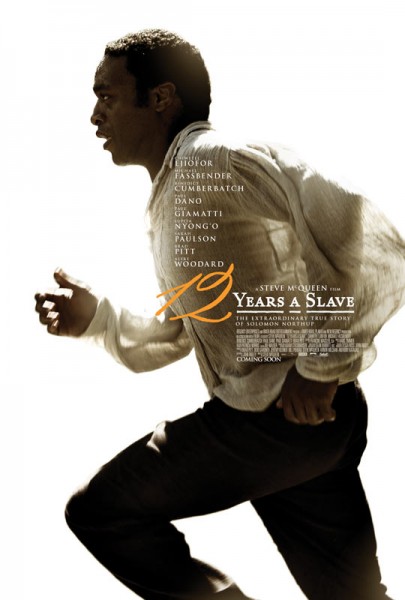
’12 Years A Slave’ and the Cross of Christ

by Bo Sanders 

12 Years A Slave is one of the most powerful movies I have ever seen. The cinematic elements compliment the twisted and troubling plot to create a riveting experience for the viewer.  What follows is a theological reflection – for a more formal review of the movie check out Pop Theology by Ryan Parker.  Ryan and I also recorded a podcast that will be released this evening. 12-years-a-slave-poster-405x600

Based on a true story, the plight of Solomon Northup (played by Chiwetel Ejiofor) is a journey from the good life as a free black man in the North to the hellish existence of a slave in the deep South. Visual artist-turned-director Steve McQueen frames the narrative in stunning cinematography and a unique pacing that reflects the twists and turns in the story.

12 Years A Slave is one of those rare movies that impacts you emotionally and challenges the assumptions you carried into the theatre. The journey of the main character sticks with you and causes you to ask questions that you know deep down need to be examined.

I expect that this movie will be one of those rare films that trigger a much-needed cultural conversation. Issues of race and America’s haunting legacy of slavery and native reservation are never far from our national consciousness. Race is often front and center in the nightly news and on the margins of most national conversations.

While we know that something is amiss, we may not know how to approach the topic. We want to have a conversation but we may be unsure about how to proceed.

From the controversies surrounding the election of President Barack Obama to the George Zimmerman trial to the ongoing ‘stop and frisk’ policy debate in the New York City mayoral election, there is an awareness that race matters (to borrow a sentiment from Cornel West’s book title) but a perpetually unsatisfying confusion about how to access the underlying issues.

For Christians, perhaps the best way to address these issues is via the cross of Christ.  In his newest book, The Cross and the Lynching Tree, famed theologian James Cone equates the cross and the lynching tree: “though both are symbols of death, one represents a message of hope and salvation, while the other signifies the negation of that message by white supremacy.”

This is poignant because Solomon Northup first witnesses and then experiences the lynching tree in 12 Years a Slave. The lynching tree is the ultimate weapon of intimidation employed by the same slave owners who claimed the name of Christ, but who preached from the Christian Bible to their slaves in order to justify their cruelties.

For Cone,

“what is at stake is the credibility and promise of the Christian gospel and the hope that we may heal the wounds of racial violence that continue to divide our churches and our society.”

There are plenty of movies that are as fleeting and significant as the popcorn one eats during it. 12 Years A Slave is a different kind of movie. It has substance and is capable of being a touch-point for a significant cultural conversation.

“Until we can see the cross and the lynching tree together, until we can identify Christ with a ‘recrucified’ black body hanging from a lynching tree, there can be no genuine understanding of Christian identity in America, and no deliverance from the brutal legacy of slavery and white supremacy”.  – Cone

If we can talk about a movie like 12 Years A Slave in light of The Cross and the Lynching Tree, we may be able to begin to have a much-needed constructive and reconciling cultural conversation about race in America.

The election of President Obama was not the end of racism in America. As the 50th anniversary of ‘the March on Washington’ showed, we still live in a deeply divided country where race and the legacy of racist policies and attitudes have a lasting effect and are an ever-present reality.

America is also a deeply religious country and Christianity is the dominant religion. The irony, and the opportunity, resides in that fact that the symbol of the cross is so central to Christian imagery. There is great hope there, if only we would take it seriously and see what the Salvadoran martyr Ignacia Ellacurio called “the crucified peoples of history.”.

You can listen to my conversation with Ryan on the Homebrewed Christianity podcast here.

Evangelicals Really Dislike Lent

My friend Krista Dalton tweeted last week:

Was told Lent was “stupid” by a fellow Christian at school. Good reminder why I am not evangelical!

I had to fes’ up to her that I used to say crap like that and I repented.

So what is it about Lent that evangelicals hate so much? I have a two-tiered theory. 

The first involves a Theology of Glory. The second is not a cause – it is an effect – but it is born our of strangeness and suspicion.

Theology of Glory

Back in Christian history, back to the roots of evangelicalism in the Protestant Reformation, are two major approaches (if you will). The first is a Theology of the Cross held up by Luther. The second is a Theology of Glory brought forward by Calvin.

I don’t have time to get into all the sorted details, but suffice to say … that the American evangelical church has not just majored in a Theology of Glory but almost to the near neglect of a Theology of Cross.

Here is a really helpful article on the differences:

“Theologies of glory” are approaches to Christianity (and to life) that try in various ways to minimize difficult and painful things, or to move past them rather than looking them square in the face and accepting them. Theologies of glory acknowledge the cross, but view it primarily as a means to an end-an unpleasant but necessary step on the way to personal improvement, the transformation of human potential. As Luther puts it, the theologian of glory “does not know God hidden in suffering. Therefore he prefers works to suffering, glory to the cross, strength to weakness, wisdom to folly, and, in general, good to evil.” The theology of glory is the natural default setting for human beings addicted to control and measurement. This perspective puts us squarely in the driver’s seat, after all.

It’s not that we don’t like the cross – oh we love the Cross – we sing about it (the wonderful cross) and we wear them around our necks!

It’s so bad that Dallas Willard has coined the phrase “Vampire Christians” for us. He says that we love Jesus for his blood and little else. Ouch – that one stings.  Wooden Cross

It shows up in other ways too. We are almost completely ignorant of the apophatic tradition. We are so kataphatic (speaking of God in the positive) that we have no idea that there are other options! We have no negativa or posteri – it is all presence all time.

Look at our worship services. Just ask yourself: what would it take to lift your hands and sing “Shout to the Lord” at the top of your lungs … and then ask if that seems compatible with fasting or Lent.  They are just two different muscle groups. Unfortunately, those who use the one often neglect the other and vice-versa

Strangeness and Suspicion  

I’m not saying that this element causes the unfamiliarity – but once there is alienation this next element adds fuel to the fire. The suspicion is syncretism.

Think about it this way: Lent isn’t in the Bible. Historically evangelicals have been a sola scriptura bunch (don’t look into that too much) and Lent is a foreign concept. It doesn’t’ take long to dig up some dirt on Lent and find out that it has its roots in Egyptian-Pagan worship borrowed by the Roman cults. Isis lost a son for 40 days so we mourn for 40 days and then have Isis eggs that are colorfully decorated is the story that come to me.

So, I’m not saying that explains all of the animosity that evangelicals have toward Lent, but I just wanted to offer up my two-tiered theory.

It starts with neglect and ends with accusations.

It’s same reason that we kinda try on Good Friday … have NO idea what to do on Saturday … but LOVE Resurrection Sunday!


Bo’s Blogs in November

Between a trip to San Fran for a conference and Thanksgiving in the mountains, I have not been blogging much this month. There are two things that I have been doing over at HomeBrewed Christianity that I am quite proud of.

The first is a conversation about the Cross.  It started with this blog post and then led to an hour long conversation with Tripp Fuller for a Theology Nerd Throwdown.  My basic take was that we have over-focused on the Cross and neglected both the empty tomb and Pentecost as Christian symbols and events.

Last week my friend A.J Swaboda said “Discipleship is photo-shopping the cross into every picture and angle of my life.”  I asked him if the empty tomb  wouldn’t be more appropriate. He said (wisely) that you can’t have one without the other.
So is that what we are doing? Is ‘the Cross’ shorthand for the whole story? Is it assumed that when we say ‘Cross’ we mean also Resurrection and Pentecost?
That would make me nervous.
Here is my concern: in the resurrection God spoke a new word over the world. I would like to live into that new word and participate with God’s Spirit who was given as a gift and a seal of the promise.
To obsess on the cross and related atonement theories is to live perpetually in the old word and to camp in the final thing that God said about the old situation.

The second is a conversation about being Charismatic/Pentecostal Continue reading “Bo’s Blogs in November”

Create a free website or blog at WordPress.com.

Up ↑