Search

Bo Sanders: Public Theology

updating & innovating for today

Tag

ecology

HomeGrown Christianity Begins Today

I am very excited to announce that 2014 has brought a new Eco-Theology series called “HomeBrewed Grown Christianity” all about-earth care and lovin’ God. It has grown into an 8 part series including a TNT follow-up to the initial run of interviews that begin today.HomegrownLogo_green_rev1

Episode 1: Leah Kostamo Planted: A Story of Creation, Calling, and Community   Kindle ($9.99) Paperback ($17.99)  Listen HERE

Episode 2: Matthew Sleeth Serve God Save The Planet , The Gospel According to the Earth & 24/6 about Sabbath. (Kindle $2.99)

Episode 3: Jennifer Butler is part of the new Christian Earthkeeping emphasis at George Fox Seminary. She is co-author of the upcoming book On Earth As In Heaven due out in November.

Episode 4: Randy Woodley with  Shalom and the Community of Creation: an Indigenous Vision  

Episode 5: John Cobb rang the alarm bell back in 1972 and has recently returned to the theme with Spiritual Bankruptcy: a prophetic call to action.

Episode 6: is a special surprise from new Elder Micky Jones and friend.

Episode 7: is specifically food related. How do get food on the table? What issues are related to feeding a family? 

Episode 8: at the the end of each episode, we ask our guest the same 5 questions. Tripp and I are dedicating a TNT to interacting with their answers to the those 5 questions. It will be in the same format that we did the Brueggemann-Fretheim Bible Bash.  

You may also want to pick up Colonialism, Han, and the Transformative Spirit by Grace Ji-Sun Kim. Her HBC interview with Callid was so good that I sort of wish it had been a part of this series!  I hope to return to Dr. Kim’s thoughts to close this initial run.

I attended part of planning meeting yesterday related to next year’s big Whitehead conference. The theme is “Seizing An Alternative: Toward An Ecological Civilization” based on a new essay by John Cobb.  I am greatly inspired about this HomeGrown series and am very aware of the intensity of the situation we are facing.

I hope that you will join us on this audiological journey and that you will chime in on the blogs as they roll out over the next 40 days. 

I want to thank Jesse Turri for the collection of logos for the series. If you have not heard Jesse’s work on the Unfolded podcast (with collaborator Matt Barlow)  you really need to check it out!

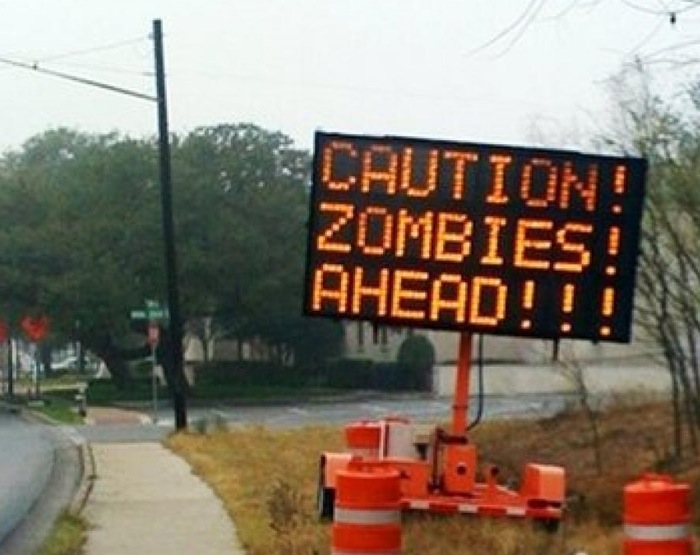
Haunted by Zombie Categories

I have spent that last two weeks reading and shoring up my familiarity with Creation Ex Nihilo and the Trinity respectively. As fascinating as that has been,  I have to admit that am speculated out. I can only take so much speculative theology. This is part of why I am so happy to be in the field of Practical Theology. The other reason is that I have a real heart for the church.

I love Practical Theology. It is a fascinating field that is in the midst of a significant reinvention of itself. As an interdisciplinary engagement within the academy, it interacts with local faith expressions (like the church) in the hope to mutually benefit both the local church and the academy as a sort of go-between.

One of the major changes in this reinvention comes from the recognition that Practical Theology had not doing its own homework. It had fallen into a stale habit of simply attempting to apply the work of other disciplines. Applications of other’s work is fine at some level, but that is no way to gain credibility within the academy. If you want to be taken seriously in that world, you have to endeavor to innovate and explore – just like everyone else.

John Reader is one of my favorites. In the book Reconstructing Practical Theology: the Impact of Globalization the author examines the impact of globalization on everything from families and spirituality to the economy and ecology. There are two specific aspects of the book that I want to post about today and tomorrow: ‘Zombie Categories’ and ‘why the Eucharist isn’t Enough’.

Zombie Categories

Change can be seen in the categorization used within scholarship, specifically as it applies to fields such as practical theology. Reader borrows the term “zombie categories” from Ulrich Beck to refer to existent categorization that are fundamentally dead but which still limps on refusing to go away quietly. This situation forces us to exist temporarily in parallel worlds both utilizing “old, familiar and increasingly redundant” categories alongside “new, emerging and untested” ones.

Reader examines the historical developments and transitions, quickly surveying from the early church to the professionalism and secularism of the twentieth century. This is why it is so important for contemporary theologian to interact with fields such as psychology, sociology, economics, and even the political. As much as I appreciate and have learned from the Big 4 of Theology (Systematic, Historic, Biblical and Philosophical).

In a quick survey of the territory it is becomes clear that the issues encountered under the heading of globalization are not simply a series of incremental changes to which we must adapt to keep operating. The impact of globalization challenges the very frameworks and concepts that are familiar to the practice of Christian ministry.

I get push-back all the time for saying that we need to reexamine and desperately reinvent the very frameworks and vocabularies with which we engage in ministry.

The concerns of local ministry and pastoral care along with the conduct of worship and the diverse challenges needing to be addressed in any context ask something very distinct from us now. The transient nature of globalization paired with a virtually liquid social structure requires a different set of questions and a unique collection of frameworks to adequately address the challenges of ministry and spirituality in a world where the boundaries are constantly shifting. These concerns are most appropriately addressed by re-imagining internal categories inherent to the tradition, partnered with the resources made available by engaging with “the insights of other disciplines”.

This is not about answering the same old questions in slightly different ways for our new context – this is about asking entirely different kinds of questions about the formation of self, the family relationship, construction of community and the nature of religion.

Tomorrow I want to look at how consumerism forms our concept of ‘self’ and why the Eucharist – no matter how tightly we hold to it or how faithfully we perform it – address what is going on with us these days. But first I needed to state how deep the change is and how profound its impact on us is. Cleverly updated answers to the antiquated questions are not going to cut it anymore.

Something else is needed. Our world is not simply a bigger version of what used to be. When people keep insisting that ‘this’ is just an amplified version of ‘that’ they may be missing the point of what it is exactly that we need to be doing here.  “Doing the same thing Sunday after Sunday” may be the worst idea in the history of the church. It may not be –  but it is sure to kill us while we lie in the very bed that we made for ourselves. 

Originally posted at HBC 

the Death of the Liberals is killing us

In chapter 1 of his book Death of Liberal Class, Chris Hedges sketches both the height of the Liberal era in the 19th century and its cataclysmic implosion with the arrival of World War in the 20th. The disillusionment of human evil, aggression, and suffering deflated the optimism of innate human goodness and inevitable progress that Liberalism is founded upon.
To understand the profound impact of Liberalism’s demise, it helps to make sure one understands the difference between Classical Liberalism and it’s contemporary milquetoast descent that slinks around in straw-man form on our 24 hours news cycle.
Hedges explains (pp. 6-7) “Classical liberalism was formulated largely as a response to the dissolution of feudalism and church authoritarianism. … (It) has, the philosopher John Gray writes, four principle features, or perspectives, which give it a recognizable identity. It is :

  • individualist, in that it asserts the moral primacy of the person against any collectivity;
  • egalitarian, in that it confers on all human beings the same basic moral status;
  • universalist, affirming the moral unity of the species;
  • and meliorist, in that it asserts the openended improvability, by use of critical reason, of human life

Both John Cobb (Mainline)  and Clayton Crockett (Radical Political Theology) use very similar formulations in their recent Homebrewed  podcasts. Cobb, by focusing on the demise of the Mainline and Crockett, by focusing on the Evangelical and Religious Right, articulate the monumental shift in the religious-political landscape in the past century.
The Mainline denominations are in a collapse narrative and it makes perfect sense why when one examines both the way liberal thought partnered with power in the 20th Century and the way that conducted itself (largely) within the shifting landscape of post-war realities at home and globalization abroad.

“In a traditional democracy, the liberal class functions as a safety valve. It makes piecemeal and incremental reform possible. It offers hope for change and proposes gradual steps toward greater equality. It endows the state and the mechanisms of power with virtue. It also serves as an attack dog that discredits radical social movements, making the liberal class a useful component within the power elite. But the assault by the corporate state on the democratic state has claimed the liberal class as one of its victims…
The inability of the liberal class to acknowledge that corporations have wrested power from the hands of citizens, that the Constitution and its guarantees of personal liberty have become irrelevant, and that the phrase consent of the governed is meaningless, has left it speaking and acting in ways that no longer correspond to reality. It has lent its voice to hollow acts of political theater, and the pretense that democratic debate and choice continue to exist.”  (pp. 9-10)

We talked yesterday about the fictitious nature of the supposed Left-Right spectrum.  For those of us who participate in christ centered communities and organizations, what does this mean?  While incomplete, here is my little experiment to come up with a game-plan for a start.

  1. We stop using the label ‘Liberal’ generically for anything that is not Conservative… especially to be dismissive.  Liberal is a very specific ethical  framework and it takes quite a commitment to liberal. It is not a default position.
  2. We disavow the left-right , conservative-liberal split as farcical. It doesn’t exist. Obama is a Centrist Democrat. Romney is a Centrist Republican. Any idea that Obama is a radical is ridiculous.* We repent of lazy language & thought.
  3. We wake up as the church that the role the Liberals used to play in the system does not function. There is no moderating or buffering presence to bring a corrective to the system. Thus, participating in the system as-it-now-exists will not fix the system. The corporate hold over every aspect of our political system is pervasive.
  4. We step up as the church in the revelation that government is not going to fulfill the expectation to
  • bring good news to the poor (Economy)
  • restore sight to the blind (Medical)
  • release to the captive  (Legal)
  • lift up the broken hearted (Compassion)

The church can do these things! We have deferred to the political system for too long. We have outsourced our responsibility to society but now live with the remains of the bloated carcass Christendom. With the death of the liberal class resistance to corporate rule and unchecked consumerism is impotent. The Citizen’s United ruling is just one step on long trail … but we know where it leads.
There are churches in every community and there may be no greater existing potential than us! **  I know it sounds dreamy, but in the rest of this series I want to flesh it out. By the end, it might not seem as far-fetched as it does right now.
– Bo Sanders
 
*Wall Street campaign funding, legalizing assassination, and Guantanamo Bay are your first 3 hints.
**  The danger of course is that we keep voting based on two issues while turning a blind eye to  corporate rule, environmental deregulation, and perpetual war.


This post is the beginning of a new series and was co-posted on Homebrewed Christianity.

Economy and Ecology: the future of the past (part 3 of 3)

I left off in part 2 by imagining what might be on the other side of the ‘bridge’ after we get past the two trolls of colonial christianity and environmental dualism. My hope is that there is a different way to be in the world.

I admit that we can’t go back. We can’t undo Colonization. We aren’t going back to family farms. We can’t refreeze the polar ice caps or re-create the Glaciers in Glacier National Park.  As they say ‘we shall not pass this way again’.

My hope is not to reclaim some previous ideal of human community. My desire is to explore a realistic assessment of what is possible (and preferable) given the past developments and as-is structures of existence.

Here are three groups/conversations that give me a little hope:

The Environmental-Philosophical crowd. People like Bill McKibben have been sounding the alarm for quite a while and have since moved to talking about a radically different planet termed “Eaarth” in which we will need to go small and local.

On a larger scale, our whole civilization stands on the edge of collapse because the data inputted into our risk management models come from the last couple of hundred years, a very atypical time. A giddy time, high on oil… Our time, on every front, has been marked by the dizzying Alice-on-her-first-pill explosion in the size of the human enterprise. For almost all of human history, our society was small and nature was large; in a few brief decades that key ratio has reversed. – p. 105

Native Communities: Three years ago I got to take part in two conferences that altered the way I see the world and think about the future. The first was the Theology of the Land conference at George Fox Seminary. The second was a NAIITS gathering at the George Fox undergrad campus. Randy Woodley continues to be a voice of reason and reconciliation in an increasingly complex environment. I am anxiously anticipating the release of his newest book this year that deals with the concept of Shalom and Creation.

Process and Eco-Feminist Theology:
Last month I helped organize an event that brought together the Emergent church and Process theology.  One of the key folks in that conversation is John Cobb, author of Spiritual Bankruptcy. Cobb’s and others in the conversation are deeply involved in both ecology and economy from a theological perspective. I was greatly encouraged to hear about projects from around the country of communities taking seriously the reality we find ourselves in. From small neo-monastic communities to universities to political & civil engagements, there is a growing awareness that something has got to change.

  • The way that we have lived
  • the rate at which we have used resources
  • the expectations for perpetual growth
  • and economic prosperity

have exhausted creation and bankrupted modern human civilization.

This is not a ‘the sky is falling’ mentality. This is a ‘new reality’ perspective that the damage is done and we can not go back or turn back the clock. This just is the way it is now. But if global capitalism, and its mutant offspring – consumerism, continue to go unchecked … let me say it a different way: the church has a message and a historic practice that can engage voices of health and community. Unfortunately, the church herself has been seduced and gone into the business of supply and demand. Those days need to come to an end. It betrays her calling and compromises her message.

The first step is to repent of the Cartesian dualism and the second is to resign from the colonial impulse. After that we can embrace the truth that we are both a product of and a participant in nature and that mutually edifying, inter-connected, trans-national, multi-racial community is our hope for the future.

The expectation of one big global community is ruining us. The future is small, diverse, multiple, and interdependent.

originally posted at Ethnic Space

Two Trolls and a Bridge (part 2 of 3)

In part one I mentioned that there are two trolls that guard the bridge to a new way. I named them as Colonial Christianity and Environmental Dualism. Of the many issues facing us, let me tell why I recognized those two.

In 1421 Chinese ships landed on the Pacific coast of what we know as North America. Last year in Postcolonial class, my prof asked us a series of questions that began with “Why didn’t they stay and colonize? What was different from what especially the Spanish would do a century later?

I spent the semester, as we read Said, de las Casas, and all those who follow them looking for a common theme that could provide a interpretive key. I kept noticing that there was secondary mechanism behind the machine of Colonial power.

Throughout history there have been Empires and that, by definition, comes with  a conquest narrative. Even in our own Bible we see that group like Assyria, the Babylonians Greeks, and Romans swept through Israel. Israel itself had the Canaanite conquest narrative. Not to mention that China was an empire that conquered and subjugated the areas and nations around them. There is nothing new about either empire or conquest.

But this is not that. There is something else going on in the Colonial era that led the British, French, Portuguese, Dutch and Spanish to expand and extend that impulse to an exponential degree. It is so inflamed and exaggerated that some explanation must be provided as to difference that we see in the 15th, 16th, and 17th centuries.

Technology is insufficient as an explanation. Guns and horses certainly explain some of atrocities we see with the Conquistadores but that is merely wood for the framework. There was a fuel that made it so flammable and destructive. What fueled the Colonial drive was a specific brand of Christianity.

I think that needs to be pointed out. It must be acknowledged for two reasons:

  1. It is still with us
  2. its unquestioned giveness allows it to remain in power but in a far more sinister way – in secret assumption.

Colonial Christianity remains – not just as a residue – but as an unquestioned operating system and that is both an ongoing danger to our planet’s existence (war, environment, economy, etc) but also to the very integrity of the Gospel message that it purports to contain.

Nipples and Bellybuttons

One of the most powerful things that the Western mind inherited comes from the thought of Renee Descartes – it is a Cartesian dualism between the mind and the physical body. On the surface it does not look so danderous – but it morphs and attches itself to other really valuable things. One mutant offspring begins to distinguish between humans and everything else. This fits great into Colonial Christianity. The result is that we think we are exceptional.

Humans are mammals – notice the presence of nipples and bellybuttons – while many Christians  recognize the similarities they refused to acknowledge that humans are mammals (and then are confused by our sexual desires and habits).

This exceptional dualism shows up in all sorts of places! In the study of religion, even if we acknowledge that other religions grew UP from communities and are expressions of their various locations … Christianity is held to be an exception to that. It came DOWN from Heaven and would be the same truth regardless of its historical embeddedness in the Ancient Near East.

Exceptionalism is an ongoing mentality today. It affects so many areas.  [by the way, Randy Woodley wrote a great piece on political exceptionalism here]

In my opinion – beside the possible exception of modern war – there is no area where exceptional thinking is more deadly than the environment. From dust we came – as humans we are made up and sustained by what comes from the soil, the water, and the air.

We must repent of of this exceptional dualism and confess that while we are unique on the earth – we are not exceptions to it and in fact we are integral parts of it and completely dependent upon it.

When you put these two monsters of Colonial Christianity and Environmental Dualism together, you may be able to see why I think that they are the Trolls blocking the bridge to a new way.

Tomorrow I will attempt to articulate what waits on the other side of the bridge. The simple fact is that we can’t go back. We can’t undo Colonization. We aren’t going back to family farms. We can’t refreeze the polar ice caps or re-create the Glaciers in Glacier National Park.  As they say ‘we shall not pass this way again’.  But I think that there is a different way of being in the world that holds hope for us.


originally posted at the Ethnic Space blog

Blog at WordPress.com.

Up ↑