Search

Bo Sanders: Public Theology

updating & innovating for today

Tag

evangelical

Evangelical and Liberal

I have stumbled into the most fascinating conversation.

Background: I work at an evangelical institution. I recently worked at a liberal mainline church while attending a liberal mainline school. I was raised evangelical and am ordained as an evangelical. It was interesting being in a mainline context for 7 years and it is equally as interesting to return to an evangelical context now.

I was talking about this with a colleague two weeks ago because a group that I am a part of is planning to simply its name but it will no longer contain with word ‘evangelical’. This decision was made before the recent US election in which 81% of white evangelicals voted for Trump. The group is afraid that this decision will now appear to be a reactive move.

I find three unspoken things going on in this discussion. Unspoken things are concerning because the assumed is unexamined and is often a source of operative power at a secondary register which hides behind the primary concerns.

Here are my 3 concerns:

  • ‘Evangelical’ has become a floating or migrating signifier. It does not mean what it used to mean and most people who use the term cannot tell you what it means. (Personally, I use an expanded version of Bebbington’s fourfold definition.)
  • The dominant boogeyman for evangelicals is being ‘liberal’ – another term which most cannot define, which has caused it to become a code-word and a boundary-marker. Liberal, to evangelicals, seems to be a place-holder and a sort of dog-whistle for being open and accepting. Using the label this way has resulted in the word operating as a master signifier.
  • Evangelicalism in the Pacific NW (where I recently returned to) is a unique type of evangelicalism which is highly visible and influential but which functions on a narrative whereby they are a minority who get the short end of the stick socially, politically, and culturally.

I find this stuff fascinating. As someone who has lived all over N. America, who has evangelical cred (I went to the Billy Graham school of evangelism for crying out loud), who has worked and studied with liberal mainline folks, and who is a committed social constructivist … I feel like I am in the vortex of a cultural and historic moment. I have friends in both camps and am comfortable in both conversations, but this is an eye-opening moment for both.


I was doing some research last week on a different issue and stumbled into a conversation from 2008 that is growing increasingly relevant. It centers around the work of University of Washington professor James K. Wellman in “Evangelical vs. Liberal: The Clash of Christian Cultures in the Pacific Northwest”.

A review in the Seattle Times by Bob Simmons starts this way:

“The “evangelicals” of James K. Wellman Jr.’s new book know there’s only one way to God, and it’s their way. The “liberals” know there’s more than one way and are still questioning theirs. By numerical and other earthly measures, the evangelicals are winning big in the Pacific Northwest. The only question is your definition of winning.”

The research is amazing. It shows that evangelical churches are larger by a 10-1 margin and are growing at an incredible rate. However … they often feel marginalized politically, oppressed culturally, and even victimized by public policy.

This is exactly what I had been telling my colleague! I have never lived in a place that felt more christian-y with so many Christian radio stations, Christian book stores, and large churches surrounded by asphalt lakes/moats (which I call a island/castle mentality) … all the while feeling that they are losing the culture war!

It is sad because the evangelicals are doing a tremendous job in so many ways. They really should be enjoying this kind of success. As Wellman writes:

“Evangelicals have an ideology that is centered on growth, and is in relation to the self, to God, to the family, the church, and the mission of the religion. Evangelicals have accommodated styles of group work that appeal to northwesterners because they activate a sense of belonging and moral accountability.”

A different article points out that, “while liberals sermonize about the importance of building a religious community, the evangelicals are living out community”, supporting financially, relationally, and spiritually.

What I am finding in these conversations has been complex and multi-layered. It turns out that when liberals talk about evangelicals, they are often commenting on two aspects: worship style (happy clappy) and politics (by which they mean women in ministry and LGBT support). Evangelicals in a similar way, use the moniker ‘liberal’ as a kind of a double-code. The first layer is supporting/accepting the LGBT community – and here is where it gets tricky – which is actually a metonym for “biblical authority”. In this sense, neither group is exactly representing the focus of the other group accurately.

I have so many thoughts that I am sure that this will be an ongoing theme for me in 2017.

One final note – you may be aware that I have developed an interpretive scheme for a potential book on the church that looks at how N. American churches relate to the ‘system’ or the ways things are. Churches fall into 3 primary categories: Prophetic, Therapeutic, or Messianic.

  • Prophetic churches critique the ‘as is’ structures to confront the system. Prophetic churches look toward the marginalized and those being run over by the machine.
  • Therapeutic churches help folks exist within the system. ‘Chaplains to the Empire’ as we say. Therapeutic churches work within the ‘ways things are’ to help make you a better version of yourself.
  • Messianic churches focus on helping one survive until God delivers us from the system. This can be rapture, evacuation, eschatological, etc.  Messianic churches often have animosity toward culture’s slippery slope ‘slouch toward Gomorrah’ and view change as resistance. Anything else is just ‘rearranging deck chairs on the Titanic’.

I reference that quickly (there is a whole book chapter that fleshes it out) in order to say that I found an amazing quote in another review.

For liberals and evangelicals, Jesus is the central focus, “but in the case of liberals, Jesus is the focus that offers compassion and hospitality to the world; in the case of evangelicals, Jesus is a source that saves them from the world by creating a new one to come” (p. 268).

I would love to hear your thoughts, concerns, or questions.

Evangelical Eschatology Experiment

This video is an experiment to tailor eschatology for an evangelical audience. A pastor requested that I customize my previous EndTimes theory to a specific crowd.

Let me know what you think!  I’m afraid that it comes off like a 3 hour class crammed into 12 minutes … because that is exactly the case … four-horses

O is for Open and Relational

One of the most vibrant developments in Christian theology has happened in the past 50 years. The conversation is diverse and includes everyone from Process friendly Mainliners to Vatican II Catholics, from Emergent types to progressive Evangelicals – and plenty of others.O-OpenRelational

These diverse perspectives come under a canopy called “Open and Relational Theologies”. The name itself is instructive and helpful in this case. Here is the easiest way to think about the name:

  • Open addresses the nature of the future.
  • Relational addresses the nature of power.

The Open crew often hale from more evangelical camps who question the common held belief (in their circles) that the future is determined. Questions of human free will, God’s intervention and nature of certainty when interpreting things like biblical prophecy, salvation, and world history.
The Relational crew is more concerned with assumptions of God’s character and power and thus question common held beliefs about things like omnipotence and intervention. This camp looks at world history and says, ‘We know how God’s activity has been framed and thought of in the past but is that really how the world works?’ Challenges to the other famous ‘O’ words are seriously undertaken: omnipotence, omniscience, omnipresence.

Both groups have many positive assertions even though they often grow out of a negative critique of established or institutional assumption regarding God’s character and work in the world.

There is much overlap between the two schools and thus they often work together and can be grouped at partners.
There are, however, three significant differences:

  1. Open thinkers often come from an evangelical background and thus are heavily Bible focused. They question the nature of the future and of God’s power but are unwilling to come all the way over to Process thoughts or to convert to a different metaphysic.
  2. Relational folks may be more likely to engage liberal brands of biblical scholarship and to shed antiquated our outdated notions by integrating scientific discoveries and new models (and better explanations) of reality.
  3. Open thinkers also hold that God could be coercive and interventionist, but willing holds back (or relinquished this) in love and for human free-will. Relational thinkers may be more willing to go all the way and say ‘no – this is just not the nature of God or God’s character. It is not that God could if God wanted to … it is simply not the way that things work.’

I came to O&R through Emergence thought. Emergent explanations of science and society make far more sense than former top-down and authoritarian (coercive) models of God and the world.
Emergence thought focus on the inter-related nature of existence and how higher forms of organization emerged from simpler and smaller  elements (or entities) within the organization or eco-system.

Many of the models we have inherited from church history are either based in hierarchy (like King-Caesar thought) or are mechanical (from the Industrial Revolution and Enlightenment on). Those mechanistic explanations of God’s power and God’s work become problematic and seem entirely outdated (and unprovable) in a world come of age.

Open & Relational schools of thought provide a much better model of reality (nature) and human experience than antiquated explanations based in the 3-tiered Universe and ancient metaphysics.

Here is a bullet point list of themes from a previous post by Tripp Fuller:

  • God’s primary characteristic is love.
  • Theology involves humble speculation about who God truly is and what God really does.
  • Creatures – at least humans – are genuinely free to make choices pertaining to their salvation.
  • God experiences others in some way analogous to how creatures experience others.
  • Both creatures and God are relational beings, which means that both God and creatures are affected by others in give-and-take relationships.
  • God’s experience changes, yet God’s nature or essence is unchanging.
  • God created all nondivine things.
  • God takes calculated risks, because God is not all-controlling.
  • Creatures are called to act in loving ways that please God and make the world a better place.
  • The future is open; it is not predetermined or fully known by God.
  • God’s expectations about the future are often partly dependent upon creaturely actions.
  • Although everlasting, God experiences time in a way analogous to how creatures experience time.

You can listen to HBC episode 107 with Thomas J. Oord for more.

Artwork for the series by Jesse Turri 


G is for Genre or Billy Graham got one thing wrong

Genre is by far the most important thing about the Bible that many Bible believing people don’t know. Empire is a close second but nothing matters more than genre when it comes to reading the Bible.

Genre: A term that refers to different types or varieties of literature or media. In the interpretation of texts, particularly the Bible, most exegetes agree that identifying the genre of the text to be interpreted is crucial and that the text must be understood in light of the common conventions that typified that genre at the time of its writing. Thus, poetry is not to be interpreted in the same manner as historical narrative, nor is prophecy properly read in the same manner as an epistle (letter).

Pocket Dictionary of Theological Terms (Kindle Locations 593-595). Kindle Edition.

Simply stated, one must read a poem differently than history, prophecy differently than a gospel, an epistle differently than apocalyptic literature.

When people say “the Bible says …” it is a bit of a misnomer. The Bible is not one book per se but a collection of books. These 66 books were written at different times over several centuries by dozens of different men and women.G-Genre

This is why one can not say “The Bible says X” with any accuracy.

It would be better to say “In Romans Paul says” or, better yet, “The epistle the Romans says”.

Saying “the Bible says” is like saying “the Kindle says”.

If you said “according to the Kindle”, one would ask ‘in which book?’ and ‘who was the author?’

We need to do the same with the Bible.

This is where Billy Graham comes in. I was recently re-acquainted with the 1998 TED Talk delivered by the legendary evangelical preacher Billy Graham. You can hear the highlights here on the TED Radio Hour.

If you listen to those highlights, I expect 5 things will stick out to you.
1) The humble and sincere spirit of a man who impacted the world.
2) The quote about Thomas Edison.
3) The allusion to Pascal.
4) The ‘Liar, Lord, or Lunatic’ option

Now it is important to stop here are make a confession. Growing up Evangelical, I idolizing Billy Graham and was trained as an apologist in the Billy Graham School of Evangelism. I can not tell you how many times I quoted those same three lines (Franklin, Pascal, and Lewis).

I thank God for this man and have only one lingering concern:

5) The story about believing that the Bible was ‘God’s word’ because ‘God was a gentleman and does not lie’. That is an interesting cultural snapshot.

BUT what it leads to is viewing the Bible as a single-entity and being comfortable say “the Bible says …” as if the Bible did not have competing and contentious voices within its collection!

  • Many people love listening to Billy Graham.
  • Many of those same people love reading the Bible.
  • Many of those same people have never heard of J.E.D.P.

Which is the most basic entry-level of Biblical Scholarship that I know.

All of this is to say that ‘Genre’ is an important element of any Biblical examination and is essential to any discussion regarding faith and religion in the 21st Century.

I know that Billy Graham played a monumental role the American political and religious landscape in the second half of the 20th Century.
The phase “the Bible says”, however, is not one that we can carry into the 21st Century.

The books of the Bible need to be read according to the genre that they were written in.
That is how we hear the truth that is in them – and Christians, beyond anything else, should be lovers of  the truth.

_______________

You can read the rest of the series here:
A is for Atonement

B is for Baptism 

C is for Christology 

ABC Podcast (TNT)

D is for Deconstruction 

E is for Empire 

F is for Fideism 

Seductive Statistics and Evangelical Persecution Complex

An intriguing aspect of cultural conceptions has to do with the importance of numbers. Empires have historically (and colonial projects more recently) have trusted in the power of quantification for both influence in shaping narrative and to fuel the imagination of the population. The ability to take a census, to generate maps with classifications of miles and acres (for example) has been utilized by those in a position to do so as mechanism of control and domination.[1] Colonial concerns of quantification, compartmentalization and subsequent mastery (control) of those established categories have been powerful and formative in the imaginaries available to it subjects (and former subjects).

“The vast ocean of numbers regarding land, field, crops, forests, castes, tribes, and so forth, gathered under colonial rule over the last four centuries, was not a utilitarian enterprise in a simple, referential manner. Its function was part of a complex including informational, justificatory, and pedagogical techniques … State-generated numbers were often put to important pragmatic uses, including setting agrarian tax levels, resolving land disputed, assessing various military options, and, later in the century, trying to adjudicate indigenous claims for political representation and policy change. Numbers were useful in all these ways.” [2]

The mechanism of devices such as census, map and agrarian register functioned in one way during colonial occupation – and in many places still functions as such – but has morphed in more recent thought for both minority communities within existing systems of power as well as de-colonial perspectives.

For an example we might look to the impact of projected demographic changes in the United States. It is widely speculated that, if present trends continue, by 2048 there will be no white majority in the country.

It is important to clarify that

  • A) this has not happened yet and
  • B) that whites will still be larger than every other ethnic group (or racial category) individually.

The turning of the tide is that as the racial categories have been constructed, there will be more non-whites than whites. This is deceptive at two levels:

  1. first it is based on statistical projections bases on demographic numbers from census results. It is simply a number at this point.
  2. Secondly, there is no inherent association or camaraderie amongst what will be the new majority except that they are non-white. Outside of that parameter, there is no assumed similarity, priority, or fixed fraternity.

Here is an example of the difficulties associated with this approach. When a young Native American man says to me with confidence that in his lifetime there will be no white majority, he draws confidence that his current lot, as a minority, will not always be the case. He is both encouraged by this projected reality and emboldened to be strong, take a stand, and let his voice be heard. He can feel the change that is in the air. His America will look very different than his father’s and great-grandfather’s America. But within his conception – his new cultural imaginary – there are (at least) three unstated difficulties.

  • The first barrier is that it is a projected number that is not his present reality. He draws strength and confidence for resistance to the perceived injustice and inequality of present reality. It is a number generated from his colonial oppressors’ census data. His growing sense of self and imagined community is a result of an empirical projection.
  • The second barrier is that he is feeling a sense of fraternity and camaraderie with a population that he will only ever meet a fraction of. He is envisioning himself as part of a dispersed community that is based on the categorization imposed by the powers that oppress him.
  • The third barrier is that of assuming an alliance with Blacks, Asians, Latinos, Islanders, and other immigrants who he may have little in common with outside their expressed non-whiteness. If he were to be empowered with legislative influence along side an LA Latina, a South Carolina descendant of slaves, and a NY Korean would they share many common cultural values?

Yet he has been given a number that allows him to imagine himself in a different cultural context – participating in a different social order. That number allows him to dream and plan now for something that is not his present reality and to behave/participate as if that number were the greater reality. Numbers, in this sense, are powerful within and for the social imaginary.[3]

I was raised and ordained in a denomination that I experienced as massive. It had a global magazine, publishing house, plus six universities and two seminaries around North America. When I attended national gathering the rented civic centers were filled to capacity. I later found that we were dwarfed in size by other denominations. This numeric awareness changed my feeling about what I belonged to and my experience of it. I am now serving with the United Methodist denomination. I have experienced this group as vibrant and massive. Within the ranks, however, is an awareness of a statistical decline that is sobering. The way that members conceive of their movement and conceptualize what is possible is impacted (hampered) by the presence of a shrinking number. It seasons their reality and ability to imagine the community to which they belong.

The power of numbers to shape experience is worth examining.  If I were a child with a skin disease that limited my physical and social options, would I feel it less un-fair if I were informed that 364 other children are inflicted with this disease yearly? Would it matter if I were to learn that I was one of only 3 people worldwide that has my condition? What if I was the victim of a violent crime: would it change the way I process what I had experienced if I learned that 50 such crimes happened daily in my city?

Would my feeling of isolation and loss be impacted by my awareness (numerically) of people that I have never met? Yes. In the western construct, numbers impact the way that we conceive of our experience and conceptualize of an imagined reality or community.

Which brings us to the ‘persecution complex’ that is framing story of many Evangelical communities. Within the ‘statistical’ approach that I have suggested above,  one can quickly zoom in on a phenomenon related to narrative that some evangelical leaders peddle with great success to ‘rally the troops’ and garner support.[4] Pastor Holding Bible

In the exact opposite way that the young Native American man (above) gained encouragement from the idea of statistical formulation, the evangelical may become angry at the perceived loss of what Bill Leonard (in episode 114) calls “Protestant cultural hegemony”. From the ‘Happy Holidays’ controversy to the Duck Dynasty fiasco what we are going through is somewhere between a slight societal shift and a seismic cultural upheaval.

The phenomenon itself is debatable. What is not debatable is the very real perception and subsequent feeling of loss by those who have bought into this narrative framing of their experience.

I recently had a conversation with someone who lives in a different region of the country. She expressed concern that Wednesday nights were no longer ‘sacred’ and that both little league Baseball games and High School practice times now encroached on what just a decade ago was set aside for Bible Study and kids programs at the area churches.

Now the reality is that she can buy Christian books and music at Walmart (!) or one of several Christian bookstores in her area while listening to her choice of Christian radio stations as she drives past the more-than-a-dozen  Protestant churches between her kids’ private Christian school and the ball fields.

The reality is that Christians are neither A) persecuted nor B) a minority in America but that statistical awareness of an incremental  loss of influence is perceived (or felt) as such. The underlying truth, however, is that it is a conceptual framework (narrative) attempting to grapple with a loss of cultural influence/domination (hegemony) that was so pervasive within the 20th century’s modern social imaginary.


[1] Arjun Appadurai, Modernity At Large, , 115.

[2] Ibid., 117.

[3] A similar case might be made for women who have been disgruntled based on the patriarchal remnants still influencing them and their sisters even though they are aware that they are 51% of the population as a whole. A great deal is made out of the number ‘51’ in juxtaposition to matters of access, equality and compensation. Much is made of that number. What if, one might ask, that number was changed. Would the case be harder to make? What if only 42% of the population were women? Or what if it turned out that an error had been made and actually 64% of the population were women. Would that make the current inequalities and unjust practices more grotesque? [See Imagined Communities by Benedict Anderson]

[4] Madan Sarup, Identity, Culture and the Postmodern World, 14. “Identity has a history. At one time it was taken for granted that a person had a ‘given’ identity. The debates round it today assume that identity is not an inherent quality of a person but that it arises in interaction with others and the focus is on the processes by which identity is constructed”

‘Atheist Churches’ are more traditional than Emergents

I am loving the conversations that have come out of the publicity tour of Sunday Assemblies. The feedback and pushback that is being generated by these ‘atheist churches’ is proving very informative. I am actually learning a lot about how people think of church, atheism, tradition, and community.

If nothing else comes out of their moment in the spotlight, it has been very enlightening. I do, however, think that some more will come out of this.

The most illuminating resource that I have found so far was an interview with co-founder of Sunday Assembly, Pippa Evans on the Nomad Podcast ep. 55. Nomad is based in Britain – as are the comedic co-founders of Sunday Assembly – and Nomad comes out of the ‘fresh expressions’ branch of the emergent movement.

The interview with Pippa (Sanderson Jones, the other co-founder, comes in at the end) is 100% worth your time. The two things that stood out the most to me were:

  1.  Pippa talks about and has adopted the ‘form’ of church.
  2. The Nomad hosts hated it – but for the opposite reason you would think.

1. The Form: Pippa was very clear in several spots about her background in church. The telling part for me, toward the end, was when she mentioned being in Soul Survivor. If you don’t know what that is, you may have missed the reference. Soul Survivor is a very charismatic movement that has developed worship leaders and a style that has been imported around the world – including by US American evangelicals & charismatics.

Pippa explains the formula – it is all about flow:

  • Start with two high energy songs – one of them needs to be familiar and singable
  • A short presentation of poetry or reading (this is like the opening prayer or scripture equivalent)
  • A slower song
  • The offering
  • The sermon (presenting an idea)
  • Response / Confession of thanks (stuff your are grateful for)
  • A big song so that it ends with a bang

Pretty standard stuff! What it reminded me of was the hilarious parody video from a couple of years ago (which started out an in-house joke for a worship conference) about the formula for contemporary evangelical/charismatic worship services.

2. Traditional. The fascinating point that made by the Nomad hosts was that walking into and sitting through a Sunday Assembly was painful because it was reclaiming and repurposing all of the things they disliked about going to traditional church! The whole reason they are into ‘fresh expressions’ is because they found so little in the forms of the church.

They were horrified to walk in and find:

  • people sitting in strait rows
  • everyone facing forward
  • huge screens at the front with song lyrics
  • one person doing all the talking
  • passive participation by the audience
  • it was Sunday morning

My favorite part was when they asked Pippa about the possibility of conversation at future Assemblies.  She was not hopeful or  excited about the idea. She said that some people have asked for a Q&A segment at the Assemblies and that is not likely either. Her point is that things like conversation and Q&A’s happen in other places. That is not what the Sunday Assembly is for.

It was at this point that the Nomad hosts made the observation that – at least in this sense – the ‘atheist churches’ are more traditional than their emergent (fresh expressions) gatherings which have de-centered meetings and deconstructed elements. That was an epiphany for me.

I am so glad that Sunday Assembly is doing this – and even more pleased that they are so approachable about what they are doing and why they are doing it. I have already had more than a dozen conversations about ‘why we do what we do‘ with people. IMG_2181

I can tell you this though – now that I have met in the round and been in conversational church … I don’t know if I could go back to  everybody facing the same direction and not have interactive sermons Sunday after Sunday. I’m pretty sure that the future of the church is de-centered and conversational/participatory.

Let me know what you think – as you can tell, I love hearing others thoughts and being in conversation.   -Bo 

Apple Updates & the Church

I have been thinking about the church and technology a lot lately. Part of it comes from planning to update a sanctuary constructed in 1951. Some of it has to do with recruiting a team to handle all the tech stuff at ‘church plant’. A bit of it came from the odd analogy that was used repeatedly about the ‘glitches’ related to the initial launch of the Affordable Health Care Act website and all of the sigh-up problems. People, including the President, said “yeah but even Apple has glitches when it first launches a product”.

An inexact comparison to be sure.

One of the questions that we are asking at the Loft LA, as we enter into our second year, is:

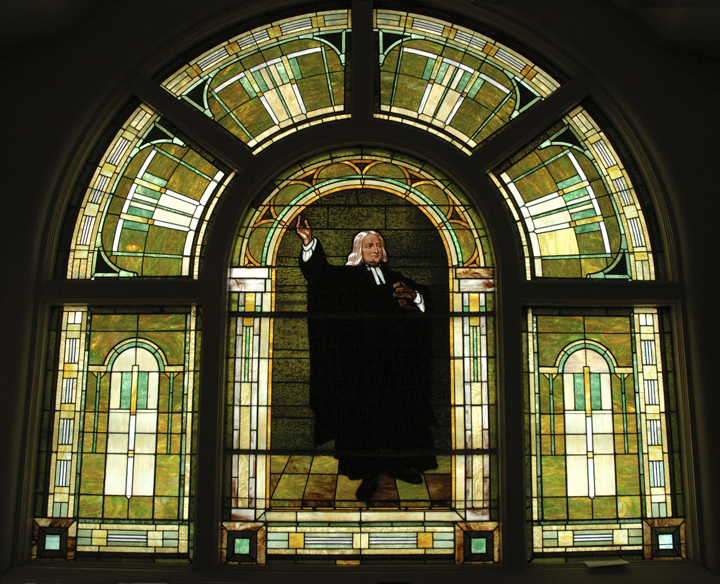
“What does it mean to use the Ancient-Future model of church in West LA?”17-85-BE3-134-08.0006-John Wesley

We come out of a United Methodist Church – which is a classic and beautiful expression of the Mainline tradition of Protestant Christianity.  The Loft is attempting to reclaim and hold onto the best of that inherited tradition … while at the same time engaging the culture around us in way that is contemporary and appropriate.
I’ll confess. It is a tricky section of water to navigate.

To use my favorite bowling analogy, there are gutters on each side that you want to avoid.
On the one side, you have a temptation to cater to the culture and concede so much of the Christian tradition that you have basically assimilated to the surrounding culture that you are nearly indistinguishable from it! This can happen in patterns of consumption, political views, sexuality, financial matters, or any other number of areas.

On the other side, you have the assumption that the inherited tradition, the given forms, are inherently relevant and effective in every place and in ever time since they were divinely delivered and historically proven. What this impulse to conserve leads to is reification of some previous era or expression of church that was culturally appropriate by which has since expired in its effectiveness in doing so. For a group whose gospel is, at its core, about incarnation … this is unacceptable.

This is why we think that the ‘Ancient-Future model’ of church is the best way forward for a young community.
Here is a short video about my recent experience with an old Apple TV that was given to me and why it triggered some thoughts about christian community for me.

Apple Updates and the Church from Bo Sanders on Vimeo.

In technology, when you fall enough behind on your updates, you can actually trap yourself with the inability to update. This is the definition of irrelevant. The christian spirituality that is employed in much of the North American church may be in this kind of danger. I am nervous that we are looking to get resources (updates) from sources (servers) that don’t exist anymore.

We are looking for solutions in things that don’t exist anymore.

The danger, for a religion that is at its core incarnation, is that the inability to be conversant with the surrounding culture in the epitome of irrelevance.

__________

Ancient-Future is a model that was popularized by Robert Webber before he changed his emphasis, focus and tone at the end of his life. His books on Faith, Worship, Evangelism and Time are supremely helpful and informative. 

My quoting him does not imply a wholesale endorsement of all of his works or thoughts. 

Religion and Consumerism’s Bricolage: in conversation with Philip Clayton

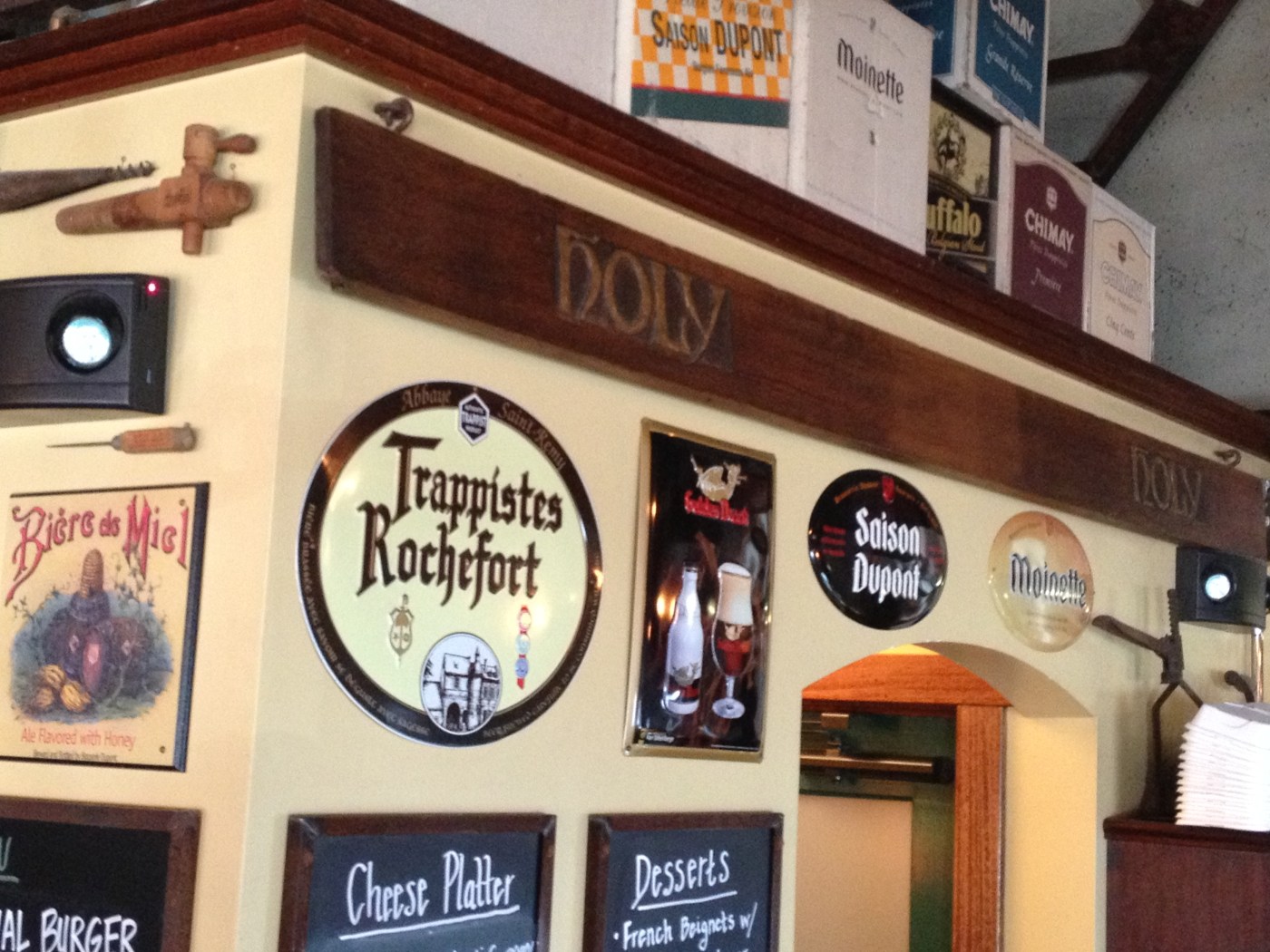
A couple of weeks ago I had a very interesting conversation with Philip Clayton. Several of us went out for lunch after the High Gravity session on Religion & Science. We were at a restaurant where the walls were decorated with a busy collection of reclaimed signs, old pictures and re-purposed trinkets.

Dr. Clayton was across the table from me and at one point I look up to notice that above his head was a sign that read ‘Holy’ on one side and ‘Holy’ at the other end. The words ‘Holy – Holy’ were framing either side of his head. IMG_2884

I tried to come up with something clever to say, scouring my memory for some passage from the Hebrew Bible or the book of Revelation to tweak. The window of opportunity closed because the conversation was quite intense. That morning the topic had been ‘Science & Religion’ and now we had expanded it to ‘Religion & Society’ – or more specifically to ‘Church & Culture’.

The conversation intensified and it became clear that neither Dr. Clayton nor Tripp was too happy with my cynical take on consumer mentalities when it comes to consuming religious experiences within a capitalist framework.

At one point I said “it is like that sign behind you: it’s not like the holy is absent from the space and all the activity that happening here – it’s just that it blends in and goes unnoticed in the midst of all the bricolage that it melts into.”

Somebody had reclaimed that wooden sign. There is a story behind it – there might have even been more to it (I wondered if it used to have a 3rd ‘Holy’ further down the line that had been lost).

But that is my point! In any gathering there are going to be those (like us at that table) who think that what is happening is legitimate, sincere, authentic, important and worth organizing your life around. The congregation is also going to be largely made up of those who are consuming a religious experience – and it is financially worth about the same amount as a movie, a meal, a game or a show.*

I will go even further: this is my great hesitation with those who want to ‘go back’ or ‘conserve’ with their religious participation. This impulse was never more evident to me than when I began interacting with those were into Radical Orthodoxy or with evangelicals who had converted to Eastern Orthodoxy or Catholicism. The ‘zeal of the convert’ can be a telling element when it comes to the anti-modern or counter-modern impulse.

An incongruity is exposed in the counter-modern impulse of these conserving movements. Never mind for a moment that often what is being conserved is born out of a patriarchal model – set that aside for a second.

I will attempt to make this in 4 succinct points:

  1. You do not live in the 14th or 16th century.
  2. You do not think like someone in a previous century.
  3. You do not engage in the rest of your week as someone in a previous century.
  4. You chose, as a consumer within a capitalist framework, to participate.

Those four things signal to me that even the most sincere, authentic, devout, and thorough engagement – whether a Pentecostal, Evangelical, Orthodox, Anglican, RO, Catholic, Mainline or Congregational expression – must account for the ubiquitous consumerism within which we all are saturated.

Dr. Clayton rightly said that I while I had a good point I was proceeding in far too cynical a manner with it. He is correct of course.

My aggressiveness is born out of a deep concern. What we say the church is about – what we believe the very gospel to be – is so vital and so needed in the world today, that we can not afford to ‘play pretend’ about previous centuries and blindly participate in consumerism all the while trumpeting the virtue of our chosen ecclesiastic community.**

The danger, in my opinion, is that religious communities will become nothing more than decorations on the corner of a neighborhood or one more option at the mall food-court. 

For christian believers, the holy is all round us. We can not afford for it to disappear among the bricolage nature of our hyper-advertised media-saturated existence.

The gospel, at its core, is incarnational. Our central story as Christians is flesh and blood in a neighborhood. The whole project is contextual – it only happens in a time and a place. We can never escape that. That is why romantic notions of past centuries or early manifestations can be dangerous distractions and fantastical facades.

We can’t afford to fade into the bricolage. IMG_2886


* plus it usually comes with free babysitting. 

** Some might object that they have not chosen but rather have ‘stayed’. I would argue that they did within the consumer’s capacity to do so. 

‘Who am I to judge?’ is an honest question

It is no secret that  I am a fan of many of the things (not all)  that the new Pope has been up to. So I was very intrigued when it came out that on his cross-Atlantic flight he took the airplane microphone and addressed reporters. RNS-Pope-Francis-flight-home-Catholic-News-Service

I was also surprised by the reports of the following sentence:

“If someone is gay and he searches for the Lord and has good will, who am I to judge?” — Pope Francis, July 2013

The running joke is of course that if you are the Pope … it’s kinda your job description! You might be the only person who is allowed to judge in some of your followers estimations.

These things have landed Francis on the cover of this month’s Sojourners magazine. They are advertising it this way:

Francis—refreshingly candid and seemingly repelled by the perks of the papacy—offers new hope for the Catholic Church and beyond. From the symbolism of him stooping to wash a Muslim woman’s feet to his harsh lambasts against a culture of greed and consumerism, this Jesuit from Argentina has captured the collective imagination of the world.

This has me thinking over the past week about the topic of judging. When I was an evangelical preacher we were very clear to distinguish between judging – which is defined by its connection to wrath – and evaluating ‘a tree by its fruit’  which christians are also commanded by Jesus to do.

Yes Jesus said ‘Do not judge’ but Jesus also said you can tell a tree by its fruit. The question “who am I to judge” seems to be a rhetorical one.

Even Miley Cyrus knows that Only God Can Judge, as she proclaims in her new video (for which I am sure that she should be judged harshly).

Now I am a pastor at a Mainline church in LA and I can honestly say that it is the least judgmental place I have ever been… but is that a good thing?  Don’t we need to make some moral evaluations?

I was getting ready to ask the HBC crowd how they have learned to navigate this cultural conundrum when my new favorite persons to quote – Brene Brown – came out with this tweet:

“When you judge yourself for asking for help, you are always judging when you give help.” @BreneBrown

Judging is clearly on people’s minds these day. It is everywhere in our cultural conversation. As we transition out of post-Christendom and cultural revolutions of 1970’s into an information age where everything is available to everyone all of the time … and your mom is your friend of Facebook ….  here is an honest question:

How are your navigating the challenge of “Judge not lest you be judged” ?

one favor I ask: let me know if you are even trying to live up to Jesus’ commands or if you have left that behind. I have a feeling it might make a difference in this discussion.  

Photo: Pope Francis addresses journalists on his flight from Rio de Janeiro to Rome, July 29. (Paul Haring/Catholic News Service)

Create a free website or blog at WordPress.com.

Up ↑