Search

Bo Sanders: Public Theology

updating & innovating for today

Tag

Global

Response to The (Non)Wesleyan (Non)Quadrilateral

Please read this is the “I’m having fun talking about something I love” voice.

A very good post was put up called: Once Again The Wesleyan Quad

I will now call it the “I Can’t Believe It’s Not Butter Should Not Be Allow To Use ‘Butter’ Blog”

The author and I have a lot in common: both United Methodist, both from Ohio, both academic.

The Butter Blog is right on so many points.

  • The Wesleyan Quad was not explicitly used by John Wesley in the 1700’s
  • Wesley looked to scripture first (Prima Scriptura) unlike other Reformed folks who claimed ‘Sola Scriptura
  • The Quad is not an symmetrical cube but a 4-part sequence which many of us have pointed out.

The Butter Blog is missing a couple of things:

  • Scripture, Tradition, Reason, and Experience are found in Wesley and easily retrofitted as ‘the Quad’
  • This is the same impulse that developed the canon of scripture because of it’s common use centuries after the founders.
  • The Quad was born out of the cultural need of the 1970’s and answered a question that was being asked in that context.

In my mind there are (at least) two vital reasons for the element of experience being added:

First, since 1906 the Pentecostal (and charismatic) movement has place primary importance on the experiential nature of Christian expression. I don’t think that we can afford to (or want to) poo-poo on the largest and fastest growing branch of Christianity globally.

Second, locating ‘experience’ as a site of theological reflection gives validity to the experience of those who have not had a chance to contribute to scripture, the tradition, or ‘reason’ (aka European philosophy) in the way that they may have wanted.

In this way: perspectives of women, people of color, and non-European contributions  are included and valued.


So when the Butter Blog argues that:

“Moreover, what too often happens in UM circles is that when the quadrilateral is employed, it is most of the time used for the purpose of pitting one of the four “principal factors” against the others (usually to pit experience against Scripture)”

Well, sort of … not against scripture … but to compliment the scripture and compensate for the lack in scripture …

I hate to be the white guy who has to point out that every person quoted in this Butter Blog seems to have something in common: Kevin Watson, Randy Maddox, Andrew Thompson, and N.T. (Tom) Wright.

As far as the quote:

“The problem, as Thompson rightly notes, is that we Methodists tend to be more American than Methodist.”

That is like saying that International Harvester tends to be more ‘harvester’ than international. Most Methodist (even in Ohio where the articles’ author is from) can’t even tell you what the ‘methods’ are.


I would like to point you in 3 other directions:


I have 50 other thoughts tonight but unfortunately it is late, and I have a 6am online session to teach for my East-coast seminary class.


BTW: I have an entire session in that seminary class about ‘the migration of meaning’ where we talk about everything from universities in Texas  – TCU (the ‘C’ being Christian) and SMU (the ‘M’ being Methodist) – to Emergent (from scientific thought to a ‘brand’ of post-evangelical hipsters).

A Global Table

One of my favorite aspects of being part of the Methodists is the global communion. Tomorrow happens to be global communion Sunday and I can not wait to preach and then invite people to the table.

My angle tomorrow is going to pair two sets of three:

The first level is directional. After Pentecost, the church spread in at least 3 directions:

  • south to Africa
  • east to Asia
  • west to Europe.

The second level is historic. Coming to the communion table:

  • Reaches back through time to connect us with the saints of the past
  • Wraps around the globe to connect us to our global sisters & brothers
  • Propels us into the future of serving the world that god loves so much

Here is a little video I made to promote this Sunday.

I have been thinking about sacraments lately as I transfer my ordination from a non-sacramental denomination (ordinances) to a sacramental one.

Sacraments are enacted symbols. In this way, they are both signs that point to a greater reality and they are performed signifiers that can never fully reveal or contain the antecedent they are attempting to signify.

Sacraments are both significant artifacts of the church and they are gifts and graces (charis) that both form and inform our faith and practice.

In this sense sacraments and corporate worship are a parable of the kin-dom. Jesus used parables (not earthly stories with heavenly meanings but earthy stories with heavy meanings) to slide underneath the listener’s defenses in order to interrogate the ‘way things are’ to subvert the unjust status quo and turn upside-down / inside-out the listener’s presumptions about the way things are and the way that God wants them.

This is the prophetic ministry of the church – to imagine the world a different way and to image what that looks like to the world around us.

I’m really looking forward to preaching this tomorrow.

Add an ‘S’ as a test

I started doing this several years ago. It is surprising how often it reveals something that significantly alters the perception of the topic. When a complex topic is overly simplified it actually makes it more confusing and becomes less helpful. Topics that are appropriately complex and multifaceted are not served by being pressed down or made mono.

Two historic examples and then some contemporary ones:

The Industrial Revolution, according to historians like John Merriman, was actually three industrial revolutions.

  • The first was an agricultural revolution which allowed people to grow more, which encouraged a bigger population and thus all the surplus labor that would be needed.
  • The second was inventions that impacted small groups of workers, like the cotton gin.
  • Then came the big one that generally gets all the headlines with big industry and coal burning factories.

The name ‘the industrial revolution’ is a bit of a misnomer that lumps these three together. They actually happened progressively over quite a long period of time.

The same happens with the ‘Protestant Reformation’. Most people don’t know that Luther and Zwingli were kind of up to two different things and that later Calvin came in (initially as a Lutheran) and then there were at least three little reformations. Then there was England’s Anglican movement that was doing its own thing, and the Anabaptists. That is 5 reformation movements.

When it comes to religions, it is often appropriate to add an ‘s’.

When we lump together the Jewish religion or the Jewish perspective, we may be overlooking the fact that there are three huge branches within Judaism, as well as many other splinters. There is a Reformed Judaism, a Conservative, and an Orthodox. They are very different from each other. You also have secular expressions of Judaism (cultural or ethnic).

Islam is the same way – there are over 80 ‘denominations’ of Islam. So when we say “Muslims _____” we may want to be careful and be more specific by adding a plural mentality and saying “some types of Muslims ______”.

Even within Christianity there are God knows how many different kinds of Christianity. So to say that “Christians believe ______” is more than challenging. It may be misleading.

There are several Judaisms, several types of Islams, and multiple Christian perspectives.

Sometimes people say things like “the Biblical Worldview” as if there is only one. There are actually many worldviews that informed Scripture. Certainly the view of those who wandered in the desert in the Exodus story had a different view of the world than Paul the cosmopolitan Roman citizen of Jewish descent. And one can clearly see that what Paul wrote in Romans 13 to submit to governments because they do God’s work was a different worldview than the person who wrote Revelation and called Rome ‘Babylon’ and a ‘whore who is drunk on the blood of that nations’. There are many examples that I could use but the important thing to note is that there are many worldviews in the Bible.

You also see this misnomer in the phrase “the early church”. Books like The Emergence of the Early Church and The Churches the Apostles Left Behind help expose just how many competing/complimentary groups were in the mix. What most people mean by use of the phase ‘the early church’ is the proto-orthodox notion of those whose views eventually won out.

It also helps out pastorally. It is so tempting to be prescriptive and formulaic in ministry – whether it is the advice we give or the way that we conceptualize the world and its workings. Let me give just 3 examples from the past month:

  • People have kids for all sorts of reasons. Starting a family can be motivated by several different impulses. Some parents view is as ‘legacy’ issue, for others it is an obligation. For some it is duty, for some it is a ‘gift’. Some parents didn’t know that it was an option not to procreate. For some there is a fascination with making something from your own body (I am quoting here) or seeing what a being that was half-them and half-their spouse would look like.

Dealing with family dynamics and expectations, then, is not a one-size-fits-all matter.

  • The same can be said for abortion. Women terminate pregnancies for so many different reasons. I get upset when I hear opponents of abortion painting with a brush that is so broad that a supremely complex issue gets boiled down to a single point and then used as a battering ram.

Motivations and factors both need to be addressed in the plural.

  • Missions is another topic that requires complexity. It is inaccurate to talk about ‘missions’ and mean one thing. It is astounding how many different reasons people have for becoming missionaries. It is also significant to clarify the type or kind of missions one is engaged in. At minimum there are 3: compassion motivated missions, colonial type missions, and salvation (anti-hell) driven missions.

There is much more to said on this one (especially historically) but at minimum we need to be clear when we are talking about missionaries that both their drive and their tactics can vary widely.

SO many examples could be used: ‘black’ voters, the female perspective, sexuality/celibacy, American ____, etc. Once you start adding an ‘s’ you will see more and more areas where it is applicable.complexity

When you put this all together you see that just adding an ‘s’ as a test can help address the inherent complexity within an issue by more accurately reflecting its intrinsic multiplicity. We will also discover important themes where it is not appropriate and that will allow us to appreciate those unique topics even more.

I’m interested in your thoughts, questions, and concerns.

Doing Theology in the 21st Century. or why Aquinas is a footnote

We are going to have to agree to disagree about some things. One thing that I would ask (in my generous orthodoxy style) is that we both acknowledge those things that we agree on as well as those we don’t.

The reason that is important is because of something that Phyllis Tickle points out (paraphrase): it is not that former (and maybe dominant) expressions go away, it is that they no longer hold the prime spot and wield the kind of power that they once did. They are all still around however. MP900405058

The interesting terrain that we inhabit in the 21st century is littered with artifacts and occupied by pockets of groups – possible ones that were once in the ascendancy. This is, as I am often saying, the bricolage nature of our cultural/societal environment.

You have methodists who have no idea what the methods were. You have ‘Amish’ fireplace stoves being mass-produced and sold on TV (think about it). You have can still, more tellingly, find actual Amish folks if you know where to look.

Here are two things you need to know:

  1. I come to the theological endeavor as a contextual theologian.
  2. In my context, practical theology and its qualitative methods (interviews, case studies, ethnography) is my chosen approach.

There are several implications of these two things. Unlike Tripp, I don’t do systematic theology.* It is not that I don’t value other branches of theology. In fact, practical theology as a field is in a major renovation, at least in part, in order to join the other 4 primary branches of theology that do their own research and provide their own innovations:

  • Historical Theology
  • Biblical Theology
  • Systematic Theology
  • Philosophical Theology

As my professor Kathleen Greider says:

Practical theologians commonly assert that the primary text of our field is lived experience– diverse persons and communities that are contextually located, inextricably related, and experiencing each other through countless interconnections and interactions.

Almost invariably when I am enduring critique from a conversation partner who is more conservative than myself, it is only a matter of time before they bring up Aquinas. I don’t get the nuance of Aquinas. I didn’t distinguish between the early and late Aquinas. I wasn’t careful to appropriate this or that of Aquinas’ formulations. I didn’t read the right translation of Aquinas. (the same things with Barth and Scotus too) 

What I am saying is that we don’t need to understand Aquinas better or deeper. 

We are to do in our day what Aquinas did in his.

As a contextual theologian I don’t think that is accomplished by obsessing over Aquinas. I’m not saying that we aren’t generous or respectful … I’m saying that Aquinas lives neither where we do nor when we do. He lived in a different context and time.

Call this dismissive if you will but  The Church’s future is not to be found in Europe’s past. I say it all the time.

You may disagree with me about this. That is fine. I’m just telling you where I am coming from since our latest TNT has raised some eyebrows, questions (and hackles) both here and on twitter.

Historic thinkers like Aquinas never saw what I call the 5 C’s of our theological context:

  • post-Christendom
  • Colonialism
  • global Capitalism
  • Charismatic renewal (especially Pentecostalism in the Southern Hemisphere)
  • Cultural Revolutions (from Civil Rights in the 60’s to the ‘Arab Spring’)

Add to those 5 to pluralism, the internet and a growing environmental crisis and you have the 8 things we as theologians need to give great attention and care to. They are the context in which (and for which) we do theology in the 21st century. Go listen to our interview with Grace Ji-Sun Kim if you have questions about this. 

You may want to focus more on the christian tradition (like Augustine or Aquinas) and I would understand that – I view that impulse through a Lindbeckian tri-focal lens. I understand the work you want to do within that cultural-linguistic silo. [I’m having fun in this part for those unfamiliar with my style]

Disagree as we might about the importance of a writer in the 3rd or 13th century – I just wanted you to know where I was coming from and what my focus was.**

 I would love it if everyone would leave a comment and let me know how this sits with you. 

_________________

*One implication of that is that when I read systematic theologians I do so though mostly thought trusted secondary sources. Admittedly, I don’t major in primary sources – for reasons I hope are clear in this post. I find scholars who know their stuff like Elizabeth Johnson, John Caputo, Joseph Bracken and Stuart Murray and trust them.

** If you want to read more about my approach check out ‘After MacIntyre’ that I wrote a while ago but never put up on the blog. It will explain my concern about everything from consumerism to hipsters and the radical orthodoxy project.

Speaking in Tongues Isn’t What It Used To Be

On the latest episode of TNT I was asked to quickly define ‘Glossolalia’ a.k.a. speaking in tongues. I said some things in that opening segment that I want to clarify here.

Here are 4 thoughts:

Initial Design 

The original miracle that we read about in Acts 2 and the story of Pentecost is that people heard the gospel message in their own tongue. While the speakers, filled with Holy Spirit power, were unaware of the language they were speaking, the hearers were not.

This is a significant point because the original miracle of speaking in tongues was an outward-external boundary crossing event. It was missional. It would be one thing if the gift of tongues was that I could suddenly speak French and knew what I was saying. But that is not how it happened. The miracle is not on the part of the one speaking but on the side of the one hearing. Tongues wasn’t about the speaker … it was impactful for the hearer.

Change Is Not Bad 

Most contemporary pentecostal manifestations of glossolalia are no longer boundary-crossing missional expressions. Modern tongues speaking is almost exclusively within the context of ecstatic worship services and are meant to edify the person with the gift and the Lord who they are praising.

Now before anyone becomes defensive … keep in mind who is saying this. I am not a conservative at any level. I am always calling for the faith to be updated and modified. I am convinced that the church is called to adapt and evolve in order to accomplish in our culture what Jesus did in his and the early churches did in theirs.

I don’t think that change is a bad thing – quite the opposite. We are called to continual change.

The only reason that I bring this up is to clarify that what is called ‘speaking in tongues’ today is not exactly the same thing was happening in scripture. In scripture it was a missional move – an external focus – that crossed cultural and linguistic barriers.

This is what we call ‘historic drift’.

Master Signifier 

How we see speaking in tongues today often accomplishes the opposite of that original aim. Speaking in tongues is now an internal matter – not out on the streets but inside a house of worship.

Speaking in tongues is also no longer missional (external in focus) – for the hearer – but is actually an internal matter of both personal edification and (here is the important part) belonging to a community.pentecost01

When glossolalia is held up as a mark of validation it become a boundary marker (or master signifier) for who belongs to a given group. When the sign is a validation or litmus test for membership, it has ceased to be what it was originally designed for and has become something else.

That is all I am saying. Speaking in tongues today is almost never the same thing that we see in the Bible. It has largely become a master signifier for membership in pentecostal-charismatic communities.

One of the reasons I believe this to be the case is that our churches have not been boundary-crossing missional organizations. They have become internally edifying communities of belonging – which is not a bad thing! It’s just not exactly the same thing that we see in Acts 2.

The Opposite of Cessation 

I was asked by our guest on the podcast if I was a cessationist. I said that I am the opposite of that. I believe that the revival of tongues (most point to the Azusa Street Revivals of 1906 as key moment) in the 20th Century to be a genuine work of God’s Spirit. I know that in many parts of the world – especially areas in S. America, Africa, and Asia – that the pentecostal expression has been a wild-fire of renewal for the church and has been a primary force in its mission and zeal.

In saying that I also want to point out that glossolalia doesn’t only happen in Christian contexts. It also manifests with Hindu gurus, in the syncretistic Haitian religions, and in shamanistic spirituality around the world.  Why do I bring this up? Because I think it important to clarify two things:

  1. God’s Spirit is not only at work in Christians. So much of what we have inherited in Christendom and Colonial frameworks does not allow us to recognize this.
  2. Glossolalia is something that humans experience in ecstatic worship.  It is not super-natural. It is quite natural.

Being that glossolalia is neither exclusive to christians nor super-natural, I think it would be interesting to ask what role it might play in crossing boundaries for our multi-national, cross-cultural, inter-racial, bi-lingual, pluralistic world of the 21st century. What if we confessed that speaking in tongues had become a master signifier and returned it to it’s original missional design where the focus is not on the speaker but the effect it has on the hearer?

I have often been in meetings, cities and seminaries where over 100 languages are represented. It has stoked my imagination for what a new-type of glossolalia could mean for the church to come.

5 Biggest Pastoral Changes in the Past 5 Decades

I’m preparing to facilitate a conversation with some colleagues in the new year about ministry and honoring tradition. I want to begin – and thus frame – the conversation with the changing culture that we are products of, interact with and attempt to minister to.

It is a different way to approach the topic of tradition, admittedly, but my thought is that we start where we are and then trace threads into the past to uncover their significance. I almost always find it unhelpful to start in the past – say at the Protest Reformation – and then slowly work our way up. It is simply too limiting (in scope) and cumbersome (in process) for the contemporary expectations of ministry.

I have been reading a little Gordon Kaufman. He has me thinking about the ‘nuclear age’ and how deeply that shift, from the end of WWII, has impacted us sociologically, psychologically, and spiritually. I take this as my launching off point.

 So here are my Big 5 – in no particular order. I wanted to throw them out here and see what others who are older, or wiser, or more insightful might add to the list or modify.

 Pervasive Pop Psychology  – My dad tells a story about interviewing retired pastors 30 years ago. He asked them when things seemed to change. All of them, without exception, pointed to the window from 1968-1970. They talked about Woodstock, Vietnam, and Nixon among other things.

Many of them also talked about people’s awareness and pop psychology. I will always remember the story of a son who came home from college to visit his folks on the farm. He tried to talk to his dad about his feelings, motivations, childhood memories, his subconscious, etc.  His dad responded, ‘Son, what the hell are going on about?’ He just had no frame of reference for it. Similar stories were repeated, in differing configurations, over and over by  the ministers.

Pop psychology has permeated every facet of society. From Oprah on daytime TV to Self-Help books – it impacts what people expect from a pastor and what they want from things like premarital counseling.
In my first 10 years of ministry, I often said that I would have more prepared for the actual way I spent my week if I had gotten a degree in psychology  rather than in Bible.

Biblical Scholarship – speaking of the Bible, I am shocked as to how much different those conversations go than they did 20 years ago when I was trained in Apologetics/Evangelism.  Between the Jesus Seminar, the Da Vinci Code and Bart Ehrman popularizing the stuff many pastors knew from seminary but were not allowed to say in the pulpit, it is a very different playing field.

It is an odd split: people often know little of the Bible – because they know so much stuff about the Bible. We can’t assume even a Sunday School understanding or a surface devotional reading. But at the same time, the culture wide awareness of critical Biblical scholarship is shocking. That was not true 50 years ago.

The Internet – The Internet changes everything. From the way people spend time to the way that they shop for a church. Facebook has changed how people connect to each other. Google has changed the way people access information. It is impossible to overstate how big of an impact the Internet has had on Western society. If you are still doing church the way you did 50 years ago – and think that it will have the same effect – you are fooling yourself. You may have the same seed, but the soil itself has changed. It will not grow the same crop or produce the same fruit.

Two little examples: When kids who grew up in your church come home from college and sit in on Sunday school (for example). They will assume that they get to share their opinion. They don’t sit quietly and honor the elders by talking last. They will raise their hands and talk first. Is it that they are over empowered? No. It is that they assume that they get to help shape the discussion and their opinion is valid. They don’t sit quietly and try to get up to speed or catch up on what they have missed.

  • This is the difference between Web 1.0 and Web 2.0.  A church website is 1.0 – the staff puts out the information that it wants people to see. You read it like a newspaper. It is not interactive. Facebook is 2.0 – it creates the environment but does not generate the content. Young people live in 2.0

Doug Paggitt talks of ‘the pastor as Google’. I love this. People don’t go to Google for Google. It is not a destination. It helps people get to their destination. If it does this well, people trust Google and go it often. Pastor used to be like encyclopedias. They were a resource, a destination for information. Now, the pastor’s office is not a destination, the art of pastoring is help people find theirs. If we do that well, they trust us and come back the next time they need direction.

Pastor as encyclopedia is a repository of information. Pastor as Google is a resource that knows how to find the information.

24 Hour News & Christian Media –  Cable news and Christian radio probably have a bigger impact on the people who fill the pews that any pastor can be expected to have in a 30 minute sermon once a week.  There is no other way to say it, the narrative that is being put out on media outlets like Fox News (Clash of Civilizations) or Christian Radio (the 6 Line Narrative) is so pervasive and so monolithic that it can feel as if your parishioners are being pastored far more by their TV and car radio that you will ever be able to.

This is also part of why our country and culture have become so:

  1. polarized
  2. adversarial

I am horrified by this trend more than all the others combined. I think that it hurts the heart of God and I know that it hurts our Christian witness.

Fractured Globalism  and PostModernity – People have great troubles conceptualizing and articulating how fractured, dislocated, overwhelmed and powerless they feel in the global marketplace. Things are not simple now. Things have never been more complex and overwhelming. Look at the food on your table? Do you know where it comes from? Think about your Thanksgiving dinner last week and imagine how many miles and from how many countries those ingredients were trucked to end up on your table. You might be shocked.

Think about your car. Was it all made and assembled at the same plant? Or even in the same country. The automotive industry was fairly straight forward 50 years ago. Now it is an example of inter-national, multi-corporation conglomerates. We have been de-centered, and people feel it. The way we conceptualize ourselves, our connection to family, the way we picture the world working, the universe and thus God. The best book I have read on the subject is “Identity, Culture, and the Postmodern World” by Madan Sarup.

The PostModern Turn – speaking of PostModern, this may be the biggest of the 5 changes. It is funny to me that some christians still want to debate if the category is real just because it can not be succinctly or universally defined (how very modern!)  Look, call it what you want: late-modernity, hyper-modernity, high-modernity, or some other thing – what can not be denied is that something big and deep has shifted. Blame it on the philosophers (Derrida, Lyotard, Foucault, etc) if you want. Make up a new name for it if you must. But please stop pretending that what we are looking at is nothing radical or unexpected. Even the ostrich thinks that it is time to pull your head out of the sand!

One interesting reaction, and this applies to denominations, is the counter-modern responses that want to go back to an imagined past and reclaim a romantic pre-shift relationship between the Christian religion and

  • society
  • the economy
  • science
  • other religions

You can see this in counter-modern responses like Radical Orthodoxy (retreating to the hills of Thomism), Post-Liberal thought, Hyper-Calvinism and the Tea-Party in politics. Even if you pastor with an established denomination (and many don’t) you have to contend with these fractious groups that will impact your congregation.

Those are my 5 Big changes for Pastors over the past 50 years. I would love your thoughts!  What would you take out and what would you add?

Race and things like Politics

by Bo Sanders 

[I initially wrote this for Ethnic Space & Faith
but thought it would be fun to cross pollinate.]  

Despite what the caller said on this week’s ‘Take Them to Task’ segment from the Smiley & West show said, race is still an issue in North America – not everyone is color blind. In fact, here are four stories that caught my attention in the past couple of days in the areas of politics, music, TV, and sport:

 Politics:  Much analysis is being done – and will continue to be done – about the U.S. Presidential election.  I had heard leading up to November 6 that if Gov. Romney was to win, he would have to do it with the largest percentage of white voters in recent history.

While he did not win yesterday, the ethnic breakdown was stark and is causing much consternation in conservative circles. Whites, and especially Evangelicals, reports say, voted over 80% for Romney. It is almost exactly the opposite (some reports say as high as 93%) of Latino voters went for Obama.

My only point is that if you think that the election of a Black president makes this a post-racial country, you have another thing coming. Race is still an issue and will continue to be an issue as we move to 2048 when Whites will not be a majority in America.

How will we lead? How will we transition? How will we hear new voices? 

Music: You may have seen the uproar over the music group No Doubt’s new video “Looking Hot”. Rolling Stone describes it this way:

The clip for the second single off their long-awaited new album, Push and Shove, featured a Wild-West theme, replete with tee-pees, feather headdresses and smoke signals. After releasing the video on Friday, No Doubt quickly drew complaints for using the stereotypical imagery, with threads such as “Appropriating Native American culture” appearing

The band did apologize and did remove the video.  Continue reading “Race and things like Politics”

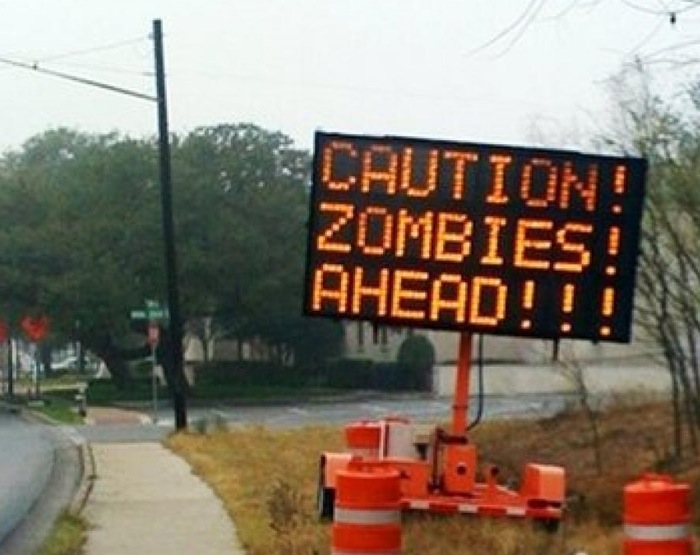
Haunted by Zombie Categories

I have spent that last two weeks reading and shoring up my familiarity with Creation Ex Nihilo and the Trinity respectively. As fascinating as that has been,  I have to admit that am speculated out. I can only take so much speculative theology. This is part of why I am so happy to be in the field of Practical Theology. The other reason is that I have a real heart for the church.

I love Practical Theology. It is a fascinating field that is in the midst of a significant reinvention of itself. As an interdisciplinary engagement within the academy, it interacts with local faith expressions (like the church) in the hope to mutually benefit both the local church and the academy as a sort of go-between.

One of the major changes in this reinvention comes from the recognition that Practical Theology had not doing its own homework. It had fallen into a stale habit of simply attempting to apply the work of other disciplines. Applications of other’s work is fine at some level, but that is no way to gain credibility within the academy. If you want to be taken seriously in that world, you have to endeavor to innovate and explore – just like everyone else.

John Reader is one of my favorites. In the book Reconstructing Practical Theology: the Impact of Globalization the author examines the impact of globalization on everything from families and spirituality to the economy and ecology. There are two specific aspects of the book that I want to post about today and tomorrow: ‘Zombie Categories’ and ‘why the Eucharist isn’t Enough’.

Zombie Categories

Change can be seen in the categorization used within scholarship, specifically as it applies to fields such as practical theology. Reader borrows the term “zombie categories” from Ulrich Beck to refer to existent categorization that are fundamentally dead but which still limps on refusing to go away quietly. This situation forces us to exist temporarily in parallel worlds both utilizing “old, familiar and increasingly redundant” categories alongside “new, emerging and untested” ones.

Reader examines the historical developments and transitions, quickly surveying from the early church to the professionalism and secularism of the twentieth century. This is why it is so important for contemporary theologian to interact with fields such as psychology, sociology, economics, and even the political. As much as I appreciate and have learned from the Big 4 of Theology (Systematic, Historic, Biblical and Philosophical).

In a quick survey of the territory it is becomes clear that the issues encountered under the heading of globalization are not simply a series of incremental changes to which we must adapt to keep operating. The impact of globalization challenges the very frameworks and concepts that are familiar to the practice of Christian ministry.

I get push-back all the time for saying that we need to reexamine and desperately reinvent the very frameworks and vocabularies with which we engage in ministry.

The concerns of local ministry and pastoral care along with the conduct of worship and the diverse challenges needing to be addressed in any context ask something very distinct from us now. The transient nature of globalization paired with a virtually liquid social structure requires a different set of questions and a unique collection of frameworks to adequately address the challenges of ministry and spirituality in a world where the boundaries are constantly shifting. These concerns are most appropriately addressed by re-imagining internal categories inherent to the tradition, partnered with the resources made available by engaging with “the insights of other disciplines”.

This is not about answering the same old questions in slightly different ways for our new context – this is about asking entirely different kinds of questions about the formation of self, the family relationship, construction of community and the nature of religion.

Tomorrow I want to look at how consumerism forms our concept of ‘self’ and why the Eucharist – no matter how tightly we hold to it or how faithfully we perform it – address what is going on with us these days. But first I needed to state how deep the change is and how profound its impact on us is. Cleverly updated answers to the antiquated questions are not going to cut it anymore.

Something else is needed. Our world is not simply a bigger version of what used to be. When people keep insisting that ‘this’ is just an amplified version of ‘that’ they may be missing the point of what it is exactly that we need to be doing here.  “Doing the same thing Sunday after Sunday” may be the worst idea in the history of the church. It may not be –  but it is sure to kill us while we lie in the very bed that we made for ourselves. 

Originally posted at HBC 

Economy and Ecology: the future of the past (part 3 of 3)

I left off in part 2 by imagining what might be on the other side of the ‘bridge’ after we get past the two trolls of colonial christianity and environmental dualism. My hope is that there is a different way to be in the world.

I admit that we can’t go back. We can’t undo Colonization. We aren’t going back to family farms. We can’t refreeze the polar ice caps or re-create the Glaciers in Glacier National Park.  As they say ‘we shall not pass this way again’.

My hope is not to reclaim some previous ideal of human community. My desire is to explore a realistic assessment of what is possible (and preferable) given the past developments and as-is structures of existence.

Here are three groups/conversations that give me a little hope:

The Environmental-Philosophical crowd. People like Bill McKibben have been sounding the alarm for quite a while and have since moved to talking about a radically different planet termed “Eaarth” in which we will need to go small and local.

On a larger scale, our whole civilization stands on the edge of collapse because the data inputted into our risk management models come from the last couple of hundred years, a very atypical time. A giddy time, high on oil… Our time, on every front, has been marked by the dizzying Alice-on-her-first-pill explosion in the size of the human enterprise. For almost all of human history, our society was small and nature was large; in a few brief decades that key ratio has reversed. – p. 105

Native Communities: Three years ago I got to take part in two conferences that altered the way I see the world and think about the future. The first was the Theology of the Land conference at George Fox Seminary. The second was a NAIITS gathering at the George Fox undergrad campus. Randy Woodley continues to be a voice of reason and reconciliation in an increasingly complex environment. I am anxiously anticipating the release of his newest book this year that deals with the concept of Shalom and Creation.

Process and Eco-Feminist Theology:
Last month I helped organize an event that brought together the Emergent church and Process theology.  One of the key folks in that conversation is John Cobb, author of Spiritual Bankruptcy. Cobb’s and others in the conversation are deeply involved in both ecology and economy from a theological perspective. I was greatly encouraged to hear about projects from around the country of communities taking seriously the reality we find ourselves in. From small neo-monastic communities to universities to political & civil engagements, there is a growing awareness that something has got to change.

  • The way that we have lived
  • the rate at which we have used resources
  • the expectations for perpetual growth
  • and economic prosperity

have exhausted creation and bankrupted modern human civilization.

This is not a ‘the sky is falling’ mentality. This is a ‘new reality’ perspective that the damage is done and we can not go back or turn back the clock. This just is the way it is now. But if global capitalism, and its mutant offspring – consumerism, continue to go unchecked … let me say it a different way: the church has a message and a historic practice that can engage voices of health and community. Unfortunately, the church herself has been seduced and gone into the business of supply and demand. Those days need to come to an end. It betrays her calling and compromises her message.

The first step is to repent of the Cartesian dualism and the second is to resign from the colonial impulse. After that we can embrace the truth that we are both a product of and a participant in nature and that mutually edifying, inter-connected, trans-national, multi-racial community is our hope for the future.

The expectation of one big global community is ruining us. The future is small, diverse, multiple, and interdependent.

originally posted at Ethnic Space

Create a free website or blog at WordPress.com.

Up ↑