Different in degree or has it become a different kind of thing?
Spelling Bee, Military, Religion, Farming, etc.
This is a follow up to Meaning Migrates.
We live in a time when change is inflamed by globalism, technology, and money.
Different in degree or has it become a different kind of thing?
Spelling Bee, Military, Religion, Farming, etc.
This is a follow up to Meaning Migrates.
We live in a time when change is inflamed by globalism, technology, and money.
Everything changes and meaning migrates. Below is a video about the migration of meaning.
Examples:
Military: from D-Day and the beaches of Normandy 75 years ago to the War on Terror and drones now.
Evangelicalism: from European and British examples over 100 years ago to Billy Graham and now 81% support for Trump.
Methodism: 300 years of historic drift
Farming: from Agrarian society to Agribusiness and Industrial Farming
Masculinity: in just the past 3 generations the meaning of ‘manhood’ has changed.
Politics: from ‘the party of Lincoln’ to the loss of conservatism. Also the ‘death of the Liberal class’.
Our access to truth is:
The result is that meaning is:
What inflames change all the more in our exponential times of cultural conflict are:
Globalization – Transnational reality as a legacy of colonialism
Technology – Internet, Social Media, etc.
Finances – capitalism in the 21st century
Just check out these stories in the news right now:
Climbing Mt. Everest has changed
China has changed global markets
The Mississippi River is being held by technology and money
Here is a follow up video for the blog post (2 weeks ago)
You can read the full blog at [this link] and either comment here or there. I look forward to continuing the conversation.
Next up: There is no neutral anymore
This week I want to offer a 4-part series that addresses some issues behind the current state of affairs.
People are concerned about what they see happening right now. There are geographic divisions that seem increasingly pronounced. There are generational, political, and racial division that are inflamed at troubling levels. The news cycle, social media, and institutional corruption (banks, schools, churches, government, hospitals, Hollywood, Washington, etc.) provide a constant string of crisis and controversy.
Things seem to have escalated quite a bit in the past couple of years. Some people will say ‘every generation thinks things are chaotic and out of control’ and there is some evidence of that. However, we live in a unique era when there are the some distinct factors causing an intensification that is notable.
Change is a constant, we know that. Change at this rate, is not. We live in a time of exponential (not just incremental) change. It is no wonder that this environment breeds so much conflict and chaos.
One of the things that I would like to explore is the way that following 3 factors come together in a troubling way:
The connection between those three might not seem clear initially, but it is the way that they come together in the 21st century that is relevant for our conversation.
Consumerism is so assumed that it often goes unnamed. It is as if we are on automatic pilot. Buying things has become second nature. I know people who claim to be Christians who can go a whole day (or days) without praying but can’t go a day without making a purchase. Capitalism is the real religion of the West. [1]
Consumerism makes us individuals – or is it that individualism makes us consumers? … either way, we have exposed the root of the problem. Speaking a language, participating in an economy, procreating and raising the next generation, and nearly every other human activity is a communal enterprise that requires cooperation and mutuality. Individualism is a mental fiction we have been sold that fails us at nearly every turn.
Globalization has brought our communities into closer proximity than ever before. We have never had this much access to or contact with one-an-other. It almost doesn’t matter where you live anymore, you have access to goods from all over the world. In fact, you do business with, go to school with, and stand in line with people from all over the world. You may all have different religions, worldviews, or notions of community and belonging. We live in age of radical connection and proximity …. but maybe not overlap. And therein lies the problem for our concern this week.
Pluralism is then a relevant factor that completes our trio. As individuals whose communities are in great proximity to each other, we have to develop an approach to one-an-other.[2] Some of us feel like we have does this well. Which is why it is so baffling why it cause some of our fellow citizens so much agitation and even anger. ‘Difference doesn’t need to lead to division’ we say, and if attitude or acceptance was the only issue we might be right. The problem is that the first two ingredients to trio are the wood and gasoline that make our current environment so flammable. Attitude (or our approach) is just the spark that makes that situation combustible.
Here is the most important thing to understanding our current culture:
Our society is a set of fragments – leftover remainders – of previous expression that may not be compatible with other or newer expressions.
Again – our society is a set of fragments, leftover remainders, of previous expressions that may not be compatible with other or newer expressions. More on this tomorrow. The examples of this phenomenon are endless once you know what you are looking at. Think about religion, Christian denominations, theories of educations, economics, politics, nationality and race, pre-1975 military, for-profit prisons, policing strategies, parenting styles, marriage equality, even grammar and texting language.
Here is a picture that I want to utilize for this 4-part series. It is a piece by my neighbor Jeff and it really speaks to me.

Our circles (communities) have diversity and differentiation within them. Those circles are in close proximity to each other and are even connected … but without overlapping. They are not integrated. They do not bleed into each other. They are distinct from one-an-other.
What makes this proximity profound is that the newer circles are smaller and bolder but are foregrounded on other circles that are faded but still present. Those larger circles are older and not as pronounced but influential. They haunt the work. They are ghosts and shadows to the primary feature. They are echoes of the past who still exert their voice. Their influence has faded but their effect still remains. The current configuration and focus wouldn’t make sense without them.
Tomorrow we talk about the nature of these remaining fragments and how people who think about such things differ on the subject.
_____________________________
[1] There are so many great books on this, including For The Common Good by Daly and Cobb and What Money Can’t Buy by Sandel. I would also recommend the non-academic book The Suburban Christian by Hsu.
[2] I find this way of writing it helpful. It may seem clumsy at first but it will bear fruit later in the series.

 I’m preparing to facilitate a conversation with some colleagues in the new year about ministry and honoring tradition. I want to begin – and thus frame – the conversation with the changing culture that we are products of, interact with and attempt to minister to.
It is a different way to approach the topic of tradition, admittedly, but my thought is that we start where we are and then trace threads into the past to uncover their significance. I almost always find it unhelpful to start in the past – say at the Protest Reformation – and then slowly work our way up. It is simply too limiting (in scope) and cumbersome (in process) for the contemporary expectations of ministry.
I have been reading a little Gordon Kaufman. He has me thinking about the ‘nuclear age’ and how deeply that shift, from the end of WWII, has impacted us sociologically, psychologically, and spiritually. I take this as my launching off point.
So here are my Big 5 – in no particular order. I wanted to throw them out here and see what others who are older, or wiser, or more insightful might add to the list or modify.
Pervasive Pop Psychology – My dad tells a story about interviewing retired pastors 30 years ago. He asked them when things seemed to change. All of them, without exception, pointed to the window from 1968-1970. They talked about Woodstock, Vietnam, and Nixon among other things.
Many of them also talked about people’s awareness and pop psychology. I will always remember the story of a son who came home from college to visit his folks on the farm. He tried to talk to his dad about his feelings, motivations, childhood memories, his subconscious, etc. His dad responded, ‘Son, what the hell are going on about?’ He just had no frame of reference for it. Similar stories were repeated, in differing configurations, over and over by the ministers.
Pop psychology has permeated every facet of society. From Oprah on daytime TV to Self-Help books – it impacts what people expect from a pastor and what they want from things like premarital counseling.
In my first 10 years of ministry, I often said that I would have more prepared for the actual way I spent my week if I had gotten a degree in psychology rather than in Bible.
Biblical Scholarship – speaking of the Bible, I am shocked as to how much different those conversations go than they did 20 years ago when I was trained in Apologetics/Evangelism. Between the Jesus Seminar, the Da Vinci Code and Bart Ehrman popularizing the stuff many pastors knew from seminary but were not allowed to say in the pulpit, it is a very different playing field.
It is an odd split: people often know little of the Bible – because they know so much stuff about the Bible. We can’t assume even a Sunday School understanding or a surface devotional reading. But at the same time, the culture wide awareness of critical Biblical scholarship is shocking. That was not true 50 years ago.
The Internet – The Internet changes everything. From the way people spend time to the way that they shop for a church. Facebook has changed how people connect to each other. Google has changed the way people access information. It is impossible to overstate how big of an impact the Internet has had on Western society. If you are still doing church the way you did 50 years ago – and think that it will have the same effect – you are fooling yourself. You may have the same seed, but the soil itself has changed. It will not grow the same crop or produce the same fruit.
Two little examples: When kids who grew up in your church come home from college and sit in on Sunday school (for example). They will assume that they get to share their opinion. They don’t sit quietly and honor the elders by talking last. They will raise their hands and talk first. Is it that they are over empowered? No. It is that they assume that they get to help shape the discussion and their opinion is valid. They don’t sit quietly and try to get up to speed or catch up on what they have missed.
Doug Paggitt talks of ‘the pastor as Google’. I love this. People don’t go to Google for Google. It is not a destination. It helps people get to their destination. If it does this well, people trust Google and go it often. Pastor used to be like encyclopedias. They were a resource, a destination for information. Now, the pastor’s office is not a destination, the art of pastoring is help people find theirs. If we do that well, they trust us and come back the next time they need direction.
Pastor as encyclopedia is a repository of information. Pastor as Google is a resource that knows how to find the information.
24 Hour News & Christian Media – Cable news and Christian radio probably have a bigger impact on the people who fill the pews that any pastor can be expected to have in a 30 minute sermon once a week. There is no other way to say it, the narrative that is being put out on media outlets like Fox News (Clash of Civilizations) or Christian Radio (the 6 Line Narrative) is so pervasive and so monolithic that it can feel as if your parishioners are being pastored far more by their TV and car radio that you will ever be able to.
This is also part of why our country and culture have become so:
I am horrified by this trend more than all the others combined. I think that it hurts the heart of God and I know that it hurts our Christian witness.
Fractured Globalism and PostModernity – People have great troubles conceptualizing and articulating how fractured, dislocated, overwhelmed and powerless they feel in the global marketplace. Things are not simple now. Things have never been more complex and overwhelming. Look at the food on your table? Do you know where it comes from? Think about your Thanksgiving dinner last week and imagine how many miles and from how many countries those ingredients were trucked to end up on your table. You might be shocked.
Think about your car. Was it all made and assembled at the same plant? Or even in the same country. The automotive industry was fairly straight forward 50 years ago. Now it is an example of inter-national, multi-corporation conglomerates. We have been de-centered, and people feel it. The way we conceptualize ourselves, our connection to family, the way we picture the world working, the universe and thus God. The best book I have read on the subject is “Identity, Culture, and the Postmodern World” by Madan Sarup.
The PostModern Turn – speaking of PostModern, this may be the biggest of the 5 changes. It is funny to me that some christians still want to debate if the category is real just because it can not be succinctly or universally defined (how very modern!) Look, call it what you want: late-modernity, hyper-modernity, high-modernity, or some other thing – what can not be denied is that something big and deep has shifted. Blame it on the philosophers (Derrida, Lyotard, Foucault, etc) if you want. Make up a new name for it if you must. But please stop pretending that what we are looking at is nothing radical or unexpected. Even the ostrich thinks that it is time to pull your head out of the sand!
One interesting reaction, and this applies to denominations, is the counter-modern responses that want to go back to an imagined past and reclaim a romantic pre-shift relationship between the Christian religion and
You can see this in counter-modern responses like Radical Orthodoxy (retreating to the hills of Thomism), Post-Liberal thought, Hyper-Calvinism and the Tea-Party in politics. Even if you pastor with an established denomination (and many don’t) you have to contend with these fractious groups that will impact your congregation.
Those are my 5 Big changes for Pastors over the past 50 years. I would love your thoughts! What would you take out and what would you add?

by Bo Sanders
[I initially wrote this for Ethnic Space & Faith
but thought it would be fun to cross pollinate.]
Despite what the caller said on this week’s ‘Take Them to Task’ segment from the Smiley & West show said, race is still an issue in North America – not everyone is color blind. In fact, here are four stories that caught my attention in the past couple of days in the areas of politics, music, TV, and sport:
Politics: Much analysis is being done – and will continue to be done – about the U.S. Presidential election. I had heard leading up to November 6 that if Gov. Romney was to win, he would have to do it with the largest percentage of white voters in recent history.
While he did not win yesterday, the ethnic breakdown was stark and is causing much consternation in conservative circles. Whites, and especially Evangelicals, reports say, voted over 80% for Romney. It is almost exactly the opposite (some reports say as high as 93%) of Latino voters went for Obama.
My only point is that if you think that the election of a Black president makes this a post-racial country, you have another thing coming. Race is still an issue and will continue to be an issue as we move to 2048 when Whites will not be a majority in America.
How will we lead? How will we transition? How will we hear new voices?
Music: You may have seen the uproar over the music group No Doubt’s new video “Looking Hot”. Rolling Stone describes it this way:
The clip for the second single off their long-awaited new album, Push and Shove, featured a Wild-West theme, replete with tee-pees, feather headdresses and smoke signals. After releasing the video on Friday, No Doubt quickly drew complaints for using the stereotypical imagery, with threads such as “Appropriating Native American culture” appearing
The band did apologize and did remove the video. Continue reading “Race and things like Politics”

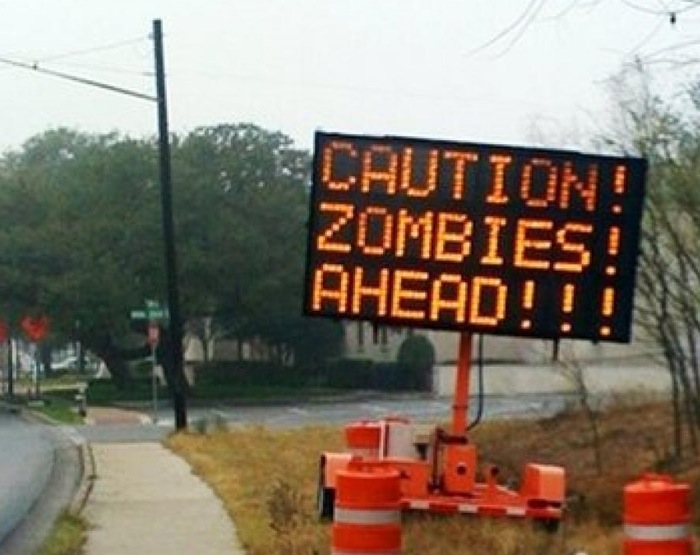
Early today I wrote about my appreciation for a book by John Reader entitled Reconstructing Practical Theology: the Impact of Globalization. I mentioned his use of Zombie Categories and promised to tackle a specific issue today.
Globalization and technological developments pose unique challenges and potential assaults on the conception of “self”. Reader examines three manifestations of these developments: Self as Commodity, Self as Consumer, and Self as Project. While admittedly the “human capacity to reduce oneself to an object is nothing new”, there is a unique capacity for the loss of dignity and of ones integrity that is of significant concern for issues of ministry.
When an individual views themselves as a commodity, defines themselves as a consumer, or constructs a new identity to project there are social behaviors that have communal implications involved at every level of engagement. Each implication carries a legitimate concern regarding community and pastoral care.
Reader addresses specific concerns about globalization by interacting with writers from various camps who are attempting innovative critiques or corrections to some of the challenges provided in globalization. At one point he examines Radical Orthodoxy and the approach of John Millbank and William Cavanaugh, who promote the Eucharist as an antidote to globalization’s blurring of boundaries.
It is suggested that globalization fragments space and dislocates the individual from location and community as a result of the fragmentation. Whereas “globalization is a master narrative, one which claims universal truth and authority for itself”, Eucharist is promoted as being trans-historical by collapsing “all spatial and temporal divisions” in its catholicity.
Reader has serious concerns about Cavanagh’s (and Radical Orthodoxy’s) solutions to globalization’s challenges:
I will next raise some questions and reservations about his solution to the problem of how Christianity might be a site of resistance to the excesses of global capitalism. The value of his book is that it draws out issues which are central for practical theology as it engages with globalization and one can agree with his analysis without agreeing with the proposed antidote.
This provides a significant distinction for Reader will readily agree with Cavanaugh’s (and Milbank’s) analysis of the zombie categories and strongly affirm the profound danger of the commodification of church and the packaging of religious programming for appeal to a consumer driven market.

It is crucial that communities first acknowledge the realities of globalization and its impact upon the congregation (including the individual members that make up the congregation) or else it will be in danger of becoming an enclave that has simply created a fantasy for use during meeting times. Groups that do this create a toxic dichotomy in the lives of members – one while the group is together and another for the real world outside the meeting. While innovative approaches are much needed and deeply appreciated they must be constructed in full awareness and admission of the epic shifts happening in every society.
This really hit home with me for several reasons. The biggest reason is just how much I hear about communion. As one who has emerged from an evangelical upbringing, participates in the emergent conversation and is employed at a mainline church – I hear about the importance of Eucharist, communion and breaking bread. While I am willing to admit that there might be something I am just not getting about this issue, I am shocked at how much stock the folks I interact with talk about it. And it’s a diverse group of folks:
That is quite a spread. So I should probably admit that I have never bought into trans or con substantiation. I am allergic to the whole debate about ‘real presence’ and I am nervous anytime someone calls it ‘sacrament’ hoping that they actually know what sacramental means theologically and are not just using that like religious ‘special sauce’ to sprinkle on things we want to give elevated importance to.
I think that it is beautiful symbol, an important ceremony and true sacrament. So this thing that the Rad. O folks try and do to use Eucharist to combat consumerism is just funky to me. Its not just a stretch – it might be missing the point all together. Do we need to combat consumerism? Yes. Is this the way to do it? I don’t think so.
Having said that, I will agree with two things:
Consumerism needs combating. I just don’t think that rehabilitating old categories and ancient practices are going to be the solution. I do think that ancient practices should be a vital part of a whole integrated approach and an import anchor in the church’s web of meaning. I just get nervous when there is so much importance placed on Eucharist and that is often the first, and sometimes only, thing mentioned.
But if we go buy the bread and juice then provide people a religious service of them consuming it like they would a biscotti and latte? They leave the transaction feeling better about themselves … that might actually be feeding their consumeristic mentality!
__________
When I first posted this at HBC, I got lots of good feedback and some pretty heavy pushback. One of the main concerns was that I didn’t put forward enough positive alternatives. (tough to do in under 1000 words) so I will endeavor to concoct a post with some positive alternatives 😉
__________
Thoughts? Questions? Concerns? Cautions? -Bo
I have spent that last two weeks reading and shoring up my familiarity with Creation Ex Nihilo and the Trinity respectively. As fascinating as that has been, I have to admit that am speculated out. I can only take so much speculative theology. This is part of why I am so happy to be in the field of Practical Theology. The other reason is that I have a real heart for the church.
I love Practical Theology. It is a fascinating field that is in the midst of a significant reinvention of itself. As an interdisciplinary engagement within the academy, it interacts with local faith expressions (like the church) in the hope to mutually benefit both the local church and the academy as a sort of go-between.
One of the major changes in this reinvention comes from the recognition that Practical Theology had not doing its own homework. It had fallen into a stale habit of simply attempting to apply the work of other disciplines. Applications of other’s work is fine at some level, but that is no way to gain credibility within the academy. If you want to be taken seriously in that world, you hav e to endeavor to innovate and explore – just like everyone else.
John Reader is one of my favorites. In the book Reconstructing Practical Theology: the Impact of Globalization the author examines the impact of globalization on everything from families and spirituality to the economy and ecology. There are two specific aspects of the book that I want to post about today and tomorrow: ‘Zombie Categories’ and ‘why the Eucharist isn’t Enough’.
Zombie Categories
Change can be seen in the categorization used within scholarship, specifically as it applies to fields such as practical theology. Reader borrows the term “zombie categories” from Ulrich Beck to refer to existent categorization that are fundamentally dead but which still limps on refusing to go away quietly. This situation forces us to exist temporarily in parallel worlds both utilizing “old, familiar and increasingly redundant” categories alongside “new, emerging and untested” ones.
Reader examines the historical developments and transitions, quickly surveying from the early church to the professionalism and secularism of the twentieth century. This is why it is so important for contemporary theologian to interact with fields such as psychology, sociology, economics, and even the political. As much as I appreciate and have learned from the Big 4 of Theology (Systematic, Historic, Biblical and Philosophical).
In a quick survey of the territory it is becomes clear that the issues encountered under the heading of globalization are not simply a series of incremental changes to which we must adapt to keep operating. The impact of globalization challenges the very frameworks and concepts that are familiar to the practice of Christian ministry.
I get push-back all the time for saying that we need to reexamine and desperately reinvent the very frameworks and vocabularies with which we engage in ministry.
The concerns of local ministry and pastoral care along with the conduct of worship and the diverse challenges needing to be addressed in any context ask something very distinct from us now. The transient nature of globalization paired with a virtually liquid social structure requires a different set of questions and a unique collection of frameworks to adequately address the challenges of ministry and spirituality in a world where the boundaries are constantly shifting. These concerns are most appropriately addressed by re-imagining internal categories inherent to the tradition, partnered with the resources made available by engaging with “the insights of other disciplines”.
This is not about answering the same old questions in slightly different ways for our new context – this is about asking entirely different kinds of questions about the formation of self, the family relationship, construction of community and the nature of religion.
Tomorrow I want to look at how consumerism forms our concept of ‘self’ and why the Eucharist – no matter how tightly we hold to it or how faithfully we perform it – address what is going on with us these days. But first I needed to state how deep the change is and how profound its impact on us is. Cleverly updated answers to the antiquated questions are not going to cut it anymore.
Something else is needed. Our world is not simply a bigger version of what used to be. When people keep insisting that ‘this’ is just an amplified version of ‘that’ they may be missing the point of what it is exactly that we need to be doing here. “Doing the same thing Sunday after Sunday” may be the worst idea in the history of the church. It may not be – but it is sure to kill us while we lie in the very bed that we made for ourselves.
Originally posted at HBC

In chapter 1 of his book Death of Liberal Class, Chris Hedges sketches both the height of the Liberal era in the 19th century and its cataclysmic implosion with the arrival of World War in the 20th. The disillusionment of human evil, aggression, and suffering deflated the optimism of innate human goodness and inevitable progress that Liberalism is founded upon.
To understand the profound impact of Liberalism’s demise, it helps to make sure one understands the difference between Classical Liberalism and it’s contemporary milquetoast descent that slinks around in straw-man form on our 24 hours news cycle.
Hedges explains (pp. 6-7) “Classical liberalism was formulated largely as a response to the dissolution of feudalism and church authoritarianism. … (It) has, the philosopher John Gray writes, four principle features, or perspectives, which give it a recognizable identity. It is :
Both John Cobb (Mainline) and Clayton Crockett (Radical Political Theology) use very similar formulations in their recent Homebrewed podcasts. Cobb, by focusing on the demise of the Mainline and Crockett, by focusing on the Evangelical and Religious Right, articulate the monumental shift in the religious-political landscape in the past century.
The Mainline denominations are in a collapse narrative and it makes perfect sense why when one examines both the way liberal thought partnered with power in the 20th Century and the way that conducted itself (largely) within the shifting landscape of post-war realities at home and globalization abroad.
“In a traditional democracy, the liberal class functions as a safety valve. It makes piecemeal and incremental reform possible. It offers hope for change and proposes gradual steps toward greater equality. It endows the state and the mechanisms of power with virtue. It also serves as an attack dog that discredits radical social movements, making the liberal class a useful component within the power elite. But the assault by the corporate state on the democratic state has claimed the liberal class as one of its victims…
The inability of the liberal class to acknowledge that corporations have wrested power from the hands of citizens, that the Constitution and its guarantees of personal liberty have become irrelevant, and that the phrase consent of the governed is meaningless, has left it speaking and acting in ways that no longer correspond to reality. It has lent its voice to hollow acts of political theater, and the pretense that democratic debate and choice continue to exist.” (pp. 9-10)
We talked yesterday about the fictitious nature of the supposed Left-Right spectrum. For those of us who participate in christ centered communities and organizations, what does this mean? While incomplete, here is my little experiment to come up with a game-plan for a start.
The church can do these things! We have deferred to the political system for too long. We have outsourced our responsibility to society but now live with the remains of the bloated carcass Christendom. With the death of the liberal class resistance to corporate rule and unchecked consumerism is impotent. The Citizen’s United ruling is just one step on long trail … but we know where it leads.
There are churches in every community and there may be no greater existing potential than us! ** I know it sounds dreamy, but in the rest of this series I want to flesh it out. By the end, it might not seem as far-fetched as it does right now.
– Bo Sanders
*Wall Street campaign funding, legalizing assassination, and Guantanamo Bay are your first 3 hints.
** The danger of course is that we keep voting based on two issues while turning a blind eye to corporate rule, environmental deregulation, and perpetual war.
This post is the beginning of a new series and was co-posted on Homebrewed Christianity.
 Bo Sanders: Public Theology