Search

Bo Sanders: Public Theology

updating & innovating for today

Tag

God

Stop Comparing Religions

I had the chance to teach adult Sunday School this past weekend as we worked our way through Brian McLaren’s A New Kind of Christianity. We are up to Question 9 “the Pluralism Question”. I had looked forward to this all Summer.

Now unfortunately I did not have the time to cover some classics on the subject like:

What I was able to do is to build on the thought of folks like  John Hick. In his famous works ,such as An Interpretation of Religions, Hick provides tour-de-force in the realm of comparative religion. He is not, however, simply reporting on religions – he is putting forward a theory about religions.

Many of Hick’s fans and critics alike end up saying the same two things when talking about him. The first is about the analogy of the mountain.  The metaphor about many paths leading up the same mountain is a pluralistic classic. The second is about the blind men and the elephant. This is of course based on a Kantian dualism between the numenal and the phenomenological.

Religions are like blind men, each with their hand on a different part of the elephant and thus describing different aspects of the same reality. One has the trunk, one the ear and one the leg. They each talk as if they have grasped the whole but in reality, they have not. Though it may appear as if they are talking about very different things (a Christian from a Muslim or Hindu) they are actually all touching the same entity.

Then there a critics of Hick.  Both Mark Heim in Salvations and Stephen Prothero in God Is Not One are post-Hickian.

Critics of Hick seem to have two main critiques (I am being very general here):

The first is that analogy of ‘paths up the mountain’ is flawed. Religions are like different paths up different mountains. The mountains may all be in a range together – in that they have some similarities and are in proximity to each other – but essentially they are not all leading to the same place. Being a good Hindu, which may have some ethic overlap with say the Christian sermon on the mount, is still not the ultimately after the same thing. Religions do not all lead to the same place and so just walking on road for long enough does not guarantee arriving at the same destination.

The second concern is about the Kantian blind men and elephant. When one takes on this enlightened view, one is placed in an elevated position above the religious traditions. They think that have a grasp on the whole but in reality it is only a part (ear, trunk, leg). The Katian-Hickian at that point is in the real seat of truth. The question then, is why would anyone ever participate in any particular religion?  Why even be a Christian – for example – and only grasp the part? Why not be a generic ‘God-ian’ and recognize the whole? In this way, studying religion is a way to not actually participate in any actual religion! Ironic isn’t it?

 Here was my main point on Sunday: the problem is comparative religion itself. The very discipline that we end up being unsatisfied with contains within it (from the very beginning) the inherent problem that we end up being frustrated with.

The problem is this – comparative religion is a product of a Western approach (with its intrinsic dualism) that first imports and them imposes it categorization upon other traditions and then looks within that compartmentalization for points of similarity and contrast. This will never work.

What I ended up doing was pointing folks toward an innovative concept called ‘Comparative Theology: deep learning across religions borders’ developed by Clooney in the book “Comparative Theology”.

His point is that each tradition tells its own story – in its own words. The art then is not in compartmentalization but in humble listening. Each learning to hear each tradition-religion bring forward its own stories, teachings, practices and values we remove ourselves from being ‘over’ the religion as a judge/reporter and humbly place ourselves at the feet as a learner/listener or at the table as friend/partner.

 I love Clooney’s approach. I find the epistemology and posture refreshing. I also think that in the inter-connected, trans-national, multi-religious 21st century it is going to be ever more critical to distance our selves from approaches of centuries past.

I have written before that I don’t want to apologize for being a Christian (I truly love it) but the time for apologetics is passing into the night of history. It’s a new day and a new approach is needed for the plurality and multiplicity that we increasingly live in. Many conservative christians hide behind exclusivism to guard against the threat of relativism.  What I love about Clooney’s approach is that they are not asked to give up their internal belief as christians but are challenged to adjust their external posture toward those of other traditions.
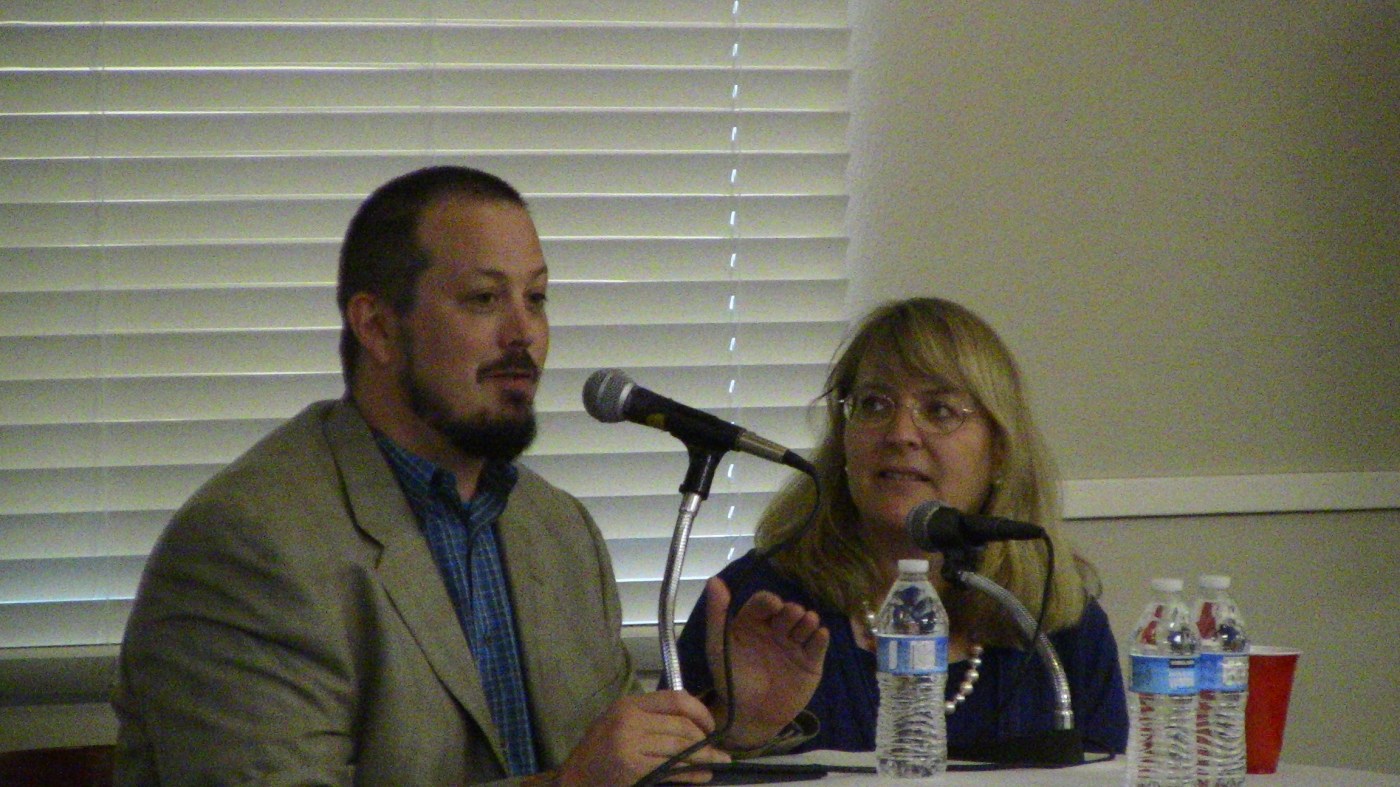
Diana Butler Bass and those non-human animals

Earlier this month I got to sit down with Diana Butler Bass and ask her about everything from her new book’s title Christianity After Religion to the Methodist tradition and why Evangelical young people are 30 years behind.

It was a blast! [you can hear the audio here]

At the end of the hour, the last question was put forward by Darcy who asked about something Diana had alluded to in the Methodist question. Butler Bass had said that the early Methodist had historically A) ministered to the fringes and B) gone to the frontiers.

It was the fringes and the frontiers that Darcy wanted to know about. Only, she was not asking about the past. She wanted to know about the present.

 Who are on the fringes today and where is the frontier for us?

This is possibly the best question I have heard asked at one of our live events. 

Diana didn’t flinch. She outlined three such scenarios that would qualify:

The first was in the realm of sexuality.
The second was in the realm of pluralism.
The third dealt with our environment.

  •  In sexuality she articulated issues related to the transgendered community. This did not surprise me. In the LGBT formulation, T (transgendered) is the the one the raises eyebrows. Now, because I am came to this conversation through a friend who was doing Queer theology, I had initially taken the LGBTQ as a 5-part alliance. I did not realize how difficult the T can be (not to mention the Q) until I starting asking question and listening to stories. I quickly became aware of the complexities and complications involved.

In the two weeks since Diana’s answer I have had several conversation about her take and I have realized how much conversation has yet to be had. May God give us grace as we learn from each other.

  •  In religion she mentioned learning from Hindu friends. As a student at Claremont School of Theology I am very invested in and more than on board with the idea of inter-religious learning. Yesterday was my day off and so I (as Christian) headed to a Jewish bakery to  sit and listen to an audio recording I had about diversity within Islam.

I am always shocked at how much I don’t know and how much beauty there is within each tradition. May God give us grace as we learn from each other.

  •  In issues of environment and ecology, I like to think of myself as up to speed. This is a subject I have really investigated and as someone mentored by Randy Woodley (his new book Shalom and the Kingdom of Creation was just released and he will be on the podcast next week) I was tracking with her when she talked about non-human animals [I often allude to Nipples & Belly Buttons in this regard].

It should not have been surprising to me that with the release of the video of our conversation that she came under some suspicion by a group called IRB  (Institute on Religion and Democracy) as well as others for  her views on non-human animals.

From the blog Juicy Ecumenism here is the end of Diana’s answer and their commentary:

“Non-human animals and their experience of our environment of the divine are a place that human animals need to listen in order to create more full understanding of God’s creation. […] They don’t have voices like humans do, but isn’t that part of my prejudice?”

I don’t like to bring up the slippery slope, but the mud’s looking pretty slick from here.

What IS surprising to me is that – of her three answers about the fringes and frontiers – that seemed to be the least inflammatory of the three answers!

In my humble opinion, her pluralism answer and her sexuality answer were FAR more daring – and challenging! The only thing that I can figure is that some Christians have so bought into the Cartesian dualism regarding humans that both Transgendered and Hindu folks are completely off their radar screen … but don’t you DARE say what you said about listening to non-human animals.

I was prepared to defend Diana Butler Bass after our show – she said some daring things –  I just didn’t think that it would be on the issue of creation-care over sexuality and pluralism.

This contemporary religious environment will never cease to surprise me.

That damned Second Sentence

I have always been suspicious of that second sentence. Usually it is the obvious second sentence that is preceded by the unstated first sentence.

“We hold these truth to be self-evident”  is a great second sentence.  The problem is that it is often put forward as a first sentence. People just start with “We hold these truths to be self-evident… that all men are created equal.”   It is a wonderful sentence. The problem is that there is something unstated that goes before it. The first sentence there is “After we killed the original inhabitants, stole their land and imported free labor from Africa …. We hold these truths to be self evident…”

 So often what appears to be a first sentence is really a second sentence and the first sentence goes unstated. 

Last week Peter Rollins showed up in LA and talked about why ‘Its not the size of the wand that matters … its the magic that is in it.’  In that talk he pointed out the danger of of a different kind: not understanding the (assumed) second sentence. This is particularly relevant to fundamentalist thinking.

The sentence is ‘We trust God’. The implied second sentence is ‘but we still lock up the church building when we leave and arm the security system.’

Or ‘I trust God’. The second implied sentence is ‘still lock your car doors’.

‘I pray for the headache to go away’ is followed by the implied ‘I take the aspirin to help’

Rollins says (around minute 26) that what is tragic is when somebody believes the first sentence too much and doesn’t pick up on the implied second sentence. Like when a child is sick and the community prays for them to be healed, the dad takes the kid home and doesn’t take them to the hospital or give them medicine and the kid dies.

People are always shocked and horrified that the parent took it too far. Yes, we pray for healing. Yes, we have faith. The implied second sentence is that we also partner with modern medicine – and I would add – even thanking God for the advances is technology and unlocking the potential (often of plants) for medicines.

 The tragedy is when someone doesn’t pick up on the implied second sentence and takes the first sentence way too seriously. It’s that damned second sentence that will get you in trouble.

Part of what I love about Rollins’ project is that he helps expose the invisible or unstated second sentence so that we, as communities of faith, are not assuming something that should not be assumed and then stating it appropriately so that everyone is on the same page and it is not invisible or hidden.

Admittedly, the danger is that it might take some of the magic out of it. I acknowledge that. The tradeoff, however,  is that we can be honest about what is really going on and move forward A) together and B) with integrity. I think that the tradeoff is worth the risk even if we do lose some  of the magic.

– Bo Sanders 

God Never Changes … or does She?

I got an email from a friend asking me:

“ … there’s just one thing that I’m still not sure about: the idea that God changes over time. And the reason this bugs me is because, to me, that means we can never know who/what God is. How do we know that God really is love? What if God really use to be as violent as He/She/It was back in the Old Testament?”

I thought it would be good to post part of my response here and compare notes (theology, after all, is dialogical).

 There are 3 things that we need to flesh out (pun intended) about this question:

1. While God may not change, how humans view and speak of that God evolves. There is little doubt that over the centuries how we conceptualize and even construct our language about God (or Gods) has changed, adapted, morphed, absorbed and modified.  There is no reason to shy away from that. It is a healthy response to growing awareness and – I will even say – progressing revelation.

God is at work in our midst and God has also given us Holy Spirit to lead us and guide us. We say that God is infinite, but as I have heard it said “then no matter how much we know about God – there is infinitely more to know.”

The only objection to this seem to be a ‘you think that your better than them?’ defense of the ancients. Seriously – that is the only real defense I hear of conserving antiquated notions of God. Don’t you dare going moving stuff and changing what they set down! 

That is silly. We must acknowledge as Merold Westphal told us in his visit to the podcast that all our knowledge is situated or what we call perspectival. This is where Elizabeth Johnson’s book “She Who Is” becomes so valuable. I wrote about this in ‘She Who Is Not’ and ‘Horse Gods’.

2. Many groups and thinkers would challenge the notion that God doesn’t change. As Keith Ward points out in God: a guide for the perplexed 

 “ it is important the see how different the classical view is from the popular view. Whatever the Trinity is, it cannot consist of three distinct ‘parts’ in God, who has no parts. Whatever is meant by ‘God becoming man’ is cannot mean that God changes by taking on human flesh. Whatever is meant by the Holy Spirit working to sanctify the hearts of man and women, it cannot mean that God is actually changing by acting like a finite being in history. All statements about God changing and acting, wether they are in the Bible of not, must be metaphors, All changes are in finite things, and not in God, who is changeless.”

Ya see – the old Platonic conception of changeless ideals means that there could not have really been an incarnation. The stories in the Old Testament about God ‘changing his mind’ must be anthropomorphism. You run into to real problems really quick if you say that God never changes.

Now, having said that – we can say, as a matter of faith, that the character and nature of God never changes. In fact, I would go as far as to say that when we say that God never changes, what we are commenting on is God’s loving nature. You want to know why I can say that so confidently as a Christian …. it’s because I believe that the highest  revelation that we have of God in this world is in Jesus.

 3. Process thinkers have an especially helpful take on this.  Built into a Process theology is a dipolar nature of God.  They distinguish between the Primordial nature or God and the Consequential Nature  (some get even more advanced and add a Superjective nature … but that is for another time.)   The Primordial nature sets out all the possibilities  – the Consequential nature is the perfection of the divine experience. Therefor the Primordial nature of God, what God desires, is preserved and can be said to ‘never change’ while God is fully participatory and even impacted by what happens.

 What are your thoughts?  Is there anything I could add to make this stronger? 

Violence in the Short Story

This was part of a post two weeks ago on HBC.
It had been a contentious week for God on the internet.

  • This week the parents of Trayvon Martin rejected the apology from George Zimmerman. According to CBS News:

The parents of Trayvon Martin say they have a hard time accepting George Zimmerman’s nationally televised apology.
Last night, in his first interview since killing the unarmed 17-year-old, the former neighborhood watch volunteer said the shooting death must have been part of “God’s plan” and that he prays for the Martin family daily.
“I simply really don’t know what God George Zimmerman is worshipping because there’s no way that the God that I serve had in his plans for George Zimmerman to murder my son,” Tracy Martin, the teen’s dad told CBS News.

What God is George Zimmerman talking about? It is a fair question.

  • This week Rachel Held Evans duked it out with the Gospel Coalition.

Two guys, Jared Wilson and Doug Wilson, said some nearly unbelievable things about sex within the complementarian theology that women complement men (or is it compliment?)  vs. the view that they are equal to men. Rachel takes them on:

The two have insisted that they advocate mutuality in the bedroom, and yet, according to Doug, “the sexual act cannot be made into an egalitarian pleasuring party,” but instead “a man penetrates, conquers, colonizes, plants” while a woman “receives, surrenders, accepts.”  What does he mean by that? What’s wrong with an “egalitarian pleasure party”? (Sounds like fun to me!)
In other words:  How is complementarian sex supposed to be different than egalitarian sex? Does preserving male authority mean that a man must always initiate sex? Does it mean that the missionary position is the only acceptable one for Christians? Is it too “egalitarian” for both a man and woman to be pleasured? Does “submission” mean that a woman must perform sex acts she doesn’t like in order to please her husband?

What is an eggalitarian pleasure party? Why can’t that be honoring to God?

There seems to be a recurring problem that is inherent to the traditional view – it is tough to get around the fact that the short story is a violent one.
What I call the “Short Story” goes like this: A short time ago (say 10,000 years) God created the world in a short period of time (6 days) and He (always ‘he’) will come back shortly (any day now) and set things right.

The short story comes from an elementary reading of both the first book and last book of the Bible that is unaware of the two different genres they were written in. It is a violent reading because (in English) it makes it look like God does what ever God wants – or shall we say – whatever God wills. God acts both unilaterally and coercively to bring about what God desires.
As one of my favorite thinkers explains

“We now know that our world, rather than being created in six days, was created in something like 16 billion years.  This quantitative difference is so great that is suggests a qualitative difference in the nature of God’s creative activity.  The idea that God spent some 16 billion years creating our world suggests that God’s creative power must be persuasive, not coercive, power.  This is the natural inference, that is, if we continue to think of the world as God’s creation.  …

Rather than a return to a premodern or early modern view: We can understand God’s activity at the beginning of our universe as of the same type as God’s activity in history. No supernatural origin must be assumed. We still have, however, the question of God’s activity at the end.  Can God as consummator be understood in the same terms?  Classical theologians certainly did not think so. For example, a book entitled Armageddon says: The second coming of Jesus Christ to earth will be no quiet manger scene. . . . Cities will literally collapse, islands sink, and mountains disappear.  Huge hailstones, each weighing a hundred pounds, will fall from heaven, the rulers and their armies who resist Christ’s return will be killed in a mass carnage. No more Mister Nice Guy!

According to this theology, in other words, God’s past mode of activity in Jesus would not suffice to bring about the eventual victory of divine over demonic power.  God would have to resort to a degree of violence that would outdo the violence of the forces of evil.  The revelation of God’s love in Jesus was not, accordingly, a revelation of the divine modus operandi: The true nature of divine power, which is supernatural, has been, for the most part, held in reserve, and will be fully manifested only at the end.”

This is not a consistent God. God acts unilaterally in the beginning, has violent periods in the Old Testament – even while being loving, is mostly super nice in Jesus, and then turns mean again at the end- which allows it to end abruptly and violently. The God of the short story is a violent and inconsistently inconsistent god.
This what we were going after on the most recent TNT. That god is a false god and an idol. It must be repented of and renounced.
I will add something here that I did not say there: people who hold that view of God are most nice people who always hold in reserve the possibility and potential right to be violent in order to bring about the will of God. It is how their God acts and they might need to imitate ‘him’ in order to bring about ‘his’ will.

  • It explains how George Zimmerman’s actions could have been a part of ‘God’s plan’.
  • It explains how the guys at the Gospel Coalition could say that “a man penetrates, conquers, colonizes, plants” while a woman “receives, surrenders, accepts.”
  • It explains how people can say that while what happened to the American Indians was ‘unfortunate’ it may have been ‘for the best’ or ‘necessary’.
  • It explains how Jesus flipping over tables at church translates into carrying concealed firearms and using drones to drop bombs.

People who object always use the same 3 defenses:

  1. (S)words – Jesus told his disciples to buy swords and said that he came to bring a sword – but those are all misunderstandings we dealt with here. 
  2. Tables & Whips – snapping a whip and turning over tables isn’t the same as packing heat or using drones to bomb enemy combatants. We dealt with that here. 
  3. Spiritual Warfare – it is of no value if we deal with personal piety and the spiritual realm but skip the systems, structures  and institutions that comprise the ‘Powers the Be’ as Walter Wink called them.

Here is the simple fact: Neither Jesus’ sayings about swords, his flipping over tables or Paul’s allusions to the spiritual realm justify this permission toward violence. It is not OK to justify aggression toward minorities, women, or other religions. Our God is not behind it and does not support it. Quote all the Bible verses you want but this is not the real and living God. It is an idol and a graven image.
We need to repent of this line of reasoning and own up to the fact that we have created a God in our own image who loves all the things we love and supports all the things that benefit us.

 – Bo Sanders 

Innovation, Context and History in Christianity

I was away on a youth service trip last week and upon my return had the opportunity to listen to the Barry Taylor podcast from the previous week’s live show. It sounded great and I was sorry to have missed it.

About 23 minutes in to The Theology of Rock, Barry Taylor talks about the play between the universal nature of music and the highly contextual nature of styles and genres. He points out that while music is said to be universal, actual songs and individual expression are very particular and specifically located. They come from a place and in a time and that lyrics – while they may get the lion’s share of attention – are nearly inconsequential in some respects to understanding what is going on in the music.

Lyrics are often an afterthought and may even be antagonistic to what is going on in the music itself. This was a fascinating point and it sent my brain on wild series of connections and contrasts in theology.

My background is in contextual theology and as I stated two weeks ago in my post about the Creeds as contextual documents (or time/place snapshots) they are neither universal nor timeless. Christian expressions – even the early Creeds – are both radically located and time-bound. Now, the objection is always that ‘they were not intended to be so – the authors surely believed them to be universal and for all times’.  While it may be true that writers of the creeds, or the Reformers or systematic theologians in general may be under that impression, we see the historical flaw in that line of thinking.

 We see now that all theology and thus theological expression are contextual expression that are uniquely located and particularly time specific. It’s not just the language (Greek or Latin or German) that needs to be translated but the ideas, concepts and content itself needs to be translated and renovated.

I would like to put forward a proposition to help us unravel the tangled web of theological history and frame – in a positive way – a path forward. I am suggesting that we acknowledge that we are always braiding or weaving a fabric from at least 3 strands:

  •  History and Tradition: Theology and other Christian expressions don’t happen in a vacuum. We never start with a blank slate. We never get back to zero – and we are not supposed to! We are part of long history with much tradition and we are to honor that even while continuing out along the trajectory provided.
  •  Context and Location: All truth is both received and expressed in cultural containers that come with inherent lenses through which we interpret what we see, experience and receive. Our job is to acknowledge and incorporate this understand as we engage our culture, place, and time in a meaningful way that is faithful to the tradition, based on the historic precedent, and aware of our modern realities.
  •  Innovation and Expression: Nothing stays the same. We are fooling ourselves if we pretend otherwise. Language – even about God, technology, and society are fluid realities that call for us to adjust, revisit, and renovate our understandings and activities. Christianity is uniquely designed to adapt and evolve. We are not only called to it but are empowered with a unique set of tools embedded within the Gospels and Acts of the early Church.

The trick is to stop reducing down things down to simply one element in our thinking. That reductive move is death to both understanding and applying the very message that we are talking about!  [read Lamin Sanneh’s Whose Religion is Christianity?: the Gospel beyond the West  for more]

 It is not simply history or tradition. People who extract content without accounting for historical context or timely innovation are in grave danger of importing and imposing collateral damage every time and in every place they do so. If we do not acknowledge the particular time and unique context from which any expression emerged, then we are willfully blind to the cultural constraints and societal containers that framed the content.

 It is not merely context. We are not free to disregard the precedent of the past. The entire project of theological reflection and Christian expression is in dialogue with the historic tradition. If one wants to do something else, that is fine – I get that – but to do theology is to submit to some level of constraint within the forms and disciplines employed.

 It is not only innovation. We do need to, in fact we must, engage our time and world as it is. We can no longer afford to  retreat into a romanticized imagined past (like the radical orthodox). But neither can we simply disregard the tradition and act as if we ourselves are not cultural creatures and products of socialization and cultural-religious conditioning. We are not free to do whatever we want. The entire enterprise is to be in dialogue with the tradition, to acknowledge the contextual nature of all truth and to engage our time and place appropriately based on that.

Theology is not simply history or tradition. It is not merely context. It is not only innovation. Christian theology is a dynamic interplay between these three elements (not to mention issues of power that effected formation of things like the early Creeds). We are foolish to ignore them historically and our work is impotent if we don’t acknowledge them and joyfully incorporate them in our work today.

We do well when we incorporate the long tradition into our context and allow for an appropriate level of innovation that honors the trajectory of the tradition and provides a continuity with the precedent of the past.

-Bo Sanders 

Lean-Tos and Creeds: temporary structures for the journey

I am a big fan of the early churches’ creeds. I appreciate them for their historical significance, for the trajectory that they provide, and for their value as snapshots in the formation of the tradition.

In fact, as a contextual theologian, I adore them as amazing time-capsules of expressions from a very particular time and a definite location. They tell us so much about what was going on, what was a stake, what was being combated and what was already established and settled.

I actually have no problem with the creeds. My problem comes from what certain folks want to do with ‘the Creeds’ and what they try to make them into. Let’s be clear about what they are not:

  • They are not timeless and universal expressions. They are very timely and remarkably located.
  • They are not litmus tests for modern orthodoxy. There is no sense in retreating into ecclesiastic silos, playing pre-modern word games, or burying our head in the historical sand. Too much has happened, too much has changed and there is too much on the line.
  • They are not houses to live in. They are lean-tos (temporary shelters) that were erected along the way. We are still to continue our journey and travel on in our day – in the world that is – and not set up camp in the imagined past.

This is my word picture. The Creeds are lean-tos. They are not museums designed to preserve nor are the cathedrals to be maintained. They are temporary shelters – built with the best materials that were available at the time and in that place. They aren’t blueprints of how every shelter needs to be constructed nor are they houses to be reinforced and guarded. They fulfilled their purpose and provided shelter on the journey.

Christian who get protective of or defensive about the creeds are like people who are hiking with their family, build lean-to out of love for the family and then get mad at the family when it is time to leave the lean-to and continue hiking.

Or like people who love watching birds so they knock out a wall in their house to install a whole side of windows and sky-lights for bird watching. But then they become so fixated on cleaning the glass then they stopped watching the birds and actually get annoyed at the birds for dropping what birds are prone to drop.

The creeds are great. I am so thankful them as historic documents, as developmental snapshots and as contextual expressions.
What I am not so thrilled about is people who get nasty about them, defensive or aggressive. I think it is so odd that they are about things like God’s love and divine relationship… but that they can make someone behave so unloving and take them out of relationship!

I like the creeds. I just don’t like what they do to people who take them too seriously. Like lean-tos, they served their purpose. They were great. Time to move on. We are still on a journey.
___________
p.s.  I meant to include this in the post but forgot. I have since said it 3 comments – so I decided to add it.

“Like the book of Revelation and the Creeds –  we should attempt to do for our culture and day what they were attempting to do for their culture and day.”

This is the best that God can do

It is fascinating what happens to conversations when you take away one word.  Words are like little suitcases – people put understandings or concepts in them and then carry them around as self contained units. Its so easy! They come with these convenient little handles and you can you pack so much meaning in and mean so much when you just use one little word.

This can be especially dangerous in theological conversations. That one word can take paragraphs and pages to unpack. Sometimes it can be a very liberating experience to take a word off the table. Just say ‘if you can’t use that word, how would you talk about this?’ It is an amazing exercise.

 A few weeks ago I had fun asking the question “what if you can’t use the word ‘demon’ – how would you talk about these same things?”  I am suspicious that we who read the Gospels and New Testament don’t mean the same thing when we say ‘demon’ or ‘devil’ as those in 1st century region of the Mediterranean did. 

 So it was with great interest that I had an amazing conversation this past weekend with a group of very intelligent, but non-theological folks. We were talking about God and the subject of evil came up. What was fascinating is that I did not place restrictions on the conversation, it happened organically – they just don’t use the usual words! Never once did I hear

  • Theodicy
  • Omnipotent
  • Kenosis

I started thinking “what if we had this conversation without those three words?” They are great words, and that is part of the problem! People assume that they know what is packed into the words and so they throw them around with ease (they come with convenient handles after all).

Here was my opening statement that sparked the debate:

God is doing all that God can do right now in the world. What you are looking at is the best that God can do. God is not holding back. God is doing God’s best to make the world a better place that more conforms to the divine will.

You can understand why that set off sparks. The questions, comments, and concerns started flowing.  Is God more powerful than God lets on? Has God restricted Godself? Has God willingly emptied Godself of some of God’s power?  Can God pick up that power anytime God will and God is just choosing not to? 

 There are specifically 3 groups that have shaped my thinking on this: 

  1. The Kenotic CrowdMultmaniacs mostly, but more generally people who think that God is who we have always said God to be but that some ‘emptying’ (see Philippians 2) or self-limitation has happened. God is ‘all powerful’ or ‘all mighty’ but has just chosen to act this way (free-will, etc.)
  2. The Process Perspective – Between Marjorie Suchocki, John Cobb, Catherine Keller, and Philip Clayton they have this thing covered. I thank God for Process as a conversation partner.
  3. The Caputo Contingent – with his book ‘The Weakness of God’ John Caputo shook some of us to our core and rocked our ‘foundation’.  What if God’s strength was shown in weakness?

 I have become very comfortable with the possibility that world as it exists is the best that God can do. I’m not saying that I believe that – just that I am open to that possibility.

What if God is doing all that God can do in the world right now?

What if God isn’t all-powerful but only very powerful?

Or that God’s power is a different kind of power?

What if God isn’t pretending or self-limiting?

What if God is giving all that God has to the moment?

So we don’t have to ask ‘why isn’t God stopping the genocide in Africa’. God can’t. It’s just not how it works. God is doing what God can but we are not cooperating.

Now, some will say “No, God could do more but has chosen to limit God’s self” or “God has emptied some of God’s power and given it to us as co-creators and free agents – we are misusing our power. It’s not on God.”

 I just want to throw out the question “What if this is the best that God can do?” I am comfortable with that.  

Looking forward to your thoughts!  All I ask is that you try not to use ‘theodicy’, ‘kenosis’, or ‘omnipotent’ without unpacking them.  

God is in charge of the economy?

I have always been suspicious that what I am about to say was true. If you follow out the way that folks talk about an interventionist God who meddles, tinkers, intervenes and interacts with ‘His’ (always his) creation … then it has to follow that some within that stream will think that God actually runs the economy.

I have met people who think this. I have reported it and based some of my posts on it – only to have it be consistently rebuffed as a case a few superstitious, uniformed or immature people or groups. Then, last week this article by Paul Froese came out in Religion & Politics called “How Your View of God Shapes your View of the Economy”.  It turns out that it is worse than I even thought!

People who look at data and conduct surveys and polls are always looking for variables. One of the wrinkles that has gotten a lot of attention lately why some conservatives – mostly based on social concerns like abortion and gay marriage – vote against their own economic interest.  Why do those who are not benefiting from the current economic structure continue to put forward policies and candidates who reinforce the status quo and hierarchy?

It turns out that even though Jesus says you can’t serve both God and mammon (whatever that is) but what if you didn’t have to make that distinction? What if within the protestant work ethic there was a mechanism by which God was in charge of the economy?

 To put this more concretely, approximately 31 percent of Americans, many of whom are white evangelical men, believe that God is steering the United States economy, thus fusing their religious and economic interests. These individuals believe in what I call an “Authoritative God.” An Authoritative God is thought to be actively engaged in daily activities and historical outcomes. For those with an Authoritative God, value concerns are synonymous with economic concerns because God has a guiding hand in both. Around two-thirds of believers in an Authoritative God conjoin their theology with free-market economics, creating a new religious-economic idealism. Nearly one-fifth of American voters hold this viewpoint, signaling that it can be a major political force.

It is actually a fascinating set of findings in the study (I would encourage you to read the whole article). The search becomes twofold:

  1. Does the willingness of God to fix the economy become dependent on us to deal with our social ills? In other words: does prosperity result from faithfulness?
  2. Believing in this Authoritative God, depending on where you live in the world can lead one to a socialist conclusion or a non-capitalist structure. Why in the US does it mean a unquestioned allegiance to a laissez-faire ideology?

The article explains:

… the United States stands as a clear exception. Americans who feel that “God has a plan” for them and their country are much more likely to think that “success is achieved by ability rather than luck” and that “able-bodied people who are out of work should not receive unemployment checks.” And over half (54 percent) of Americans who think God controls the economy feel that “anything is possible for those who work hard”; in contrast, only one-quarter of Americans who rely on human resourcefulness, rather than God’s plan, feel this way.

Perhaps it is the fervent individualism of American Christianity which makes free market capitalism seem like a Divine mandate. Because evangelicals assert that you alone are responsible for your eternal salvation, it makes sense that the individual is also responsible for his or her economic salvation without government assistance, especially if God is the only assistance you really need.

I am fascinated by this. I have written (and talked on TNT) so often about the implication of this type of evangelical-charismatic-protestant mentality that believes in personal piety (small) and super-structure cosmic spiritual warfare (large) but has no framework for (linking middle)  ‘powers the be’ in systems, structures, and institutions.

If God magically made the world in 6 days, made the Sun stand still, can time earthquakes to get Apostles out of jail and one day will pull back the clouds and ride into to dole out justice and end the whole bloody thing… I guess it makes sense that God is guiding the economy.

This is why I am so passionate about a better way to read the Bible – we need a mature hermeneutic that see the text with its eyes wide open, aware of the world as it is not just the way we want it to be or we used to think it was. Last week I wrote about the effects of Globalization and how it impacts our theological thinking. Global capitalism is no minor issue – how we think about the economy and participate financially as consumers should matter to believers.

I might need to apologize for my sassy tone here – but I truly am interested in your thoughts.

Create a free website or blog at WordPress.com.

Up ↑