Search

Bo Sanders: Public Theology

updating & innovating for today

Tag

God

Savage Monkeys Won’t Save the Planet – why would they?

Two disclaimers up front:

  1. I originally posted this at HBC and it was not received so well. Which is fine, and I wrote a follow up that you can read [here] which is much more hopeful. 
  2. I do not expect anyone to like this or agree with this. I am simply put it out there for conversation.

The Summer philosophy group that I am a part of is reading The Faith of the Faithless by Simon Critchley. It is an wild, tour-de-force type of work that spans genres and categories. This past week it broached something that touched a nerve for me.

 The most extreme expression of human arrogance… is the idea that human beings can save the planet from environmental destruction. Because they are killer apes, that is, by virtue of a naturalized version of original sin that tends them towards wickedness and violence, human beings cannot redeem their environment.

Furthermore, the earth doesn’t need saving… The earth is suffering from disseminated primatemaia, a plague of people. Homo rapiens is ravaging the planet like a filthy pest that has infested a dilapidated but once beautiful mansion. In 1600 the human population was about half a billion. In the 1990’s it increased by the same amount.
This plague cannot be solved by the very species who are the efficient cause of the problem … When the earth is done with humans, it will recover and human civilization will be forgotten. Life will on on, but without us. Global warming is simply one of many fevers that the earth has suffered during its history. It will recover, but we won’t because we can’t.  – p. 110

This reminded me something that an old podcast interview with Michael Dowd first awakened me to. Dowd is the author of Thank God for Evolution and he has an incredible knack for articulating his unique perspective.

Dowd talks about the power of participating in a narrative. His assertion is that we are participating in the wrong narrative! If we think that humans are the crown achievement of a project that began about 10,000 years ago and was finished in a 6 day period … a project that humans were give dominion over – then we live one way. [often this dominion is mis-interpreted as domination and has resulted in everything from unchecked capitalism to environmental policies such as “drill baby drill” for instance

Dowd has this theory that humans who living under this narrative are participating in the earth as a cancer does in the body. Cancer is a biological part of the body. It is made up of the same matter that comprise the body that hosts it. But cancer is under the impression that the body that hosts it is a rival to be overcome and defeated. The cancer cells rally together to take over the body. They eventually multiply and expand to the point they endanger the very body that not only gave rise to it but that sustains it.

Ever since the Enlightenment and Descartes’ dualism, a certain set of the human population has believed that while humans are biologically mammals that they are not animals. Continuing on that while we originally were apart of the earth, we are above the earth. We are different than the rest of creation. While we came from the earth – from dust we came – we are not dependent on the earth for our very life. [I touched on this at my own blog in Nipples and Bellybuttons and the Imago dei ]

Because christian humans live by the wrong narrative, we behave as a cancer on the planet. In increasing size and exponential growth we consume at greater and greater levels, consuming the very body that gives host to our existence. At some point, the cancer ends up compromising the functions (organs) that give life to the organism in which it lives. Death ensues. We are not worried about because we think Jesus is coming back soon – it is the end times after all (a self-fulfilling prophecy if ever I saw one). *

Humans that are not willing to engage the ideas of emergence and evolution are living by a cancerous narrative that will extinguish the very host that gives it life. Humans that have a short view of history and a high view of their place in the created order behave in ways that are inherently cancerous to the ecosystems that support and sustain them.

 If we don’t wake up and acknowledge that we have been living by a false narrative we will eventually (sooner or later) overtake the host body’s capacity to renew itself and continue to survive and prosper. This 6 day – 10,000 year old narrative is resulting in a cancerous attitude that is killing the planet.

  • If Critchley is right, then we as killer apes can not save the planet – in fact we wouldn’t even care.
  • If Dowd is correct, we wouldn’t even try because we thought we didn’t need to. We would be living by a different narrative.

* The book of Revelation is a political commentary on Roman politics of the first three centuries written in the form of apocalyptic literature. 

Eucharist isn’t Enough to Combat Consumer

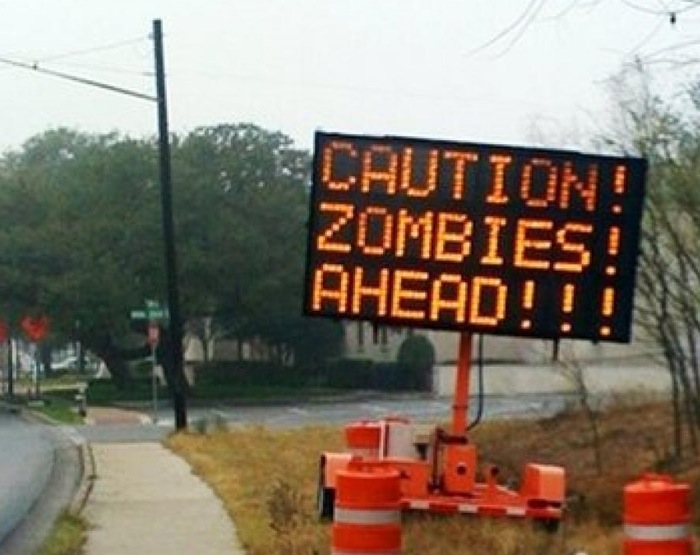
Early today I wrote about my appreciation for a book by John Reader entitled Reconstructing Practical Theology: the Impact of Globalization. I mentioned his use of Zombie Categories and promised to tackle a specific issue today.

Globalization and technological developments pose unique challenges and potential assaults on the conception of “self”.  Reader examines three manifestations of these developments: Self as Commodity, Self as Consumer, and Self as Project.  While admittedly the “human capacity to reduce oneself to an object is nothing new”, there is a unique capacity for the loss of dignity and of ones integrity that is of significant concern for issues of ministry.

When an individual views themselves as a commodity, defines themselves as a consumer, or constructs a new identity to project there are social behaviors that have communal implications involved at every level of engagement. Each implication carries a legitimate concern regarding community and pastoral care.

Reader addresses specific concerns about globalization by interacting with writers from various camps who are attempting innovative critiques or corrections to some of the challenges provided in globalization. At one point he examines Radical Orthodoxy and the approach of John Millbank and William Cavanaugh, who promote the Eucharist as an antidote to globalization’s blurring of boundaries.

It is suggested that globalization fragments space and dislocates the individual from location and community as a result of the fragmentation. Whereas “globalization is a master narrative, one which claims universal truth and authority for itself”, Eucharist is promoted as being trans-historical by collapsing “all spatial and temporal divisions” in its catholicity.

Reader has serious concerns about Cavanagh’s (and Radical Orthodoxy’s) solutions to globalization’s challenges:

I will next raise some questions and reservations about his solution to the problem of how Christianity might be a site of resistance to the excesses of global capitalism. The value of his book is that it draws out issues which are central for practical theology as it engages with globalization and one can agree with his analysis without agreeing with the proposed antidote.

This provides a significant distinction for Reader will readily agree with Cavanaugh’s (and Milbank’s) analysis of the zombie categories and strongly affirm the profound danger of the commodification of church and the packaging of religious programming for appeal to a consumer driven market.

It is crucial that communities first acknowledge the realities of globalization and its impact upon the congregation (including the individual members that make up the congregation) or else it will be in danger of becoming an enclave that has simply created a fantasy for use during meeting times. Groups that do this create a toxic dichotomy in the lives of members – one while the group is together and another for the real world outside the meeting. While innovative approaches are much needed and deeply appreciated they must be constructed in full awareness and admission of the epic shifts happening in every society.

This really hit home with me for several reasons. The biggest reason is just how much I hear about communion. As one who has emerged from an evangelical upbringing, participates in the emergent conversation and is employed at a mainline church – I hear about the importance of Eucharist, communion and breaking bread. While I am willing to admit that there might be something I am just not getting about this issue, I am shocked at how much stock the folks I interact with talk about it.  And it’s a diverse group of folks:

  • New-monastics in intentional community
  • Lutherans
  • United Methodists
  • Emergent types
  • Radical Orthodox
  • House Church folks

That is quite a spread. So I should probably admit that I have never bought into trans or con substantiation. I am allergic to the whole debate about ‘real presence’ and I am nervous anytime someone calls it ‘sacrament’ hoping that they actually know what sacramental means theologically and are not just using that like religious ‘special sauce’ to sprinkle on things we want to give elevated importance to.

 I think that it is beautiful symbol, an important ceremony and true sacrament. So this thing that the Rad. O folks try and do to use Eucharist to combat consumerism is just funky to me. Its not just a stretch – it might be missing the point all together. Do we need to combat consumerism? Yes.  Is this the way to do it?  I don’t think so.

Having said that, I will agree with two things:

  1. Communion can combat consumerism. I’m not talking about the Eucharist, I’m talking about actually communing – sitting around a table and eating bread with others while talking about Jesus and being the body of Christ. But a religious ceremony, especially one that is administered by salaried officials? I don’t think so.
  2. The only way that I could get behind this Eucharist idea is if the wheat for the bread was grown by community and the soil that the grapes grew in was known and visited by them! IF communion was a way to reconnect with the earth and with a location – THEN I could get down with the suggestion. That would combat combat consumerism is a significant way.  But then again, I suppose at this point I am really supporting localism and not anything to do with Eucharist!

Consumerism needs combating. I just don’t think that rehabilitating old categories and ancient practices are going to be the solution. I do think that ancient practices should be a vital part of a whole integrated approach and an import anchor in the church’s web of meaning. I just get nervous when there is so much importance placed on Eucharist and that is often the first, and sometimes only, thing mentioned.

But if we go buy the bread and juice then provide people a religious service of them consuming it like they would a biscotti and latte?  They leave the transaction feeling better about themselves … that might actually be feeding their consumeristic mentality!

__________

When I first posted this at HBC, I got lots of good feedback and some pretty heavy pushback. One of the main concerns was that I didn’t put forward enough positive alternatives. (tough to do in under 1000 words) so I will endeavor to concoct a post with some positive alternatives 😉

__________

Thoughts? Questions? Concerns? Cautions?    -Bo

Haunted by Zombie Categories

I have spent that last two weeks reading and shoring up my familiarity with Creation Ex Nihilo and the Trinity respectively. As fascinating as that has been,  I have to admit that am speculated out. I can only take so much speculative theology. This is part of why I am so happy to be in the field of Practical Theology. The other reason is that I have a real heart for the church.

I love Practical Theology. It is a fascinating field that is in the midst of a significant reinvention of itself. As an interdisciplinary engagement within the academy, it interacts with local faith expressions (like the church) in the hope to mutually benefit both the local church and the academy as a sort of go-between.

One of the major changes in this reinvention comes from the recognition that Practical Theology had not doing its own homework. It had fallen into a stale habit of simply attempting to apply the work of other disciplines. Applications of other’s work is fine at some level, but that is no way to gain credibility within the academy. If you want to be taken seriously in that world, you have to endeavor to innovate and explore – just like everyone else.

John Reader is one of my favorites. In the book Reconstructing Practical Theology: the Impact of Globalization the author examines the impact of globalization on everything from families and spirituality to the economy and ecology. There are two specific aspects of the book that I want to post about today and tomorrow: ‘Zombie Categories’ and ‘why the Eucharist isn’t Enough’.

Zombie Categories

Change can be seen in the categorization used within scholarship, specifically as it applies to fields such as practical theology. Reader borrows the term “zombie categories” from Ulrich Beck to refer to existent categorization that are fundamentally dead but which still limps on refusing to go away quietly. This situation forces us to exist temporarily in parallel worlds both utilizing “old, familiar and increasingly redundant” categories alongside “new, emerging and untested” ones.

Reader examines the historical developments and transitions, quickly surveying from the early church to the professionalism and secularism of the twentieth century. This is why it is so important for contemporary theologian to interact with fields such as psychology, sociology, economics, and even the political. As much as I appreciate and have learned from the Big 4 of Theology (Systematic, Historic, Biblical and Philosophical).

In a quick survey of the territory it is becomes clear that the issues encountered under the heading of globalization are not simply a series of incremental changes to which we must adapt to keep operating. The impact of globalization challenges the very frameworks and concepts that are familiar to the practice of Christian ministry.

I get push-back all the time for saying that we need to reexamine and desperately reinvent the very frameworks and vocabularies with which we engage in ministry.

The concerns of local ministry and pastoral care along with the conduct of worship and the diverse challenges needing to be addressed in any context ask something very distinct from us now. The transient nature of globalization paired with a virtually liquid social structure requires a different set of questions and a unique collection of frameworks to adequately address the challenges of ministry and spirituality in a world where the boundaries are constantly shifting. These concerns are most appropriately addressed by re-imagining internal categories inherent to the tradition, partnered with the resources made available by engaging with “the insights of other disciplines”.

This is not about answering the same old questions in slightly different ways for our new context – this is about asking entirely different kinds of questions about the formation of self, the family relationship, construction of community and the nature of religion.

Tomorrow I want to look at how consumerism forms our concept of ‘self’ and why the Eucharist – no matter how tightly we hold to it or how faithfully we perform it – address what is going on with us these days. But first I needed to state how deep the change is and how profound its impact on us is. Cleverly updated answers to the antiquated questions are not going to cut it anymore.

Something else is needed. Our world is not simply a bigger version of what used to be. When people keep insisting that ‘this’ is just an amplified version of ‘that’ they may be missing the point of what it is exactly that we need to be doing here.  “Doing the same thing Sunday after Sunday” may be the worst idea in the history of the church. It may not be –  but it is sure to kill us while we lie in the very bed that we made for ourselves. 

Originally posted at HBC 

Explaining Evil: 3 Unique Takes

Earlier this week I wrote about Dealing with Demons – a progressive take, and in it I mentioned that the Devil was a personification of when evil is too big and too bad for us to comprehend as a human result … we outsource to an ancient, cosmic bad guy.  Many were able to track with the demon thing but some hit a snag with the Devil thing.

Then what is evil?  Where does it come from? Is it real? Is it ontological? 

Let me entertain the 3 suggestions that were brought up by responders to the blog: Augustine, Process and Relational Reality.

Augustine had a theory called “privatio boni”. Back in my apologist-evangelist days I would explain it like this:  Evil isn’t something, it is the absence of something. Like darkness is not a thing, it is simply the absence of a thing. Wherever you do not have the presence of light, you automatically have darkness – so where God’s will is not obeyed, you automatically have sin and evil.

Of course, the problem with this is that it predicated by God being “all powerful” or omnipotent. Augustine explains:

For the Almighty God, who, as even the heathen acknowledge, has supreme power over all things, being Himself supremely good, would never permit the existence of anything evil among His works, if He were not so omnipotent and good that He can bring good even out of evil. For what is that which we call evil but the absence of good? In the bodies of animals, disease and wounds mean nothing but the absence of health; for when a cure is effected, that does not mean that the evils which were present—namely, the diseases and wounds—go away from the body and dwell elsewhere: they altogether cease to exist; for the wound or disease is not a substance, but a defect in the fleshly substance,—the flesh itself being a substance, and therefore something good, of which those evils—that is, privations of the good which we call health—are accidents. Just in the same way, what are called vices in the soul are nothing but privations of natural good. And when they are cured, they are not transferred elsewhere: when they cease to exist in the healthy soul, they cannot exist anywhere else.

An alternative to that comes from Process thought – which does not see God’s power as coercive (able to unilaterally act however God wills) but persuasive, engaging the possibilities of each moment, complete the contingencies of the past, to bring forward the possibility of a preferable future. John Cobb explains in Process Perspectives II that there are many factors that create the multi-layered web of evil. Human sin is just one element. He also names

  • Chance and Purpose
  • Survival instinct
  • Communal Identity – and fear when it is threatened
  • Deep held but mistaken beliefs
  • Institutions
  • Obedience of authority

among others, as potential ingredients in the creation of evil.

 I want to make it clear that the systemic evil of degrading the Earth in our current situation is not primarily the result of individual sins of unnecessary wastefulness by those who know they are falling short of the ideal. The systemic evil results from our industrial-economic system. This system came into being out of a great mixture of motives. Some of them were narrowly selfish, and some of the decisions people made in the process were no doubt sinful. But not all. Some people rightly saw that the development of this system brought prosperity to nations and eventually to most of their people…

Since I believe that to some extent we all miss the mark or fail to fully actualize the initial aim, I do not exclude sin as a causal element in the establishment of this system. My point is only that to explain the rise to dominance of this system primarily in terms of sin is extremely misleading. The evil results from a mixture of good intentions, ignorance, and sin. It is also profoundly brought about by the power of the past in each moment of human experience. (p. 135)

 A third option for thinking about this is a Relational Approach. I first encountered this through reading Native American approaches to theology with my mentor Randy Woodley (who’s new book Shalom and the Community of Creation  just came out).

If you go back to the story of Eden and can resist the temptation to retroject a Greek understanding of ‘original sin’ and substance into the story, you will see that it is primarily about relationship. What happens in Eden is a fracturing and a resulting alienation in 3 directions:

  1. humans from God
  2. humans from each other
  3. and humans from the earth that sustains them.

As Genesis continues, the fractures stretch out and the impact of the alienation is greater and greater. Soon brother kills brother, generations are fractured … then tribes, peoples and societies.

I love this approach! Once you get away from the substance/material approach the whole Gospel reads differently!  God’s relational covenant with Israel and the resulting Law, Christ’s relationship to the God and ushering in a new covenant which radically altered (and began to repaired) our relationship to God – to each other – and to the earth which sustains us (where do you think bread and wine come from?)

The gift of Holy Spirit re-connects us in an inter-related family of God. The perichoretic reality of the Trinity is about the relatedness of the Godhead and not primarily about matters of substance and matter (ousia). Evil in this picture, is that which results from brokeness and fracturing, which leads to alienation, and is then complixified through  exponential increase of family systems, tribalism, social structures, societal realities and institutional frameworks … it becomes so big and so bad that it is nearly unimaginable to our mind. At this point we are tempted to outsource the badness to an ‘entity’ which is the personification of evil.

So those are three really good ways of beginning to address the problem of evil. They all have strengths and weakness – but in the end, they are better than saying ‘the Devil made me do it’.

I will end by quoting Cobb again:

 The ways in which even what is good in human nature and society can and does become destructive are so numerous and so effective that the mystery is how good sometimes triumphs over it. This is where I see the need to emphasize God’s directing and empowering call to novel forms of goodness.

John B. Cobb Jr.. The Process Perspective II (p. 137). Kindle Edition which sells for $7.63

originally posted at HBC with an amazing follow-up conversation

Dealing with Demons (a progressive take)

In the weeks since Pentecost I have posted 2 blogs about the Bible (A Funny Thing Happened and Poetics)  and then 2 about personal prophecy (Why didn’t God tell me? and Process). I love the conversations that have ensued and am amazed at the number of questions that have been generated.

Recently I was asked about ‘casting out demons’ in the past and how I reconcile that now. This is one of my favorite things to talk about, but it does require a little set-up so I will be a concise as possible and then get to it.

In ‘What had changed since I was your Pastor” I explained ‘why the natural is super’:

I am convinced that the church has made a major mistake in adopting the language of the super-natural. Since the epic flub with Galileo and Copernicus the church has allowed science to have the natural (things that make sense) and has been relegated to watching over things that increasingly don’t make sense and retreating into words like ‘mystery’ and ‘faith’ as cover for that which is just not reasonable.

I do not believe in a realm (the natural) that is without God. As a Christian, I believe that God’s work is the most natural thing in the world. I am unwilling to concede the natural-spiritual split and then leave less and less room for God as science is able to explain more and more. The church is foolish to accept the dualism (natural-supernatural) and then superintend only the spiritual part.

I would prefer to reclaim the language of the ‘miraculous’ (surprising to us or unexpected) and ‘signs’ from the Gospel of John (that point to a greater reality).

SO inside that expectation, what do you do with demons and the devil?

I no longer believe that demons are ancient fallen creatures that work for some cosmic bad army in unseen realms and attached themselves to people’s souls… or something.

I believe that demons are the ‘shadows’ that result from injury, brokeness, and scar tissue in a fractured psyche (or spirit or soul). Those ‘dark’ elements or places can manifest in the exact ways that we used to describe ‘spiritual oppression’.

The Devil is a poetic-literary device for when corporate evil is so big and bad that we outsource it (personify it) to an anthropomorphic bad guy envisioned as some overlord type.

[now, I have done this enough to know that two pushbacks are coming, so let me just say: A) Don’t quote Job. The ‘hasatan’ or the satan is not the New Testament ‘Devil’. Plus you have to read Job as the ancient play that it was (it is more like a manuscript than a newspaper report). B) The temptation of Jesus plays an important role in the gospels. stick with me, it will make a lot more sense if you don’t read the devil as ‘an ancient fallen being now terrorizing the earth’. The temptation of Christ was about identity. Not if he was Messiah, but what kind he would be. ]

When we kick demons out of people (through deliverance, exorcism, or guided prayer) we use something called “Open Doors & Broken Windows”.  We invite God’s Spirit to walk them through their ‘house’ – every area of their life – and look for places that the ‘enemy’ could have gained access. Doors are opened from the inside (you have the lock & key to your own heart). Windows are broken from the outside. That is our imagery.

  • Open Doors are decisions that you make (sin, weakness, participation, etc.) that leave you vulnerable and susceptible.
  • Broken Windows are injuries from others (abuse, neglect, violence, etc.).

Sometimes we do this topically (verbally go from room to room) sometimes we do it chronologically (starting from when you were young). Once we have find something, we take back the authority that has been given away (renounce sin) or we invite the Spirit into that place of injury to repair what has been broken and fractured.

Within Deliverance circles that are two primary schools: Authority (or power) and Truth. I am a Truth guy. I simply speak truth into that place of hurt or brokeness. The words of Christ are very powerful for healing and release. Within the Authority school there are two groups: a group who talks to (interviews) the demons; one that doesn’t but simply ‘takes authority’ over them. The theory is that you have to figure out how they got in in order to take away that root of their power. I never liked that, demons lie – they work for ‘the Liar and Father of Lies’.  I even thought that back then …

 How do I process this now? I still do deliverances but much prefer ‘guided prayer times’ without the deliverance element. The only time I will do it is if the person is convinced that there is a demon present. If this person grew up in an environment where this was taught, or has bought into a place where this is the religious teaching – I never introduce the idea, but if that is what they are being tormented by, then I help them out and meet them where they are at.

I believe that demons are the ‘shadows’ that result from injury, brokeness, and scar tissue in a fractured psyche (or spirit or soul). Those ‘dark’ elements or places can manifest in the exact ways that we used to describe ‘spiritual oppression’.

This can affect every thing from internal dialogue, to relationship, to social behavior. Gone far enough, it can even look like possession. Two important things:

  1. As Christians, we believe in the presence of God’s Holy Spirit in the world.
  2. The deliverance style prayer works just as well on shadows in fractured souls.

When someone walks into my office and they are convinced that they are being a tormented by a demon, I’m not sure that is the best time to explain to them how the ancients viewed the 3-tiered universe and the metaphysics behind it that allowed for demons. It is a time to care for that person and just translate for them.*  What they have been taught to call a demon is a personification with anthropomorphic characteristics. When we have injuries, there can emerge shadows from the fractures and scar tissue. Pastors do all sorts of counseling and this can be a way of caring for a hurting person who is really struggling inside.
I can still do 80% of what I used to do and operate in integrity. I can:

  • invite the Holy Spirit’s presence
  • walk with the person through their life
  • speak the words of Christ into that place of hurt
  • help them renounce the origin, impact and collateral damage
  • take authority over that situation and for themselves
  • confess trust in God and the power to live differently in the future
  • celebrate the freedom that is in Christ and in Christ’s work

I would love to hear your thoughts, concerns, comments and questions. This has been  long journey for me and though I no longer believe in ‘the boogie man’, I understand that this language of demons is powerful in some traditions so I work with people where they are at – I don’t need to first convince them of my perspective.

* I have at times said to the person “What if I told you that there is no such thing as a demon and that what you are experiencing is something else?” Just to test the waters. About 50% of the time the person is open and was simply told by someone else (usually the person who referred them to me) that it was a demon – which terrified them. Some times they insist, so I just go with it.

originally published at HBC

Personal Prophecy: a minority report (part 1)

I’m passing this work on to you, my son Timothy. The prophetic word that was directed to you prepared us for this. All those prayers are coming together now so you will do this well, fearless in your struggle, keeping a firm grip on your faith and on yourself.  – 1 Timothy 1:18 (Message)

 Do not quench the Spirit.  Do not treat prophecies with contempt but test them all; hold on to what is good
– 1 Thessalonians 5: 19-21 

 I was writing a letter to a friend the other morning about a devastating development in her family. I didn’t get to finish the letter so I put it on hold. A couple of days later I was watching the film The Minority Report (2002 with Tom Cruise) and had an epiphany.

In the film, Cruise’s character kidnaps a women who has cognitive abilities (pre-cog) to anticipate and ‘see’ the future. At one point he is smuggling her through a mall and she says to him “The women in the brown sweater will recognize you” just seconds before it happens. Then she stops another women (a stranger) and warns her, “He knows – don’t go home.”

It was jarring to me because that is how many people wish that God worked. I come from a charismatic background and in the past I have participated ‘prophetic words’ where secrets were revealed and the hidden was brought out into the light. I always enjoyed those unique occasions where something like this occurred. An openness to God was my general posture … but I was never quite comfortable with forming lines at the alter after every service with people lining up every week to ‘hear from God’. That seemed too forced, or too rote or too presumptuous. 

I have talked before about my progressive take on pentecostal stuff (after the Leif Hetland interview) and getting my mind around miracles. But personal prophecy seems to be an even bigger issue. For those who run in charismatic circles, words of personal prophecy (or ‘reading someone’s mail’) are something that they come to lean on. That is what makes me so nervous.

Let me be clear: I take the passages in the Bible where Jesus talks about hearing the ‘voice’ of the Father very seriously. I have taught hundreds of folks how to ‘listen to God’ in the past. I am neither apologizing for that nor am I explaining it away.
What I am wanting to address is when people

  1. expect it
  2. come to rely on it
  3. abandon other ways of ‘knowing’ because of a dependance on it.

I’m not talking about folks who pray about trivial stuff like prime parking spots or who try to discern which color to paint their fingernails (both are common). I am talking about real people who have said  sentences like the following over the past decade of ministry:

  • Why didn’t God tell me it was cancer?
  • Why didn’t God warn us not to let her take the car?
  • Why didn’t God alert us our that child was being abused?
  • Why didn’t God direct us and help us find the body?
  • Why didn’t God tell me that my spouse was cheating?
  • Why didn’t God expose the treasurer’s embezzling?
  • Why didn’t God say the Doctor’s diagnosis was wrong?

I am not making these up. These are real sentences I have been asked. (and I have many more examples)

I want to say two things:

That is not how God works. It’s just not. Look, I get the power of personal prophecy! I have called out things that I wouldn’t know in my own capability. I am not a doubter. I am just saying that if we come to rely on this way of knowing we could really endanger ourselves and those around us. We need accountability with our church’s finances because we can’t trust that the Holy Spirit would tell us if something was up.

Process has given me a framework to explain how this kind of prophecy works. I don’t want to quench the Spirit, or hold prophecy with contempt, or lose what is good and explain away some of the miraculous stuff I have seen over the years. I know that some will dispute that personal prophecy is what is meant when the New Testament speaks of prophecy – and it is illustrative to my about the contemporary church that many have NO frame of reference for this activity (it seems like voodoo to them) and yet for others it is their MAIN connection to God and they know of no other type of definition for prophecy.

Tomorrow I will post ‘The Process of Prophecy’ – but for now I just wanted to say that The Minority Report is fiction. That is not how God works. Yes, I think it is cool that we can know stuff we normally don’t have access to. BUT we have to be really careful that we don’t turn off other systems of navigation because we like playing with this one. People are getting hurt (by others) and are discouraged with God because we are playing with a toy that was never meant to be a real steering wheel or compass.

Personal prophecy is not a guide to life. It can be a sign (like in the Gospel of John) that points to a greater level of trust and awareness and creates a desire. However, it can not be our main go-to mechanism for making our way in the world. Prophetic words need to be integrated into a web-of-meaning that incorporates scripture, community, and reason. 

Why didn’t God tell you? Because that is not how God designed it to work.

_______

if you have never encountered this type of thing before: check out this instructive blog about maximizing the impact your prophetic word.

Then you may want to check out my post “what has changed since I was your pastor”.

Church & State are Married in a Civil Union

Originally published at HBC

A good questions can get to the heart of an issue – or expose the underlying assumptions that lie behind an issue.

I learned early on in ministry to ask a simple question about marriage: If I as an ordained minister perform a wedding ceremony for a couple, but they have not secured a license from the state, then when I say “Before God and all these witnesses – I pronounce that you are husband and wife. What God has joined together, let no one separate.” Are they married?

Overwhelmingly the answer is ‘no’. That they are not married until that paper is signed and it is legal.
So it is indeed that piece of paper that is marriage and not the Christian ceremony that we perform.

This actually happened to me one time. A young couple had secured the marriage license but in all the fun and frivolity of the reception and photos, they forgot to get the paper signed. They were just about to get on the Cruise ship when they realized the mistake!
No big deal, we got it taken care of. What was a big deal was the family’s reaction! What would have happened if they had consummated the union and they weren’t even married??? (legally).

If what we are doing is nothing more than a thin Christian veneer over a civil institution, then one has to wonder why we are also so concerned about who can get married – or even have civil unions – according to our biblical morality.

It seems that the Church wants it’s wedding cake and to eat it too.

But that is a second conversation. There is a different conversation that we need to have first. Like I said, I know hundreds of people who do not (because of what they claim is their christian conviction) support same-sex unions or homosexuality in general. I get that. But why does that then translate into legislating one’s religious belief into a legal morality imposed upon others?

My point is that there is a secondary mechanism involved. There is something else working behind the scenes.

We see this in legislating who can get married based on a reading of the Bible … but we also see it in the assumption of when someone is officially married: when the Christian minister declares it or when the State license is signed.

We try to have the second conversation without having the first and that is why we never get anywhere. Christians ask the question “should same sex unions be allowed” without first addressing “why are Christian ministers performing as agents of the State?

If the answer is what I suspect it is, then we may want to take the ‘separation of church & state’ verbiage down a notch and start thinking about how we are going to fund ministry if our tax-deductible status was not so convenient for people to ‘give’.

The same-sex union is a second conversation.
There is a conversation we should have first that no one seems too eager to entertain.

3 things many Christians may not know (but should)

originally published as “I’m not sure most Christians know that

I was reading a fascinating article by Terry Eagelton where he was reviewing Dawkin’s book (the God Delusion) specifically and refuting the new atheist en mass. He took them to task for not knowing much about theology – which, in his mind, is a major problem if one is writing a book about God. He takes an interesting tone, nearly mocking at points, regarding their lack of sophistication and wherewithal in theological understanding and categorization.

Here is a sample (which, by the way, it reads MUCH better in a John Oliver delivery style):

Dawkins speaks scoffingly of a personal God, as though it were entirely obvious exactly what this might mean. He seems to imagine God, if not exactly with a white beard, then at least as some kind of chap, however supersized. He asks how this chap can speak to billions of people simultaneously, which is rather like wondering why, if Tony Blair is an octopus, he has only two arms. For Judeo-Christianity, God is not a person in the sense that Al Gore arguably is. Nor is he a principle, an entity, or ‘existent’: in one sense of that word it would be perfectly coherent for religious types to claim that God does not in fact exist. He is, rather, the condition of possibility of any entity whatsoever, including ourselves. He is the answer to why there is something rather than nothing. God and the universe do not add up to two, any more than my envy and my left foot constitute a pair of objects.

I was struck by his attitude and I caught myself thinking “I’m not sure that most Christians know that.” He kind of treats these antagonists with a dismissive “duh” but I am suspicious that the atheist aren’t the only one who aren’t aware of the categorical mistake of calling God a ‘person’ just because knowledge of God can be ‘personal’.

There are two significant implications of this:

  • the new atheists (Hitchens, Dawkins, Harris & Dennet) have a stinging criticism that continues to impact those on the margin of the faith and those wrestling with seasonal Christian commitment. Neither the Atheists nor those they seduce know that we don’t mean what they say we mean.
  • Many Christians continue to repeat the Creeds and Catechisms in rote repetition without comprehending the way in which language is being utilized. This concerns me as I continue to wrestle with (and against) the work of Lindbeck, Hauerwaus and MacIntyre.

Here are 3 things that I have learned over the past 5 years that I’m not sure most Christians know. In fact, as I have transitioned from an evangelist-apologist to a theologian, I’ve had the opportunity to converse with and introduce people to these ideas and ,for almost everyone, it is the first time they are hearing the distinction.

God is a Person: When we say that God is a ‘person’ we are not saying that God is like a big you (or me) in the sky. God is not a person in the way that we are a person. You almost have to think about it as a placeholder. It’s a verbal placeholder because whatever God is not exactly a person.
This is where accusations personification and anthropomorphism come in. Folk and Pop brands of christianity are very vulnerable to this charge.

God in 3 Persons: It gets really confusing when we say that there is ONE god but 3 Persons. Gregory of Nyssa, in the 4th century, said:

We can grasp this by reference to a single instance. From him, I say, who is the source of gifts, all things that share in this grace have obtained life. When, then, we inquire whence this good gift came to us, we find through the guidance of the Scriptures that it was through the Father, the Son, and the Holy Spirit. But though we take it for granted that there are three persons and names, we do not imagine that three different lives are granted us-one from each of them.

Most explanations I hear about how ‘God is One’ but can also be ‘3 persons’ reek of modalism. I was being too kind: they are modalism (one God in 3 modes). But who can blame them? Elizabeth Johnson is right when she says that it is nearly unavoidable when you start with One – then go to three (all of which are boys) … and claim that it is monotheism and not polytheism. It’s confusing as hell! She, instead, starts with a perichoretic reality and says we do the best we can to express it well.

Jesus is fully God and fully human: We don’t have space to get into  the ‘substance’ confusion about how Jesus could be fully two different things and how 98% of the explanations I have heard make it impossible that there actually was an incarnation. We still have to talk about the difference of God as a ‘being’ and God as being. Then we can deal with the nature of language and gender pronouns for God and all sorts of other stuff.

I also am not blaming people for the explanations they have been handed on these issues – they can be difficult to comprehend and even tougher to defend.I am suspicious that many of our former explanations are incomprehensible and so we simply say they are ‘mystery’ when in reality they are untenable.

What I am concerned about is that theologians not take on a ‘duh’ attitude toward those who are unfamiliar with the categorization employed within the theological endeavor. When our language is a) specific and b) different than the common use, it is we who are obligated to bridge the gap if we want others to understand what we are saying.

Reflecting on Pentecost part 2 (duck the dove)

Originally posted as “Poetics of Pentecost

This past weekend was Pentecost – here is part 2 of my reflection.

Hopefully, most here agree that reading the Bible like contract, constitution, instructional manual or newspaper report is wholly unhelpful [since that is my starting point].

Yet when it comes to Pentecost – it’s almost as if we get lazy in our hermeneutic and revert to a Children’s Church level engagement of the text. I say this as a Children’s Minister who is a big fan of teaching kids to read the Bible… it’s just that I don’t want adults to read the Bible at level.

Yes, we are to have faith like a child – but that does not mean a childlike understanding of our faith.

The language of the Bible is read so much more effectively if we employ a relational component to the words and phrases. So in Christ, it’s not that we are brothers and sisters literally. It’s that we relate to one another as brothers and sister do. We can’t be too literal and wooden with this. Otherwise we end up making elaborate ontological and metaphysical gymnastics to explain how it COULD be literal. It’s not. It’s relational language.

So what if we applied that relational hermeneutic to (expressive language instead of exacting representative language) the passages about the coming of Holy Spirit? 

For instance, what if the descending of Holy Spirit was as a dove descends and not AS a dove?  One could imagine the same with the flames of fire. It may be better to think a little poetically and not so literally. The presence of Spirit on the disciples appears as tongues of fire appear. [you have to admit the funny play on words in English with speaking in tongues … tongues of fire … that is fun.]

 I’m afraid that our centuries old compromise with super-natural thinking conditions us to magically import things into the text that don’t necessarily need to be there. It kills our poetic imagination. Whenever something sounds wild, instead of asking “how does the literary device function? How does the text work?” We just splice in ‘magic’ Doves and Flames without examining what poetic mechanism might have been employed.

It is far more beautiful and makes way more sense to read that God’s Holy Spirit descended as a dove descends.  A nice side effect is that we don’t need to insist that it happened literally, make adults feel embarrassed about the chunkiness of the story , and then have to scramble to explain why stuff like that doesn’t happen anymore and have to contrive elaborate secessionist explanations about validating the apostles in order to authenticate the writing of the Bible.

Signs and Wonders work a lot better poetically than they do literally.

Blog at WordPress.com.

Up ↑