Search

Bo Sanders: Public Theology

updating & innovating for today

Tag

homosexuality

Moving Toward Multiplicity

Listening to Howard Zinn (author of the classic A People’s History of the United States) at a town hall meeting style presentation recorded in 2007 (you can get it on Itunes from WGBH Politics) I was struck by the need to recognize the sheer complexity of issues and multiplicity of perspectives. complexity

To state it as simply as possible: Not everything is the same. When we attempt to represent EVERYthing as if it were represented by ONE thing, we often neglect the complexity and multiplicity involved in the matter.

I will use two examples that Howard Zinn illustrated well at the community forum, then address the issues that it seemed relevant to connect to.

Zinn takes on the idea of “Family values”. Some conservative political interest say that they represent ‘family values’. But he asks “Which family?” I think it is a valid question. There are families with single moms and multiple kids, divorced dads raising a family, there are foster families, adoptive families, multi-generational families living in the same house. There are lesbian couples with no kids and gay couples with kids. My wife are were D.I.N.K.s (double income – no kids) hen she lost her job while were trying to adopt (which fell through recently) and every permeation you can imagine.

Which family is represented by Focus on the Family’s values? It is erroneous to act as if there is one kind of family and that you represent their values.

That is, unless you are saying that you value only one type of family.

That would be fair enough but you would have to stop using the phrase ‘family values’. Some families value making money or achieving success. Some value conformity. Some value religious adherence above all else. Some value military service while others value independent thinking or even civil disobedience.

Zinn says the same thing about the ‘National interest’. I am a big fan of Paul Kahn’s Political Theology and both he and Zinn talk about President’s ability to declare war or even launch the nuclear codes should the President deem it ‘in the national interest’.

But which of the many National interests? The Nation is not interested in only one thing. There are hundreds or thousands of interests. Unfortunately the reductive mono-speak is code. These buzz-words become code-words for an assume-unstated single issue that clouds the true complexity behind the language.

Zinn touched another example which has been showing up in a lot of my reading lately. The phrase ‘We the people’ is a magnificent ideal. I admire the phase and the idea behind it so much. But I think that it is worth noting that when it was written – we the people were not in the room. At the time of it’s writing, not every ‘we’ was represented.

There were no native americans in the room, no women, no blacks, no commoners. Just land-owning white males. But they had an idea – and it is that idea that we love!

I actually think that this is the exact type of trajectory mentality that we see in a progressive reading of the New Testament. When Paul says in Galatians 3:28 that “There is neither Jew nor Greek, slave nor free, male nor female, for you are all one in Christ Jesus.” He is doing this exact thing. He wrote in prophetic expectation using the 3 categories employed in his day were being broken with resurrection power. Barriers between nationality (or race), legal status and gender were being dissolved. My assertion is that it was not for the purpose of homogenization but for multiplicity! The former containers can not contain what it being poured out and welling up in Christ’s new life.

This is why I don’t sweat the fact that Paul appears to by anti-gay (though I argue that he was not anti-gay in the same way that those who quote him today are). You have to read Paul on a trajectory. Within the fruit of the Spirit of God is seed of liberation and transformation. So like ‘We the people’ – it looks forward to a greater reality than was present at it’s writing. Contained within the words is an ideal not yet realized. That is part of why I don’t want to conserve the reality of the time of it’s writing, but spring board off of it to be propelled to a greater one.

We can get caught up in reductive views that ignore the inherent complexity that we are dealing with. For instance, “Is the world essentially good or bad?” or “Are humans inherently evil or innately good?” That kind of simplicity is blind to the multiplicity of factors that we are dealing with in any conversation and allowing the conversation to be framed that way almost ensured that no progress will be made.

Good people still do bad things or even do good things with poor motivation. People who do bad things often love their own families.

We do ourselves a great disservice when we allow our media to talk about ‘the evangelical vote’ or even ‘the black perspective’ as if those parameters only mean one thing or as if everyone within designations voted the same way or believe all the same things, hold all the same values and act in unison. It is fictitious, deceptive and paralyzing.

You can’t even say ‘gun owners’ and mean one thing! Our language (and the dualism behind it) is crippling our culture.

There has been a great “De-centering” that has happened to humanity in the past 500 years. If you just look at the effect starting with Copernicus and continue to Darwin, the earth is not the center of the universe and neither are humans.

It would do us well to move from a reductive mentality (center/ order) to a dynamic interplay of emergent elements. When we recognize the complexity and multiplicity involved in the reality behind our ‘code words’, we will begin to access the real issues that face us.

Church & State are Married in a Civil Union

Originally published at HBC

A good questions can get to the heart of an issue – or expose the underlying assumptions that lie behind an issue.

I learned early on in ministry to ask a simple question about marriage: If I as an ordained minister perform a wedding ceremony for a couple, but they have not secured a license from the state, then when I say “Before God and all these witnesses – I pronounce that you are husband and wife. What God has joined together, let no one separate.” Are they married?

Overwhelmingly the answer is ‘no’. That they are not married until that paper is signed and it is legal.
So it is indeed that piece of paper that is marriage and not the Christian ceremony that we perform.

This actually happened to me one time. A young couple had secured the marriage license but in all the fun and frivolity of the reception and photos, they forgot to get the paper signed. They were just about to get on the Cruise ship when they realized the mistake!
No big deal, we got it taken care of. What was a big deal was the family’s reaction! What would have happened if they had consummated the union and they weren’t even married??? (legally).

If what we are doing is nothing more than a thin Christian veneer over a civil institution, then one has to wonder why we are also so concerned about who can get married – or even have civil unions – according to our biblical morality.

It seems that the Church wants it’s wedding cake and to eat it too.

But that is a second conversation. There is a different conversation that we need to have first. Like I said, I know hundreds of people who do not (because of what they claim is their christian conviction) support same-sex unions or homosexuality in general. I get that. But why does that then translate into legislating one’s religious belief into a legal morality imposed upon others?

My point is that there is a secondary mechanism involved. There is something else working behind the scenes.

We see this in legislating who can get married based on a reading of the Bible … but we also see it in the assumption of when someone is officially married: when the Christian minister declares it or when the State license is signed.

We try to have the second conversation without having the first and that is why we never get anywhere. Christians ask the question “should same sex unions be allowed” without first addressing “why are Christian ministers performing as agents of the State?

If the answer is what I suspect it is, then we may want to take the ‘separation of church & state’ verbiage down a notch and start thinking about how we are going to fund ministry if our tax-deductible status was not so convenient for people to ‘give’.

The same-sex union is a second conversation.
There is a conversation we should have first that no one seems too eager to entertain.

Opting Out of the Argument Culture (follow up to 4 > 2)

Last week I put out a fun challenge for Good Friday: repent of either-or thinking. It got a great response and a reader asked how one might pursue a conversation differently.

After a decade of trial and error, these are the three things (appropriately) I have found most helpful in breaking down the inherited dualisms: diagrams, vocabulary, and intentional complexification.

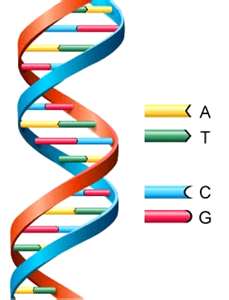
Diagrams: I am a believer in the power of shapes. I heard Len Sweet talk one time about how the two scientists that finally solved the riddle of DNA actually had all the necessary proteins and elements figured out for quite a while … but could not break the code. It wasn’t until they had that now famous shape – the double helix – that they were able to put the puzzle together.
I tell people

“You can have all the right content and be forcing it into the wrong shape.”

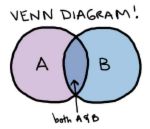
My use of the Venn last week to create 5 categories out of 2 would be an example of this. But it comes from a deep conviction that even when given 2 categories, there has to be more to the story – so look for a third. (The book Argument Culture by Deborah Tannen is excellent on this point).

Draw the person’s spectrum and then bend it (as I did here) for them. Take their two options and put it in a matrix (like the Urgent/Important matrix below). Just become convinced that there is too much data for it to be crammed into a pre-made little mold – it just won’t fit. You end up discarding too much data once your little tins are filled.

Vocabulary: When people are too familiar, too entrenched, and too comfortable, you may have to change the terms of the debate in order to unseat the status quo.

In the never ending Calvinist v Arminian debate that Calvinist love, I will teach them that Arminius was a Calvinist, but  just ‘not calvin enough’ and then, in reaction, the Synod of Dort went more calvin than Calvin to come up with T.U.L.I.P. So when Calvinist portray all free-will theologies as Arminian, that is like an American saying that all non-republicans are democrats: its just not true. They are basically just two sides of the same coin … but certainly not representative of the whole array of options. If they want to read an actual Arminian they should check out Roger Olson and his book Against Calvinism. Once you know what a real Arminian looks like, you will stop mistaking everyone who is not Calvinist for one!

Intentional Complexification:  Since dualism is destructive and deceptive, resolve to never let two contradictory-adversarial positions stand as the only options. Search far and wide, at all costs find a third option. Become inquisitive, Become imaginative. Who doesn’t see it this way?

In the abortion debate you must take away the entrenched or given labels that people assume are the only options. Pro-Life is usually just about one stage of life (unborn) and is less concerned about the life of the mother after her child’s birth, the education of the child 5 years after birth, our  country’s foreign policy and being pro-life in an age of perpetual war, and the ever increasing rates of incarceration, death penalty, etc. To be pro-life you also have to be pro-health care, for education, against militarism, anti-death penalty and should probably do something about hand guns and assault rifles ( I’m not talking about your deer rifle Mr. NRA, that is not what is being used to kill people in these shootings).

If you don’t care about the health of the mother, the education of the child, the life of soldiers, and the life of inmates then you are not pro-life: you are just anti-abortion.

When I see the conversation being set up in an us v. them scenario, I will just boycott by saying “until a women has control over her own womb and she can walk away from a pregnancy like the fella can, we can not even have this conversation. It’s impossible.” I just won’t concede the terms and allow the conversation to be set up like that. It is a false binary and it never leads anywhere except ‘both’ sides (as if there is only 2) feeling justified in their own self-virtue.

So those are my 3 suggestions. I would love to hear what things you have found help us get out of the either/or rut and change the parameters conversation!

Four is greater than Two: Good Friday repentance

So often when I hear two groups arguing, I think to myself  “the problem isn’t what we think about this subject, it is how we are thinking about it.”  If you have read posts here for any time at all you will know that I am not a big fan of dualism in general. I invest great amounts of energy examining binaries and pulling apart overly simplistic dichotomies.

In the past I have utilized a Venn diagram to illuminate the overlap between two groups that are ‘given’ as the options. Lately, I have focused more on the 4th and 5th area.
So in American politics, when ‘republican’ and ‘democrat’ are given to me as opposites, you simply illustrate the overlapping values of the two (3rd space) and then point out those who are ‘neither’ (4th space) like Green folks and anarchists. Then draw a circle around the whole system and point out folks outside the system (5th space) like Canadians.

This semester my two classes are ‘Political Liberalism and It’s Critics’ and ‘Globalization’. It has given me lots of practice in picking up on patterns and thinking in different shaped categories.

Example 1: when a subject like ‘Norms’ is discussed – in sexual identity or sexual practices for instance – often a basic “for & against” structure is presented for any isolated topic. But as the discussion develops you can actually see that this is not a linear ‘far left – far right’ spectrum configuration – even if it is presented as such!

You quickly see that there are least 4 positions even ON a spectrum: if the far left position is “there are no norms” and the far right position is that norms are “intrinsic / originate outside the system” and implement themselves, you can imagine that a center-left position would be an emergent perspective (norms arise from below in the population and then ascend) and a center-right position of top-down Hierarchy where norms are seen to be passed down from the authorities. Recognizing those four positions facilitates a radically different conversation than just outlining two.

Example 2: when the subject is ‘Law’ or court rulings, we need to rise above elementary ‘agree’ and ‘disagree’ binaries.  There are actually 4 positions in practice.

  • Agree & Obey
  • Agree & Disobey
  • Disagree but Obey
  • Disagree and Disobey

It is essential to admit that in any population there will be great variety, disparity, and diversity – so we do a terrible disservice to the matter when we reduce the matter down to basic dichotomies.

The reason I bring this up is because I am very concerned about the round-and-round cul-de-sac conversations that I hear over and over again in the church. I am growing convince that as contemporary Christians, the issue is increasingly not what we think but how we think about it.

The issues of abortion, homosexuality, biblical inerrancy, the creeds/ orthodoxy, environmentalism, and women in ministry are just 6 examples of matters where the dualisms are killing us.

One of the best things that could happen this Good Friday would be for those who take the Christian story seriously to die to – not what we think – but how we think about it. My dream would be for a heart of repentance: to decide in our hearts to swear off inherited dualisms and pledge to, as a community, look for and develop better ways of framing the issues that matter to us most.

Challenge: This Friday, repent of either/or thinking and die to the dualism of us/them for/against right/wrong in/out thinking.  Ask your small group to hold you accountable and maybe even join you in a new life (Easter) of the mind.

disclaimer: some of you will finish this post and think ‘it was so remedial it was barely worth reading’ and others will think ‘that is crazy talk – you are either right (on God’s side) or you are plain wrong – there is no middle ground.’ But we have to start somewhere, and this is the world we live in.


White, Extremely Male and Incredibly Homophobic

I originally posted this at Homebrewed Christianity but wanted to move it over here to keep the conversation going.

The news is wild these days! Its almost as if there is a cultural shift underway!
Let me just highlight 4 news stories from the past weeks:

1) The Pope: Gay marriage threatens humanity’s future

2) Pastor Joel Osteen to Oprah: Homosexuality Is Sin — But Gay People Will Get Into Heaven

3) Rick Santorum: A Straight Dad In Prison Is Better Than Two Gay Dads Who Aren’t

4) Pastor Mark Driscoll’s book on Marriage hits the shelves

It is interesting that all four of these stories have come to my attention within a week. What most people will focus on is whether there is a Bible verse to back up what they are saying or not.

What needs to be stated before we get there is two-fold:

  • All four are white males. Somebody may ask “are you implying that their gender or race somehow diminishes their right to speak with authority?” and I would answer “No – I just think that it is worth pointing it out in case later we wanted to examine how people come to power and in what ways authority is constructed, bestowed, or recognized.”
  • When you have the leader of all the world’s catholics, a guy who is renowned for not speaking up about anything or coming down on anyone, a presidential candidate, and one of the most influential evangelical pastors in America saying the same thing… one of a couple of things has to cross your mind.

Either:
a) they are all sticking up for the truth or
b) they are all sticking up for an antiquated perspective of the past

The reason that this issue has grabbed my attention is that many are calling it “The Last Taboo”.  Continue reading “White, Extremely Male and Incredibly Homophobic”

Heaven, we have a problem – with sexuality

This was a week of controversy in the Blogosphere – at least in my neighborhood.

The topic of gender, femininity, and sexuality were the touch points.  I am going to highlight 3 controversial blogs from this week … but first I want to acknowledge that it mirrored (albeit in a much smaller way) something happening in the larger culture that we are embedded in.

This was also a week that saw the Penn State football sexual abuse scandal rock the nation, the Herman Cain sexual harassment allegations, and several other national news story related to discrimination, abuse, and harassment.

These three christian conversations that follow are not happening in a vacuum – perhaps that is why they illicit such a heated response and so much attention. It impacts all of us.

Post 1:  from Stuff that Christians Like – a post called ‘Girls with a Past’ was a little test (written by a man) that women could take to see if one qualified as intriguing or not.  It was satire (which not everyone gets or likes) and it pointed out a real problem. Now, some people were offended and took it out on the author. I just want to say that the situation is infuriating but we can’t take it out on the person who illustrates the problem, Jon was articulating a severe inconsistency between what we say and what we do in the ‘church’.

Here is his post: http://www.jonacuff.com/stuffchristianslike/2011/11/stuff-christians-guys-like-girls-that-have-a-past/ let me know what you think. My 2 cents will be at the bottom of this post. It got over 500 responses.

Post 2: Rachel Held Evans (one of my favorite bloggers) put up a post called “13 things that make me a bad feminist”. It is part of a series that she does from time to time – she has also admitted to being a bad ‘evangelical’ and ‘progressive’.  This post went over like a lead-balloon . This led to a guest-post the following day.

Here is the post: http://rachelheldevans.com/13-things-lousy-feminist . It got 149 responses.

Post 3: my good buddy Tripp Fuller came out of the closet as not being ‘open and affirming’ on a video from Two Friars and a Fool. His contention was that affirming letters – whether L, B, G, Q, T, I or any other dash or asterisk – is an inherently limited response. It has two great dangers: Continue reading “Heaven, we have a problem – with sexuality”

Create a free website or blog at WordPress.com.

Up ↑