Dualism offers us binary options that must be challenged. Evolution & Creation, Male & Female, Church & World, Jihad & McWorld, East & West, Think & Do etc.
This short video is in response to requests for alternatives to the either/or frame work that we have inherited.

Baptism, like atonement yesterday, is one of those topics that is vitally important to the Christian tradition but which has developed and evolved over time to have a multiplicity of perspectives.
Let’s talk about the second aspect first.
Sprinkling, pouring and immersing in water are the 3 main methods. There are churches that have fonts built in, others have a basin they pull out when needed. Some have baptismal tanks at the back of the platform. My favorite are the tanks built below the stage that can be uncovered when needed.
For groups that do no do baptisms during the worship service, some groups go to a member’s house and gather around the swimming pool. Other groups go to the nearest lake, river, or ocean.
Here are four aspects of baptism that intrigue me:
1- I grew up in a tradition that did ‘believer’s baptism’ and so we ‘dedicated’ infants to the Lord. I now work in a tradition that baptizes babies and then has confirmation for teens. I see the strength of both … and the weakness. I wish that we could combine these two and that churches who do A) immersion and B) believer’s baptism also had confirmation class in the build up. I’m sure somebody out there does this but I have not found them.
2 – My evangelical background doesn’t do ‘sacraments’ as much as ‘ordinances’. Baptism and communion we ordinances because Jesus A) did them and B) commanded them. I now work in a situation which is nearly ‘catholic’ by my evangelical sensibilities. It is not just sacramental but practically sacerdotal.*
What intrigues me is that for the nearly unanimous expression of baptism in the Eastern and Western, Catholic-Protestant-Orthodox, ancient and current churches … there is no unity or uniformity about how it should be practiced.
In fact, people have historically died over this. Christians have killed other types of christians over this issue! Even today, there are groups which will not recognize (or transfer) members of another group who practice baptism differently.
For something so central to the christian practice you would think there would be more continuity.
3 – Baptism is a great example of a major difference between Christianity and other religions like Islam. I find it really illustrative.
There is nothing geographic about the christian practice of baptism.
- We don’t have to go to the Jordan River (like Jesus did)
- We don’t even have to baptize in a river.
- We don’t have to face East of Jerusalem when baptized.
- We don’t have a specific time of year when we baptize.
I am fascinated with how little geography is involved in Christianity. I have written about it before. Sometimes people use the word ‘universal’ when they talk about some aspect of christianity. I shy away from that. Its not that it is universal so much as it is not earthly (or earthy).
This is something that concerns me very much.
4) The New Testament stories of baptism do not happen in a vacuum. Many people have no idea that part of the Temple worship of Jesus’ time involved frequent baptism – or ceremonial washing. There were actual permanent pools with two sets of steps – in and out – for purification.
This is so important to know and I am shocked at how many bible-believing people don’t know this biblical scholarship or background. John the Baptizer being A)outside of Jerusalem and B) in a river not a man-made pool is a massive critique and protest against the corrupt religious-political-finacial systems of the Temple religion.
What John and (later) Jesus’ followers were doing was not original to them nor was it the sentimental ceremony it is often portrayed as. What a fascinating way to begin a ministry. It is impacts the whole rest of the gospel … and most people I talk to read it without this context or knowledge.
I would love to hear your thoughts!
* whereas sacrament is concerned with elements (like bread or water) , sacerdotal is concerned with who have perform this sacred ceremonies. ‘Priests only’ is the elevation of certain commissioned individuals being the only ones allowed to.

Over the past two months we have been having a lot of fun talking about John 14:6. The release of Brian McLaren’s new book Why Did Jesus, Moses, the Buddha, and Mohammed Cross the Road?: Christian Identity in a Multi-Faith World and our subsequent live event with him at Wild Goose West (audio here) got us started.
Then Jericho Books gave us some copies to give away so we put out the John 14:6 Challenge. People stepped up with posts and used the speakpipe to leave us messages.
I swung first with “Jesus wasn’t talking about Muslims in John 14:6” and followed it up with “an alternative to John 14:6” saying that one that famous passage is off the table for thinking about how to deal with other religions … where does one start? What are the alternatives?
Last week, Tripp and I recorded a TNT that will come out this afternoon where we listen to some of the calls and talk about some of the posts… in that midst of that conversation, (beginning in minute 15) we put out an idea that I thought should be in written form and not just audio. Here it goes:
Not only is John 14:6 not about other religions – since it is a disciple’s invitation – but it is not even about salvation. It is about relationship and not salvation.
I blame it on lazy reading that results in conflating subjects. I think that Jesus is inviting those who follow him to relate to ‘the Father’ (Abba) as he relates to Abba by:
- living the life he laid out,
- walking the way he modeled and
- embodying the truth we proclaim.
Tripp implies that is has something to do with Calvinism and it’s histroical impact of making salvation:
A) transactional instead of relational
B) individual instead of communal
So I want to ask the question (you may want to listen to the TNT episode to hear the whole context):
What if John 14:6 is not only not about other religions – but isn’t even about salvation? How would that impact your use of that passage and where else would you turn in the Bible for an alternative?
Personally, I would go to Acts 4:12 “God has given no other name under heaven by which we must be saved.” Mainly because it has the word ‘saved’ in it AND sounds semi-exclusive … which is what people TRY to get John 14:6 to be – but simply isn’t. That is the conflation that I am talking about.
Thoughts? Responses?

I love John 14:6. I take so much encouragement from it and it challenges me deeply.
I love John 14:6 but I do not like what many today are doing with it: hiding behind it as a catch-all explanation for other religions...
Here is what I love about the passage and the three things I don’t like that people do with the passage:
What I love – this is a disciples invitation. It happens within a story, it is in dialogue that Jesus’ famous sentence “I am the way, the truth, and the life”. It comes in response to a very specific question. Here is the thing – the question is not “What about other religions?” The question was a disciples’ question about following.
Three things people do that scare me – My first concern is that people only quote John 14:6 and not John 14:1-5 or even 14:7. They have ripped this one sentence out of its narrative context and acted like it emerged in a vacuum. This is never a good sign. In fact, the only way this famous sentence of Jesus works as an answer to the question ‘What about other religions?’ is if you isolate it from the rest of the story and place it in a vacuum.

The second concern is that our inherited (non-Hebrew) concern with substance and our language’s (non-Hebrew) lack of relational emphasis really handicaps us when reading the scriptures. I have to explain to people all the time that when Jesus calls God ‘Father’ he is speaking relationally – he related to God as one relates to one’s pappa (or abba). He is not saying that god IS ontologically a Father. Language about God is not univocal, it is equivocal. Or, if you prefer, as Nancey Murphy points out, language is not representative of God, it is expressive. Language does not represent God is a 1:1 ratio – it is merely expressive of some aspect or nature of God.
The third concern is that in John 14:6 Jesus could not possibly have been talking about Muslims. He had never met a Muslim (as Islam didn’t exist yet) and therefore could not have been talking about them. In fact, once one comes to terms with this reality, one has to question whether Jesus would have even know about Buddhists or Hindus either. No, Jesus had probably never encountered them and certainly wasn’t referring to other religions in John 14:6.
(Unless of course you are retroactively ascribing attributes … at which point you are going to have to explain why you chose this one over other preferable ones.)
This sentence was uttered:
- in conversation with his disciples
- in response to a very specific question
- as an invitation to his disciples
- to relate to God as Jesus related to God
Where the problem seems to lie: When people miss the relational language (come to the Father as related to God), remove the sentence from its narrative context (as if it emerged in a vacuum) and assume that Jesus was referring to things he couldn’t possibly have known about … then irony sets in.
The ironic thing is that quoting John 14:6 as a stand alone explanation – without receiving it as a disciples invitation – one may actually be doing the exact opposite with that passage as Jesus was asking one to do: follow his way.
Having said all of that: Maybe Prophet Isa was talking about Muslims in John 14:6. Maybe he was saying that if they want to relate to God as he did – that they could only do so by walking his way and following his life. In fact, if you take away the univocal calling God Father (ontologically) and see it as expressive (or equivocal) of relating to God as one relates to a loving father … you would remove the biggest obstacle Islam has to Jesus – namely that the Quran tells Muslims not to say that ‘God has children’.
You may think that I am way off here – but until we:
- stop quoting John 14:6 in a vacuum
- stop thinking that Jesus was talking about other religions
- stop thinking that Jesus’ Father language is univocal (instead of relational)
We won’t even be able to have the conversation and explore the possibility.

I had the chance to teach adult Sunday School this past weekend as we worked our way through Brian McLaren’s A New Kind of Christianity. We are up to Question 9 “the Pluralism Question”. I had looked forward to this all Summer.
Now unfortunately I did not have the time to cover some classics on the subject like:
- Variety of Religions Experience by William James
- The World’s Religions by Huston Smith
- The History of God by Karen Armstrong
What I was able to do is to build on the thought of folks like John Hick. In his famous works ,such as An Interpretation of Religions, Hick provides tour-de-force in the realm of comparative religion. He is not, however, simply reporting on religions – he is putting forward a theory about religions.
Many of Hick’s fans and critics alike end up saying the same two things when talking about him. The first is about the analogy of the mountain. The metaphor about many paths leading up the same mountain is a pluralistic classic. The second is about the blind men and the elephant. This is of course based on a Kantian dualism between the numenal and the phenomenological.
Religions are like blind men, each with their hand on a different part of the elephant and thus describing different aspects of the same reality. One has the trunk, one the ear and one the leg. They each talk as if they have grasped the whole but in reality, they have not. Though it may appear as if they are talking about very different things (a Christian from a Muslim or Hindu) they are actually all touching the same entity.
Then there a critics of Hick. Both Mark Heim in Salvations and Stephen Prothero in God Is Not One are post-Hickian.
Critics of Hick seem to have two main critiques (I am being very general here):
The first is that analogy of ‘paths up the mountain’ is flawed. Religions are like different paths up different mountains. The mountains may all be in a range together – in that they have some similarities and are in proximity to each other – but essentially they are not all leading to the same place. Being a good Hindu, which may have some ethic overlap with say the Christian sermon on the mount, is still not the ultimately after the same thing. Religions do not all lead to the same place and so just walking on road for long enough does not guarantee arriving at the same destination.
The second concern is about the Kantian blind men and elephant. When one takes on this enlightened view, one is placed in an elevated position above the religious traditions. They think that have a grasp on the whole but in reality it is only a part (ear, trunk, leg). The Katian-Hickian at that point is in the real seat of truth. The question then, is why would anyone ever participate in any particular religion? Why even be a Christian – for example – and only grasp the part? Why not be a generic ‘God-ian’ and recognize the whole? In this way, studying religion is a way to not actually participate in any actual religion! Ironic isn’t it?
Here was my main point on Sunday: the problem is comparative religion itself. The very discipline that we end up being unsatisfied with contains within it (from the very beginning) the inherent problem that we end up being frustrated with.
 The problem is this – comparative religion is a product of a Western approach (with its intrinsic dualism) that first imports and them imposes it categorization upon other traditions and then looks within that compartmentalization for points of similarity and contrast. This will never work.
What I ended up doing was pointing folks toward an innovative concept called ‘Comparative Theology: deep learning across religions borders’ developed by Clooney in the book “Comparative Theology”.
His point is that each tradition tells its own story – in its own words. The art then is not in compartmentalization but in humble listening. Each learning to hear each tradition-religion bring forward its own stories, teachings, practices and values we remove ourselves from being ‘over’ the religion as a judge/reporter and humbly place ourselves at the feet as a learner/listener or at the table as friend/partner.
I love Clooney’s approach. I find the epistemology and posture refreshing. I also think that in the inter-connected, trans-national, multi-religious 21st century it is going to be ever more critical to distance our selves from approaches of centuries past.
I have written before that I don’t want to apologize for being a Christian (I truly love it) but the time for apologetics is passing into the night of history. It’s a new day and a new approach is needed for the plurality and multiplicity that we increasingly live in. Many conservative christians hide behind exclusivism to guard against the threat of relativism. What I love about Clooney’s approach is that they are not asked to give up their internal belief as christians but are challenged to adjust their external posture toward those of other traditions.
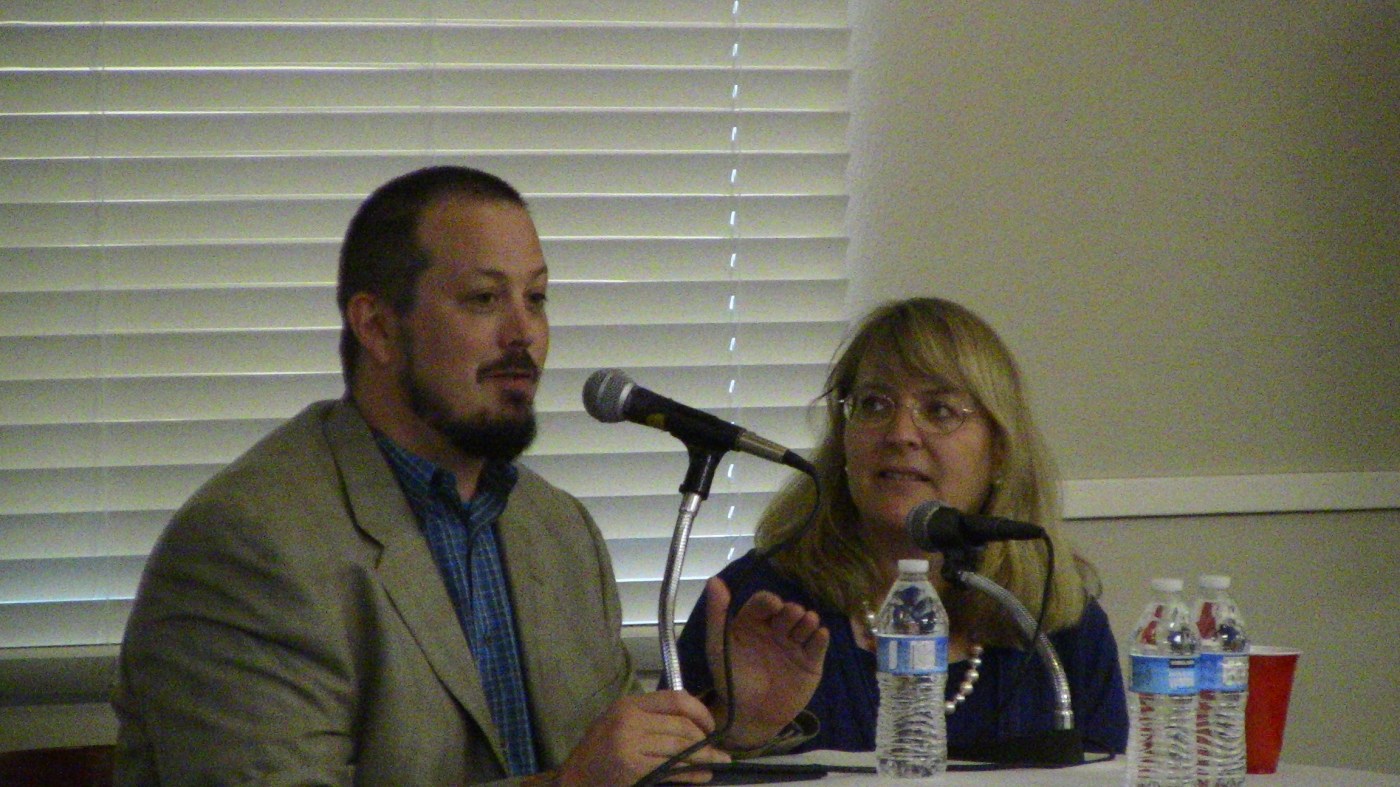
Earlier this month I got to sit down with Diana Butler Bass and ask her about everything from her new book’s title Christianity After Religion to the Methodist tradition and why Evangelical young people are 30 years behind.
 It was a blast! [you can hear the audio here]
At the end of the hour, the last question was put forward by Darcy who asked about something Diana had alluded to in the Methodist question. Butler Bass had said that the early Methodist had historically A) ministered to the fringes and B) gone to the frontiers.
It was the fringes and the frontiers that Darcy wanted to know about. Only, she was not asking about the past. She wanted to know about the present.
Who are on the fringes today and where is the frontier for us?
This is possibly the best question I have heard asked at one of our live events.
Diana didn’t flinch. She outlined three such scenarios that would qualify:
The first was in the realm of sexuality.
The second was in the realm of pluralism.
The third dealt with our environment.
- In sexuality she articulated issues related to the transgendered community. This did not surprise me. In the LGBT formulation, T (transgendered) is the the one the raises eyebrows. Now, because I am came to this conversation through a friend who was doing Queer theology, I had initially taken the LGBTQ as a 5-part alliance. I did not realize how difficult the T can be (not to mention the Q) until I starting asking question and listening to stories. I quickly became aware of the complexities and complications involved.
In the two weeks since Diana’s answer I have had several conversation about her take and I have realized how much conversation has yet to be had. May God give us grace as we learn from each other.
- In religion she mentioned learning from Hindu friends. As a student at Claremont School of Theology I am very invested in and more than on board with the idea of inter-religious learning. Yesterday was my day off and so I (as Christian) headed to a Jewish bakery to sit and listen to an audio recording I had about diversity within Islam.
I am always shocked at how much I don’t know and how much beauty there is within each tradition. May God give us grace as we learn from each other.
- In issues of environment and ecology, I like to think of myself as up to speed. This is a subject I have really investigated and as someone mentored by Randy Woodley (his new book Shalom and the Kingdom of Creation was just released and he will be on the podcast next week) I was tracking with her when she talked about non-human animals [I often allude to Nipples & Belly Buttons in this regard].
It should not have been surprising to me that with the release of the video of our conversation that she came under some suspicion by a group called IRB (Institute on Religion and Democracy) as well as others for her views on non-human animals.
From the blog Juicy Ecumenism here is the end of Diana’s answer and their commentary:
“Non-human animals and their experience of our environment of the divine are a place that human animals need to listen in order to create more full understanding of God’s creation. […] They don’t have voices like humans do, but isn’t that part of my prejudice?”
I don’t like to bring up the slippery slope, but the mud’s looking pretty slick from here.
What IS surprising to me is that – of her three answers about the fringes and frontiers – that seemed to be the least inflammatory of the three answers!
In my humble opinion, her pluralism answer and her sexuality answer were FAR more daring – and challenging! The only thing that I can figure is that some Christians have so bought into the Cartesian dualism regarding humans that both Transgendered and Hindu folks are completely off their radar screen … but don’t you DARE say what you said about listening to non-human animals.
I was prepared to defend Diana Butler Bass after our show – she said some daring things – I just didn’t think that it would be on the issue of creation-care over sexuality and pluralism.
This contemporary religious environment will never cease to surprise me.
I continue to be very excited about the Claremont Lincoln University Project to bring together Jewish, Muslim and Christian scholars and practitioners. It is essential for the future that each tradition initiate its young leaders and thinkers in at atmosphere of mutual exchange and understanding.
The reason this is so important is that these three religions are not the same. They are not simply three expressions of a common understanding. They are vastly and distinctly different from each other. Of course there is commonality and overlap – for instance all three are a covenantal people and point to a covenant they have with God. I am interested to hear how each of the three groups reflects on and lives into their particular understanding.
Many Christians seem to think that the big difference between Christianity and both Islam and Judaism is what they believe about Christ. I do not think that views on Jesus is the biggest difference between the three. In fact, I am suspicious that any Christian willingness to revisit a wooden-literal reading of passages like John 14:6 or reexamine the language and meta-physics of the creedal formulations would easily result in an understanding that did not violate the Quranic understanding that God has no children. Vocabularies of ‘how God was present in Christ’ are already being worked out by followers of the prophet Isa (Jesus) in Muslim countries. [Link: an article on c-6 contextualization]
In my mind, there is a much bigger difference between the three religions than an understanding of Jesus’ identity. It has to do with the earth.
Christianity is primarily time based. While the Christian gospel is one of incarnation, ironically, Christianity has become something that is not place-based and especially not land-based. This is easily illustrated by looking at some Muslim practices and noticing their absence or contrast in Christianity.
- Prayer Direction: When Muslim pray, they face Mecca. This is a directional earth-relative orientation. Christianity lacks this orientation.
- Pilgrimage: Once in their lives Muslims are expected to make a pilgrimage to Mecca. This is an intentional journey to a specific location on the surface of the earth that holds special meaning. Christianity has no such thing.
- Sunset: Certain holy days are marked as beginning at “sundown” or when a specific phase of the moon first appears as observed in a set location. This shows an awareness of the seasons, the sun, and the moon. Christian holy days and holidays are based on a calendar and clock.
- Language: If you want to read the Quran you need to learn Arabic. The Christian gospel is not only translatable into any language – Christians believe that it should be translated into every language. The Gospel is equally valid in any and every language.
In his book Whose Religion is Christianity?: the Gospel beyond the West, Lamin Sanneh puts it this way:
Being that the original scripture of the Christian movement, the New Testament Gospels are translated versions of the message of Jesus, and that means Christianity is a translated religion without a revealed language. The issue is not whether Christians translated their scriptures well or willingly, but that without translation there would be no Christianity or Christians. Translation is the church’s birthmark … Christianity seems unique in being the only world religion that is transmitted without the language or originating culture of its founder (p. 97-98) Continue reading “a BIG difference between Christianity and Islam”
Religions need revision. This is even true of made up ones! Scientology has been in the news over the past months for all the wrong reasons: splinter groups, rival factions, money issues, coercive strategies for intimidating dissenters, and even heated theological debates. [check out last week’s Time article for instance]
And this is religion where we have writings of the founder. In fact, one of the original tenets of the religion (started just 50 years ago) was that nothing was allowed to be changed in the future. This stands is stark contrast to Christianity where we don’t have any writings of the founder (thank God) and have a model that is incarnational – which means that the religion is inherently contextual and translatable. [read Lamin Sanneh’s books like Who’s Religion is Christianity? and Translating the Message if you want to see a contemporary contrast with Islam – like ours, a religion based on revelation.]
All religion needs revision – or re-visiting, re-imagining, and reviving. Some people object to this much needed procedure. The arguments tend to fall in two broad divisions.
1) Those who object to deconstruction because it feels like destruction. This is understandable because when you hold dear something sacred, it is precious and worth protecting.
I would simply argue that like any house or house of worship, if it is going to continue to be useful, it will need to go under renovation – a re-examining with a critical lens (deconstruction) is actually a loving act of clearing room for the renovations that need to happen.
If we didn’t love it and intend to live in it, we would walk away, burn it down, or blow it up.
2) The second objection seems to be more theoretical, less sentimental but equally as defensive. It comes from those who object by saying “that is not what those who came before would have recognized as the faith” or “those who ________ (wrote the creeds, were reformers, etc.) thought that they were doing something that you now say they did not accomplish (making meta-physical statements, producing a once for all systematic theology, etc.)
In this case, I would simply argue, with Bernard of Chartres, that we are dwarves who stand on the shoulders of giants. We have a perspective that they did not have. Ours then in a 2nd order reflection on their 1st order activity. They were in the arena, we are in the balcony. This sets up two tensions: A) it is not possible to do what they did nor is it possible to disregard it B) you know a tree by it’s fruit and we now see that they may not have done what they thought they were doing at the time.
This is the critical element. We are part of a living tradition that lives out faith in community – communities that are radically located in particular times and places. Our tradition proclaims an incarnational gospel and orients around a living word of God. That is, both conceptually and practically, an ongoing model of revision, renovation and revival. In these ways our faith stands in distinct contrast to other religions – especially made up ones.
 Bo Sanders: Public Theology
The Next Pat Robertson Gaff
With the election season over, the frequency, intensity and insanity of conservative white men making outlandish statements will hopefully die down … I’m moving a bunch of blogs over there this week and found this cheeky little blog I wrote in the middle of the fire-storm.
Pat Robertson topped even himself in the category of ‘insulting-inflammatory- stupid comments while the tape is running’ this morning. That may seem difficult with all of the previous entries that have earned him elite status in the gaff Olympics.
The most recent entry was in response to a question from a man who apparently wanted to know what to do with his non-submissive wife. Robertson started with suggesting that the man could convert to Islam … and as tough as it might be to top that one, he did. After conceding that the Bible does not allow for him to divorce her, Robertson gave him the option to move to Saudi Arabia – thereby indicting not only an entire religion but an entire nation.
I know that many will want to jump on Robertson with disdain and scorn but … maybe we should not be so quick to jump to judgement. As often happens in cases like this, there is a good possibility that there is something we don’t know behind the scenes. There might be more to the story that at first meets the eye.
Now, before you dismiss this outright – just keep in mind that many preachers and politicians who rail against homosexuality later turn out to have been involved in illicit same-sex affairs at the very time they were railing. This pattern can be seen in leaders of many self-righteous and sanctimonious movements.
With public figures, we just don’t know. So I am suggesting that we might want to hold off judgement. Sure, right now it looks like crazy Uncle Pat has come unglued and betrayed the very gospel that he is supposed to be a minister of and a spokesman for. But … let’s just give it time.
That is plan A.
If you can’t wait for that, there is a plan B. As I proposed a while ago, it is possible that words for fundamentalist christians are like dialogue in porn movies. They play an important role in allowing us to suspend our suspicion and get down to the real business at hand.
I said that the real activities were nationalism, capitalism and militarism. One of our deaconesses added patriarchy. This accusation would stick to Robertson’s many gaffs like a field of burrs on a cheap pair of cotton dockers.
Here is the thing: I want to be a generous and gracious purveyor irenic ecumenism. But there are times when you hear something like this and realize how many people are genuinely injured by this stuff. Like it or not – he is a spokesman for our religion, my tradition and Jesus’ name. This is why I go so far out of my way to say that we need to stop waiting for Superman and start sticking up for causes that don’t directly impact us.
Here is a conversation that I have had repeatedly in the past 20 years.
People don’t like when I am critical, negative, dismissive or adversarial. Neither do I. All I am saying is that I am very nervous about what gets broadcast on christian radio and TV these days and the impact that it has on thousands and thousands of people.
So here is the question: If, and I am only asking ‘if’, there was a machine that was fueled by a different vision of the world and different priority structure than that fleeting Galilean vision – but it was covered with a thin veneer of Jesus talk as a mask for the true agenda … shouldn’t we say something at some point?
If the Jesus-paint was only a mask on a monster, or a series of brushstrokes on a Hollywood set facade … we should say something right?
That probably is why plan B in this case is not so popular.
THE most important thing in all of this is that we are very clear about people who have simply bought into a bad brand of christianity and those who are up to something with it. It is one thing to have merely inherited a flawed-limited-unaware religious product and those who openly promote a product that injures people and harms those who need what Christ provides the most. We have to be careful. This stuff is wicked, acidic, and cancerous. We can’t paint with a broad brush or be dismissive of folks who are just walking the same road we are all walking together – trying to figure it out.
May God give us grace in the journey. We need it. Lots of it.