Search

Bo Sanders: Public Theology

updating & innovating for today

Tag

Jesus

Seductive Statistics and Evangelical Persecution Complex

An intriguing aspect of cultural conceptions has to do with the importance of numbers. Empires have historically (and colonial projects more recently) have trusted in the power of quantification for both influence in shaping narrative and to fuel the imagination of the population. The ability to take a census, to generate maps with classifications of miles and acres (for example) has been utilized by those in a position to do so as mechanism of control and domination.[1] Colonial concerns of quantification, compartmentalization and subsequent mastery (control) of those established categories have been powerful and formative in the imaginaries available to it subjects (and former subjects).

“The vast ocean of numbers regarding land, field, crops, forests, castes, tribes, and so forth, gathered under colonial rule over the last four centuries, was not a utilitarian enterprise in a simple, referential manner. Its function was part of a complex including informational, justificatory, and pedagogical techniques … State-generated numbers were often put to important pragmatic uses, including setting agrarian tax levels, resolving land disputed, assessing various military options, and, later in the century, trying to adjudicate indigenous claims for political representation and policy change. Numbers were useful in all these ways.” [2]

The mechanism of devices such as census, map and agrarian register functioned in one way during colonial occupation – and in many places still functions as such – but has morphed in more recent thought for both minority communities within existing systems of power as well as de-colonial perspectives.

For an example we might look to the impact of projected demographic changes in the United States. It is widely speculated that, if present trends continue, by 2048 there will be no white majority in the country.

It is important to clarify that

  • A) this has not happened yet and
  • B) that whites will still be larger than every other ethnic group (or racial category) individually.

The turning of the tide is that as the racial categories have been constructed, there will be more non-whites than whites. This is deceptive at two levels:

  1. first it is based on statistical projections bases on demographic numbers from census results. It is simply a number at this point.
  2. Secondly, there is no inherent association or camaraderie amongst what will be the new majority except that they are non-white. Outside of that parameter, there is no assumed similarity, priority, or fixed fraternity.

Here is an example of the difficulties associated with this approach. When a young Native American man says to me with confidence that in his lifetime there will be no white majority, he draws confidence that his current lot, as a minority, will not always be the case. He is both encouraged by this projected reality and emboldened to be strong, take a stand, and let his voice be heard. He can feel the change that is in the air. His America will look very different than his father’s and great-grandfather’s America. But within his conception – his new cultural imaginary – there are (at least) three unstated difficulties.

  • The first barrier is that it is a projected number that is not his present reality. He draws strength and confidence for resistance to the perceived injustice and inequality of present reality. It is a number generated from his colonial oppressors’ census data. His growing sense of self and imagined community is a result of an empirical projection.
  • The second barrier is that he is feeling a sense of fraternity and camaraderie with a population that he will only ever meet a fraction of. He is envisioning himself as part of a dispersed community that is based on the categorization imposed by the powers that oppress him.
  • The third barrier is that of assuming an alliance with Blacks, Asians, Latinos, Islanders, and other immigrants who he may have little in common with outside their expressed non-whiteness. If he were to be empowered with legislative influence along side an LA Latina, a South Carolina descendant of slaves, and a NY Korean would they share many common cultural values?

Yet he has been given a number that allows him to imagine himself in a different cultural context – participating in a different social order. That number allows him to dream and plan now for something that is not his present reality and to behave/participate as if that number were the greater reality. Numbers, in this sense, are powerful within and for the social imaginary.[3]

I was raised and ordained in a denomination that I experienced as massive. It had a global magazine, publishing house, plus six universities and two seminaries around North America. When I attended national gathering the rented civic centers were filled to capacity. I later found that we were dwarfed in size by other denominations. This numeric awareness changed my feeling about what I belonged to and my experience of it. I am now serving with the United Methodist denomination. I have experienced this group as vibrant and massive. Within the ranks, however, is an awareness of a statistical decline that is sobering. The way that members conceive of their movement and conceptualize what is possible is impacted (hampered) by the presence of a shrinking number. It seasons their reality and ability to imagine the community to which they belong.

The power of numbers to shape experience is worth examining.  If I were a child with a skin disease that limited my physical and social options, would I feel it less un-fair if I were informed that 364 other children are inflicted with this disease yearly? Would it matter if I were to learn that I was one of only 3 people worldwide that has my condition? What if I was the victim of a violent crime: would it change the way I process what I had experienced if I learned that 50 such crimes happened daily in my city?

Would my feeling of isolation and loss be impacted by my awareness (numerically) of people that I have never met? Yes. In the western construct, numbers impact the way that we conceive of our experience and conceptualize of an imagined reality or community.

Which brings us to the ‘persecution complex’ that is framing story of many Evangelical communities. Within the ‘statistical’ approach that I have suggested above,  one can quickly zoom in on a phenomenon related to narrative that some evangelical leaders peddle with great success to ‘rally the troops’ and garner support.[4] Pastor Holding Bible

In the exact opposite way that the young Native American man (above) gained encouragement from the idea of statistical formulation, the evangelical may become angry at the perceived loss of what Bill Leonard (in episode 114) calls “Protestant cultural hegemony”. From the ‘Happy Holidays’ controversy to the Duck Dynasty fiasco what we are going through is somewhere between a slight societal shift and a seismic cultural upheaval.

The phenomenon itself is debatable. What is not debatable is the very real perception and subsequent feeling of loss by those who have bought into this narrative framing of their experience.

I recently had a conversation with someone who lives in a different region of the country. She expressed concern that Wednesday nights were no longer ‘sacred’ and that both little league Baseball games and High School practice times now encroached on what just a decade ago was set aside for Bible Study and kids programs at the area churches.

Now the reality is that she can buy Christian books and music at Walmart (!) or one of several Christian bookstores in her area while listening to her choice of Christian radio stations as she drives past the more-than-a-dozen  Protestant churches between her kids’ private Christian school and the ball fields.

The reality is that Christians are neither A) persecuted nor B) a minority in America but that statistical awareness of an incremental  loss of influence is perceived (or felt) as such. The underlying truth, however, is that it is a conceptual framework (narrative) attempting to grapple with a loss of cultural influence/domination (hegemony) that was so pervasive within the 20th century’s modern social imaginary.


[1] Arjun Appadurai, Modernity At Large, , 115.

[2] Ibid., 117.

[3] A similar case might be made for women who have been disgruntled based on the patriarchal remnants still influencing them and their sisters even though they are aware that they are 51% of the population as a whole. A great deal is made out of the number ‘51’ in juxtaposition to matters of access, equality and compensation. Much is made of that number. What if, one might ask, that number was changed. Would the case be harder to make? What if only 42% of the population were women? Or what if it turned out that an error had been made and actually 64% of the population were women. Would that make the current inequalities and unjust practices more grotesque? [See Imagined Communities by Benedict Anderson]

[4] Madan Sarup, Identity, Culture and the Postmodern World, 14. “Identity has a history. At one time it was taken for granted that a person had a ‘given’ identity. The debates round it today assume that identity is not an inherent quality of a person but that it arises in interaction with others and the focus is on the processes by which identity is constructed”

4 Attempts at Approaching ‘God’

Over Christmas my brother-in-law, who is a fellow pastor, wanted to have a conversation about approaches to God – specifically as it related to epistemology (how we know what we know).

Although we both went to the same Bible college more then 20 years ago, our paths have headed in different directions and our hope was to compare notes and see where some common ground might be found for future conversations about ministry and christian spirituality.

 I thought it would be fun to throw out my initial schematic here and ask for some help in refining / overhauling it. 

I started with 4 basic historic approaches and then added a layer where each of the 4 approaches had 2 directions. Each approach has the possibility of starting with the notion of ‘god’ and then working out to the concept or starting with the concept and working toward the notion of god.


 4 Approaches pic

  •  Ethics has been a popular approach in the past. It is not as popular after the events of the 20th century (WWII, global pluralism and post-modern theory being 3 reasons why).

The problem here seems to be that starting with ‘god’ does not inherently result in clear ethics. In fact, those who have attempted to take the ethics approach often run into the problem that the two don’t necessarily equate. It is obvious that those who believe in ‘god’ are not more ethical than those who don’t believe in that same god or any god for that matter.

To make matters worse, starting with ethics (the outside-in direction) has a tough time getting all the way to ‘god’ by trying to equate ethics with evidence that there is a god. While you can see that the ethics and belief in god may have some overlap, it is not the most efficient of effective approach and thus it has fallen out of favor.

  • Revelation is a tried-and-true approach historically. Protestants of almost every stripe love this approach. From fundamentalist to fans of Karl Barth feast on a steady diet of the revelation approach.

That God reveals god’s-self in creation, in history, in scripture and in experience is a staple of the christian religion. The problem is that there is often a gap. If you start with what is revealed you might not make it all the way to God… and likewise, if you start with God it can be tough to make it all the way out to what is revealed. The problems come in things like Biblical (historic) criticism, modern science and the pesky pluralism of the post-colonial era.

  • Reductive approaches are perhaps the post problematic. We are haunted in late modernity by this shadow of foundationalism. As we are all aware, the scientific reductionism of the New Atheists is just the flip-side of the coin from fundamentalists like Jerry Falwell. If you start out there, you never make it in to God. If you start with God, you never make it all the way out there.

This approach has left us with a nasty enlightenment hangover and many (if not most) people are weary of the contentious and often combative result of this attempt of making your way in the world.

  • Linguistic approaches (I include the hermeneutical crowd in this) seem to me the most promising in the 21st century. The problem, however, is that they can often be so different from classic or historic approaches that the uninitiated have a difficult time even recognizing them as the same christianity one is trying to engage.

Take for instance the much debated sentences of Jack Caputo. What does it even mean that God does not exist but that God insists? Is god just a concept of our highest good? And how does one fend off the Feuerbach critique that religion is nothing more than a human projection by talking about ‘language games’?

Does god ontologically exist or not? Is the linguistic approach just a fancy way of skirting the tricky questions about what we can know beyond the physical world? Most importantly, for the epistemology question that we were originally attempting to get setup, how do you even more forward if linguistics/hermeneutics are your preferred entry point?

So that is my “4 Approaches – 2 Directions” schematic. It lead to a fruitful conversation even while it clearly needed some adjustments.

I would welcome your thoughts, questions, concerns, revisions, suggestions and innovations. 

p.s. I’m going to start linking to the Kindle version of Pocket Dictionary of Theological Terms at the bottom of posts like this. It is only $5 and it is so helpful new readers of this blog.

Pastoring the Process

Last week was a fun one for me! On top of interacting with concerns of Roger Olson and Tony Jones about process thought, I have received amazing emails, tweets, blog and Facebook comments.

Keep in mind that while I am familiar with process thought, I don’t subscribe to it hook-line-and-sinker … so I am a good person to ask these kind of questions to.

MP900178784

Here are the 4 biggest themes that emerged from those interactions.

How does Process affect your field of Practical Theology?

The first thing to understand that Practical Theology is kinda sociology with a theological lens. We use interviews, case studies & ethnographies (qualitative methods) to investigate how religion is lived out on the ground.

So a Practical Theologian does not need to subscribe to any particular school of thought per se. We do have to locate ourselves philosophically but no one approach is required.

Having said that … I am primarily concerned with pastoral theology and as a pastor, process theology has deeply impacted the way that I think, believe, lead and facilitate my interactions with the community of faith.

Doesn’t it seem weird to base so much on the philosophy of one guy in the 20th century?

Not exactly. Once you understand that all of christian history and specifically western theology is based and embedded with philosophy from day 1. If you don’t know how the Gospel of John or the Nicene Creed is laced with philosophical frameworks, this will be eye-opening to you.

Having said that, the philosophical approach that come from thinkers like Alfred North Whitehead is notable in a number a ways. It is naturalist (vs. empiricist) and it is advantageous in the areas of:

A) creation-care

B) give and take (symbiotic) relationship we have with the earth & the rest of creation

C) the realistic (not idealistic) way that things are after the industrial revolution

D) emergent thought and evolutionary history

When you put that all together, THEN add the fact that Whitehead had a Bible – what you end up with is an approach that is far more compatible with the way that the world actually works than anything we have inherited from centuries past.

Does it really matter?

100% Yes! Are you kidding me? When people question the nature of God’s power – why God doesn’t do the things that a god is supposed to do – when God, who could do anything if ‘he’ wanted to, doesn’t do them … both the world and the faith that we have inherited doesn’t make any sense.

Giving people both a permission to ask questions and a framework to process different approaches is a gift in the 21st century.

There is no school of thought that I have found more fruitful in engaging than process. Engaging biblical scholarship is a great starter. Asking big question about the nature of human violence (like memetic theory) is a catalyst. The pièce de résistance is found an alternative framework that not only asks different questions but allows for different answers.

Does it change how you pastor? 

Absolutely! If the nature of God’s power is not coercive but persuasive, then it affects everything.

  • The way you view administration
  • The way you counsel people
  • The way you preach
  • The way you recruit help
  • The way you pray
  • The way you empower & delegate
  • The way you do hospital visitation
  • The way you respond to criticism
  • The way discipleship is defined*
  • The way the community conceives of itself and participates
  • The way you perceive outsiders

I actually can not think of one aspect of church-life that is untouched  by this upgrade in operating-systems.

As you can tell, I am having a blast, so feel free to keep the conversation rolling! What else do we want to address? 

* In last week’s response “Is God Unique?” I made the case – based on the Advent podcast with John Cobb – that following Jesus in discipleship looks a little different. 

Jesus was as open to and as faithful to the will of God as Mother Theresa was to her calling, Francis of Assisi was to being Francis, maybe even Buddha was to be Buddha … That is not what makes Jesus unique.

WHAT makes Jesus unique is WHAT God called Jesus to. It is possible that all of these people were equally open & available to god as Jesus was. The difference is what God called Jesus to.

Jesus played a unique role in human history. No has ever – or will ever – play that role. What God did in Jesus has impacted all of humanity. Jesus is unique.

NOW having said that … the art of following Jesus is being open to and available to the presence of God the way that Jesus was open to available to the will of God is Jesus’ life.

Being like Jesus is not doing what Jesus did (walking on water) but being available to God the way the Jesus was available to God. This is discipleship.

Doing Theology in the 21st Century. or why Aquinas is a footnote

We are going to have to agree to disagree about some things. One thing that I would ask (in my generous orthodoxy style) is that we both acknowledge those things that we agree on as well as those we don’t.

The reason that is important is because of something that Phyllis Tickle points out (paraphrase): it is not that former (and maybe dominant) expressions go away, it is that they no longer hold the prime spot and wield the kind of power that they once did. They are all still around however. MP900405058

The interesting terrain that we inhabit in the 21st century is littered with artifacts and occupied by pockets of groups – possible ones that were once in the ascendancy. This is, as I am often saying, the bricolage nature of our cultural/societal environment.

You have methodists who have no idea what the methods were. You have ‘Amish’ fireplace stoves being mass-produced and sold on TV (think about it). You have can still, more tellingly, find actual Amish folks if you know where to look.

Here are two things you need to know:

  1. I come to the theological endeavor as a contextual theologian.
  2. In my context, practical theology and its qualitative methods (interviews, case studies, ethnography) is my chosen approach.

There are several implications of these two things. Unlike Tripp, I don’t do systematic theology.* It is not that I don’t value other branches of theology. In fact, practical theology as a field is in a major renovation, at least in part, in order to join the other 4 primary branches of theology that do their own research and provide their own innovations:

  • Historical Theology
  • Biblical Theology
  • Systematic Theology
  • Philosophical Theology

As my professor Kathleen Greider says:

Practical theologians commonly assert that the primary text of our field is lived experience– diverse persons and communities that are contextually located, inextricably related, and experiencing each other through countless interconnections and interactions.

Almost invariably when I am enduring critique from a conversation partner who is more conservative than myself, it is only a matter of time before they bring up Aquinas. I don’t get the nuance of Aquinas. I didn’t distinguish between the early and late Aquinas. I wasn’t careful to appropriate this or that of Aquinas’ formulations. I didn’t read the right translation of Aquinas. (the same things with Barth and Scotus too) 

What I am saying is that we don’t need to understand Aquinas better or deeper. 

We are to do in our day what Aquinas did in his.

As a contextual theologian I don’t think that is accomplished by obsessing over Aquinas. I’m not saying that we aren’t generous or respectful … I’m saying that Aquinas lives neither where we do nor when we do. He lived in a different context and time.

Call this dismissive if you will but  The Church’s future is not to be found in Europe’s past. I say it all the time.

You may disagree with me about this. That is fine. I’m just telling you where I am coming from since our latest TNT has raised some eyebrows, questions (and hackles) both here and on twitter.

Historic thinkers like Aquinas never saw what I call the 5 C’s of our theological context:

  • post-Christendom
  • Colonialism
  • global Capitalism
  • Charismatic renewal (especially Pentecostalism in the Southern Hemisphere)
  • Cultural Revolutions (from Civil Rights in the 60’s to the ‘Arab Spring’)

Add to those 5 to pluralism, the internet and a growing environmental crisis and you have the 8 things we as theologians need to give great attention and care to. They are the context in which (and for which) we do theology in the 21st century. Go listen to our interview with Grace Ji-Sun Kim if you have questions about this. 

You may want to focus more on the christian tradition (like Augustine or Aquinas) and I would understand that – I view that impulse through a Lindbeckian tri-focal lens. I understand the work you want to do within that cultural-linguistic silo. [I’m having fun in this part for those unfamiliar with my style]

Disagree as we might about the importance of a writer in the 3rd or 13th century – I just wanted you to know where I was coming from and what my focus was.**

 I would love it if everyone would leave a comment and let me know how this sits with you. 

_________________

*One implication of that is that when I read systematic theologians I do so though mostly thought trusted secondary sources. Admittedly, I don’t major in primary sources – for reasons I hope are clear in this post. I find scholars who know their stuff like Elizabeth Johnson, John Caputo, Joseph Bracken and Stuart Murray and trust them.

** If you want to read more about my approach check out ‘After MacIntyre’ that I wrote a while ago but never put up on the blog. It will explain my concern about everything from consumerism to hipsters and the radical orthodoxy project.

Jesus Isn’t Superman

As you may be aware, with the release of the Man of Steel movie earlier this year there was a major push by evangelical marketing types to get preachers to focus on the messianic imagery that had been intentionally spliced into the movie. Comic-Con- Superman A_Cala

This is not my concern (although insights about that whole phenomenon would not be discouraged).

My concern is with the real and inherited christologies that show up around both Christmas and Easter. I am content most of the year to naively pretend that we all are basically talking about the same thing when we use the name of Jesus. That fiction is often shattered in Advent and Lent as we build up to the high holidays holy days.

I have often been given opportunities in recent years to introduce lay people to the concepts of ‘christology from below’ (instead of the dreaded  ‘low christology’)  and to illuminate the dangers of starting – not with a cosmic christ – but with a pre-incarnate Jesus. [selah]

Most people have never thought about the difference and the importance that it might make in how they both believe and worship … let alone live their christianity.

What I am hoping to do here is to offer you a gift exchange:  you get something from Homebrewed and in exchange you help me out with something!

The offering: The current ‘Barrel Aged’ Homebrewed Podcast is a chat with John Cobb about Advent and Incarnation.  It is in my top 10 favorite episodes that we have ever done and I got Tripp to post it specifically for this conversation. It is a delicious audiological delight. 

The request: What I am asking in exchange is for ya’all to help me come up with and clarify a list I am working on for the conversation this week at my church.  We are starting a new series called ‘Jesus Isn’t Superman’ and I am coming up with tweets to get people thinking.

Here is what I have so far:

Jesus didn’t crash on earth sent from a distant planet – Jesus was born of a women. #JesusIsntSuperman

Jesus doesn’t get powers from the yellow sun – Jesus’ power is in his relatedness & availability to God’s spirit. #JesusIsntSuperman

Jesus isn’t Christ’s Clark Kent secret identity that can be taken off when its time to walk on water. #JesusIsntSuperman

Jesus wasn’t an alien pretending to be human & secretly had a fortress of solitude to retreat to. Jesus was fully human #JesusIsntSuperman

Post your thoughts here and thanks in advance, I look forward to hearing your contributions! 

’12 Years A Slave’ and the Cross of Christ

by Bo Sanders 

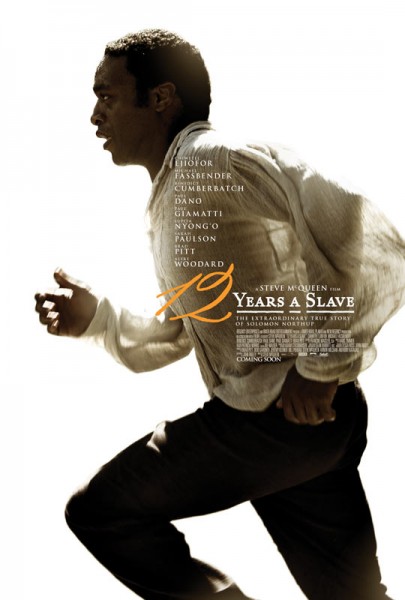
12 Years A Slave is one of the most powerful movies I have ever seen. The cinematic elements compliment the twisted and troubling plot to create a riveting experience for the viewer.  What follows is a theological reflection – for a more formal review of the movie check out Pop Theology by Ryan Parker.  Ryan and I also recorded a podcast that will be released this evening. 12-years-a-slave-poster-405x600

Based on a true story, the plight of Solomon Northup (played by Chiwetel Ejiofor) is a journey from the good life as a free black man in the North to the hellish existence of a slave in the deep South. Visual artist-turned-director Steve McQueen frames the narrative in stunning cinematography and a unique pacing that reflects the twists and turns in the story.

12 Years A Slave is one of those rare movies that impacts you emotionally and challenges the assumptions you carried into the theatre. The journey of the main character sticks with you and causes you to ask questions that you know deep down need to be examined.

I expect that this movie will be one of those rare films that trigger a much-needed cultural conversation. Issues of race and America’s haunting legacy of slavery and native reservation are never far from our national consciousness. Race is often front and center in the nightly news and on the margins of most national conversations.

While we know that something is amiss, we may not know how to approach the topic. We want to have a conversation but we may be unsure about how to proceed.

From the controversies surrounding the election of President Barack Obama to the George Zimmerman trial to the ongoing ‘stop and frisk’ policy debate in the New York City mayoral election, there is an awareness that race matters (to borrow a sentiment from Cornel West’s book title) but a perpetually unsatisfying confusion about how to access the underlying issues.

For Christians, perhaps the best way to address these issues is via the cross of Christ.  In his newest book, The Cross and the Lynching Tree, famed theologian James Cone equates the cross and the lynching tree: “though both are symbols of death, one represents a message of hope and salvation, while the other signifies the negation of that message by white supremacy.”

This is poignant because Solomon Northup first witnesses and then experiences the lynching tree in 12 Years a Slave. The lynching tree is the ultimate weapon of intimidation employed by the same slave owners who claimed the name of Christ, but who preached from the Christian Bible to their slaves in order to justify their cruelties.

For Cone,

“what is at stake is the credibility and promise of the Christian gospel and the hope that we may heal the wounds of racial violence that continue to divide our churches and our society.”

There are plenty of movies that are as fleeting and significant as the popcorn one eats during it. 12 Years A Slave is a different kind of movie. It has substance and is capable of being a touch-point for a significant cultural conversation.

“Until we can see the cross and the lynching tree together, until we can identify Christ with a ‘recrucified’ black body hanging from a lynching tree, there can be no genuine understanding of Christian identity in America, and no deliverance from the brutal legacy of slavery and white supremacy”.  – Cone

If we can talk about a movie like 12 Years A Slave in light of The Cross and the Lynching Tree, we may be able to begin to have a much-needed constructive and reconciling cultural conversation about race in America.

The election of President Obama was not the end of racism in America. As the 50th anniversary of ‘the March on Washington’ showed, we still live in a deeply divided country where race and the legacy of racist policies and attitudes have a lasting effect and are an ever-present reality.

America is also a deeply religious country and Christianity is the dominant religion. The irony, and the opportunity, resides in that fact that the symbol of the cross is so central to Christian imagery. There is great hope there, if only we would take it seriously and see what the Salvadoran martyr Ignacia Ellacurio called “the crucified peoples of history.”.

You can listen to my conversation with Ryan on the Homebrewed Christianity podcast here.

Religion and Consumerism’s Bricolage: in conversation with Philip Clayton

A couple of weeks ago I had a very interesting conversation with Philip Clayton. Several of us went out for lunch after the High Gravity session on Religion & Science. We were at a restaurant where the walls were decorated with a busy collection of reclaimed signs, old pictures and re-purposed trinkets.

Dr. Clayton was across the table from me and at one point I look up to notice that above his head was a sign that read ‘Holy’ on one side and ‘Holy’ at the other end. The words ‘Holy – Holy’ were framing either side of his head. IMG_2884

I tried to come up with something clever to say, scouring my memory for some passage from the Hebrew Bible or the book of Revelation to tweak. The window of opportunity closed because the conversation was quite intense. That morning the topic had been ‘Science & Religion’ and now we had expanded it to ‘Religion & Society’ – or more specifically to ‘Church & Culture’.

The conversation intensified and it became clear that neither Dr. Clayton nor Tripp was too happy with my cynical take on consumer mentalities when it comes to consuming religious experiences within a capitalist framework.

At one point I said “it is like that sign behind you: it’s not like the holy is absent from the space and all the activity that happening here – it’s just that it blends in and goes unnoticed in the midst of all the bricolage that it melts into.”

Somebody had reclaimed that wooden sign. There is a story behind it – there might have even been more to it (I wondered if it used to have a 3rd ‘Holy’ further down the line that had been lost).

But that is my point! In any gathering there are going to be those (like us at that table) who think that what is happening is legitimate, sincere, authentic, important and worth organizing your life around. The congregation is also going to be largely made up of those who are consuming a religious experience – and it is financially worth about the same amount as a movie, a meal, a game or a show.*

I will go even further: this is my great hesitation with those who want to ‘go back’ or ‘conserve’ with their religious participation. This impulse was never more evident to me than when I began interacting with those were into Radical Orthodoxy or with evangelicals who had converted to Eastern Orthodoxy or Catholicism. The ‘zeal of the convert’ can be a telling element when it comes to the anti-modern or counter-modern impulse.

An incongruity is exposed in the counter-modern impulse of these conserving movements. Never mind for a moment that often what is being conserved is born out of a patriarchal model – set that aside for a second.

I will attempt to make this in 4 succinct points:

  1. You do not live in the 14th or 16th century.
  2. You do not think like someone in a previous century.
  3. You do not engage in the rest of your week as someone in a previous century.
  4. You chose, as a consumer within a capitalist framework, to participate.

Those four things signal to me that even the most sincere, authentic, devout, and thorough engagement – whether a Pentecostal, Evangelical, Orthodox, Anglican, RO, Catholic, Mainline or Congregational expression – must account for the ubiquitous consumerism within which we all are saturated.

Dr. Clayton rightly said that I while I had a good point I was proceeding in far too cynical a manner with it. He is correct of course.

My aggressiveness is born out of a deep concern. What we say the church is about – what we believe the very gospel to be – is so vital and so needed in the world today, that we can not afford to ‘play pretend’ about previous centuries and blindly participate in consumerism all the while trumpeting the virtue of our chosen ecclesiastic community.**

The danger, in my opinion, is that religious communities will become nothing more than decorations on the corner of a neighborhood or one more option at the mall food-court. 

For christian believers, the holy is all round us. We can not afford for it to disappear among the bricolage nature of our hyper-advertised media-saturated existence.

The gospel, at its core, is incarnational. Our central story as Christians is flesh and blood in a neighborhood. The whole project is contextual – it only happens in a time and a place. We can never escape that. That is why romantic notions of past centuries or early manifestations can be dangerous distractions and fantastical facades.

We can’t afford to fade into the bricolage. IMG_2886


* plus it usually comes with free babysitting. 

** Some might object that they have not chosen but rather have ‘stayed’. I would argue that they did within the consumer’s capacity to do so. 

Branded From Birth & the Web of Meaning

Some of the best feedback I got last week, when talking about Social Costructivism being my philosophical orientation within my chosen discipline of Practical Theology, came from WrdsandFlsh

Responding to my sentence:  “I do not believe in the autonomousselective nor the pre-institutional self. I am a social constructivist who believes that we are socialized, groomed and conditioned from day 1.”,  She said:

Your social constructionist theory fits well within Serene Jones’ theology of sin. We are given “scripts” form the time we’re born. Those scripts teach us consumerism, racism, patriarchy, etc. So we are indoctrinated into sin in our very language. We are shaped before we have a knowing self into the language, patterns, etc of our families/communities. And, that includes being shaped by the societal institutions of sin.

I think there is much to explore in the idea that we can never get back to our “pre-conditioned” selves. We are always indoctrinated (for lack of a better term) into the communities in which we are raised.

So, my question to you as a Pastor and not as a researcher, is to say, how do you live theology differently with this in mind? (As opposed to study theology).Perichoresis

I am always honored when someone asks about translating a theological idea into pastoral practice. It is literally my favorite thing in the world – next, of course, to reflecting on the perichoresis. 

 Four things come to mind initially: 

  •  the first is a joke I got from Peter Rollins
  •  the second has to do with expectations
  •  the third deals with authority
  •  the last addresses translation

Joke:

A man walks into a lawyers office to inquire about legal council and asks “How much does a consultation cost?”

The lawyer informs him that the fee is $200 for three questions.

Surprised, the man asks “Really?”

The lawyer says “Yes. Now what is your third question?”

Rollins used this joke to reflect on the nature of ideology: we find ourselves deep in the midst of it before we realize that we are even in it.

One of the most helpful things that we can do for people as pastoral leadership in the church is help them to realize the nature of inherited beliefs and assumptions. Through our preaching and counsel we can illuminate the nature of ‘what we are caught up in the middle of’.

While I tend to try and steer away from technological analogies for humanity, this is my one exception:

When people come to us they are often  wanting help to fix A) a glitch with the program they are trying to run or B) a problem with the hardware.

Rarely do they want to address the operating system that underlies the problem. We assume the operating system ( the ideologies and assumptions behind that which we can see)  and either want to fix the program we already use or to download a better version of it.

Getting people to examine the operating system that is in place is difficult because it is a much bigger undertaking than simply tweaking the program or trading out some hardware.

If  what they are using was working they probably wouldn’t come to us – we wouldn’t even know about. Like a medicine woman or a computer repair person we see people when something is broken. Being prepared with how to access the operating system–and not just fixed the program that is running on it–is a gift we can offer people.

Expectations: 

I have told this story before but it is illustrative for this point.

A man in my congregation would lose his job at the big factory in town on a seasonal/semiannual rotation. When the economy was in a rut, he remained jobless for quite a while and his family was devastated that God had let them down.

We prayed as a congregation, as we did for everyone, for his employment. It dawned on me, however,  during this period that we might be better off addressing the systemic problem of how the major employers in our area conducted themselves.

 In many circles the way we pray exposes a gap in our understanding. We are fine to pray for people personally and to focus on their individual piety/spirituality (mirco) And to trust in the heavenly/divine of some transcendent realm (macro).  Where we are negligent is in the connective element of systems, structures, and institutions.

The work of folks like Walter Wink on The Powers is essential here.

We do people a great disservice when we neglect this essential component and allow people to conceive of themselves and their lives as individuals – and then jump right to the heavenlies. That enlightenment notion of self and society is deadly both to the soul and Christian community.

christian unity

Authority:  Whether you have a hierarchical model of pastoral leadership or a more egalitarian/communitarian conception, we each have a role to play. That role comes with some level of authority over a sphere of influence.

By first understanding, then articulating a better understanding of concepts like original sin (see part 1 of this post),  we recognize and account for the fact that we are all caught up in a web of conflicting desires and motivations. This acknowledgment is essential for the way one conducts her or himself in Christian community and especially leadership within the community.

The people that we interact with and give direction to are as multifaceted, complex, complicated, conflicted, irrational, and erratic  as we ourselves our!  Knowing and confessing this at the beginning and in the midst of every interaction will necessarily cause us to temper our propensity to be prescriptive and formulaic.

Translation:  In the previous post “Wrestling with Original Sin”  some fairly elaborate notions of human and societal makeup were put forward.  Contemporary work in the fields of sociology, psychology, and neuroscience ( just to name a few)  have radically altered the way that we understand and thus talk about what it means to be human and to participate in human social organization (society).

A significant gap forms for Christians who’ve been look to the Bible for direction if they do not account for this. One gift that a Reflective Practitioner  brings to a community is the ability to translate divinely inspired pre-modern notions in spiritual direction into the 21st century.

By helping people to understand the reality of the gap between some portions of our sacred text and the lived realities of modern society, we can bless people with the opportunity of insight and clarity. It helps no one to give old answers to new questions and call it being faithful. Being faithful is a willingness to up with new answers to new questions in a way that is informed by the way that the traditional answers were offered in response to questions within that historic context.

This is why I have little interest in the old ‘essence’ or ‘substance’ debates around notions like depravity. They just don’t work anymore. We waste a lot of time and energy trying to convince people or convert people to a pre-Copernican world view.

Those are the four things that came to mind  in response to your comment.

I would love to get your feedback on my 4 and to hear what you might add or substitute. 

Revisiting Original Sin

What follows in the next 2 posts is an attempt to address a theme that emerged out of some vibrant conversations I have been having this week. 

We have 3 good contemporary interpretations of ‘Original Sin’ on the table for discussion. I will call them:

  1. Evolutionary
  2. Realist
  3. Web -Networked.*

Evolutionary Types might talk about our ‘conflicted desires’ or ‘contradictory impulses’. This has been my favorite way to talk about what the ancients were attempting to describe with the idea of ‘original sin’ in the past. Something is wrong and we know it.

Even the Apostle Paul touched on the idea in Romans 7 by acknowledging that we don’t even do the good that we want to do! That is really saying something.

Evolutionary Types are fond of pointing to the conflicted nature of modern men to A) raise their offspring in a stable environment (like the mutually-beneficial social arrangement of marriage)  B) that is in conflict with another biological yearning to spread their seed far & wide to make more offspring. That is the most brute and easiest example.

Admittedly, this is not a very ‘christian’ perspective in some people’s estimation but I think that it illuminating.

  • Q: What if original sin is nothing more than what is going on at the ‘hard wiring’ level underneath the religions language?

Reinhold Niebuhr is famous for an approach called Christian Realism. He said some really interesting things about sin.

Aurthur Schlesinger Jr. says Niebuhr “emphasized the mixed and ambivalent character in human nature – creative impulses matched with destructive impulses, regard for others overruled by excessive self-regard, the will to power, the individual under constant temptation to play God in history. This is what is known in the ancient vocabulary of Christianity as the doctrine of original sin.”

James Cone summarizes this way:

“Because human finitude and humanity’s natural tendency to deny it (sin), we can never fully reach that ethical standard.”

He was speaking of love and justice. Cone comments, “Since Niebuhr saw justice as a balance of power between groups, whether classes, races, or nations, he saw it always in a state of flux, never achieving perfection in history.”

  • Q: What if original sin is better thought of as a deadly combination of human limitation and the natural tendency to deny it? 

A web approach can be heard from thinkers like Terry Eagleton in ‘On Evil’ and was suggested by Bo Eberly (also know as ‘Bo East’).

Eagleton on Original Sin:

“There is a sense in which freedom and destructiveness are bound up together. In the complex web of human destinies, where so many lives are meshes intricately together, the freely chosen actions of one individual may breed damaging, entirely unforeseeable effects in the lives of countless anonymous others. They may also return in alien form to plague ourselves. Acts that we and others have performed freely in the past may merge into an opaque process which appears without an author, confronting us in the present with all the intractable force of fate. In this sense, we are the creatures of our own deeds. A certain inescapable self-estrangement is thus built into our condition…

This is why original sin is traditionally about an act of freedom (eating an apple), yet is at the same time a condition we did not choose, and one which is nobody’s fault. It is ‘sin’ because it involves guilt and injury, but not ‘sin’ in the sense of willful wrong. Like desire for Freud, it is less a conscious act than a communal medium into which we are born. The interwoven of our lives is the source of our solidarity. But it also lies at the root of our mutual harm…

Original sin is not about being born either saintly or wicked. It is about the fact of being born in the first place. Birth is the moment when, without anyone having the decency to consult us on the matter, we enter into the preexistent web of needs, interests, and desires-an inextricable tangle to which the mere brute fact of existence will contribute, and which will shape our identity to the core. This is why in most Christian churches babies are baptized at birth…they have already reorder the universe without being aware of it.”

He goes on:

Original sin is not the legacy of our first parents but our parents, who in turn inherited it from their own. The past is what we are made of. Throngs of ghostly ancestors lurk within our most casual gestures, programming our desires and flicking our actions mischievously awry. Because our earliest, most passionate love affair takes place when we are helpless infants, it is caught up with frustration and voracious need. And this means our loving will always be defective. As with the doctrine of original sin, this condition lies at the core of the of the self, yet is nobody’s responsibility. Love is both what we need in order to flourish and what we are born to fail at. Our only hope is learning to fail better. Which may, of course, prove not to be good enough.”

  •  Q: What if the doctrine of original sin is addressing a tangled web of human desires and destinies that lies at the core of every self but for which nobody is responsible?

In part 2  I will attempt to address how the tangled web of inherited meanings and desires plays out when pastoring – but for now I would like to hear your thoughts on these theories.

* I am not that interested in conserving outdated discussions of ‘essence’ or ‘substance’ and how classical, patristic or Calvinistic understandings of century’s past may have framed it.  But if that is where you are at, you can simply state that and let it stand on it’s own merit. I don’t speculate about the details of ‘an’ original sin even while I am interested in the reality behind the concept. 

Create a free website or blog at WordPress.com.

Up ↑