Search

Bo Sanders: Public Theology

updating & innovating for today

Tag

metaphysics

Moving On From SuperNatural

In a recent podcast of the Peacing It All Together Book Discussion Group, a question was asked about moving on from a the concept of the supernatural to a more integrated or indigenous perspective.

From minute 7 to 14 there is a nice discussion about different ways of moving on from this poorly manufactured thought construct.

I come from an evangelical-charismatic perspective in my past where the supernatural was just assumed.  It was almost like a second language that not fluent but fairly versed in. It has taken my 12 years of incremental work to move out of that language and worldview in order  to make room for a more wholistic and (possibly indigenous) perspective.

Here is the steps that I took to (re)orient myself.

1) Jesus did not believe in the supernatural. There is no Jewish concept like ‘spiritual’. It just wasn’t a category for them like it is for us . That division starts for Christianity in the Greco-Roman world (think of Plato’s philosophy) but comes to its height in the European Enlightenment. It is helpful to simply realize that the Bible does not have this word.

2) It has not born good fruit for the past 500 years. This dualism between natural & supernatural have had devastating consequences in the colonial, then industrial, then technological eras. Jesus said that you will know a tree by its fruit and this is bad fruit. Many of the problems we face today are rooted in this kind of binary (either/or) thinking. The church has been complicit in some pretty horrific stuff – partly because it was participating in this natural/supernatural split.

3) See the living world as a revelation of God. It is a valid loci for theological reflection. I am not separate from creation but very much a part of it. I am a narrative mammal – complete with nipples and a belly-button. I both need creation and am called to care for creation because I am a part of creation – from dust I came and dust I shall return.

4) The church messed up by conceding the ‘natural’ to science because the more that science can explain the less we need God. God has gotten smaller and smaller over the past couple centuries. ‘He’ is less powerful than ever before and at this point all ‘He’ can do is give us goosebumps during worship, get us a good parking spot at the mall (?), and speak to our heart when we are feeling bad about ourselves. How it that ‘super’ natural?

We messed up in the western worldview when we conceded the rules of the game to science and said that we would take everything that science or reason can’t explain and call that ‘super’natural. Everything else is natural?   That is why we must re-claim  proclaim that …

5) God’s work is the most natural thing in the world. We have made God into an idol – a ‘being’ who is a lot like us but just different kind if not degree. This is the danger of personification (anthropomorphism) when it goes from being fluid (theo-poetics) and it hardens to become more concrete in doctrinal statements and foundationalism.

The problem is that there is no ‘there’ there. This view is god is both unsatisfying and ultimately impotent. God is not ‘a being’ like we are a being – god is divine being. When we reference God ‘speaking’ is not by pushing air over vocal chords. When we talk about the hand of god we are not being literal. It is a poetic way envisioning or imagining the way in which the divine presence influences and animates all of creation.

I have tried to move toward a more integrated worldview that is holistic and interdependent.

So want to invite you to begin to or continue to deconstruct this terrible thought construct that we have inherited by looking out the window to creation and saying out loud:

 “There is no such thing as the supernatural. God’s work is the most natural thing in the world”.

Please don’t think that this is merely semantics or a rhetorical device. It is a completely different worldview – complete with different ontology, cosmology, and metaphysic. I am not being clever or tricky when I say this stuff. It really is a different way of believing and participating in the world.

So in summary:

  1. Jesus didn’t believe in the supernatural (only the miraculous).
  2. The natural/supernatural split has not born good fruit historically.
  3. Creation is a living thing that God loves and that you are a part of.
  4. The church messed up by conceding the ‘natural’ world and taking the leftovers.
  5. We profess and confess that God’s work is the most natural thing in the world.

Please let me know your thoughts and your questions. I would love to be helpful in your migration to a more integrated and wholistic worldview. I hope that this model helps.

Somebody asked about miracles!

Miraculous is when the result is greater than you would expect from the ‘sum of its parts’. It is an event (in philosophy).
So we say ‘the miracle of child birth’ or ‘the miracle on the Hudson’ when Sully landed that plane.
I still believe in the miracle of healing. It is not predictable or formulaic or even reliable … it is always surprising. BUT it does happen. Medicine can be a part of it, diet is a part of it, rest is a part of it, and prayer can be a part of it.
I can believe in the miraculous without the addition of another super-natural ‘realm’ beyond this one. The super-natural split just comes with so much extra (and unnecessary) baggage.
Keep in mind that the Gospel of John calles them ‘signs & wonders’ … which is much healthier and more helpful.
A sign (in this way of thinking) is a symbol that participates in the reality that it points to. Miracles are signs of the inbreaking Kin-dom.
Communion can be like this for us! It is a symbol (the bread and cup) that participates in the reality that it points to – we all gather around the table as the body of christ – but the bread and cup are not supernatural.
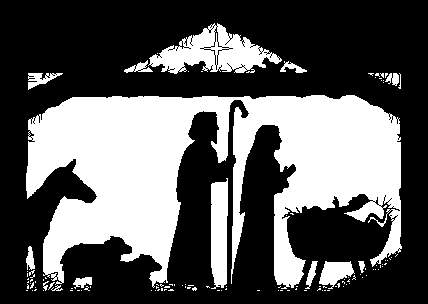
Born Of A Virgin? It happened a lot back then

I posted this 2 years ago and thought it might be fun to revisit. 

As Christians we confess that Jesus was born to a virgin.  Some people doubt the accuracy of that – but they may not realize that it was not that uncommon back then.

Here are just 10 people born of a virgin in the ancient world: 

  • Buddha
  • Krishna – born without a sexual union, by “mental transmission” from the mind of Vasudeva into the womb of Devaki, his mother.
  • Odysseus
  • Romulus
  • Dionysus*
  • Heracles – Son of a god (Zeus)
  • Glycon – son of the God Apollo
  • Zoroaster/Zarathustra
  • Attis of Phrygia
  • Horus

One theory is that when somebody who led a deeply impactful life died, those who wrote about them later would attempt to say something special about them. One of the ways that they could do that was to say something extraordinary about their birth. It was a way of that there was something significant, even about they way that they were conceived.

Sometimes it was that they were born to people that were really old (past the age of child-bearing age).

Think of Issac born to Abraham and Sarah in the Old Testament or John the Baptist born to Zechariah and Elizabeth in the New (Advent).

Now, If somebody wanted to take the origin of their hero up a notch, they could say that there was no human dad … it was a god!  (like Zeus)

This is why some think that Jesus’ autobiographers took it up even one more notch! Not only did a God not have sex with women … there was NO sex at all!

 Now some say “yeah, lots of people were said to be born of a virgin … but Jesus actually was.”

This is where the problem starts. As best as I can discern, there basically three ways to approach the problem: physics, meta-physics or linguistics. 

Physics:

Some people take an approach that is so certain that even science itself would be proved wrong. This usually comes up around issue like the Shroud of Turin (the cloth Jesus was buried in). I once heard a very confident person say that if we did DNA test on the blood on the shroud it would show that Jesus was fully human with 46 pairs of chromosomes – only instead of 23 from the female mother and 23 from the male father – Jesus would have 46 human ones from Mary.

I find this problematic for the same reason that I do not believe in the super-natural. It concedes the rules of the games to science (reductive naturalism) then tries to fill in the gaps with God.  That is a losing game-plan if ever I heard one.

Meta-Physics: 

Other people try to get around the whole reductive scientific debate by saying “Look, if God could make the world in 6 days out of nothing, then what is to make a virgin pregnant?  God does whatever God wants to do and who are we to question that?”

I am not a big fan of this approach either. It seems to say that revelation doesn’t have to report to reason and that God can not be evaluated on any reasonable standard conceived of by humans.

It seems just a short leap to say that God can elect who God wants for salvation God can pick favorites if that is what ‘He‘ wants to do.

It seems to retreat into the silo of ecclesiastic isolation and unaccountability. I think we have to look a little deeper ask some bigger questions.

 Linguistics:

This is an interesting approach that some in the post-liberal camp or comparable schools of thoughts might take.

The basic line is that it’s not the physics or meta-physics of the virgin birth that matters, its the way that it impacts us as people and forms us as a community. The importance of the language found in the gospels has to do with how it functions for us as a community and tradition.

Some folks don’t like this linguistic approach because it seems like theologically ‘thin soup’ to them. They look at the formulations that are quantified in the early creeds and they make definite and literal assumptions about what is behind them.

I am however nervous that all of this controversy is simply because we don’t know how to read a gospel. It’s like when we get sucked into debates about talking snakes in the garden of Eden or trying to prove scientifically how a man like Jonah could stay alive in the belly of a whale for 3 days and not be eaten by the stomach acid (or something).

It would be the equivalent of people 1,000 years from now arguing that we actually thought there was a place called Mudville and that a man named Casey was literally up to to bat.  It is because we don’t know how to read the genre of literature.

Jesus was born of a virgin – we confess that by faith, it is affirmed in our ancient creeds and it functions in our community to form us as people.    

* I even found one internet source that claims Dionysus was born of a virgin on December 25 and, as the Holy Child, was placed in a manger. He was a traveling teacher who performed miracles. He “rode in a triumphal procession on an ass.” He was a sacred king killed and eaten in an eucharistic ritual for fecundity and purification. Dionysus rose from the dead on March 25. He was the God of the Vine, and turned water into wine. He was called “King of Kings” and “God of Gods.” He was considered the “Only Begotten Son,” Savior,” “Redeemer,” “Sin Bearer,” Anointed One,” and the “Alpha and Omega.” He was identified with the Ram or Lamb. His sacrificial title of “Dendrites” or “Young Man of the Tree” intimates he was hung on a tree or crucified.

M is for Metaphor

Today we explore two words that appear at opposite ends of the language/reality spectrum but in fact have a great deal to do with each other and inform each other mutually.M-Metaphore

Before we dive into metaphor, there are two words that are needed in our theological tool-belt.

Univocal and Equivocal are important 2nd tier vocabulary words that radically transform the conversation.

Folks who hold that language is univocal tend to think that language is representative and exacting – that a word represents that which it stands in for and is exact in its ability to execute that function.

Folks who hold that language is equivocal tend to think that language is expressive and thus any word or concept expresses that which it stands in for and is inexact in its ability to do so.

If you believe language is representative (univocal), then you will say that these symbols (words & pictures)  represent that which they reference. Getting this right is essential because otherwise you are talking about something different that what is intended.

If you believe that language is expressive (equivocal), then you will say that language is both inexact and it is malleable. We do the best we can with the language/concepts/word pictures that we have but in the end they are both perspectival and provisional (it depends on where you stand and the words always stand in/substitute for the concept).

Here is how our Pocket Dictionary defines it:

Metaphor, metaphorical theology: A metaphor is a figure of speech in which a word or phrase that has an accepted, literal meaning is used in place of another to suggest a likeness or similarity between them. Metaphorical theology holds that God can only be spoken about through metaphors. Thus we must use metaphors to name our experience of God (the “Transcendent”); consequently, God can be described only in relational terms (that is, through the relational language of metaphor). Furthermore, metaphorical theologians, such as Sallie McFague, generally claim that such metaphors are culturally conditioned representations created by the mind as we seek to make experience intelligible.

Pocket Dictionary of Theological Terms (Kindle Locations 856-860). Kindle Edition.

Obviously we use word pictures to talk about God and God’s work. There is no shortage of examples in the Bible from a rock to a King, from a mother-hen to a dove, from a lover to a judge… and lamb.  We use analogies to talk about God and God’s work.

The question arises (post-enlightenment) when we begin to expect language to be exacting and representative. We do the same thing with the narratives of scripture when we hold them to the standard of newspaper reports and instruction manuals.

I fall squarely in the equivocal camp and think that all of our god-talk is expressive and provisional. As we come to understand more about God and God’s work in the world, we will come greater understandings and bigger revelations.

We do the best we can with the tools that we have.

This only becomes an issue when someone latches onto one a word-picture and insists that God IS a father. They mean literally and ontologically… which is impossible.
God being a ‘father’ is not exact and representative – it is a metaphor, a word picture. Jesus is saying that he relates to God as one relates to an ‘Abba’ daddy figure.
Which brings us to our second topic: metaphysics

Metaphysics: The philosophical exploration into the ultimate nature of reality lying beyond the merely physical (meta = beyond). Metaphysics deals with *ontological concerns, that is, with questions about what constitutes something as “real” or as having “being.”

Pocket Dictionary of Theological Terms (Kindle Locations 860-861). Kindle Edition.

The important thing to understand about meta-physics is:

  • Unless you are a reductive-naturalist (that everything is physical) you have a metaphysic.
  • Metaphysics is how you explain the world (or universe) beyond what is seen and measurable.
  • A 21st century christian is not limited to the metaphysics of the ancient world that the Bible was written in.
  • The Copernican revolution (away from the Ptolemaic geo-centric world view) has seen cascading effects of de-centering both earth and thus humans from being central to everything.
  • This is why some have found a Process world-view a valuable alternative that incorporates scientific discoveries into views of the world and universe.

When one tackles metaphysical concerns, it is helpful to first have in place a notion of language (univocal v equivocal) and of metaphor when it comes to using word pictures and symbols to help us understand the world and human experience and existence.

Tell me how you are using language – then let’s talk about what is going on beyond the physical world.

Artwork for the series by Jessi Turri 

Blog at WordPress.com.

Up ↑