Search

Bo Sanders: Public Theology

updating & innovating for today

Tag

movie

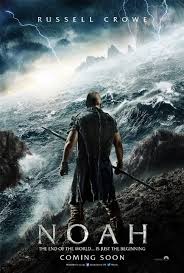
Noah: Inhabiting A ReEnchanted World

In Aronovsky’s movie, Noah inhabits an enchanted world. kinopoisk.ru

From the first rain drop that mystically/magically replaces a plucked flower, we know that Noah is walking in a world that is enchanted is way we are not used to seeing.

The rules are a little different. Things work in slightly different ways from the world that we inhabit.

From the suspension of certain laws of physics to the wondrous seed of Eden and on to the healing blessing of a barren womb, the world is undoubtedly enchanted.

It is about that enchanted world that I want to propose a problem and a promise.

Problem

In a post-enlightenment world, we no longer have access to that level of enchantment – except in cinema. That is the importance of movies. Most of us no longer sit around the fire and hear the stories and mythic tales of the ancient generations.

Movies open up a world to us that seems closed in the ancient past. Cinema releases us from the confines of our limited imagination and allows us to imagine the world (in) a different way.

Movies spark our creativity and open us up to the possibility that the world can, and maybe should, be a different way. Movies like Avatar or Star Wars are not meant to be exegeted or examined for their exacting possibilities. That would be to miss the point.

Noah should be enjoyed in the same way. A movie like this should not be measured and weighed in an attempt to map its realistic representation. That would be to close down the possibilities. Aronofsky’s vision is to open up our imaginative creativity and invite a greater possibility.

Promise 

David Ray Griffin has ambitiously tackled this problem in his massive (and heady) tome Reenchantment Without Supernaturalism. You can read Bevery Clack’s excellent review here.

Clack explains:

the naturalism that underpins this model is

  • prehensive (highlighting the conscious or unconscious grasp of something)
  • panentheistic (god’s presence is in all)
  • panexperientialist (meaning that experience is not limited only to the sensory)


I don’t want to get bogged down in big words but that tri-framing opens up an important insight that Griffin lays out.

 First, as long as the scientific and religious communities regard each other with suspicion and hostility, it will be difficult for them to cooperate wholeheartedly to overcome the problems threatening civilization today, such as the global ecological crisis.

Second, religion that has not taken account of the truths revealed by science can be very dangerous.

Third, the development of a “scientific worldview” that does not incorporate the truths revealed by religious experience has led … to the view that the universe provides no normative values to guide the future course of civilization.

It is passages like the above that bring me back to the enchanted world of Noah. We love the idea of that world. It is partly why the epic-mythical-primal storytelling of those early accounts capture us at so many levels.

The unfortunate thing is that we have no access to that world anymore. This is where cinema comes in. Movies like Noah release us from the confines of our disenchanted and mundane existence and open up our imaginations to the possibilities of an enchanted world. The unfortunate reality is, however, that cinema is the only access most of have to a world like that.

We can’t go back. We could try but we would never make it. The better option is to live wholly into this world that we actually inhabit in a way that recognizes what is already (re)enchanted and allows us to participate with integrity in the world as it is.
Noah: Eclipse of the Biblical Narrative

It has been a busy month for me but I have 4 things that I would love to hear your thoughts on in the next 24 hours.

I got a sneak peak of the new movie Noah and got to be a part of a roundtable with the director and screenwriter. You can listen to the HomeBrewed  review of the movie and interview here. 

Today I want to put up my two posts on Noah and see what y’all thought of it (if you got to see it this weekend).

______________________

The new Noah movie is a masterful work of biblical imagination and creativity. Noah

There are two aspects of the movie that audiences will notice up-front:

  1. one is related to epic-mythic-primal narrative
  2. the other addresses physics and logistics

The latter is significant for the former. Through a creative move to put the animals into hibernation, all of the questions about how you would feed that many animals, keep them from killing each other, and shoveling manure are instantly relieved. Those who are concerned about such logistical matter can then relax and settle into the narrative.

This is important because for many viewers, the story of Noah is either a) a children’s tale or b) a physics/apologetics problem.

What is missed in both the children’s story and the apologetics arguments is that we are dealing with an epic-mythic-primal narrative. It is not a newspaper account of the flood.

The danger of reducing epic-mythic-primal narrative down to newspaper reports is that too much is lost in the reductive move. The sad part is that often those who are the most series about the biblical account – and who may be upset about the creative flourishes in this movie – have often fallen victim to a debilitating loss of wonder and possibility.

 This is a ‘Failure of Imagination’.

When the Biblical Narrative is reduced down to a newspaper report,  the account lacks the appropriate level of animation.

Aronofsky illustrates how a story should inspire us. This is how we should entertain and engage a Biblical narrative – not by simplifying it down to a flannel board representation – but by breathing more life into it to see what emerges.

In the interview you will hear Aronofsky and Ari Handel say that they wanted to ‘humanize and dramatize’ this work of ‘primal story telling’. My mind went immediately to the work of Hans Frei – specifically The Eclipse of the Biblical Narrative. Frei was both concerned about and critical of the shifts that happened in recent centuries of biblical criticism. We had clearly moved out of the pre-modern (pre-critical) way of addressing a sacred text and into (via the enlightenment) a flood of critical thought and scholarly criticism.

Both the fundamentalist retreat to historical facts and the liberal abandonment of historical concerns are a failure to Frei. This is not about extracting universals or proving ‘facts.’ That is an exercise in missing the point.

Frie’s proposal related to fitting our world into the world of the Bible.  While I don’t subscribe to Frie’s system wholesale, I think that he would be very impressed by Aranofsky’s vision for the Noah story.

The director lets us inhabit the enchanted world of Noah and tries to find elements of our world within it. This is the beautiful opportunity provided for us through film. We breath creativity and imagination into the text and let it come alive.*

The next post will look at ReEnchanting the world the Noah inhabited. 

*It is important to note that Aronofsky and Handel took great pride in not contradicting a single detail in the biblical account. They admittedly added and embellished other aspects of the story.

Jesus Isn’t Superman

As you may be aware, with the release of the Man of Steel movie earlier this year there was a major push by evangelical marketing types to get preachers to focus on the messianic imagery that had been intentionally spliced into the movie. Comic-Con- Superman A_Cala

This is not my concern (although insights about that whole phenomenon would not be discouraged).

My concern is with the real and inherited christologies that show up around both Christmas and Easter. I am content most of the year to naively pretend that we all are basically talking about the same thing when we use the name of Jesus. That fiction is often shattered in Advent and Lent as we build up to the high holidays holy days.

I have often been given opportunities in recent years to introduce lay people to the concepts of ‘christology from below’ (instead of the dreaded  ‘low christology’)  and to illuminate the dangers of starting – not with a cosmic christ – but with a pre-incarnate Jesus. [selah]

Most people have never thought about the difference and the importance that it might make in how they both believe and worship … let alone live their christianity.

What I am hoping to do here is to offer you a gift exchange:  you get something from Homebrewed and in exchange you help me out with something!

The offering: The current ‘Barrel Aged’ Homebrewed Podcast is a chat with John Cobb about Advent and Incarnation.  It is in my top 10 favorite episodes that we have ever done and I got Tripp to post it specifically for this conversation. It is a delicious audiological delight. 

The request: What I am asking in exchange is for ya’all to help me come up with and clarify a list I am working on for the conversation this week at my church.  We are starting a new series called ‘Jesus Isn’t Superman’ and I am coming up with tweets to get people thinking.

Here is what I have so far:

Jesus didn’t crash on earth sent from a distant planet – Jesus was born of a women. #JesusIsntSuperman

Jesus doesn’t get powers from the yellow sun – Jesus’ power is in his relatedness & availability to God’s spirit. #JesusIsntSuperman

Jesus isn’t Christ’s Clark Kent secret identity that can be taken off when its time to walk on water. #JesusIsntSuperman

Jesus wasn’t an alien pretending to be human & secretly had a fortress of solitude to retreat to. Jesus was fully human #JesusIsntSuperman

Post your thoughts here and thanks in advance, I look forward to hearing your contributions! 

’12 Years A Slave’ and the Cross of Christ

by Bo Sanders 

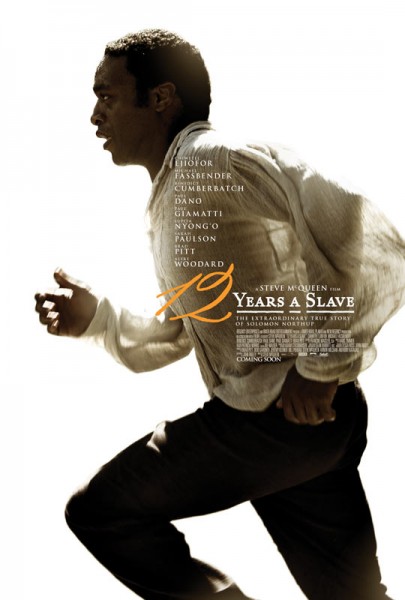
12 Years A Slave is one of the most powerful movies I have ever seen. The cinematic elements compliment the twisted and troubling plot to create a riveting experience for the viewer.  What follows is a theological reflection – for a more formal review of the movie check out Pop Theology by Ryan Parker.  Ryan and I also recorded a podcast that will be released this evening. 12-years-a-slave-poster-405x600

Based on a true story, the plight of Solomon Northup (played by Chiwetel Ejiofor) is a journey from the good life as a free black man in the North to the hellish existence of a slave in the deep South. Visual artist-turned-director Steve McQueen frames the narrative in stunning cinematography and a unique pacing that reflects the twists and turns in the story.

12 Years A Slave is one of those rare movies that impacts you emotionally and challenges the assumptions you carried into the theatre. The journey of the main character sticks with you and causes you to ask questions that you know deep down need to be examined.

I expect that this movie will be one of those rare films that trigger a much-needed cultural conversation. Issues of race and America’s haunting legacy of slavery and native reservation are never far from our national consciousness. Race is often front and center in the nightly news and on the margins of most national conversations.

While we know that something is amiss, we may not know how to approach the topic. We want to have a conversation but we may be unsure about how to proceed.

From the controversies surrounding the election of President Barack Obama to the George Zimmerman trial to the ongoing ‘stop and frisk’ policy debate in the New York City mayoral election, there is an awareness that race matters (to borrow a sentiment from Cornel West’s book title) but a perpetually unsatisfying confusion about how to access the underlying issues.

For Christians, perhaps the best way to address these issues is via the cross of Christ.  In his newest book, The Cross and the Lynching Tree, famed theologian James Cone equates the cross and the lynching tree: “though both are symbols of death, one represents a message of hope and salvation, while the other signifies the negation of that message by white supremacy.”

This is poignant because Solomon Northup first witnesses and then experiences the lynching tree in 12 Years a Slave. The lynching tree is the ultimate weapon of intimidation employed by the same slave owners who claimed the name of Christ, but who preached from the Christian Bible to their slaves in order to justify their cruelties.

For Cone,

“what is at stake is the credibility and promise of the Christian gospel and the hope that we may heal the wounds of racial violence that continue to divide our churches and our society.”

There are plenty of movies that are as fleeting and significant as the popcorn one eats during it. 12 Years A Slave is a different kind of movie. It has substance and is capable of being a touch-point for a significant cultural conversation.

“Until we can see the cross and the lynching tree together, until we can identify Christ with a ‘recrucified’ black body hanging from a lynching tree, there can be no genuine understanding of Christian identity in America, and no deliverance from the brutal legacy of slavery and white supremacy”.  – Cone

If we can talk about a movie like 12 Years A Slave in light of The Cross and the Lynching Tree, we may be able to begin to have a much-needed constructive and reconciling cultural conversation about race in America.

The election of President Obama was not the end of racism in America. As the 50th anniversary of ‘the March on Washington’ showed, we still live in a deeply divided country where race and the legacy of racist policies and attitudes have a lasting effect and are an ever-present reality.

America is also a deeply religious country and Christianity is the dominant religion. The irony, and the opportunity, resides in that fact that the symbol of the cross is so central to Christian imagery. There is great hope there, if only we would take it seriously and see what the Salvadoran martyr Ignacia Ellacurio called “the crucified peoples of history.”.

You can listen to my conversation with Ryan on the Homebrewed Christianity podcast here.

Create a free website or blog at WordPress.com.

Up ↑