Dualism offers us binary options that must be challenged. Evolution & Creation, Male & Female, Church & World, Jihad & McWorld, East & West, Think & Do etc.
This short video is in response to requests for alternatives to the either/or frame work that we have inherited.

I had the chance to teach adult Sunday School this past weekend as we worked our way through Brian McLaren’s A New Kind of Christianity. We are up to Question 9 “the Pluralism Question”. I had looked forward to this all Summer.
Now unfortunately I did not have the time to cover some classics on the subject like:
- Variety of Religions Experience by William James
- The World’s Religions by Huston Smith
- The History of God by Karen Armstrong
What I was able to do is to build on the thought of folks like John Hick. In his famous works ,such as An Interpretation of Religions, Hick provides tour-de-force in the realm of comparative religion. He is not, however, simply reporting on religions – he is putting forward a theory about religions.
Many of Hick’s fans and critics alike end up saying the same two things when talking about him. The first is about the analogy of the mountain. The metaphor about many paths leading up the same mountain is a pluralistic classic. The second is about the blind men and the elephant. This is of course based on a Kantian dualism between the numenal and the phenomenological.
Religions are like blind men, each with their hand on a different part of the elephant and thus describing different aspects of the same reality. One has the trunk, one the ear and one the leg. They each talk as if they have grasped the whole but in reality, they have not. Though it may appear as if they are talking about very different things (a Christian from a Muslim or Hindu) they are actually all touching the same entity.
Then there a critics of Hick. Both Mark Heim in Salvations and Stephen Prothero in God Is Not One are post-Hickian.
Critics of Hick seem to have two main critiques (I am being very general here):
The first is that analogy of ‘paths up the mountain’ is flawed. Religions are like different paths up different mountains. The mountains may all be in a range together – in that they have some similarities and are in proximity to each other – but essentially they are not all leading to the same place. Being a good Hindu, which may have some ethic overlap with say the Christian sermon on the mount, is still not the ultimately after the same thing. Religions do not all lead to the same place and so just walking on road for long enough does not guarantee arriving at the same destination.
The second concern is about the Kantian blind men and elephant. When one takes on this enlightened view, one is placed in an elevated position above the religious traditions. They think that have a grasp on the whole but in reality it is only a part (ear, trunk, leg). The Katian-Hickian at that point is in the real seat of truth. The question then, is why would anyone ever participate in any particular religion? Why even be a Christian – for example – and only grasp the part? Why not be a generic ‘God-ian’ and recognize the whole? In this way, studying religion is a way to not actually participate in any actual religion! Ironic isn’t it?
Here was my main point on Sunday: the problem is comparative religion itself. The very discipline that we end up being unsatisfied with contains within it (from the very beginning) the inherent problem that we end up being frustrated with.
 The problem is this – comparative religion is a product of a Western approach (with its intrinsic dualism) that first imports and them imposes it categorization upon other traditions and then looks within that compartmentalization for points of similarity and contrast. This will never work.
What I ended up doing was pointing folks toward an innovative concept called ‘Comparative Theology: deep learning across religions borders’ developed by Clooney in the book “Comparative Theology”.
His point is that each tradition tells its own story – in its own words. The art then is not in compartmentalization but in humble listening. Each learning to hear each tradition-religion bring forward its own stories, teachings, practices and values we remove ourselves from being ‘over’ the religion as a judge/reporter and humbly place ourselves at the feet as a learner/listener or at the table as friend/partner.
I love Clooney’s approach. I find the epistemology and posture refreshing. I also think that in the inter-connected, trans-national, multi-religious 21st century it is going to be ever more critical to distance our selves from approaches of centuries past.
I have written before that I don’t want to apologize for being a Christian (I truly love it) but the time for apologetics is passing into the night of history. It’s a new day and a new approach is needed for the plurality and multiplicity that we increasingly live in. Many conservative christians hide behind exclusivism to guard against the threat of relativism. What I love about Clooney’s approach is that they are not asked to give up their internal belief as christians but are challenged to adjust their external posture toward those of other traditions.
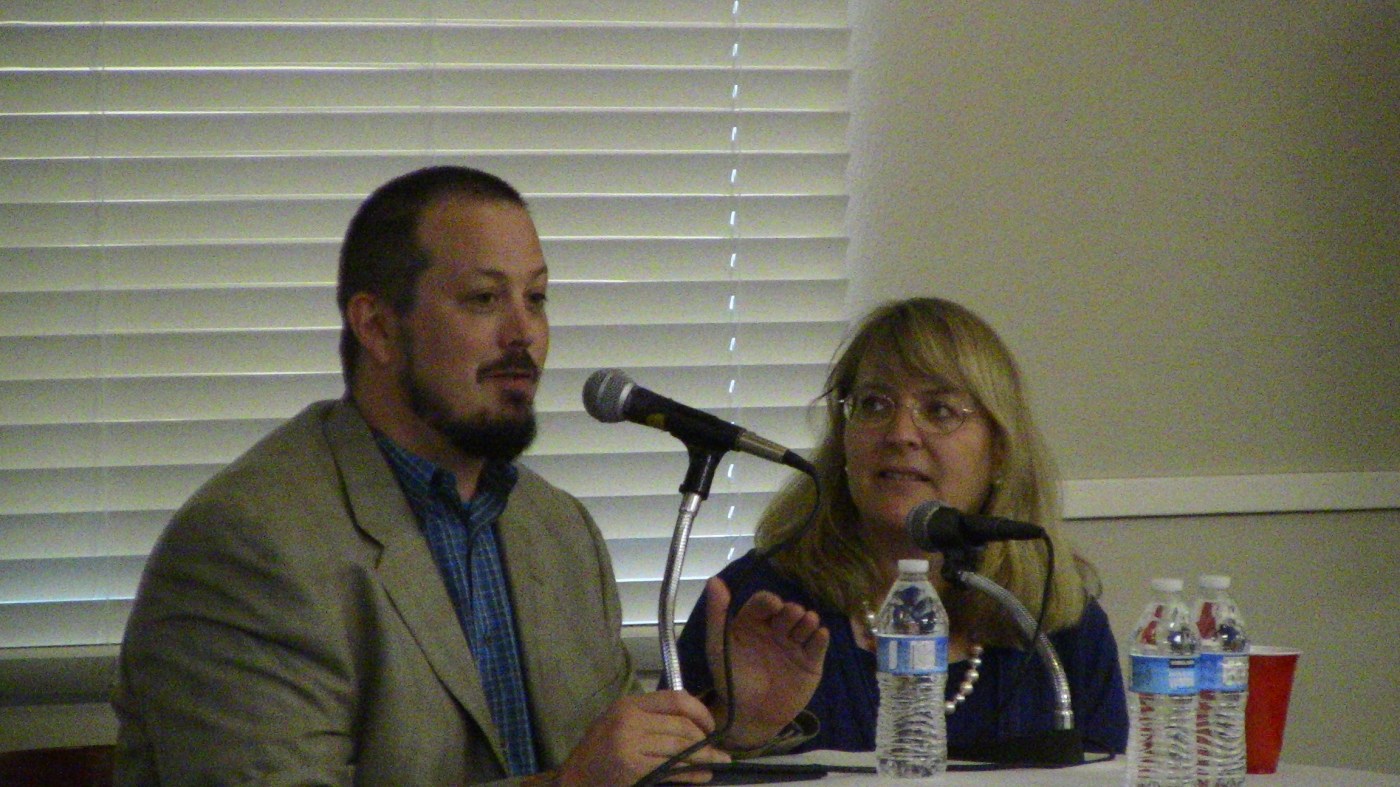
Earlier this month I got to sit down with Diana Butler Bass and ask her about everything from her new book’s title Christianity After Religion to the Methodist tradition and why Evangelical young people are 30 years behind.
 It was a blast! [you can hear the audio here]
At the end of the hour, the last question was put forward by Darcy who asked about something Diana had alluded to in the Methodist question. Butler Bass had said that the early Methodist had historically A) ministered to the fringes and B) gone to the frontiers.
It was the fringes and the frontiers that Darcy wanted to know about. Only, she was not asking about the past. She wanted to know about the present.
Who are on the fringes today and where is the frontier for us?
This is possibly the best question I have heard asked at one of our live events.
Diana didn’t flinch. She outlined three such scenarios that would qualify:
The first was in the realm of sexuality.
The second was in the realm of pluralism.
The third dealt with our environment.
- In sexuality she articulated issues related to the transgendered community. This did not surprise me. In the LGBT formulation, T (transgendered) is the the one the raises eyebrows. Now, because I am came to this conversation through a friend who was doing Queer theology, I had initially taken the LGBTQ as a 5-part alliance. I did not realize how difficult the T can be (not to mention the Q) until I starting asking question and listening to stories. I quickly became aware of the complexities and complications involved.
In the two weeks since Diana’s answer I have had several conversation about her take and I have realized how much conversation has yet to be had. May God give us grace as we learn from each other.
- In religion she mentioned learning from Hindu friends. As a student at Claremont School of Theology I am very invested in and more than on board with the idea of inter-religious learning. Yesterday was my day off and so I (as Christian) headed to a Jewish bakery to sit and listen to an audio recording I had about diversity within Islam.
I am always shocked at how much I don’t know and how much beauty there is within each tradition. May God give us grace as we learn from each other.
- In issues of environment and ecology, I like to think of myself as up to speed. This is a subject I have really investigated and as someone mentored by Randy Woodley (his new book Shalom and the Kingdom of Creation was just released and he will be on the podcast next week) I was tracking with her when she talked about non-human animals [I often allude to Nipples & Belly Buttons in this regard].
It should not have been surprising to me that with the release of the video of our conversation that she came under some suspicion by a group called IRB (Institute on Religion and Democracy) as well as others for her views on non-human animals.
From the blog Juicy Ecumenism here is the end of Diana’s answer and their commentary:
“Non-human animals and their experience of our environment of the divine are a place that human animals need to listen in order to create more full understanding of God’s creation. […] They don’t have voices like humans do, but isn’t that part of my prejudice?”
I don’t like to bring up the slippery slope, but the mud’s looking pretty slick from here.
What IS surprising to me is that – of her three answers about the fringes and frontiers – that seemed to be the least inflammatory of the three answers!
In my humble opinion, her pluralism answer and her sexuality answer were FAR more daring – and challenging! The only thing that I can figure is that some Christians have so bought into the Cartesian dualism regarding humans that both Transgendered and Hindu folks are completely off their radar screen … but don’t you DARE say what you said about listening to non-human animals.
I was prepared to defend Diana Butler Bass after our show – she said some daring things – I just didn’t think that it would be on the issue of creation-care over sexuality and pluralism.
This contemporary religious environment will never cease to surprise me.
Today the new University Project announced it’s official name – Claremont Lincoln University. You can read about the background story of the name here.
As a Claremont student, I am invested in the future of the project. I had desired to come to the School of Theology for a while but that was considerably amplified with the announcement of the project [read the Time Magazine article here] to train Imams, Rabbis and Pastors in close quarters and in close contact.
There are two things that I am especially excited about and a third that I am concerned about:
- There has been a lot of talk around training Imams. I have been following several conversations about the domestic training of those who will serve in U.S. Islamic communities. Historically, the first wave was bringing over foreign trained Imams to serve in the American context. That had inherent limitations. The second wave was to send American candidates for foreign training. The challenge was then to translate the training into a context that was significantly different than the training environment.
Imams in the U.S. are asked to provide services and play roles that are unique to the North American context. Imams are asked – not just to be experts in theology and textual interpretation – but serve as social workers, counselors, and all sorts of other roles that are not traditionally in the job description or accounted for in the training they may receive. The Islamic Center of Southern California and Claremont Lincoln University will address these concerns in a uniquely particular way.
- Questions about training ministers in a pluralistic environment are deep. Continue reading “Training Imams, Rabbis, and Pastors at Claremont Lincoln University”
Last weekend the LA Times had a review of Miroslav Volf’s upcoming book on Christian and Muslim theological concerns. It is well worth your 5 minutes to read. Volf is a renowned Christian thinker and is supremely well respected in my circles. For him to be addressing this topic is noteworthy in itself – regardless of what he says about it. But when one hears what he says about it… it is truly noteworthy.
For Miroslav Volf, an Episcopalian professor of theology at Yale’s Divinity School, (the name of God) is a direct route over the “chasm of misunderstanding” and hatred that has separated Christians and Muslims for centuries… In his thought-provoking new book, “Allah: A Christian Response,” Volf attempts to explain how the God of Christianity and the God of Islam are, essentially, one and the same.
Here are three things, from a uniquely Christian perspective, that I would like to see addressed:
- The name of god – Is Allah the same as Jehovah and is that the one Jesus called “Abba”?
- If so – are these 3 legitimate covenants with the same God? (1 with Issac, 1 with Ismael and 1 with Yeshua)
- Can we figure out how to stop A) converting each other and B) killing each other Continue reading “Islam and the Fringe”
I wrote this as part of another project, but I wanted to post it here in prep for something that I will soon be up to .
I exist in a mixed environment – spiritually speaking. It is progressive (not a capital P) and also includes many people who have ‘emerged’ (not capital E) from a predominately evangelical-protestant-with charismatic leanings type heritage. I also have many friends and conversation partners who would still identify as conservative, reformed, or some other type of evangelical.
In my circles I have always assumed and heard that when public characters like Jerry Falwell sounded off on Hurricane Katrina being a punishment from God for the people of New Orleans – that most people rolled their eyes and knew that his was such a marginal expression that he should not be taken seriously.
or when Franklin Graham said that Islam (as if it were one thing) is a terrible religion filled with hate – that people knew he was not a spokesman for Christians (as if we are just one thing).
or when Mark Driscoll says that he could never worship a Jesus that he could beat up – that it carried about as much weight as a WWF wrestler mouthing off in order to get pumped up before a match, pulsing with vibrato and testosterone.
But apparently that is not the case. Continue reading “Clowns at every Circus”
 Bo Sanders: Public Theology
The Next Pat Robertson Gaff
With the election season over, the frequency, intensity and insanity of conservative white men making outlandish statements will hopefully die down … I’m moving a bunch of blogs over there this week and found this cheeky little blog I wrote in the middle of the fire-storm.
Pat Robertson topped even himself in the category of ‘insulting-inflammatory- stupid comments while the tape is running’ this morning. That may seem difficult with all of the previous entries that have earned him elite status in the gaff Olympics.
The most recent entry was in response to a question from a man who apparently wanted to know what to do with his non-submissive wife. Robertson started with suggesting that the man could convert to Islam … and as tough as it might be to top that one, he did. After conceding that the Bible does not allow for him to divorce her, Robertson gave him the option to move to Saudi Arabia – thereby indicting not only an entire religion but an entire nation.
I know that many will want to jump on Robertson with disdain and scorn but … maybe we should not be so quick to jump to judgement. As often happens in cases like this, there is a good possibility that there is something we don’t know behind the scenes. There might be more to the story that at first meets the eye.
Now, before you dismiss this outright – just keep in mind that many preachers and politicians who rail against homosexuality later turn out to have been involved in illicit same-sex affairs at the very time they were railing. This pattern can be seen in leaders of many self-righteous and sanctimonious movements.
With public figures, we just don’t know. So I am suggesting that we might want to hold off judgement. Sure, right now it looks like crazy Uncle Pat has come unglued and betrayed the very gospel that he is supposed to be a minister of and a spokesman for. But … let’s just give it time.
That is plan A.
If you can’t wait for that, there is a plan B. As I proposed a while ago, it is possible that words for fundamentalist christians are like dialogue in porn movies. They play an important role in allowing us to suspend our suspicion and get down to the real business at hand.
I said that the real activities were nationalism, capitalism and militarism. One of our deaconesses added patriarchy. This accusation would stick to Robertson’s many gaffs like a field of burrs on a cheap pair of cotton dockers.
Here is the thing: I want to be a generous and gracious purveyor irenic ecumenism. But there are times when you hear something like this and realize how many people are genuinely injured by this stuff. Like it or not – he is a spokesman for our religion, my tradition and Jesus’ name. This is why I go so far out of my way to say that we need to stop waiting for Superman and start sticking up for causes that don’t directly impact us.
Here is a conversation that I have had repeatedly in the past 20 years.
People don’t like when I am critical, negative, dismissive or adversarial. Neither do I. All I am saying is that I am very nervous about what gets broadcast on christian radio and TV these days and the impact that it has on thousands and thousands of people.
So here is the question: If, and I am only asking ‘if’, there was a machine that was fueled by a different vision of the world and different priority structure than that fleeting Galilean vision – but it was covered with a thin veneer of Jesus talk as a mask for the true agenda … shouldn’t we say something at some point?
If the Jesus-paint was only a mask on a monster, or a series of brushstrokes on a Hollywood set facade … we should say something right?
That probably is why plan B in this case is not so popular.
THE most important thing in all of this is that we are very clear about people who have simply bought into a bad brand of christianity and those who are up to something with it. It is one thing to have merely inherited a flawed-limited-unaware religious product and those who openly promote a product that injures people and harms those who need what Christ provides the most. We have to be careful. This stuff is wicked, acidic, and cancerous. We can’t paint with a broad brush or be dismissive of folks who are just walking the same road we are all walking together – trying to figure it out.
May God give us grace in the journey. We need it. Lots of it.