Search

Bo Sanders: Public Theology

updating & innovating for today

Tag

Orthodox

Modern Christianity’s Temptation (2/3)

In light of the massive shifts in culture, understanding and expectation that the last 300 years has seen, there seem to be three great temptations for the devout.

Last post we talked about the problems that Modernity brought to Christianity’s doorstep in the West. Science had moved into the driver’s seat and was none too kind to those who would not get on board.

The problem, of course, is that we are simply not left the option to go back to primitive Christianity. For Lent this year I read books about post-Nuclear theology and listened to lectures on the first twelve centuries of Church history. It has never been more apparent that the world has changed in drastic ways.

  • Christendom
  • The Scientific Age
  • Globalization

Are just 3 catalysts and results of this epic (and epoch) shift.

Tomorrow I will present what I see as the amazing opportunity. Today I want to comment on what seem to be the 3 biggest temptations for modern Christianity:

  1. to concede
  2. to attack
  3. to retreat.


Concede

Faith as a public matter has never been more challenging. The easiest response is to both personalize ones faith and then make it private. This is a two-step dance but either is dangerous on its own.

Personalizing faith is a natural response for an Enlightenment Individual. We major in ‘self’. We have cultivated the ability to think in ‘me’. This is a novel development in religion and some argue that it is against the very nature of religion! The purpose of religion is to bind us together in practice (re-ligio) or reconnect us as a belief-community.

The second step is to internalize ones personal faith. In liberal democracy, no one cares if you believe something – just keep it to yourself. Don’t put it on someone else. Your personal practice in there or over there is one thing … just don’t make too big of a deal about out here. Out here we have a civil expectation of life, liberty and the pursuit of happiness. If your religion helps as a means to those ends, fine. If not, it might become an issue of you infringe on someone else right. Go ahead and practice your ‘tradition’ on your own time but just keep it down when you’re out here in public.

The modern expression of Christianity has responded to this two-step dance in many little ways – my favorite of which is consumeristic-accessorization. The bumper sticker on my interal-combustion automobile and the fashionable yet ironic message T that imitates a popular ad campaign are just two examples. It allows me to allude to a Bible verse (I am not of the world after all) while participating in a capitalist system that goes unquestioned.


Attack

To counter the personal-and-internal compromise noted above, an aggressive and external coup has been attempted. The memory of Christendom has fueled a political response to take back power and ‘return to our roots’. The rise of the Religious Right (and Moral Majority) of the past four decades is perhaps the most high-profile example. It is, however, just the latest incarnation of this impulse.Facade of St. Vitus Cathedral

The fond (and white-washed) memories of days gone by and yesteryear fuel an anger at what is seen as a disintegrating culture and a slouching toward Gomorrah. The resulting Culture Wars and political animosity have a fundamental problem however:

Ever since the Constantinian compromise in the 4th century is has been difficult (if not impossible) to get the Bible to say what one needs it to say in order to justify a claim to power.

A religion founded on the teaching of a marginalized prophet and incubated in persecuted minority communities does not lend itself to being in charge. An incredible amount of selective editing, creative hermeneutics and mental gymnastics are required to make it fit. At some point a voice like Yoder comes along and points out that ‘this is untenable’.


Retreat

The above two responses are both simpler and more obvious (and thus more popular) than our last response. The retreat is more subtle and sophisticated. I will return to Theology at the End of Modernity from the first post.

Those who seek to answer the questions raised by the work of Gordon Kaufman (primarily Sheila Greeve Davaney and Linell E. Cady) have deep concern about a school of thought that seeks to move the Christian tradition toward an “autonomous and protected location”.

A seductive temptation is found in an attempt to preserve former (historic) expressions of the faith behind linguistic fences (insulated language games) and communities that become isolated silos. These “are really retreats into forms of fideism or ‘protective strategies’ that seek ways of interpreting theological discourse so as to preserve its unique status.”

The Post-Liberal work of Lindbeck and the Radical Orthodoxy camp of Milbank and MacIntyre are in danger of this.[1]

Those who follow this line of reasoning:

“contend that theology is not properly about ascertaining indubitable truth claims about God or reality, nor about fathoming the depths of human subjectivity; rather, the task is to analyze and explicate the fundamental claims about reality and human life that have emerged within a specific tradition, so that believers might more fully appropriate and live out of their tradition’s vision of reality.”

It becomes a:

“self-enclosed historical community; its method is interpretive, not critical; and its goal is to aid in the internalization of central claim, not the critique or reconstruction of that which we have inherited.” p. 6

You can see the attraction of the retreat! By privileging “revelation” or the “given-ness” of the tradition, one is afforded the space to preserve and defend an inherited system which immune for outside critique and thus preserved in its ‘as is’ status.

This romantic preservation and reclamation mistakenly – and perhaps intentionally – defends and protects manifestations and consequences that we not only need to move on from but we to which we can not possible return to.


In part 3 we will conclude this series with a challenge to make the Christian faith “pluralistic, public, and critical”.


[1] “by emphasizing an ahistorical human subjectivity, (they seem) to find an autonomous sphere protected from the challenge of other forms of inquiry, then the cost of such independence was the removal of both theology and religion from the public sphere.” p.5

Modern Christianity’s Problem (1/3)

For Lent this year I did an interesting experiment. I did not give up anything but instead added an exercise as a discipline. My goal was to engage both the earliest days of the church’s past and stretch myself to imagine the church’s future. I did this by engaging two things:

  • I downloaded a lecture series on the History of Christianity from the 1st Century to the 12th. I listened to this as I biked to work and walked my dog everyday – instead of my normal diet of podcasts and news programs.
  • I bought and read a series of books from the most forward thinking theologian I have ever encountered. I read these in the morning over a french-press of coffee.

This has been a profoundly enriching experience and I am left with several observations as this season comes to an end.

1) I have never been more impressed or moved by the passion of the early centuries. What they were attempting to do was so formidable and expansive that a great deal of respect must be paid to them by anyone attempting to engage in a theological endeavor. From figuring out how a concept of Trinity could work with monotheism, to the incarnation within greek metaphysics – from eternal begotten-ness to the double procession of the Filioque clause controversy … one has to respectfully give a nod to what they were up against the overwhelming effort that was exerted. This is the first time that I have revisited either the patristic or the Middle Ages since I took on as conversation partners Process thought, Post-Colonial concerns or Critical Theory. This is the sixth time I have cycled around to the early church studies in the 20 years since I trained for ministry. It has been, by far, the most enlightening.

2) I have never been more convinced of both the situated and contextual nature of the church’s theology and practice. It is not just that those saints of the past lived in a different time, a different place and spoke a different language than we do – they were dealing with entirely different sets of concerns and with totally different sets of data. From Augustine, to Abelard – from Anselm to Aquinas, once you enter into the intricacies and nuanced argumentation of these doctrinal concerns, you can’t escape the fact that they were a product of their time. All theology is contextual and an honest examination of any doctrine or teaching reveals that their situated nature and specific location (time and place) played as much of a role in their development as any formulation that might have come out of them. The pre-Moderns were not only asking different questions than we are, they were working with different material than we are. Their philosophical assumptions, their metaphysical frameworks, their limitations of language and their pre-scientific world-views all have to be taken into account when evaluating their writing and thought.

3) I have never been more aware of our contemporary situation and how modernity has completely changed the game. To contrast the examination of the early centuries I have been reading the work of Gordon Kaufman, and more importantly, those who attempt to answer the questions that he raises. Kaufman is famous for his ‘Theology for a Nuclear Age’ but I am far more impressed with those who responded to him in ‘Theology at the End of Modernity’. Sheila Greeve Davaney, Sallie McFague, Linell E. Cady, Wayne Proudfoot, Francis Schussler Fiorenza, John Cobb and Mark C. Taylor have been rocking me.MP9004065481-196x300

Kaufman says that we live in an unprecedented time after a) the Holocaust b) Hiroshima and c) global environmental degradation. Human’s capacity to destroy life and wipe out humanity means that we are in a different epoch (era) that comes with unique concerns and an unequaled intensity. I agree with him.

We have to be concerned with things that Origen and Augustine simply never had to consider. We also have access to information that Aquinas and Calvin would have had no reference point for. We live in a new day. We have different concerns. We deal with levels of consequence they never had to consider. This is a new epoch – where the threat isn’t from the heavens or a realm beyond (super-natural). It is all too present and in the natural.

This admission leads to/calls for some significant adjustments to ones approach to life, thinking, theology and practice. We can’t go on just saying the same things (parroting / repetition) without variation. At some point it becomes unfaithful.

Take the foot-washing ceremony that often accompanies Maundy Thursday services. The unique element of the Biblical accounts is that Jesus shocked his followers by doing something that they would have been very familiar with. The novelty was who did the foot-washing. We live in an era where the novelty is the foot-washing itself. It has also changed from an everyday and practical occurrence to ceremonial and liturgical one.

“So even when we do the same thing that they did we are not doing the same thing they did.”

We live in a different time and in a different culture, which asks us a different set of questions, so that even when we give the same answers we are not saying the same thing.

4) It has never been more obvious that we can not go back. By looking at both the first 12 centuries and the last 30 years at the same time, it has deftly illustrated how extreme the gap is. What rests in the gap is modernity. It has become so clear why some want to go back to primitive or ancient expression of the Christian faith. I get the impulse to reclaim Augustine or Aquinas. I get the notion of converting to Greek Orthodox or Catholic. I feel the pull of retreating into insulated or isolated language games like the Post-Liberal or privileging an antiquated notion polis or habitus like the Radical Orthodoxy camp.

I get why that is desirable – It’s just that it is impossible. Like foot-washing on Maundy Thursday, even when you are doing the same thing you are not doing the same thing. It only appears that way.

This is Modern Christianity’s problem (the title of this post).

“ While science gained as the model for truth and the traditional arguments for God’s existence were eclipsed, theologians increasingly turned to the depths of human subjectivity as the source of religious experience and belief.”

Thus the attraction of reverting to former notions of tradition, revelation or isolation.

In “an autonomous and protected location in a modern world where science reigned and religious claims had lost their rational force … by positing that religious experience was a unique dimension of experience, differentiated by its unmediated and nonlinguistically interpreted character and hence not accountable to the canons of scientific inquiry and explanation. Thus religious and theological spheres, without legitimacy or security … appeared to have found a new and unassailable place in the modern world.”*

I am not saying there is only one way forward. I am saying that there are hundreds of ways forward – it’s just that there is no way back.

In part 2 I will address the new need.  In part 3 I will cover the two most obvious and wrong responses.


* Devaney in the introduction 


Religion and Consumerism’s Bricolage: in conversation with Philip Clayton

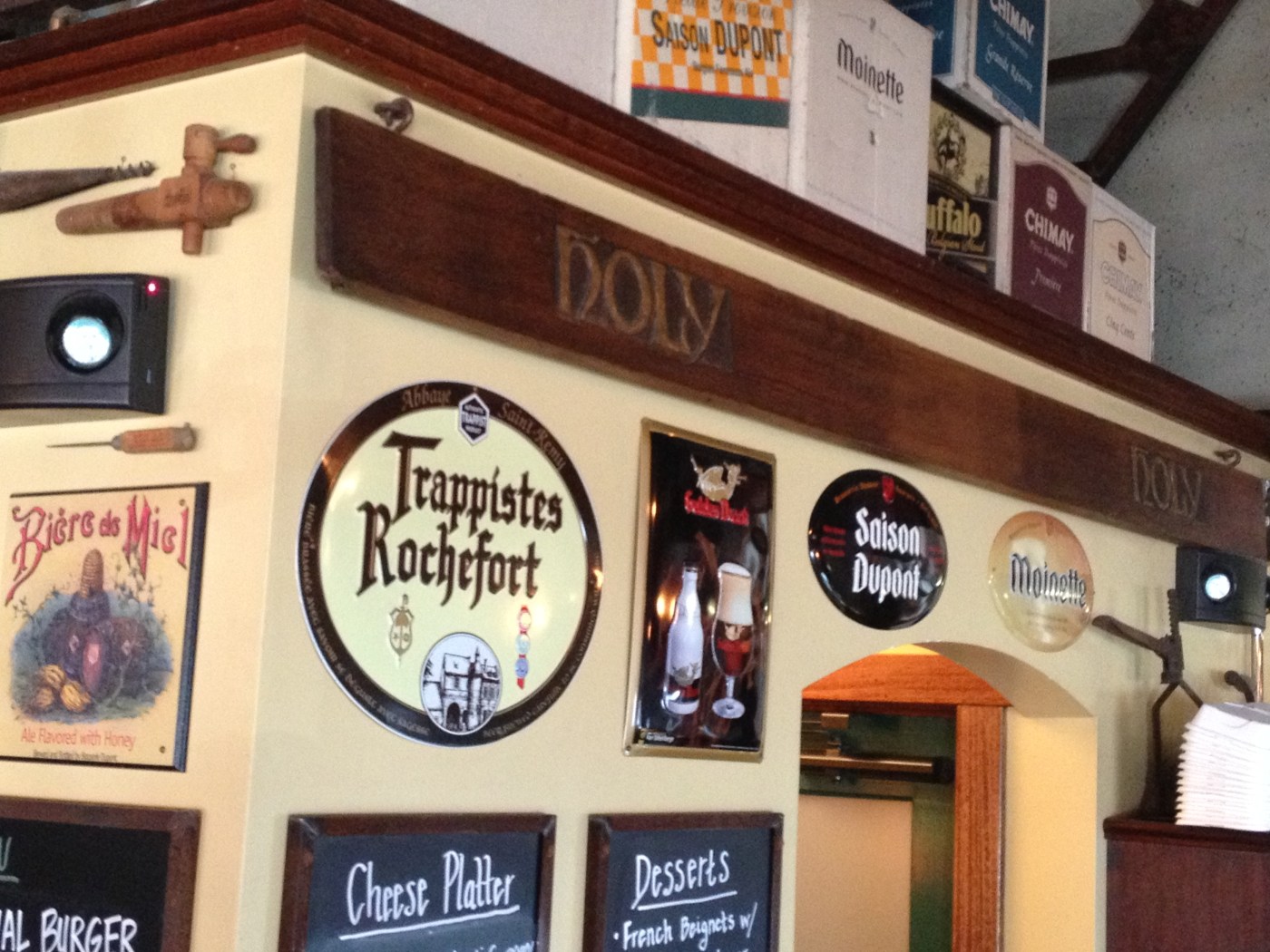
A couple of weeks ago I had a very interesting conversation with Philip Clayton. Several of us went out for lunch after the High Gravity session on Religion & Science. We were at a restaurant where the walls were decorated with a busy collection of reclaimed signs, old pictures and re-purposed trinkets.

Dr. Clayton was across the table from me and at one point I look up to notice that above his head was a sign that read ‘Holy’ on one side and ‘Holy’ at the other end. The words ‘Holy – Holy’ were framing either side of his head. IMG_2884

I tried to come up with something clever to say, scouring my memory for some passage from the Hebrew Bible or the book of Revelation to tweak. The window of opportunity closed because the conversation was quite intense. That morning the topic had been ‘Science & Religion’ and now we had expanded it to ‘Religion & Society’ – or more specifically to ‘Church & Culture’.

The conversation intensified and it became clear that neither Dr. Clayton nor Tripp was too happy with my cynical take on consumer mentalities when it comes to consuming religious experiences within a capitalist framework.

At one point I said “it is like that sign behind you: it’s not like the holy is absent from the space and all the activity that happening here – it’s just that it blends in and goes unnoticed in the midst of all the bricolage that it melts into.”

Somebody had reclaimed that wooden sign. There is a story behind it – there might have even been more to it (I wondered if it used to have a 3rd ‘Holy’ further down the line that had been lost).

But that is my point! In any gathering there are going to be those (like us at that table) who think that what is happening is legitimate, sincere, authentic, important and worth organizing your life around. The congregation is also going to be largely made up of those who are consuming a religious experience – and it is financially worth about the same amount as a movie, a meal, a game or a show.*

I will go even further: this is my great hesitation with those who want to ‘go back’ or ‘conserve’ with their religious participation. This impulse was never more evident to me than when I began interacting with those were into Radical Orthodoxy or with evangelicals who had converted to Eastern Orthodoxy or Catholicism. The ‘zeal of the convert’ can be a telling element when it comes to the anti-modern or counter-modern impulse.

An incongruity is exposed in the counter-modern impulse of these conserving movements. Never mind for a moment that often what is being conserved is born out of a patriarchal model – set that aside for a second.

I will attempt to make this in 4 succinct points:

  1. You do not live in the 14th or 16th century.
  2. You do not think like someone in a previous century.
  3. You do not engage in the rest of your week as someone in a previous century.
  4. You chose, as a consumer within a capitalist framework, to participate.

Those four things signal to me that even the most sincere, authentic, devout, and thorough engagement – whether a Pentecostal, Evangelical, Orthodox, Anglican, RO, Catholic, Mainline or Congregational expression – must account for the ubiquitous consumerism within which we all are saturated.

Dr. Clayton rightly said that I while I had a good point I was proceeding in far too cynical a manner with it. He is correct of course.

My aggressiveness is born out of a deep concern. What we say the church is about – what we believe the very gospel to be – is so vital and so needed in the world today, that we can not afford to ‘play pretend’ about previous centuries and blindly participate in consumerism all the while trumpeting the virtue of our chosen ecclesiastic community.**

The danger, in my opinion, is that religious communities will become nothing more than decorations on the corner of a neighborhood or one more option at the mall food-court. 

For christian believers, the holy is all round us. We can not afford for it to disappear among the bricolage nature of our hyper-advertised media-saturated existence.

The gospel, at its core, is incarnational. Our central story as Christians is flesh and blood in a neighborhood. The whole project is contextual – it only happens in a time and a place. We can never escape that. That is why romantic notions of past centuries or early manifestations can be dangerous distractions and fantastical facades.

We can’t afford to fade into the bricolage. IMG_2886


* plus it usually comes with free babysitting. 

** Some might object that they have not chosen but rather have ‘stayed’. I would argue that they did within the consumer’s capacity to do so. 

Lean-Tos and Creeds: temporary structures for the journey

I am a big fan of the early churches’ creeds. I appreciate them for their historical significance, for the trajectory that they provide, and for their value as snapshots in the formation of the tradition.

In fact, as a contextual theologian, I adore them as amazing time-capsules of expressions from a very particular time and a definite location. They tell us so much about what was going on, what was a stake, what was being combated and what was already established and settled.

I actually have no problem with the creeds. My problem comes from what certain folks want to do with ‘the Creeds’ and what they try to make them into. Let’s be clear about what they are not:

  • They are not timeless and universal expressions. They are very timely and remarkably located.
  • They are not litmus tests for modern orthodoxy. There is no sense in retreating into ecclesiastic silos, playing pre-modern word games, or burying our head in the historical sand. Too much has happened, too much has changed and there is too much on the line.
  • They are not houses to live in. They are lean-tos (temporary shelters) that were erected along the way. We are still to continue our journey and travel on in our day – in the world that is – and not set up camp in the imagined past.

This is my word picture. The Creeds are lean-tos. They are not museums designed to preserve nor are the cathedrals to be maintained. They are temporary shelters – built with the best materials that were available at the time and in that place. They aren’t blueprints of how every shelter needs to be constructed nor are they houses to be reinforced and guarded. They fulfilled their purpose and provided shelter on the journey.

Christian who get protective of or defensive about the creeds are like people who are hiking with their family, build lean-to out of love for the family and then get mad at the family when it is time to leave the lean-to and continue hiking.

Or like people who love watching birds so they knock out a wall in their house to install a whole side of windows and sky-lights for bird watching. But then they become so fixated on cleaning the glass then they stopped watching the birds and actually get annoyed at the birds for dropping what birds are prone to drop.

The creeds are great. I am so thankful them as historic documents, as developmental snapshots and as contextual expressions.
What I am not so thrilled about is people who get nasty about them, defensive or aggressive. I think it is so odd that they are about things like God’s love and divine relationship… but that they can make someone behave so unloving and take them out of relationship!

I like the creeds. I just don’t like what they do to people who take them too seriously. Like lean-tos, they served their purpose. They were great. Time to move on. We are still on a journey.
___________
p.s.  I meant to include this in the post but forgot. I have since said it 3 comments – so I decided to add it.

“Like the book of Revelation and the Creeds –  we should attempt to do for our culture and day what they were attempting to do for their culture and day.”

Create a free website or blog at WordPress.com.

Up ↑