Search

Bo Sanders: Public Theology

updating & innovating for today

Tag

Randy Woodley

New Podcast

Big news: I have teamed up with Randy Woodley for a new podcast!

It is called “Peacing It All Together”

The first 4 episodes came out this morning.

Please visit the website: https://www.peacingitalltogether.com/podcast/

Like us on Facebook to join the conversation: https://www.facebook.com/PeacingItAllTogether/

We are on iTunes  https://itunes.apple.com/us/podcast/peacing-it-all-together/id1403549692?mt=2

and Stitcher https://www.stitcher.com/podcast/peacing-together/peacing-it-all-together

There is even a Patreon page if you want to support the podcast https://www.patreon.com/peacingitalltogether

I would love if you subscribed, listened to an episode (or 4) and let me know what you think.

The audio quality and production will get better as we go – but we are delighted to be up and running.

You can post comments either here (my blog) or at the podcast FB page .


Diana Butler Bass and those non-human animals

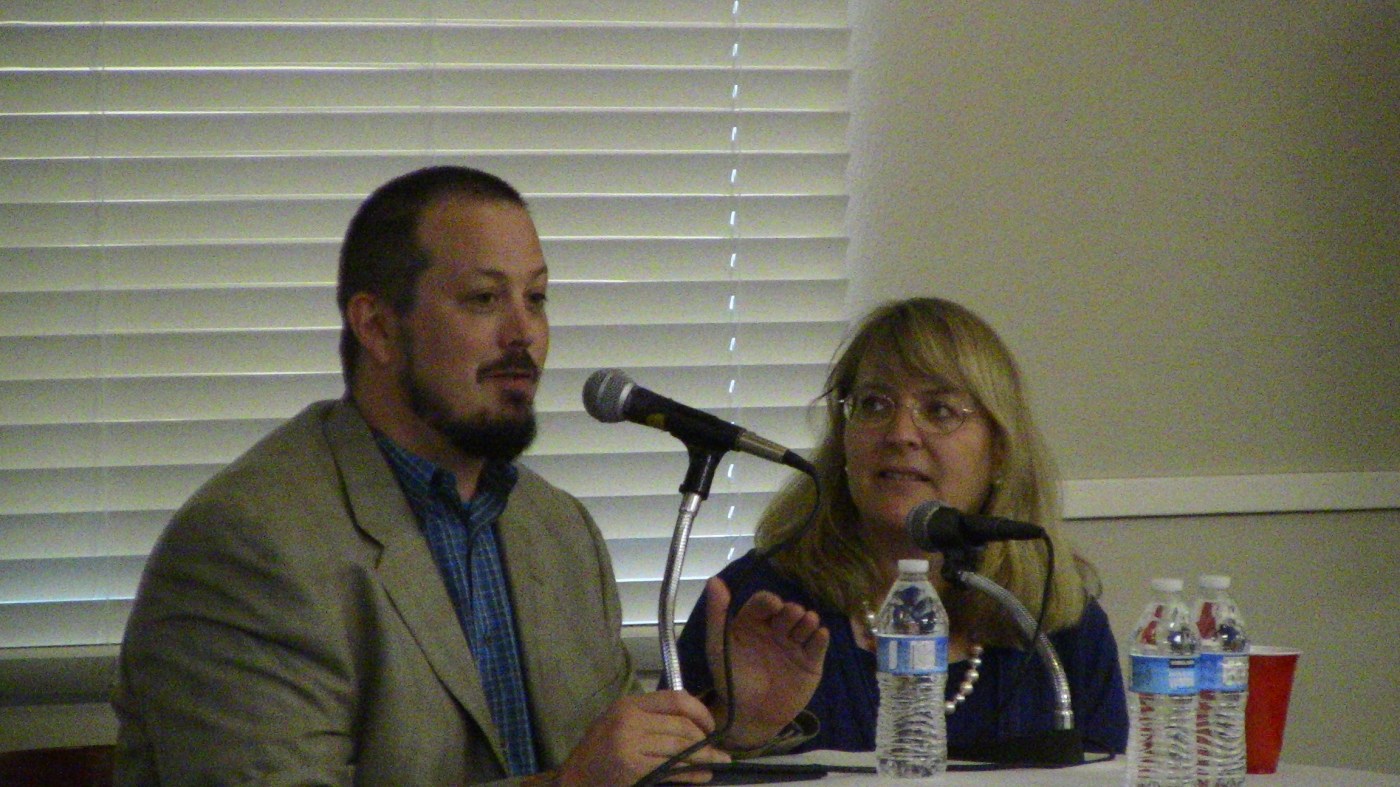
Earlier this month I got to sit down with Diana Butler Bass and ask her about everything from her new book’s title Christianity After Religion to the Methodist tradition and why Evangelical young people are 30 years behind.

It was a blast! [you can hear the audio here]

At the end of the hour, the last question was put forward by Darcy who asked about something Diana had alluded to in the Methodist question. Butler Bass had said that the early Methodist had historically A) ministered to the fringes and B) gone to the frontiers.

It was the fringes and the frontiers that Darcy wanted to know about. Only, she was not asking about the past. She wanted to know about the present.

 Who are on the fringes today and where is the frontier for us?

This is possibly the best question I have heard asked at one of our live events. 

Diana didn’t flinch. She outlined three such scenarios that would qualify:

The first was in the realm of sexuality.
The second was in the realm of pluralism.
The third dealt with our environment.

  •  In sexuality she articulated issues related to the transgendered community. This did not surprise me. In the LGBT formulation, T (transgendered) is the the one the raises eyebrows. Now, because I am came to this conversation through a friend who was doing Queer theology, I had initially taken the LGBTQ as a 5-part alliance. I did not realize how difficult the T can be (not to mention the Q) until I starting asking question and listening to stories. I quickly became aware of the complexities and complications involved.

In the two weeks since Diana’s answer I have had several conversation about her take and I have realized how much conversation has yet to be had. May God give us grace as we learn from each other.

  •  In religion she mentioned learning from Hindu friends. As a student at Claremont School of Theology I am very invested in and more than on board with the idea of inter-religious learning. Yesterday was my day off and so I (as Christian) headed to a Jewish bakery to  sit and listen to an audio recording I had about diversity within Islam.

I am always shocked at how much I don’t know and how much beauty there is within each tradition. May God give us grace as we learn from each other.

  •  In issues of environment and ecology, I like to think of myself as up to speed. This is a subject I have really investigated and as someone mentored by Randy Woodley (his new book Shalom and the Kingdom of Creation was just released and he will be on the podcast next week) I was tracking with her when she talked about non-human animals [I often allude to Nipples & Belly Buttons in this regard].

It should not have been surprising to me that with the release of the video of our conversation that she came under some suspicion by a group called IRB  (Institute on Religion and Democracy) as well as others for  her views on non-human animals.

From the blog Juicy Ecumenism here is the end of Diana’s answer and their commentary:

“Non-human animals and their experience of our environment of the divine are a place that human animals need to listen in order to create more full understanding of God’s creation. […] They don’t have voices like humans do, but isn’t that part of my prejudice?”

I don’t like to bring up the slippery slope, but the mud’s looking pretty slick from here.

What IS surprising to me is that – of her three answers about the fringes and frontiers – that seemed to be the least inflammatory of the three answers!

In my humble opinion, her pluralism answer and her sexuality answer were FAR more daring – and challenging! The only thing that I can figure is that some Christians have so bought into the Cartesian dualism regarding humans that both Transgendered and Hindu folks are completely off their radar screen … but don’t you DARE say what you said about listening to non-human animals.

I was prepared to defend Diana Butler Bass after our show – she said some daring things –  I just didn’t think that it would be on the issue of creation-care over sexuality and pluralism.

This contemporary religious environment will never cease to surprise me.

Explaining Evil: 3 Unique Takes

Earlier this week I wrote about Dealing with Demons – a progressive take, and in it I mentioned that the Devil was a personification of when evil is too big and too bad for us to comprehend as a human result … we outsource to an ancient, cosmic bad guy.  Many were able to track with the demon thing but some hit a snag with the Devil thing.

Then what is evil?  Where does it come from? Is it real? Is it ontological? 

Let me entertain the 3 suggestions that were brought up by responders to the blog: Augustine, Process and Relational Reality.

Augustine had a theory called “privatio boni”. Back in my apologist-evangelist days I would explain it like this:  Evil isn’t something, it is the absence of something. Like darkness is not a thing, it is simply the absence of a thing. Wherever you do not have the presence of light, you automatically have darkness – so where God’s will is not obeyed, you automatically have sin and evil.

Of course, the problem with this is that it predicated by God being “all powerful” or omnipotent. Augustine explains:

For the Almighty God, who, as even the heathen acknowledge, has supreme power over all things, being Himself supremely good, would never permit the existence of anything evil among His works, if He were not so omnipotent and good that He can bring good even out of evil. For what is that which we call evil but the absence of good? In the bodies of animals, disease and wounds mean nothing but the absence of health; for when a cure is effected, that does not mean that the evils which were present—namely, the diseases and wounds—go away from the body and dwell elsewhere: they altogether cease to exist; for the wound or disease is not a substance, but a defect in the fleshly substance,—the flesh itself being a substance, and therefore something good, of which those evils—that is, privations of the good which we call health—are accidents. Just in the same way, what are called vices in the soul are nothing but privations of natural good. And when they are cured, they are not transferred elsewhere: when they cease to exist in the healthy soul, they cannot exist anywhere else.

An alternative to that comes from Process thought – which does not see God’s power as coercive (able to unilaterally act however God wills) but persuasive, engaging the possibilities of each moment, complete the contingencies of the past, to bring forward the possibility of a preferable future. John Cobb explains in Process Perspectives II that there are many factors that create the multi-layered web of evil. Human sin is just one element. He also names

  • Chance and Purpose
  • Survival instinct
  • Communal Identity – and fear when it is threatened
  • Deep held but mistaken beliefs
  • Institutions
  • Obedience of authority

among others, as potential ingredients in the creation of evil.

 I want to make it clear that the systemic evil of degrading the Earth in our current situation is not primarily the result of individual sins of unnecessary wastefulness by those who know they are falling short of the ideal. The systemic evil results from our industrial-economic system. This system came into being out of a great mixture of motives. Some of them were narrowly selfish, and some of the decisions people made in the process were no doubt sinful. But not all. Some people rightly saw that the development of this system brought prosperity to nations and eventually to most of their people…

Since I believe that to some extent we all miss the mark or fail to fully actualize the initial aim, I do not exclude sin as a causal element in the establishment of this system. My point is only that to explain the rise to dominance of this system primarily in terms of sin is extremely misleading. The evil results from a mixture of good intentions, ignorance, and sin. It is also profoundly brought about by the power of the past in each moment of human experience. (p. 135)

 A third option for thinking about this is a Relational Approach. I first encountered this through reading Native American approaches to theology with my mentor Randy Woodley (who’s new book Shalom and the Community of Creation  just came out).

If you go back to the story of Eden and can resist the temptation to retroject a Greek understanding of ‘original sin’ and substance into the story, you will see that it is primarily about relationship. What happens in Eden is a fracturing and a resulting alienation in 3 directions:

  1. humans from God
  2. humans from each other
  3. and humans from the earth that sustains them.

As Genesis continues, the fractures stretch out and the impact of the alienation is greater and greater. Soon brother kills brother, generations are fractured … then tribes, peoples and societies.

I love this approach! Once you get away from the substance/material approach the whole Gospel reads differently!  God’s relational covenant with Israel and the resulting Law, Christ’s relationship to the God and ushering in a new covenant which radically altered (and began to repaired) our relationship to God – to each other – and to the earth which sustains us (where do you think bread and wine come from?)

The gift of Holy Spirit re-connects us in an inter-related family of God. The perichoretic reality of the Trinity is about the relatedness of the Godhead and not primarily about matters of substance and matter (ousia). Evil in this picture, is that which results from brokeness and fracturing, which leads to alienation, and is then complixified through  exponential increase of family systems, tribalism, social structures, societal realities and institutional frameworks … it becomes so big and so bad that it is nearly unimaginable to our mind. At this point we are tempted to outsource the badness to an ‘entity’ which is the personification of evil.

So those are three really good ways of beginning to address the problem of evil. They all have strengths and weakness – but in the end, they are better than saying ‘the Devil made me do it’.

I will end by quoting Cobb again:

 The ways in which even what is good in human nature and society can and does become destructive are so numerous and so effective that the mystery is how good sometimes triumphs over it. This is where I see the need to emphasize God’s directing and empowering call to novel forms of goodness.

John B. Cobb Jr.. The Process Perspective II (p. 137). Kindle Edition which sells for $7.63

originally posted at HBC with an amazing follow-up conversation

Economy and Ecology: the future of the past (part 3 of 3)

I left off in part 2 by imagining what might be on the other side of the ‘bridge’ after we get past the two trolls of colonial christianity and environmental dualism. My hope is that there is a different way to be in the world.

I admit that we can’t go back. We can’t undo Colonization. We aren’t going back to family farms. We can’t refreeze the polar ice caps or re-create the Glaciers in Glacier National Park.  As they say ‘we shall not pass this way again’.

My hope is not to reclaim some previous ideal of human community. My desire is to explore a realistic assessment of what is possible (and preferable) given the past developments and as-is structures of existence.

Here are three groups/conversations that give me a little hope:

The Environmental-Philosophical crowd. People like Bill McKibben have been sounding the alarm for quite a while and have since moved to talking about a radically different planet termed “Eaarth” in which we will need to go small and local.

On a larger scale, our whole civilization stands on the edge of collapse because the data inputted into our risk management models come from the last couple of hundred years, a very atypical time. A giddy time, high on oil… Our time, on every front, has been marked by the dizzying Alice-on-her-first-pill explosion in the size of the human enterprise. For almost all of human history, our society was small and nature was large; in a few brief decades that key ratio has reversed. – p. 105

Native Communities: Three years ago I got to take part in two conferences that altered the way I see the world and think about the future. The first was the Theology of the Land conference at George Fox Seminary. The second was a NAIITS gathering at the George Fox undergrad campus. Randy Woodley continues to be a voice of reason and reconciliation in an increasingly complex environment. I am anxiously anticipating the release of his newest book this year that deals with the concept of Shalom and Creation.

Process and Eco-Feminist Theology:
Last month I helped organize an event that brought together the Emergent church and Process theology.  One of the key folks in that conversation is John Cobb, author of Spiritual Bankruptcy. Cobb’s and others in the conversation are deeply involved in both ecology and economy from a theological perspective. I was greatly encouraged to hear about projects from around the country of communities taking seriously the reality we find ourselves in. From small neo-monastic communities to universities to political & civil engagements, there is a growing awareness that something has got to change.

  • The way that we have lived
  • the rate at which we have used resources
  • the expectations for perpetual growth
  • and economic prosperity

have exhausted creation and bankrupted modern human civilization.

This is not a ‘the sky is falling’ mentality. This is a ‘new reality’ perspective that the damage is done and we can not go back or turn back the clock. This just is the way it is now. But if global capitalism, and its mutant offspring – consumerism, continue to go unchecked … let me say it a different way: the church has a message and a historic practice that can engage voices of health and community. Unfortunately, the church herself has been seduced and gone into the business of supply and demand. Those days need to come to an end. It betrays her calling and compromises her message.

The first step is to repent of the Cartesian dualism and the second is to resign from the colonial impulse. After that we can embrace the truth that we are both a product of and a participant in nature and that mutually edifying, inter-connected, trans-national, multi-racial community is our hope for the future.

The expectation of one big global community is ruining us. The future is small, diverse, multiple, and interdependent.

originally posted at Ethnic Space

Blog at WordPress.com.

Up ↑