Search

Bo Sanders: Public Theology

updating & innovating for today

Tag

Religion

Born Of A Virgin? It happened a lot back then

I posted this 2 years ago and thought it might be fun to revisit. 

As Christians we confess that Jesus was born to a virgin.  Some people doubt the accuracy of that – but they may not realize that it was not that uncommon back then.

Here are just 10 people born of a virgin in the ancient world: 

  • Buddha
  • Krishna – born without a sexual union, by “mental transmission” from the mind of Vasudeva into the womb of Devaki, his mother.
  • Odysseus
  • Romulus
  • Dionysus*
  • Heracles – Son of a god (Zeus)
  • Glycon – son of the God Apollo
  • Zoroaster/Zarathustra
  • Attis of Phrygia
  • Horus

One theory is that when somebody who led a deeply impactful life died, those who wrote about them later would attempt to say something special about them. One of the ways that they could do that was to say something extraordinary about their birth. It was a way of that there was something significant, even about they way that they were conceived.

Sometimes it was that they were born to people that were really old (past the age of child-bearing age).

Think of Issac born to Abraham and Sarah in the Old Testament or John the Baptist born to Zechariah and Elizabeth in the New (Advent).

Now, If somebody wanted to take the origin of their hero up a notch, they could say that there was no human dad … it was a god!  (like Zeus)

This is why some think that Jesus’ autobiographers took it up even one more notch! Not only did a God not have sex with women … there was NO sex at all!

 Now some say “yeah, lots of people were said to be born of a virgin … but Jesus actually was.”

This is where the problem starts. As best as I can discern, there basically three ways to approach the problem: physics, meta-physics or linguistics. 

Physics:

Some people take an approach that is so certain that even science itself would be proved wrong. This usually comes up around issue like the Shroud of Turin (the cloth Jesus was buried in). I once heard a very confident person say that if we did DNA test on the blood on the shroud it would show that Jesus was fully human with 46 pairs of chromosomes – only instead of 23 from the female mother and 23 from the male father – Jesus would have 46 human ones from Mary.

I find this problematic for the same reason that I do not believe in the super-natural. It concedes the rules of the games to science (reductive naturalism) then tries to fill in the gaps with God.  That is a losing game-plan if ever I heard one.

Meta-Physics: 

Other people try to get around the whole reductive scientific debate by saying “Look, if God could make the world in 6 days out of nothing, then what is to make a virgin pregnant?  God does whatever God wants to do and who are we to question that?”

I am not a big fan of this approach either. It seems to say that revelation doesn’t have to report to reason and that God can not be evaluated on any reasonable standard conceived of by humans.

It seems just a short leap to say that God can elect who God wants for salvation God can pick favorites if that is what ‘He‘ wants to do.

It seems to retreat into the silo of ecclesiastic isolation and unaccountability. I think we have to look a little deeper ask some bigger questions.

 Linguistics:

This is an interesting approach that some in the post-liberal camp or comparable schools of thoughts might take.

The basic line is that it’s not the physics or meta-physics of the virgin birth that matters, its the way that it impacts us as people and forms us as a community. The importance of the language found in the gospels has to do with how it functions for us as a community and tradition.

Some folks don’t like this linguistic approach because it seems like theologically ‘thin soup’ to them. They look at the formulations that are quantified in the early creeds and they make definite and literal assumptions about what is behind them.

I am however nervous that all of this controversy is simply because we don’t know how to read a gospel. It’s like when we get sucked into debates about talking snakes in the garden of Eden or trying to prove scientifically how a man like Jonah could stay alive in the belly of a whale for 3 days and not be eaten by the stomach acid (or something).

It would be the equivalent of people 1,000 years from now arguing that we actually thought there was a place called Mudville and that a man named Casey was literally up to to bat.  It is because we don’t know how to read the genre of literature.

Jesus was born of a virgin – we confess that by faith, it is affirmed in our ancient creeds and it functions in our community to form us as people.    

* I even found one internet source that claims Dionysus was born of a virgin on December 25 and, as the Holy Child, was placed in a manger. He was a traveling teacher who performed miracles. He “rode in a triumphal procession on an ass.” He was a sacred king killed and eaten in an eucharistic ritual for fecundity and purification. Dionysus rose from the dead on March 25. He was the God of the Vine, and turned water into wine. He was called “King of Kings” and “God of Gods.” He was considered the “Only Begotten Son,” Savior,” “Redeemer,” “Sin Bearer,” Anointed One,” and the “Alpha and Omega.” He was identified with the Ram or Lamb. His sacrificial title of “Dendrites” or “Young Man of the Tree” intimates he was hung on a tree or crucified.
F is for Fideism or Why What We Believe Really Matters

Fideism is one of the most alluring, and thus, potentially dangerous developments on the theological landscape in our lifetime.

Fideism: The view that matters of religious and theological truth must be accepted by faith apart from the exercise of reason. In its extreme, fideism suggests that the use of reason is misleading. Less extreme fideists suggest that reason is not so much misleading as it is simply unable to lead to truths about the nature of God and *salvation.

Pocket Dictionary of Theological Terms (Kindle Locations 552-554). Kindle Edition.

Fideism has been around for a long time but it has taken on a new tenacity recently.F-Fideism

The 19th Century was a tough one for ‘reasoned faith’. Those bastions that survived into the 20th Century were not left unaltered. In fact, since WWII the effect of those descended from who Paul Ricoeur dubbed ‘The Master of Suspicion’ – Freud, Nietzsche, Marx … and some add Darwin – has grown and intensified.*

Part of ‘reasoned faith’ is that it had to adjust and modify. It had to account for new data (scientific and sociological) and, more importantly, it had to stop playing by its own rules.

The rules of engagement changed. Faith no longer got a free pass. The ‘church’ was no longer running the uni-versity. Fields like science had grown up since the Copernican revolution was no longer afraid of the church and began to act like the were running the show now.

Modern christianity had to choose whether to

  • Flee
  • Fight
  • or Adjust-Adapt-Evolve

I have written about this as modern christianity’s temptations.

A subtle form of this impulse toward fideism is simply to speak of ‘Non-Overlapping Magisterium”. Science and reason take care of their areas and faith takes care of its area.

Those who take this impulse further retreat into what Wittgenstein would call ‘private language games’. They take on a formal defense of the given-ness of faith say that faith doesn’t have to be reasonable. Those two things are just speaking different languages and that science of reason doesn’t even have the ability to understand what faith is doing. That is why neither can even provide a critique let alone a correction. Religion is thus except from an investigation-integration from outside.

I would argue that what we believe in private has massive implication for how we participate in the public arena.

We can see this battle line in the recent Hobby Lobby decision from the Supreme Court.

Let me give an example from history – courtesy of another ‘F’ word in our pocket dictionary: filioque. A Latin term literally meaning “and the Son,”

The addition of this phrase by the Western (Latin) branch of the church in the in the 6th to the 4th Century creeds – without the permission of the Eastern churches – would eventually lead to the schism of the two groups in the 11th Century.
This schism is notable enough but 500 years later, in what would become colonial missions by western europeans, the issue had real consequences. As both Catholic and Protestant missionaries sailed around the world to convert native populations, the filioque clause would answer a significant question.
Could the Spirit of God be at work ahead of the missionaries arrival? The answer was a resounding ‘no’. The Spirit proceeded not just from the Father (and thus potentially outside of the work of the Son) but ‘from the Son also’. It was believed then that the work of the Spirit followed (proceeded not preceded) the proclamation of the Christian gospel.

There were minority schools (some Jesuits) who disagreed – but they were subsequently reprimanded.

Some may hear about the filioque clause and think “how would we even know who proceeded when? And how exactly are three people ‘one God’ anyway? This is all just speculation and minutia – like angels dancing on the head of the needle!”

Speculation it might be. But both in history and in our present societal unrest what folks believe in private really does impact how that participate in public.

This is why we have to care about fideism. I understand the desire to preserve the past and stake out ones territory for the given-ness of the tradition. It is a way of protecting what is deeply valued and – let’s be honest – in grave danger.

Those who are attracted to fideism look at the evolution of their religion and the disappearance of treasured practices and think “I don’t even recognize this contemporary mutation as the same thing that we inherited from those who came before!”

… and that might be true. But , as I am arguing in the series, we live in a world come of age and The Faith both needs to and is bound to change.
* another way of saying this is to list the fields of psychology, philosophy, sociology, and science.

Religion and Consumerism’s Bricolage: in conversation with Philip Clayton

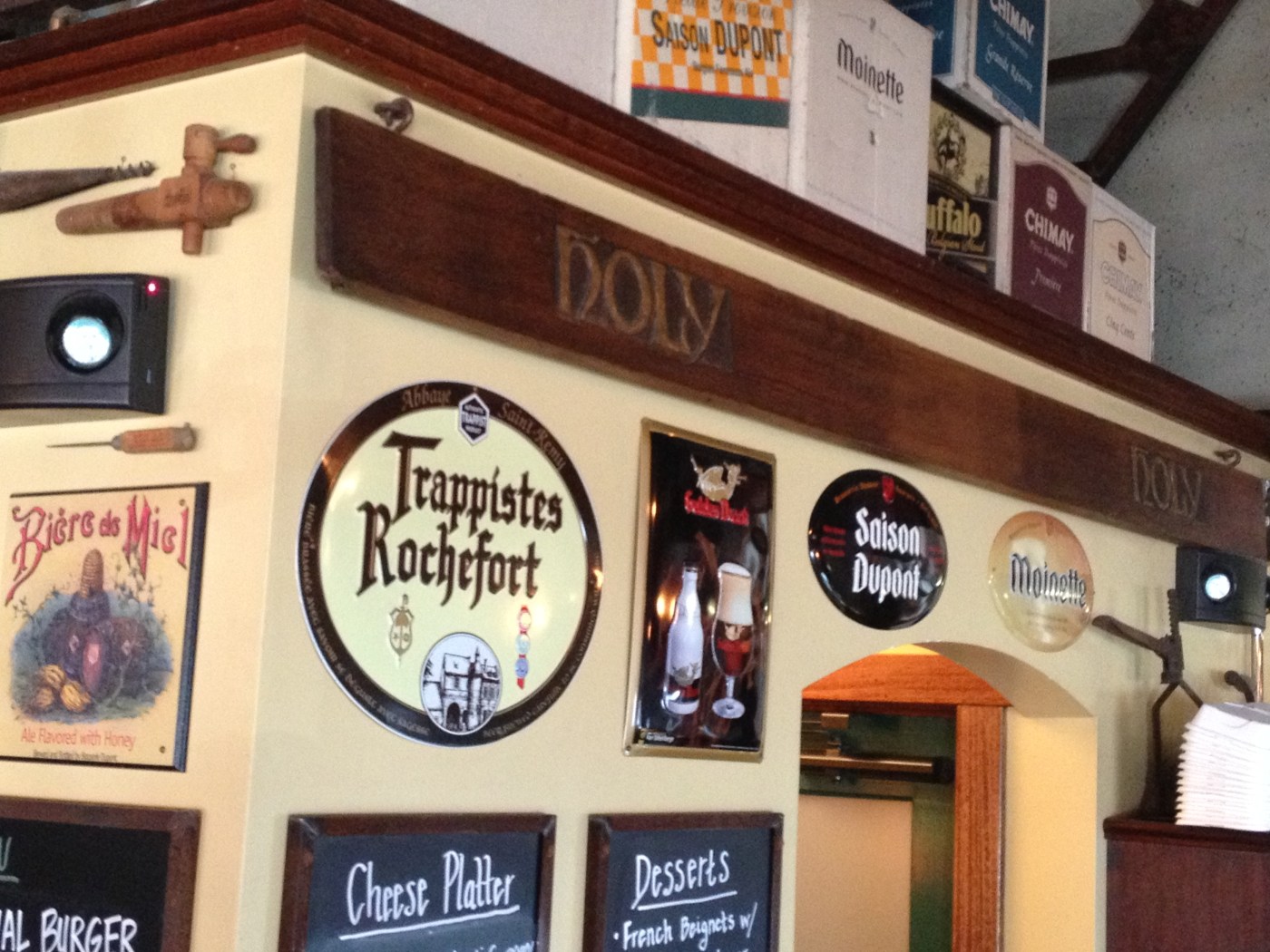
A couple of weeks ago I had a very interesting conversation with Philip Clayton. Several of us went out for lunch after the High Gravity session on Religion & Science. We were at a restaurant where the walls were decorated with a busy collection of reclaimed signs, old pictures and re-purposed trinkets.

Dr. Clayton was across the table from me and at one point I look up to notice that above his head was a sign that read ‘Holy’ on one side and ‘Holy’ at the other end. The words ‘Holy – Holy’ were framing either side of his head. IMG_2884

I tried to come up with something clever to say, scouring my memory for some passage from the Hebrew Bible or the book of Revelation to tweak. The window of opportunity closed because the conversation was quite intense. That morning the topic had been ‘Science & Religion’ and now we had expanded it to ‘Religion & Society’ – or more specifically to ‘Church & Culture’.

The conversation intensified and it became clear that neither Dr. Clayton nor Tripp was too happy with my cynical take on consumer mentalities when it comes to consuming religious experiences within a capitalist framework.

At one point I said “it is like that sign behind you: it’s not like the holy is absent from the space and all the activity that happening here – it’s just that it blends in and goes unnoticed in the midst of all the bricolage that it melts into.”

Somebody had reclaimed that wooden sign. There is a story behind it – there might have even been more to it (I wondered if it used to have a 3rd ‘Holy’ further down the line that had been lost).

But that is my point! In any gathering there are going to be those (like us at that table) who think that what is happening is legitimate, sincere, authentic, important and worth organizing your life around. The congregation is also going to be largely made up of those who are consuming a religious experience – and it is financially worth about the same amount as a movie, a meal, a game or a show.*

I will go even further: this is my great hesitation with those who want to ‘go back’ or ‘conserve’ with their religious participation. This impulse was never more evident to me than when I began interacting with those were into Radical Orthodoxy or with evangelicals who had converted to Eastern Orthodoxy or Catholicism. The ‘zeal of the convert’ can be a telling element when it comes to the anti-modern or counter-modern impulse.

An incongruity is exposed in the counter-modern impulse of these conserving movements. Never mind for a moment that often what is being conserved is born out of a patriarchal model – set that aside for a second.

I will attempt to make this in 4 succinct points:

  1. You do not live in the 14th or 16th century.
  2. You do not think like someone in a previous century.
  3. You do not engage in the rest of your week as someone in a previous century.
  4. You chose, as a consumer within a capitalist framework, to participate.

Those four things signal to me that even the most sincere, authentic, devout, and thorough engagement – whether a Pentecostal, Evangelical, Orthodox, Anglican, RO, Catholic, Mainline or Congregational expression – must account for the ubiquitous consumerism within which we all are saturated.

Dr. Clayton rightly said that I while I had a good point I was proceeding in far too cynical a manner with it. He is correct of course.

My aggressiveness is born out of a deep concern. What we say the church is about – what we believe the very gospel to be – is so vital and so needed in the world today, that we can not afford to ‘play pretend’ about previous centuries and blindly participate in consumerism all the while trumpeting the virtue of our chosen ecclesiastic community.**

The danger, in my opinion, is that religious communities will become nothing more than decorations on the corner of a neighborhood or one more option at the mall food-court. 

For christian believers, the holy is all round us. We can not afford for it to disappear among the bricolage nature of our hyper-advertised media-saturated existence.

The gospel, at its core, is incarnational. Our central story as Christians is flesh and blood in a neighborhood. The whole project is contextual – it only happens in a time and a place. We can never escape that. That is why romantic notions of past centuries or early manifestations can be dangerous distractions and fantastical facades.

We can’t afford to fade into the bricolage. IMG_2886


* plus it usually comes with free babysitting. 

** Some might object that they have not chosen but rather have ‘stayed’. I would argue that they did within the consumer’s capacity to do so. 

Religion in America Update: Spring 2013

Last week 3 interesting items came across my radar screen.

  1. A new CNN poll entitled “America losing its religion”
  2. A NYTimes op-ed called “Belief Is the Least Part of Faith” by an author who specializes on Evangelicals.
  3. A God Complex Radio interview with Cameron Trimble on the Future of Church Renewal.

Each of these three caught my attention for a different reason. I want to try to connect them here and then listen to what you have to say.

In the CNN poll, it turns out that:

“More than three in four of Americans say religion is losing its influence in the United States, according to a new survey, the highest such percentage in more than 40 years.”  One-Room Schoolhouse

There are two interesting parts to that opening sentence. The first is that it is only people ‘saying it’. It doesn’t meant that religion IS losing it’s influence – only that it feels that way to 3/4 of those surveyed. The second point is that 40 years ago it felt much that same way.

The article points out two other times in recent history that the percentage was very similar. Those periods were 1969-1970 and then again in 1991-1994.

In the NY Times op-ed piece, T. M. Luhrmann, attempts to clarify a common misconception by those who do not go to church about why people go to church. She is arguing that it is not because of belief – but rather that belief comes from action (going to church/living out your faith) for those who go to church.

As interesting as her stories and finding were, the part that really caught my attention (as one who comes from an Evangelical perspective) is that :

If you can sidestep the problem of belief — and the related politics, which can be so distracting — it is easier to see that the evangelical view of the world is full of joy. God is good. The world is good. Things will be good, even if they don’t seem good now. That’s what draws people to church. It is understandably hard for secular observers to sidestep the problem of belief. But it is worth appreciating that in belief is the reach for joy, and the reason many people go to church in the first place.

In the God Complex Radio interview with Rev. Cameron Trimble was great. She is the director of the center for progressive renewal and Derek asked her about the future of the church. She had fantastic answer that are best days are not behind us. This piqued my interest because of the CNN poll.

When I think about these three items together, I come to two conclusions:

A) IF the churches best days are not behind us, then WHAT the church is in the future will be very different – almost unrecognizable – from what we have been used to for the past couple of centuries.

B) The way that we engage media, use technology, train future leaders and use resources – especially buildings – is so important because of the reason that Luhrmann said in the NY Times piece that people are even going to church. Trimble also points out in the interview that the reason people even go to church at all has changed in the last 50 years.

I would love to hear your thoughts on these trends and ideas. 

Doug Pagitt Radio: what is going on IN religion

I had the honor to be on Doug Pagitt Radio yesterday  morning. It was a great conversation with Doug and Victoria that centered about what is happening in religion.Web_Logo_lrg_wTagBubble

You can read the initial blog about religion and postmodern thought here.

Doug has the video on his website and on Itunes.

Here the video of the first segment. Here is the video of the second.

Doug has been on Homebrewed several times. Once talking about his books in the Inventive Age, and once chatting with Tripp about politics (in a post-debate debrief).

Check out Doug’s book on Amazon.

Most the conversation centered around my proposal that there are at least 5 things happening in religion:

  • Experience
  • Formation
  • Event
  • Mystery
  • Potentially Something Real

I would love to get your feedback on the interview. Brew on!   -Bo   [you can keep up with all my past posts on this page]

Hipsters and Zombies: the end of civilization

Ballard says in Kingdom Come

Consumerism rules, but people are bored. They’re out on the edge, waiting for something big and strange to come along. … They want to be frightened. They want to know fear. And maybe they want to go a little mad.
– Ballard, Kingdom Come

When we live in a time when like ours, where the as-is structures are assumed and there is a certain giveness to the system, we view them as final applications. Nation States and capitalism are just two areas where this can be seen (Tripp explains this well in the interview).
In this consumerism as culture humans are defined by their external signs and symbols. These become signifiers that form more than our image, they project our identity. It is in this cul-de-sac and the end of the wide road of consuming that the monotony of round and round sameness becomes soul-numbing. You can see why things on the fringes, that lurk in the dark and just below the surface begins to titillate and become attractive.

We are bored.

Alasdair MacIntyre (who asses the situation so well in After Virtue – even though I disagree with his solution) says this about what the church becomes

nothing but a meeting place for individual wills, each with its own set of attitudes and preferences and who understand that world solely as an arena for the achievement of their own satisfaction, who interpret reality as a series of opportunities for their enjoyment and for whom the last enemy is boredom.

Our fractured and contentious societal situation is inflamed by (at least) three cultural elements: consumerism, globalization, and pluralism. The first is the disposition of individuals within a society, the second impacts the proximity of different communities, and the third affects the posture when approaching a disparate series of relationship for communities.

Consumerism is hyperbolized in an examination of Hipster ‘culture’ by Douglas Haddow entitled “Hipster: The Dead End of Western Civilization”.* Haddow provides a vicious critique when he says:

An artificial appropriation of different styles from different eras, the hipster represents the end of Western civilization – a culture lost in the superficiality of its past and unable to create any new meaning. Not only is it unsustainable, it is suicidal. While previous youth movements have challenged the dysfunction and decadence of their elders, today we have the “hipster” – a youth subculture that mirrors the doomed shallowness of mainstream society.

It this both the dislocation of generational continuity and the isolation of consumerist aesthetics that are troubling about the brand obsessed and all too self-aware ironic sensibilities that alert one to the incredible disenchantment and disassociation of the youth culture. It is these very same consumerist influences and institutions that give rise to their embodied expression and vague angst that manifests in such irresponsible yet elaborate demonstrations of the Hipster’s intentionally senseless displays.

Ironically, we have more stuff and access to more toys, information, and treats than ever before … but we are soul-numb bored. This is the danger of thinking that what we have is everything in it’s final form. That our representative democracy, that our free-market economy, that our United Nations are the pinnacle and the end of history.

This is why that Zizek quote about living in the end times is so great – that it is easier for most Christians today to imagine the end of the world than it is to imagine living in some other economy beside capitalism.

Hipsters and the suburban fascination with zombies and vampires … are trying to tell us something.

* The subtitle of this article says “We’ve reached a point in our civilization where counterculture has mutated into a self-obsessed aesthetic vacuum. So while hipsterdom is the end product of all prior countercultures, it’s been stripped of its subversion and originality. “
Mark Douglas Haddow, “Hipster: The Dead End of Western Civilization | Adbusters Culturejammer Headquarters”, n.d., http://www.adbusters.org/magazine/79/hipster.html

John 14:6 may not even be about salvation

Over the past two months we have been having a lot of fun talking about John 14:6.  The release of Brian McLaren’s new book Why Did Jesus, Moses, the Buddha, and Mohammed Cross the Road?: Christian Identity in a Multi-Faith World  and our subsequent live event with him at Wild Goose West (audio here) got us started.

Then Jericho Books gave us some copies to give away so we put out the John 14:6 Challenge. People stepped up with posts and used the speakpipe to leave us messages.

I swung first with “Jesus wasn’t talking about Muslims in John 14:6” and followed it up with “an alternative to John 14:6” saying that one that famous passage is off the table for thinking about how to deal with other religions … where does one start? What are the alternatives?

Last week, Tripp and I recorded a TNT that will come out this afternoon where we listen to some of the calls and talk about some of the posts…  in that midst of that conversation, (beginning in minute 15)  we put out an idea that I thought should be in written form and not just audio.  Here it goes:

Not only is John 14:6 not about other religions – since it is a disciple’s invitation – but it is not even about salvation. It is about relationship and not salvation.

I blame it on lazy reading that results in conflating subjects. I think that Jesus is inviting those who follow him to relate to ‘the Father’ (Abba) as he relates to Abba by:

  • living the life he laid out,
  • walking the way he modeled and
  • embodying the truth we proclaim.

Tripp implies that is has something to do with Calvinism and it’s histroical impact of making salvation:
A) transactional instead of relational
B) individual instead of communal

So I want to ask the question (you may want to listen to the TNT episode to hear the whole context):

What if John 14:6 is not only not about other religions – but isn’t even about salvation? How would that impact your use of that passage and where else would you turn in the Bible for an alternative?

Personally, I would go to Acts 4:12 “God has given no other name under heaven by which we must be saved.”  Mainly because it has the word ‘saved’ in it AND sounds semi-exclusive … which is what people TRY to get John 14:6 to be – but simply isn’t.   That is the conflation that I am talking about.

Thoughts?  Responses?   

Hopefully the Politicizing of Rape is over

This is part of  a series over the next 2 days of posts that were written a month ago. It is interesting to read them now. I will tweak the intros to each, but I fear that they will be ongoing issues until we seriously revisit some of our flimsy thinking behind these subjects.

Yet again a Republican candidate came out with an outlandish comment about rape  that has drawn widespread criticism from those outside the ideological bubble.

  Indiana Congressman Richard Murdoch, during a debate, made the latest in what has become a consistent string of rhetoric for white conservative men – notably on the heels of Senate candidate Todd Akin’s introduction of ‘legitimate’ rape into our vernacular.

Apparently Akin, who is on the House Science Committee, thinks that a women’s body can sense if the conception was because of ‘legitimate’ rape and take of the matter on its own. Richard Murdoch took it a step further, beyond biology, and introduced theology into the mix. The resulting pregnancy would be ‘God’s will’.

 Let me be clear: I get why some people hate abortion. I do. I get it. I was raised watching movies like ‘Silent Scream’ and listening to Carmen rap/sing about our nation’s demise and invitation of God’s wrath.  I get it. That is not what I want to address here.

 My concern is with the consistent and frequent rhetoric that is coming from the conservative right on the issue of rape. 
There are 3 reasons that this hits so close to home for me:

  1. My wife ran the rape crisis hotline and prevention education for the county where we lived in NY. For a decade this was a major part of our life and focus.
  2. As a minister, I have sat with countless women and heard their stories. We have walked a really tough road of recovery and healing with many.
  3. I have traded my narrow/shallow theological adolescence for a more critical-aware- sophisticated-and progressive one.

These three things come together is a very painful way for me when I hear these continuing statements from non-women candidates.

 One starts to ask “What exactly is going on with these guys? What in the world are they thinking?”
If two is a trend and three is a pattern then this is a full-blown school of thought!

Are they just trying to fire-up their base? Are they trying to out religion each other? Are they so fixated on abortion that it blinds them to the absurdity of their other positions?

 Or is it worse than that?  Is it that there view of God is fundamentally determining this stuff?  I’m afraid that this might be true. I think that these might be really good hearted christian men who have bought into a view of God that is so limited and narrow that it necessarily dictates utterances like we have been hearing.

I am suspicious that one’s view of God is like an operating system on a computer and that given enough time, this N. American conservative/fundamentalist program that gets downloaded just inherently comes with some unavoidable glitches and bugs that eventually result in stances like we have been seeing.

Thomas Jay Oord posted the following on Facebook:

 Candidate Richard Mourdock’s statements about rape, pregnancy, and God’s intentions point out a major problem with most theologies. John Calvin summarized the problem well, “There can be no distinction between God’s will and God’s permission! Why say ‘permission’ unless it is because God so wills?” The Mourdock episode suggests that those who (rightfully) object to his statements implicitly support a view of divine power closer to process theology’s view, even though they may not realize it.

 I’m not trying to pick a fight.  I am not trying to be partisan. I am simply heartbroken about these hurtful things that have consistently come to the surface during this election cycle.

Maybe a new guideline should be put in place: as a candidate you are not allowed to talk about rape unless you have walked a mile in those shoes.

At a minimum, I would like to see the name of God disconnected from this subject in political arenas. 

Race and things like Politics

by Bo Sanders 

[I initially wrote this for Ethnic Space & Faith
but thought it would be fun to cross pollinate.]  

Despite what the caller said on this week’s ‘Take Them to Task’ segment from the Smiley & West show said, race is still an issue in North America – not everyone is color blind. In fact, here are four stories that caught my attention in the past couple of days in the areas of politics, music, TV, and sport:

 Politics:  Much analysis is being done – and will continue to be done – about the U.S. Presidential election.  I had heard leading up to November 6 that if Gov. Romney was to win, he would have to do it with the largest percentage of white voters in recent history.

While he did not win yesterday, the ethnic breakdown was stark and is causing much consternation in conservative circles. Whites, and especially Evangelicals, reports say, voted over 80% for Romney. It is almost exactly the opposite (some reports say as high as 93%) of Latino voters went for Obama.

My only point is that if you think that the election of a Black president makes this a post-racial country, you have another thing coming. Race is still an issue and will continue to be an issue as we move to 2048 when Whites will not be a majority in America.

How will we lead? How will we transition? How will we hear new voices? 

Music: You may have seen the uproar over the music group No Doubt’s new video “Looking Hot”. Rolling Stone describes it this way:

The clip for the second single off their long-awaited new album, Push and Shove, featured a Wild-West theme, replete with tee-pees, feather headdresses and smoke signals. After releasing the video on Friday, No Doubt quickly drew complaints for using the stereotypical imagery, with threads such as “Appropriating Native American culture” appearing

The band did apologize and did remove the video.  Continue reading “Race and things like Politics”

Create a free website or blog at WordPress.com.

Up ↑