Search

Bo Sanders: Public Theology

updating & innovating for today

Tag

Roger olson

Opting Out of the Argument Culture (follow up to 4 > 2)

Last week I put out a fun challenge for Good Friday: repent of either-or thinking. It got a great response and a reader asked how one might pursue a conversation differently.

After a decade of trial and error, these are the three things (appropriately) I have found most helpful in breaking down the inherited dualisms: diagrams, vocabulary, and intentional complexification.

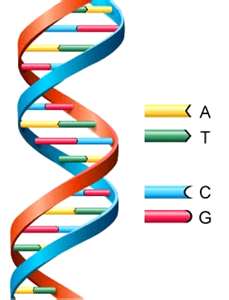
Diagrams: I am a believer in the power of shapes. I heard Len Sweet talk one time about how the two scientists that finally solved the riddle of DNA actually had all the necessary proteins and elements figured out for quite a while … but could not break the code. It wasn’t until they had that now famous shape – the double helix – that they were able to put the puzzle together.
I tell people

“You can have all the right content and be forcing it into the wrong shape.”

My use of the Venn last week to create 5 categories out of 2 would be an example of this. But it comes from a deep conviction that even when given 2 categories, there has to be more to the story – so look for a third. (The book Argument Culture by Deborah Tannen is excellent on this point).

Draw the person’s spectrum and then bend it (as I did here) for them. Take their two options and put it in a matrix (like the Urgent/Important matrix below). Just become convinced that there is too much data for it to be crammed into a pre-made little mold – it just won’t fit. You end up discarding too much data once your little tins are filled.

Vocabulary: When people are too familiar, too entrenched, and too comfortable, you may have to change the terms of the debate in order to unseat the status quo.

In the never ending Calvinist v Arminian debate that Calvinist love, I will teach them that Arminius was a Calvinist, but  just ‘not calvin enough’ and then, in reaction, the Synod of Dort went more calvin than Calvin to come up with T.U.L.I.P. So when Calvinist portray all free-will theologies as Arminian, that is like an American saying that all non-republicans are democrats: its just not true. They are basically just two sides of the same coin … but certainly not representative of the whole array of options. If they want to read an actual Arminian they should check out Roger Olson and his book Against Calvinism. Once you know what a real Arminian looks like, you will stop mistaking everyone who is not Calvinist for one!

Intentional Complexification:  Since dualism is destructive and deceptive, resolve to never let two contradictory-adversarial positions stand as the only options. Search far and wide, at all costs find a third option. Become inquisitive, Become imaginative. Who doesn’t see it this way?

In the abortion debate you must take away the entrenched or given labels that people assume are the only options. Pro-Life is usually just about one stage of life (unborn) and is less concerned about the life of the mother after her child’s birth, the education of the child 5 years after birth, our  country’s foreign policy and being pro-life in an age of perpetual war, and the ever increasing rates of incarceration, death penalty, etc. To be pro-life you also have to be pro-health care, for education, against militarism, anti-death penalty and should probably do something about hand guns and assault rifles ( I’m not talking about your deer rifle Mr. NRA, that is not what is being used to kill people in these shootings).

If you don’t care about the health of the mother, the education of the child, the life of soldiers, and the life of inmates then you are not pro-life: you are just anti-abortion.

When I see the conversation being set up in an us v. them scenario, I will just boycott by saying “until a women has control over her own womb and she can walk away from a pregnancy like the fella can, we can not even have this conversation. It’s impossible.” I just won’t concede the terms and allow the conversation to be set up like that. It is a false binary and it never leads anywhere except ‘both’ sides (as if there is only 2) feeling justified in their own self-virtue.

So those are my 3 suggestions. I would love to hear what things you have found help us get out of the either/or rut and change the parameters conversation!

Evangelical Orthodoxy? no such thing

Roger Olson posted an excellent article by Mike Clawson (hubby of Julie Clawson) on his blog last week. It was about the fundamentalist roots of evangelicalism and their contemporary implications. In the comments (and Roger always has tons of comments) Olson reminded everyone of an article he wrote 12 years ago for Christianity Today.  I subscribed to CT back then and remembered the article.  I went back and found it but what I did not remember was just how contentious things were.
In the article Olson is trying to fight off criticisms from the ultra-reformed, or rabid-Calvinist wing of the Evangelical camp. Folks like MacArthur, Piper, Driscoll, and Mohler – besides being continuously contentious – are always throwing around words like heresy and orthodoxy at folks like Olson, Rob Bell, and Brian McLaren (all former pod guests on HBC).
Here is the thing: there is no Evangelical Orthodoxy

I love reading books like Revisioning Evangelical Theology by Stanley Grenz, Discovering an Evangelical Heritage by Donald Dayton, History of Evangelical Theology by Roger Olson.  I was part of the the Lussane gathering of young leaders in Malaysia. I was very vocal last summer that Evangelical is not only a political term but has deep theological implications and is inherently and historically theological (I used Bebbington’s 4 indicators) .
 But there are two things I think need to be clear:
I got a book called the Evangelical Catechism. It is a compilation of consensus beliefs from 200 leaders, pastors, and thinkers that were surveyed. I like the book – but that is not the same as a catechism! We have no Pope, no ability to call a council, no catechism … so we need to knock it off with the “Orthodox” insistence and throwing around the word  “heresy”. LOOK: there actually is an ‘Orthodox’ church and they think that  the likes of Driscoll, MacArthur, and Piper (as well as the rest of us) has lost their way!  *
1) There is no evangelical catechism and there is no evangelical orthodoxy!  I proposed earlier this week that a dynamic conversation is the best we can hope for (I am partial to the Wesleyan quadrilateral). Can we have consensus? Ok. Can we have conversation? Absolutely. Is there a governing body to enforce your brand of ‘orthodoxy’? NO – so knock it off. Get some new words in your vocab. Think of some other ways to say what you want to say and stop pretending like you believe only what the early church believed. It fantasy at best and delusion at worst.

2) You can’t kick me out of the family. We all have siblings that think we are off and even wrong. Some brothers don’t talk to each other for years … but they are still family. That is not what determines if you are a part of a family! It is not how it works. So snuggle up sister! We are in this together, like it or not, we have the same parent, we were birthed through the same water, and we have the same blood. We don’t have to agree on everything – but stop trying to kick me out of the ‘fam’ bro! We are in this for eternity.
Now I know someone will come along and say “I told you its a meaningless term” … but I want to say

Hey Mr.  – if you don’t want to be evangelical that is fine. But some of us call this family and it means a lot to us. If you are done with the term, fine. But to us it has deep meaning we still use it as a family name. If you don’t count yourself as a member anymore – that is your call. But stop telling us who are inside the conversation that Evangelical doesn’t mean anything. It does to us.

We may not have a catechism or an actual orthodoxy, but that doesn’t mean we aren’t a  living branch on the family tree.

This was originally posted at Homebrewed Christianity as “There is no Evangelical Orthodoxy”

I also shared some thoughts about Christian unity and conformity on a TNT episode.

* I appreciate the real Orthodox and have learned much from them.

weaving my theological web

part of being Post-foundational is a move away from thinking in “foundation stones” – building blocks that become unmovable or unquestionable over time – and moving to more a “web” of meaning or interpretation. The advantage of the web-mentality  is that it is flexible and you can adjust one part of it without the entire project crumbling into ruins.

I like this switch a lot.   Of course, no system or structure comes without it’s complications, glitches, and obstacles.

A web is not a liquid existence. It still needs to be anchored somewhere. It has to be connected to something.

I am fond of saying that I want to be innovative, but in a way that honors the original idea and provides continuity with the tradition. This desire means that I am not floating from thing to thing as if I was un-anchored. We are all, at some level, tied to both the original vision and to the modern manifestation. The first asks for accountability and the second one calls for integrity.

navigating between the original vision and the historic progression is demanding. It takes time, a little bit of research, and a whole lot of grace. In fact, I see why some people don’t want to do it. It would be easier to either A) be conservative and just set the foundation stones in place and then never need to move them or ask the original questions again or B) be destructive and/or pragmatic and just do what works now without consideration for the road that brought us here.

I have noticed a pattern lately in my conversations. There seem to be four ideas or movements that I use to anchor my web of meaning / interpretation to.  I ran this by a couple of friends and it has led to some really interesting conversations.

I am a post-conservative, emergent, progressive with charismatic leanings. – this allows me to be in conversation with process thought as well as post-modern thinkers. Continue reading “weaving my theological web”

Create a free website or blog at WordPress.com.

Up ↑