Search

Bo Sanders: Public Theology

updating & innovating for today

Tag

story

Trinity of Belief

There are 3 elements of belief that overlap and interact to form what we generally refer to as ‘faith’.

I am fascinated with how these layers stack up and both empower the other layers but also limit the options of each other.

The 3 elements are:

  • narratives (story)
  • practices (action)
  • relationships (connection)

Narratives are powerful because the stories that we tell ourselves – or the stories that we are told and buy in to – frame our actions and give direction to our relationships.

Each of us live in a story.

Practices are important because ideas don’t just remain ‘theories’, they translate into actions, habits, and ultimately practices. Some of these are intentional, others are by default. Regardless, they reinforce the story that we live into and they connect us with others who become our community.

Relationships are vital because we are essentially (and fundamentally) social creatures. There is not one aspect of human existence that isn’t relational. We are born into a family of origin, and even the words we use to form our own thoughts are given to us. In fact, who we are connected to defines us as much as anything else and determines what we are allowed to believe or not allowed to believe.

  • Our stories frame our experiences and inspire our actions.
  • Our practices em/body and en/act our beliefs and ideas.
  • Our relationships connect us to a web of meaning and creates community.

It is the interplay between these 3 elements and specifically the spot where they overlap that has become my fascination.

Here is a short video – let me know your thoughts.

The reason that I call it the ‘trinity’ of belief is because each of the 3 elements can correspond to a ‘person’ in the Christian trinity: the story of God (the Bible is primarily narrative), Christian practices are founded in the incarnation and embodies presence, the Spirit is how we all connect to one another (community).

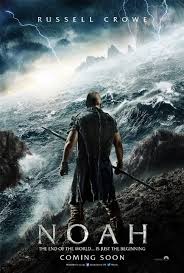
Noah: Inhabiting A ReEnchanted World

In Aronovsky’s movie, Noah inhabits an enchanted world. kinopoisk.ru

From the first rain drop that mystically/magically replaces a plucked flower, we know that Noah is walking in a world that is enchanted is way we are not used to seeing.

The rules are a little different. Things work in slightly different ways from the world that we inhabit.

From the suspension of certain laws of physics to the wondrous seed of Eden and on to the healing blessing of a barren womb, the world is undoubtedly enchanted.

It is about that enchanted world that I want to propose a problem and a promise.

Problem

In a post-enlightenment world, we no longer have access to that level of enchantment – except in cinema. That is the importance of movies. Most of us no longer sit around the fire and hear the stories and mythic tales of the ancient generations.

Movies open up a world to us that seems closed in the ancient past. Cinema releases us from the confines of our limited imagination and allows us to imagine the world (in) a different way.

Movies spark our creativity and open us up to the possibility that the world can, and maybe should, be a different way. Movies like Avatar or Star Wars are not meant to be exegeted or examined for their exacting possibilities. That would be to miss the point.

Noah should be enjoyed in the same way. A movie like this should not be measured and weighed in an attempt to map its realistic representation. That would be to close down the possibilities. Aronofsky’s vision is to open up our imaginative creativity and invite a greater possibility.

Promise 

David Ray Griffin has ambitiously tackled this problem in his massive (and heady) tome Reenchantment Without Supernaturalism. You can read Bevery Clack’s excellent review here.

Clack explains:

the naturalism that underpins this model is

  • prehensive (highlighting the conscious or unconscious grasp of something)
  • panentheistic (god’s presence is in all)
  • panexperientialist (meaning that experience is not limited only to the sensory)


I don’t want to get bogged down in big words but that tri-framing opens up an important insight that Griffin lays out.

 First, as long as the scientific and religious communities regard each other with suspicion and hostility, it will be difficult for them to cooperate wholeheartedly to overcome the problems threatening civilization today, such as the global ecological crisis.

Second, religion that has not taken account of the truths revealed by science can be very dangerous.

Third, the development of a “scientific worldview” that does not incorporate the truths revealed by religious experience has led … to the view that the universe provides no normative values to guide the future course of civilization.

It is passages like the above that bring me back to the enchanted world of Noah. We love the idea of that world. It is partly why the epic-mythical-primal storytelling of those early accounts capture us at so many levels.

The unfortunate thing is that we have no access to that world anymore. This is where cinema comes in. Movies like Noah release us from the confines of our disenchanted and mundane existence and open up our imaginations to the possibilities of an enchanted world. The unfortunate reality is, however, that cinema is the only access most of have to a world like that.

We can’t go back. We could try but we would never make it. The better option is to live wholly into this world that we actually inhabit in a way that recognizes what is already (re)enchanted and allows us to participate with integrity in the world as it is.

Noah: Eclipse of the Biblical Narrative

It has been a busy month for me but I have 4 things that I would love to hear your thoughts on in the next 24 hours.

I got a sneak peak of the new movie Noah and got to be a part of a roundtable with the director and screenwriter. You can listen to the HomeBrewed  review of the movie and interview here. 

Today I want to put up my two posts on Noah and see what y’all thought of it (if you got to see it this weekend).

______________________

The new Noah movie is a masterful work of biblical imagination and creativity. Noah

There are two aspects of the movie that audiences will notice up-front:

  1. one is related to epic-mythic-primal narrative
  2. the other addresses physics and logistics

The latter is significant for the former. Through a creative move to put the animals into hibernation, all of the questions about how you would feed that many animals, keep them from killing each other, and shoveling manure are instantly relieved. Those who are concerned about such logistical matter can then relax and settle into the narrative.

This is important because for many viewers, the story of Noah is either a) a children’s tale or b) a physics/apologetics problem.

What is missed in both the children’s story and the apologetics arguments is that we are dealing with an epic-mythic-primal narrative. It is not a newspaper account of the flood.

The danger of reducing epic-mythic-primal narrative down to newspaper reports is that too much is lost in the reductive move. The sad part is that often those who are the most series about the biblical account – and who may be upset about the creative flourishes in this movie – have often fallen victim to a debilitating loss of wonder and possibility.

 This is a ‘Failure of Imagination’.

When the Biblical Narrative is reduced down to a newspaper report,  the account lacks the appropriate level of animation.

Aronofsky illustrates how a story should inspire us. This is how we should entertain and engage a Biblical narrative – not by simplifying it down to a flannel board representation – but by breathing more life into it to see what emerges.

In the interview you will hear Aronofsky and Ari Handel say that they wanted to ‘humanize and dramatize’ this work of ‘primal story telling’. My mind went immediately to the work of Hans Frei – specifically The Eclipse of the Biblical Narrative. Frei was both concerned about and critical of the shifts that happened in recent centuries of biblical criticism. We had clearly moved out of the pre-modern (pre-critical) way of addressing a sacred text and into (via the enlightenment) a flood of critical thought and scholarly criticism.

Both the fundamentalist retreat to historical facts and the liberal abandonment of historical concerns are a failure to Frei. This is not about extracting universals or proving ‘facts.’ That is an exercise in missing the point.

Frie’s proposal related to fitting our world into the world of the Bible.  While I don’t subscribe to Frie’s system wholesale, I think that he would be very impressed by Aranofsky’s vision for the Noah story.

The director lets us inhabit the enchanted world of Noah and tries to find elements of our world within it. This is the beautiful opportunity provided for us through film. We breath creativity and imagination into the text and let it come alive.*

The next post will look at ReEnchanting the world the Noah inhabited. 

*It is important to note that Aronofsky and Handel took great pride in not contradicting a single detail in the biblical account. They admittedly added and embellished other aspects of the story.

Neighbors and Wisemen for Lent

My blogging energies have all been going to Neighbors and Wisemen over at HBC.  A bunch of us are using it for a Lenten emphasis.

I thought it would be good to post a list of them here so that if anyone wants to look into any of it, it is clearly cataloged.


Here is a running list to all the links: 

Introduction:  Loss and Lent

Day 1:  Foreign Concepts

Day 2: Double Vision

Day 3:   Betrayed By a Kiss

Day 4:  Be Not Synced With The World

Day 5: Devotion and Distilled Friendship

Day 6: Translation Station

Day 7: Sodom’s Sin Wasn’t Sexual

Day 8: What’s In A Name?

Day 9: My Soul Is Fried

Day 10: Unlikely Allies and Not That Kind of Christian

Day 11: How Do You Know?

Day 12: The Voice of God in Others

Day 13: Poetic Language about God

Day 14: Going to College with Christians

Day 15: Living Out Faith Loud

Place, Direction and Perspective: changes since I was a pastor

Last week I had chance to return to the place where I had been a pastor for 11 years. I have been away for 4 years pursuing higher education. It was great to reconnect with folks that I love very much. The trip also included a chance to head out into the woods with a group of guys for a week-long canoe trip in the Adirondack Mountains.

One night around the fire, someone asked

“so you have learned a lot and changed a lot since you were our pastor, bring us up to speed. What has changed in your thinking in 4 years?”

It was a question that I hoped would come up and had given it a lot of thought as I flew across the country from LA to NY.

 I said that there were 3 big changes – that I had added 2 things and gotten rid of 1 thing. 

Directions: 

We had a saying that oriented us over those 11 years I was pastor: Upward – Inward – Outward: it must be all 3 – they must be in that order. I have learned that there is a 4th direction: downward. 

When we look downward, two things happen:

  1. We see the earth. This awakens us to things like where our food comes from, ecology, and location – the importance of place. Christianity is an incarnational religion and it is a spirituality that is em-bodied. Location is central to the practices of christian community.
  2. We see those less fortunate or less powerful. This awakens us to issues of justice. Cornel West is the one who has helped me see the importance of not just looking around (which is vital for awareness) and looking up (where our strength come from) but looking down for those who might need some help.

Adding this 4th direction brings in issues of environment, locatedness, and justice. It illustrates the importance of embodying the gospel in a place – none of us are from everywhere.

 Critique and Create:

One of the things that I have learned in my travels (from folks like Zizkek, Cornel West, Marc Ellis and Diana Butler Bass) is that there are 3 broad kinds of churches in North America:

  • Prophetic – that critique the system
  • Therapeutic – that help you adjust to the system
  • Messianic – that look to escape the system

We were great at two of them. We had a natural Messianic element because our denomination is staunchly and passionately pre-millennial (the soon coming King! is one of our big 4 things). We also had a good dose of the Therapeutic and helped a lot of people be the best version of themselves within the existing structures.

If I got to do it again, I would add a Prophetic element and address the systems and structures that hold so much sway in our communities and in the lives of our congregations.

The example that I used was routinely praying for a guy with a limited skill set to get a job. “Jesus – please help ‘J’ to get a job”.  By not addressing the relationship of local government with factories and manufactures in our area … we were relegating the answer to our prayers to the ‘powers that be’ and J was perpetually disappointed with God and discouraged in his faith. We nearly set him up to fail.

 Those are the 2 things I have added: a 4th direction and 3rd element. But I have also gotten rid of something – I no longer believe in the supernatural. 

Why the Natural is super:

I am convinced that the church has made a major mistake in adopting the language of the super-natural. Since the epic flub with Galileo and Copernicus the church has allowed science to have the natural (things that make sense) and has been relegated to watching over things that increasingly don’t make sense and retreating into words like ‘mystery’ and ‘faith’ as cover for that which is just not reasonable.

I do not believe in a realm (the natural) that is without God. As a Christian, I believe that God’s work is the most natural thing in the world. I am unwilling to concede the natural-spiritual split and then leave less and less room for God as science is able to explain more and more. The church is foolish to accept the dualism (natural-supernatural) and then superintend only the spiritual part.

No wonder 85% of our kids walk away in their 20’s. This stuff is unbelievable. 

I would prefer to reclaim the language of the ‘miraculous’ (surprising to us or unexpected) and ‘signs’ from the Gospel of John (that point to a greater reality).

So that is what has changed since I was Senior Pastor four years ago. I look down now (at the earth, for location, and for issues of justice). I hear the Prophetic critiquing the system. And I have gotten rid of the super-natural while embracing the miraculous.

 It was so great to share these thoughts and hear the feedback from my friends as we shared the week together. I would love to get your feedback or to hear how you have changed in the past few years.  -Bo 

Create a free website or blog at WordPress.com.

Up ↑