Search

Bo Sanders: Public Theology

updating & innovating for today

Tag

theology

’12 Years A Slave’ and the Cross of Christ

by Bo Sanders 

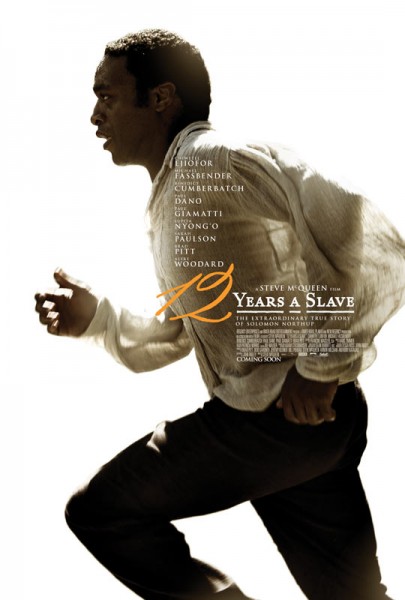
12 Years A Slave is one of the most powerful movies I have ever seen. The cinematic elements compliment the twisted and troubling plot to create a riveting experience for the viewer.  What follows is a theological reflection – for a more formal review of the movie check out Pop Theology by Ryan Parker.  Ryan and I also recorded a podcast that will be released this evening. 12-years-a-slave-poster-405x600

Based on a true story, the plight of Solomon Northup (played by Chiwetel Ejiofor) is a journey from the good life as a free black man in the North to the hellish existence of a slave in the deep South. Visual artist-turned-director Steve McQueen frames the narrative in stunning cinematography and a unique pacing that reflects the twists and turns in the story.

12 Years A Slave is one of those rare movies that impacts you emotionally and challenges the assumptions you carried into the theatre. The journey of the main character sticks with you and causes you to ask questions that you know deep down need to be examined.

I expect that this movie will be one of those rare films that trigger a much-needed cultural conversation. Issues of race and America’s haunting legacy of slavery and native reservation are never far from our national consciousness. Race is often front and center in the nightly news and on the margins of most national conversations.

While we know that something is amiss, we may not know how to approach the topic. We want to have a conversation but we may be unsure about how to proceed.

From the controversies surrounding the election of President Barack Obama to the George Zimmerman trial to the ongoing ‘stop and frisk’ policy debate in the New York City mayoral election, there is an awareness that race matters (to borrow a sentiment from Cornel West’s book title) but a perpetually unsatisfying confusion about how to access the underlying issues.

For Christians, perhaps the best way to address these issues is via the cross of Christ.  In his newest book, The Cross and the Lynching Tree, famed theologian James Cone equates the cross and the lynching tree: “though both are symbols of death, one represents a message of hope and salvation, while the other signifies the negation of that message by white supremacy.”

This is poignant because Solomon Northup first witnesses and then experiences the lynching tree in 12 Years a Slave. The lynching tree is the ultimate weapon of intimidation employed by the same slave owners who claimed the name of Christ, but who preached from the Christian Bible to their slaves in order to justify their cruelties.

For Cone,

“what is at stake is the credibility and promise of the Christian gospel and the hope that we may heal the wounds of racial violence that continue to divide our churches and our society.”

There are plenty of movies that are as fleeting and significant as the popcorn one eats during it. 12 Years A Slave is a different kind of movie. It has substance and is capable of being a touch-point for a significant cultural conversation.

“Until we can see the cross and the lynching tree together, until we can identify Christ with a ‘recrucified’ black body hanging from a lynching tree, there can be no genuine understanding of Christian identity in America, and no deliverance from the brutal legacy of slavery and white supremacy”.  – Cone

If we can talk about a movie like 12 Years A Slave in light of The Cross and the Lynching Tree, we may be able to begin to have a much-needed constructive and reconciling cultural conversation about race in America.

The election of President Obama was not the end of racism in America. As the 50th anniversary of ‘the March on Washington’ showed, we still live in a deeply divided country where race and the legacy of racist policies and attitudes have a lasting effect and are an ever-present reality.

America is also a deeply religious country and Christianity is the dominant religion. The irony, and the opportunity, resides in that fact that the symbol of the cross is so central to Christian imagery. There is great hope there, if only we would take it seriously and see what the Salvadoran martyr Ignacia Ellacurio called “the crucified peoples of history.”.

You can listen to my conversation with Ryan on the Homebrewed Christianity podcast here.

When Good Is Not Enough (3/3)

This week I have been writing a little about my interest in Practical Theology (PT) and  the subsequent philosophical orientation with which I will be engaging research: social constructivism. 

I had some very heady (and public) conversations with colleagues this Summer who desperately wanted to paint me as a ‘Liberal’ who is afraid of my own shadow (afraid to admit it/come out of the theological closet, etc.)

My assertion was that, as a social constructivist, I am more in a agreement with communitarian concerns than I am with liberal loyalties. Communitarians have a very harsh critique of liberalism where it:

considers classical liberalism to be ontologically and epistemologically incoherent, and opposes it on those grounds. Unlike classical liberalism, which construes communities as originating from the voluntary acts of pre-community individuals, it emphasizes the role of the community in defining and shaping individuals.

While I clearly hold some positions that overlap with liberal stances, and while I do presently serve at a classically Mainline church that exists within the liberal tradition of church expressions … I do not do so as a liberal. I grew evangelical, went very charismatic and then emerged into whatever kind of deconstructed christianity this is.

I jokingly said that I don’t identify as a liberal for the same reason that I don’t wear a medium-size Tshirt. It doesn’t fit and doesn’t cover some things I find important (ie. my belly).Facade of St. Vitus Cathedral

The problem with being progressive:

I have flirted with the idea of just being a progressive even while I bristle at the notion of societal evolution, inevitable progress or the consequences of a colonial notion of ‘civilization’.

I realize that some liberals have engaged in post-colonial, feminist or liberation approaches – so that those concerns are not mutually exclusive.

So what do I mean when I say that Liberal doesn’t go far enough?

 Take post-colonial concerns

Classic liberalism has had two responses to the colonial problem. I will call them:

assimilation and reservations.

They can either come to us, act like us, learn to think like us, speak like us and live among us … or they can go over there and do their own thing without bothering us.

In fact, is it self-congratulatory either way. If indigenous folks assimilate we feel validated as open and accepting – even multi-cultural or diverse! If we ‘give them their own space’ we pat ourselves on the back for being understanding and accepting of other cultures. Let’s be honest – at least it isn’t conquest and genocide after all.

Neither one of those approaches is satisfactory. The first is unacceptable because it still presumes the hegemonic power of the dominant culture and it is looking at the indigenous community as something that needs to be absorbed, adapted or modified. The second is unacceptable because it sees the two cultures as incommensurable without realizing the power differential to  conquest.

I am not looking for a nicer, more gentle version of colonialism or empire. As a researcher-advocate, I want to hear the voice and experience of impacted communities in their own words. If that leads to an opportunity for partnership, great. If not, I have to accept that I am not in control of the outcome nor am I referee to make sure that people play by my rules. In the post-colonial context, indigenous peoples are not to be adopted & adapted … nor are they to be ‘left to their own devices’. Neither of these approaches is acceptable.

Something else is needed. Practical Theology and its qualitative methods provide me a starting point to engaging in a different way – one that addresses larger issues of systemic and institutional concerns, one that hears the voice of the communities most affected, and one that provides the possibility of change in the real lived experiences of those involved.

Let me give you an example. James Cone writes near the end of ‘The Cross and The Lynching Tree’:

White theologians in the past century have written thousands of books about Jesus’ cross without remarking on the analogy between the crucifixion of Jesus and the lynching of black people. One must suppose that in order to feel comfortable in the Christian faith, whites needed theologians to interpret the gospel in a way that would not require them to acknowledge white supremacy as America’s greatest sin. 

Then Cone comments on perhaps the quintessential evolving- liberal theologian that America has ever had:

Reinhold Niebuhr could write and preach about the cross with profound theological imagination and say nothing of how the violence of white supremacy invalidated the faith of white churches. It takes a lot of theological blindness to do that, especially since the vigilantes were white Christians who claimed to worship the Jew lynched in Jerusalem.

I hope that these past three posts have helped to clarify why Practical Theology holds possibilities for me as a discipline and why I have chosen a social constructivist orientation within the research.

Thank you to everyone who has taken the time to read these 3 posts and to give me such high quality feedback and/or affirmation.

45 words

I have gotten more positive feedback on the following 45 words than any other 45 words I have ever posted. Both famous friends and former congregants have let me know what they thought.  It was part of a response to a blog post … and I write stuff like this to myself all the time – but this one made it out and seemed to connect.

I wanted to share it here.

I assume that my theology and practice are off. I’m sure my grammar is flawed. It seems impossible that it would be otherwise.
I write knowing it is provisional and perspectival.  MY concern is that some think that this not the case of their work.

I love comparing notes with people so feel free to let me know what you are thinking.

Process, Cicadas and Time

Three things have been rattling around in by cranium while I was away this Spring.

1. The cicada’s came back. Every 17 years the Periodical Cicada Brood II emerges to rollick in the Eastern half of the U.S. for a brief but frenzied round of sex and gluttony. We will not see them again for 17 years. It is a phenomenon that always garners it’s fair share of bewilderment and awe.

cicadas

It is appropriate that this baffles most of us. We are set to think in perennial terms and oddities like this don’t fit that narrative. Underneath the soil right now is a massive swarm that we will not hear a peep from until 2030.

2. I was listening to an episode of Smiley and West’s weekly radio show while I was fixing up my parent’s house. The guests were Maceo Parker and Bill Ayers (interesting mix eh?). It was pointed out that sometimes, things just take time. Ayers’ example: Rosa Parks refused to give up her seat in 1955. It was not until 1963 that the march in Birmingham took place.

Ayers points out that not everything happens in quick succession. He said this in reference to the Occupy flare-up last year and why it appears that not much has come out of them.

3. Tony Jones had the response to Jack Caputo’s address at the Subverting the Norm conference. Point 2 of Tony’s 13 points was :

Process theology had its chance. If process theology couldn’t get traction in the American church under the auspices of John Cobb in the 1970s, I doubt that it will gain traction with his acolytes. Outside of Claremont (and Homebrewed Christianity), I hear little about process theology. I am not saying that popular theology = good theology; that would make Joel Osteen a theological genius. What I’m saying is that process theology did not capture the imagination of a critical mass of clergy and laypeople in its heyday, so I doubt that it will today. But maybe I’m wrong. Maybe Cobb was ahead of his time, and the church is only now ready for process.

I know that Process thought will always be on the periphery. It will never be mainstream… and I am o.k. with that. Some things just work better as ‘catchers’ on the outside of the whirlwind.

Here is the thing: many Mainline, progressive or emergent church expressions don’t make that many converts. Some may even think that evangelism is wrong/trite/passé/ or coercive.

You know who does make a lot of converts? The evangelical-charismatic branch of the family. They do.

But not all of their kids or converts find the theological answer persuasive or satisfying after a while. So there is always a large supply of folks cycling out of the evangelical spin-cycle looking for better frameworks and answers … and it just so happens that Process thought can provide that.

Process thought interacts with both Biblical Scholarship and Science with flying colors.

Process even has a built-in interface for engaging other religions. It’s perfect for the pluralism that our world and time are calling for.

Yes – you have to learn some new words and it is admittedly clumsy to transition into from a classical approach. We all acknowledge that. But … and I can not overstate this … if your unhappy with the frameworks that you inherited, what have you got to lose?   Your faith?

If the alternatives are to either:

A) close your eyes and choke-down the medicine

or

B) walk away from the faith altogether

Then what is the harm is picking up some new vocabulary and concepts that allows you to navigate the tricky waters of the 21st century?

I mean, what else are you going to do for the next 17 years while we wait for the cicada’s return?

___

I have been enjoying 2 big books while I was away:

Modern Christian Thought (the twentieth century) and Essentials of Christian Theology – both have significant sections of Process influence.

Cicada Picture: H. Scott Hoffman/News & Record, via Associated Press

Evangelicals Really Dislike Lent

My friend Krista Dalton tweeted last week:

Was told Lent was “stupid” by a fellow Christian at school. Good reminder why I am not evangelical!

I had to fes’ up to her that I used to say crap like that and I repented.

So what is it about Lent that evangelicals hate so much? I have a two-tiered theory. 

The first involves a Theology of Glory. The second is not a cause – it is an effect – but it is born our of strangeness and suspicion.

Theology of Glory

Back in Christian history, back to the roots of evangelicalism in the Protestant Reformation, are two major approaches (if you will). The first is a Theology of the Cross held up by Luther. The second is a Theology of Glory brought forward by Calvin.

I don’t have time to get into all the sorted details, but suffice to say … that the American evangelical church has not just majored in a Theology of Glory but almost to the near neglect of a Theology of Cross.

Here is a really helpful article on the differences:

“Theologies of glory” are approaches to Christianity (and to life) that try in various ways to minimize difficult and painful things, or to move past them rather than looking them square in the face and accepting them. Theologies of glory acknowledge the cross, but view it primarily as a means to an end-an unpleasant but necessary step on the way to personal improvement, the transformation of human potential. As Luther puts it, the theologian of glory “does not know God hidden in suffering. Therefore he prefers works to suffering, glory to the cross, strength to weakness, wisdom to folly, and, in general, good to evil.” The theology of glory is the natural default setting for human beings addicted to control and measurement. This perspective puts us squarely in the driver’s seat, after all.

It’s not that we don’t like the cross – oh we love the Cross – we sing about it (the wonderful cross) and we wear them around our necks!

It’s so bad that Dallas Willard has coined the phrase “Vampire Christians” for us. He says that we love Jesus for his blood and little else. Ouch – that one stings.  Wooden Cross

It shows up in other ways too. We are almost completely ignorant of the apophatic tradition. We are so kataphatic (speaking of God in the positive) that we have no idea that there are other options! We have no negativa or posteri – it is all presence all time.

Look at our worship services. Just ask yourself: what would it take to lift your hands and sing “Shout to the Lord” at the top of your lungs … and then ask if that seems compatible with fasting or Lent.  They are just two different muscle groups. Unfortunately, those who use the one often neglect the other and vice-versa

Strangeness and Suspicion  

I’m not saying that this element causes the unfamiliarity – but once there is alienation this next element adds fuel to the fire. The suspicion is syncretism.

Think about it this way: Lent isn’t in the Bible. Historically evangelicals have been a sola scriptura bunch (don’t look into that too much) and Lent is a foreign concept. It doesn’t’ take long to dig up some dirt on Lent and find out that it has its roots in Egyptian-Pagan worship borrowed by the Roman cults. Isis lost a son for 40 days so we mourn for 40 days and then have Isis eggs that are colorfully decorated is the story that come to me.

So, I’m not saying that explains all of the animosity that evangelicals have toward Lent, but I just wanted to offer up my two-tiered theory.

It starts with neglect and ends with accusations.

It’s same reason that we kinda try on Good Friday … have NO idea what to do on Saturday … but LOVE Resurrection Sunday!


Critical Questions: part 2

Originally published as ‘The Silent White Guy and Invisible Black Women’. beyonce-super-bowl1

I am glad that people liked the idea of Critical Theory (from part 1) and the structure of the questions that I put forward.

 I did notice 2 places where the conversation trickled to an drip. 

  • One is the issue of what white guys are allowed to talk about.
  • Two is the way to talk about the role of black women in our society without picking on Beyonce.

Let me give those some background:

My friend Hollie Baker-Lutz tweeted  a sentiment that I hear quite frequently

“Uh oh, overheard in the university cafe: “and I can’t say anything in that class cuz I’m a white male, which is the worst thing u can be.”

I get this all the time from guys young and old alike.  I think something may be missing from that equation however.
Here are two things it would be helpful to add to the mix:

  1. an acknowledgement that the world is changing.
  2. a familiarity of the word hegemony.

If you add those 2 things, it has been my experience that people are generally open to hear what you have to say. People are quite interested.

What they are not interested in is the hegemonic refrain.  See, here is the problem: because that is the dominant cultural narrative … they have already heard it. They know it well. They may know it better than you because they have had to deal with it –  whereas you have only assumed it and benefited uncritically from it.

The second issue came from my friend Janisha when she wrote in response to part 1 post:

I appreciate your article and your attempt to think deeply. I don’t think anyone except for black women can truly determine what are primary and secondary issues.
The place of black women in society as a primary issue has with it endless complications, including “taking back one’s physicality in the face of generations of oppression and marginalization.”
My place in this culture is directly linked to taking back my physicality, because my black womanhood is my physicality. They aren’t different. they cannot be separated. I will argue again, that this conversation is difficult to have unless you are a black woman, because who else can fully understand the implications of Beyonce?

MP responded: 

I get what you (Janisha) are saying about the black woman conversation and I don’t want to butt into it, white man that I am. But that conversation would be about actual black womanhood, whereas this one is about public spectacle, one created and much enjoyed by white men. So there’s a white man conversation to be had about why we (white men) have created a category of “black women” who occupy this particular place in our spectacle. 

… Bo, I wonder how to tackle the issue of “what place black women hold in our culture” without picking apart actual cases like Beyonce’s half-time show??

MP makes 2 excellent points!  

The first situation I would compare to ‘reader response’ approaches to text. We have the author-text-reader.
In this case we have Beyonce-Performance-Viewer.

So each of us viewers is related to the performance differently so ‘white men’ and ‘black women’ may be relating to the performance differently.

In the second I just think that we need to be VERY clear the difference between an example and an anecdote.  Focusing in one example can be illustrative or it can be problematic.

I would hesitate to use this performance by Beyonce as an example – she is not the only one who dances like this. Lots of performers do. Also white women (like Christina and Britney) do.   So it is not unprecedented.

NFL Cheerleading squads do many of the same moves in much the same outfits … the difference is that
A) they don’t have a microphone  and
B) we don’t know their name.

Which is a HUGE difference.
If we want to talk about male sexuality and football we should have the Cheerleader conversation. That is every team – every week.  Women walking

If we want to have the ‘place that black women hold in our society’ conversation, then we would ask a different set of questions. Like ‘where were the other black women during the 5 hour broadcast of America’s largest TV event of the year?’  Since it is a commercial event … maybe we would even take a look at the commercials and ask how black women were represented.

Either way – isolating the one performance by Beyonce is not our best starting point.

Honoring Our Elders or If Aquinas was Around Today

Thomas Aquinas comes up a lot these days.*   Some of it is generated by a small community of passionate people who want to reclaim his project. Thomas_Aquinas_by_Fra_Bartolommeo

This, in turn, prompts some – such as John Caputo in an interview with us – to come up with a legendary one liner that accused this group of ‘retreating into the hills of Thomism’. 

The most insightful address I have encountered recently comes from Umberto Eco in the book Travels in Hyperreality. In a chapter entitled “In Praise of St. Thomas” he outlines how Thomas interacted with his world and how he navigated the difficulties of his inherited order (mendicants) , his Age, and his own limitations.  Three passages from the 1974 essay that inspired me were:

  – Thomas, was neither a heretic not a revolutionary. He has been called a “concordian”. For him it was a matter of reconciling the new science with the science of revelation, changing everything so that nothing would change. 

– Nobody ever said that Thomas was Galileo. Thomas simply gave the church a doctrinal system that put her in agreement with the natural world. 

–  So it is surely licit to ask what Thomas Aquinas would do if he were alive today; but we have to answer that, in any case, he would not write another Summa Theologica. He would come to terms with Marxism, with the physics of relativity, with formal logic, with existentialism and phenomenology. 

He would comment not on Aristotle, but on Marx and Freud. Then he would change his method of argumentation, which would become a bit less harmonious and conciliatory.

And finally he would realize that one cannot and must not work out a definitive, concluded system, like a piece of architecture, but a sort of mobile system, a loose-leaf Summa, because in his encyclopedia of the sciences the notion of historical temporariness would have entered.

I can’t say whether he would still be a Christian.

But let’s say he would be.

I know for sure that he would take part in the celebrations of his anniversary only to remind us that it is not a question of deciding how still  to use what he thought, but to think new things.

Or at least to learn from him how you can think cleanly, like a (person) of your own time.

After which I wouldn’t want to be in his shoes.

This actually is an approach to the past that has some general applicability. I have heard it said that best way to honor founders of any movement is not to simply repeat what they did but do the kind of thing they did in their time for our time. Aquinas

As a contextual theologian, I have said (over and over again) that honoring the apostles and the early church’s mothers and fathers is not in simple doing what they did in their culture – but in doing in our culture the types of things they did in theirs.

Rote repetition – regurgitation is not honoring. It is closer to idolatry. 

Repeating in the 21st century what they said in the 8th century isn’t as faithful as one might like it to imagine. This is due to the nature of our message. Our message is incarnational and thus our models and methods must match that!

The container must match the content. 

I’m not that into Aquinas. I think it’s because of the approach of those who are a little too into him.  But if they were to change to Eco’s approach and engage contemporary science and incorporate real scholarship, then I might get into Aquinas as well.

I just have no interest in reclaiming a romantically imagined version of the past. I am very interested in engaging the living now and emerging near future.

 _________
* Saint Thomas Aquinas, (1225 – 1274), also Thomas of Aquin or Aquino, was an Italian Dominican priest, and an immensely influential philosopher and theologian in the tradition of scholasticism, within which he is also known as the “Dumb Ox”.
Aquinas

5 Biggest Pastoral Changes in the Past 5 Decades

I’m preparing to facilitate a conversation with some colleagues in the new year about ministry and honoring tradition. I want to begin – and thus frame – the conversation with the changing culture that we are products of, interact with and attempt to minister to.

It is a different way to approach the topic of tradition, admittedly, but my thought is that we start where we are and then trace threads into the past to uncover their significance. I almost always find it unhelpful to start in the past – say at the Protest Reformation – and then slowly work our way up. It is simply too limiting (in scope) and cumbersome (in process) for the contemporary expectations of ministry.

I have been reading a little Gordon Kaufman. He has me thinking about the ‘nuclear age’ and how deeply that shift, from the end of WWII, has impacted us sociologically, psychologically, and spiritually. I take this as my launching off point.

 So here are my Big 5 – in no particular order. I wanted to throw them out here and see what others who are older, or wiser, or more insightful might add to the list or modify.

 Pervasive Pop Psychology  – My dad tells a story about interviewing retired pastors 30 years ago. He asked them when things seemed to change. All of them, without exception, pointed to the window from 1968-1970. They talked about Woodstock, Vietnam, and Nixon among other things.

Many of them also talked about people’s awareness and pop psychology. I will always remember the story of a son who came home from college to visit his folks on the farm. He tried to talk to his dad about his feelings, motivations, childhood memories, his subconscious, etc.  His dad responded, ‘Son, what the hell are going on about?’ He just had no frame of reference for it. Similar stories were repeated, in differing configurations, over and over by  the ministers.

Pop psychology has permeated every facet of society. From Oprah on daytime TV to Self-Help books – it impacts what people expect from a pastor and what they want from things like premarital counseling.
In my first 10 years of ministry, I often said that I would have more prepared for the actual way I spent my week if I had gotten a degree in psychology  rather than in Bible.

Biblical Scholarship – speaking of the Bible, I am shocked as to how much different those conversations go than they did 20 years ago when I was trained in Apologetics/Evangelism.  Between the Jesus Seminar, the Da Vinci Code and Bart Ehrman popularizing the stuff many pastors knew from seminary but were not allowed to say in the pulpit, it is a very different playing field.

It is an odd split: people often know little of the Bible – because they know so much stuff about the Bible. We can’t assume even a Sunday School understanding or a surface devotional reading. But at the same time, the culture wide awareness of critical Biblical scholarship is shocking. That was not true 50 years ago.

The Internet – The Internet changes everything. From the way people spend time to the way that they shop for a church. Facebook has changed how people connect to each other. Google has changed the way people access information. It is impossible to overstate how big of an impact the Internet has had on Western society. If you are still doing church the way you did 50 years ago – and think that it will have the same effect – you are fooling yourself. You may have the same seed, but the soil itself has changed. It will not grow the same crop or produce the same fruit.

Two little examples: When kids who grew up in your church come home from college and sit in on Sunday school (for example). They will assume that they get to share their opinion. They don’t sit quietly and honor the elders by talking last. They will raise their hands and talk first. Is it that they are over empowered? No. It is that they assume that they get to help shape the discussion and their opinion is valid. They don’t sit quietly and try to get up to speed or catch up on what they have missed.

  • This is the difference between Web 1.0 and Web 2.0.  A church website is 1.0 – the staff puts out the information that it wants people to see. You read it like a newspaper. It is not interactive. Facebook is 2.0 – it creates the environment but does not generate the content. Young people live in 2.0

Doug Paggitt talks of ‘the pastor as Google’. I love this. People don’t go to Google for Google. It is not a destination. It helps people get to their destination. If it does this well, people trust Google and go it often. Pastor used to be like encyclopedias. They were a resource, a destination for information. Now, the pastor’s office is not a destination, the art of pastoring is help people find theirs. If we do that well, they trust us and come back the next time they need direction.

Pastor as encyclopedia is a repository of information. Pastor as Google is a resource that knows how to find the information.

24 Hour News & Christian Media –  Cable news and Christian radio probably have a bigger impact on the people who fill the pews that any pastor can be expected to have in a 30 minute sermon once a week.  There is no other way to say it, the narrative that is being put out on media outlets like Fox News (Clash of Civilizations) or Christian Radio (the 6 Line Narrative) is so pervasive and so monolithic that it can feel as if your parishioners are being pastored far more by their TV and car radio that you will ever be able to.

This is also part of why our country and culture have become so:

  1. polarized
  2. adversarial

I am horrified by this trend more than all the others combined. I think that it hurts the heart of God and I know that it hurts our Christian witness.

Fractured Globalism  and PostModernity – People have great troubles conceptualizing and articulating how fractured, dislocated, overwhelmed and powerless they feel in the global marketplace. Things are not simple now. Things have never been more complex and overwhelming. Look at the food on your table? Do you know where it comes from? Think about your Thanksgiving dinner last week and imagine how many miles and from how many countries those ingredients were trucked to end up on your table. You might be shocked.

Think about your car. Was it all made and assembled at the same plant? Or even in the same country. The automotive industry was fairly straight forward 50 years ago. Now it is an example of inter-national, multi-corporation conglomerates. We have been de-centered, and people feel it. The way we conceptualize ourselves, our connection to family, the way we picture the world working, the universe and thus God. The best book I have read on the subject is “Identity, Culture, and the Postmodern World” by Madan Sarup.

The PostModern Turn – speaking of PostModern, this may be the biggest of the 5 changes. It is funny to me that some christians still want to debate if the category is real just because it can not be succinctly or universally defined (how very modern!)  Look, call it what you want: late-modernity, hyper-modernity, high-modernity, or some other thing – what can not be denied is that something big and deep has shifted. Blame it on the philosophers (Derrida, Lyotard, Foucault, etc) if you want. Make up a new name for it if you must. But please stop pretending that what we are looking at is nothing radical or unexpected. Even the ostrich thinks that it is time to pull your head out of the sand!

One interesting reaction, and this applies to denominations, is the counter-modern responses that want to go back to an imagined past and reclaim a romantic pre-shift relationship between the Christian religion and

  • society
  • the economy
  • science
  • other religions

You can see this in counter-modern responses like Radical Orthodoxy (retreating to the hills of Thomism), Post-Liberal thought, Hyper-Calvinism and the Tea-Party in politics. Even if you pastor with an established denomination (and many don’t) you have to contend with these fractious groups that will impact your congregation.

Those are my 5 Big changes for Pastors over the past 50 years. I would love your thoughts!  What would you take out and what would you add?

Diana Butler Bass and those non-human animals

Earlier this month I got to sit down with Diana Butler Bass and ask her about everything from her new book’s title Christianity After Religion to the Methodist tradition and why Evangelical young people are 30 years behind.

It was a blast! [you can hear the audio here]

At the end of the hour, the last question was put forward by Darcy who asked about something Diana had alluded to in the Methodist question. Butler Bass had said that the early Methodist had historically A) ministered to the fringes and B) gone to the frontiers.

It was the fringes and the frontiers that Darcy wanted to know about. Only, she was not asking about the past. She wanted to know about the present.

 Who are on the fringes today and where is the frontier for us?

This is possibly the best question I have heard asked at one of our live events. 

Diana didn’t flinch. She outlined three such scenarios that would qualify:

The first was in the realm of sexuality.
The second was in the realm of pluralism.
The third dealt with our environment.

  •  In sexuality she articulated issues related to the transgendered community. This did not surprise me. In the LGBT formulation, T (transgendered) is the the one the raises eyebrows. Now, because I am came to this conversation through a friend who was doing Queer theology, I had initially taken the LGBTQ as a 5-part alliance. I did not realize how difficult the T can be (not to mention the Q) until I starting asking question and listening to stories. I quickly became aware of the complexities and complications involved.

In the two weeks since Diana’s answer I have had several conversation about her take and I have realized how much conversation has yet to be had. May God give us grace as we learn from each other.

  •  In religion she mentioned learning from Hindu friends. As a student at Claremont School of Theology I am very invested in and more than on board with the idea of inter-religious learning. Yesterday was my day off and so I (as Christian) headed to a Jewish bakery to  sit and listen to an audio recording I had about diversity within Islam.

I am always shocked at how much I don’t know and how much beauty there is within each tradition. May God give us grace as we learn from each other.

  •  In issues of environment and ecology, I like to think of myself as up to speed. This is a subject I have really investigated and as someone mentored by Randy Woodley (his new book Shalom and the Kingdom of Creation was just released and he will be on the podcast next week) I was tracking with her when she talked about non-human animals [I often allude to Nipples & Belly Buttons in this regard].

It should not have been surprising to me that with the release of the video of our conversation that she came under some suspicion by a group called IRB  (Institute on Religion and Democracy) as well as others for  her views on non-human animals.

From the blog Juicy Ecumenism here is the end of Diana’s answer and their commentary:

“Non-human animals and their experience of our environment of the divine are a place that human animals need to listen in order to create more full understanding of God’s creation. […] They don’t have voices like humans do, but isn’t that part of my prejudice?”

I don’t like to bring up the slippery slope, but the mud’s looking pretty slick from here.

What IS surprising to me is that – of her three answers about the fringes and frontiers – that seemed to be the least inflammatory of the three answers!

In my humble opinion, her pluralism answer and her sexuality answer were FAR more daring – and challenging! The only thing that I can figure is that some Christians have so bought into the Cartesian dualism regarding humans that both Transgendered and Hindu folks are completely off their radar screen … but don’t you DARE say what you said about listening to non-human animals.

I was prepared to defend Diana Butler Bass after our show – she said some daring things –  I just didn’t think that it would be on the issue of creation-care over sexuality and pluralism.

This contemporary religious environment will never cease to surprise me.

Blog at WordPress.com.

Up ↑