Search

Bo Sanders: Public Theology

updating & innovating for today

Tag

theology

Innovation, Context and History in Christianity

I was away on a youth service trip last week and upon my return had the opportunity to listen to the Barry Taylor podcast from the previous week’s live show. It sounded great and I was sorry to have missed it.

About 23 minutes in to The Theology of Rock, Barry Taylor talks about the play between the universal nature of music and the highly contextual nature of styles and genres. He points out that while music is said to be universal, actual songs and individual expression are very particular and specifically located. They come from a place and in a time and that lyrics – while they may get the lion’s share of attention – are nearly inconsequential in some respects to understanding what is going on in the music.

Lyrics are often an afterthought and may even be antagonistic to what is going on in the music itself. This was a fascinating point and it sent my brain on wild series of connections and contrasts in theology.

My background is in contextual theology and as I stated two weeks ago in my post about the Creeds as contextual documents (or time/place snapshots) they are neither universal nor timeless. Christian expressions – even the early Creeds – are both radically located and time-bound. Now, the objection is always that ‘they were not intended to be so – the authors surely believed them to be universal and for all times’.  While it may be true that writers of the creeds, or the Reformers or systematic theologians in general may be under that impression, we see the historical flaw in that line of thinking.

 We see now that all theology and thus theological expression are contextual expression that are uniquely located and particularly time specific. It’s not just the language (Greek or Latin or German) that needs to be translated but the ideas, concepts and content itself needs to be translated and renovated.

I would like to put forward a proposition to help us unravel the tangled web of theological history and frame – in a positive way – a path forward. I am suggesting that we acknowledge that we are always braiding or weaving a fabric from at least 3 strands:

  •  History and Tradition: Theology and other Christian expressions don’t happen in a vacuum. We never start with a blank slate. We never get back to zero – and we are not supposed to! We are part of long history with much tradition and we are to honor that even while continuing out along the trajectory provided.
  •  Context and Location: All truth is both received and expressed in cultural containers that come with inherent lenses through which we interpret what we see, experience and receive. Our job is to acknowledge and incorporate this understand as we engage our culture, place, and time in a meaningful way that is faithful to the tradition, based on the historic precedent, and aware of our modern realities.
  •  Innovation and Expression: Nothing stays the same. We are fooling ourselves if we pretend otherwise. Language – even about God, technology, and society are fluid realities that call for us to adjust, revisit, and renovate our understandings and activities. Christianity is uniquely designed to adapt and evolve. We are not only called to it but are empowered with a unique set of tools embedded within the Gospels and Acts of the early Church.

The trick is to stop reducing down things down to simply one element in our thinking. That reductive move is death to both understanding and applying the very message that we are talking about!  [read Lamin Sanneh’s Whose Religion is Christianity?: the Gospel beyond the West  for more]

 It is not simply history or tradition. People who extract content without accounting for historical context or timely innovation are in grave danger of importing and imposing collateral damage every time and in every place they do so. If we do not acknowledge the particular time and unique context from which any expression emerged, then we are willfully blind to the cultural constraints and societal containers that framed the content.

 It is not merely context. We are not free to disregard the precedent of the past. The entire project of theological reflection and Christian expression is in dialogue with the historic tradition. If one wants to do something else, that is fine – I get that – but to do theology is to submit to some level of constraint within the forms and disciplines employed.

 It is not only innovation. We do need to, in fact we must, engage our time and world as it is. We can no longer afford to  retreat into a romanticized imagined past (like the radical orthodox). But neither can we simply disregard the tradition and act as if we ourselves are not cultural creatures and products of socialization and cultural-religious conditioning. We are not free to do whatever we want. The entire enterprise is to be in dialogue with the tradition, to acknowledge the contextual nature of all truth and to engage our time and place appropriately based on that.

Theology is not simply history or tradition. It is not merely context. It is not only innovation. Christian theology is a dynamic interplay between these three elements (not to mention issues of power that effected formation of things like the early Creeds). We are foolish to ignore them historically and our work is impotent if we don’t acknowledge them and joyfully incorporate them in our work today.

We do well when we incorporate the long tradition into our context and allow for an appropriate level of innovation that honors the trajectory of the tradition and provides a continuity with the precedent of the past.

-Bo Sanders 
Personal Prophecy: moving on (part 2)

I wrote earlier that we need to be careful with developing a dependance on personal prophecy.

Q: Why didn’t God tell you the accountant was embezzling?

A: Because that is not how God designed things to work.

Having said that, I want to be clear – I believe in the gifts of the Holy Spirit, including the prophetic. I have seen some wild stuff in the past 20 years and while I no longer run in charismatic circles, I am not interested in poo-pooing on my friends’ parade nor explaining away my experience.

Process theology has given me an interesting framework with which to view the phenomenon.
I can do it in 3 simple steps!  

  1. Step out of the 3 Tiered Universe. The Bible was written in an antiquated vocabulary that was embedded in a system that had Heaven above & Hell below. We still use that vocabulary but recognize now that it is only imagery – not physical reality.
  2. Step away from the super-Natural. Get rid of the imagery that God is ‘up’ in heaven and periodically pokes through the thin veil to whisper in your ear – if you have enough faith, or if you are a chosen vessel, or if you are not tainted by sin, or … the truth is that God is with you. Holy Spirit is a work all around you.

God doesn’t need to ‘come down, or ‘break in’ or ‘break through’. God is down, in, and through. 

  1. Be aware of and open to the reality of God’s presence in the world. From verbal cues to body language – there are hundreds of ways that we perceive and interpret other people and our interactions. The is nothing magical about your receptivity, openness or awareness of what is possibly going on with someone else. As Christians, we believe that God’s Spirit is alive and at work in the world. Part of that ministry is to heighten and intensify our already existent (by grace) ability to listen, perceive and interpret social and relational interactions.

I have done this enough to know the objections that are bound to arise. So let me just say 2 things with the space I have left:

  • There are several innovative definitions of transcendence (as it relates to God) that get us out of the 3 Tiered Universe but still hold that God is not just a big bearded guy in the sky that we made up to feel like ‘somebody is watching over us’ and will take care of things in the end.  Both Process theology and the work of Panneneberg give us visions of God’s otherness that squash most objections to moving in the direction that I am headed: we don’t lose the transcendence/otherness of God.

I love the idea that God is the power of the future. God comes to us in each moment and provides the possibility of a preferable reality complete with contingencies of the past. That gets me out of bed in the morning!

  • Prophecy is a sign that is meant to create in us a greater level of faith, trust and awareness. It is not a ‘party trick’ nor is it a primary mode of decision making. If you are relying on God’s Voice to plan travel itineraries, invest in the stock market, look for your missing child, counsel people getting divorced, or predict the weather … I got bad news for ya. That is not how God designed this all to work. 

Admittedly, you have to downgrade your expectations a little bit. Gone are the days of thinking that some stranger on the street is going to call out your name and tell you all the secrets of your heart – and which fork in the road is ‘God’s will’.  The magic show is over. Prophecy happens in relationship. 

BUT (and this is a big but) because God is relational and inside a relationship God’s Spirit can lead your friend to speak loving, kind, challenging words to you – by being open and available … that is  pretty great stuff!  It’s just not magic.

It’s like your sex life. One you get rid of the unrealistic expectations of porn, you can have a healthy real relationship that is both satisfying and sustainable. First, though, you have to acknowledge that the earlier thing was fantasy … or you will be perpetually disappointed.

 We are going to touch on this in an upcoming TNT so I would love to hear your feedback, fears, questions, comments, concerns and pushbacks. 

3 things many Christians may not know (but should)

originally published as “I’m not sure most Christians know that

I was reading a fascinating article by Terry Eagelton where he was reviewing Dawkin’s book (the God Delusion) specifically and refuting the new atheist en mass. He took them to task for not knowing much about theology – which, in his mind, is a major problem if one is writing a book about God. He takes an interesting tone, nearly mocking at points, regarding their lack of sophistication and wherewithal in theological understanding and categorization.

Here is a sample (which, by the way, it reads MUCH better in a John Oliver delivery style):

Dawkins speaks scoffingly of a personal God, as though it were entirely obvious exactly what this might mean. He seems to imagine God, if not exactly with a white beard, then at least as some kind of chap, however supersized. He asks how this chap can speak to billions of people simultaneously, which is rather like wondering why, if Tony Blair is an octopus, he has only two arms. For Judeo-Christianity, God is not a person in the sense that Al Gore arguably is. Nor is he a principle, an entity, or ‘existent’: in one sense of that word it would be perfectly coherent for religious types to claim that God does not in fact exist. He is, rather, the condition of possibility of any entity whatsoever, including ourselves. He is the answer to why there is something rather than nothing. God and the universe do not add up to two, any more than my envy and my left foot constitute a pair of objects.

I was struck by his attitude and I caught myself thinking “I’m not sure that most Christians know that.” He kind of treats these antagonists with a dismissive “duh” but I am suspicious that the atheist aren’t the only one who aren’t aware of the categorical mistake of calling God a ‘person’ just because knowledge of God can be ‘personal’.

There are two significant implications of this:

  • the new atheists (Hitchens, Dawkins, Harris & Dennet) have a stinging criticism that continues to impact those on the margin of the faith and those wrestling with seasonal Christian commitment. Neither the Atheists nor those they seduce know that we don’t mean what they say we mean.
  • Many Christians continue to repeat the Creeds and Catechisms in rote repetition without comprehending the way in which language is being utilized. This concerns me as I continue to wrestle with (and against) the work of Lindbeck, Hauerwaus and MacIntyre.

Here are 3 things that I have learned over the past 5 years that I’m not sure most Christians know. In fact, as I have transitioned from an evangelist-apologist to a theologian, I’ve had the opportunity to converse with and introduce people to these ideas and ,for almost everyone, it is the first time they are hearing the distinction.

God is a Person: When we say that God is a ‘person’ we are not saying that God is like a big you (or me) in the sky. God is not a person in the way that we are a person. You almost have to think about it as a placeholder. It’s a verbal placeholder because whatever God is not exactly a person.
This is where accusations personification and anthropomorphism come in. Folk and Pop brands of christianity are very vulnerable to this charge.

God in 3 Persons: It gets really confusing when we say that there is ONE god but 3 Persons. Gregory of Nyssa, in the 4th century, said:

We can grasp this by reference to a single instance. From him, I say, who is the source of gifts, all things that share in this grace have obtained life. When, then, we inquire whence this good gift came to us, we find through the guidance of the Scriptures that it was through the Father, the Son, and the Holy Spirit. But though we take it for granted that there are three persons and names, we do not imagine that three different lives are granted us-one from each of them.

Most explanations I hear about how ‘God is One’ but can also be ‘3 persons’ reek of modalism. I was being too kind: they are modalism (one God in 3 modes). But who can blame them? Elizabeth Johnson is right when she says that it is nearly unavoidable when you start with One – then go to three (all of which are boys) … and claim that it is monotheism and not polytheism. It’s confusing as hell! She, instead, starts with a perichoretic reality and says we do the best we can to express it well.

Jesus is fully God and fully human: We don’t have space to get into  the ‘substance’ confusion about how Jesus could be fully two different things and how 98% of the explanations I have heard make it impossible that there actually was an incarnation. We still have to talk about the difference of God as a ‘being’ and God as being. Then we can deal with the nature of language and gender pronouns for God and all sorts of other stuff.

I also am not blaming people for the explanations they have been handed on these issues – they can be difficult to comprehend and even tougher to defend.I am suspicious that many of our former explanations are incomprehensible and so we simply say they are ‘mystery’ when in reality they are untenable.

What I am concerned about is that theologians not take on a ‘duh’ attitude toward those who are unfamiliar with the categorization employed within the theological endeavor. When our language is a) specific and b) different than the common use, it is we who are obligated to bridge the gap if we want others to understand what we are saying.

Reflecting on Pentecost part 1

Originally posted as “A funny thing happened on the way to Pentecost

This past weekend was Pentecost in the liturgical calendar. As one who emerged from a charismatic evangelical background and is now employed at a mainline church, this is my favorite Sunday of the whole year!

Here are just 3 funny things about Pentecost Sunday:

Charismatics don’t celebrate it. Because the large majority of Pentecostal & Charismatic churches don’t follow the liturgical year, this Sunday goes unnoticed in any special way. It is just another rockin’ week of worship songs! I find that hilarious. When you exist in a context that does not observe Lent (or even Advent) then both Easter and Pentecost are just one more occasion for ‘feasting’. This is a glory theology and neither fasting nor waiting are on the menu (speaking in generalities).

It’s tough to be a Christian and get away from it. Reading the Bible as a white-westerner can cause disorientation and cognitive dissonance. In the Gospel of Mark, fully 65% of Jesus’ ministry was based around miracles, mostly healing and exorcism. If you are going to read the Bible, it is going to be tough to get around just how much time and effort the writers spend on this element of ministry. But if you are part of an educated (enlightenment) tradition that is primarily intellectual about faith … you may have never seen a miraculous healing, exorcism, or manifestation of God’s power. Most of things we call ‘answers to prayer’ are slightly amplified coincidence – like getting a job you applied for and were qualified for or finding it in your heart to forgive someone which brought about reconciliation.

Don’t get me wrong, I do think that those things are miraculous and answers to prayer. I just want to note that there might be a difference in intensity from what is recorded in the Book of Acts.

Africa, Asia and South America are foreign to us. We hear lots and lots of reports from the Southern Hemisphere about the explosion of Pentecostal and Charismatic (P&C) Signs and Wonders movements (S&W). Many are calling it ‘the Future of Christianity’. It is tough to argue with when you compare it to the decline in church attendance in Europe and N. America, the overly analytical and often paralyzed intellectual brand of church that is embarrassed at both the zeal and simplicity of the fundamentalist and evangelical branches of the family.

Here are my two hesitations about the southern hemisphere being the future of the church:

1) As many have noted, the latest turn in the P&C movement is one toward the ‘Prosperity Gospel’ and the wildly demonstrative ‘Signs & Wonders’ movement where the spectacular and the sensational are prized above all else! (including Biblical precedent). This is an ominous turn. I am deeply suspicious that with the rise of global capitalism, deregulated markets and multi-national corporations’ economic and environmental policies … the prosperity ‘blessing’ might be a one-generation phenomenon with a vicious cynical backlash waiting behind it. This bubble will burst and both the pain and disillusionment will be inconsolable.

2) ‘The weirder the better’ is an ugly mantra. I recently talked to a traveling Charismatic evangelist who was disappointed that his most recent rally did not have more pizzaz. Sure good things happened and people reported both salvations, significant personal growth (like forgiveness) and a couple of minor healing (anorexia, etc.) But nothing really demonstrative or spectacular. That is not the part that caught my attention (I am used to that). It was the reasoning behind it.

“ If you come from a background where you have never seen Signs & Wonders then you are less likely for it to happen to you. Seeing it happen creates something in you – a faith or an openness – that allows God to do it with you.”

I was stunned. Did he really just say that if you have never seen it, that it is less likely to happen? Well, actually that makes a lot of sense. If you have never seen someone be ‘slain in the Spirit’ then you may be less likely to go to the ground when prayed for (ever heard of ‘carpet time’?).  This is where testimony and teaching are SO valuable.

Now the funny thing is that this dear minister has no idea that I have Lindbeck & MacIntyre ringing in my head like alarm bells at a fire station! I wanted to say ‘Language not only helps us interpret experience … our language helps create our experience.”

Those two things – the Prosperity turn in the South and the awareness of language/experience – are the two things that keep me from being 100% stoked about the future of Pentecost.   – Bo Sanders

_______

If you would like to read an interesting book on the subject, check out Philip Jenkins’ The New Faces of Christianity: Believing the Bible in the Global South 

My 200th post is to thank my International Readers!

According to WordPress, this is my 200th post. Of course that is a somewhat arbitrary number since I started on an I-web blog for 2 years, then moved to Blogger for 2 years and have only recently moved to WordPress.

WordPress is constantly making upgrades and I just wanted to tell you about my favorite feature at WordPress. Recently they have added a map on the dashboard that tells you where your readers are coming from. I love maps anyway but this is my new favorite map!

So far today I have had visitors from Canada, Russia, Italy, Sudan and Denmark.  I find that so encouraging! I have had the pleasure of visiting 17 countries in my travels and I love talking with people from around the world. When I found out that folks from all these countries were coming to help me navigate between the everyday and theology – I was ecstatic!

Just this week I have had visitors from Nigeria, United Kingdom, Canada, Republic of Korea, India, Spain, Australia, Portugal, Turkey, Mongolia, Italy, Indonesia, Russian Federation, Mexico, Egypt, Sweden, Denmark, Sudan, Hong Kong, Brazil, Estonia, Cambodia, United Arab Emirates, Latvia, Austria, France, Germany, and Norway. I find this absolutely astounding.

I always knew that there was some level of international readership but this new dashboard feature has really opened my eyes to just how wide a conversation like this  (emerging-Bible-church-theology) can reach in our internet culture. I am so excited to post with this new knowledge and expand the scope even more.

I am honored to be a part of the bigger conversation and look forward to comparing notes with you all over the next 200 posts.  – Bo Sanders

53 in the past month:
Canada FlagCanada
United Kingdom FlagUnited Kingdom
Korea, Republic of FlagRepublic of Korea
Germany FlagGermany
Australia FlagAustralia
Sweden FlagSweden
Denmark FlagDenmark
Brazil FlagBrazil
Philippines FlagPhilippines
India FlagIndia
Greece FlagGreece
Italy FlagItaly
Saudi Arabia FlagSaudi Arabia
Malaysia FlagMalaysia
Indonesia FlagIndonesia
Bulgaria FlagBulgaria
Spain FlagSpain
Macedonia, the former Yugoslav Republic of FlagMacedonia
Turkey FlagTurkey
Egypt FlagEgypt
United Arab Emirates FlagUnited Arab Emirates
Mongolia FlagMongolia
Algeria FlagAlgeria
Mexico FlagMexico
Portugal FlagPortugal
Russian Federation FlagRussian Federation
Thailand FlagThailand
Malta FlagMalta
South Africa FlagSouth Africa
Hong Kong FlagHong Kong
Tanzania, United Republic of FlagUnited Republic of Tanzania
Netherlands FlagNetherlands
France FlagFrance
Sudan FlagSudan
Cambodia FlagCambodia
Latvia FlagLatvia
Austria FlagAustria
Estonia FlagEstonia
Norway FlagNorway
Sri Lanka FlagSri Lanka
Colombia FlagColombia
Japan FlagJapan
Poland FlagPoland
Serbia FlagSerbia
Romania FlagRomania
Bangladesh FlagBangladesh
Moldova, Republic of FlagMoldova
New Zealand FlagNew Zealand
Viet Nam FlagViet Nam
Iceland FlagIceland
Taiwan, Province of China FlagTaiwan
Yemen FlagYemen
Finland FlagFinland


Opting Out of the Argument Culture (follow up to 4 > 2)

Last week I put out a fun challenge for Good Friday: repent of either-or thinking. It got a great response and a reader asked how one might pursue a conversation differently.

After a decade of trial and error, these are the three things (appropriately) I have found most helpful in breaking down the inherited dualisms: diagrams, vocabulary, and intentional complexification.

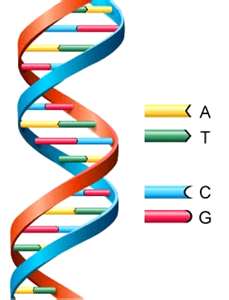
Diagrams: I am a believer in the power of shapes. I heard Len Sweet talk one time about how the two scientists that finally solved the riddle of DNA actually had all the necessary proteins and elements figured out for quite a while … but could not break the code. It wasn’t until they had that now famous shape – the double helix – that they were able to put the puzzle together.
I tell people

“You can have all the right content and be forcing it into the wrong shape.”

My use of the Venn last week to create 5 categories out of 2 would be an example of this. But it comes from a deep conviction that even when given 2 categories, there has to be more to the story – so look for a third. (The book Argument Culture by Deborah Tannen is excellent on this point).

Draw the person’s spectrum and then bend it (as I did here) for them. Take their two options and put it in a matrix (like the Urgent/Important matrix below). Just become convinced that there is too much data for it to be crammed into a pre-made little mold – it just won’t fit. You end up discarding too much data once your little tins are filled.

Vocabulary: When people are too familiar, too entrenched, and too comfortable, you may have to change the terms of the debate in order to unseat the status quo.

In the never ending Calvinist v Arminian debate that Calvinist love, I will teach them that Arminius was a Calvinist, but  just ‘not calvin enough’ and then, in reaction, the Synod of Dort went more calvin than Calvin to come up with T.U.L.I.P. So when Calvinist portray all free-will theologies as Arminian, that is like an American saying that all non-republicans are democrats: its just not true. They are basically just two sides of the same coin … but certainly not representative of the whole array of options. If they want to read an actual Arminian they should check out Roger Olson and his book Against Calvinism. Once you know what a real Arminian looks like, you will stop mistaking everyone who is not Calvinist for one!

Intentional Complexification:  Since dualism is destructive and deceptive, resolve to never let two contradictory-adversarial positions stand as the only options. Search far and wide, at all costs find a third option. Become inquisitive, Become imaginative. Who doesn’t see it this way?

In the abortion debate you must take away the entrenched or given labels that people assume are the only options. Pro-Life is usually just about one stage of life (unborn) and is less concerned about the life of the mother after her child’s birth, the education of the child 5 years after birth, our  country’s foreign policy and being pro-life in an age of perpetual war, and the ever increasing rates of incarceration, death penalty, etc. To be pro-life you also have to be pro-health care, for education, against militarism, anti-death penalty and should probably do something about hand guns and assault rifles ( I’m not talking about your deer rifle Mr. NRA, that is not what is being used to kill people in these shootings).

If you don’t care about the health of the mother, the education of the child, the life of soldiers, and the life of inmates then you are not pro-life: you are just anti-abortion.

When I see the conversation being set up in an us v. them scenario, I will just boycott by saying “until a women has control over her own womb and she can walk away from a pregnancy like the fella can, we can not even have this conversation. It’s impossible.” I just won’t concede the terms and allow the conversation to be set up like that. It is a false binary and it never leads anywhere except ‘both’ sides (as if there is only 2) feeling justified in their own self-virtue.

So those are my 3 suggestions. I would love to hear what things you have found help us get out of the either/or rut and change the parameters conversation!

Melatonin has ruined my blog

I have always called myself a night-owl. I have an odd type of insomnia. I sleep either 3 hours, 6 hours or 9 hours … and here is the fun part … I never know which one it will be!  It makes for an odd collection of half-read books, watching classic movies, theological research,  and of course, blogging.

I go to bed around 10 every night, I just never know how long I will be there.

It has been like this since my early 20s and I have just gotten used to it. I build in variables each night and through out the week, I chip away at my to-do list and blog about the stuff on my mind. After close to 20 years, the erratic nature of my sleep cycles became as much a part of the routine as erratic things can become.

For the past 4 years I have invested lots of late night hours into my various blogs and projects. People always comment that I am prolific, but in reality I just can’t sleep.

Well, about 3 weeks ago something changed. My wife suggested that I try taking melatonin before bed. I am not a big fan of ‘taking stuff’ but this is something that your body produces naturally but can decrease as you age.

So I gave it a try 3 weeks ago and for the past 21 nights have slept through the night getting between 8 and 9 hours of sleep!  The upside is that I feel like a new man. Not only do I feel 5 years younger but my eyes are not fatigued and I don’t have to wear glasses. It’s amazing.

The downside, however, is that I no longer have the time that I formerly spent writing. I get up in the morning, do some reading, head to work, come home for dinner, walk the dog and then either do homework or watch a movie with my wife.

Don’t get me wrong: I feel fantastic. I am happy about the change. All I’m saying is that melatonin has wrecked my blog.

Oh sure, I will still put out 3 posts a week  but it looks like the seasons are changing… unless, of course,  after this semester I can adjust my daily routine. I just wanted to A) say thank-you to everyone who has made this past 4 years an amazing conversation and faith and everyday life  B) I wanted to let you know about the obvious changes around here.

my the grace of God lead us on together – Bo

Economy and Ecology: the future of the past (part 3 of 3)

I left off in part 2 by imagining what might be on the other side of the ‘bridge’ after we get past the two trolls of colonial christianity and environmental dualism. My hope is that there is a different way to be in the world.

I admit that we can’t go back. We can’t undo Colonization. We aren’t going back to family farms. We can’t refreeze the polar ice caps or re-create the Glaciers in Glacier National Park.  As they say ‘we shall not pass this way again’.

My hope is not to reclaim some previous ideal of human community. My desire is to explore a realistic assessment of what is possible (and preferable) given the past developments and as-is structures of existence.

Here are three groups/conversations that give me a little hope:

The Environmental-Philosophical crowd. People like Bill McKibben have been sounding the alarm for quite a while and have since moved to talking about a radically different planet termed “Eaarth” in which we will need to go small and local.

On a larger scale, our whole civilization stands on the edge of collapse because the data inputted into our risk management models come from the last couple of hundred years, a very atypical time. A giddy time, high on oil… Our time, on every front, has been marked by the dizzying Alice-on-her-first-pill explosion in the size of the human enterprise. For almost all of human history, our society was small and nature was large; in a few brief decades that key ratio has reversed. – p. 105

Native Communities: Three years ago I got to take part in two conferences that altered the way I see the world and think about the future. The first was the Theology of the Land conference at George Fox Seminary. The second was a NAIITS gathering at the George Fox undergrad campus. Randy Woodley continues to be a voice of reason and reconciliation in an increasingly complex environment. I am anxiously anticipating the release of his newest book this year that deals with the concept of Shalom and Creation.

Process and Eco-Feminist Theology:
Last month I helped organize an event that brought together the Emergent church and Process theology.  One of the key folks in that conversation is John Cobb, author of Spiritual Bankruptcy. Cobb’s and others in the conversation are deeply involved in both ecology and economy from a theological perspective. I was greatly encouraged to hear about projects from around the country of communities taking seriously the reality we find ourselves in. From small neo-monastic communities to universities to political & civil engagements, there is a growing awareness that something has got to change.

  • The way that we have lived
  • the rate at which we have used resources
  • the expectations for perpetual growth
  • and economic prosperity

have exhausted creation and bankrupted modern human civilization.

This is not a ‘the sky is falling’ mentality. This is a ‘new reality’ perspective that the damage is done and we can not go back or turn back the clock. This just is the way it is now. But if global capitalism, and its mutant offspring – consumerism, continue to go unchecked … let me say it a different way: the church has a message and a historic practice that can engage voices of health and community. Unfortunately, the church herself has been seduced and gone into the business of supply and demand. Those days need to come to an end. It betrays her calling and compromises her message.

The first step is to repent of the Cartesian dualism and the second is to resign from the colonial impulse. After that we can embrace the truth that we are both a product of and a participant in nature and that mutually edifying, inter-connected, trans-national, multi-racial community is our hope for the future.

The expectation of one big global community is ruining us. The future is small, diverse, multiple, and interdependent.

originally posted at Ethnic Space

Bending the Spectrum

I have never been a big fan of ‘spectrum’ thinking. The language of far left and far right  just rings hollow for me. It is insufficient for the most part and in the end, inaccurate.

I read the book The Argument Culture by Deborah Tannen more than a decade ago and said out loud “Oh! So THAT is why I bristle at the either/or, Republican/Democrat, Right/Left dichotomy! – now it makes sense.”

I reject the spectrum at every turn … but recently I have begun to make an exception in regards to the spectrum. The spectrum is only applicable for someone who thinks that there is a spectrum. I will only try to get them to see that not everyone exists on a spectrum nor are they accounted for by a right-left binary. I no longer try to dislodge them of the notion as a whole – I only try to introduce that a spectrum is incomplete and insufficient.

Lately I have been overwhelmed – probably because it is an election year – by binary language and dualistic thinking. In these conversations I have discovered that it can be quite effective to introduce a simple word play. Spectrums are not straight lines – like light, they bend.

You may think that this sounds overly simplistic but just think about the rise of the Tea-Party and the emergence of the Occupy movement coming in roughly the same window of time. Now those two groups would say that they stand for completely different things. To an outside observer, however, for all the minor distinctions they share a ‘Major’ concern: the system is broken and we can’t trust our leaders to fix it.

This week, I am starting a series working though the Death of the Liberal Class by Chris Hedges. He begins the book with a 25 year old former Marine walking along a highway in Upstate NY that I driven. He is disillusioned with the economic and political systems and is getting ready to do something about it. At one point the young vet says:

“I could see there was no difference between the two main political parties. There is a false left/right paradigm which diverts the working class from the real reasons for their hardships.”

I am looking forward to the series in the exact inverse proportion to how much I am dreading this election cycle.* I have lots of Tea Party types in my life and many Occupy sympathizers as friends. I hear them both saying that the system is not working and that those in charge are not capable of fixing it, that we the people need to be more hands on.

Chris Hedges analyzes the crisis and articulates the root causes better than anyone I have found. The slant of the series will revolve around one simple question “IF Hedges is right about the world – how then should we do theology?

The Tea Party, the Occupy Movement, the global economic crisis and the ongoing wars are telling us something … and it is not about the End of Days. Doing theology in this environment will inherently have some continuity with historical approaches but it will require some tools that may not be familiar to us as well as some necessary innovations.

 The left and right think that they are far apart, but in a bent system they are closer than they would believe. At some point on an arc the far right and the far left almost touch.

I end the way Hedges begins, with a quote from George Orwell:

At any given moment there is an orthodoxy, a body of ideas which it is assumed that all right-thinking people will accept without question. It is not exactly forbidden to say this, that or the other, but it is “not done” to say it, just as in mid-Victorian times it was “not done” to mention trousers in the presence of a lady. Anyone who challenges the prevailing orthodoxy finds himself silenced with surprising effectiveness. A genuinely unfashionable opinion is almost never given a fair hearing, either in the popular press or in the highbrow periodicals.  “Freedom of the Press”

* Tavis Smiley has been saying for quite a while that this will be the ugliest and most racist election in modern times.

I also posted this at Homebrewed

Blog at WordPress.com.

Up ↑