Search

Bo Sanders: Public Theology

updating & innovating for today

Category

Church History

Clarifying the Quad

a quick follow up to the post from last week
– both of which were also posted at Homebrewed

 I wanted to thank everyone who gave feedback on the Four Locations of Theology in the 21st century post from earlier this week. I appreciate the comments here, on facebook, and the emails.  It has given me a lot to think about and I wanted to clarify three themes that have emerged.

Three clarifications:

  • Reason seems to be the suspicious quadrant. Every time I bring up quadrilateral, more than half of the conversation will be centered on reason. This week was no exception. Reason draws the most concern – which is funny to me because tradition is the one that I find most suspect.

Here is the thing I would want to clarify: the other 3 themes of Scripture, Tradition and Experience all have reason woven into them. Those who wrote the scriptures, those who established the tradition and even our won experience are all saturated with reason. It is inescapable. The scriptures did not fall from the sky! They passed through the author’s minds and were processed with reason. Same with tradition. The creeds were not divined in some sort of supernatural ceremony. The were constructed and reasoned. Our experiences are interpreted utilizing our filters, frameworks and lenses.

 It seems important then to clarify that those three are not independent of reason but are dynamically intertwined with it. It would be useless to take out reason (as some have suggested) because it interlinked and inescapable.

  •  It may be that the quad needs something else. Some suggested replacing one of the 4 elements with an alternative. My favorite idea came from my friend Raphael who said

 “I suggest we add a fifth source for the practice of theology in the 21st century: Imagination!”

Admittedly, it would no longer be a quad! but I think that the tradeoff is that you would get adventure and zest incorporated and not just a static, conserving, or historical product.

  • There are no guarantees. Even if we could all agree to utilize the quad for the theological endeavor, there is no guarantee that we would all come up with some thing or come out with the same conclusions. This seems to be a major concern – that we can not ensure the outcome of such an endeavor.

I am surprised at the conserving nature of such mentalities! People are ok to ‘go on the journey’ as long as we predictably end up basically where we started.
Think all you want. Explore new thoughts and incorporate science … just don’t stray too far from the foundations of antiquity!  Integrate new realities and account for ongoing historical developments … just make sure that you end up with the same thing we started with.

I have not overstated this hesitancy and resistance. But the reality is that there are no guarantees. You may start out an Evangelical and end up being an Emergent type working in a Mainline church with Process theology as your main conversation partner!  (for instance)

 In summary:

  1. You can’t get rid of reason, it is already present in the other three. Scripture, Tradition and Experience are inextricably laced with it.
  2. The quad may need a little something extra. The 21st century may require some zest, adventure and imagination
  3. There are no guarantees. While we want to honor the historical expression and provide continuity with the trajectory … it might look a little different and think a little different than it did in the 3rd or 17th century.

Thanks for all your feedback, thoughts, and concerns. I appreciate the conversation.
4 Locations for Theology in the 21st Century

originally posted at Homebrewed Christianity

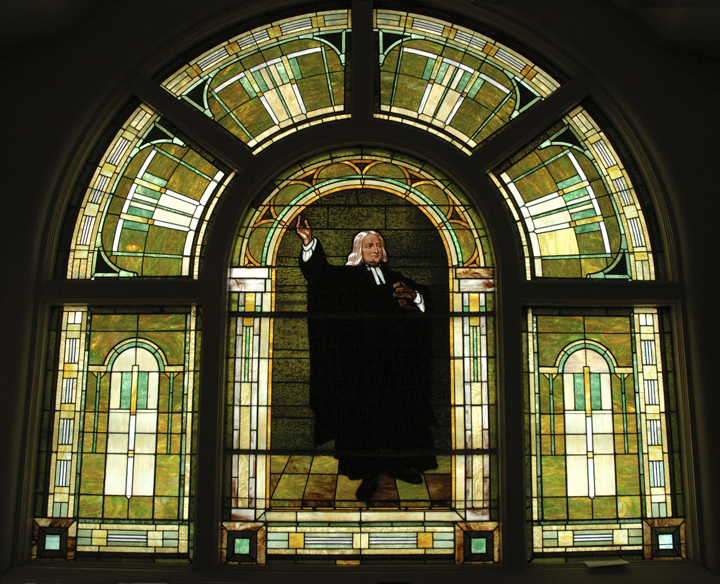
I come from a Methodist tradition that looks to John Wesley as its founder. Wesley utilized a famous quadrilateral to talk about how we do theology.
The four elements were Scripture, Tradition, Reason, and Experience.
I love the quad! I am a proud descendant of Wesley and I still find it quite helpful to utilize the same quad.  Here is why I find each element so valuable.

Scripture: No matter how fancy we want to get with our theology (I am looking at you Tillich) or whatever else we want to do (Griffin), it must account for the scriptural witness . I am not saying that we must always begin with scripture (like neo-Orthodox or Open folks) nor am I saying that we must only do scripture – but any 21st century theology must account for it. The Gutenberg and Missionary eras have reinforced a global importance and influence that must be acknowledged for any theology to carry weight. There is just no sense in having a theology that is not thoroughly scriptural if you want it to count widely.
Tradition: I grew up evangelical and developed a disdain for tradition. It was a bad word to me – like religion. It meant thoughtless, empty ritual done on autopilot in rote repetition. I see things a little differently now. Back then, I actually thought that we were free to do whatever we wanted as long as it was meaningful and effective for accomplishing the goal – which was to bring people into a deeper relationship with the living God. Now, I understand that we are all socially conditioned into elaborate human constructions. These constructs (like language or religion) are part and parcel of both the communal/social order and the religious tradition. Tradition and community must be recognized and honored since all theology is contextual theology.
Reason: I loved quoting Colossians 2:8 when I was an evangelist and someone would ask me a better question than I had an answer to
See to it that no one takes you captive through hollow and deceptive philosophy, which depends on human tradition and the elemental spiritual forces[a] of this world rather than on Christ.
It was the deceptive word play that depended on human thinking that was so dangerous to my Josh McDowell faith. I had evidence that demanded a verdict and you had tricky mental gymnastics and endless questions. I had never heard of Neoplatonism and why did I need to? I had Paul and the Epistle to the Hebrews! … Which is to say that I had never encountered the philosophical underpinnings of the New Testament writers nor of my Protestant declarations of faith.
Experience: I know that part of my fascination comes my charistmatic-evangelical roots. I know that part of it is my American protestant upbringing and that it is reinforced by my personality. But I find it on the pages of the New Testament, and I am simply uninterested a religion that is all in the head and not in the heart. I want a full body religious experience. Nice words are fine (and OH how I love nice words) but we have to walk the walk (as they say) and not just talk the talk. Theology must be validated by the community’s experience.  

I always attempt to frame things in the positive. In this case, I will also attempt to reinforce the need for all four by allowing myself to state them in the negative as well.
 Scripture: I am not interested in a Christianity that does not engage scripture or does not seek to be faithful to those initial witnesses.  We can update, renovate, adapt, evolve and reinterpret … but we must always interact with scripture. It is  scripture that we update and reinterpret.
Tradition: Let me say first that I  loath tradition for tradition’s sake. It makes be somewhere between vomitous and irate – which is not pretty. But in our global context you can’t just ‘do theology’ as if it were in a vacuum or you were starting from scratch. We are not starting with a blank slate!  I did not write the Bible, I am not the first to read the Bible – it was handed to me, was given to me and it is that ‘givenness’ that must be absorbed.
 Reason: who wants a faith the un-reasonable? Not me.  Plenty of other people do. In fact, this is really in vogue right now. Lots of conservative folks are retreating into their orthodoxy silo and playing their own isolated word games. That is a theological dead-end for the faith. It is a desperate remnant of Christendom monopoly and wholly counter to the very impetuous of the gospel they so proudly claim to defend.
 Experience: I am as uninterested in a theology that is not experienced as I am in a faith that is unreasonable.

I have been reading a lot of theology lately in preparation for the 2012 Emergent Theological Conversation. Much of it has been philosophical 20th century theology, some of it has been early century and reformation era. At the end of the day, I keep coming back to the Wesleyan quadrilateral as a framework that works for the inter-active, cross-cultural, multi-voiced engagement of the 21st century.

White, Extremely Male and Incredibly Homophobic

I originally posted this at Homebrewed Christianity but wanted to move it over here to keep the conversation going.

The news is wild these days! Its almost as if there is a cultural shift underway!
Let me just highlight 4 news stories from the past weeks:

1) The Pope: Gay marriage threatens humanity’s future

2) Pastor Joel Osteen to Oprah: Homosexuality Is Sin — But Gay People Will Get Into Heaven

3) Rick Santorum: A Straight Dad In Prison Is Better Than Two Gay Dads Who Aren’t

4) Pastor Mark Driscoll’s book on Marriage hits the shelves

It is interesting that all four of these stories have come to my attention within a week. What most people will focus on is whether there is a Bible verse to back up what they are saying or not.

What needs to be stated before we get there is two-fold:

  • All four are white males. Somebody may ask “are you implying that their gender or race somehow diminishes their right to speak with authority?” and I would answer “No – I just think that it is worth pointing it out in case later we wanted to examine how people come to power and in what ways authority is constructed, bestowed, or recognized.”
  • When you have the leader of all the world’s catholics, a guy who is renowned for not speaking up about anything or coming down on anyone, a presidential candidate, and one of the most influential evangelical pastors in America saying the same thing… one of a couple of things has to cross your mind.

Either:
a) they are all sticking up for the truth or
b) they are all sticking up for an antiquated perspective of the past

The reason that this issue has grabbed my attention is that many are calling it “The Last Taboo”.  Continue reading “White, Extremely Male and Incredibly Homophobic”

trying to making sense of the miraculous

This is a re-post from a blog that I did at Homebrewed Christianity. I wanted to display here in preparation for a series of upcoming posts.  [ I have started putting posts with big words over there and more everyday stuff over here – it seems to be working]  Thank you all for your great feedback and thoughts!

In his book Process Theology: a basic introduction , C. Robert Mesle says:

“the miracle of birth” is a wise phrase, pointing us toward a healthy theology of miracles. Birth is not supernatural. It involves no intervention violating natural processes. We know a tremendous amount about reproduction and may one day be able to create life in laboratories. Yet for all that, we still feel, and speak of, the miracle of birth…
Miracles become problems when we think of them as demonstrating divine power to intervene in the world however God wishes. The problems are not merely scientific, but also theological and moral. Nothing challenges the goodness of God or the justice of the universe more than the stark randomness of such alleged “miracles”.

That is an interesting way to think about the subject, but I want to make an important distinction between supernatural and miraculous.  The Miraculous can be seen several ways – as something that surprises us, outside our expectations; as something that is amazing; like the miracle of birth, something that is statistically improbable , like landing a Airplane on the Hudson River; or religiously as something that only divine help could account for.

There are several reasons why I think that this topic is SO important:
I can not tell you how often someone says something about how God directed them to take a specific road or a route that avoided an accident.

  • Did god tell everyone and they just were not listening?
  • Did god only tell those whom love god?
  • Does god monitor all traffic patters and why would god be so concerned with getting you  home on time but so unconcerned with children being abused and people going hungry?

People often get defensive and say “In a worship service I saw/experienced  _____. Are you trying to tell me that did not happen?”  No. I absolutely believe you that it happened. What I am saying is that maybe the explanation provided in the worship service was not the whole story of why the phenomenon happened (people being slain in the spirit, etc).
I want to be clear about something: I believe in prophetic words. I have told people things that I could not have known in my own power – including twice that I have described pictures that hang in their homes, homes that I had never been to.
I absolutely believe that the Lord could ‘lead’ you to call someone who needs a call ‘at that exact moment”.

So keep that in mind when I say that we need to revisit our frameworks around the miraculous and we definitely need to abandon the whole ‘super’ natural worldview. It does not hold together under even the slightest examination in the 21st century. Continue reading “trying to making sense of the miraculous”

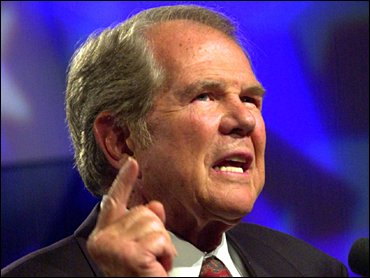
Pat Robertson makes me a better believer …

God told Pat Robertson who the next President of the United States will be.
You can watch it at Slate or read about in million other places.

Here is the thing: as much as people may want to make fun of the guy for being delusional I have to think that there may be something to be said for him.

If anyone follows my blogs either here or at Homebrewed Christianity then you know that I am a big proponent updating the faith. In fact, truth be told, I have written about it more than any other subject over the last 4 years.

I am especially interested in 3 updating things:

  • The way we read the Bible (hermeneutics)
  • The way we conceptualize the universe (cosmology)
  • The way we talk about miracles (metaphysics)

I have even gone so far lately as to publicly articulate why the miraculous is not super-natural and to research church history about eschatology (the end)… I have even shown concern about the evangelical icon Tebow [here].  All of that is to  say that I am not dabbling in this or being halfhearted… nor I am doing what so many that I know are and simply walking away from a faith that is not intellectually credible, scientifically accountable, or personally tenable. Continue reading “Pat Robertson makes me a better believer …”

No One is 1st Century these days

I have been having a great conversation with a good friend of mine named JD. I wanted put part of it up here in the hopes that others will be able to jump in.

Me: I keep saying: I have no interest in discounting or explaining away my Christian experience – but neither am I willing to be bound to the antiquated ways that it was talked about in the 1st centuries.
JD: Understood! But does that mean you also discount people that do follow the 1st century Christianity? Is there not a place for everyone to understand and follow God in his/her own way
Me: Good clarification! I certainly do want to be open – engage – interact with – and learn from people of all traditions, denominations, and sects.
The one thing that I am most concerned about is people who think that they have a 1st century perspective but … who have not accounted for the radical developments that have impacted their faith! I will give you three examples:
1) Individualism. 1st century folks would not have even thought in our terms. They were connected in community and family systems/structures that defined them. When they said “I” they did not mean what we mean when we say “I”.
2) Literacy: since the Gutenberg press we each have a Bible in our own hands. The Bible was never meant to be studied alone. It was a communal activity where is was primarily read out loud.
3) Science: our understanding of everything from the Universe to the human body (not to mention Facebook and the Internet) has profoundly changed the way that think about the world, interact with each others and interact with God. This can not be underestimated. Continue reading “No One is 1st Century these days”

Clowns to the left of me Jokers to the right

The old Stealers Wheels song says “clowns to the left of me – jokers to the right” , when I do watch the news I find myself humming “wingnuts to the left of me – nut jobs to the right” here I am stuck in the middle with you. Of course, it’s not that simple – nothing is. 

Over a decade ago I read an amazing book called The Argument Culture by Deborah Tannen that forever changed the way I was able to see and participate in the toxic, adversarial, binary system that had evolved. It haunts me as I watch the political environment and media circus unfold in front of me.

The other day I stumbled across another good reminder from the past. Alasdair MacIntyre was credited with saying

all contemporary debates are really between conservative liberals, liberal liberals, and radical liberals.

I found this in a Dictionary of Theology, where the author added “Thus there is little room for the criticism of the system itself.” In a post the other day I said that “in the end the structure is nearly unchanged. The system is never in danger. The machine doesn’t even slow down. The Powers are never in jeopardy. It eats new ideas with barely a burp – let alone beginning to buckle.”

Stated simply: there is a real danger is assuming our inherited  structures. When we presume the giveness of our constructed systems we are inflicted with a blindness that is more than debilitating to dialogue – it is corrosive to the very intent and virtue of our stated ideals. When the system is assumed:

  1. we begin to major on the minors.
  2. we create blind-spots that leave us vulnerable to critique.

The result then is that we either take on a defensive posture, turn aggressive, or become paralyzed and withdrawal all together. It is the social equivalent of  the “Fight-Flight-or Fright” reflex .

When we don’t examine our inherited assumption or unwilling to engage our constructed social conditioned-ness, we open the door to something quite hazardous to the Gospel message. Beyond compromise and conflict as either/or options is a real cancerous effect on community.

Our political views and denominational persuasions are not the all or nothing ‘far right vs. far left’ spectrum with a huge gap in the middle that has been presented to us. They are kinds within the same system. They are not different in kind – they are only different in degree. And when we realize this, we are afforded the possibility to step back from the arena and gain some perspective on the structure as a whole. That is is the only way that system itself will ever be critiqued – the only ways that the Powers the Be will ever get challenged. Continue reading “Clowns to the left of me Jokers to the right”

Here and Now

I am a big fan of being present. That is especially true in the spirituality of presence. It is also one of the great dangers of our modern technology. It allows us to be somewhere else, neglecting those we are sitting with,  and to be focused on some other time (either future plans or past memories). This has always been a danger. Now, day dreaming or living in regret are one thing but technology enables us and can even encourage us to be some other place or at some other time.

There is a beauty to being here now.

This tendency, if unchecked, can accentuate a mentality in some christians to long for the 1st Century in an idealized form of ‘the early church’ or the ‘church of Acts’.  I have talked often about the error of making the early church singular by quoting books like “The Churches the Apostles Left Behind” , “The Emergence of the Church” and “Unity and Diversity in the New Testament“. The is no ‘Early Church” in that homogenized sense. It was never a singular expression. There was always diversity and variation. I actually think that God likes it that way and wants it to be that way. But that is a different conversation.

My main focus here the is the temptation to long for the 1st century as Bible readers. We should be careful what we wish for. We might not be getting what we think we are asking for. In fact, not only is it impossible … even if it were possible, I’m not sure how accurately our romanticized version would measure up to the real deal.

Two things have prodded me in this area recently. The first is a quote that a freind sent me from Alfred North Whitehead

Whereas you can make a replica of an ancient statue, there is no possible replica of an ancient state of mind.

The second prompt came from a recent comment on this blog. It comes from Jason Stewart:

When I get in these sorts of conversations, I find it very helpful to stress that it is IMPOSSIBLE, not simply difficult, to read the scriptures in the same way the original audience would have. Many times I have made this very point, only to find out later in the conversation that the other person thinks I really mean something more to the effect of: “We should be really careful to make sure we’re reading the text in the same way the first audiences would have”.

Not being a premodern man and lacking premodern man experiences, language, culture, and expectations, makes my reading of the text very very different from his from the outset.

These two thoughts have been rattling around and haunting me. On this weekend where we remember that attack of September 11, I am very aware that in so many ways the 21st century is not like the world that we have known. It is not entirely unlike the world we have known but neither is it entirely similar. I want to be awake to the realities that we find ourselves in now. I think that the first step to that may be coming to terms with the fact that A) We can’t go back even if we wanted to. B) the past was never singular and homogenous. There was always diversity and complexity.

We are here now. I thank God that I have the opportunity to be here and to be here now. There is no other place I would rather be.

The Nine Nations of Evangelicalism

One of my all time favorite books is The Nine Nations of North America by Joel Garreau (published in 1981). [summary article here]
His theory was that by any measure of culture, there were at least nine of them in North America. As someone in the newspaper industry in the 70s and 80s, he was commenting on how things worked and what priority is evident where.


The three most important ideas for our conversation are these.

– The Nine Nations are broken down as  New England (including the Maritime provinces), Quebec, the Foundry (the rust belt), Dixie (the Southwest), the Island (centered in Miami), The Breadbasket, The Empty Quarter (around the Rockies), Mex-America (in the southwest) and Ecotopia (on the Pacific coast).

– The borders dividing the United States, Canada, and Mexico nearly disappear when one re-examines according to  values, money, lifestyle and other factors. A person in Calgary, Alberta has far more in common with someone in Denver, Colorado than she does someone in Ottawa, Ontario.

– There is no such thing as the Midwest. It doesn’t exist. Chicago is the western boundary of the Rust Belt (the Foundry) and west of it is the Breadbasket. Chicago is a border-town and not a Capitol. The concept of the midwest has no actual base in reality. The cornfields of Ohio and the wheat-fields of Kansas are part of two different systems.

Earlier  this week I blogged about the definition of Evangelical. I think that we are in danger of the label ‘evangelical’ being as undefinable as the ‘midwest’ is geographically. We need to re-conceptualize how the landscape really looks and develop a better map that  reflects how things actually function.

In this diverse group called ‘Evangelical’ we have a large and varied collection of groups that may qualify: Conservative, Fundamentalist, Holiness offshoots , Charismatic, Pentecostal, Anabaptist traditions , Congregationalist, Free Church folks, progressive protestants who attend Mainline churches , and potentially some Neo-Reformed perspectives, etc.

I suggested starting with Bebbington’s definition (4 emphasis).
My Hope: is to updated these 4 a bit with a more progressive emphasis – or more a generous perspective.

New Life – expectation of transformed self and community
Bible – I follow N.T. Wright’s ‘ongoing play’ narrative analogy here [How can the Bible be Authoritative]
Activism – faith in Christ should be emboddied and proclaimed to impact /transform culture
Cross Centered – the incarnation and resurrection of Jesus is central to the Christian message.

My Fear: is that they will be replaced by four other issues that will become the new litmus test for this unspoken imagined orthodoxy.

  • Biblical Literalism / Inerrancy
  •  Substitutionary Atonement Theory
  • Anti-abortion stance
  • Anti-homosexuality

If the latter set of four prevail then I am afraid that evangelicalism will become as unclear and unhelpful as the Midwest is in geography. It would become a generic area absent of any real coherence that fails to provide any continuity and thus lacks any real constituents. It would become a citizenship not worth having and which provides no tangible benefit for its citizens.

I look to Mark Noll and Stanley Grenz as examples of the historical and theological richness of the Evangelical tradition. If it becomes merely political, then perhaps the title deserves to fade into irrelevance and to be abandoned. I pray that is not the case.

Blog at WordPress.com.

Up ↑