Search

Bo Sanders: Public Theology

updating & innovating for today

Category

Culture

No Such Thing As Neutral Anymore

This is part 3 in Why Things Seem So Bad Right Now. [Read part 1 and part 2 here]

One obvious effect of our communities living in closer proximity and having more access to a greater number of cultures and subcultures – even if that is only only on social media -is that you can not assume anything anymore.

One big change in our culture in the past 70 years is the loss of an homogeneous majority and thus an assumed ‘normal’. When you had a homogeneous majority, there were certain expectations and assumptions that one could make. Anything different was suspected as a deviation at worst or a variation at best.

You can no longer assumed that there is a ‘normal’. This can be disorienting to those who were formerly at the ‘center’ and enjoyed the privilege of not exerting energy on navigating issues of difference.

You can no longer assume that we are all beginning with the same frameworks or that we are all working toward the same ends. This must be negotiated and mediated. It can no longer be taken for granted as a neutral starting point.

There Is No Neutral Anymore.


I have written before about how important it is to realize that truth does not materialize out of thin air – what we call truth is constructed socially (or communally if you prefer).

Even if there was such a thing as ‘universal truth’,  our human access to that truth is:

  • partial,
  • provisional,
  • and perspectival

These confessions come with some pretty profound implications.

Meaning, then, is correspondingly understood to be:

Mediated

Located

Contested

Meaning is mediated because our understanding comes to us through inherited language, cultural behaviors, social expectations, and mental frameworks (paradigms).

Meaning is located because the same event or data may look very different or be interpreted differently be a different person in another place or time.

Meaning is contested because in a partial/perspectival understanding, no one interpretation gets a free ride or an automatic pass. Everything is up for review.


In the past, some have thought that meaning is obvious (not mediated), that it was accross-the-board the same for everyone (not located), and that the only negotiation required was at what level you wanted to conform to the truth.

This realization that meaning is contested and must be negotiated communally (or socially) can lead to disorientation and even result in agitation. However, once it is embraced, it can actually be comforting as ones expectations come into alignment with the world as it really is. Homogeneous majority is a mental fiction that had problems all along but never as pronounced as they are now.


There is no neutral (or exempt) position anymore. One does not simply get to sit back and poo-poo other’s perspective without providing an alternative. It is not sufficient to take shots at or poke holes in opinions that you disagree with. We live in the age of the cynic but it is unsatisfying personally and unhelpful to the common good.

Because our culture is so fractured … one has to make the claim or justify one’s position in the arena of ideas or the court of public discourse. Nothing gets off scot-free, no idea gets a free ride, and no position is exempt from examination.

There is no neutral anymore.

This is true in issues of economy, politics, military, ecology, morals, religion, civility, marriage, gender, sexuality, occupations and trades are just a few examples of categories that display this loss of fixed and stable assumptions.

The sooner we embrace this new way to conceptualize our participation in culture and society, the better we will be at developing new tools for navigating and practices for flourishing together.


Fragmented and Fractured

Yesterday was part 1 of ‘Why Things Seem So Bad’. Today in part 2 of 4, I would like to focus on how the fabric of our society is under stress and is pulling apart. Let me state this succinctly up front and then expand on it more.

We live in a time that seems very fractured and fragmented. The non-stop news cycle and social media only seem to inflame things. There are 4 ingredients to pay attention to in this analysis:

  • Cultural chaos
  • Communities in close proximity
  • Conflicting narratives
  • Remnants of previous era (past ideas without their historic setting)

In 1981 Alasdair MacIntyre published a book After Virtue that was so monumental that it is referenced (positively or negatively) by nearly everyone working on such issues. The book illustrates the futility of such debates but outlining the problem on three levels:

  1. First is that we have no “rational way of weighing the claims of one (argument) against another”.[1]
  2. Second, the arguments “purport to be impersonal rational arguments” that complicate “moral excellence and argument”.
  3. Third, each disagreement has its own historical situation and “cannot be resolved, because no moral disagreements of that kind in any age, past, present, or future, can be resolved.”

This triangle limits the possibility that we have any arena in which to address moral discrepancies in our culture. As MacIntyre has pointed out earlier:

“What we posses … are the fragments of a conceptual scheme, parts that now lack those contexts from which their significance derived. We possess indeed simulacra of morality; we continue to use many of the key expressions. But we have – very largely, if not entirely – lost our comprehension, both theoretical and practical, of morality.”[2]

A community’s character is formed by their “enacted narratives”[3] that allow the self to be formed and ones identity to emerge within the continuity (or discontinuity) of the self that is provided by a greater environment. This happens within an embedded or situated environment in which a narrative may be lived out. Our environment is so fragmented and fractured that it is producing a different and disjointed result than previous eras.

In chapter 9 of After Virtue, MacIntyre goes after the relatively unintelligible vocabulary in our modern situation that is nothing more than a series of remnants and fractured remainders from past systems and moral frameworks.

“A key part of my thesis has been that modern moral utterance and practice can only be understood as a series of fragmented survivals from an older past and that the insoluble problems which they have generated for modern moral theorists will remain insoluble until this is well understood.”[4]

Traditions are inherited and do not come to us in a vacuum but contain an element of their given nature. Antiquated notions cannot simply be reclaimed and integrated without a serious examination of the structures from which they arise and the cultures that gave birth to them if we do not desire to reinstall, reinforce, and re-instantiate the forms that gave rise to them. While the desire to return to some familiar pursuit of character formation may be comforting in a fragmented present chaotic era, serious critique is needed to question both the telos of desired outcomes and the source of projects adopted or reclaimed.[5]

In his prologue to the 3rd edition of After Virtue, written on the 25th anniversary of publication, MacIntyre (sounding like Dewey) says that it is within “acts of imagination and questioning”[6] that members or a group would be able to navigate the difficulties of a situation or decision where there is disagreement with another group.

Since there are no “neutral standards” available by which to judge the adequacies of any claim to truth, a rational agent may be able to determine a course of action and bring about a resolution where there is no clear standard by which to evaluate the superiority of one tradition over another.

Navigating in this arena is a dangerous enterprise. An awareness of our cultural chaos is vital. Hauerwas points out that we live in a ‘precarious’ moment:

“Life in a world of moral fragments is always on the edge of violence, since there are no means to ensure that moral arguments in itself cans resolve our moral conflicts.”[7]

He goes on to say that it is little wonder we “hunger for absolutes in such a world” [8] that robs us of sense of self or security that we have. The individual as a rational agent, the unencumbered self, and free actor are all illusions outside of a radically situated history and story of formation and participation.

He goes on to say  “our problem is that we live amid fragments of past moralities each, with good reason. Competing for our loyalty.” [9] We are, however, not simply post-modern islanders participating in and existing within an isolated inheritance. We are more like floating communities tied together by threads from our respective pasts and under constant exposure to new investigations by foreign expeditions.

Our era of inter-national, multi-cultural global connectivity has resulted in a multiplicity where no tradition or community exists in the kind of isolation that allows for stability and continuity. It is within this context that our formation of virtuous agents must conceive of frameworks and incubate embodied practices.  That is no easy task.

Tomorrow we will address one implication of today’s post: that there is no ‘neutral’ position that can be assumed anymore.

[1] Alasdair C. MacIntyre, After Virtue: a Study in Moral Theory (University of Notre Dame Press, 2007), 8.

[2] Ibid., 2.

[3] MacIntyre, After Virtue, 202.

[4] MacIntyre, After Virtue, 105.

[5] I would argue that the nature of Christianity is incarnational – so the past is not the sole determining factor for our present or future expression.

[6] MacIntyre, “After Virtue,” xiii.

[7] Stanley Hauerwas, The Peaceable Kingdom: A Primer in Christian Ethics (SCM Press, 2003), 5.

[8] Ibid., 6.

[9] Hauerwas, The Peaceable Kingdom, 4.

Why Things Seem So Bad (part 1)

This week I want to offer a 4-part series that addresses some issues behind the current state of affairs.

People are concerned about what they see happening right now. There are geographic divisions that seem increasingly pronounced. There are generational, political, and racial division that are inflamed at troubling levels. The news cycle, social media, and institutional corruption (banks, schools, churches, government, hospitals, Hollywood, Washington, etc.) provide a constant string of crisis and controversy.

Things seem to have escalated quite a bit in the past couple of years. Some people will say ‘every generation thinks things are chaotic and out of control’ and there is some evidence of that. However, we live in a unique era when there are the some distinct factors causing an intensification that is notable.

Change is a constant, we know that. Change at this rate, is not. We live in a time of exponential (not just incremental) change. It is no wonder that this environment breeds so much conflict and chaos.

One of the things that I would like to explore is the way that following 3 factors come together in a troubling way:

  • Consumerism
  • Globalization
  • Pluralism

The connection between those three might not seem clear initially, but it is the way that they come together in the 21st century that is relevant for our conversation.

Consumerism is so assumed that it often goes unnamed. It is as if we are on automatic pilot. Buying things has become second nature. I know people who claim to be Christians who can go a whole day (or days) without praying but can’t go a day without making a purchase. Capitalism is the real religion of the West. [1]

Consumerism makes us individuals – or is it that individualism makes us consumers? … either way, we have exposed the root of the problem. Speaking a language, participating in an economy, procreating and raising the next generation, and nearly every other human activity is a communal enterprise that requires cooperation and mutuality. Individualism is a mental fiction we have been sold that fails us at nearly every turn.

Globalization has brought our communities into closer proximity than ever before. We have never had this much access to or contact with one-an-other. It almost doesn’t matter where you live anymore, you have access to goods from all over the world. In fact, you do business with, go to school with, and stand in line with people from all over the world. You may all have different religions, worldviews, or notions of community and belonging. We live in age of radical connection and proximity …. but maybe not overlap. And therein lies the problem for our concern this week.

Pluralism is then a relevant factor that completes our trio. As individuals whose communities are in great proximity to each other, we have to develop an approach to one-an-other.[2] Some of us feel like we have does this well. Which is why it is so baffling why it cause some of our fellow citizens so much agitation and even anger. ‘Difference doesn’t need to lead to division’ we say, and if attitude or acceptance was the only issue we might be right. The problem is that the first two ingredients to trio are the wood and gasoline that make our current environment so flammable. Attitude (or our approach) is just the spark that makes that situation combustible.

Here is the most important thing to understanding our current culture:

Our society is a set of fragments – leftover remainders – of previous expression that may not be compatible with other or newer expressions.

Again – our society is a set of fragments, leftover remainders, of previous expressions that may not be compatible with other or newer expressions. More on this tomorrow. The examples of this phenomenon are endless once you know what you are looking at. Think about religion, Christian denominations, theories of educations, economics, politics, nationality and race, pre-1975 military, for-profit prisons, policing strategies, parenting styles, marriage equality, even grammar and texting language.

Here is a picture that I want to utilize for this 4-part series. It is a piece by my neighbor Jeff and it really speaks to me.

IMG_7259

Our circles (communities) have diversity and differentiation within them. Those circles are in close proximity to each other and are even connected … but without overlapping. They are not integrated. They do not bleed into each other. They are distinct from one-an-other.

What makes this proximity profound is that the newer circles are smaller and bolder but are foregrounded on other circles that are faded but still present. Those larger circles are older and not as pronounced but influential. They haunt the work. They are ghosts and shadows to the primary feature. They are echoes of the past who still exert their voice. Their influence has faded but their effect still remains. The current configuration and focus wouldn’t make sense without them.

Tomorrow we talk about the nature of these remaining fragments and how people who think about such things differ on the subject.

_____________________________

[1] There are so many great  books on this, including For The Common Good by Daly and Cobb and What Money Can’t Buy by Sandel. I would also recommend the non-academic book The Suburban Christian by Hsu.

[2] I find this way of writing it helpful. It may seem clumsy at first but it will bear fruit later in the series.

When Technology Meets Theology The Church Changes

The church is always changing.

It adjusts and adapts to cultural shifts and needs.

Change is often initiated when new technology meets evolving theology.

I talked about it in Why Do Church This Way? [link] or listen to the podcast audio

There are two interesting notes about these changes:

1) When new developments arise, the previous form does not go away, it continues on but without its former prominence or influence.

Phyllis Tickle points out in The Great Emergence that 500 years ago when the Protestant Reformation happened, the Catholic Church did not cease to exist. It had a counter-reformation and made some changes.

500 years earlier the same happened with Great Schism between the Roman West and the Eastern Orthodox. Both of which survived … just in modified forms.

500 years early in the period of Councils and Creeds saw similar issues of division and adaption.

500 years earlier (in the fallout of the the Axial Age) figures like Jesus had profound effects, and some divisions, with the existing religious order of their day.

We are 500 years after the Protestant Reformation we look to be going through something similar.

2) There is always an authority issue involved in change. 

Like a song, most people focus on the lyrics and the melody – for our analogy that is the theology and the technology. The driving force is the baseline – this is the role of authority.

Authority was central in every change listed above:

  • Axial Age
  • Jesus and early churches
  • Councils and Creeds
  • Great Schism
  • Protestant Reformation
  • Denominational decline (now)

I like to talk about collaboration, contribution, and conversation as locations of authority. I have a very de-cenereted  and democratized ideal of the church in the 21st century.

I have to keep reminding people that this is not a “free-for-all” anything-goes anarchy. It is simply the church hosting a space and but not providing all of the content.

The current change is about control. We are no longer in control. That doesn’t mean that things are out-of-control!!   It means that control was always an illusion at some level and required coercion and violence to maintain the illusion.

Opening up the microphone means that we are not in control of everything that is said. The desire for control keeps us from welcoming our congregation’s insights, experience, and perspectives as locations for God’s revelation and our theological reflection.

Admittedly, we are in the earliest days of the transition .. but here is the harsh reality:

People are voting with their feet and the ‘nones’ and ‘dones’ are the fastest growing religious affiliation in N. America. People are going to grow increasingly unsatisfied with being spectators at religious spectacles where their contribution doesn’t count and their experience and perspective are not valued.

Listen to the podcast and let me know what you think.

Being A Different Way In The World

What does it mean to be an Easter people?
In what way are we aliens and strangers (1 Peter 2:11)?
Is it possible to opt out of the current ‘Argument Culture’?

You can say “a different way to be in the world” … and that first step is a change in your personal orientation.

The next step is then to talk about being “a different way in the world”, which is a communal commitment and expression.

The emphasis of the first is the “be”.  A different way to be in the world asks us to consider how we approach the world, how we position ourselves, our posture toward the world, and our participation with the world.

  • How we approach the world
  • How we position ourselves in relation to the world
  • How we are postured toward the world
  • How we participate with the world

The emphasis of the second approach is the “way”.  This imagery rings familiar for Christians because Jesus proclaimed that “I am the way, the truth, and the life”. Following the teaching of Jesus is not just a different way to be in the world (though it certainly is), but the church is to be a different way in the world.

  • Forgiveness and reconciliation where there is division and animosity
  • Connection and community are prioritized
  • Peace and ‘shalom’ wholeness are desired
  • Unplugging from partisan politics and consumerism

Sadly, throughout history, the church has often followed the world’s way. It has utilized power, violence, personal gain, and many other worldly-ways to accomplish its work. People have used God’s name to get their way – but they have not always done it in God’s way.

The gospel is not just a different way of being in the world. It calls us to be a different way in the world.

If you don’t like the way that the world works, if you don’t want to be that way toward your neighbor, the stranger, and even your ‘enemy’, Christ offers you another way of being in the world. Then, when a number of us do this together, it provides a chance for others to find a different way – a path that leads to a different place.

Not understanding this has led to ‘the church’ participating in partisan politics. Christians have become a part of the problem and are actually making the situation worse. This happens in Liberal circles, in Conservative camps, and with folks who have opted out of the process altogether because they are disillusioned and don’t want to vote for ‘the lesser of two evils’.[1]

Aligning with the Republicans and the Democrats is failing us. Fox News and MSNBC (or NPR) are not the problem nor are they the solution. To paraphrase the Apostle Paul “neither voting or not voting brings in the kin-dom of God” but right-living, peace and joy in God’s Spirit.  (Romans 14:17) [2]

Cable news and social media are not the way. In fact, this is part of how we have been seduced by the ideologies of our day. Conservatives who want to legislate morality and Liberals who look to identity politics as an end in itself are practicing the way of the world. You can’t legislate morality and identity politics are great for liberal politics but not for sacred community.[3]

Jesus calls us to a different way of being in the world that does not use our race, gender, class, and sexuality as boundary markers. It includes and transcends the categories of identity and belonging (Galatians 3:28).

Likewise, the way is not found in military strength. It is not satisfied by consumerism or credit card debt. It is not found in reclaiming some idealized past or in returning to some romanticized notion from a previous era. It is not about becoming more orthodox in our beliefs or extravagant in our worship and sacrifice.

Once we discover a different way of being in the word (first step) and then collaborate with others to be a different way in the world (second step) then we may choose to partner with or support those elements of political parties that help bring about the greater good. These are the first two steps on a very long journey.

To be clear: I am not an idealist but I am a true believer. I am not after utopia. There is no pure or perfect to be had. Just writing this in English (or any language) is inherently compromised and corrupted. We have been formed and informed by the very words and ideas that we have been given. We are groomed and conditioned from birth in the way of the world.

Christ’s way will never be popular. It will always be a minority movement. It started that way and is perfectly suited to be that way. It does, however, provide a different way for an individual to be in the world and collectively we provide the world a different way than its round-and-round, dog-eat-dog, us versus them, march toward destruction.

Admittedly, I am being foolish here. I believe that there is a different way that isn’t measured in dollars, or troops, or ‘likes’, or members, or votes, or converts, or doctrinal purity, or visibility, or sales, or laws, or nearly anything that can be measured or quantified.[4]

The current way of being the world is being exposed as a rotten tree. We can smell its sour fruit. Its roots in division and deceit are coming to the surface. It can barely stand under the weight of its own burden. It provides no future or hope that the way forward will be satisfying or liberating.

Our hope is to follow the way of Christ, to live in the truth of God’s love, and to live life in the Spirit. If we did this, together, we would open up possibilities that are not even visible to us yet.


[1] If you are going to vote, I would certainly encourage you to vote for less evil. If nothing else we could use less evil.

[2] “for the kingdom of God is not eating and drinking, but righteousness and peace and joy in the Holy Spirit.” (NASV)

[3] Identity politics is great for politics. Of course someone’s politics should be informed by their social identity and location! What else would it be informed by – ideology?

[4] If you are looking for specifics, step one might focus on passages like the fruit of the spirit in Galatians 5:22-23 and step 2 might begin to look at passages like 2 Corinthians 5:19 in which God reconciled with the whole world through Christ and then gave Christ’s people the ministry of reconciliation. The first step is often personal and the second is always collective.

3 Questions about ‘Change’

Can you help me as I get ready for Sunday?

This will be my 3rd service at Vermont Hills UMC – but it is the first gathering that will be built around conversation. The first week was a holiday weekend so I just introduced myself casually. Last week was a big communion week. This week we are moving the communion table and replacing it with a coffee table.

Would be willing answer 3 questions for me as I prepare to facilitate that conversation:

  1. What is the biggest change that you have seen in society during your lifetime?
  2. What has changed the most for you in the past 20 years?
  3. What is one change that you would undo if you could?


My three answers would be something like:
1. The role of religion in public life.
2. Discovering Second Naïveté mid-preaching career.
3. TV in the living room and iPhones at the breakfast table.

I would love to hear your 3 answers.

There Is No Neutral Anymore

Perhaps the most important theme that has developed for me in 2017 is the ongoing realization that there is no neutral position. This has been with me conceptually for the past decade but the seminary classroom has made it less abstract.

One of the great challenge and great opportunities of the multi-denominational seminary is that students come in with layers of experiences, perspectives, loyalties, and insights. They do not come in as clean slates or blank canvases. We never start from scratch (thank God).

Training for ministry does not happen in a vacuum. It happens some where and some when. That is why yesterday I wrote that truth is not dead, it just needs to be understood as situated.

This is a big revelation and a potential stumbling block for some! Truth and meaning do not materialize out of thin air – they are constructed socially. The realization that our access to truth is partial, provisional, and perspectival comes with some profound implications.

Meaning, then, is correspondingly understood to be:

  1. Mediated
  2. Located
  3. Contested

Meaning is mediated because our understanding comes to us through inherited language, social constructs, and mental frameworks (paradigms).

Meaning is located because the same event or data may look very different or be interpreted differently by a different person in another place or time.

Meaning is contested because in a partial/perspectival understanding, no one interpretation gets a free ride or an automatic pass. Everything is up for review.


This realization can have a disrupting effect and can lead to disorientation. However, once it is embraced, there is a comforting peace that can settle in as knowledge of the world and claims within faith correspond more accurately to history and to the world as it really is.

Perhaps the two most significant implications are for the person who has been sold an ideology and for the perennial skeptic. Those two positions are tough to maintain in this new reality. There is no neutral (or exempt) position anymore. One does not simply get to sit back and poo-poo other’s perspective without providing an alternative. It is not sufficient to take shots at or poke holes in opinions that you disagree with.

Because our culture, and our understanding of truth, is so fractured … one has to make the claim or justify ones position in the arena of ideas or the court of public discourse. Nothing gets off scot-free, no idea gets a free ride, and no position is exempt from examination.

There is no neutral anymore. Inactivity reinforces the status quo and is, by default, taking a position.*

Two quick examples: theology and hair.

Whether the topic is women in ministry or speaking in tongues, it is not sufficient for the cynic to encounter a new perspective and simply say “I don’t know about that”. 20 or 40 years ago that may have worked, but it works no longer. If a young man wants to be skeptical after reading feminist theology or looking at charismatic excesses, he gets to do that, but he must bring something to the table in its stead. No longer can one take the privileged position of retreating to the way things are as a defense against engaging new ideas and challenging critiques.

This is a new reality that takes some adjustment. It can be uncomfortable for those who have been groomed or conditioned to succeed in the traditional way things have been.

Hair is an interesting example. It is not enough to make snarky comments about how trendy beards are without realizing that shaving in a social performance as well. One may feel free to criticize the money and attention that a women puts into her hair – but not doing your hair is a decision as well. For both men and women, shaving your legs and armpits are both political statements. For women of a certain age, coloring the gray and not coloring become an issue. A womanist friend of mine explained that African-American women can go-natural, use product, straighten or braid (among a myriad of other options) but they all make a statement (sometimes political) and that position will be reviewed and will likely be contested. There is no neutral.

Sir, you can criticize my expensive organic fair-trade cotton Tshirt, but your $4 Walmart knockoff sweatshop shirt or not wearing any shirt at all are both up for review as well.

Like it or not, the age of inactivity is over. Sitting in your house or protesting the government, cooking at home or going out to eat, buying nice furniture or going off the grid, having kids or using protection  are all statements and they are all consequential.


*Academics might reference this as the nature of the hegemonic order. The 20th century saw the ability to presume the established order of things dissolve at every level. Economy, politics, military, ecology, morals, religion, civility, marriage, gender, sexuality, occupations and trades are just a few examples of categories that display this loss of fixed and stable assumptions.  

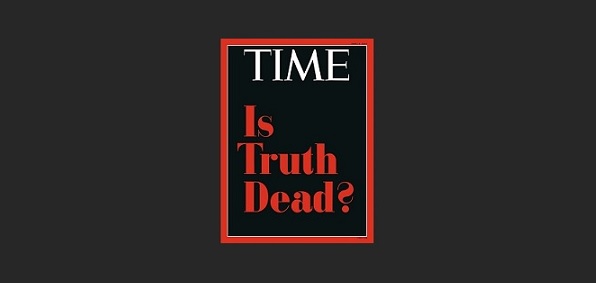
Is Truth Dead?

You have probably seen the attention-grabbing cover of this week’s Time magazine. It is a very real issue in our culture and it has serious implications for how we approach faith and church.

Truth has been an urgent topic this semester in the seminary classroom as some students have been asking what it means to think about religion and faith in a “post-truth” society.

I know that some status quo cynics and kind conservatives will smirk and try to dismiss these developments as just the latest assault on ‘what the church has always believed’. They will point to Herod asking “what is truth” in John 18:38 or quote Jude 1:3 and attempt to hide behind “the faith which was once for all handed down to the saints”.

Both of those attempts at dismissive evasion miss the point that something has shifted in our culture.

My hope is to seize this moment and to have an honest-to-God reality check that engages in an open-eyed assessment of the actual situation that we find ourselves in.

Here is the approach that I am taking with my students: 

We are exiting a time when truth has been purported to be both universal and timeless. IF that were ever true, and that is debatable, then it is certainly less true today than it ever has been.

First, nothing is timeless. Even if one wants to assert that something is not time-bound, it at least has to be time-ly. 2nd Temple Judaism, Pentecost, the Council of Constantinople, the Nicene Creed, Augustine’s confessions, Thomism, the Protestant Reformation, the birth of Methodism, the 2nd Great Awakening, and the Azusa Street revival were not timeless. They were all timely.

Second, things are not universal – they a situated, located, and particular. Things can not be presumed to be the same everywhere and simply applied anywhere. When and where (not to mention how and why) matter deeply.

Having said that, we have an opportunity (here and now) to evaluate our approach to truth and assess how we want to address this crisis in our culture.

Side-note: perhaps the worst thing that we could do at this kairos moment is to double-down on our truth claims of past centuries and continue to ignore the fact that things may not work as well, as smoothly, as predictably, or as justly as we had been told.

A great start begins with this realization:

Any claim to truth is:

  1. Partial
  2. Provisional
  3. Perspectival

It is partial because I never have all of the information – if there is a ‘god’s eye view’ I do not have access to it. Reality check: if there is a God, you are not God. This doesn’t mean that you have no access to truth – only that you have limited access to truth.

It is provisional because it will need to be amended as new data becomes available. I am free to say ‘at this point, here is what I understand’. If you are under the impression that something is ‘set in stone’, you need to come to terms with the fluid nature of our understanding and the perpetual/liquid nature of our access to all that is going on both in what we can see and the stuff behind the scenes.

It is perspectival because you can only see things from where you stand. Get rid of any notion of being ‘objective’ – you are subjective (thank God) and any access we have to truth is subject to review.

Is truth dead? Not exactly. 

Is our understanding of truth in need of adjustment for our liquid era of perpetual motion and exponential change? Yes. 

Do we still get to believe that things are true? Yes! 

Does that require a little bit of humility and even repentance from our addiction to certainty? Absolutely. 

Is the New Year new?

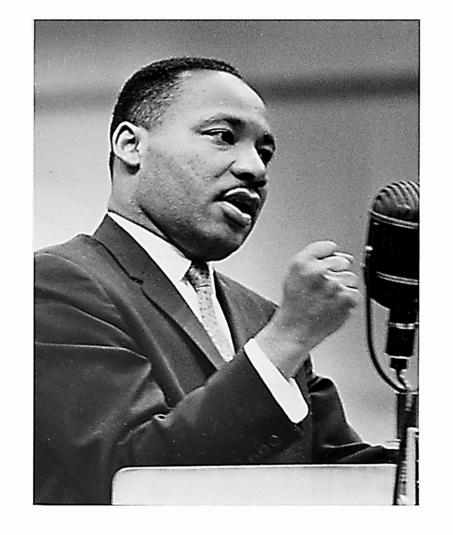
The MLK holiday provides a time to check in on the new year. I actually start getting ready for this question during Advent. Once we round the corner of Christmas day and I begin to take inventory of the past year in preparation for the New Year … I know that today is coming.

Each MLK holiday I ask myself how our society is doing with Dr. King’s triplets of evil: racism, materialism, and militarism.

I am currently reading “The End of White Christian America”  and it reminded my of a post that I put up two years ago today. I thought I would share a part of it again:
The loss of my mother has caused me a nearly indescribable amount of pain. I have given great thought to changing the entire direction of ministry – it has to be about more than just helping people understand the Bible better or be a better person.
Dr. King’s ‘triplets of evil’ are alive and well in our world and impact us all everyday … but because they are embedded in larger structures they can hide from people’s awareness and so they need to be investigated, exposed, and subverted.

In honor of this holiday and my mother’s memory I want to say two things:

  1. Be kind to each other. We are all carrying hurts and concerns and scars that may be impossible to see from the surface. As humans, we are all in this together … the world doesn’t need more strife and violence and division.
  2. We are all caught up in systems and structures that work against the ‘common-wealth’ of humanity and the planet. They need to be confronted and radically dismantled.

Now, as a christian minister I have chosen to stick with the gospel as I think that it provides the tools to do these two things.
On this MLK holiday I just wanted honor the legacy of a man and movement that has deeply impacted me and inspired my vision.

“We must rapidly begin the shift from a “thing-oriented” society to a “person-oriented” society. When machines and computers, profit motives and property rights are considered more important than people, the giant triplets of racism, materialism, and militarism are incapable of being conquered.” Dr. Martin Luther King Jr.

Blog at WordPress.com.

Up ↑