Search

Bo Sanders: Public Theology

updating & innovating for today

Category

Hermeneutics

H is for Hermeneutics

We humans are gifted at interpreting. We are constantly interpreting signs and symbols everywhere we go and in everything that we do. We are so comfortable interpreting that we may not even know that we are doing it.

Interpreting comes to most of us almost as second nature. We pick it up as child in the same way that we learn language and so many other things from imitating adults and our peers. We are conditioned in powerful ways that influence our opinions, convictions, prejudices, and even our desires.

We are constantly interpreting.

We almost instinctively know how to read different facial expressions, body language, gestures, moods, words, tone of voice, intensity, sincerity, pace, volume, etc. We even interpret things like gender, body style, and clothing. We interpret everything from human interactions, to sacred texts – from the clouds in the sky to the road signs as we drive.

We are always interpreting. 

What if you were told that the way you interpret something may be more important than the thing itself?

Would you be comfortable with the idea that your interpretive lens doesn’t just help you process your experiences – but actually helps create those experiences at some level?

Thinking about the way that we interpret things is called hermeneutics. It is a fancy word that would seem completely unnecessary if humans were not constantly interpreting nearly everything. The ‘Herme’ in hermeneutics comes from Greek mythology where Hermes was the messenger of the gods. Hermes was “considered to be the inventor of language and speech, an interpreter, a liar, a thief and a trickster. These multiple roles made Hermes an ideal representative figure for hermeneutics.”[1]

Words and ideas need interpreting because they can be tricky, double-coded, multilayered, and highly situational (contextual).

You may know that I come from an evangelical-charismatic background.  What you may not know is that I am continually contested in conversations with people from that background about the need to interpret our experiences and texts. I am often told that our religious experiences do not need to be interpreted, that they are actually a validation or a sign of faith. That, of course, is in itself an interpretation.[2]

We don’t just have experiences (like we don’t just read and believe the Bible), we interpret. We do it as second nature because to be human – and thus social – is to be thoroughly saturated in language and symbols. We speak, and indeed think, in language. It permeates everything we do and are. It is part of what being human means.

Hermeneutics is quite concerned with the complex set of relationships between an author, the text itself and the original or subsequent audience. The reader, according to hermeneutics, has a lot of power in that relationship.

Hermeneutics is a massive and complex field. Since this an ABC’s series, there are two basic things that are important to know:

  • The word has been in use since the 17th century even though the idea is an ancient one that can be traced all the way back to the Greek philosophers.
  • Everything changed in past 90 years. With the publication of Heidegger’s “Being and Time” in 1927, philosophy, and then subsequently the human sciences, took a hermeneutical turn.

This trickle-down effect has made its way through nearly every aspect of society and culture. The impact of this turn has been so thorough that we are now to the point where everything is analyzed, dissected, and questioned. No area of life gets a free pass and no activity is safe from interrogation. Social media is the perfect venue to exam how absolutely everything is now amplified (first) and then scrutinized.

If you are attracted to someone or not attracted to them, if you comb your hair a certain way or you don’t comb your hair, if you go to church or don’t go to church, if you stand for the national anthem at a sporting event or you don’t … everything means something.

This is true for individuals, families, congregations, people groups, and nations. It is the reality of the world that we live in for the 21st century.

One of Heidegger’s most famous students was Hans-Georg Gadamer. His 1975 book “Truth and Method” was about the world of interpretation and it expanded what is called the hermeneutical circle.

The five elements are characterized as:

  • pre-understanding
  • the experience of being brought up short
  • dialogical interplay
  • fusion of horizons
  • application.

This five-part cycle is really helpful and I often paraphrase it this way:

  1. We all come in with something to contribute. We have different perspectives, experiences, insights, histories, and assumptions. We might be familiar with topic or we might be new to the information. Both perspectives are needed.
  2. When we compare notes we come to realize that none of us have the whole picture and we might not even looking at our part of the picture in the most helpful or healthiest way. We admit our limitations or the flaws in what we were given.
  3. We begin to put our individual parts of the picture next to each other and may need to go outside to find some more or different parts of the picture in order to have a fuller or more wholistic understanding of what we are looking at.
  4. We begin to piece the whole picture together. We might overlap some areas, glue some down, we may choose to expand some elements or minimize others into order to make the project work together as a whole.
  5. We commit to actually do something with what we have made. We have each been impacted by the process and we acknowledge that we leave this phase of the cycle different than we came in.

In conclusion:

We all interpret. We think, experience, and speak through a lens. None of us are a blank slate and we never start from scratch. None of us come to a text, an event, or to an encounter value-free or judgement-free. We are rich tapestries full of values and laden with judgements.

These interpretations impact our beliefs, convictions, behaviors, practices, decisions, and feelings. Accounting for and attending to our interpretive lens in any situation will allow us to prosper in the complex, complicated, and multi-sensory world of the 21st century.

Bonus Section For Church Leaders:

A helpful example of the hermeneutical circle is employed in my field of Practical Theology. I tend toward utilizing the work of Paul Ricoeur and his ‘second naivety’ myself, but the example I want share is from Richard Osmer who utilizes Gadamer as his framework to talk about a community of interpretation.[3]

Let’s looks at what it takes to be someone who facilitates this for their community.  This understanding engages in different forms of communication because it is a collaborative effort. The following elements factor in significantly for the spirituality required to carry out the leadership that Osmer envisions.

  • The Descriptive–Empirical Task is called Priestley Listening and finds great importance in the power of presence.

The spirituality of presence addresses several levels of what is called attending to the congregation as a community of interpretation. Being present with and being attentive to the diverse perspectives, insights, experiences, and histories of those who make up the community.

  • The second task is the Interpretive Task called Sagely Wisdom.

The interpretive task draws off of thoughtfulness, theory, and wise judgment. Osmer appeals to Israel’s wisdom tradition and to Jesus being the hidden wisdom of God revealed. Facilitating this kind of communal discernment requires a unique set of skills and tools. There is a place for someone with specialized education (like seminary) in a community of interpretation.

  • The third task is the Normative Task, which is called Prophetic Discernment.

This task weaves together narrative, theory, and scriptural illustration. This is the art of this kind of leadership. Like a quilter stitching together the various pieces of fabric into a coherent whole, or a knitter diligently alternating between the required and various patterns required to bring out the texture for the desired finished product.

  • The final task is the Pragmatic Task, classified as Servant Leadership.

Osmer identifies the three forms of leadership as task competence, transactional leadership, and transforming leadership. Playing this role in your community requires three overlapping and interrelated convictions: you want to do this well, you want to do it with people, and you want the community to empowered and liberated for their work in the world. 

A priest mediates between God and God’s people, a sage has unique knowledge, a prophet tells the truth in interesting and creative ways, and servant works on their hands and knees.

The motif of “deep change” is introduced through the writing of Robert Quinn and is woven together with Old Testament imagery in order to illustrate the type of leadership that is required in this task. Quinn’s Four-stage model of organizational change (called the transformational cycle) involves: Initiation, Uncertainty, Transformation, and Routinization.

I share all of these different examples to point out two themes that you find in almost every hermeneutical project:

  1. They form a cycle, a circle, or a spiral – signifying an ongoing (continual) process.
  2. The second stage or step is one of negativity, negation, or something negative (like uncertainty). This is important because it is only after was pass through the unknowing that we come to see-know-engage-understand-assimilate-fuse in a new way.

In summary, interpreting is always and ongoing process and we must address the negative second step in order to move forward.


[1] This is from the Wikipedia entry on hermeneutics.

[2] Like we talked about in F is Fideism, divine revelation or religious experience cannot be privileged to the point that it is exempt from the attention that pay to other ‘ways of knowing’ and other areas of refelction.

[3] He first examines the idea of guiding the congregation as a community of interpretation. Secondly, he addresses the need to guide interpretation evoked by the experience of being brought up short. Lastly, guiding the dialogue between theology and other fields of knowledge. Leadership of this kind is defined as “the exercise of influence.”

H is for Hermeneutics

You may know that I hail from an evangelical-charismatic background.  What you may not know is that I am continually challenged in conversations about the need to interpret our experiences and texts.H-Hermeneutics

We don’t just have experiences – like we don’t just read (and believe) the Bible – we interpret. We do it as second nature because to be human – and thus social – is to be thoroughly saturated in language and symbols. We speak, and indeed think, in language. It permeates every thing we do and are. It is part of what being human means.

Our pocket dictionary defines hermeneutics as:

Hermeneutics: The discipline that studies the principles and theories of how texts ought to be interpreted, particularly sacred texts such as the Scriptures. Hermeneutics also concerns itself with understanding the unique roles and relationships between the author, the text and the original or subsequent readers.

Pocket Dictionary of Theological Terms (Kindle Locations 638-640). Kindle Edition.
Hermeneutics is a massive and complex field. Since this an ABC’s series, there are two things that you need to know :

  1. The word has been in use since the 17th century even though the idea is an ancient one that can be traced all the way back to the Greek philosophers.
  2. Everything changed in past 90 years. With the publication of Heidegger’s Being and Time in 1927, philosophy (and then subsequently the human sciences) took a hermeneutical turn.

One of Heidegger’s most famous students was Hans-Georg Gadamer. His 1975 book about the world of interpretation called Truth and Method expanded what is called the hermeneutical circle.
The five elements are characterized as:

  • pre-understanding
  • the experience of being brought up short
  • dialogical interplay
  • fusion of horizons
  • application.

I could not possibly do this topic justice in a single blog post – If you want more info there are links at the bottom of the page. ?

I just wanted to share an example of how the hermeneutical circle is employed in my field of Practical Theology. I tend toward utilizing the work of Paul Ricoeur and his ‘second naivety’ myself, but the example I want share is from Richard Osmer who utilizes Gadamer as his framework.

These elements allow Osmer to transition into analyzing the role of the congregational leader along these lines.

  1. He first examines the idea of guiding the congregation as a community of interpretation.
  2. Secondly, he addresses the need to guide interpretation evoked by the experience of being brought up short.
  3. Lastly, guiding the dialogue between theology and other fields of knowledge. Leadership of this kind is defined as “the exercise of influence.”

This influence engages in different forms of communication and is a collaborative effort. These three elements factor in significantly for the spirituality required to carry out the leadership that Osmer envisions.

  • The Descriptive–Empirical Task is called Priestley Listening and finds great importance in the power of presence.

The author illustrates the spirituality of presence by addressing several levels of what is called attending which is then integrated into concepts introduced earlier such as the congregation as a community of interpretation.

  • The second task is the Interpretive Task called Sagely Wisdom.

The interpretive task draws off of thoughtfulness, theory, and wise judgment. Osmer appeals to Israel’s wisdom tradition and to Jesus being the hidden wisdom of God revealed.

  • The third task is the Normative Task, which is called Prophetic Discernment.

The author utilizes a familiar pattern in this chapter similar to the previous two. Weaving together narrative, theory, and scriptural illustration.

  • The final task is the Pragmatic Task, classified as Servant Leadership.

Osmer identifies the three forms of leadership as task competence, transactional leadership, and transforming leadership.
The motif of “deep change” is introduced through the writing of Robert Quinn and is woven together with Old Testament imagery in order to illustrate the type of leadership that is required in this task. Quinn’s Four-stage model of organizational change (called the transformational cycle) involves: Initiation, Uncertainty, Transformation, and Routinization.

You will find that in almost all hermeneutical addresses, there is a common two common themes:

  1. They form a cycle, a circle or a spiral – signifying an ongoing (continual) process.
  2. The second stage or step is one of negativity, negation or something negative (like Uncertainty). This is important because it is only after was pass through the unknowing that we come to see-know-engage-understand-assimilate-fuse in a new way.

In conclusion:
We all interpret. We think, experience and speak through this lens.
The past century has seen a hermeneutical turn in almost every area related to human behavior, belief and social understanding.

For Further Reading:

A nice article on Heidegger and Gadamer

A massive and heady article on Hermeneutics from the Stanford Dictionary

A quick article on Paul Ricoeur and the Second Naïveté

Limits in (religious) Language

I just finished my semester this past week and was going through my desktop cleaning up all the icons when I discovered this post and realized that I had put it up over here yet.
It was originally posted at HBC

I like reading Lindbeck.* I used to say that I love Lindbeck but I ran into two snags.

  1. I didn’t realize what people did with Lindbeck. I did not know that it often led to retreat into a neo-Catholic expression.
  2. There is some philosophical wrinkle that I don’t fully understand about why the language that creates our religious experience implies a one-way limitation of language -it is a bit technical for me but I wanted to acknowledge it because it eventually becomes a real sticking point.

Having said that …

What I am a big fan of is Lindbeck’s critique of Language. He has a riveting analysis of the way that religious language functions in our communities and personal experiences.  I was susceptible to liking Lindbeck because of my deep appreciation for Nancey Murphy’s book “Beyond Liberalism and Fundamentalism”. I was primed for what Lindbeck brings to the table.

To become religious–no less than to become culturally or linguistically competent–is to interiorize a set of skills by practice and training. One learns how to feel, act, and think in conformity with the religious tradition that is, in its inner structure, far richer and more subtle than can be explicitly articulated. The primary knowledge is not about the religion, nor is that the religion teaches such and such, but rather how to be religious in such and such ways. p. 35

Then I found out that saying you appreciate the Lindbeck’s (post-Liberal) approach is like saying you cheer for the New York Yankees in Boston. I understand the concern with the descendants of Lindbeck’s work … but I am still suspicious that he is right about how language works in our faith communities.

Fast Forward: I was reading some stuff to get ready for the 2012 Emergent Village Theological Conversation this past January and I stumbled onto a section of Whitehead’s thoughts on religious language.** I got to a section called “Doctrine and History”. After dealing with the fact that language does not have a one-to-one correlation and that all language thus requires interpretation, the author explains:

“The language of a tradition and the central doctrines that reflect and support that language are the prime turbulence of the particular mode of existence characterizing that tradition. Furthermore, as human existence is shaped in specialized ways during the course of history, experiences occur that are not possible to persons shaped by other traditions.”

I resonate with the idea that a person is shaped by the language one is groomed and conditioned by – and that would both empower and naturally shape the experiences that one has and the interpretation of those experiences … even (or especially) the religious experiences.

It just makes sense that because religious in a communal endeavor – one is always a part of a community that has a tradition and set of practices/beliefs – that it determines, at some level, both the types of experiences one has , can have and how one translates or interprets those experiences.

This is a vital assertion for the 21st century! We no longer live in the monopoly of Christendom or the frameworks of the Colonial Era where one tradition imported and imposed foreign expectations and alien interpretations on another.

With works like “The invention of world religions” by Tomoko Masuzawa and “God is not One” by Stephen Prothero (among many others) we are entering a time in world history (and thus church history) where we need to come to terms with two things that both Lindbeck and Whitehead are pointing out:

  • Language is both inherited and powerful in shaping our experiences and subsequent interpretations of those experiences.
  • Language used in doctrines like ‘the Church’ and ‘Eucharist’ actually facilitate the ability to have certain experiences that are simply not available to those outside the community or language game. Practices like Yoga or Ramadan would be the same for those in different traditions. That is why North American Christians who do yoga are not have the same experience as those in India.

We live in an era where the realities of inter-religious education, cross-denominational communication and trans-national citizenship are going to challenge all of our inherited traditions and conceptual frameworks.

If we are unwilling to do so and insist on simply repeating the same rote answers week after week under the misguided impression that we are being faithful to the tradition … we are in danger of an irrelevance that leads not only to extinction but ultimately failure to accomplish our great commission.

*George Lindbeck wrote “The Nature of Doctrine” and along with Hans Frei (author of “Eclipse of the Biblical Narrative”) is credited with starting the Yale School of thought. One of the most famous proponents of which is Stanley Hauerwas famous for his books like  “Peaceable Kingdom” as well as other things.

** Alfred North Whitehead was a 20th century philosopher who is credited for helping to come up with what became Process-Relational thought.

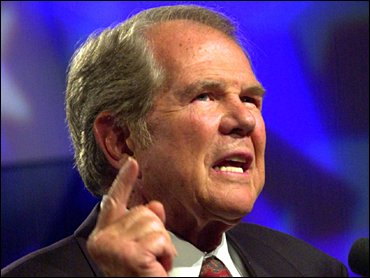
Pat Robertson makes me a better believer …

God told Pat Robertson who the next President of the United States will be.
You can watch it at Slate or read about in million other places.

Here is the thing: as much as people may want to make fun of the guy for being delusional I have to think that there may be something to be said for him.

If anyone follows my blogs either here or at Homebrewed Christianity then you know that I am a big proponent updating the faith. In fact, truth be told, I have written about it more than any other subject over the last 4 years.

I am especially interested in 3 updating things:

  • The way we read the Bible (hermeneutics)
  • The way we conceptualize the universe (cosmology)
  • The way we talk about miracles (metaphysics)

I have even gone so far lately as to publicly articulate why the miraculous is not super-natural and to research church history about eschatology (the end)… I have even shown concern about the evangelical icon Tebow [here].  All of that is to  say that I am not dabbling in this or being halfhearted… nor I am doing what so many that I know are and simply walking away from a faith that is not intellectually credible, scientifically accountable, or personally tenable. Continue reading “Pat Robertson makes me a better believer …”

The Hangover: Rapture edition

Here is a newspaper report and interview with Harold Camping:Washington Post article

The thing that people seem to be feeling bad about is that some gullible individuals got duped. I am sympathetic with the mild compassion. But I think that there is something far more sinister and devastating that we should be piping mad about and are justified in mocking (or at least being cynical about).
I remember in 1988 and 1991 people dropping out of the Bible College that my dad taught at to go home and ‘save’ their family and friends…. also no sense in racking up credits for a degree you are never going to finish!
 Look – until we stop all this mumbo jumbo stuff, the newer folks are going to continue to get duped.

I was shocked last week at how many Christians said things like “well – Camping is mostly right, this stuff will all happen, its just that we don’t know the day or hour.”

SO basically (as it has been presented to me)

  • 
Thinking all this stuff will happen on May 21 = crazy.
  • Thinking all this will happen but we don’t know when = acceptable.

I was raised to read the Bible this fantastical way. But I noticed that even knowing a little bit about the 5 centuries before Christ and the 2 after quickly made reading the Bible that way nearly impossible.
Reading the Bible in this ‘dispensational’ way – or what is called the “mountain tops” view of history – is not really faithful to the text or historically accurate. It is based on linear view of time, a literal reading of the text, and sketchy view of history. Continue reading “The Hangover: Rapture edition”

>Resurrecting space for belief

It goes without saying, Easter is a big deal. I only have to mention the significance of passages like Paul’s claim in 1 Corinthians 15:13-15 (NIV) 

13 If there is no resurrection of the dead, then not even Christ has been raised. 14 And if Christ has not been raised, our preaching is useless and so is your faith. 15 More than that, we are then found to be false witnesses about God, for we have testified about God that he raised Christ from the dead. But he did not raise him if in fact the dead are not raised.


As I a pastor I looked forward to Easter so much, but I knew that we would have  visitors, family members, and friends who would come to our services out of relational obligation or for social interest in the event. I knew that some of these would not believe in the literalness of the resurrection of Jesus’ body. 


I always had to think through how I was going to talk about this as a way that was both faithful in proclamation for us as a community of faith, while also attempting to be invitational and sensitive to potential objections or barriers from our guests. 


I have no interest in apologizing for what we believe as a faith community. But neither do I want to dogmatically push an ancient worldview that may, to the listener, be suspicious at best and incompatible at worst.  Continue reading “>Resurrecting space for belief”

>Clearing the Air – 4 changes

>

I have been doing Everyday Theology for the almost 3 years. I love it. Of all my projects, it is my favorite. 
As I continue my transition from being a local church minister (only) to an academic and a public theologian – things will necessarily need to change.
There are four changes that I just wanted to  “get out on the table” to talk about what is going on behind the scenes or what is driving this conversation from my side. 
Here are the four things:
  1. I believe that almost everything about the Christian faith needs to be updated for the world that we live in.  The first implication is that   
  2. we have to get rid of words like “supernatural” 
  3. I need to start quoting people by name for accountability and credibility  
  4. there are some big and/or fancy words that I need to get comfortable using. I will always try to define and explain things as we go – but some of these words are too good and too helpful to continue not using them.  
Number one is obvious. There is no aspect of our lives that has gone unchanged in the last 2000 years. From basic things like food and sex to more complicated things like politics and economics , everything has changed. 
It’s not that these things have changed entirely – it’s that nothing has gone entirely unchanged. 
Religion is in this category. Christianity, both in it’s revealed nature (revelation) and it’s organization (religion) has evolved, adapted, and transformed immensely. I think that is a good thing. The only thing about it that is not good is that some believe that is has not changed or that it isn’t suppose to change. That is where the problem comes.
In the coming month I will be floating some thoughts about prayer, biology and reading the Bible in light of these necessary and good changes. 
The second thing is an immediate casualty. There are many things that are gained by updating, but there will also be some things that get sacrificed in the transition. This involves moving away from the supernatural.
I do not believe in the supernatural. I still believe in miracles – just not in the supernatural. Neither the word or the idea is in the Bible and it is really hurting us in the post-modern (and modern) world.
sidenote: the fact that most people do not know how that is possible shows how limited our conversation has been around this issue. 
What we call the super-natural is really just left over language from the pre-natural mindset of ancient times.  I believe that God’s work in the world in the most natural thing in the world. It is not SUPER-natural, which really means UN-natural. It is just natural.  Everything is natural.  Praying for someone to be healed is natural.  Someone who you are in relationship giving you their car when they hear about your need is natural.  
It might be miraculous (surprising to us) but it is not super-natural or un-natural. It is just natural. It is how God works. [if you want to read something similar that I wrote about discerning God’s will click here]
The third change is quoting people. I have avoided this for three years because sometimes people are scared off by name dropping as it can seem too academic or highbrow.  I think that avoiding author’s and expert’s names has been the right decision up to this point, but that continuing to do so will be limiting. For both accountability and credibility I need to make this change. I know that some people will be turned off by it – but hopefully we can meet in the middle!
The fourth change is using some multi-syllable words. I have avoided this for the same reason as I have avoided quoting authors. But the simple fact is that this conversation is framed by some ideas that are encapsulated in good words. I need to become proficient is using these words well and being comfortable explaining them and integrating them. I will try to do this with clarity and caution – not for the sake of using the $10 word, but for  reasons that it propels the conversation forward in a good and helpful direction. 
I just wanted to clear the air. Two main points A) as I continue to learn and translate and participate in public theology, I wanted to show my cards so that everyone knew where I was coming from.   B) Sometimes people push back on me (which I enjoy) but are surprised that I don’t just repeat the same ‘apologetics’ answers that I learned in Bible College (Evidence that Demands a Verdict, Ravi Zacharias, etc.) 
I want to be really clear about what I am doing. I am participating in a great global conversation about updating the faith for the 21st century that is both: 
  • in continuity with the historical christian tradition 
  • relevant and has accounted for the realities of the world in which we live
If you want to know why I am doing this read this article by N.T. Wright – or on his website
If you want to check out the kind of thing I am after check out this article by F. Leron Shultz [link]

>the Bible is not about the End of the World

>I wrote this for something else but wanted to post here for discussion.

The minute the earthquake in Japan happened, I told several friends that two things were coming: 1) talk of the end of the world  2) talk of God punishing Japan

But I was not prepared for was the quality of the sample that was to come. This article details the prophetic take of Cindy Jacobs.  She is an authoritative leader in Intercession Prayer circles and someone that I am very familiar with and had even quoted during my college years (the mid- 90s).

    “In the early nineties, the Lord gave me a prophecy for Japan that it was a “sickle in the hand of the Lord” that will be used for great harvest. The physical geography of the islands look like a curved sickle with the handle being the island of Hokkaido in the north. One could also say that it looks like a curved sword. Where Japan has historically been a sword of war across Asia.”

    “On the other hand, if you look at it another way, this island, Hokkaido, looks like the head of a dragon with the body being the rest of Japan. The people of Asia have worshipped the dragon for 5,000 years. If one looks at the place where the earthquake took place, it looks like the soft underbelly of most vulnerable part of the dragon.”

Can you believe it? The reasoning is that it ‘looks like a sword’?  Are you serious?
Does that mean as seen from space… or on a map… or… wait – I’m looking at a map right now and I am not seeing a sword,  or a dragon for that matter.

Not that it matters. When you are being this imaginative and fantastical, I am not sure that the facts would be all that helpful.

I was making fun of this on Facebook and I referenced the best selling book by Harold Camping’s 1994 or Edgar C. Whisenant “88 reasons the Rapture will be in 1988”.  How corny right?

A week later I get a text message from someone listening to NPR that Harold Camping is on the radio saying that the end of the world will be next May 26th. It will happen at 6pm. It will make it’s way around the world time-zone by time-zone.

Wasn’t that how Y2K was suppose to happen?  Not that it matters…

Here is what I wish would happen: that we could make a deal as Evangelical-Conservative-Fundamentalist and Charismatic Protestants that IF this happens next May or even in 2012 at all – then those of us who doubt them will volunteer to go to hell.

BUT if it doesn’t happen then we will realize that nothing is going to happens like this – and stop doing this every time a natural disaster occurs.

Here is what I wish we would realize:

   1. human civilizations (brick and mortar) who live on fault lines and shore lines are impacted when the world does what it has always done – shift, evolve, and create.
   2. every generation can not imagine things continuing to progress beyond a point that they would find unrecognizable and thus they think ‘this must be the end’
   3. when we talk about the ‘eschatological hope’ of the resurrection we need to be careful to distinguish it from cooky dispensational “Left-Behind” mumbo-jumbo. We must distinguish because most people can’t tell the difference. In fact, sometimes I can’t tell the difference.

Background:

  • Most of what Jesus said that gets chalked up to ‘end times’ stuff – like his story about two people in a field or on a road and one is taken, or  how women will not want to be pregnant – he is talking about the destruction of Jerusalem in 70 a.d.   All that ‘flight to the hills’ and sky/moon turning red and a loaf of bread costing a bag of gold is about something that happened “within that generation” (Matthew 24:33-35).  It is not about the end of the world.
  • The book of Revelation was a political commentary on Rome of the first centuries CE. It is written in apocalyptic language because of the Roman oppression of the first century. It is not about the end of the world.

>Reading the Bible Better: Talents

>

We have all read the parable of the Talents
Matthew 25:14-30 (New American Standard Bible)
Parable of the Talents
 14 For it is just like a man about to go on a journey, who called his own slaves and entrusted his possessions to them.
 15″To one he gave five talents, to another, two, and to another, one, each according to his own ability; and he went on his journey.
 16″Immediately the one who had received the five talents went and traded with them, and gained five more talents.
 17″In the same manner the one who had received the two talents gained two more.
 18″But he who received the one talent went away, and dug a hole in the ground and hid his master’s money.
 19″Now after a long time the master of those slaves came and settled accounts with them.
 20″The one who had received the five talents came up and brought five more talents, saying, ‘Master, you entrusted five talents to me. See, I have gained five more talents.’
 21″His master said to him, ‘Well done, good and faithful slave You were faithful with a few things, I will (I)put you in charge of many things; enter into the joy of your master.’
 22″Also the one who had received the two talents came up and said, ‘Master, you entrusted two talents to me. See, I have gained two more talents.’
 23″His master said to him, ‘Well done, good and faithful slave. You were faithful with a few things, I will put you in charge of many things; enter into the joy of your master.’
 24″And the one also who had received the one talent came up and said, ‘Master, I knew you to be a hard man, reaping where you did not sow and gathering where you scattered no seed.
 25’And I was afraid, and went away and hid your talent in the ground. See, you have what is yours.’
 26″But his master answered and said to him, ‘You wicked, lazy slave, you knew that I reap where I did not sow and gather where I scattered no seed.
 27’Then you ought to have put my money in the bank, and on my arrival I would have received my money back with interest.
 28’Therefore take away the talent from him, and give it to the one who has the ten talents.’
 29″For to everyone who has, more shall be given, and he will have an abundance; but from the one who does not have, even what he does have shall be taken away.
 30″Throw out the worthless slave into the outer darkness; in that place there will be weeping and gnashing of teeth.


 Here’s the thing:  what if we have not understood the environment and the context that Jesus was speaking to enough to understand what is going on in this parable?


 Several weeks ago I put forward two theories about our understanding of the Bible:

  •  we would benefit to know more about the first century context
  •  we would benefit to know more about the genres that the Scriptures were written in
 This parable is a perfect example of those two ideas.
 A talent was the largest denomination of currency available in Jesus’s day. It weighed 72 pounds and required several servants to carry. It was used once a year to pay estate taxes.
 When Jesus says that some servant received several talents his first century audience would have known that this was absurdum.  They would have known immediately that this was a political or economic lampoon.
 It is also interesting to note that the Jewish rate of interest was capped at 12%. Anything more than that was considered unethical.
 So when we listen to Jesus tell this fictitious story, there are two things that may not be obvious to us as 21st-century listeners:

  • The first is that those servants that are applauded/esteemed in this parable would have been perceived as villains and potentially booed or jeered by the original audience.
  • The second is that the servant that buries his treasure was the hero in this story!
It is possible that the servant who buries his treasure is the good guy both as Jesus tells the story and as it was heard by the first century audience!  Keep in mind that this is in an agrarian society  and that by sticking his money in the ground he has demonstrated to his master that money does not grow and will not feed his family. 
 In this sense, he is sticking it to the man by saying that participating in an predatory economic system of profit does not feed me and those I care about.  Money does not grow and you cannot eat it.  This guy might be the hero of Jesus’ story. 
Now-  Somebody might object at this point and say “he is called a wicked and lazy servant”, but I would point out that Jesus does not call him that… Jesus is telling a story where the evil landlord is calling him that.   This is a huge distinction.
Just because of the phrase “evil and lazy servant” appears in the text does not mean that Jesus is assigning it to the man. And this is where our lack of knowledge about the genre of parable betrays us.  If we do not know how to read a parable then we are in danger of mis-reading the parable. 
 It might be interesting at this point to note that the word “talent” did not come to mean what it does in our modern definition until somewhere around the 13th century.  This is one of the first instances we have of a word’s definition actually coming from an interpretation of Scripture.  Talent came to mean skill or ability in the 13th century because of this very passage.  Before that it had never meant what it means in our contemporary understanding.  Talent was a Roman denomination of money.  When Jesus told this story he was clearly meaning it as an economic teaching.
At this point, we have to be willing to come to terms with the fact that we may have been reading this parable exactly the opposite as Jesus meant it.

The man who buried his treasure may actually be the hero of this story! And the servants who derived income from a double percentage gain may have been a wicked participant in an oppressive system. 
A capitalist reading of this passage may actually result in an exultation in the exact opposite purpose for which Jesus meant it.  This is a grave realization. 
If the man who buried his treasure is indeed the hero of this story and he is – by means of a prophetic act – demonstrating the fatal flaw of an opportunistic (predatory) economic enterprise… then we may have been sold a  faulty view of both the kingdom and the financial enterprise of this world.  This is a sobering possibility.
Most people that I talk to do not know that the talent was a denomination of money. They do not know that it weighed 72 pounds. They do not know that it required several servants to carry. They do not know that it was used as an estate tax once a year. This is information that radically changes the way we read the parable.
I am not a fan of either/or, this or that, in or out, us or them, dualism and binary thinking. That is well-established. In this one instance, however, it is clear to me that these are two very different readings and that one reading supports the status quo of Imperial economics and the other is a subversive reading that undermines the way things are and the ‘powers that be’ !
Jesus does not call the servant who buries the money a “wicked and lazy servant” he puts that phrase in the mouth of the wicked landowner.  When people say to me that “the Bible says… that man was a wicked lazy servant” they are misunderstanding the very purpose for which the parable was spoken. We must acknowledge that it is the wicked landowner who calls the servant by that title.
On a side note –  think about what we are saying about God if we think of the wicked landowner as God.  We are saying that God is absent. We are saying that God us harsh. We are saying that God is ruthless.  Is this really what we want to say about God?
 Is this what we think God is like?
I am not blaming those who have been taught to read the Bible this way –  but the simple fact is that it is not how Jesus meant it in the first century nor is it how his original audience would’ve heard it. 
 If we are going to read the Bible better we have got to know more about the first century and we have got to know more about the genres that Scripture is written in.
 This is simply a snapshot of how our ignorance of those two areas … and how 2000 years of dust have blurred the original picture. 

Create a free website or blog at WordPress.com.

Up ↑